Amanita pantherina: Identification, Features, Habitat & Safety Guide (Amanita Lookalike Danger)

Nathan Cole
Mycologist · Author · Fungi Expert
Updated
Apr 10, 2026
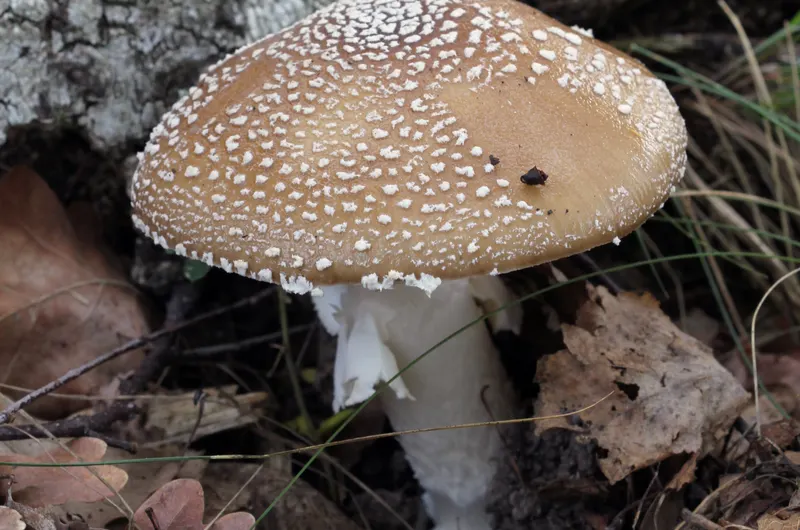
Amanita pantherina, commonly known as the Panther Cap, is a toxic Amanita species known for its brown cap with white spots and strong potential for misidentification. It contains psychoactive compounds similar to Amanita muscaria, but is considered more dangerous due to stronger toxicity and unpredictable effects. This mushroom is often mistaken for edible species, making it a major amanita lookalike danger. Accurate identification requires examining cap, gills, stem, ring, volva, and habitat, or using a mushroom identifier for support.
Amanita pantherina Identification Summary
Amanita pantherina Family and Species
Kingdom
Fungi
Division
Basidiomycota
Class
Agaricomycetes
Order
Agaricales
Family
Amanitaceae
Genus
Amanita
Species
Amanita pantherina
The Panther Cap belongs to the Amanitaceae family, a group containing both deadly toxic and psychoactive mushrooms. Within the Amanita genus, species are often identified by white gills, a ring (annulus), and a volva, making careful identification critical.
Amanita pantherina Dimensions
Cap diameter
5–12 cm
Stem height
6–12 cm
Stem thickness
1–2 cm
Volva size
Bulbous base with distinct rim
It is a medium-sized mushroom with a compact but well-defined structure.
Amanita pantherina Key Features (Identification Characteristics)
Cap (Pileus)
- Color: Brown to dark brown
- Surface: Covered with white wart-like spots (veil remnants)
- Shape: Convex → flat with age
These spots are remnants of the universal veil, similar to Fly Agaric but on a darker cap.
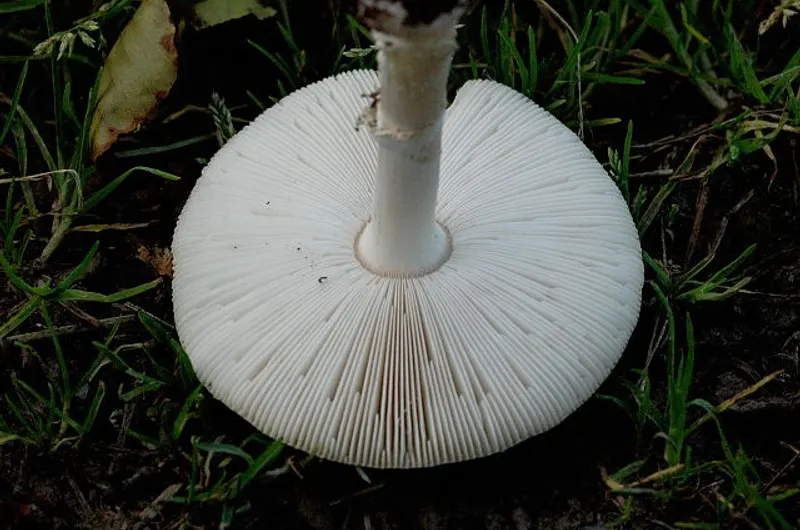
Gills (Lamellae)
- Color: White
- Attachment: Free gills
- Dense and crowded
Gills remain white throughout maturity.
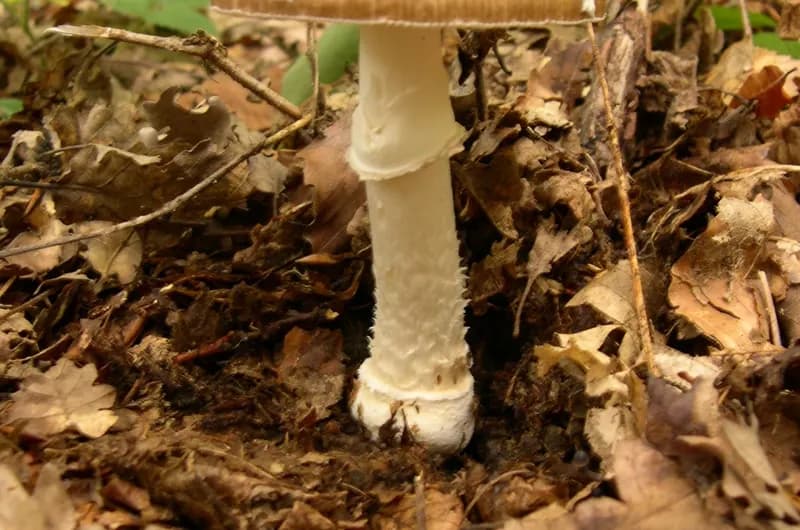
Stem (Stipe)
- White, slender
- Smooth or slightly fibrous
- Bulbous base with defined margin
Ring (Annulus)
- Thin but visible
- Located on upper stem
- May persist or fade
Volva (Basal Structure)
- Bulbous base with distinct rim or collar
- Not fully cup-shaped like deadly Amanitas
This feature helps distinguish it from other Amanita species.
Amanita pantherina Color, Smell, and Taste
Color
- Cap: Brown with white spots
- Gills: White
- Stem: White
Smell
- Mild or slightly unpleasant
- Not a reliable identifier
Taste
Not recommended — toxic. Never taste wild mushrooms for identification purposes.
Amanita pantherina Growth Pattern and Seasonality
Growth Pattern
- Grows single or scattered
- Occasionally in small groups
Seasonality
- Summer to autumn
- Appears after rainfall
Amanita pantherina Habitat, Environment & Distribution
Habitat
- Forests and woodland areas
- Found near tree roots
Tree Association
- Oak
- Beech
- Pine
- Spruce
Forms mycorrhizal relationships with trees.
Environment
- Moist soil
- Shaded forest floor
- Temperate climates
Geographic Distribution
- Europe
- North America
- Asia
Widely distributed in temperate regions.
Edibility, Safety & Risk Level
Is it Edible?
❌ Not edible. Amanita pantherina is classified as poisonous.
Risk Level
🔴 High (toxic and psychoactive)
Toxicity
Contains:
- Ibotenic acid
- Muscimol
These compounds affect the central nervous system, often more intensely than Amanita muscaria.
Symptoms
- Confusion and hallucinations
- Delirium
- Nausea and vomiting
- Muscle spasms
Effects can be unpredictable and dangerous.
Similar Species (Look-Alikes Comparison)
| Feature | Amanita pantherina | Amanita muscaria |
|---|---|---|
| Cap | Brown with white spots | Red with white spots |
| Toxicity | Higher | Moderate |
| Volva | Rimmed base | Bulbous base |
| Risk | High | Moderate |
Common Confusions
- Amanita muscaria (Fly Agaric) — similar structure, different cap color
- Brown woodland mushrooms
- Some edible species (rare but possible confusion)
Amanita Lookalike Danger Explained
The Panther Cap is particularly dangerous because:
- It resembles Amanita muscaria, which some people wrongly consider safe
- It shares similar features with other Amanita species
- Visual differences can be subtle for beginners
Misidentification can lead to serious poisoning. Always verify with expert knowledge or a reliable wild mushroom identifier.
Economic Value and Uses
No Safe Edible Value. This mushroom has no safe culinary use.
Scientific Importance
- Studied for psychoactive compounds
- Used in neurological research
- Important in toxicology studies
Benefits and Value
- Research in brain chemistry
- Educational importance in mycology
No general consumption benefits.
Pros and Cons
✅ Pros
- Scientifically valuable
- Important for ecological balance
- Helps research toxic compounds
❌ Cons
- Toxic and dangerous
- Easily confused with other Amanita species
- Causes unpredictable neurological effects
How Our Mushroom Identifier Helps Identify Amanita pantherina?
Our mushroom identification app uses AI and image recognition to analyze:
- Cap color and white spots
- Gill structure
- Stem and ring
- Volva base shape
- Habitat
This helps distinguish Amanita pantherina from similar species, especially Amanita muscaria. For a deeper understanding of mushroom anatomy, check our mushroom parts explained guide. You can also learn about deadly lookalikes in our Death Cap vs Destroying Angel comparison.
Frequently Asked Questions
What is Amanita pantherina?
Amanita pantherina is a toxic mushroom known as the Panther Cap, identified by its brown cap with white spots.
Is Amanita pantherina poisonous?
Yes, it is toxic and can cause severe neurological symptoms.
How is Amanita pantherina different from Amanita muscaria?
It has a brown cap instead of red and is generally considered more toxic and dangerous.
Where does Amanita pantherina grow?
It grows in forests near trees like oak, pine, and spruce.
Can AI identify Amanita pantherina?
Yes, a mushroom identifier app can analyze its features, but results should always be verified.
Final Thoughts
Amanita pantherina (Panther Cap) is a high-risk toxic mushroom that can easily be mistaken for other Amanita species. Its brown cap with white spots, combined with white gills, ring, and volva, makes it important to identify carefully.
Understanding its features, habitat, and risks is essential for avoiding dangerous mistakes. Tools like a mushroom identifier can assist, but should always be used alongside expert knowledge.
Sign in to leave a comment and join the discussion.