AI-POWERED · 10,000+ SPECIES · 3 FREE SCANS

Mushroom Identifier - Free Mushroom Identification App by Picture

Use our Free mushroom identifier by photo for fast, accurate results with advanced mushroom identifier AI. Upload clear images from multiple angles to instantly identify fungi, detect key features, and receive toxicity warnings plus similar species alerts through our free mushroom identification app.

10K+ Species
95% Accuracy
<60s Results
3 Free Scans
scroll

Free Mushroom Identification App by Photos

By uploading clear images showing the cap, gills, pores, stem, and surrounding habitat, the system extracts visual traits such as cap shape, gill pattern, surface texture, and stem structure, then returns a ranked list of possible species matches.

Many people use a wild mushroom identifier by picture when hiking, exploring forests, or observing fungi in gardens and parks. These tools often work as a mushroom identifier app or web-based identifier that runs directly in a browser. Some platforms also include a helpful mushroom ID chart, allowing users to compare key identification features such as gill attachment, cap shape, spore structures, and habitat clues to better understand mushroom anatomy.

A mushroom identifier is especially useful for hikers, mushroom foragers, students of mycology, nature photographers, and outdoor enthusiasts who want to quickly research unknown fungi. By combining photo analysis, habitat context, and geographic information, the tool can narrow down potential species far faster than manually searching through traditional field guides or fungal reference books.

Mushroom identification app — Amanita muscaria (fly agaric) in natural forest habitat

Photo by Flocci Nivis · Wikimedia Commons · CC BY 4.0

Important Safety Notice

However, a mushroom identifier should always be used as a learning and research aid, not as a final identification authority. Some poisonous mushrooms closely resemble edible ones. For example, Amanita phalloides (death cap) — one of the most toxic mushrooms in the world — can look similar to edible species when young.

For safety, never rely solely on an AI result to determine edibility and always consult a local mycologist or mycological society for expert confirmation.

How AI Analyzes Mushroom Features?

This process works similarly to how experienced field mycologists approach identification. Instead of looking at a single trait, the AI evaluates combinations of characteristics:

FeatureExample Observation
Cap shapeConvex, flat, or bell-shaped
Gill attachmentFree gills, decurrent gills, attached gills
Stem structureHollow stem or solid stem
HabitatGrowing on wood, soil, moss, or leaf litter
Tree associationOak, birch, beech, hemlock, conifer

These traits together help distinguish species that may appear almost identical at first glance.

How to Use the Mushroom Identifier?

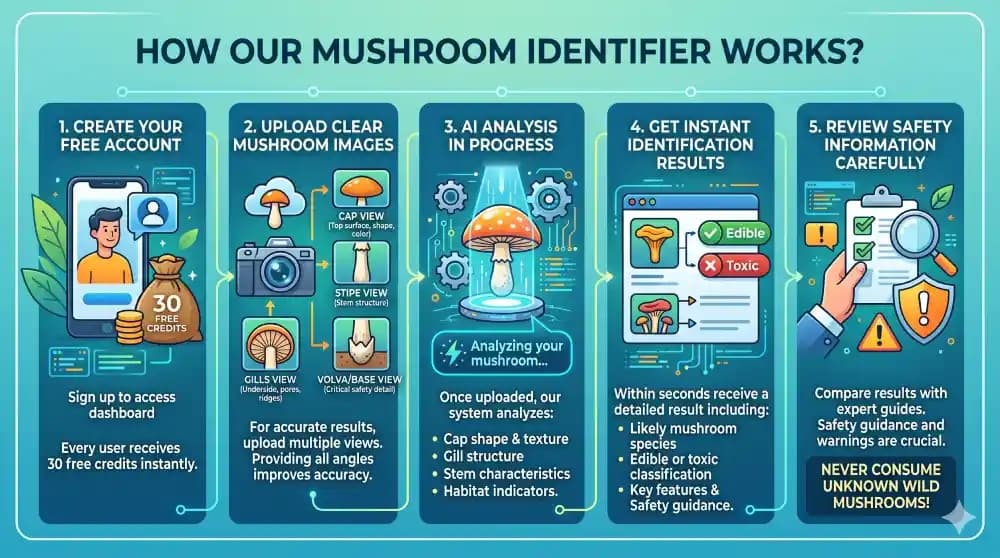
Identifying a mushroom with an AI mushroom identifier only takes a minute if you capture the right details. The tool uses computer vision and fungal species databases to compare your photos with thousands of known mushroom and fungi specimens. Follow these quick steps to get the most accurate results.

01

Upload Clear Mushroom Photos

Start by uploading clear, well-lit images of the mushroom. The AI analyzes visual traits such as cap color, texture, gill pattern, and stem structure.

02

Capture Multiple Angles

Upload several angles of the specimen so the image recognition system can detect more identifying features. Recommended views: cap (top view), side profile, underside (gills, pores, or teeth).

03

Photograph the Mushroom Cap

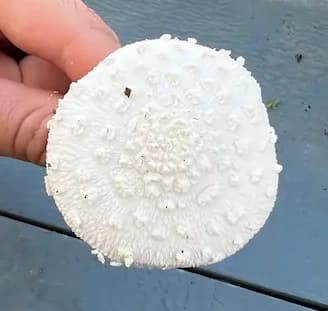
Take a top-down photo of the mushroom cap showing cap shape, color and patterns, and surface texture (smooth, scaly, warty). This helps narrow down potential fungal species.

04

Show the Underside Structure

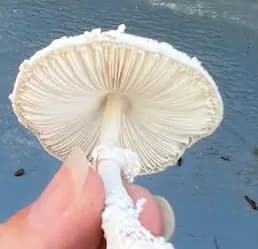
Turn the mushroom over and photograph the gills, pores, or spines. These structures are often the most important diagnostic feature in mycology.

05

Capture the Stem and Base

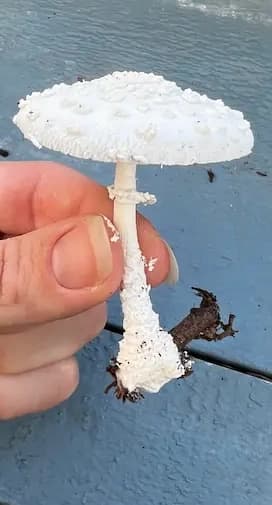
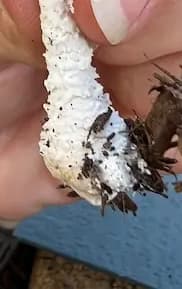
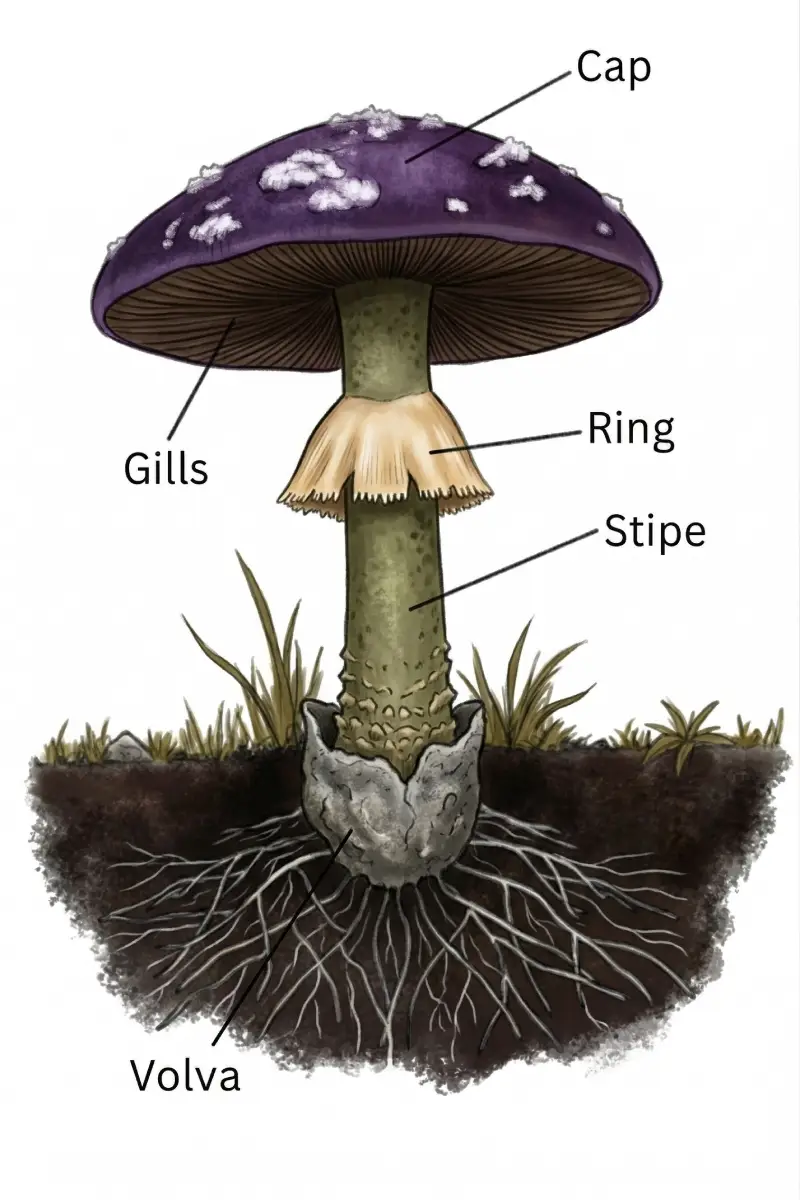
Photograph the full stem and base before removing the mushroom from the ground. This may reveal important structures like ring, volva, or basal bulb.

06

Include the Habitat

Take a photo showing the mushroom in its natural habitat, including soil or moss, leaf litter, decaying wood or logs, and nearby trees (oak, birch, conifer).

07

Enter Location and Date Found

Provide the geographic location and date when the mushroom was found. This helps the system filter species by geographic range, seasonality, and climate and elevation.

08

Add Observational Notes

Include details the camera cannot capture, such as odor or smell, bruising reactions, spore print color, and cap texture (slimy, dry, velvety).

09

Run the AI Identification

Click Identify Mushroom and the AI will analyze the uploaded images using machine learning and visual feature extraction. The system returns a ranked list of possible mushroom species.

10

Review Results Carefully

Treat the results as a starting point for research, not a final answer. Many mushrooms have dangerous look-alikes, including toxic species like Amanita phalloides (death cap). Never eat a wild mushroom based only on an AI mushroom identification result.

Mushroom identification app — forager holding freshly picked Cantharellus cibarius (golden chanterelles)

Photo by Gunnar Creutz · Wikimedia Commons · CC BY-SA 4.0

Who This Mushroom Identifier Is For?

The mushroom identifier is designed for anyone curious about fungi in the wild. It can be especially helpful for:

Hikers and outdoor explorers encountering mushrooms on trails

Backyard nature observers discovering fungi in gardens or lawns

Mushroom foragers researching species before consulting experts

Students studying mycology or forest ecology

Nature photographers documenting fungal diversity

Whether you are walking through a Pacific Northwest conifer forest, exploring a Rocky Mountain meadow, or simply observing mushrooms growing on a fallen hardwood log, the tool can provide a quick starting point for understanding what species you may be seeing.

Want to sharpen your identification skills before heading into the field? Try our free mushroom identification quiz — 50 expert questions covering toxic species, edible fungi, and anatomy terms with a 30-second timer per question.

How AI Helps Identify Mushrooms?

Artificial intelligence enables rapid mushroom recognition by combining several technologies:

  • Computer vision to detect patterns in images

  • Machine learning models trained on fungal specimen photos

  • Feature extraction algorithms identifying structural traits

  • Species probability ranking based on visual similarity and context

Instead of relying solely on color, the AI evaluates multiple anatomical features simultaneously: cap color and surface texture, gill or pore structure, stem thickness and internal structure, presence of a ring, veil, or volva, growth pattern and clustering, and habitat and substrate information. This approach helps distinguish closely related fungi and identify potential look-alike species, which are common in the fungal world.

Mushroom identification app — macro close-up of Cortinarius violaceus gills showing radial lamellae structure

Photo by 00Amanita00 · Wikimedia Commons · CC BY-SA 3.0

Why Mushroom Identification Requires Caution?

Identifying mushrooms is complex because many species share similar visual traits. Some of the most dangerous fungi — including members of the Amanita genus — resemble edible mushrooms commonly collected by beginners.

Amanita phalloides (death cap)

Responsible for many fatal mushroom poisonings worldwide

Amanita bisporigera (destroying angel)

Visually similar to edible button mushrooms when young

Other highly dangerous species include Amanita virosa (destroying angel), Amanita ocreata (western destroying angel), Cortinarius rubellus (deadly webcap), Galerina marginata (funeral bell), and Lepiota brunneoincarnata (deadly dapperling). Toxic mushrooms in the Amanita genus, such as Amanita muscaria (fly agaric) and Amanita pantherina (panther cap), can also cause severe poisoning.

Even experienced mycologists often rely on additional diagnostic signals such as spore print color, bruising reactions, smell or odor, and microscopic examination. Because a photo cannot capture all of these details, a mushroom identifier should always be treated as a starting point for research, not a final answer.

When You Should Not Rely Only on a Mushroom Identifier?

An AI mushroom identifier is an excellent starting point for recognizing fungi, but it should never be the only source used to make important decisions about wild mushrooms. Even the most advanced computer vision and machine learning systems cannot replace the experience of a trained mycologist or the careful verification methods used in traditional mycology.

Certain situations require additional caution because visual similarity between mushroom species is extremely common. Many edible mushrooms have dangerous look-alikes that share similar cap color, gill structure, or stem appearance.

You should avoid relying only on a mushroom identifier in the following situations:

When deciding whether a wild mushroom is edible

When a mushroom is suspected to be toxic or poisonous

When children or pets may have touched or ingested a mushroom

When identifying mushrooms belonging to high-risk genera such as Amanita

When the mushroom's base, spore print, or bruising reaction cannot be observed

When the mushroom grows in unusual habitats or rare environments

In these cases, the safest approach is to consult a local mycologist, regional mycological society, or poison control center. AI tools are powerful for research and learning, but they should always be used as supporting tools rather than final authorities.

Best Practices for Safer Mushroom Identification

Successful mushroom identification relies on careful observation, accurate documentation, and verification from multiple sources. Combining AI image recognition with traditional field identification techniques provides the most reliable results.

Key Practices Used by Mycologists

Professional mushroom experts follow a consistent process when identifying fungi in nature. These steps can help improve both AI identification accuracy and human verification.

Observe the specimen before touching it

  • • Look at the cap shape, color, and surface texture
  • • Note whether the mushroom grows alone or in clusters
  • • Check if it is growing on soil, moss, wood, or leaf litter

Photograph the mushroom in its habitat

Capture images showing the environment such as:

  • • Decaying hardwood logs
  • • Conifer forest floors
  • • Fallen branches or buried roots
  • • Open meadows or woodland edges

Document structural traits

Important mushroom anatomy features include:

  • Cap – color, shape, scales, or warts
  • Gills or pores – spacing and attachment to the stem
  • Stem – thickness, texture, hollow or solid interior
  • Ring or veil – protective structures beneath the cap
  • Volva or basal bulb – structures found at the base of certain species

Record environmental context

Write down:

  • • Location and geographic region
  • • Nearby tree species such as oak, birch, beech, or hemlock
  • • Substrate (soil, wood, moss, dung)
  • • Elevation and climate conditions

These ecological clues help narrow the list of possible fungal species.

Mushroom identification app — Pleurotus ostreatus (oyster mushroom) cluster growing on fallen wood

Photo by Rosser1954 · Wikimedia Commons · Public Domain

Mushroom Identification in Different Habitats

Habitat is one of the most important clues in accurate mushroom identification, and it plays a critical role in how a mushroom identifier app or mushroom identifier AI delivers results. Most fungi grow in very specific environments and form relationships with certain trees, soil types, grasslands, or decaying wood. When you use a mushroom identifier by photo or mushroom identifier online, including the surrounding habitat in your images can significantly improve identification accuracy and help the system detect whether a species may be harmful or safe.

Our free mushroom identifier app is designed to go beyond just visual recognition—it also considers environmental context. For example, some mushrooms only grow under oak or pine trees, while others appear exclusively on rotting logs or moist forest floors. By capturing habitat details along with the mushroom itself, the app can better match patterns, suggest similar species, and provide more reliable toxicity warnings. This makes habitat awareness a powerful factor when using any mushroom identifier free tool for real-world identification.

Mushrooms Growing on Soil

Many mushrooms appear directly from the forest soil, especially in woodland environments. These species are often mycorrhizal fungi, meaning they form beneficial underground partnerships with tree roots. Often found near oak, beech, birch, or conifer trees.

Mushrooms Growing on Moss

Some fungi prefer moist moss-covered environments. Moss retains water and organic matter, creating ideal conditions for many small woodland mushrooms. Found in damp forest floors, often appear after rain or high humidity.

Mushrooms Growing on Hardwood Logs

Many fungi specialize in breaking down decaying hardwood, such as oak, maple, or birch logs. These mushrooms are known as wood-rotting fungi. They play a vital ecological role by recycling nutrients back into the forest ecosystem.

Mushrooms Growing on Conifer Wood

Some fungi grow specifically on conifer trees such as pine, spruce, or fir. Conifer wood contains different chemical compounds than hardwood, so certain fungi specialize in breaking it down.

Mushrooms Growing on Living Trees

Some mushrooms grow directly on living trees, especially on damaged or weakened areas of bark. These fungi may act as parasites or decomposers. Common signs include mushrooms emerging from tree trunks or branches and shelf-like formations.

Mushrooms in Meadows and Grassy Areas

Not all mushrooms grow in forests. Many species appear in open meadows, lawns, and grassy fields, where they feed on organic material in soil. These environments are sometimes associated with fairy rings.

In lawns and grassy areas, common species include Chlorophyllum molybdites, one of the most frequently misidentified poisonous mushrooms in North America, and the edible Agaricus campestris (field mushroom). If you find unexpected fungi in your yard, our guide explains why mushrooms grow in your yard and how to identify them safely.

Can This Tool Identify Mushrooms Growing on Wood?

Yes. Many distinctive fungi grow on logs, tree trunks, and woody debris, and the mushroom identifier can often recognize these species when clear images are provided. Wood-growing species like Hypholoma fasciculare (sulfur tuft) form dense clusters on stumps, while oyster mushrooms colonize hardwood logs.

However, the AI needs to see how the mushroom attaches to the wood.

Helpful photo details include:

Whether the mushroom has a stem

Whether it forms shelf-like brackets

Whether it grows in dense clusters

It is also helpful to mention whether the wood appears to be hardwood or conifer, since some fungi specialize in only one type.

Including this context helps the system better match the specimen with the correct fungal species database entries.

Mushroom Identification Accuracy: What Affects It Most

The accuracy of an AI mushroom identifier depends on several factors. While artificial intelligence can analyze visual patterns extremely quickly, the quality of input information plays a major role.

Factors That Improve Identification Accuracy

FactorWhy It Matters
Multiple photo anglesReveals different anatomical features
Clear lightingShows color and surface texture accurately
Habitat photosProvides ecological context
Geographic locationFilters species by regional distribution
Date foundAccounts for mushroom seasonality
Distinctive species traitsReduces confusion with look-alikes

Species that are visually unique are usually identified with higher confidence, while mushrooms with many similar relatives can produce multiple possible matches.

For example, white mushrooms with free gills and a ring on the stem may belong to several genera, including both edible and toxic species.

Mushroom Identification for Beginners

Learning to identify mushrooms is an exciting process, but beginners should approach it carefully. Many field guides emphasize the importance of observing structural traits, habitat relationships, and ecological patterns rather than relying on a single visual feature.

Simple Traits to Observe First

Start by focusing on a few basic characteristics:

Cap shape and color

Presence of gills, pores, or spines

Stem thickness and structure

Whether the mushroom grows on wood or soil

Nearby tree species

Even simple observations can dramatically reduce the number of potential species.

Common Beginner Mistakes

Many misidentifications occur because important details are overlooked.

Avoid these common errors:

Taking only one photo of the cap

Ignoring the stem base or volva

Forgetting to note the habitat

Assuming a mushroom is edible because it resembles a familiar species

For example, the edible Agaricus arvensis (horse mushroom) can be confused with the toxic Agaricus xanthodermus (yellow stainer), which causes gastrointestinal distress.

Remember that even experienced foragers often verify their findings with multiple references or expert advice.

Mushroom identification app — group of Amanita muscaria (fly agaric) mushrooms in autumn woodland

Photo by Onderwijsgek · Wikimedia Commons · CC BY-SA 3.0 NL

Why This Mushroom Identifier Is Useful as a Web-Based Tool?

One advantage of a web-based mushroom identifier is accessibility. Unlike many mobile apps, the tool works directly in a browser on desktop, tablet, or smartphone.

This makes it easy to use while hiking or exploring outdoor environments.

Key advantages include:

No app download or installation required

Works on mobile devices and computers

Fast access in the field

No account creation necessary

Unlimited identification requests

Because it runs entirely online, users can identify multiple specimens during a single outing without needing to install updates or manage software.

Mushroom ID Chart: Common Types

A mushroom ID chart is a helpful visual reference used in mushroom identification and mycology. It groups mushrooms by their key structural traits so beginners can quickly narrow down possible species.

Mushroom TypeKey FeaturesHabitat
Gilled MushroomsThin blade-like gills under the cap, visible stemForest soil, grasslands
Pore Mushrooms (Boletes)Sponge-like underside with pores, thick capsNear hardwood or conifer trees
Tooth / Spine MushroomsUnderside covered with soft spines or teethForest floors, moss, decaying wood
Polypores / Shelf FungiBracket or shelf-shaped, no traditional stemDead logs, tree trunks
PuffballsRound, no visible gills, release spores as powderGrasslands, fields, forest edges
MorelsHoneycomb-pattern caps with hollow interiorForest soil near trees
Amanita GroupOften have gills, a ring, and a volva at baseForests with oak, birch, or conifer

When identifying boletes, note that most are safe but some can cause illness. Learn whether any Leccinum mushrooms are deadly and how to distinguish edible species like Boletus edulis (king bolete) from bitter lookalikes.

Mushroom identification app — basket of freshly foraged Boletus edulis (king boletes / porcini) and related edible species

Photo by George Chernilevsky · Wikimedia Commons · Public Domain

Key Benefits of Using This Free Mushroom Identifier

Free Access with No Hidden Fees

This mushroom identification tool is completely free to use. There are no subscription plans, locked features, or hidden charges. Anyone interested in fungi identification, mushroom foraging, or nature observation can access the tool instantly through a web browser.

Unlimited Mushroom Identifications

Users can run as many identification requests as they need. Each photo submission is analyzed independently by the AI recognition system, allowing you to identify multiple specimens during a single outing.

Simple and Easy Photo Upload Workflow

The tool is designed with a straightforward interface that allows users to upload images quickly. The image analysis system works best when photos show important mushroom structures such as cap shape, gills, stem, and habitat.

Fast Ranked Species Results

Once images are uploaded, the AI analyzes visual patterns and compares them with thousands of labeled fungal specimen images. The system returns a ranked list of possible mushroom species within seconds.

Helpful for Learning Mushroom Traits

Using a mushroom identifier is also a great way to learn about mushroom anatomy and fungal biology. As users explore different species, they become familiar with important identification traits.

When to Consult a Local Expert?

There are times when expert assistance is essential. If a mushroom may pose a health risk, a trained professional should always confirm identification.

🔬

When the species is unknown

Never guess with an unfamiliar find

⚠️

When toxicity is suspected

Seek immediate medical help if ingested

🌿

Before your first forage

Go with an experienced guide first

📍

For local regional species

Regional experts know local variations

Experts who can help include:

Professional mycologists

Members of a regional mycological society

Local mushroom identification groups

Poison control specialists

Common Similar Species Our Mushroom Identifier Distinguishes

Understanding look-alike mushrooms is essential in mushroom identification and mycology. Many fungal species share similar cap color or shape, but differ in gill attachment, stem structure, habitat, smell, and seasonality. Below are common confusing pairs explained clearly, along with how our AI mushroom identifier helps distinguish them.

Death Cap vs Paddy Straw Mushroom comparison

1. Death Cap vs Paddy Straw Mushroom

(Amanita phalloides vs Volvariella volvacea)

The death cap is one of the most toxic mushrooms, often confused with the edible paddy straw mushroom due to similar appearance when young. The key difference lies in the presence of a ring and volva, along with habitat — forest vs cultivated environments.

FeatureDeath Cap (Toxic)Paddy Straw (Edible)
Key FeaturesVolva, ring, free gillsVolva, no ring
ColorGreenish, pale yellowGray to brown
SmellMild sweetMild earthy
Growth PatternSingle/scatteredClusters
EnvironmentWoodland forestsStraw, farms
Habitat & DistributionEurope, Asia, North AmericaTropical regions
SeasonalitySummer–FallWarm seasons

Our AI identifies differences in volva structure, ring presence, habitat context, and cap color variation to prevent confusion.

Destroying Angel vs Button Mushroom comparison

2. Destroying Angel vs Button Mushroom

(Amanita bisporigera vs Agaricus bisporus)

The destroying angel looks very similar to edible button mushrooms, especially when young. However, it contains deadly toxins. The most reliable differences include gill color change and absence of volva in Agaricus.

FeatureDestroying Angel (Toxic)Button Mushroom (Edible)
Key FeaturesVolva + ring, white gillsNo volva, pink→brown gills
ColorPure whiteWhite/light brown
SmellSlight/unpleasantMild pleasant
Growth PatternSingleClusters
EnvironmentForest soilGrass/cultivated
Habitat & DistributionNorth America, EuropeWorldwide
SeasonalitySummer–FallYear-round

Our AI detects gill color progression, stem base structure, and habitat differences to distinguish these species.

Chanterelle vs False Chanterelle comparison

3. Chanterelle vs False Chanterelle

(Cantharellus cibarius vs Hygrophoropsis aurantiaca)

True chanterelles are prized edible mushrooms but are often confused with false chanterelles. The key difference lies in ridge-like folds vs true gills, along with smell and growth environment.

FeatureChanterelle (Edible)False Chanterelle
Key FeaturesRidges (not true gills)Thin true gills
ColorYellow/goldenBright orange
SmellFruity (apricot)Weak/none
Growth PatternScatteredDense clusters
EnvironmentForest soilDecaying wood
Habitat & DistributionEurope, North AmericaWorldwide
SeasonalitySummer–FallLate summer–Fall

Our AI identifies ridge vs gill structures, color intensity, and substrate (soil vs wood) for accurate differentiation.

Another dangerous chanterelle look-alike is Omphalotus illudens (Jack O'Lantern), which grows in clusters on wood and has true gills instead of ridges.

Oyster Mushroom vs Angel Wings comparison

4. Oyster Mushroom vs Angel Wings

(Pleurotus ostreatus vs Pleurocybella porrigens)

Both species grow in clusters on wood, making them visually similar. However, oyster mushrooms are edible, while angel wings can be toxic in some conditions. The main differences include thickness and substrate type.

FeatureOyster (Edible)Angel Wings (Toxic risk)
Key FeaturesThick flesh, decurrent gillsThin, fragile
ColorGray/whitePure white
SmellMild pleasantSlight
Growth PatternClustersDense clusters
EnvironmentHardwood logsConifer wood
Habitat & DistributionWorldwideNorthern forests
SeasonalityFall–WinterLate fall

Our AI compares growth on hardwood vs conifer, gill attachment, and body thickness to separate these species.

Morel vs False Morel comparison

5. Morel vs False Morel

(Morchella esculenta vs Gyromitra esculenta)

Morels are highly valued edible mushrooms, but false morels can be toxic. The most important distinction is internal structure and cap shape.

FeatureMorel (Edible)False Morel (Toxic)
Key FeaturesHollow, honeycomb capBrain-like, solid
ColorTan/yellowReddish brown
SmellMild earthyStrong
Growth PatternScatteredScattered
EnvironmentForest soilWoodland floor
Habitat & DistributionNorth America, EuropeNorthern hemisphere
SeasonalitySpringSpring

Our AI analyzes cap texture patterns, internal structure clues, and shape consistency for identification.

Puffball vs Young Amanita comparison

6. Puffball vs Young Amanita

(Lycoperdon spp. vs Amanita spp. immature)

Young Amanita mushrooms can resemble puffballs before their caps open. This is a critical distinction because Amanita species are often highly toxic.

FeaturePuffball (Edible young)Young Amanita (Toxic)
Key FeaturesSolid white interiorDeveloping gills inside
ColorWhiteWhite
SmellMildNeutral
Growth PatternGroupsSingle
EnvironmentGrasslands/forestsForest soil
Habitat & DistributionWorldwideWorldwide
SeasonalitySummer–FallSummer–Fall

Our AI evaluates internal structure (via context clues), growth pattern, and base features to avoid misidentification.

Scleroderma citrinum (common earthball) is another round fungus sometimes confused with puffballs, but it has a tough, dark interior unlike true puffballs.

King Bolete vs Bitter Bolete comparison

7. King Bolete vs Bitter Bolete

(Boletus edulis vs Tylopilus felleus)

Both are pore mushrooms and look very similar, but the bitter bolete is inedible due to taste. Differences include pore color and stem features.

FeatureKing Bolete (Edible)Bitter Bolete
Key FeaturesThick stem, white poresPink pores, bitter
ColorBrown capBrown cap
SmellPleasantMild
Growth PatternSingle/scatteredSingle
EnvironmentForest soilForests
Habitat & DistributionEurope, North AmericaWorldwide
SeasonalitySummer–FallSummer–Fall

Our AI identifies pore color variations, stem patterns, and subtle surface differences to distinguish these boletes.

Shaggy Ink Cap vs Common Ink Cap comparison

8. Shaggy Ink Cap vs Common Ink Cap

(Coprinus comatus vs Coprinopsis atramentaria)

Both ink caps grow in urban and grassy areas, but they differ in cap texture and appearance.

FeatureShaggy Ink Cap (Edible young)Common Ink Cap
Key FeaturesShaggy, elongated capSmooth gray cap
ColorWhite with scalesGray
SmellMildMild
Growth PatternGroupsGroups
EnvironmentLawns/roadsidesUrban soil
Habitat & DistributionWorldwideWorldwide
SeasonalitySpring–FallSpring–Fall

Our AI analyzes cap texture, shape, and growth environment to clearly separate these similar species.

Frequently Asked Questions

What type of mushroom is this?

To determine what type of mushroom this is, observe key features such as cap shape, gills or pores, stem structure, and habitat. A mushroom identifier uses AI to analyze these traits and compare them with a database of fungal species.

How does a mushroom identifier work?

A mushroom identifier uses artificial intelligence and computer vision to analyze uploaded photos of a mushroom's cap, gills, pores, stem, and base. The system compares these visual features with thousands of labeled specimens and returns a ranked list of possible species matches.

Is there a free mushroom identifier app?

Yes, this tool works as a free web-based mushroom identifier that runs directly in your browser. Upload images and use AI mushroom recognition without installing software.

Can a wild mushroom be identified from a picture?

Yes, a wild mushroom identifier by picture can recognize many species by analyzing structural traits like cap texture, gill pattern, and habitat. However, photo-based identification should always be confirmed with a field guide or mycologist.

Can a mushroom identifier tell if a mushroom is edible?

No. A mushroom identifier tool can suggest possible species but cannot confirm edibility or toxicity. Some dangerous mushrooms like Amanita phalloides (death cap) closely resemble edible species.

Why does habitat matter in mushroom identification?

Many fungi grow in specific environments such as forest soil, moss, hardwood logs, or conifer wood. Habitat information helps narrow down possible mushroom species since many fungi form ecological relationships with certain trees or substrates.

Do I need to create an account?

No. The tool works instantly in your browser and does not require registration or sign-up.

How does the AI identify mushrooms?

The system uses machine learning and computer vision trained on large datasets of labeled fungal specimen images. It analyzes features such as cap shape, gill pattern, stem structure, and habitat clues.

Final Safety Reminder Before Using Any Mushroom Identification Result

A mushroom identifier is a valuable educational tool, but it cannot replace professional expertise or traditional identification methods.

  • Never eat a wild mushroom based solely on AI identification
  • Keep unknown mushrooms away from children and pets
  • Always verify results using field guides or expert advice
  • Treat AI suggestions as hypotheses, not final answers

Nature contains an incredible diversity of fungi, from tiny woodland species to large mushrooms growing on ancient logs. Using a mushroom identifier responsibly can help you explore this fascinating world while staying safe and informed.

Start Identifying Safely Today

Join thousands of foragers using AI-powered identification