Psychedelic Mushroom Identification Chart With Pictures

Nathan Cole
Mycologist · Author · Fungi Expert
Updated
Jul 10, 2026
Psychedelic mushroom identification requires much more than recognizing a blue-staining mushroom or comparing a single photo online. Accurate identification involves examining multiple characteristics, including the cap, gills, stem, spore print, habitat, season, and microscopic features, while also considering dangerous lookalike species.
This guide explains how mycologists identify psilocybin-containing mushrooms, highlights common psychedelic species and toxic imposters, outlines safe identification protocols, and discusses the strengths and limitations of AI mushroom identification tools.
Whether you're learning about mushroom anatomy, understanding blue bruising, or comparing similar species, this guide provides a science-based overview designed to improve knowledge while emphasizing safety and responsible identification practices.
Key Takeaways
- Psychedelic mushrooms cannot be identified by a single feature such as blue bruising or cap color.
- Multiple characteristics—including cap shape, gill attachment, stem features, spore print color, habitat, and season—must be evaluated together.
- Several poisonous mushrooms closely resemble psilocybin-containing species, making careful identification essential.
- Professional mycologists use a structured identification workflow rather than relying on photographs alone.
- AI mushroom identification apps can assist with learning but should never replace expert verification.
- Understanding mushroom anatomy improves identification accuracy and reduces common mistakes.
- Habitat and substrate provide useful clues but cannot confirm a mushroom's identity.
- A spore print remains one of the most valuable diagnostic tools for narrowing down species.
- Proper documentation and multiple photographs significantly improve identification confidence.
- This guide is intended for educational purposes and emphasizes safe, evidence-based identification practices.
What Are Psychedelic Mushrooms?
Psychedelic mushrooms are fungi that naturally contain psilocybin and, in many species, psilocin—compounds that can produce changes in perception, mood, and cognition. These compounds occur in dozens of mushroom species, primarily within the genus Psilocybe, but they are also found in certain species of Panaeolus, Gymnopilus, and Pluteus. Despite sharing these compounds, the mushrooms themselves vary considerably in appearance, habitat, and growing conditions.
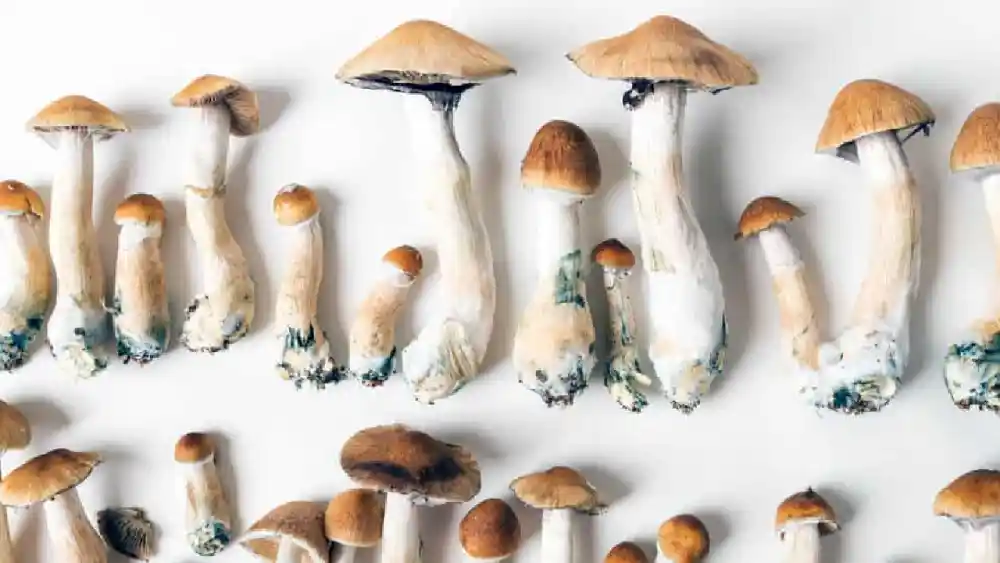
One of the biggest misconceptions is that all psychedelic mushrooms look alike. In reality, they range from small grassland species with slender stems to larger mushrooms growing on dung or decaying wood.
Their colors, shapes, and textures often change as they age or when environmental conditions such as humidity and sunlight vary. This natural variation makes accurate identification more challenging than simply matching a photograph.
Many species also resemble harmless mushrooms—or, more concerning, highly poisonous ones. Because visual similarities can be misleading, experienced mycologists evaluate multiple characteristics together rather than relying on a single feature. This approach helps distinguish closely related species and reduces the risk of dangerous misidentification.
Why Accurate Identification Matters?
Correct mushroom identification is important because many fungi share similar appearances while having very different biological properties. Some mushrooms that resemble psilocybin-containing species belong to entirely different genera and may contain harmful toxins.
Learning how identification works helps readers understand the complexity of fungal diversity and why careful observation is essential.
Can You Reliably Identify Psychedelic Mushrooms?
The short answer is not from a single characteristic or photograph. Reliable identification requires evaluating a combination of physical features, habitat, and supporting evidence. Even experienced mycologists often examine mushrooms under different lighting, compare several field characteristics, and sometimes use microscopic analysis before reaching a confident conclusion.
Many online images show only the cap of a mushroom, but important identifying features—such as the gills, stem base, ring, or spore print—may not be visible. Environmental factors can also alter a mushroom's appearance, causing colors to fade, stems to elongate, or caps to crack. These changes make visual identification from one image especially difficult.
Why Photos Alone Are Often Insufficient?
A single image rarely captures all of the details needed for accurate identification. Essential characteristics may be hidden, damaged, or absent altogether. For educational purposes, photographs are helpful, but they should be viewed as one piece of a much larger identification process rather than definitive proof of a species.
The Role of AI Mushroom Identification
Modern AI-powered mushroom identification tools can analyze photographs and suggest possible matches based on visible features. These tools are useful for learning about mushroom diversity and narrowing down possibilities, but their accuracy depends heavily on image quality, lighting, viewing angle, and the completeness of the specimen shown.
AI works best when users provide multiple clear photographs, including the cap, underside, stem, stem base, and surrounding habitat. Even then, AI should be considered an educational aid rather than a replacement for expert review, especially when mushrooms closely resemble one another.
Core Identification Features
Professional mushroom identification relies on examining several characteristics together. No single feature can reliably confirm whether a mushroom belongs to a psilocybin-containing species. Instead, mycologists compare a combination of visible traits, ecological information, and sometimes microscopic characteristics to narrow down the possibilities.
Understanding these core features also helps explain why mushrooms that appear similar at first glance may belong to entirely different genera.
Cap Characteristics
The cap is often the first feature people notice, but it changes considerably as a mushroom matures. Mycologists examine its shape, diameter, surface texture, color, moisture level, and edge (margin). Some psychedelic mushrooms have hygrophanous caps, meaning they change color depending on how much moisture they contain.
Gill Characteristics
Gill color, spacing, attachment, and maturity provide valuable clues. Young mushrooms may have lighter gills that darken as spores develop, making it important to observe specimens at different growth stages whenever possible.
Stem Characteristics
The stem, or stipe, can reveal important identifying features such as thickness, texture, color changes, the presence or absence of a ring, and how it connects to the base. The base should always be examined carefully, as some distinguishing structures remain partially buried in the soil.
Blue Bruising
Blue bruising is one of the most widely discussed characteristics of psilocybin-containing mushrooms because it can occur when psilocin oxidizes after the mushroom is damaged. However, bruising varies between species and is not always obvious. Some mushrooms with psychoactive compounds bruise only faintly, while other non-psychoactive species may also show bluish discoloration. For this reason, bruising should never be considered a definitive identifying feature on its own.
Spore Print Color
A spore print is created by allowing mature spores to fall onto a contrasting surface. The resulting color helps distinguish similar-looking genera and is one of the most valuable non-destructive identification techniques used in mycology.
Habitat and Substrate
Where a mushroom grows provides useful ecological context. Some species are associated with decomposing wood, others with grasslands or animal dung, while many grow in forest leaf litter. Habitat supports identification but cannot confirm it, as multiple unrelated species often share the same environment.
Seasonality
The time of year influences which mushrooms are likely to appear. Temperature, rainfall, humidity, and local climate all affect fruiting seasons, making seasonal patterns another important factor when evaluating an unknown mushroom.
Professional Mushroom Identification Workflow
Experienced mycologists follow a structured process rather than making quick conclusions based on appearance. This systematic approach reduces mistakes and builds confidence by gathering evidence from multiple sources before attempting an identification.
Step 1: Observe Before Disturbing
Examine the mushroom in its natural setting before touching or moving it. Note whether it is growing alone or in groups and observe the surrounding vegetation, soil, wood, or other substrate.
Step 2: Photograph the Entire Specimen
Take clear photographs from several angles, including the cap, underside, stem, stem base, and the surrounding habitat. Multiple images provide a more complete record than a single close-up.
Step 3: Examine Physical Characteristics
Carefully observe the cap, gills, stem, bruising response, and any distinguishing structures. Comparing several characteristics together is far more reliable than focusing on only one.
Step 4: Record Habitat Information
Document the location, substrate, nearby trees or vegetation, elevation if relevant, and recent weather conditions. Ecological information often helps narrow down possible species.
Step 5: Compare Multiple References
Consult reputable field guides, taxonomic keys, and educational resources to compare the observed features. Looking at several trusted sources helps reduce confirmation bias and improves identification accuracy.
Common Psychedelic Mushroom Species
More than 200 mushroom species have been reported to contain psilocybin or related compounds, but only a relatively small number are commonly discussed in field guides and educational resources.
Each species has unique identifying characteristics, preferred habitats, and seasonal patterns, which is why learning individual species profiles is an important part of mushroom identification.
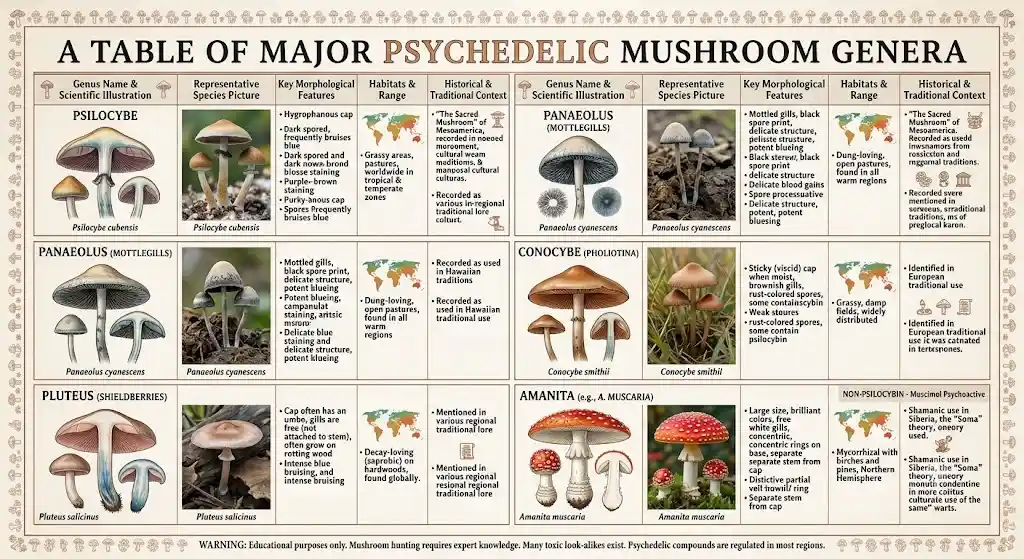
Psilocybe cubensis
One of the most widely recognized species, often associated with nutrient-rich grasslands and livestock environments in tropical and subtropical regions.
Psilocybe semilanceata (Liberty Cap)
A small grassland species known for its distinctive pointed cap and preference for cool, temperate climates.
Psilocybe cyanescens
Often associated with wood-chip mulch and urban landscaping, particularly in regions with cool, wet autumn weather.
Other Notable Species
Additional species frequently discussed in mycology literature include:
- Psilocybe azurescens
- Psilocybe mexicana
- Psilocybe ovoideocystidiata
- Psilocybe allenii
- Psilocybe tampanensis
- Panaeolus cyanescens
- Panaeolus cinctulus
- Gymnopilus luteofolius
- Pluteus salicinus
Each differs in morphology, habitat preferences, and geographic distribution, reinforcing why identification should always consider the complete set of characteristics rather than assumptions based on appearance alone.
Deadly Lookalikes to Avoid
One of the most important aspects of psychedelic mushroom identification is learning to recognize dangerous lookalike species. Many mushrooms share similar colors, sizes, or habitats, yet belong to completely different genera and may contain toxins capable of causing severe illness or even death.
Because of these similarities, professional mycologists never identify a mushroom based on a single characteristic such as cap color, blue bruising, or where it was found. Instead, they compare a combination of features, including the cap, gills, stem, spore print, habitat, and microscopic characteristics when necessary.
Safety Reminder: Even experienced mushroom enthusiasts can misidentify wild mushrooms. Educational guides and AI identification tools should never be considered definitive proof of a mushroom's identity.
Galerina marginata (Funeral Bell)
Often considered one of the most dangerous lookalikes, Galerina marginata is a small brown mushroom that commonly grows on decaying wood. At first glance, it can resemble several wood-loving Psilocybe species, especially when viewed from above.
Key identification clues
- Rusty-brown spore print
- Brown gills that darken with age
- Typically grows on rotting logs and stumps
- Contains deadly amatoxins
Conocybe filaris
This lawn-growing mushroom has caused fatal poisonings due to its amatoxin content. Young specimens may resemble small brown mushrooms found in grassy areas.
Key identification clues
- Thin fragile stem
- Rust-colored spores
- Often found in lawns and landscaped areas
- Highly toxic despite its delicate appearance
Pholiotina rugosa
Previously classified within Conocybe, this species is another highly toxic mushroom that may resemble small psilocybin-containing mushrooms.
Key identification clues
- Small brown cap
- Thin stem with a delicate ring
- Rust-colored spores
- Contains dangerous liver toxins
Amanita phalloides (Death Cap)
Although it usually differs in appearance from most Psilocybe species, inexperienced collectors may confuse immature specimens with other mushrooms.
Distinctive features
- White gills
- Prominent volva at the stem base
- Ring on the stem
- White spore print
- Among the world's most poisonous mushrooms
Amanita virosa (Destroying Angel)
Another deadly member of the Amanita genus, recognized by its white coloration and toxic amatoxins.
Distinctive features
- Entirely white appearance
- White gills
- White spores
- Large sac-like volva
- Extremely poisonous
Other Common Lookalikes
Several additional mushrooms are frequently confused with psychedelic species:
| Species | Common Habitat | Why It's Confused |
|---|---|---|
| Hypholoma fasciculare | Wood | Similar clustered growth |
| Agrocybe pediades | Grass | Small brown appearance |
| Panaeolina foenisecii | Lawns | Similar size and habitat |
| Various "Little Brown Mushrooms" (LBMs) | Many habitats | Similar overall shape and color |
Many unrelated mushrooms fall into the informal category of Little Brown Mushrooms (LBMs). While they may appear similar to some psilocybin-containing species, they represent dozens of different genera with varying characteristics and should never be grouped together for identification purposes.
Side-by-Side Comparison Tables
Comparing similar species helps illustrate why experienced identifiers evaluate multiple characteristics together rather than relying on a single feature.
Psilocybe cubensis vs. Galerina marginata
| Characteristic | Psilocybe cubensis | Galerina marginata |
|---|---|---|
| Spore Print | Purple-brown | Rust-brown |
| Habitat | Nutrient-rich grasslands | Decaying wood |
| Blue Bruising | Often present | Typically absent |
| Toxicity | Contains psilocybin | Deadly amatoxins |
| Stem Base | No volva | No volva |
Psilocybe cyanescens vs. Hypholoma fasciculare
| Characteristic | Psilocybe cyanescens | Hypholoma fasciculare |
|---|---|---|
| Habitat | Wood chips | Decaying wood |
| Spore Color | Purple-brown | Purple-brown to dark |
| Cap Margin | Wavy with maturity | Rounded |
| Bruising | Often blue | Not characteristic |
| Toxicity | Contains psilocybin | Poisonous |
Liberty Cap vs. Panaeolina foenisecii
| Characteristic | Psilocybe semilanceata | Panaeolina foenisecii |
|---|---|---|
| Cap Shape | Distinct pointed nipple | Bell-shaped |
| Spore Print | Dark purple-brown | Brown to blackish |
| Habitat | Grasslands | Lawns |
| Blue Bruising | Variable | Absent |
Why Comparisons Matter?
Instead of asking:
"Does this mushroom look like a psychedelic mushroom?"
Experienced identifiers ask:
- Does the habitat match?
- Does the spore print match?
- Are the gills correct?
- Does the stem fit?
- Does the cap change with age?
- Do all observed characteristics agree?
This systematic approach produces much more reliable identifications than comparing a single photograph online.
Safe Identification Protocols
Whether you're learning mycology, using a mushroom identification app, or studying field guides, following a consistent safety protocol helps reduce identification errors and encourages responsible observation.
Never Rely on a Single Characteristic
Cap color, blue bruising, habitat, or size alone cannot confirm a mushroom's identity. Accurate identification depends on evaluating multiple features together.
Examine the Entire Mushroom
Always observe:
- Cap
- Gills
- Stem
- Stem base
- Surface texture
- Bruising response
- Habitat
Missing even one of these characteristics can make identification much less reliable.
Take Multiple High-Quality Photographs
For educational identification, photograph:
- Top of the cap
- Underside showing the gills
- Entire stem
- Stem base
- Nearby habitat
- Surrounding vegetation
Multiple images provide a much more complete record than a single close-up.
Make a Spore Print
Spore print color remains one of the most useful field techniques for narrowing down mushroom genera.
To obtain a clear spore print:
- Place the mature cap on white and dark paper.
- Cover it with a bowl or container.
- Leave it undisturbed for several hours.
- Observe the deposited spores.
Compare Multiple Trusted References
Rather than relying on a single website or photograph, compare observations with:
- Modern field guides
- Mycology textbooks
- Scientific descriptions
- Regional identification resources
Cross-referencing information improves confidence and reduces confirmation bias.
Understand the Limitations of AI
AI mushroom identification tools are valuable educational resources, but they depend entirely on the quality and completeness of the submitted images. Factors such as lighting, immature specimens, damaged mushrooms, or missing stem bases can significantly affect results.
Whenever uncertainty exists, additional observation and expert evaluation remain essential.
Common Identification Mistakes
Most mushroom identification errors occur because people focus on one obvious feature while overlooking several others. Understanding these common mistakes can improve both learning and identification accuracy.
Assuming Blue Bruising Is Proof
Blue bruising is commonly associated with some psilocybin-containing mushrooms, but it is not universal. Some psychedelic species bruise only faintly, while certain non-psychoactive mushrooms may also develop bluish discoloration after damage.
Ignoring the Stem Base
The stem base often contains important diagnostic structures. Removing only the cap or cutting the stem before examination may eliminate critical identification clues.
Identifying from One Photograph
Lighting, camera angle, moisture, and image quality can dramatically change a mushroom's appearance. Multiple photographs from different perspectives provide a far more accurate basis for comparison.
Ignoring Habitat
Knowing whether a mushroom grows on wood, grass, leaf litter, or animal dung helps narrow the list of possible species. Habitat alone cannot confirm an identification, but ignoring it removes valuable context.
Confusing Young and Mature Specimens
Mushrooms often change shape, color, and texture as they mature. Comparing a young specimen with photographs of mature mushrooms frequently leads to mistakes.
Relying Solely on Internet Images
Online galleries rarely show the natural variation within a species. Regional differences, environmental conditions, and developmental stages can produce mushrooms that look very different from textbook examples.
Regional Distribution and Habitat
Psychedelic mushrooms occur across many parts of the world, but species distribution varies according to climate, elevation, vegetation, and substrate. Learning where different species are commonly documented helps provide ecological context, although habitat alone should never be used to identify a mushroom.
North America
North America supports a wide diversity of psilocybin-containing mushrooms, particularly in temperate forests, coastal regions, grasslands, and areas with abundant organic matter. Species documented in scientific literature occur in a variety of habitats, from wood-chip landscaping to natural grasslands.
Europe
European species are frequently associated with cool, moist grasslands and meadows. Seasonal rainfall and moderate temperatures play an important role in annual fruiting patterns.
Australia and New Zealand
Several well-known species have been documented in temperate regions of Australia and New Zealand, where suitable rainfall and woody substrates support seasonal mushroom growth.
Central and South America
These regions are home to significant fungal biodiversity, including species adapted to tropical and subtropical environments. Historical mycological research has documented numerous Psilocybe species across different ecosystems.
Asia
Psilocybin-containing mushrooms have also been reported from various parts of Asia, although species diversity and distribution vary considerably depending on climate and habitat.
Environmental Factors Influencing Growth
Several environmental conditions influence mushroom fruiting:
- Seasonal rainfall
- Air and soil temperature
- Humidity
- Organic matter availability
- Suitable substrate
- Forest canopy and shade
- Elevation
- Local ecosystem conditions
These factors affect when and where mushrooms fruit, but they should always be considered alongside physical characteristics during identification rather than as standalone evidence.
Frequently Asked Questions
Can blue bruising confirm a psychedelic mushroom?
No. Blue bruising may occur in some psilocybin-containing mushrooms because of the oxidation of psilocin, but it is not present in every species. Likewise, certain non-psychoactive mushrooms may also develop bluish discoloration after being damaged. Blue bruising should always be evaluated alongside other identifying characteristics.
What is the most reliable way to identify a mushroom?
Professional identification involves examining multiple characteristics together, including the cap, gills, stem, stem base, spore print, habitat, season, and, when necessary, microscopic features. No single trait can reliably identify every mushroom.
Can AI accurately identify psychedelic mushrooms?
AI can provide useful educational suggestions based on photographs, but its accuracy depends on image quality and the completeness of the specimen shown. It should be considered a learning tool rather than a definitive identification method.
Which mushroom is the most psychedelic?
There isn't a single mushroom that can universally be called "the most psychedelic." The effects and potency vary between species, individual specimens, growing conditions, storage, and the concentration of naturally occurring compounds such as psilocybin and psilocin. Some species are known to contain higher average concentrations than others, but potency can differ even within the same species. For that reason, mycologists focus on accurate species identification rather than ranking mushrooms by strength.
What is the most common psychedelic mushroom?
One of the most widely recognized and studied psychedelic mushroom species is Psilocybe cubensis. It is frequently discussed in scientific literature, educational resources, and mycology guides because of its broad distribution in suitable tropical and subtropical environments. However, many other species, including Psilocybe semilanceata, Psilocybe cyanescens, and Panaeolus cyanescens, are also well documented in different regions of the world.
How can I identify a type of mushroom?
Accurate mushroom identification requires examining multiple characteristics together, not just comparing a single photograph. Professional mycologists typically evaluate:
- Cap shape, color, and texture
- Gill color and attachment
- Stem characteristics
- Stem base and any underground structures
- Spore print color
- Habitat and growing substrate
- Fruiting season
- Geographic location
For difficult species, microscopic features and expert consultation may also be necessary. Relying on one feature—such as color or blue bruising—can lead to incorrect identification because many unrelated mushrooms share similar appearances.
What are the top 5 psychedelic drugs?
"Psychedelics" is a broad category of substances that alter perception, mood, and cognition. Among the best-known examples discussed in scientific and medical literature are:
- Psilocybin (found naturally in certain mushroom species)
- LSD (Lysergic acid diethylamide)
- Mescaline (found in certain cacti)
- DMT (N,N-Dimethyltryptamine) (occurs naturally in some plants and other organisms)
- Ayahuasca, a traditional brew that contains DMT along with compounds that make it orally active
These substances differ in their chemistry, duration, effects, legal status, and cultural or clinical research contexts.
What is the most powerful psychedelic mushroom in the world?
Scientific studies have found that some mushroom species contain higher average concentrations of psilocybin and psilocin than others, but there is no universally accepted ranking of the "most powerful" mushroom. Potency varies naturally due to genetics, maturity, environmental conditions, and storage. Because of this variation, reputable mycology references generally avoid identifying a single species as definitively the strongest and instead emphasize accurate taxonomy and laboratory analysis.
What are the three types of psychedelics?
From a pharmacological perspective, classic psychedelics are commonly grouped into three major categories based on their chemical structure:
| Type | Examples | Primary Source |
|---|---|---|
| Tryptamines | Psilocybin, Psilocin, DMT | Certain mushrooms, plants, and synthetic compounds |
| Lysergamides | LSD | Semi-synthetic compounds derived from ergot alkaloids |
| Phenethylamines | Mescaline | Naturally occurring in certain cactus species |
Final Safety Reminder
Psychedelic mushroom identification is a skill developed through careful observation, study, and experience. Rather than relying on a single characteristic or photograph, mycologists evaluate multiple pieces of evidence, including mushroom anatomy, spore print color, habitat, seasonal patterns, and comparisons with authoritative references.
Modern AI identification tools have made learning more accessible by helping users recognize patterns and explore fungal diversity. However, AI cannot replace comprehensive observation or expert evaluation. The most reliable approach combines quality photographs, careful documentation, trusted field guides, and an understanding of mushroom biology.
Whether you're studying fungi for educational purposes, photography, ecological research, or personal interest, approaching mushroom identification with patience and curiosity leads to a deeper appreciation of fungal diversity while reducing the risk of common identification mistakes.
Ultimately, successful mushroom identification is not about finding a single "magic feature." It is about understanding how all the characteristics work together to build a complete and accurate picture of a species.
Sign in to leave a comment and join the discussion.
 Species Guide
Alaska has many edible mushrooms, including morels, king boletes, golden chanterelles, hedgehogs, oyster mushrooms and bear’s head mushrooms. Most appear...
 Species Guide
Wisconsin is home to edible mushrooms such as morels, chanterelles, oyster mushrooms, hen of the woods, chicken of the woods and giant puffballs. Different...
 Species Guide
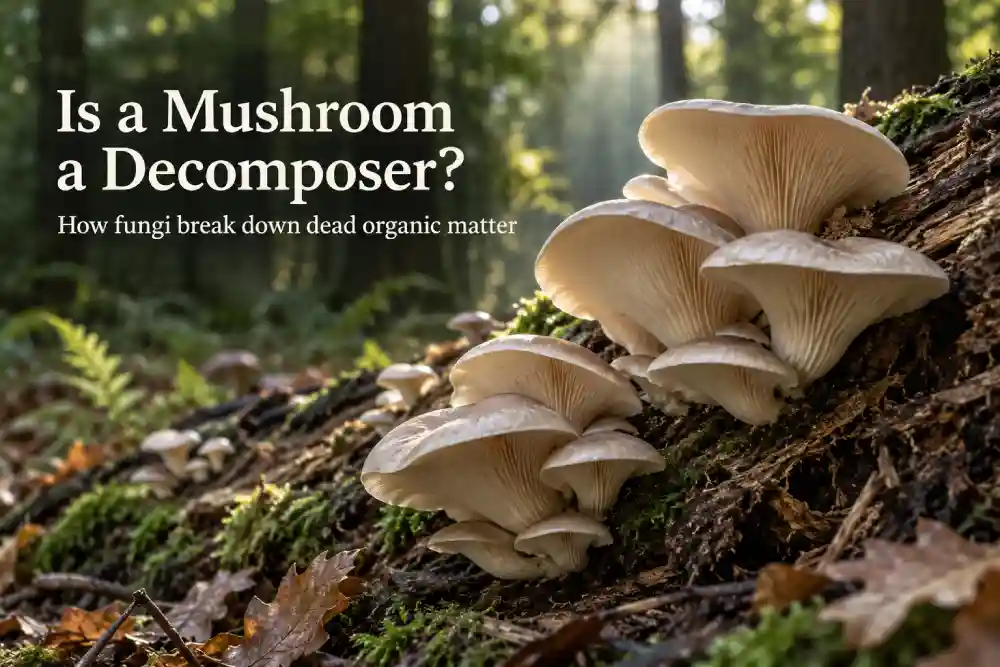
Is a Mushroom a Decomposer? Yes, many mushroom-forming fungi are decomposers. They break down dead wood, fallen leaves and other organic material, helping...