Galerina marginata: Identification, Features, Habitat & Safety Guide (Small Brown Poisonous Mushroom)

Nathan Cole
Mycologist · Author · Fungi Expert
Updated
Apr 11, 2026
Galerina marginata, commonly known as the Funeral Bell, is a small brown poisonous mushroom that contains deadly amatoxins, the same toxins found in the Death Cap. Despite its small size, it is extremely dangerous and often confused with edible mushrooms like honey fungus (Armillaria). It can be identified by its brown cap, brown gills, thin stem, and growth on wood. Because of its similarity to edible species, accurate mushroom identification — including habitat, cap, gills, and stem — is critical. Using a mushroom identifier can help analyze these features, but expert confirmation is always required.
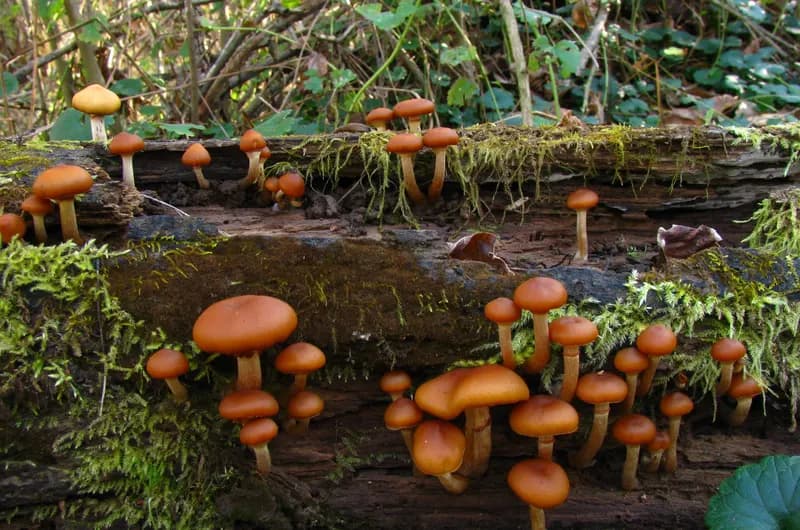
Galerina marginata Identification Summary
Galerina marginata Family and Species
Kingdom
Fungi
Division
Basidiomycota
Class
Agaricomycetes
Order
Agaricales
Family
Hymenogastraceae
Genus
Galerina
Species
Galerina marginata
Unlike Amanita species, this mushroom belongs to a different family but shares the same deadly toxin group (amatoxins), making it equally dangerous. For more on deadly Amanita toxins, see our guide on Amanita phalloides (Death Cap).
Galerina marginata Dimensions
Cap diameter
1–5 cm
Stem height
2–7 cm
Stem thickness
Very thin (0.2–0.6 cm)
This is a small, delicate mushroom, often overlooked or mistaken for harmless species.
Galerina marginata Key Features (Identification Characteristics)
Cap (Pileus)
- Color: Yellow-brown to reddish-brown
- Shape: Convex → flat
- Surface: Smooth, slightly sticky when moist
Cap color may change depending on moisture (hygrophanous).
Gills (Lamellae)
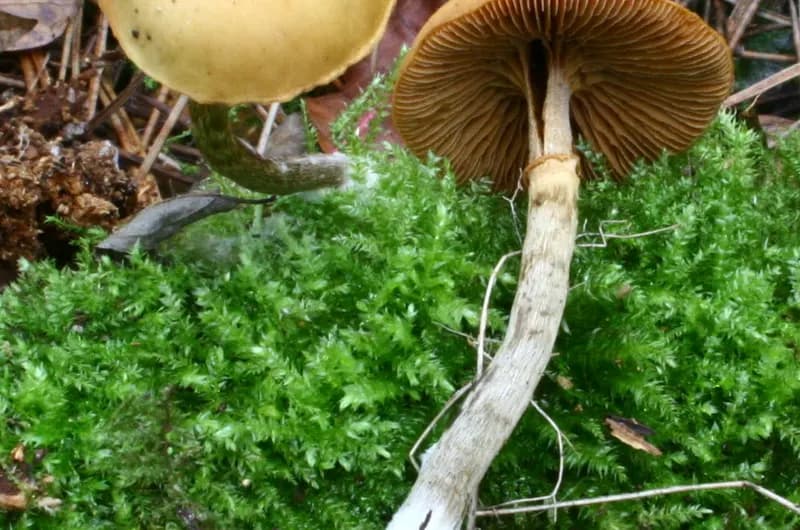
- Color: Yellowish → brown → rusty brown
- Attachment: Attached to stem
- Density: Moderately spaced
Stem (Stipe)
- Thin and fragile
- Brownish or pale
- May have a faint ring zone
Ring (Annulus)
- Often faint or absent
- May appear as a subtle band
Volva
- ❌ Absent
This distinguishes it from Amanita species, which have a volva. Learn more about these structures in our mushroom parts explained guide.
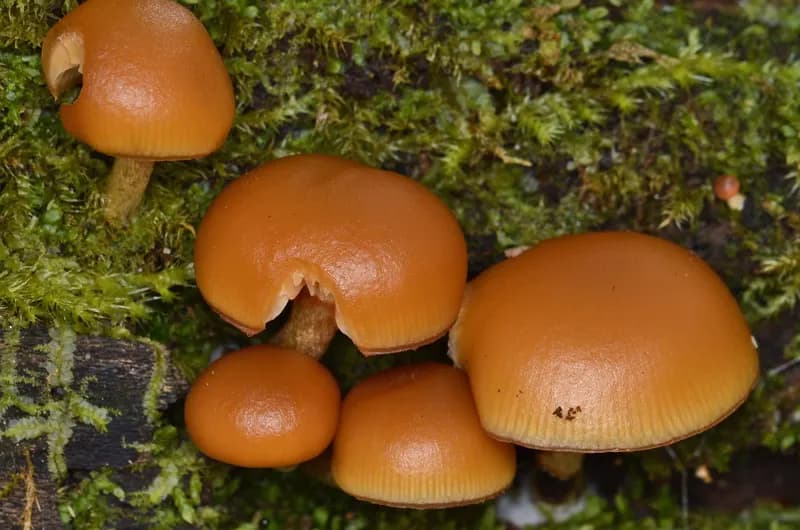
Galerina marginata Color, Smell, and Taste
Color
- Cap: Brown to orange-brown
- Gills: Brown
- Stem: Pale brown
Smell
- Mild or slightly earthy
- Not distinctive
Taste
Never taste — deadly toxic. This mushroom contains the same amatoxins as the Death Cap.
Galerina marginata Growth Pattern and Seasonality
Growth Pattern
- Grows in clusters or small groups
- Found on wood (key identifier)
Seasonality
- Spring to autumn
- Can appear year-round in mild climates
Galerina marginata Habitat, Environment & Distribution
Habitat
- Decaying wood
- Logs, stumps, tree roots
Environment
- Moist forest areas
- Shaded woodland
Substrate (Important Identifier)
- Dead hardwood
- Conifer wood
- Moss-covered logs
Geographic Distribution
- North America
- Europe
- Asia
- Found worldwide
Galerina marginata Edibility, Safety & Risk Level
Is it Edible?
❌ No — deadly poisonous. Galerina marginata is one of the most dangerous small mushrooms in the world.
Risk Level
🔴 Deadly
Toxicity
Contains amatoxins, which:
- Destroy liver cells
- Cause kidney failure
- Lead to fatal poisoning
Symptoms
- Delayed onset (6–24 hours)
- Vomiting and diarrhea
- Temporary recovery
- Severe liver failure
Immediate medical care is critical. The delayed onset of symptoms makes this mushroom especially treacherous.
Galerina marginata Similar Species (Look-Alikes Comparison)
| Feature | Galerina marginata | Honey Fungus (Armillaria) |
|---|---|---|
| Cap | Brown, small | Yellow-brown |
| Gills | Brown | White |
| Habitat | Wood | Wood |
| Toxicity | Deadly | Edible |
| Ring | Weak or absent | Prominent |
Common Confusions
- Honey fungus (Armillaria)
- Small brown mushrooms ("LBMs" — little brown mushrooms)
- Other wood-growing fungi
Small Brown Mushroom Danger Explained
Galerina marginata is especially dangerous because:
- It looks like many harmless small brown mushrooms
- It grows in clusters like edible species
- It shares habitat with edible fungi
Small brown mushrooms are among the hardest to identify safely. When in doubt, never consume any LBM (little brown mushroom).
Economic Value and Uses
No Edible Value. This mushroom has no safe culinary use.
Scientific Importance
- Studied in toxicology
- Helps understand amatoxin poisoning
- Important in forensic mushroom identification
Benefits and Value
- Research value in medical science
- Helps improve mushroom safety awareness
Galerina marginata Pros and Cons
✅ Pros
- Scientifically important
- Helps study toxic compounds
- Part of forest ecosystem
❌ Cons
- Extremely toxic
- Easily confused with edible mushrooms
- Responsible for fatal poisonings
How Our Mushroom Identifier Helps Identify Galerina marginata?
Our free mushroom identifier app uses AI and image recognition to analyze:
- Cap color and size
- Gill color progression
- Stem structure
- Growth on wood
By combining these features, the tool helps distinguish Galerina marginata from edible look-alikes, reducing risk. For more on deadly Amanita lookalikes that share similar toxins, see our Death Cap vs Destroying Angel comparison guide.
Frequently Asked Questions
What is Galerina marginata?
Galerina marginata is a small brown poisonous mushroom known as the Funeral Bell, found on decaying wood.
Is Galerina marginata deadly?
Yes, it contains amatoxins and can cause fatal poisoning.
How do I identify Galerina marginata?
Look for a small brown mushroom growing on wood with brown gills and a thin stem.
What mushrooms look like Galerina marginata?
It is often confused with honey fungus (Armillaria) and other small brown mushrooms.
Can AI identify Galerina marginata?
Yes, a mushroom identifier app can analyze features, but results must always be verified.
Final Thoughts
Galerina marginata (Funeral Bell) is one of the most dangerous small brown mushrooms due to its deadly toxins and similarity to edible species. Its growth on wood and brown coloration make it particularly easy to misidentify.
Understanding its cap, gills, stem, habitat, and growth pattern is essential for safe identification. While a mushroom identifier can assist, it should always be used alongside expert knowledge.
Golden rule: Never consume small brown mushrooms unless absolutely certain of identification.
Sign in to leave a comment and join the discussion.