Death Cap vs Destroying Angel: Key Differences, Identification & Safety Guide

Nathan Cole
Mycologist · Author · Fungi Expert
Updated
Mar 31, 2026
The difference between the Death Cap (Amanita phalloides) and the Destroying Angel (Amanita bisporigera, Amanita virosa) comes down to cap color, shape, and subtle structural features — but both are among the most deadly toxic mushrooms in the world.
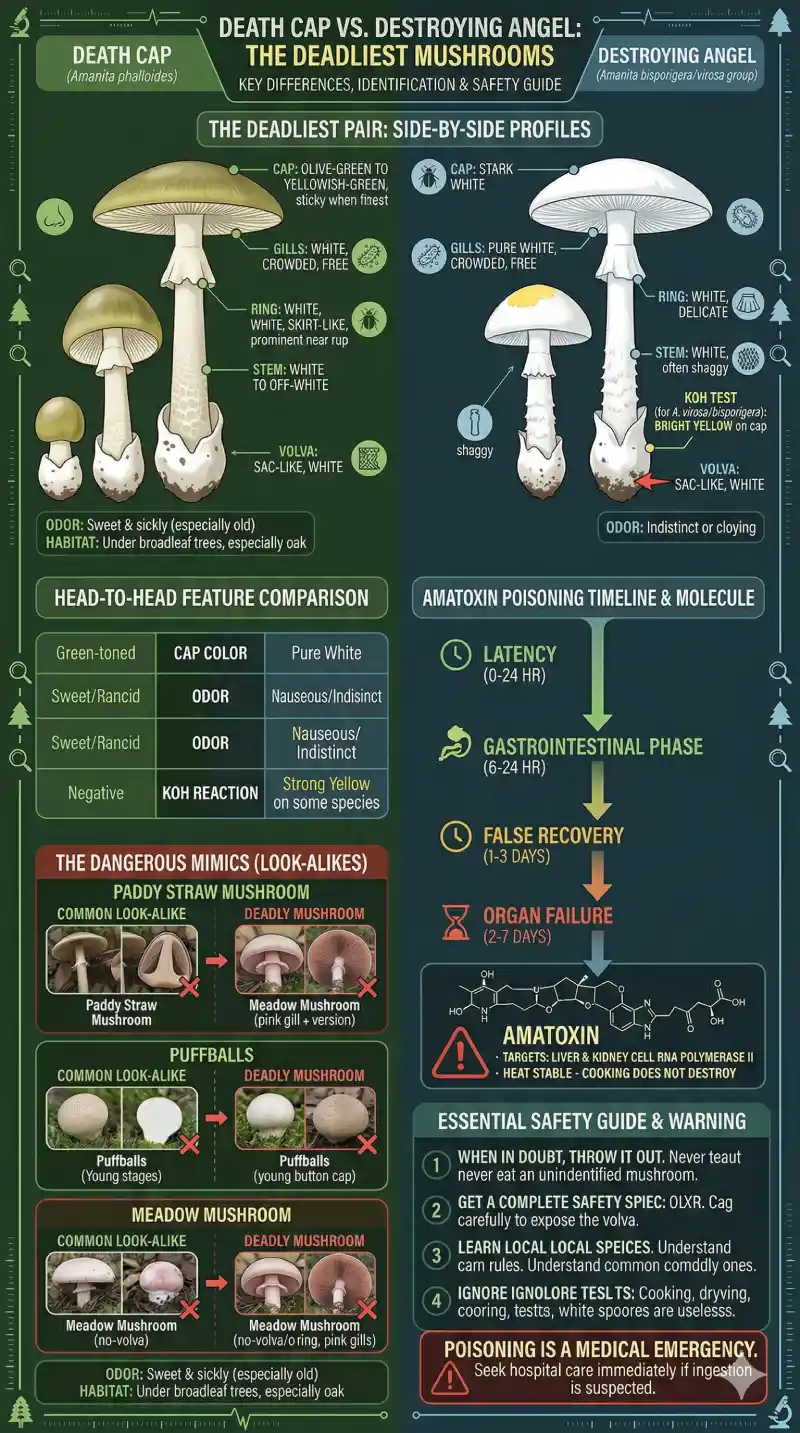
The Death Cap typically has a greenish or olive cap, while Destroying Angels are usually pure white. However, both share dangerous traits like white gills, a ring (annulus), and a volva (basal cup), making them extremely easy to confuse with edible mushrooms. Accurate identification requires analyzing multiple mushroom parts together — not just appearance — which is why tools like a mushroom identifier use AI to compare features such as cap, gills, stem, and habitat.
Introduction: Why Comparing Death Cap and Destroying Angel Matters
What Are Death Cap and Destroying Angel Mushrooms?
The Death Cap and Destroying Angel belong to the Amanita genus within the Amanitaceae family, a group known for containing some of the most toxic fungi in the Kingdom Fungi. These mushrooms are part of the fungal fruiting body, which grows above ground to release spores, while the main organism exists underground as mycelium.
- Death Cap (Amanita phalloides) → greenish or pale cap
- Destroying Angel (Amanita bisporigera, Amanita virosa) → pure white
Despite visual differences, both share nearly identical toxic compounds (amatoxins).
Why These Are the Most Dangerous Toxic Mushrooms
Both mushrooms contain amatoxins, which are among the most potent natural toxins in fungi. These compounds:
- Block protein synthesis in cells
- Cause severe liver and kidney failure
- Have delayed symptoms, making early diagnosis difficult
Even small amounts can be fatal, which is why these species are responsible for a large percentage of mushroom poisoning deaths worldwide.
Common Confusion Between Amanita Species
The biggest danger comes from misidentification. Many edible mushrooms share similar traits:
- White or pale caps
- Smooth surfaces
- Growth in similar environments
This makes Amanita species especially risky for beginners.
Importance of Correct Mushroom Identification
Correct identification depends on combining key mushroom anatomy features:
- Cap (pileus)
- Gills (lamellae)
- Stem (stipe)
- Ring (annulus)
- Volva (basal cup)
- Habitat and environment
This is exactly how an online wild mushroom identifier works — analyzing multiple features together rather than relying on a single visual clue.
Quick Comparison Table: Death Cap vs Destroying Angel
Side-by-Side Comparison
| Feature | Death Cap (Amanita phalloides) | Destroying Angel (A. bisporigera / virosa) |
|---|---|---|
| Cap Color | Greenish, olive, yellow | Pure white |
| Gills | White, free | White, free |
| Stem | White, bulbous base | White, slender |
| Ring | Present | Present (often fragile) |
| Volva | Large, cup-like | Large, sac-like |
| Smell | Mild or slightly sweet | Mild to unpleasant |
| Habitat | Hardwood forests | Woodland (hardwood + conifer) |
| Risk Level | 🔴 Deadly | 🔴 Deadly |
- Greenish cap → likely Death Cap
- Pure white mushroom → likely Destroying Angel
- Both have white gills + ring + volva → extremely dangerous
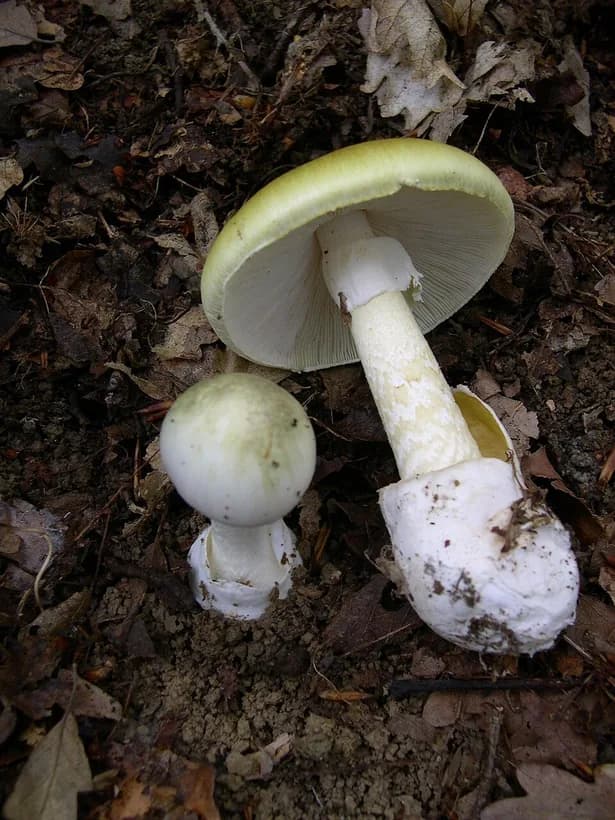
⚠️ Never rely on color alone — always check the base (volva).
Scientific Classification and Taxonomy
Amanita Genus and Amanitaceae Family
Both mushrooms belong to:
- Family: Amanitaceae
- Genus: Amanita
This genus is one of the most important groups in mycology because it contains both highly toxic and visually deceptive species.
Species Breakdown
- Amanita phalloides → Death Cap
- Amanita bisporigera → Destroying Angel (North America)
- Amanita virosa → Destroying Angel (Europe)
Although different species, they share similar morphology, same toxic compounds (amatoxins), and comparable ecological roles.
Role in Mycology and Fungal Classification
In fungal classification, Amanita species are identified by:
- Presence of universal veil → volva
- Presence of partial veil → ring
- White spores and gills
These traits make them critical examples in fungal taxonomy and identification training.
Key Identification Differences (Cap, Gills, Stem, Ring, Volva)
Cap Color and Shape
- Death Cap: greenish, olive, sometimes pale yellow
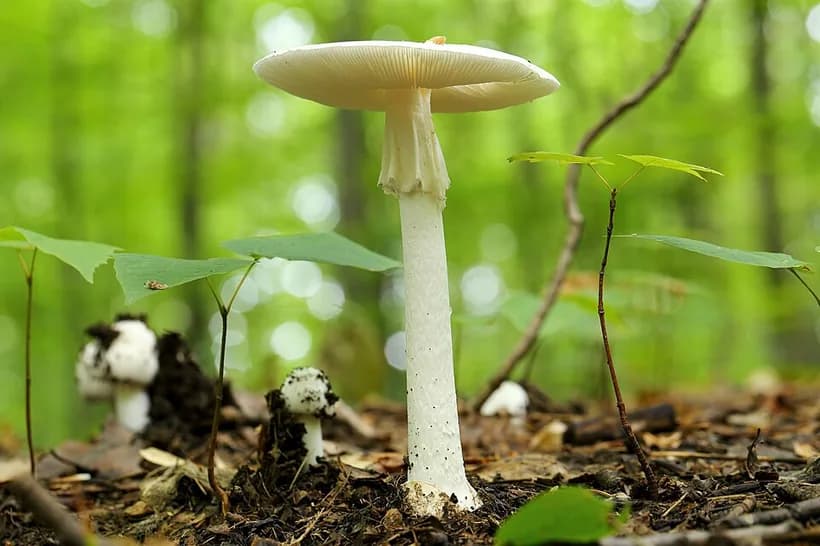
- Destroying Angel: pure white
Cap shape for both: Convex (young) → flat (mature)
Gills (Lamellae)
Both have white, free gills that do not change color with age. This is a key warning sign, especially when compared to edible mushrooms like Agaricus, which have pink → brown gills.
Stem (Stipe) and Base
- Death Cap: thicker stem, bulbous base
- Destroying Angel: slender stem
Both have a basal bulb enclosed in a volva.
Ring (Annulus)
Present in both species — more persistent in Death Cap, more fragile in Destroying Angel.
Volva (Basal Cup) — Most Important Feature
Both species have a volva, which:
- Appears as a cup at the base
- May be hidden underground
- Is the most critical identification feature
Color, Smell, and Visual Differences
Cap Color Variation
- Death Cap → greenish, olive, sometimes pale
- Destroying Angel → consistently white
However, lighting and age can affect appearance.
Smell Differences
- Death Cap → mild, slightly sweet
- Destroying Angel → faint or unpleasant
Smell is helpful but not always reliable.
Appearance at Different Growth Stages
Both species change shape as they grow:
- Young → egg-shaped (enclosed in veil)
- Mature → cap opens, ring visible
- Old → structures degrade
At early stages, both can look like white eggs, making them easily confused with edible species.
Habitat, Environment & Geographic Distribution
Understanding where these mushrooms grow is a powerful clue in mushroom identification. Both Death Cap and Destroying Angel are mycorrhizal fungi, meaning they form symbiotic relationships with tree roots.
Death Cap Habitat (Amanita phalloides)
Primarily found in hardwood forests, commonly associated with:
- Oak trees
- Beech
- Chestnut
Grows in moist, nutrient-rich soil.
Geographic Distribution — Death Cap
- Native to Europe
- Widely spread in North America
- Found in Australia and parts of Asia
It has expanded globally due to human activity, especially through tree planting.
Destroying Angel Habitat (Amanita bisporigera / virosa)
Found in woodlands and forests, associated with both:
- Hardwood trees (oak, birch)
- Conifer trees (pine, spruce)
- Amanita bisporigera → North America
- Amanita virosa → Europe and parts of Asia
Environmental Conditions
Both species prefer shaded forest environments, moist soil conditions, and areas with organic matter and tree roots.
Key Habitat Differences
| Feature | Death Cap | Destroying Angel |
|---|---|---|
| Tree Preference | Mostly hardwood | Hardwood + conifer |
| Distribution | Global spread | Region-specific species |
| Habitat | Dense forests | Mixed woodland |
Growth Pattern and Seasonality
Growth Pattern
Both mushrooms typically grow single or scattered, occasionally in small groups, rarely in dense clusters. This differs from some edible mushrooms that grow in large groups.
Seasonality
Late summer to autumn is the main season. Growth increases after rainfall and warm temperatures.
Climate Influence
Fruiting depends on soil moisture, temperature fluctuations, and seasonal rainfall. This is why sightings often spike after rain followed by warm days.
Toxicity Comparison: Which Is More Dangerous?
Amatoxins and Their Effects
Both mushrooms contain amatoxins, which are among the most dangerous natural toxins. These toxins:
- Block RNA polymerase II
- Stop protein production in cells
- Lead to cell death, especially in the liver
Effects on the Human Body
- Severe liver damage
- Kidney failure
- Internal bleeding
- Organ shutdown
Even a small amount can be fatal.
Symptoms of Poisoning
Symptoms appear in stages:
Which Is More Dangerous?
Similar Edible Look-Alikes and Misidentification Risks
One of the biggest dangers is confusing these mushrooms with edible species.
Common Edible Look-Alikes
- Agaricus species (field mushrooms)
- Puffballs (when young)
- Some white woodland mushrooms
Why Misidentification Happens
- Similar cap color (white or pale)
- Smooth appearance
- Growth in similar environments
Key Differences from Edible Mushrooms
| Feature | Amanita (Toxic) | Agaricus (Edible) |
|---|---|---|
| Gills | White | Pink → brown |
| Volva | Present | Absent |
| Smell | Mild / unpleasant | Pleasant |
| Risk | Deadly | Safe |
How to Safely Identify Death Cap vs Destroying Angel
Step-by-Step Identification Checklist
Before identifying any mushroom:
Why the Volva is Critical
The volva (basal cup) confirms Amanita genus, is often hidden underground, and is the most reliable safety feature. Always expose the base before identifying.
Combine Multiple Features
Never rely on one trait. Always combine: Cap + gills, Stem + ring, Volva + habitat. This multi-feature approach is essential for accurate mushroom identification.
How a Mushroom Identifier Helps Distinguish Them
Modern tools like a mushroom identifier use AI and image recognition to analyze:
- Cap color and texture
- Gill structure (white, free gills)
- Stem and ring presence
- Volva at base
- Habitat and environment
How AI Improves Identification
- Compares features with thousands of fungal species
- Detects patterns humans may miss
- Reduces confusion between look-alike mushrooms
Limitations of AI
What to Do If You Suspect Poisoning
Early Warning Signs
- Vomiting
- Diarrhea
- Abdominal pain
Emergency Steps
🚨 Emergency Protocol
- Seek immediate medical help — do not wait
- Do not induce vomiting unless instructed
- Inform doctors about mushroom exposure
- Bring a sample of the mushroom if safe to do so
Why Immediate Action Matters
Because symptoms are delayed, internal damage may already be severe before you feel sick. Early treatment is the only thing that can prevent fatal organ failure.
FAQ: Death Cap vs Destroying Angel
What is the difference between Death Cap and Destroying Angel?+
The main difference is cap color — Death Cap is greenish, while Destroying Angel is pure white. Both share deadly traits like white gills, ring, and volva.
Which mushroom is more dangerous?+
Both are equally dangerous because they contain the same amatoxins and can be fatal.
How can I identify a Destroying Angel?+
Look for a pure white mushroom with white gills, a ring, and a volva at the base, typically in forest environments.
Can AI identify toxic mushrooms?+
Yes, a mushroom identifier app can analyze features, but results must always be verified by experts.
Where do Death Cap mushrooms grow?+
They grow in hardwood forests, especially near oak, beech, and chestnut trees.
See It in the Wild
A real-world look at these deadly mushrooms — shared on Instagram to help foragers recognize the danger in the field.
Final Thoughts
The comparison between Death Cap and Destroying Angel highlights how small visual differences can hide extreme danger. Both mushrooms share critical traits — white gills, ring, volva, and deadly amatoxins — making them among the most hazardous fungi in the world.
Learning their differences, habitat, and structure is essential for safe identification. While tools like a mushroom identifier can help analyze features, they should always be used alongside expert knowledge. Ready to put your knowledge to the test? Try our mushroom identification quiz to see how well you can distinguish deadly Amanita species from safe look-alikes.
 GeneralYard Guide
Mushrooms grow in your yard because underground fungi (mycelium) are actively breaking down organic matter in moist, shaded soil.
 GeneralLawn Guide
Remove lawn mushrooms fast by fixing moisture, drainage, and organic matter. Full step-by-step guide to stop mushrooms coming back.
 GeneralGuide
A mushroom identifier book helps you recognize fungi by cap shape, gills, habitat, season and spore print. Find the best field guide for your skill level.
Sign in to leave a comment and join the discussion.