Agaricus campestris (Meadow Mushroom) – Identification, Edibility & Lookalikes

Nathan Cole
Mycologist · Author · Fungi Expert
Updated
Apr 11, 2026
What is Agaricus campestris?
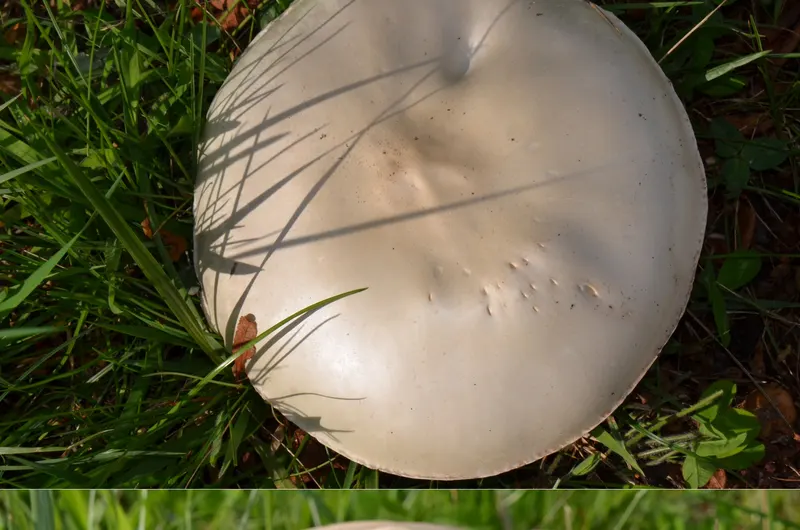
Agaricus campestris, commonly known as the meadow mushroom or field mushroom, is a widely recognized edible wild mushroom found in grasslands, pastures, and open fields. It belongs to the same genus as the cultivated Agaricus bisporus and is prized for its mild flavor and culinary versatility.
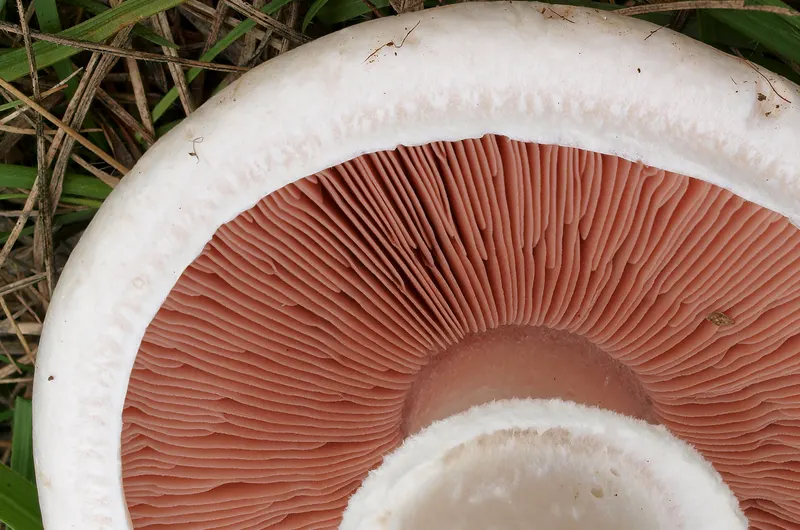
For identification, the key features include white caps, pink gills that turn chocolate-brown with age, and a pleasant mushroom aroma. However, it can be confused with toxic species in the same genus, so accurate identification is essential. Beginners should combine field knowledge with a mushroom identifier tool or AI mushroom identification app to safely confirm species before consumption.
Scientific Classification & Taxonomy
Kingdom
Fungi
Phylum
Basidiomycota
Class
Agaricomycetes
Order
Agaricales
Family
Agaricaceae
Genus
Agaricus
Species
Agaricus campestris
Closely related to both edible and toxic Agaricus species. Correct identification within this genus is critical. See also our guide on Agaricus arvensis (Horse Mushroom) — another edible species in the same genus.
Key Features (Identification Essentials)
Cap Characteristics
- Color: White to slightly creamy
- Shape: Convex → flat with age
- Surface: Smooth, sometimes slightly silky
- Size: 5–10 cm diameter
Gills (Important Feature)
- Start pink → turn dark brown (chocolate)
- Free from the stem
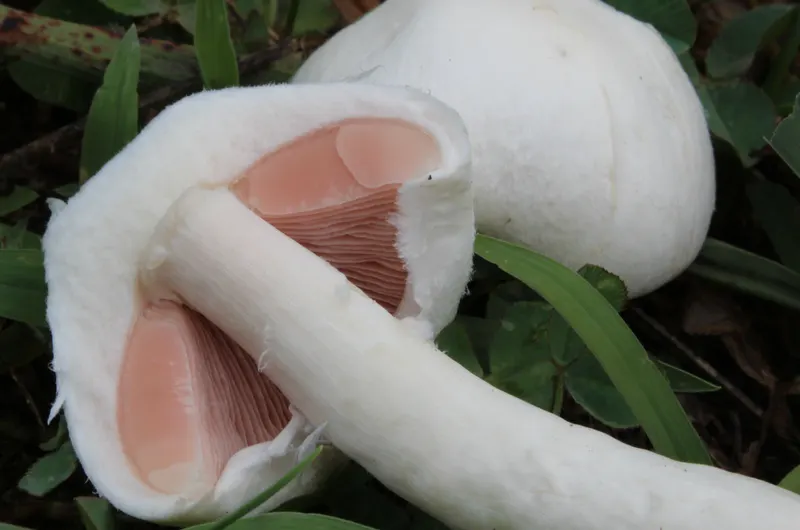
Stem (Stipe)
- Short, sturdy
- White with a small ring (annulus)
- Smooth surface
Overall Appearance
- Clean white mushroom with pink-to-brown gills
- Grows in open grassy areas
Color, Smell & Taste
- Color: White cap, pink → brown gills
- Smell: Pleasant, mushroom-like
- Taste: Mild and nutty (when properly identified and cooked)
- Texture: Firm but tender
Never taste wild mushrooms unless you are certain of identification.
Environment & Habitat
Habitat & Distribution
Found worldwide:
- Europe
- North America
- Asia
- Australia
Common in:
- Meadows
- Pastures
- Lawns
- Grasslands
Seasonality
- Spring to autumn
Growth Pattern
- Grows in groups
- Grows in rings (fairy rings)
- Prefers nutrient-rich soil
Physical Dimensions & Structure
Cap Diameter
5–10 cm
Stem Height
3–7 cm
Stem Thickness
1–2 cm
Gills
Free, crowded
Edibility & Nutritional Value
Yes — Agaricus campestris is edible and highly regarded as a wild food mushroom.
Culinary Uses
- Frying, grilling, soups
- Similar taste to button mushrooms
Nutritional Benefits
- Rich in protein
- Contains B vitamins
- Low in calories
Risk Level Assessment
Similar Species (Critical Comparison)
Dangerous Lookalikes
| Feature | Meadow Mushroom | Toxic Agaricus Species |
|---|---|---|
| Smell | Pleasant | Chemical/phenol-like |
| Staining | Minimal | Yellow staining |
| Gills | Pink → brown | Similar but with warning signs |
| Edibility | Safe | Toxic |
Common Confusion Species
- Agaricus xanthodermus (toxic — yellow-staining mushroom)
- Amanita virosa (deadly — Destroying Angel)
Key rule: avoid white mushrooms with white gills (possible Amanita). Meadow mushrooms always have pink to brown gills, never white.
Growth Pattern & Life Cycle
Ecological Role
- Saprotrophic
- Breaks down organic matter
- Improves soil fertility
Life Cycle
- Spore release
- Mycelium spreads in soil
- Fruiting body develops
- Spores disperse
Regions Where It Is Found
- 🇬🇧 United Kingdom
- 🇺🇸 United States
- 🇪🇺 Europe
- 🇦🇺 Australia
- 🌏 Worldwide in temperate regions
Economic & Ecological Value
Ecological Importance
- Supports nutrient recycling
- Enhances soil ecosystems
Economic Value
- Edible wild mushroom
- Used in local foraging and markets
Pros and Cons
✅ Pros
- Edible and tasty
- Widely available
- Nutritionally beneficial
❌ Cons
- Easily confused with toxic species
- Requires careful identification
- Not suitable for beginners without guidance
How to Identify Agaricus campestris Safely?
Step-by-Step Identification
- Check pink gills (young stage)
- Confirm gills turn brown with age
- Smell → pleasant, not chemical
- Look for growth in grasslands (not woods)
Always confirm with a mushroom identification app or AI-based mushroom identification system for safer results. This helps reduce misidentification risks and supports beginners.
Expert Identification Tips
- Never pick mushrooms with white gills in grass (possible deadly species)
- Check for yellow staining (avoid if present)
- Smell is a key identifier
- Use multiple features together
For understanding mushroom structures like gills, stems, and rings in detail, read our mushroom parts explained guide. And to learn how deadly lookalikes compare, see our Death Cap vs Destroying Angel comparison.
Frequently Asked Questions
Is Agaricus campestris safe to eat?
Yes, but only if correctly identified. It can be confused with toxic species.
What does it taste like?
Mild, similar to store-bought mushrooms.
How do I tell it apart from toxic species?
No yellow staining, pleasant smell, and pink to brown gills.
Can beginners forage it safely?
Only with proper knowledge or guidance.
Where does it grow?
In meadows, lawns, and grasslands.
Can AI identify meadow mushrooms?
Yes, AI tools can help, but always verify manually.
Final Thoughts
Agaricus campestris is a classic edible wild mushroom valued for its taste and availability. However, its resemblance to toxic species makes accurate identification essential.
By understanding its gill color progression, smell, and habitat, and combining that with a reliable mushroom identifier tool, you can forage more safely and confidently.
Sign in to leave a comment and join the discussion.