Horse Mushroom (Agaricus arvensis): Identification, Features, Habitat & Safety Guide

Nathan Cole
Mycologist · Author · Fungi Expert
Updated
Mar 31, 2026
The Horse Mushroom (Agaricus arvensis) is a large, edible mushroom commonly found in grasslands and pastures. It is known for its white cap, pink-to-brown gills, strong anise-like smell, and prominent ring on the stem. While it is considered edible and popular among foragers, it closely resembles toxic look-alikes such as Agaricus xanthodermus (Yellow Stainer). Correct identification requires examining cap, gills, stem, and other mushroom parts, smell, habitat, and growth pattern, which tools like a mushroom identifier can help analyze using AI and image recognition.
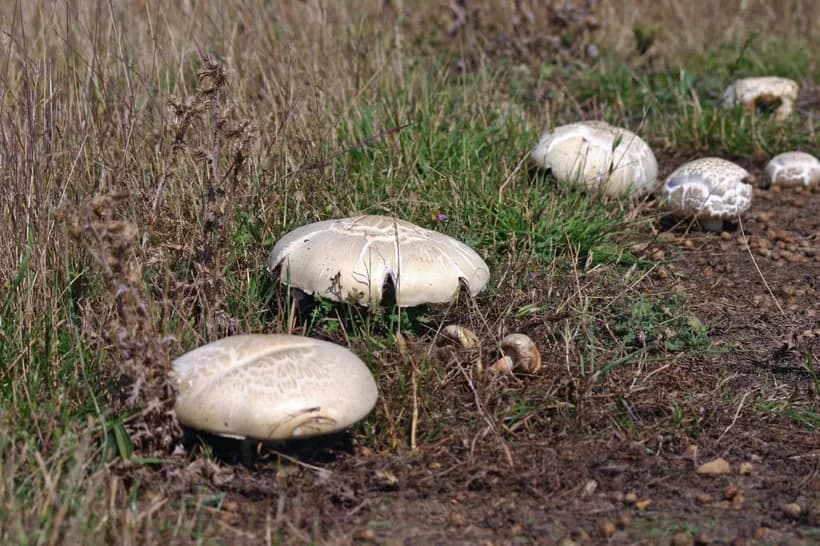
Agaricus arvensis (Horse Mushroom) — large white cap specimen in natural habitat
Source: commons.wikimedia.org/wiki/File:Horse_mushroom_(Agaricus_arvensis).jpg — CC BY 2.0, Rictor Norton & David Allen
Quick Identification Summary
Family and Species
| Rank | Classification |
|---|---|
| Kingdom | Fungi |
| Division | Basidiomycota |
| Class | Agaricomycetes |
| Order | Agaricales |
| Family | Agaricaceae |
| Genus | Agaricus |
| Species | Agaricus arvensis |
The Horse Mushroom belongs to the Agaricaceae family, the same broader group that includes many familiar gilled mushrooms such as Agaricus campestris (field mushroom). Within the genus Agaricus, species are often identified by their pink-to-brown gills, ring on the stem, and lack of a volva — but can still vary in smell, staining reaction, and habitat.
Dimensions
The dimensions of Horse Mushroom are helpful because it is usually larger and more robust than many similar field mushrooms.
Its broad white cap, sturdy stem, and substantial double ring make it a fairly impressive mushroom in grassland habitats. Size alone should never be used for identification, but it supports other features such as gill color, smell, and growth pattern.
Key Features (Identification Characteristics)
Cap (Pileus)
The cap is large, smooth, and white, often becoming slightly yellowish with age.
- Shape: Convex when young → flat when mature
- Surface: Smooth, sometimes slightly scaly
- Size: 8–20 cm wide
- Texture: Dry to slightly silky
Cap color alone is not reliable — always combine with other features.
Gills (Lamellae)
The gills are free from the stem and change color as the mushroom matures.
- Young stage: Pale pink
- Mature stage: Dark brown
- Attachment: Free gills (not touching the stem)
This color progression is a key trait of many Agaricus species.
Stem (Stipe)
- Height: 5–15 cm
- Structure: Solid, slightly bulbous at the base
- Color: White, sometimes yellowish when handled
The stem helps elevate the cap for better spore dispersal.
Ring (Annulus)
One of the most distinctive features of the Horse Mushroom is its large, double ring.
- Thick and hanging (skirt-like)
- Often persistent even in mature mushrooms
- May show a cogwheel-like pattern underneath
Volva (Basal Cup)
Absent in Horse Mushroom — no cup or sac at the base. This helps distinguish it from dangerous species like Amanita phalloides (Death Cap) and Amanita virosa (Destroying Angel), which have a volva.
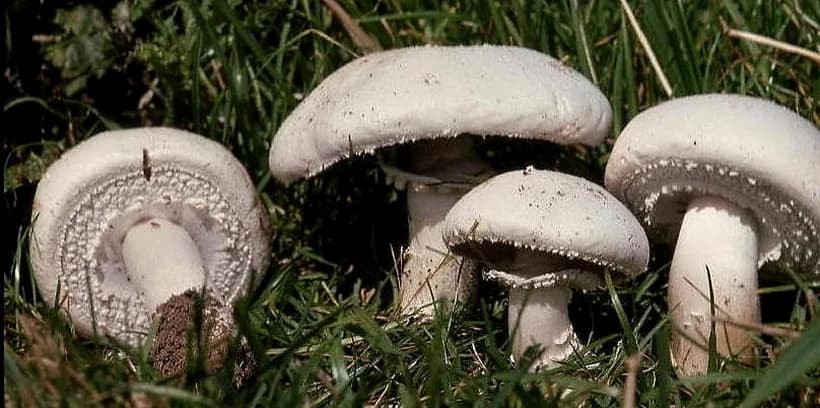
Agaricus arvensis — the distinctive cogwheel (gear-tooth) pattern on the underside of the ring (annulus)
Source: commons.wikimedia.org/wiki/File:A._arvensis_showing_cogwheel.jpg — CC BY 3.0, Frank Gardiner (Zonda Grattus)
Color, Smell, and Taste
🎨
Color
- Cap: White to cream
- Gills: Pink → chocolate brown
- Stem: White
👃
Smell
- Strong anise or almond-like smell
- Most reliable identification feature
- Absent in toxic look-alikes
👅
Taste
- Mild and pleasant
- Only tested by experts
- Never rely on taste alone
Growth Pattern and Seasonality
Growth Pattern
- Found single or in groups
- Often forms fairy rings in grass
Seasonality
- Typically appears in late summer to autumn
- Often after rainfall
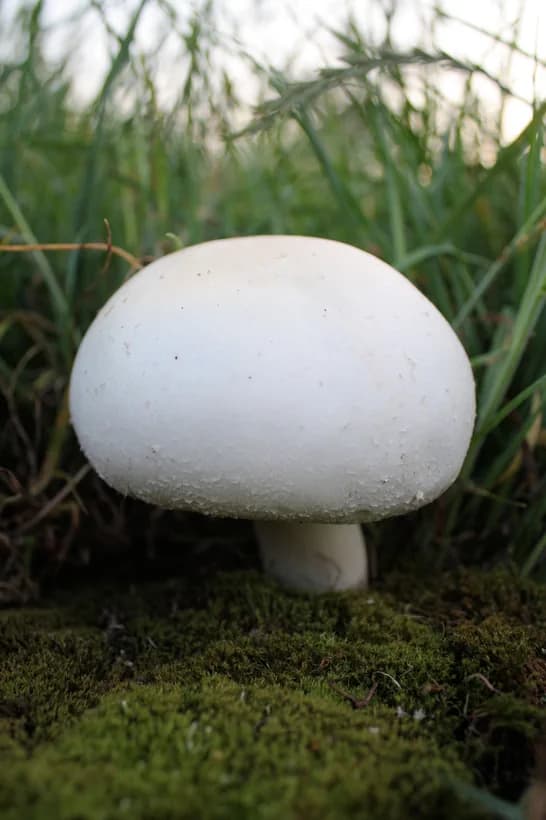
Young Agaricus arvensis specimen — convex cap shape at early growth stage in grassland
Source: commons.wikimedia.org/wiki/File:Pieczarka_polowa_vongrzanka.JPG — CC BY-SA 3.0, Von.grzanka
Habitat, Environment & Distribution
🌿
Habitat
- Grasslands
- Meadows
- Pastures
- Lawns
☀️
Environment
- Open, sunny areas
- Nutrient-rich soil
- Often near grazing land
🌍
Distribution
- Widely found in Europe
- Common in North America
- Present in parts of Asia
It is not typically found in dense forests.
Edibility, Safety & Risk Level
Is it Edible?
Yes, Horse Mushroom is edible and considered high-quality.
Who Should Avoid It
- Beginners without identification experience
- Anyone unsure about identification
- Children and pets should avoid all wild mushrooms
Similar Species (Look-Alikes Comparison)
| Feature | Horse Mushroom | Yellow Stainer (A. xanthodermus) |
|---|---|---|
| Smell | Sweet, anise-like | Chemical, phenol-like |
| Color change | Slight yellowing | Bright yellow staining |
| Edibility | Edible | Toxic |
| Habitat | Grassland | Grassland, urban areas |
Benefits and Value
Horse Mushroom is valued mainly for its culinary quality, nutritional value, and ecological role.
Nutritional and Practical Benefits
- Contains protein, fiber, vitamins, and minerals
- Popular in foraging because of its large size and good texture
- Often appreciated for its pleasant anise-like smell
- Can be used in a range of cooked dishes when correctly identified
Ecological Benefits
- Helps break down organic matter in soil
- Supports nutrient cycling in grassland ecosystems
- Contributes to healthy fungal biodiversity in meadows and pastures
Economic Value and Uses
- Used in culinary dishes
- Sometimes sold in local markets
- Rich in protein, vitamins, and minerals
- Plays a role in ecosystem nutrient recycling
Pros and Cons
Pros
- Edible and nutritious
- Easy to recognize with experience
- Strong smell helps identification
Cons
- Dangerous look-alikes exist
- Requires careful inspection
- Not beginner-friendly
How Our Mushroom Identifier Helps Identify This Species
Our AI-based mushroom identification tool uses computer vision to analyze:
By comparing these features with a database of fungal species, the tool helps reduce confusion between Horse Mushroom and toxic look-alikes.
Frequently Asked Questions
Is Horse Mushroom safe to eat?+
Yes, it is edible, but only when correctly identified. It has toxic look-alikes, so caution is required.
What does Horse Mushroom smell like?+
It has a strong anise or almond-like smell, which helps distinguish it from toxic species like the Yellow Stainer.
Where does Horse Mushroom grow?+
It grows in grasslands, pastures, and open meadows, often forming fairy rings. It is commonly found across Europe, North America, and parts of Asia.
What mushrooms look like Horse Mushroom?+
The main look-alike is Agaricus xanthodermus (Yellow Stainer), which is toxic and smells chemical instead of sweet.
Can AI identify Horse Mushroom?+
Yes, a mushroom identifier app can analyze features like cap, gills, ring, and habitat to suggest matches, but results should always be verified by an expert.
Final Thoughts
The Horse Mushroom (Agaricus arvensis) is a well-known edible species, but it requires careful identification due to similar toxic fungi. Understanding its cap, gills, stem, ring, smell, and habitat is essential for safe recognition.
Using a mushroom identifier alongside field knowledge and a reliable mushroom identification field guide can significantly improve accuracy — helping you explore fungi safely while avoiding dangerous mistakes.
 GeneralYard Guide
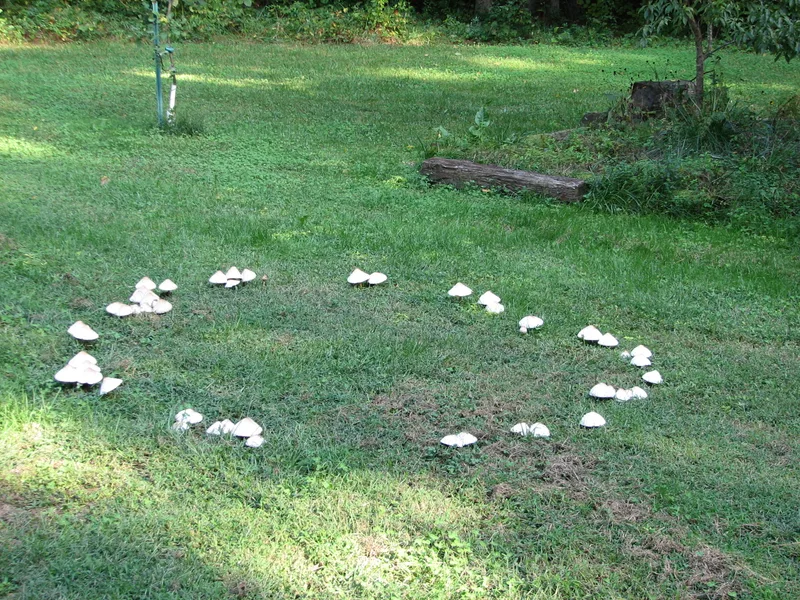
Mushrooms grow in your yard because underground fungi (mycelium) are actively breaking down organic matter in moist, shaded soil.
 GeneralLawn Guide
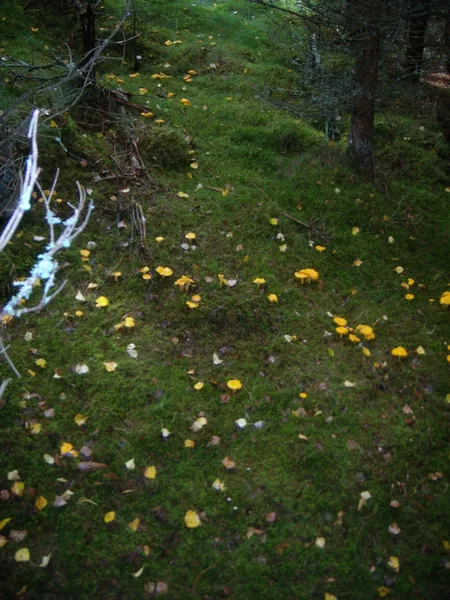
Remove lawn mushrooms fast by fixing moisture, drainage, and organic matter. Full step-by-step guide to stop mushrooms coming back.
 GeneralGuide
A mushroom identifier book helps you recognize fungi by cap shape, gills, habitat, season and spore print. Find the best field guide for your skill level.
Sign in to leave a comment and join the discussion.