Agaricus xanthodermus (Yellow Stainer Mushroom) – Identification, Toxicity & Lookalikes

Nathan Cole
Mycologist · Author · Fungi Expert
Updated
Apr 11, 2026
Agaricus xanthodermus, commonly called the yellow stainer, is a widespread toxic mushroom often mistaken for edible species in the same genus, such as Agaricus bisporus. It is known for its rapid yellow staining when bruised or cut and a distinct chemical or phenol-like smell. Found in gardens, parks, and woodland edges, this species frequently causes gastrointestinal poisoning when accidentally consumed.
If your goal is to identify this mushroom safely, focus on yellow staining at the base, unpleasant odor, and habitat patterns. For beginners and even experienced foragers, using a mushroom identifier tool or AI mushroom identification app can significantly reduce misidentification risks and improve accuracy in the field.
Scientific Classification & Taxonomy
| Kingdom | Fungi |
| Phylum | Basidiomycota |
| Class | Agaricomycetes |
| Order | Agaricales |
| Family | Agaricaceae |
| Genus | Agaricus |
| Species | Agaricus xanthodermus |
Part of the Agaricus genus, which includes both edible and toxic species. The yellow stainer is one of the most commonly encountered toxic members of this genus, making it particularly important to learn for anyone foraging for edible Agaricus species like the field mushroom or button mushroom.
Key Features (Identification Essentials)
Cap Characteristics
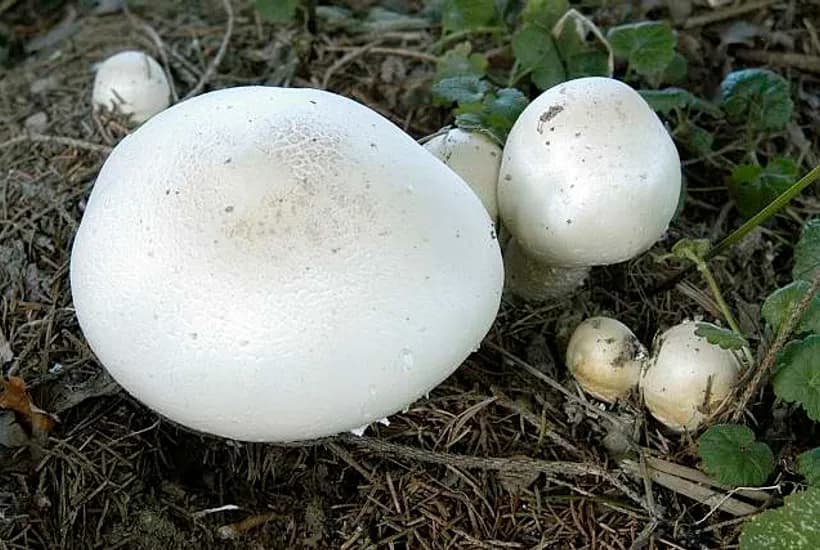
- Color: White to off-white
- Shape: Convex when young, flattening with age
- Surface: Smooth, sometimes slightly scaly
- Size: 5–15 cm diameter
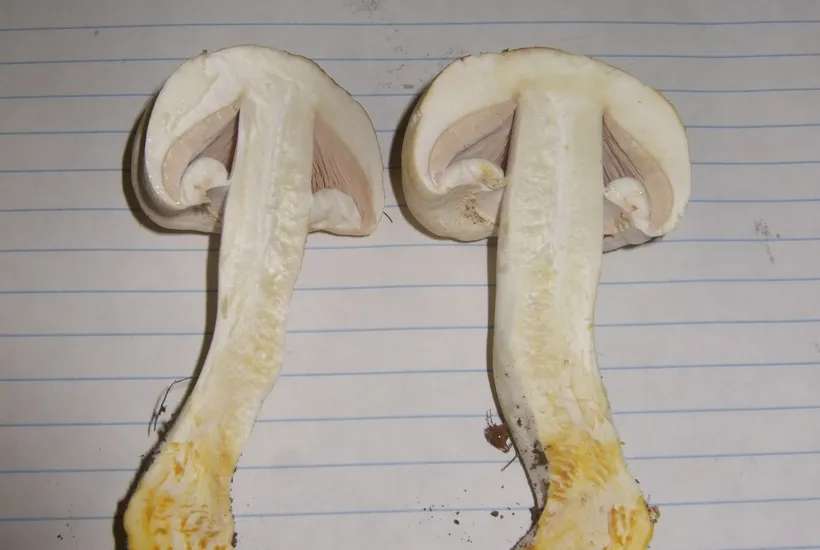
Yellow Staining Reaction (Critical ID Feature)
Bright yellow staining appears:
- At the base of the stem when cut or scratched
- On cap edges when bruised
- Fades to brown over time
Stem (Stipe)
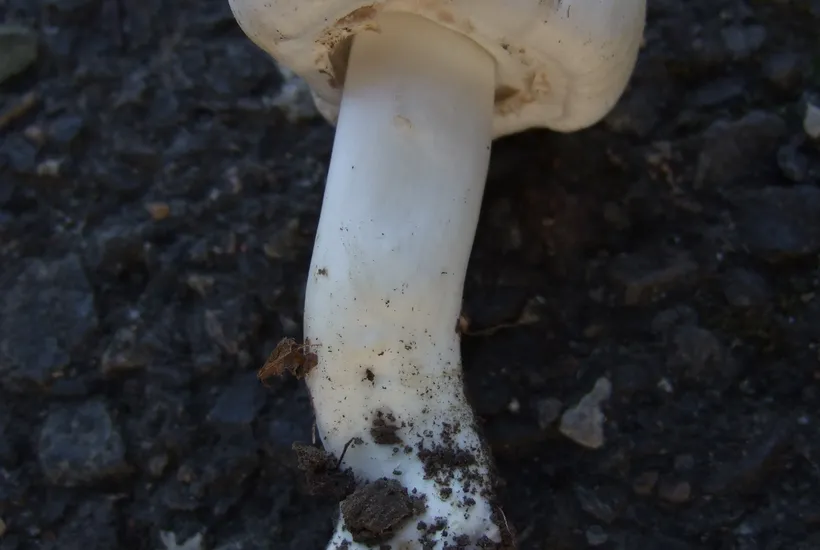
- Color: White, firm, cylindrical
- Base: Enlarged, bulb-like
- Staining: Often shows strong yellow staining when cut at the base
Gills
- Attachment: Free from stem
- Color progression: Pink when young, changing to chocolate brown as spores mature
- Density: Crowded
Smell, Taste & Texture
Smell
- Strong phenol or antiseptic odor
- Chemical, ink-like scent
- More pronounced when cooked
Taste
- Not recommended (toxic)
- ⚠️ Do not taste — causes illness
Texture
- Firm flesh
- Slightly fibrous stem
- Smooth cap surface
Physical Dimensions & Structure
Environment & Habitat
Habitat
- Lawns and gardens
- Parks and roadsides
- Woodland edges
Seasonality
- Late summer to autumn
- Appears after rain periods
Growth Pattern
- Singly or in groups
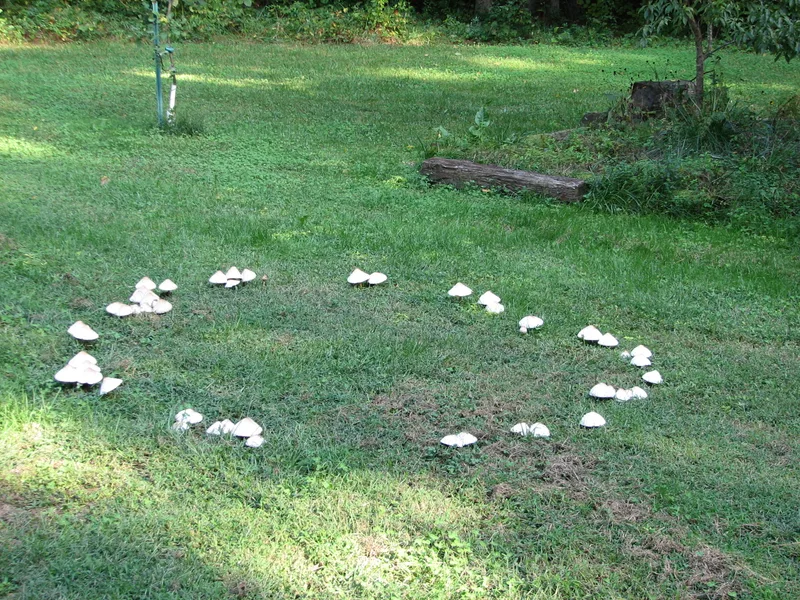
- Sometimes in fairy rings
Geographic Distribution
Toxicity & Health Risks
Toxic Compounds
Contains phenolic compounds that cause gastrointestinal irritation and distress.
Symptoms of Poisoning
- Nausea and vomiting
- Abdominal cramps
- Diarrhea
- General discomfort and sweating
Onset Time
Usually within 30 minutes to 2 hours after ingestion.
Risk Level Assessment
| Toxicity | 🔴 Moderate–High |
| Fatality Risk | 🟠 Low |
| Misidentification Risk | 🔴 High |
| Edibility | ❌ Not edible |
Similar Species (Critical Comparison)
| Feature | Yellow Stainer (A. xanthodermus) | Edible Agaricus (e.g., Button Mushroom) |
|---|---|---|
| Smell | Chemical / phenol | Pleasant, mushroom-like |
| Staining | Bright yellow | Minimal or none |
| Habitat | Lawns, disturbed soil | Cultivated or natural fields |
| Cap Color | White to off-white | White to brown |
| Toxicity | Toxic ☠️ | Edible ✓ |
Common Confused Species
- Agaricus campestris (Field Mushroom) — edible, lacks yellow staining and chemical smell
- Agaricus bisporus (Button Mushroom / Portobello) — edible, commercially cultivated, no yellow staining
- Agaricus arvensis (Horse Mushroom) — edible, may show slight yellowing but smells of anise, not phenol
Growth Pattern & Life Cycle
Ecological Role
- Saprotrophic (decomposes organic matter)
- Plays a role in soil nutrient recycling
Life Cycle
- Spore release from mature gills
- Mycelium growth in soil
- Fruiting body appears in favorable conditions
- Spore dispersal by wind
Economic & Ecological Value
Ecological Importance
- Helps break down organic matter
- Supports soil ecosystems
- Part of the natural nutrient cycle
Economic Value
- No culinary value (toxic)
- Occasionally studied for fungal biology
- Important in mycology education
Pros and Cons
Pros
- ✓ Easy to identify once learned (staining + smell)
- ✓ Important ecological decomposer
- ✓ Widely studied species in mycology
Cons
- ✗ Toxic — causes gastrointestinal illness
- ✗ Commonly misidentified as edible Agaricus
- ✗ Grows in areas where people commonly forage
How to Identify Agaricus xanthodermus Safely
For better accuracy, upload images to our mushroom identifier free by photo tool for AI-powered confirmation. Always cross-check multiple features before deciding on edibility.
Expert Identification Tips
- Always bruise the base to test the yellow reaction
- Avoid relying on appearance alone — many edible Agaricus look similar
- Smell is a key identifier — the phenol odor is unmistakable
- Cross-check multiple features before deciding
Frequently Asked Questions
Is Agaricus xanthodermus edible?+
What does the yellow stainer smell like?+
How do I know if my mushroom is a yellow stainer?+
Can it kill you?+
Where is it commonly found?+
Can AI identify this mushroom?+
Final Thoughts
Agaricus xanthodermus is one of the most commonly encountered toxic mushrooms in everyday environments like gardens and parks. Its resemblance to edible Agaricus species makes it particularly risky for beginners.
Understanding its yellow staining reaction, chemical smell, and habitat is essential for safe identification. Pairing this knowledge with a reliable mushroom identifier tool can help prevent dangerous mistakes and improve foraging confidence.
Learn more about mushroom anatomy and identification features to build your knowledge, or check out our recommended mushroom identification books for in-depth field guides.
 GeneralYard Guide
Mushrooms grow in your yard because underground fungi (mycelium) are actively breaking down organic matter in moist, shaded soil.
 GeneralLawn Guide
Remove lawn mushrooms fast by fixing moisture, drainage, and organic matter. Full step-by-step guide to stop mushrooms coming back.
 GeneralGuide
A mushroom identifier book helps you recognize fungi by cap shape, gills, habitat, season and spore print. Find the best field guide for your skill level.
Sign in to leave a comment and join the discussion.