Mushroom Identifier Book: Best Field Guides, Edible Mushroom Books & Foraging Resources

Nathan Cole
Mycologist · Author · Fungi Expert
Updated
Apr 4, 2026
A mushroom identifier book helps you recognize fungi by combining photos or illustrations with key traits such as cap shape, gills, stem structure, habitat, season, and spore print. The best book for you depends on your goal: a beginner usually needs a visual field guide, a forager needs a safety-focused reference, a cook may want edible species coverage, and a grower benefits from cultivation books. A strong guide does not replace expert confirmation, but it can make mushroom identification more structured, safer, and far more accurate.
What Is a Mushroom Identifier Book?
A mushroom identifier book is a reference designed to help readers identify mushrooms and toadstools by observable features. Unlike a general nature book, it focuses on fungi and the traits that separate one species from another. That usually includes color, cap texture, gill attachment, pores, bruising reaction, smell, habitat, season, and sometimes spore print color. In practical terms, a good mushroom field guide teaches you how to slow down and notice details that matter.
That distinction is important because mushroom identification is rarely based on a single feature. A yellow mushroom is not identified just because it is yellow. A chanterelle, for example, is usually separated from lookalikes by its ridges, growth habit, smell, and habitat, not color alone. Likewise, many dangerous species in the genus Amanita, such as the deadly Death Cap (Amanita phalloides), can appear simple at first glance, but their ring, volva, and overall structure are critical to a safe identification. This is where a proper mushroom identifier book becomes useful: it trains the reader to look at fungi as a combination of related traits rather than as isolated pictures.
Most mushroom books fall into one of several formats. A field guide is usually designed for outdoor use, with portable size, species entries, photos, and quick identification clues. A more advanced reference book may go deeper into taxonomy, fungal morphology, ecological relationships, and regional variation. Some books are visual-first, which makes them good for beginners, while others rely on terminology and structured identification keys, which appeal more to experienced foragers, naturalists, and amateur mycologists.
These books are also connected to broader subjects. Mushroom identification overlaps with mycology, which is the scientific study of fungi. It also overlaps with foraging, ecology, toxicology, cooking, and even gardening. If you are trying to identify a wild mushroom, you are not just looking at an object on the forest floor. You are reading a living organism in its environment: what tree is nearby, whether it is growing on wood or soil, whether it appears in spring or autumn, and whether it grows singly or in clusters. The best books explain those relationships clearly.
For people who search for terms like "mushroom field guide pdf," "wild mushroom guide," or "edible mushroom book," the goal is often practical. They want a trusted guide they can use in real life. Some want to avoid toxic lookalikes. Some want to learn mushroom names with confidence. Others are choosing a gift, buying a foraging companion, or building a home library of fungi books. That is why a useful mushroom identifier page should not only explain what these books are, but also help readers understand which type of guide matches their purpose.
For instant digital identification in the field, our mushroom identifier AI works alongside any printed guide — upload a photo and get an AI-powered species match with toxicity warnings, a useful complement when you need a second opinion fast.
What a good mushroom identifier book usually includes
Types of Mushroom Books
Not every mushroom book serves the same purpose. Some are made for field identification, some for cooking, and some for cultivation. Grouping them by type helps readers avoid buying the wrong guide. Someone searching for a mushroom field guide and someone searching for an edible mushroom recipe book may both use the word "mushroom book," but their needs are completely different.
Reference Books
Reference books are the core of mushroom identification. These are the books most people mean when they search for a mushroom identifier book, wild mushroom guide, or mushroom field guide PDF. Their main job is to help readers observe, compare, and narrow down species using field marks and habitat clues.
A strong reference guide usually covers mushroom morphology in detail. That includes the cap, gills, pores, teeth, stem, ring, and volva, as well as flesh texture, bruising changes, smell, and spore print. It may also organize fungi by genus, family, habitat, or visible form. Some are compact enough to carry outdoors, while others are better suited to home study because of their depth and page count.
Reference books are especially important for identifying dangerous lookalikes. A novice may confuse a false chanterelle with a true chanterelle or overlook the deadly significance of a volva in an Amanita. Good reference guides reduce that risk by showing related species together and explaining why similar mushrooms are not the same.
They also introduce readers to the language of mycology. Terms like pileus, lamellae, stipe, mycelium, spores, and fruiting body may seem technical at first, but they help make identification more precise. Once a reader understands those relationships, books become much easier to use.
Cooking Books
Cooking books focus less on taxonomy and more on edible use. They are for readers who want to know how to clean, prepare, pair, and cook mushrooms. Some center on wild edible fungi such as chanterelles, morels, porcini, and hedgehog mushrooms, while others include cultivated mushrooms like oyster mushrooms, shiitake, chestnut mushrooms, and lion's mane.
A cooking book can still be useful for identification, but that is not its primary job. Its main value lies in helping readers understand flavor, texture, preservation, and recipe use. For example, a culinary mushroom guide might explain why chanterelles pair well with butter and herbs, or how morels should be cooked thoroughly before eating. It may also cover drying, sautéing, pickling, and stock-making.
For commercial search intent, this category matters because many users are not looking for scientific detail. They simply want an edible mushroom book that helps them use mushrooms in the kitchen. That search intent is different from someone seeking a field guide. A good page should separate those needs clearly.
Gardening Books
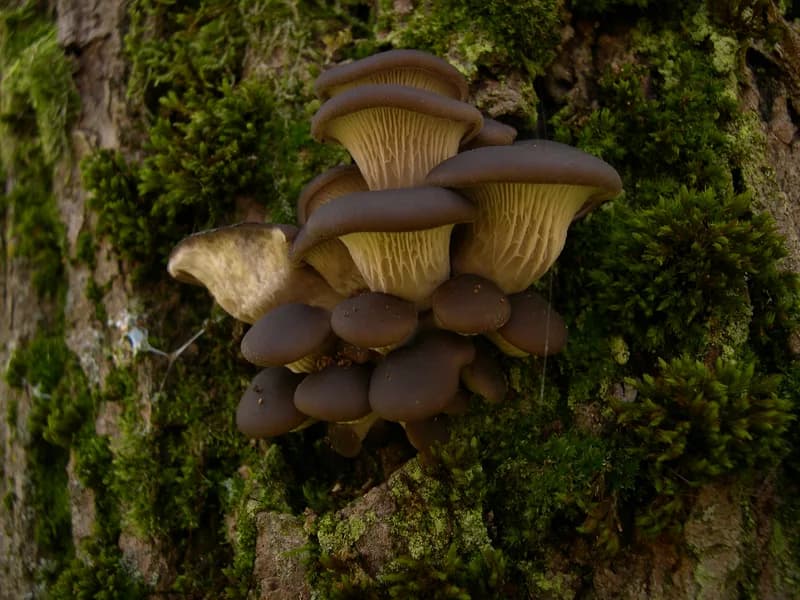
Gardening books are about cultivation rather than identification. These books explain how to grow mushrooms at home, either indoors or outdoors, often using substrates such as straw, sawdust, hardwood logs, compost, or grow kits. They may cover mycelium, spawn, humidity, temperature, incubation, fruiting conditions, contamination, and harvest timing.
This category sits close to mushroom science because growing fungi teaches readers how mushrooms develop from mycelial networks rather than appearing randomly. That ecological connection is useful, even for identification readers, because it deepens understanding of fungal life cycles and habitat preferences. A gardener who grows oyster mushrooms, for instance, starts to understand moisture, substrate, and fruiting triggers in a practical way.
Still, gardening books should not be confused with field guides. A cultivation book may be excellent for producing shiitake on logs or oyster mushrooms on straw, but it may offer very little help when identifying a wild woodland species. That is why separating cultivation from field identification improves the usefulness of your content and helps readers buy the right kind of book.
Quick comparison of the main categories
Best mushroom identification book 2026
The books below fit most closely with the reference and field-guide side of search intent. They are the titles people often compare when they want a practical mushroom book for study, foraging, or gift buying. Since your topic also has commercial intent, it makes sense to present each book with a short introduction, key strengths, possible weaknesses, author details, and price positioning.
Beginner-Friendly Field Guides
An Initial Guide to the Identification of Mushrooms and Toadstools
This title works well as an entry-level option because the wording itself signals a beginner audience. A book framed as an "initial guide" is typically most helpful when a reader wants first-step familiarity rather than expert taxonomy. That makes it especially suitable for readers who are just learning the difference between broad categories such as gilled mushrooms, boletes, brackets, puffballs, and toadstools.
Its likely strength is accessibility. Beginner books are valuable when they reduce intimidation and help readers understand basic anatomy, common species groups, and safe observation habits. That is important in mushroom learning because a new reader can get lost quickly if the guide jumps too fast into technical classification.
✅ Strengths
- • Approachable and less overwhelming
- • Good starting point for new readers
- • Reduces intimidation around fungi learning
- • Covers basic anatomy and common species groups
⚠️ Weaknesses
- • May be too basic for advanced identification
- • Often trades completeness for simplicity
- • Not suitable for difficult species groups or lookalikes
Mushrooms — Roger Phillips
Roger Phillips is widely associated with visually driven nature books, and that matters in mushroom identification. For many readers, photography is the bridge between curiosity and confidence. A mushroom book with strong visual coverage can help users compare cap color, gill structure, stem proportion, and growth habit more effectively than a dense text-heavy guide.
At around £20, this book sits in a practical mid-range for buyers who want a recognizable title without moving straight into specialist pricing. Its biggest strength is likely visual identification support.
✅ Strengths
- • Image-led learning approach
- • Accessible presentation and strong browsing value
- • Mid-range price for recognizable title
- • Good for visual comparison of cap, gills, stem
⚠️ Weaknesses
- • Users may over-rely on photos if not read carefully
- • Lighting and natural variation can change appearance
- • Photography alone is not enough for safe ID
Mushrooms – River Cottage Handbook No. 1
John Wright's River Cottage connection gives this book a practical, usable tone that appeals to readers interested in wild food, foraging, and real-world understanding rather than purely academic study. At £14.99, it is positioned as an affordable and approachable guide for readers who want trusted information without a high entry cost.
One of its likely strengths is balance. Books in this style often sit between field practicality and readable explanation. That makes them attractive to people who want to understand edible mushrooms, foraging basics, and caution around toxic species without reading an overly technical manual.
✅ Strengths
- • Practical and hands-on tone
- • Approachable pricing at £14.99
- • Good balance of field practicality and readable explanation
- • Appeals to readers interested in wild food and foraging
⚠️ Weaknesses
- • May not be comprehensive enough for advanced readers
- • Handbook format may limit very broad species coverage
- • Some users eventually outgrow it for more advanced study
Trusted Classic Mushroom Guides
If you're choosing a reliable mushroom identifier book, classic field guides are the safest and most trusted option. These books combine visual identification, habitat knowledge, and safety rules to help you distinguish edible species like chanterelles and porcini from dangerous lookalikes such as Amanita phalloides. They are widely used by foragers, naturalists, and beginner mycology learners because they balance accuracy, usability, and real-world field application.
Mushrooming With Confidence
Even the title of this book aligns strongly with what many buyers want: not just information, but confidence. In mushroom identification, confidence comes from understanding what details matter and what warning signs should stop you from making assumptions. A book built around that idea is especially attractive to cautious beginners and developing foragers.
This book emphasizes confidence through structured learning, not guesswork. It introduces mushroom identification using clear traits like cap shape, gills, stem structure, habitat, and seasonality.
✅ Strengths
- • Strong focus on safe identification practices
- • Beginner-friendly explanations without heavy taxonomy
- • Covers edible vs toxic lookalikes clearly
- • Confidence-building structure throughout
⚠️ Weaknesses
- • Limited depth in advanced taxonomy
- • Fewer species compared to comprehensive guides
- • May not satisfy readers seeking deep scientific detail
Mushrooms & Toadstools of Britain and Europe
This is a strong value-oriented option for readers with regional interest in Britain and Europe. Geography matters in mushroom identification, and a guide focused on a specific region is often more useful than a broad global title. Species distribution, habitat, and seasonal timing differ across continents, so regional relevance improves practical accuracy.
At £9.99, this is the most budget-friendly title in the list, which gives it strong commercial appeal for entry-level buyers. A low-cost guide can be a smart first purchase for readers who want a portable companion before investing in a larger or more advanced book.
✅ Strengths
- • Affordable and accessible at £9.99
- • Region-specific accuracy for Britain and Europe
- • Portable for outdoor use
- • Covers common species and habitats
⚠️ Weaknesses
- • Limited species depth due to budget format
- • Less detailed comparison for lookalikes
- • Not ideal for advanced identification needs
Field Guide to Mushrooms and Other Fungi of Britain and Europe
This title has a strong regional and practical identity. The phrase "other fungi" also broadens its value beyond classic cap-and-stem mushrooms, which can be useful for readers interested in brackets, puffballs, jelly fungi, cup fungi, and related groups. That wider scope can make a guide feel more complete for nature enthusiasts.
At £7.99, it is a very accessible purchase and easy to position as an affordable entry point. This guide helps readers understand fungi beyond basic mushrooms — including mycelium (underground fungal network), fruiting bodies (visible mushrooms), and spores (reproduction system) — building foundational knowledge for deeper mycology learning.
✅ Strengths
- • Very affordable at £7.99
- • Covers diverse fungi types beyond classic mushrooms
- • Includes brackets, puffballs, jelly fungi, and cup fungi
- • Good introduction to fungal diversity
⚠️ Weaknesses
- • Less detailed species comparison
- • Limited advanced identification support
- • More general than specialist guides
Advanced & Comprehensive Fungi Guides
If you're serious about mushroom identification, advanced field guides offer deeper accuracy, wider species coverage, and stronger long-term value than beginner books. These are ideal for readers who already understand basics like cap (pileus), gills (lamellae), stem (stipe), spores, and habitat, and now want to identify mushrooms with higher confidence — including difficult groups and toxic lookalikes like Amanita phalloides. These guides often include taxonomy (genus/species), detailed comparison keys, ecological relationships, and regional species depth, making them essential for serious foragers and mycology learners.
Collins Complete Guide to British Mushrooms and Toadstools
This Collins title is likely to appeal to readers who want a more serious and structured field reference without stepping into very high specialist pricing. Collins guides are often associated with practical natural history use, and that makes this book attractive for readers who want dependable coverage of British mushrooms and toadstools.
Its major strength is likely completeness relative to price. At £16.99, it appears to offer strong value for readers who want broader species coverage, better comparison depth, and more long-term usefulness than a very basic pocket guide. It should suit intermediate readers well and may also work for motivated beginners who want to start with a stronger reference.
✅ Strengths
- • Wide range of species across Britain
- • Good balance between detail and readability
- • Strong visual and descriptive identification
- • Useful for both home study and field use
- • Combines morphology, habitat, and seasonal patterns
⚠️ Weaknesses
- • Can feel dense for complete beginners
- • Requires some understanding of mushroom terms
- • More detailed than casual readers may expect
Collins Fungi Guide
At £35, this is the premium-priced title in the list, and that immediately positions it differently. Buyers looking at this guide are usually not choosing a casual impulse purchase. They are likely seeking a serious fungi reference with greater authority, deeper coverage, and more staying power in their personal library.
Stefan Buczacki is a well-known name in British natural history and gardening writing, and that kind of author recognition can add trust for buyers. A guide at this level is often best for readers who already know the basics and want more detailed study support, wider species treatment, and better long-term reference value.
✅ Strengths
- • Highly detailed taxonomy and classification
- • Extensive species coverage
- • Strong long-term reference value
- • Authoritative and research-backed
- • Covers genus, species, fungal biology, and ecological relationships
⚠️ Weaknesses
- • Expensive compared to other guides at £35
- • Not beginner-friendly
- • Requires understanding of scientific terminology
Quick comparison table
Which type of buyer each book suits
Best for absolute beginners
An Initial Guide to the Identification of Mushrooms and Toadstools
Best for visual learning
Mushrooms by Roger Phillips
Best value for practical readers
Mushrooms – River Cottage Handbook No. 1 by John Wright
Best for building confidence
Mushrooming With Confidence by Alexander Schwab
Best budget regional choice
Mushrooms & Toadstools of Britain and Europe
Best low-cost entry guide
Field Guide to Mushrooms and Other Fungi of Britain and Europe
Best mid-range serious guide
Collins Complete Guide to British Mushrooms and Toadstools
Best premium reference
Collins Fungi Guide by Stefan Buczacki
How to Choose the Right Mushroom Book
Choosing the right mushroom book depends on your experience level and goal — whether you want to identify mushrooms, cook them, or grow them.
🟢
For Beginners
Choose books that are:
- • Visual (clear images)
- • Simple explanations
- • Focused on common species
Recommended types:
- • Beginner field guides
- • Confidence-based books
Goal: Learn basics like cap, gills, habitat, season
🟡
For Intermediate Users
Choose books that are:
- • More species coverage
- • Comparison between similar mushrooms
- • Habitat and seasonal details
Recommended types:
- • Regional field guides
- • Collins-style guides
Goal: Improve accuracy and reduce mistakes
🔴
For Advanced Users
Choose books that are:
- • Deep taxonomy
- • Scientific classification
- • Detailed species variation
Recommended types:
- • Comprehensive fungi guides
- • Mycology-focused books
Goal: Master identification and understand fungi deeply
Regional Mushroom Field Guides
Mushroom identification depends heavily on location and ecosystem. A mushroom found in Europe may not exist in North America or Asia.
🌍 Why Regional Guides Matter
- • Different climates = different fungi
- • Tree species affect mushroom growth
- • Seasonal timing varies by region
🌲 Key Habitat Entities
- • Deciduous forests (oak, birch)
- • Coniferous forests (pine, spruce)
- • Grasslands and meadows
- • Deadwood and forest floor
Seasonal Mushroom Identification
Mushrooms grow based on seasonal conditions like moisture, temperature, and environment. A good mushroom book always includes seasonal data. To practice recognizing species across different seasons and habitats, try our mushroom identification quiz.
🌸
Spring
- • Morels (highly sought-after edible species)
- • Early woodland fungi
☀️
Summer
- • Lighter growth due to dry conditions
- • Some boletes and woodland species
🍂
Autumn (Peak Season)
- • Chanterelles
- • Porcini
- • Oyster mushrooms
👉 Best season for foraging
❄️
Winter
- • Limited species
- • Some cold-resistant fungi
Frequently Asked Questions
What is the best mushroom identifier book for beginners?
For most beginners, the best book is one with strong visuals, clear warnings, and simple explanations. A beginner often learns faster from an accessible guide than from a highly technical reference. For deeper long-term study, a more complete Collins-style guide can be a good second purchase.
What is the difference between a mushroom field guide and an edible mushroom book?
A mushroom field guide helps identify fungi in nature using morphology, habitat, and season. An edible mushroom book is more focused on safe culinary species, recipes, preparation, and kitchen use. Some overlap exists, but they serve different purposes.
Why do mushroom books still matter in the AI era?
AI mushroom identifier tools and photo-based apps are now common, but books remain valuable because they teach judgment. A photo tool may suggest a likely match, but a good field guide helps you verify the species using multiple traits. That extra step matters because many poisonous mushrooms resemble edible ones. Books also work offline, which is useful in forests, parks, and rural areas where signal is weak.
Can a mushroom book really help beginners?
Yes, a beginner-friendly mushroom book can be extremely helpful, especially one with strong visuals, plain language, and clear warnings. The safest books do not encourage reckless identification. Instead, they teach observation, comparison, and caution. For a beginner, that is far more useful than memorizing names too quickly.
 GeneralYard Guide
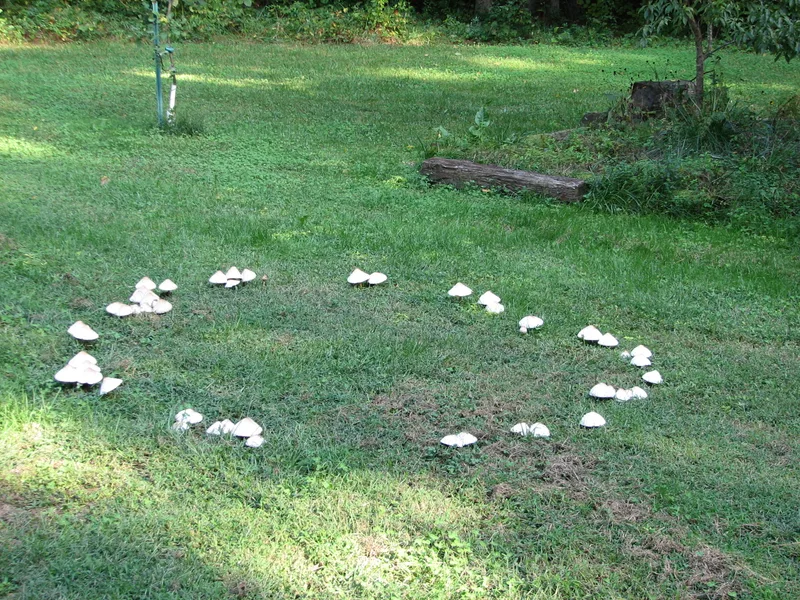
Mushrooms grow in your yard because underground fungi (mycelium) are actively breaking down organic matter in moist, shaded soil.
 GeneralLawn Guide
Remove lawn mushrooms fast by fixing moisture, drainage, and organic matter. Full step-by-step guide to stop mushrooms coming back.
 DeadlySafety
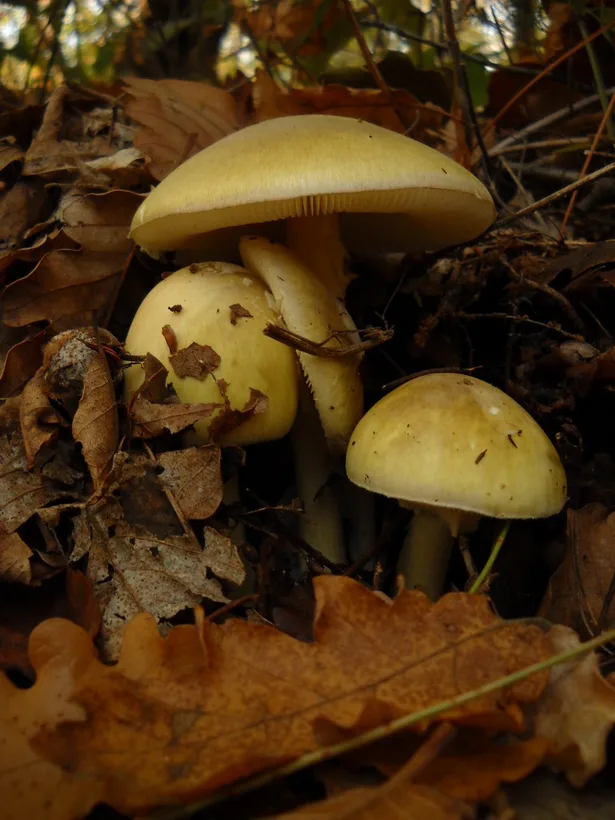
Learn death cap identification by cap color, white gills, ring, volva, and habitat. One of the world's most dangerous toxic mushrooms.
Sign in to leave a comment and join the discussion.