Edible Mushrooms in PA: Pennsylvania Mushroom Identification Guide

Nathan Cole
Mycologist · Author · Fungi Expert
Updated
Jun 1, 2026
Pennsylvania is one of the best regions in the northeastern United States for finding wild edible mushrooms thanks to its hardwood forests, seasonal rainfall, mountain ecosystems, and rich biodiversity. Popular edible species such as Morchella esculenta, Cantharellus cibarius, and Grifola frondosa grow throughout Pennsylvania during different seasons. However, accurate identification is essential because several poisonous mushrooms closely resemble edible species. Understanding mushroom anatomy, habitat, spore prints, and seasonal growth patterns can help beginners forage more safely and confidently.
Wild mushroom hunting has become increasingly popular across Pennsylvania forests, especially in Appalachian woodland regions where fungi thrive in moist leaf litter, fallen hardwood logs, and decaying organic matter. In Mycology, Pennsylvania is considered an excellent region for studying forest fungi because its ecosystems support hundreds of mushroom species throughout spring, summer, and fall.
Why Pennsylvania Is Ideal for Wild Mushroom Growth?
Pennsylvania’s climate and forest ecosystems create ideal conditions for fungi to grow naturally. Warm summers, humid rainfall, dense hardwood forests, and organic-rich soil all contribute to a thriving mushroom environment.
Unlike dry western climates, Pennsylvania woodlands retain moisture for long periods, allowing mushrooms to fruit consistently after rainfall.
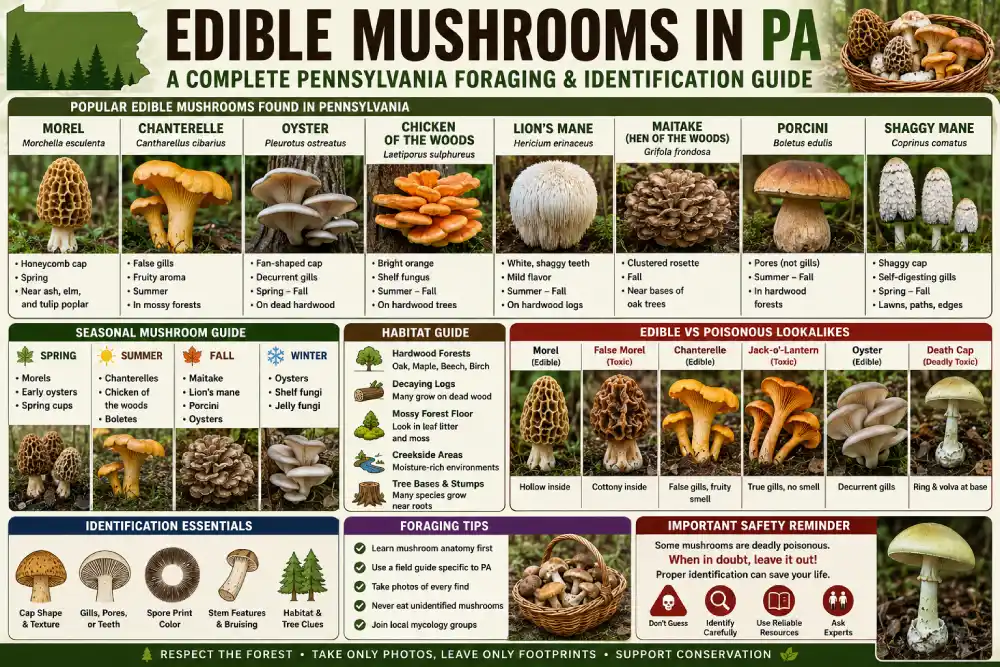
Pennsylvania’s Hardwood Forest Ecosystems
Large portions of Pennsylvania are covered with hardwood forests containing:
- Oak trees
- Maple trees
- Beech forests
- Birch woodlands
- Hemlock areas
These forests create rich fungal habitats filled with decomposing wood, leaf litter, and underground mycelial networks.
Many edible mushrooms form ecological relationships with trees through Symbiosis, exchanging nutrients with tree roots beneath the forest floor.
Rainfall and Humidity Support Mushroom Growth
Mushrooms depend heavily on moisture.
Pennsylvania’s environment provides:
- Frequent rainfall
- Morning humidity
- Moist woodland soil
- Cool shaded forest floors
After warm rainstorms, mushrooms often appear rapidly across trails, logs, and wooded slopes.
Why Appalachian Forests Produce So Many Mushrooms?
The Appalachian region supports diverse fungal populations because of:
- Elevation changes
- Rich organic matter
- Old-growth forests
- Stable moisture levels
- Dense tree coverage
This biodiversity allows many edible fungi to grow naturally across different seasons.
Most Common Edible Mushrooms in Pennsylvania
Pennsylvania forests contain many edible mushroom species prized by foragers, chefs, and nature enthusiasts. Some species grow on dead wood, while others emerge directly from soil near hardwood trees.
Learning the physical features and habitats of common edible species is one of the most important steps for safe mushroom identification.
Morchella esculenta (Morel Mushrooms)
Morels are among the most sought-after wild mushrooms in North America due to their unique appearance and rich earthy flavor.
Key Identification Features
- Honeycomb-like cap texture
- Hollow interior
- Tan to yellow coloration
- Spring fruiting season
Common Habitats
Morels often grow:
- Near dead elm trees
- Around ash trees
- Along creek beds
- In disturbed woodland soil
Because false morels exist, proper identification is extremely important.
Cantharellus cibarius (Chanterelle Mushrooms)
Chanterelles are famous for their fruity aroma and golden-orange coloration.
Key Identification Features
- Forked false gills
- Wavy cap margins
- Apricot-like smell
- Thick flesh
Typical Pennsylvania Habitat
Chanterelles commonly appear:
- In mossy hardwood forests
- Near oak and beech trees
- During humid summer conditions
Pleurotus ostreatus (Oyster Mushrooms)
Oyster mushrooms are one of the easiest edible mushrooms for beginners to recognize.
Key Identification Features
- Fan-shaped caps
- White decurrent gills
- Clustered shelf growth
- Soft texture
Where They Grow
These mushrooms usually grow on:
- Dead hardwood logs
- Fallen tree trunks
- Decaying forest wood
They often appear during cool wet weather in spring and fall.
Pennsylvania Mushroom Identification Guide
Correct mushroom identification requires studying several characteristics together rather than relying on a single visual clue. In Mycology, identification accuracy depends on careful observation of fungal morphology and habitat.
Important Features Used in Mushroom Identification
Cap Shape and Texture
Mushroom caps may appear:
- Smooth
- Sticky
- Dry
- Scaly
- Funnel-shaped
- Convex or flat
Cap texture often changes after rainfall or with age.
Gills, Pores, and Teeth
Different mushrooms produce spores in different ways.
| Structure Type | Description | Example |
|---|---|---|
| Gills | Thin blade-like structures | Oyster mushrooms |
| Pores | Sponge-like holes | Porcini mushrooms |
| Teeth | Hanging spines | Lion’s mane |
| Smooth surfaces | Flat spore-bearing tissue | Some crust fungi |
Why Spore Prints Matter
Spore Print analysis helps separate similar-looking species.
Spore print colors may appear:
- White
- Brown
- Pink
- Black
- Purple-brown
Because poisonous mushrooms sometimes resemble edible species, spore print testing remains one of the most valuable identification methods.
Tree and Habitat Clues
Habitat often provides strong identification hints.
Examples include:
- Morels near dying hardwoods
- Oyster mushrooms on logs
- Maitake near oak tree bases
- Chanterelles in mossy forests
Understanding habitat relationships improves identification accuracy significantly.
Edible vs Poisonous Mushrooms in Pennsylvania
One of the most important parts of mushroom foraging is learning how to recognize dangerous lookalikes. Several toxic mushrooms found in Pennsylvania forests resemble edible species closely enough to confuse beginners.
This is why experienced foragers examine:
- Spore prints
- Gill structure
- Stem features
- Habitat
- Bruising reactions
- Odor and texture
before identifying any wild mushroom.
Amanita phalloides
The death cap is one of the most dangerous mushrooms in the world.
Identification Features
- Pale greenish cap
- White gills
- Ring on the stem
- Cup-like volva at the base
Even small amounts can be fatal if consumed.
Gyromitra esculenta
False morels are often confused with true morels during spring mushroom season.
Key Differences
| True Morels | False Morels |
|---|---|
| Hollow interior | Cotton-like interior |
| Honeycomb cap | Wrinkled irregular cap |
| Uniform structure | Folded brain-like appearance |
Omphalotus illudens
This bright orange mushroom is commonly mistaken for chanterelles.
Important Warning Signs
- Sharp true gills
- Dense clustered growth
- Bright orange color
- Possible faint glow in darkness
Unlike chanterelles, jack-o’-lantern mushrooms are poisonous and can cause severe gastrointestinal illness.
Why Misidentification Can Be Dangerous?
Some toxic mushrooms:
- Closely resemble edible species
- Change appearance with age
- Grow in similar habitats
- Share similar colors
Because of these risks, safe mushroom identification requires patience, study, and multiple confirming characteristics.
Mushroom Hunting Seasons in Pennsylvania
Sign in to leave a comment and join the discussion.
 Species Guide
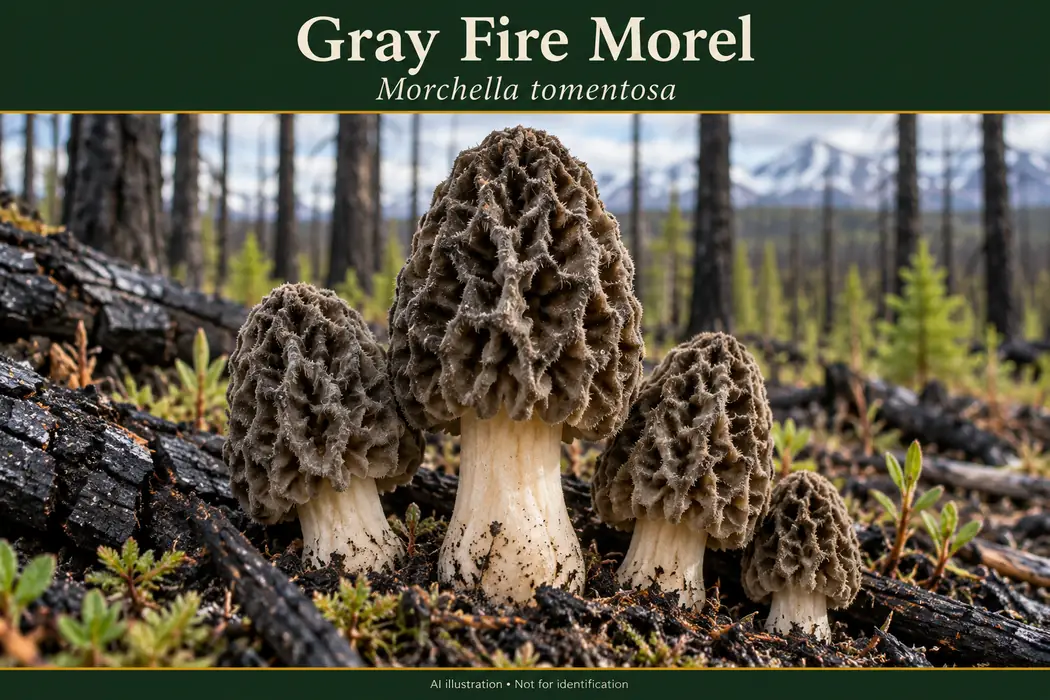
Alaska has many edible mushrooms, including morels, king boletes, golden chanterelles, hedgehogs, oyster mushrooms and bear’s head mushrooms. Most appear...
 Species Guide
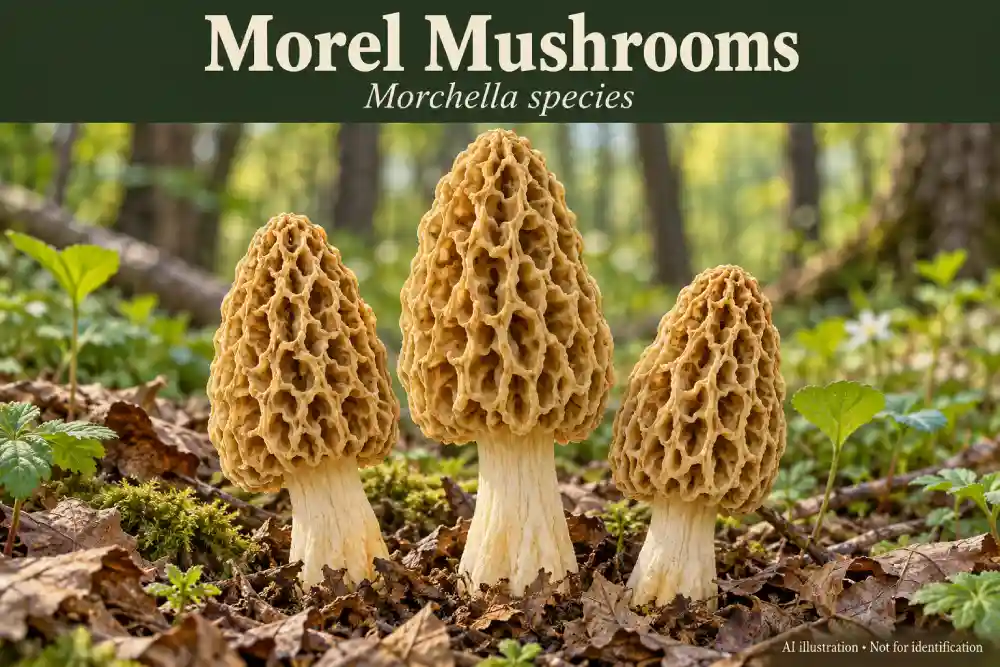
Wisconsin is home to edible mushrooms such as morels, chanterelles, oyster mushrooms, hen of the woods, chicken of the woods and giant puffballs. Different...
 Species Guide
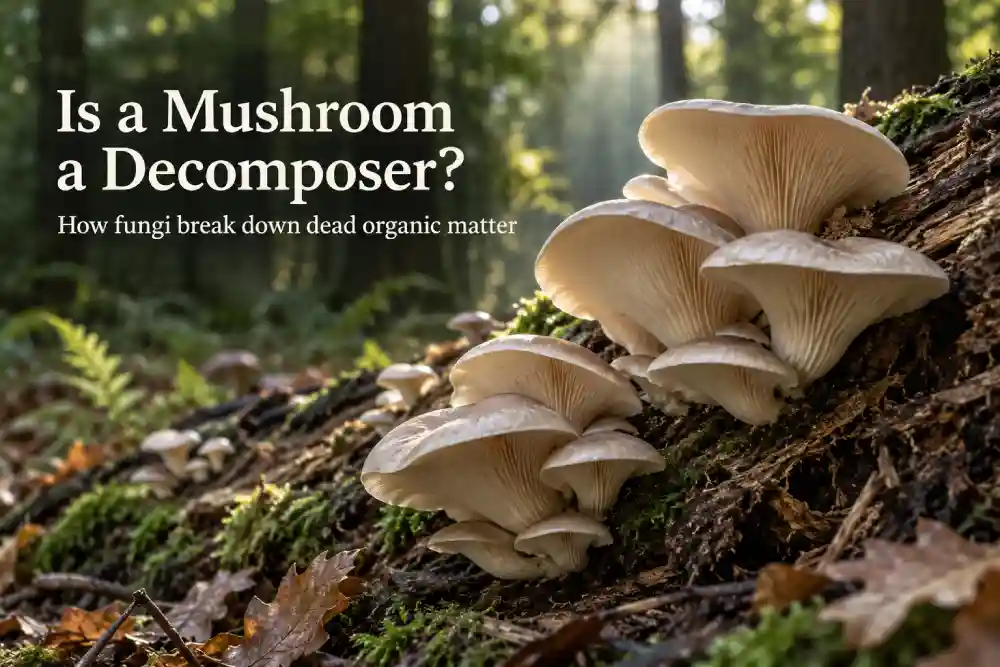
Is a Mushroom a Decomposer? Yes, many mushroom-forming fungi are decomposers. They break down dead wood, fallen leaves and other organic material, helping...