Tree Mushroom Identification Chart: How to Identify Mushrooms Growing on Trees?

Nathan Cole
Mycologist · Author · Fungi Expert
Updated
May 20, 2026
Mushrooms that grow on trees are a diverse group of fungi that feed on wood, bark, or decaying organic material. Some species help forests recycle nutrients, while others may weaken or damage living trees. Learning how to identify tree mushrooms involves examining their color, texture, shape, pore surface, host tree, and growth pattern. Species such as Trametes versicolor, Pleurotus ostreatus, and Ganoderma lucidum are among the most commonly recognized fungi found on logs and tree trunks.
In Mycology, tree mushrooms are important because they play major ecological roles in wood decomposition, nutrient cycling, and forest biodiversity. Some species are edible or medicinal, while others are toxic or harmful to living trees. Understanding these fungi helps nature enthusiasts, mushroom foragers, arborists, and photographers identify species more accurately in woodland environments.
Many tree fungi form shelf-like growths called brackets or conks, while others develop gills, pores, teeth, or jelly-like textures. Because appearances can vary depending on moisture, age, and season, proper identification should always involve multiple characteristics rather than color alone.
What Are Tree Mushrooms?
Tree mushrooms are fungi that grow directly on living trees, dead logs, fallen branches, stumps, or decaying wood. Unlike ground mushrooms that emerge from soil, these fungi obtain nutrients from wood fibers and organic material found inside trees.
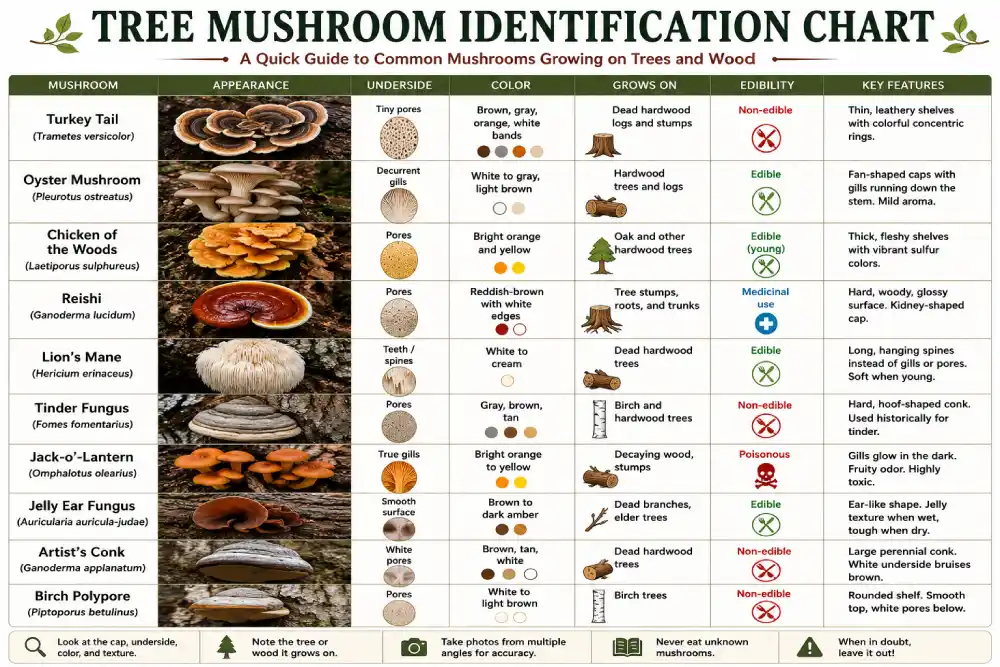
Some species are parasitic and attack living trees, while others are saprophytic, meaning they break down dead wood and help recycle nutrients back into the forest ecosystem.
Why Do Mushrooms Grow on Trees?
Wood contains cellulose and lignin, which many fungi can digest using specialized enzymes. These fungi slowly break down the wood structure and absorb nutrients as they grow.
This process contributes to Wood Decay and plays a major role in natural forest regeneration.
Tree mushrooms commonly grow on:
- Dead hardwood logs
- Rotting stumps
- Fallen branches
- Weak or damaged trees
- Moist woodland environments
Tree Mushrooms vs Ground Mushrooms
Although both belong to the fungal kingdom, tree mushrooms and ground mushrooms often differ in structure, habitat, and growth patterns.
| Feature | Tree Mushrooms | Ground Mushrooms |
|---|---|---|
| Growth surface | Wood and bark | Soil and leaf litter |
| Shape | Shelf, bracket, clustered | Cap and stem forms |
| Main food source | Wood fibers | Organic soil matter |
| Common habitat | Forest trunks and logs | Grasslands and forests |
Species like Hericium erinaceus and Fomes fomentarius are strongly associated with tree habitats rather than soil growth.
Tree Mushroom Identification Chart
Identifying mushrooms growing on trees requires careful observation of several physical and environmental characteristics. Many species share similar colors or shapes, so experienced mushroom enthusiasts rely on a combination of features instead of a single trait.
A complete identification chart should include:
- Mushroom color
- Shape and texture
- Pore, gill, or tooth structure
- Host tree species
- Growth pattern
- Seasonal appearance
- Edibility status
- Spore print color
Key Features Used in Tree Mushroom Identification
Shape
Tree fungi may appear shelf-like, fan-shaped, rounded, clustered, or coral-like.
Underside Structure
Some species have pores, while others contain gills, spines, or smooth surfaces.
Texture
Texture may range from soft and fleshy to woody and hard.
Growth Pattern
Certain fungi grow individually, while others form overlapping shelves or dense clusters.
Host Tree Type
Some mushrooms prefer hardwoods like oak and maple, while others favor conifers.
In the next section of the article, a detailed mushroom identification chart will compare common tree fungi by appearance, habitat, edibility, and distinguishing characteristics.
Tree Mushroom Identification Chart
| Mushroom Name | Appearance | Underside Type | Common Color | Grows On | Edibility | Key Identification Features |
|---|---|---|---|---|---|---|
| Trametes versicolor | Thin overlapping shelves | Tiny pores | Brown, orange, gray, white bands | Dead hardwood logs | Non-edible | Multicolored rings resembling turkey feathers |
| Pleurotus ostreatus | Fan-shaped clustered caps | Decurrent gills | White to gray | Hardwood trees and logs | Edible | Soft texture with oyster-like layered growth |
| Laetiporus sulphureus | Thick shelf clusters | Pores | Bright orange and yellow | Oak and hardwood trees | Edible when young | Vibrant sulfur colors and chicken-like texture |
| Ganoderma lucidum | Hard glossy bracket | Pores | Red-brown with white edges | Tree stumps and roots | Medicinal use | Lacquered shiny surface and woody texture |
| Hericium erinaceus | Hanging pom-pom shape | Teeth/spines | White to cream | Dead hardwood trees | Edible | Long icicle-like spines instead of gills |
| Fomes fomentarius | Hoof-shaped bracket | Pores | Gray to brown | Birch and hardwoods | Non-edible | Hard woody conk with layered interior |
| Jack-o’-Lantern Mushroom | Clustered mushroom caps | True gills | Bright orange | Decaying wood | Poisonous | Glowing orange appearance with sharp gills |
| Birch Polypore | Rounded shelf fungus | Pores | Light brown to cream | Birch trees | Non-edible | Smooth pale surface with thick body |
| Jelly Ear Fungus | Ear-shaped gelatinous body | Smooth surface | Brown to dark amber | Dead branches | Edible | Soft jelly texture after rainfall |
| Artist’s Conk | Large perennial bracket | White pores | Brown and cream | Dead hardwood trees | Non-edible | White underside bruises dark when touched |
Common Mushrooms Found on Trees
Forests around the world contain thousands of wood-growing fungi, but several species are especially common and widely recognized due to their appearance, medicinal use, or culinary value.
These mushrooms often grow on weakened trees, dead logs, or fallen branches where moisture and decaying wood create favorable conditions.
Turkey Tail Mushroom
Trametes versicolor is one of the most recognizable bracket fungi due to its colorful concentric bands resembling a turkey’s tail feathers.
Identification Features
- Thin shelf-like structure
- Multicolored bands
- White pore underside
- Grows in overlapping clusters
Turkey tail fungi are commonly found on hardwood logs and are widely studied for medicinal compounds.
Oyster Mushroom
Pleurotus ostreatus is a popular edible mushroom known for its soft texture and fan-shaped caps.
Identification Features
- Cream to gray caps
- Decurrent gills
- Clustered growth on wood
- Mild seafood-like aroma
Oyster mushrooms usually appear on dead hardwood trees during cool and humid conditions.
Reishi Mushroom
Ganoderma lucidum is a glossy bracket fungus traditionally used in herbal medicine.
Identification Features
- Reddish lacquered surface
- Woody texture
- White growing edge
- Pore-bearing underside
This species commonly grows near tree bases and decaying stumps.
How to Identify Mushrooms Growing on Trees?
Correct identification requires observing both the mushroom itself and the surrounding environment. Many fungi change color, texture, or shape depending on weather and maturity, so examining multiple features is essential.
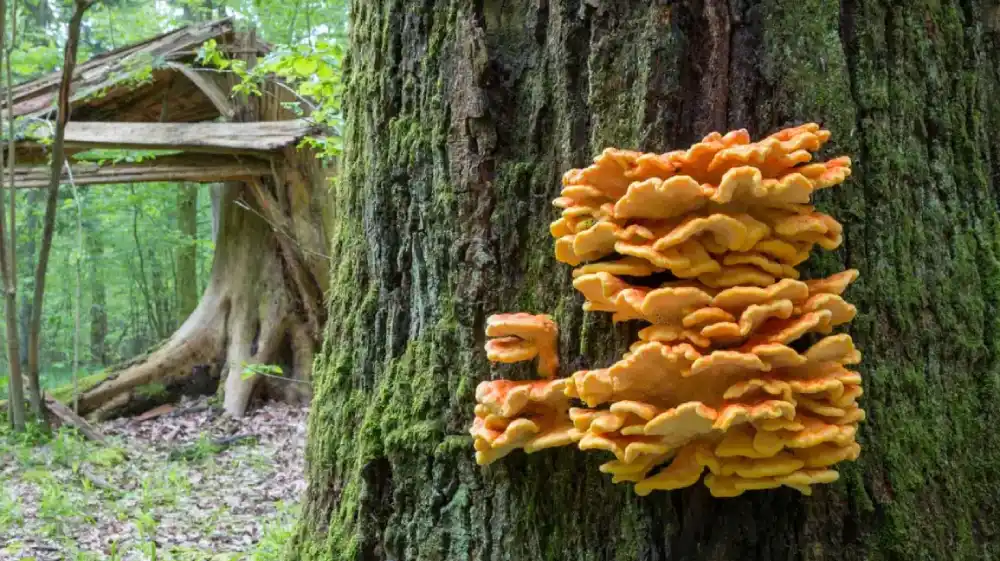
Professional mycologists rarely identify tree fungi based on appearance alone.
Step 1: Examine the Shape
Tree mushrooms commonly grow in several recognizable forms:
- Shelf or bracket fungi
- Fan-shaped clusters
- Coral-like branches
- Rounded conks
- Jelly-like growths
Shape is often the first clue in narrowing down fungal groups.
Step 2: Look Underneath the Mushroom
The underside structure is one of the most important identification features.
| Underside Type | Description |
|---|---|
| Pores | Tiny holes beneath the cap |
| Gills | Thin blade-like structures |
| Teeth | Hanging spines or icicles |
| Smooth | Flat spore surface |
Species like Hericium erinaceus develop hanging tooth-like structures rather than pores or gills.
Step 3: Identify the Host Tree
Some fungi strongly prefer specific trees.
Examples include:
- Oyster mushrooms on hardwoods
- Certain conk fungi on birch
- Reishi near oak or maple
- Conifer-specific bracket fungi
Knowing the host tree can significantly improve identification accuracy.
Step 4: Observe Texture and Moisture
Tree fungi may feel:
- Soft and spongy
- Tough and leathery
- Wet and jelly-like
- Dry and woody
Texture often changes with age and weather exposure.
Types of Tree Fungi by Growth Pattern
Tree fungi are often grouped according to how they grow on wood surfaces. These growth patterns help identify fungal families and ecological behavior.
Some species form hard permanent shelves, while others produce short-lived fleshy mushrooms during humid seasons.
Shelf Fungi
Shelf fungi grow outward from trees in horizontal layers resembling shelves attached to bark.
Characteristics include:
- Flat bracket-like appearance
- Woody or leathery texture
- Long lifespan
- Common on dead hardwoods
Many shelf fungi belong to polypore groups with pore-covered undersides.
Bracket Fungi
Bracket fungi are closely related to shelf fungi and often form thick semicircular structures called conks.
Species such as Fomes fomentarius are examples of long-lasting bracket fungi associated with wood decay.
Jelly Fungi
Jelly fungi develop soft gelatinous fruiting bodies that absorb moisture during wet conditions.
These fungi:
- Swell after rainfall
- Shrink during dry weather
- Grow on dead wood and branches
Coral and Tooth Fungi
Certain tree fungi develop branching coral shapes or hanging tooth-like spines instead of traditional caps.
Hericium erinaceus is one of the best-known tooth fungi growing on hardwood trees.
Edible Tree Mushrooms
Many mushrooms that grow on trees are edible and highly valued for their flavor, texture, and nutritional properties. However, accurate identification is essential because some toxic fungi closely resemble safe edible species.
Popular edible tree mushrooms include Pleurotus ostreatus, Laetiporus sulphureus, and Hericium erinaceus.
Common Edible Mushrooms Found on Trees
Oyster Mushroom
Oyster mushrooms are among the easiest edible fungi to recognize due to their layered fan-shaped caps and pale decurrent gills.
Key Features
- White to gray caps
- Soft texture
- Mild seafood-like aroma
- Clustered growth on hardwoods
Chicken of the Woods
Laetiporus sulphureus is known for its bright orange and yellow shelf-like appearance.
Key Features
- Vibrant sulfur-yellow edges
- Thick overlapping shelves
- No true gills
- Soft texture when young
This species gets its name from its chicken-like texture when cooked.
Lion’s Mane Mushroom
Hericium erinaceus forms cascading white spines instead of traditional caps or gills.
Key Features
- Icicle-like teeth
- White fluffy appearance
- Grows on hardwood trees
- Soft and tender texture
Lion’s mane is also widely studied for potential neurological and cognitive health benefits.
Nutritional Benefits of Edible Tree Mushrooms
Edible wood-growing fungi may contain:
- Dietary fiber
- Protein
- Antioxidants
- B vitamins
- Copper and potassium
- Beta-glucans
Some medicinal fungi, including Ganoderma lucidum, are traditionally used in herbal wellness practices rather than culinary dishes.
Poisonous or Dangerous Tree Mushrooms
Not all mushrooms growing on trees are safe to touch or consume. Some species contain toxic compounds, while others may trigger allergic reactions or digestive problems if misidentified.
Because fungal appearance changes with age, weather, and moisture, dangerous species are often mistaken for edible varieties.
Why Identification Mistakes Happen?
Tree fungi can vary dramatically depending on:
- Growth stage
- Humidity levels
- Sun exposure
- Host tree species
- Seasonal conditions
This variability sometimes causes edible and toxic species to appear surprisingly similar.
Warning Signs of Potentially Dangerous Tree Mushrooms
Although no single feature confirms toxicity, common warning signs include:
- Bright unnatural coloration
- Bitter or chemical odors
- Slimy textures
- Rapid discoloration
- Unknown species with white spores
Certain bracket fungi are extremely tough and inedible even when non-toxic.
Toxic Lookalikes to Watch For
Some poisonous fungi resemble edible mushrooms such as oyster mushrooms or chicken of the woods.
For example:
- Toxic jack-o’-lantern mushrooms may resemble chanterelles
- Some bitter polypores resemble edible shelf fungi
- Young toxic mushrooms may mimic edible button stages
Experts in Mycology strongly recommend avoiding consumption unless identification is completely certain.
Why Mushrooms Grow on Dead Trees?
Dead trees provide one of the richest food sources for fungi in forest ecosystems. Wood contains large amounts of cellulose and lignin, which many fungi can break down using natural enzymes.
This process contributes directly to Wood Decay and helps recycle nutrients back into the environment.
The Role of Decomposer Fungi
Decomposer fungi feed on dead organic material and play a critical role in forest health.
These fungi help:
- Break down fallen trees
- Return nutrients to the soil
- Create habitats for insects and wildlife
- Support new plant growth
Without wood-decaying fungi, forests would accumulate enormous amounts of undecomposed organic matter.
Why Dead Wood Attracts Mushrooms?
Dead wood retains moisture and nutrients, making it ideal for fungal growth.
Common places where fungi develop include:
- Fallen logs
- Hollow trunks
- Rotting stumps
- Cracked bark
- Damp branches
Moist shaded forests are especially favorable for mushroom development.
Can Mushrooms Kill Trees?
Some fungi attack living trees by entering through wounds, damaged bark, or weakened roots.
Parasitic fungi may:
- Cause internal rot
- Weaken structural stability
- Slow tree growth
- Eventually kill stressed trees
However, many mushrooms only appear after a tree is already dead or decaying naturally.
Tree Mushroom Identification Tips for Beginners
Learning to identify mushrooms on trees takes patience and close observation. Beginners should focus on studying visible patterns, textures, and habitats instead of relying on color alone.
Many experienced mushroom hunters carry notebooks or photograph fungi from multiple angles to improve identification accuracy over time.
Start With Easy-to-Recognize Species
Some tree fungi are easier for beginners to identify because of their unique appearance.
Examples include:
- Trametes versicolor
- Hericium erinaceus
- Ganoderma lucidum
These species often display distinctive colors or growth forms that stand out in woodland environments.
Photograph the Mushroom Carefully
Good identification photos should include:
- Top surface
- Underside structure
- Stem attachment
- Nearby tree bark
- Growth pattern
The underside is especially important because pores, gills, or teeth help identify fungal groups.
Learn the Host Tree Species
Many fungi strongly prefer specific trees.
Examples:
- Oyster mushrooms often grow on hardwoods
- Certain polypores prefer birch
- Some conk fungi grow mainly on conifers
Learning tree identification alongside mushroom identification greatly improves accuracy.
Never Eat an Unknown Mushroom
Even experienced foragers avoid eating unidentified fungi. Some toxic mushrooms can cause severe illness or organ damage.
Beginners should:
- Use multiple field guides
- Study spore prints
- Join local mycology groups
- Consult experts before consuming wild fungi
Seasonal Patterns of Tree Mushrooms
Tree mushrooms appear throughout the year, but different species favor different environmental conditions. Temperature, humidity, rainfall, and wood moisture all influence fungal growth cycles.
Understanding seasonal patterns can help identify species more accurately in forests and woodland trails.
Spring Tree Mushrooms
Spring fungi often emerge during cool damp weather as forests regain moisture after winter.
Common spring species include:
- Oyster mushrooms
- Early jelly fungi
- Young shelf fungi
Summer Tree Mushrooms
Warm temperatures and humidity increase fungal activity in many regions.
Summer commonly produces:
- Bright bracket fungi
- Chicken of the woods
- Fast-growing decomposer species
Thunderstorms and humid forests create ideal conditions for rapid mushroom growth.
Autumn Tree Mushrooms
Autumn is considered peak mushroom season in many forests.
During this time:
- Moisture levels increase
- Temperatures become moderate
- Decaying wood supports heavy fungal growth
This season often produces the highest diversity of visible tree fungi.
Winter Tree Mushrooms
Some cold-resistant fungi continue growing through winter, especially in mild climates.
Woody shelf fungi and conks may remain attached to trees year-round even after releasing spores.
Medicinal Mushrooms That Grow on Trees
Some tree mushrooms have been used in traditional wellness practices for centuries and are now widely researched for their bioactive compounds. These fungi are valued not only for their unique appearance but also for their connection to immune support, antioxidants, and natural medicinal studies.
Among the best-known medicinal tree fungi are Ganoderma lucidum, Trametes versicolor, and Hericium erinaceus.
Reishi Mushroom
Reishi mushrooms are glossy bracket fungi commonly found near hardwood stumps and dying trees.
Identification Features
- Reddish varnished surface
- White growing edge
- Hard woody texture
- Kidney-shaped cap
In traditional herbal systems, reishi is often associated with long-term wellness and immune support.
Turkey Tail Mushroom
Turkey tail fungi are thin colorful shelf mushrooms with concentric bands of brown, gray, orange, and cream.
Why It Is Popular?
- Rich in polysaccharides
- Common in forest ecosystems
- Frequently studied in medicinal mushroom research
- Easy to recognize on hardwood logs
Lion’s Mane Mushroom
Hericium erinaceus is famous for its cascading white spines and unusual appearance.
Research Interest
Scientists continue studying lion’s mane for possible effects related to:
- Cognitive health
- Nerve support
- Brain function
- Antioxidant activity
Although widely researched, medicinal fungi should not replace professional medical treatment.
The Ecological Importance of Tree Fungi
Tree mushrooms are far more than woodland decorations. They are essential organisms in forest ecosystems and help maintain environmental balance through decomposition and nutrient recycling.
Without fungi, forests would become overwhelmed with dead wood and organic debris.
How Fungi Help Forest Ecosystems?
Tree fungi contribute to ecosystem health by:
- Breaking down dead wood
- Recycling nutrients into soil
- Supporting biodiversity
- Creating habitats for insects and microorganisms
- Helping forests regenerate naturally
This natural process supports countless forms of plant and animal life.
Wood Decomposition and Nutrient Cycling
Many tree mushrooms function as decomposers. They digest cellulose and lignin found in wood and convert them into simpler organic compounds.
This supports:
- Soil fertility
- Plant growth
- Carbon cycling
- Forest regeneration
The process is closely linked with Wood Decay and plays a major role in woodland ecosystems worldwide.
Symbiotic Relationships in Forests
Some fungi develop complex relationships with trees and surrounding organisms.
In certain forest environments:
- Fungal networks transport nutrients
- Trees exchange sugars with fungi
- Underground mycelium connects plant roots
These interactions are studied under Symbiosis and are considered vital for healthy forest ecosystems.
Interesting Facts About Mushrooms Growing on Trees
Tree fungi display some of the most unusual adaptations found in nature. From glowing mushrooms to shelf fungi that survive for years, these organisms continue to fascinate scientists and nature enthusiasts alike.
Some Tree Mushrooms Glow in the Dark
Certain wood-decaying fungi produce natural bioluminescence, causing faint greenish light in dark forests.
This glow may:
- Attract insects
- Help spore dispersal
- Result from chemical reactions inside fungal tissue
Bioluminescent fungi are sometimes called “foxfire” in woodland folklore.
Tree Fungi Can Live for Years
Unlike short-lived soil mushrooms, some bracket fungi survive for multiple years on the same tree.
These fungi:
- Add new growth layers annually
- Become extremely hard and woody
- Continue releasing spores over long periods
Large conk fungi can eventually reach impressive sizes.
Mushrooms Help Create Wildlife Habitats
Decaying wood softened by fungi becomes an important habitat for:
- Insects
- Beetles
- Mosses
- Birds
- Small mammals
By breaking down trees, fungi indirectly support forest biodiversity.
Some Fungi Are Tree Disease Indicators
Certain mushrooms appear only when internal decay already exists inside a tree trunk.
Arborists often use fungal growth as a warning sign for:
- Root rot
- Hollow trunks
- Structural weakness
- Internal wood decay
The visible mushroom may represent only a small portion of a much larger underground fungal network.
Frequently Asked Questions About Tree Mushroom Identification
What mushrooms commonly grow on trees?
Some of the most common tree mushrooms include Pleurotus ostreatus, Trametes versicolor, Ganoderma lucidum, and Laetiporus sulphureus.
These fungi often grow on dead logs, stumps, bark, and weakened hardwood trees.
Are mushrooms growing on trees edible?
Some tree mushrooms are edible, while others are toxic or too tough to eat. Proper identification is essential before consuming any wild mushroom.
Popular edible species include:
- Oyster mushrooms
- Lion’s mane
- Chicken of the woods
Never eat unidentified fungi growing on wood.
Can fungi kill trees?
Yes, certain parasitic fungi can weaken or kill living trees by causing internal decay and root damage. However, many mushrooms only appear after a tree has already died or begun decomposing naturally.
What is the difference between bracket fungi and mushrooms?
Bracket fungi typically form shelf-like structures attached directly to wood, while traditional mushrooms often develop stems and caps.
Many bracket fungi have pores underneath instead of gills.
How do I identify mushrooms growing on trees?
Tree mushroom identification usually involves examining:
- Shape
- Color
- Texture
- Pores or gills
- Host tree species
- Growth pattern
- Spore print color
Using multiple identification features improves accuracy and safety.
Final Thoughts
Tree mushrooms are some of the most fascinating organisms found in forests, parks, and woodland ecosystems. From colorful shelf fungi to edible oyster mushrooms and medicinal reishi conks, these fungi play critical ecological roles while offering valuable insight into the natural world.
Learning how to identify mushrooms growing on trees requires patience, observation, and attention to detail. Features such as pore structure, gills, texture, growth pattern, and host tree type all help distinguish one species from another.
In Mycology, tree fungi remain an important area of study because they influence decomposition, biodiversity, nutrient cycling, and forest health. Whether you are a beginner nature enthusiast, photographer, mushroom forager, or woodland explorer, understanding tree mushrooms can deepen your appreciation for the hidden life within forests.
Sign in to leave a comment and join the discussion.
 Species Guide
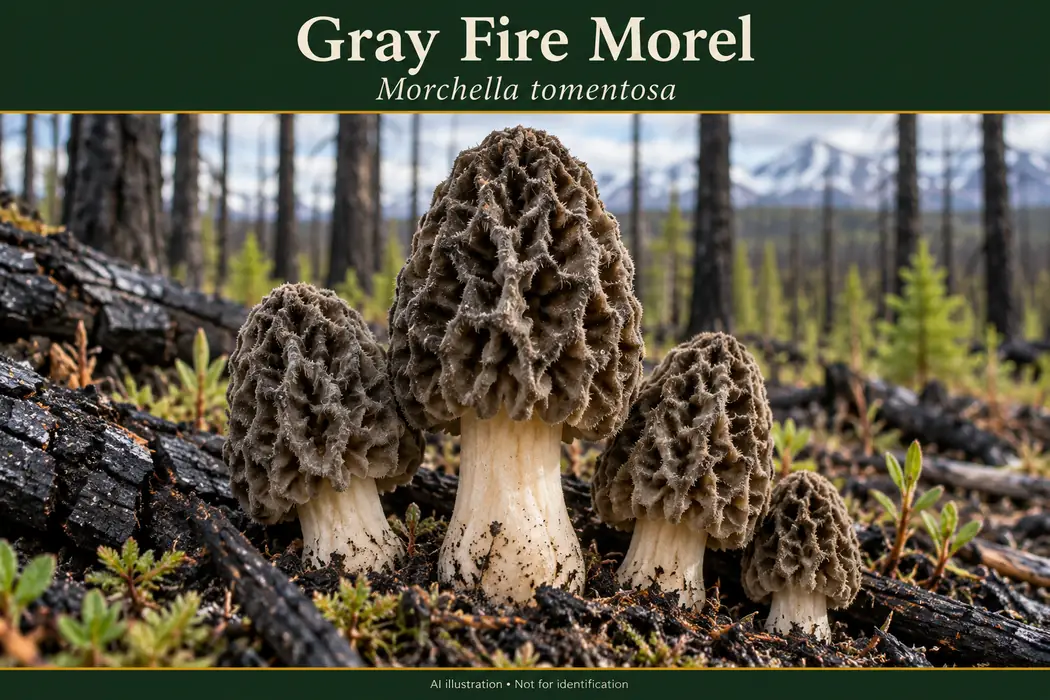
Alaska has many edible mushrooms, including morels, king boletes, golden chanterelles, hedgehogs, oyster mushrooms and bear’s head mushrooms. Most appear...
 Species Guide
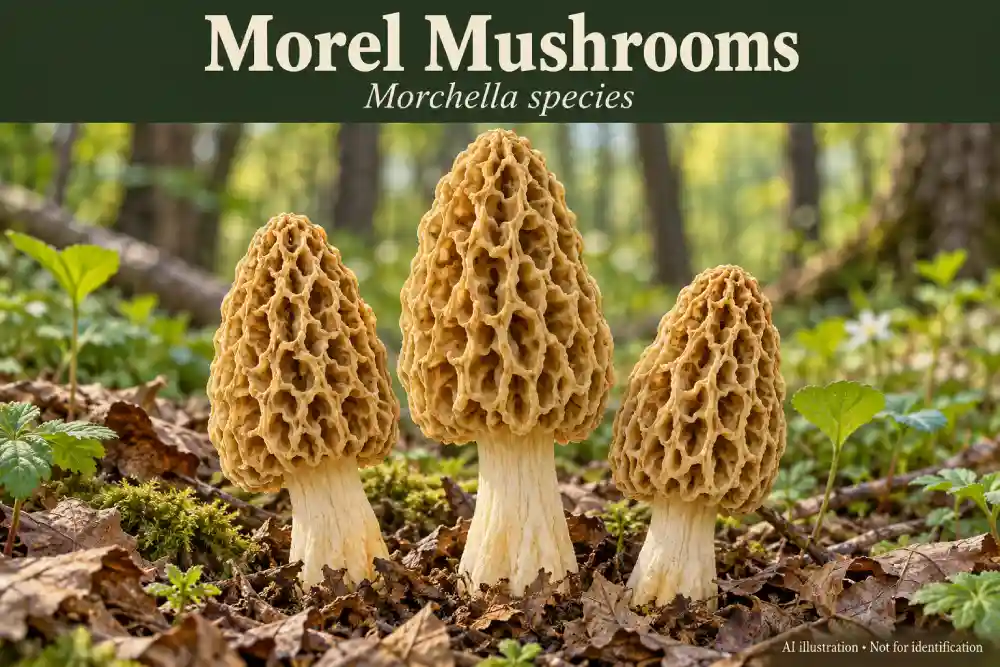
Wisconsin is home to edible mushrooms such as morels, chanterelles, oyster mushrooms, hen of the woods, chicken of the woods and giant puffballs. Different...
 Species Guide
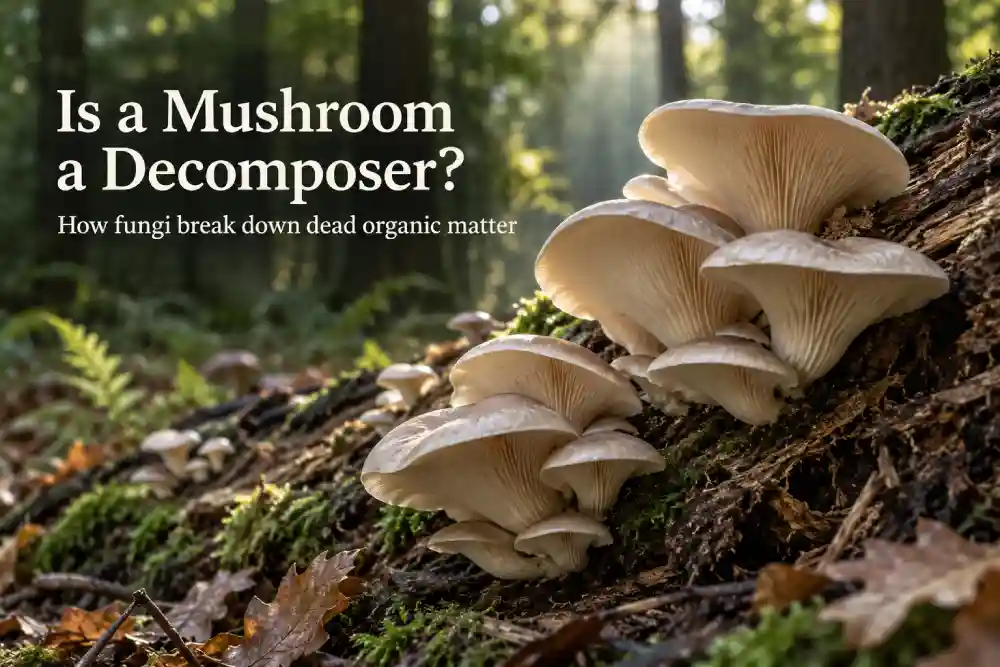
Is a Mushroom a Decomposer? Yes, many mushroom-forming fungi are decomposers. They break down dead wood, fallen leaves and other organic material, helping...