Edible Mushroom Identification: A Practical Guide to Finding Safe Wild Mushrooms

Nathan Cole
Mycologist · Author · Fungi Expert
Updated
Apr 13, 2026
Learn how to identify edible mushrooms safely using proven methods like spore prints, habitat clues, and anatomy. Avoid toxic lookalikes and forage with confidence.
Identifying edible mushrooms safely requires careful observation, scientific methods, and cross-checking multiple features. By studying structure, habitat, and tools like Spore print, you can distinguish edible species from dangerous ones like Amanita phalloides.
This guide walks you through a practical, beginner-friendly process to confidently recognize safe mushrooms in the wild.
About Edible Mushrooms and Mycology
Edible mushrooms are fungi that are safe to consume and widely valued for their nutritional, culinary, and medicinal properties. They are part of a larger biological kingdom studied under Mycology, which focuses on understanding fungal species, their life cycles, and their ecological roles.
Why Edible Mushrooms Matter?
- Rich in protein, fiber, and antioxidants
- Natural source of vitamins like B-complex and D
- Important in global cuisines and traditional medicine
The Science Behind Identification
Unlike plants, mushrooms don’t produce seeds. Instead, they reproduce through spores, making identification more complex and requiring scientific observation rather than guesswork.
Real-WorldExamples
- Agaricus bisporus – the most widely consumed mushroom worldwide
- Lentinula edodes – known for both flavor and health benefits
- Pleurotus ostreatus – beginner-friendly and easy to recognize
Understanding these basics builds the foundation for safe identification in the wild.
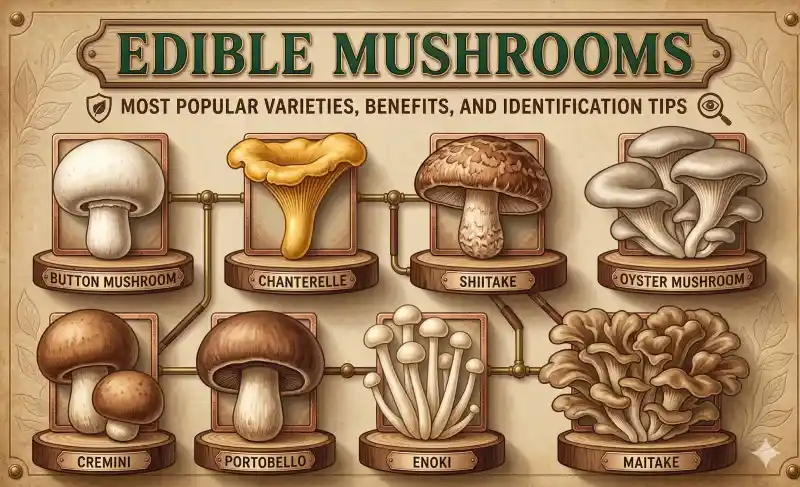
🍄 Simplified Edible Mushroom Identification Guide (Easy + Reliable Method)
Identifying edible mushrooms is about checking a few critical features in the right order. This simplified method combines expert techniques like Spore print and Gill structure into an easy process anyone can follow.
✅ Step 1: Start with Shape and Growth Pattern
- Is it umbrella-shaped, funnel-shaped, or irregular?
- Growing alone or in clusters?
👉 Example: Pleurotus ostreatus usually grows in clusters on wood.
✅ Step 2: Check the Cap (Top Surface)
- Color (white, brown, yellow, etc.)
- Texture (smooth, scaly, sticky)
- Does it change with age or touch?
👉 This helps narrow down species quickly.
✅ Step 3: Examine Gills and Stem Carefully
- Look underneath → gills, pores, or ridges
- Study Gill structure
-
Check the stem for:
- Ring (skirt)
- Bulbous base (volva)
⚠️ Warning: Mushrooms with white gills + ring + bulb may belong to dangerous species like Amanita phalloides
✅ Step 4: Take a Spore Print (Most Important Test)
- Place the cap gills-down on paper (white + black background)
- Wait several hours
- Observe spore color
👉 Use Spore print to confirm identity:
- White spores → caution
- Brown/pink → often edible species
✅ Step 5: Look for Color Changes (Staining Test)
- Cut or bruise the mushroom
- Does it turn blue, red, or yellow?
👉 This is a key clue for distinguishing:
- Edible vs toxic
- Similar-looking species
✅ Step 6: Smell and Texture Check
- Smell: earthy, sweet, or foul
- Texture: firm, brittle, or spongy
👉 Some toxic mushrooms have unpleasant odors.
✅ Step 7: Check Habitat and Environment
-
Growing on:
- Wood (logs, trees)
- Soil (forest floor)
- Grass
- Nearby trees (important for identification)
👉 Example:
- Morchella esculenta grows in forest soil
- Cantharellus cibarius prefers woodland areas
⚠️ Step 8: Always Rule Out Dangerous Lookalikes
Before eating, compare with toxic species like:
- Amanita phalloides
- Amanita virosa
- Gyromitra esculenta
👉 Many deadly mushrooms look similar to edible ones.
If you want to know Mushroom Identifications Price packages, you can visit our pricing section.
Mushroom Anatomy Explained: Fruiting body, Mycelium, and Structure
To identify mushrooms correctly, you must understand their structure.
Main Parts of a Mushroom
- Cap (Pileus): The top part, often used for initial identification
- Gills / Pores: Located under the cap, crucial for species recognition
- Stem (Stipe): Supports the cap
- Base: May include a cup-like structure (volva)
Internal Biology
- The visible mushroom is the Fruiting body
- Beneath the surface lies the Mycelium, which absorbs nutrients
Why Anatomy Matters
Small differences—like gill attachment or stem structure—can mean the difference between:
- A safe edible mushroom
- A highly toxic species
Understanding anatomy allows you to spot these critical differences confidently.
Identifying Common Edible Mushrooms like Agaricus bisporus, Pleurotus ostreatus, and Morchella esculenta
Learning a few reliable edible species is the safest way to begin.
Key Edible Mushrooms and Features
| Mushroom | Key Identification Features | Habitat |
|---|---|---|
| Pleurotus ostreatus | Fan-shaped, grows in clusters | Dead wood |
| Morchella esculenta | Honeycomb cap, hollow inside | Forest floor |
| Cantharellus cibarius | Yellow color, ridges instead of gills | Forest |
Beginner Tip
Start with distinct, easy-to-identify mushrooms like oyster mushrooms before moving to more complex species.
Avoiding Toxic Lookalikes such as Amanita phalloides and Amanita virosa
One of the biggest dangers in mushroom foraging is confusing edible species with toxic lookalikes.
Most Dangerous Mushrooms
- Amanita phalloides – responsible for most fatal poisonings
- Amanita virosa – pure white and extremely toxic
- Gyromitra esculenta – resembles edible morels but dangerous
Warning Signs to Watch For
- White gills + ring + volva combination
- Unknown mushrooms in the Amanita group
- Unfamiliar species with strong or unpleasant odors
Habitat and Seasonal Clues for Finding Edible Mushrooms like Cantharellus cibarius and Pleurotus ostreatus
Where a mushroom grows is often as important as how it looks. Habitat and season can quickly narrow down possibilities.
🌲 Common Habitats to Check
- Dead wood / logs: Common for Pleurotus ostreatus
- Forest floor: Ideal for Morchella esculenta
- Grasslands & fields: Some Agaricus bisporus varieties
🌦️ Seasonal Growth Patterns
| Season | Mushrooms Commonly Found |
|---|---|
| Spring | Morchella esculenta |
| Summer / Monsoon | Pleurotus ostreatus |
| Autumn | Cantharellus cibarius |
🧭 Pro Tip
- Mushrooms often appear after rain + humidity
- Look near decaying organic matter, as fungi thrive on decomposition
Advanced Identification Techniques Using Spore print and Field Observation
Once you know the basics, advanced techniques improve accuracy and confidence.
🔬 Key Techniques Used by Experts
- Spore print analysis (color helps narrow species)
- Close observation of gill attachment and spacing
- Monitoring color changes when bruised or cut
🧪 Combining Methods for Accuracy
Instead of relying on one feature:
- Shape + habitat + spore print = stronger identification
- Compare with field guides and verified images
📌 Example
A mushroom might look like Morchella esculenta, but:
- If it is not hollow inside → it may be a toxic lookalike like Gyromitra esculenta
👉 This is why cross-verification is critical.
Essential Safety Rules to Avoid Poisoning from Amanita phalloides and Gyromitra esculenta
Mushroom foraging is rewarding—but mistakes can be life-threatening.
🚫 Non-Negotiable Safety Rules
- Never eat a mushroom unless 100% identified
- Avoid mushrooms with:
- White gills + ring + volva
- Do not rely on myths like:
- “If animals eat it, it’s safe” ❌
⚠️ Common Beginner Mistakes
- Identifying based on color alone
- Ignoring habitat clues
- Skipping spore print testing
🧠 Smart Approach
- Learn a few safe species deeply
- Avoid risky families like Amanita entirely
Tools and Resources for Mushroom Identification including Mycology Guides and Field Apps
Modern tools can significantly improve your identification accuracy.
📚 Traditional Tools
- Field guides (region-specific)
- Printed identification charts
📱 Digital Tools
- Mobile apps (AI-based identification)
- Online fungal databases
👨🔬 Expert Resources
- Local mycology groups
- Foraging communities
- Workshops and guided tours
⚖️ Important Note
Apps are helpful—but they should not replace real knowledge or expert verification.
Frequently Asked Questions
❓ How do I know if a mushroom is edible?
You must confirm:
- Physical features
- Habitat
- Spore print
- Comparison with known species
👉 Never rely on a single factor.
❓ What is the safest mushroom for beginners to identify?
Pleurotus ostreatus is widely recommended due to:
- Unique shape
- Growth on wood
- Few dangerous lookalikes
❓ Are all mushrooms growing on wood safe?
No. While many edible mushrooms grow on wood, some toxic species do as well. Always verify carefully.
❓ Can mushroom identification apps be trusted?
They are useful tools, but not 100% reliable. Always cross-check with:
- Field guides
- Expert advice
❓ What is the most dangerous mushroom to avoid?
Amanita phalloides is considered the most dangerous due to its high toxicity and resemblance to edible species.
Do you have good mushroom knowledge? Let's try our Mushroom Identification Quiz
Conclusion: Mastering Edible Mushroom Identification Safely and Effectively
Edible mushroom identification is a skill that combines science, observation, and caution. By understanding key concepts from Mycology, studying mushroom anatomy, and applying step-by-step identification methods, you can safely explore wild mushrooms.
Sign in to leave a comment and join the discussion.
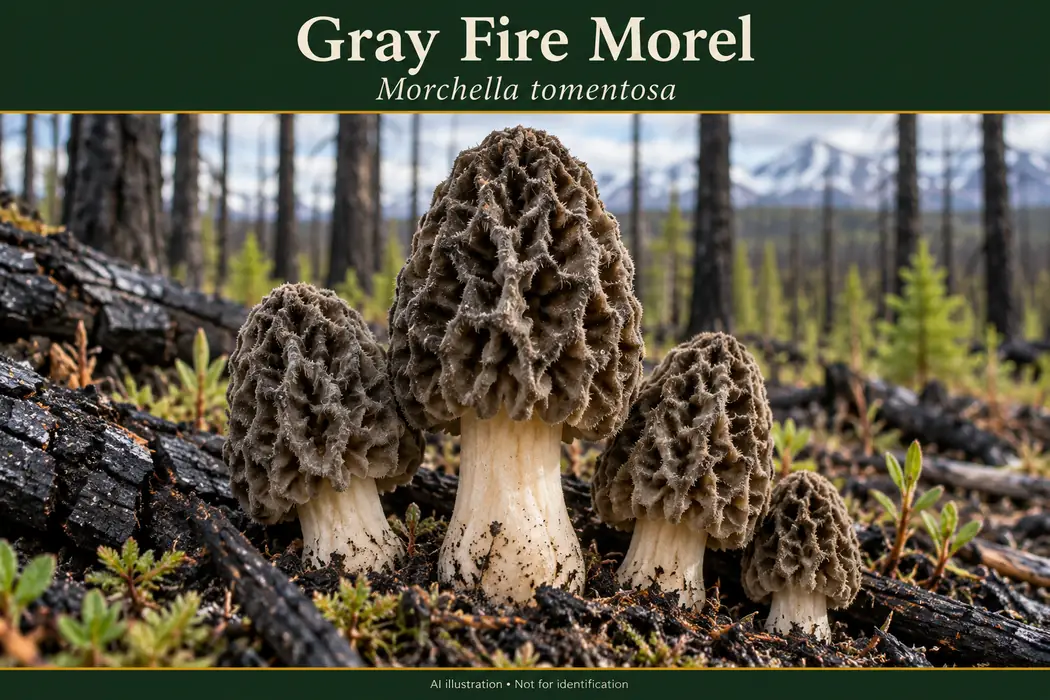 Species Guide
Alaska has many edible mushrooms, including morels, king boletes, golden chanterelles, hedgehogs, oyster mushrooms and bear’s head mushrooms. Most appear...
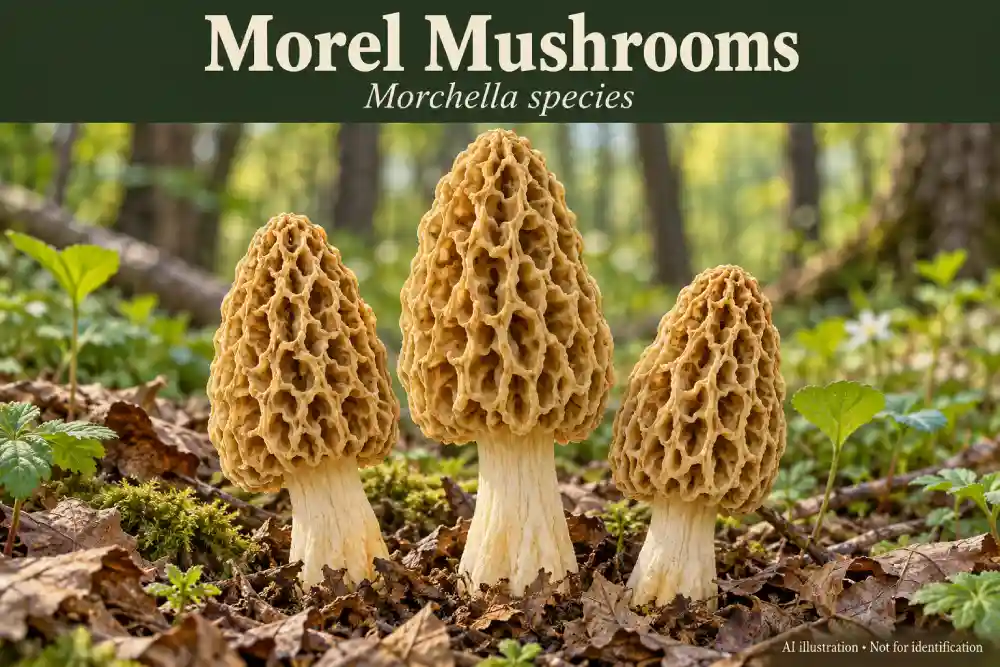 Species Guide
Wisconsin is home to edible mushrooms such as morels, chanterelles, oyster mushrooms, hen of the woods, chicken of the woods and giant puffballs. Different...
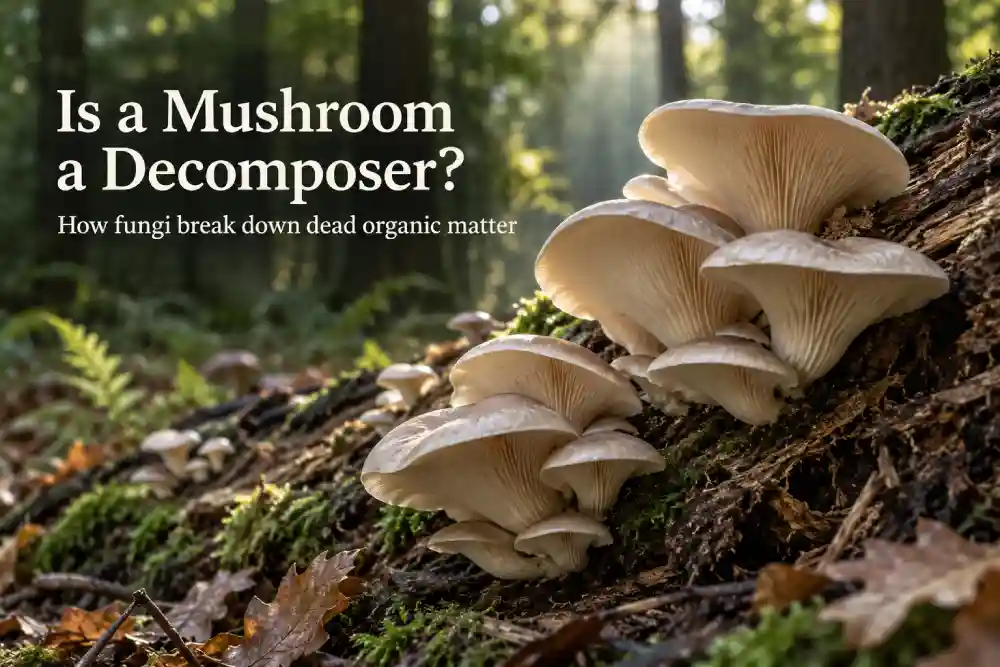 Species Guide
Is a Mushroom a Decomposer? Yes, many mushroom-forming fungi are decomposers. They break down dead wood, fallen leaves and other organic material, helping...