Lentinus Crinitus: Identification, Habitat, Uses & Safety Guide

Nathan Cole
Mycologist · Author · Fungi Expert
Updated
Apr 25, 2026
Lentinus crinitus is a tropical wood-decaying mushroom known for its hairy cap and saw-toothed gills. It typically grows on dead hardwood in warm, humid environments and plays an important ecological role in breaking down organic material.
Although it is not considered poisonous, it is generally inedible due to its tough, leathery texture. Accurate identification depends on examining multiple features, especially the gill edges and growth habitat.
Key facts at a glance:
- Common name: Hairy sawgill
- Habitat: Dead hardwood
- Edibility: Not recommended
- Risk: Low toxicity, moderate misidentification risk
Scientific Classification & Taxonomy
Understanding Its Place in Fungal Biology
Lentinus crinitus belongs to the Polyporaceae, a group of fungi specialized in decomposing wood. This relationship explains its ecological role and physical toughness compared to softer, edible mushrooms.
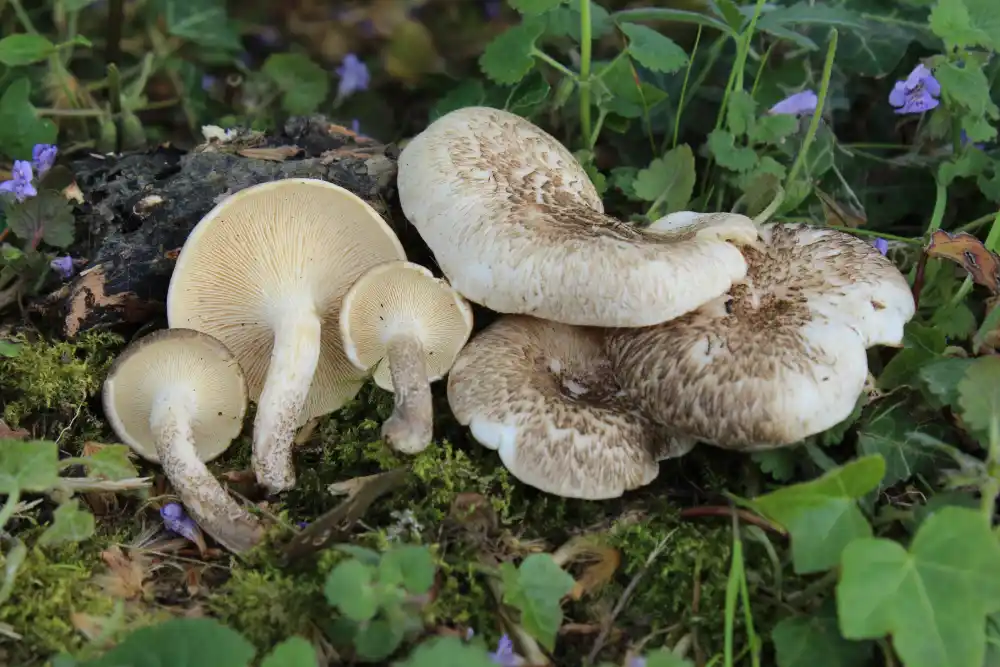
It is also closely related to genera like Panus and Neolentinus, which share similar growth habits and structural features.
Taxonomic hierarchy:
- Kingdom: Fungi
- Phylum: Basidiomycota
- Class: Agaricomycetes
- Order: Polyporales
- Family: Polyporaceae
- Genus: Lentinus
Key Identification Features
How to Recognize Lentinus crinitus in the Wild?
Identifying this species requires careful observation of multiple morphological features. Unlike many mushrooms, it cannot be reliably identified by cap appearance alone.
Mycologists focus on gill structure, texture, and substrate to confirm identification.
Diagnostic features:
- Hairy or fibrous cap surface
- Saw-toothed (serrated) gill edges
- Tough, leathery flesh
- Growth directly on wood
🧢Cap (Pileus)
The cap of Lentinus crinitus is visually distinctive due to its rough, hairy texture. It often appears dry and fibrous, which helps differentiate it from smooth-capped species.
Its color blends well with forest environments, making close inspection important.
Cap characteristics:
- Size: 2–8 cm
- Shape: Convex to flat
- Texture: Hairy / fibrous
- Color: Brown to tan
🌿 Gills (Hymenophore)
The gills are the most important identifying feature. They have a serrated or saw-like edge, which is uncommon and highly diagnostic.
This feature is the origin of the term “sawgill mushroom.”
Gill features:
- Saw-toothed edges
- Cream to light brown color
- Attached or slightly descending
- Dense spacing
🌱 Stem (Stipe)
The stem is typically tough and fibrous, matching the overall texture of the mushroom. It may vary slightly in position depending on how it grows on wood.
Stem features:
- Central or slightly off-center
- Firm and fibrous
- Similar color to cap
- No prominent ring
🧬 Flesh & Spore Print
The flesh is one of the main reasons this mushroom is not eaten. It is extremely tough and resistant to breaking.
Spore prints help confirm identification at the genus level.
Key details:
- Flesh: Tough, leathery
- Spore print: White
- Breakability: Low
Habitat & Distribution
Where Does Lentinus crinitus Grow?
This species thrives in environments rich in decaying wood. It is commonly found on fallen logs, branches, and stumps in moist forests.
It prefers warm, humid conditions, making it more common in tropical ecosystems.
Typical habitat:
- Dead hardwood logs
- Forest floors with high moisture
- Shaded woodland areas
📍 Geographic Regions
Lentinus crinitus is widely distributed in warmer parts of the world, where fungal diversity is high.
It is rarely seen in colder climates.
Regions include:
- South America
- Central America
- Africa
- Southeast Asia
- Caribbean
🌱 Growth Pattern & Ecology
Ecological Role in Forest Systems
As a saprotrophic fungus, Lentinus crinitus plays a vital role in breaking down dead organic matter. This process supports nutrient cycling and soil health.
It contributes to maintaining balanced ecosystems by decomposing wood materials.
Ecological functions:
- Decomposes lignin and cellulose
- Recycles nutrients
- Supports forest regeneration
Growth Behavior
This mushroom often grows in clusters and may form overlapping layers on wood surfaces.
Its growth pattern makes it easier to spot in dense forest environments.
Growth traits:
- Clustered formation
- Shelf-like arrangement
- Directly on wood (not soil)
👃 Smell, Taste & Physical Traits
Sensory Characteristics
Although not typically consumed, sensory traits can assist with identification.
The smell is subtle, and the texture is the most defining feature.
Characteristics:
- Smell: Mild or woody
- Taste: Not significant
- Texture: Tough and dry
⚠️ Edibility & Safety
Is Lentinus crinitus Edible?
This mushroom is not toxic, but it is not considered edible due to its tough consistency. It lacks culinary value and is difficult to digest.
Foragers generally avoid it for consumption.
Edibility summary:
- Non-poisonous
- Not palatable
- Not used in cooking
Risk Assessment
Even though it is not toxic, misidentification is always a concern when dealing with wild mushrooms.
Risk levels:
- Toxicity: Low
- Misidentification: Medium
- Consumption safety: Poor
🔍 Similar Species & Lookalikes
Common Confusions
Several mushrooms resemble Lentinus crinitus, especially those growing on wood.
Correct identification requires examining gill edges and substrate.
Lookalikes include:
- Panus lecomtei
- Neolentinus lepideus
- Other Lentinus species
📸 How to Identify Lentinus crinitus by Picture?
Best Practices for Accurate Identification
Photographic identification works best when multiple angles are provided. A single image is rarely sufficient for accurate results.
Capturing structural details significantly improves accuracy.
Recommended photos:
- Cap (top view)
- Gills (close-up)
- Stem and base
- Growth surface (wood)
💰 Economic Value & Uses
Scientific & Environmental Importance
While not edible, Lentinus crinitus is valuable in research related to decomposition and enzyme activity.
It plays a role in understanding how fungi break down organic material.
Uses:
- Research in fungal biology
- Study of wood decay
- Environmental sustainability studies
👍 Pros & Cons
Advantages
This species is useful for ecological study and is relatively easy to recognize with experience.
Pros:
- Distinctive features
- Important ecological role
- Widely distributed
Limitations
Despite its benefits, it has no culinary value and requires careful observation.
Cons:
- Not edible
- Tough texture
- Requires detailed identification
Frequently Asked Questions
What is the common name for Lentinus crinitus?
Lentinus crinitus is commonly called the hairy sawgill due to its fibrous cap and serrated gill edges.
The name reflects its rough texture and distinctive saw-like underside.
Is Lentinus crinitus edible?
It is not considered edible, mainly because of its tough, leathery texture rather than toxicity.
Most foragers avoid it since it has little to no culinary value.
What is the common name for Lentinus tigrinus?
Lentinus tigrinus is commonly known as the tiger sawgill.
It gets its name from its patterned cap and similar serrated gill structure.
What is the classification of Lentinus species?
Lentinus belongs to the Polyporaceae within the order Polyporales.
These fungi are typically wood-decaying and share tough, fibrous structures.
What is the genus of Lentinus?
Lentinus itself is a genus of fungi that includes species growing mainly on wood.
It is known for mushrooms with firm texture and often saw-edged gills.
What makes Lentinus crinitus unique?
Its hairy cap surface and distinctly serrated (saw-toothed) gills set it apart from most mushrooms.
These features make it easier to recognize when examined closely.
Where is Lentinus crinitus found?
It grows on dead hardwood in tropical and subtropical regions around the world.
Common locations include forests in South America, Africa, and Southeast Asia.
Is Lentinus crinitus dangerous?
It is not considered toxic, but it should not be eaten due to poor texture and identification risks.
Always verify wild mushrooms before handling or consuming them.
Sign in to leave a comment and join the discussion.
 Species Guide
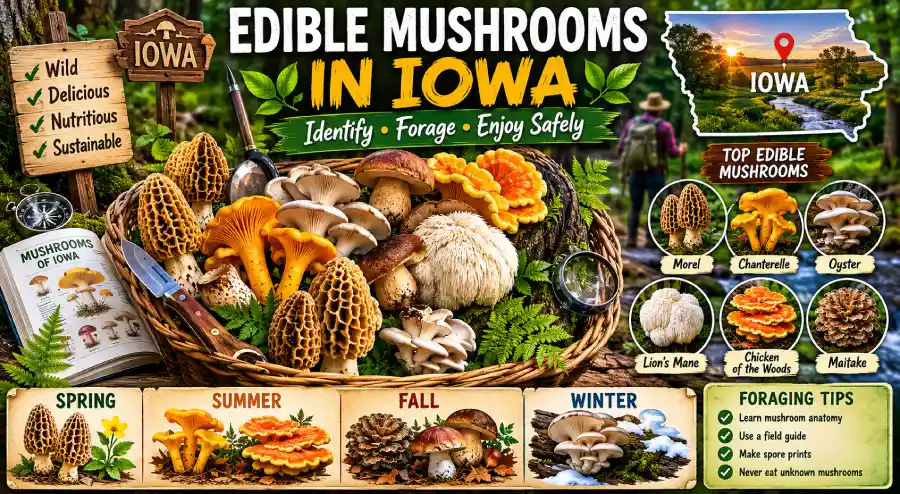
If you're looking for edible mushrooms in Iowa, you'll find a surprising variety of delicious wild fungi growing in forests, river valleys, woodlands, and...
 Species Guide
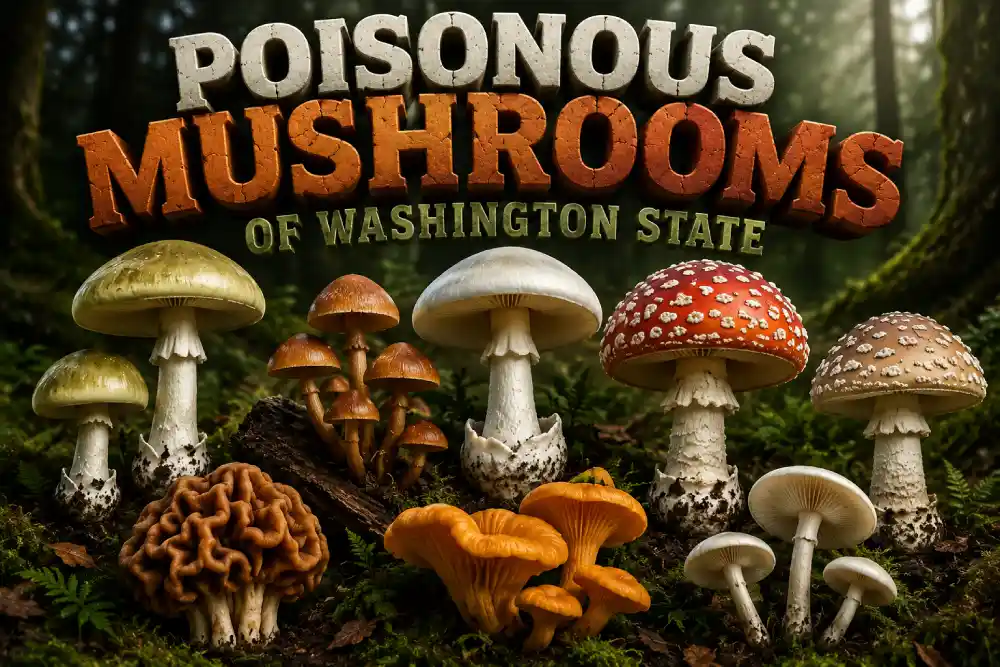
Washington State is home to some of North America's most dangerous wild mushrooms, including the Death Cap ( Amanita phalloides ), Destroying Angel (...
 Species Guide
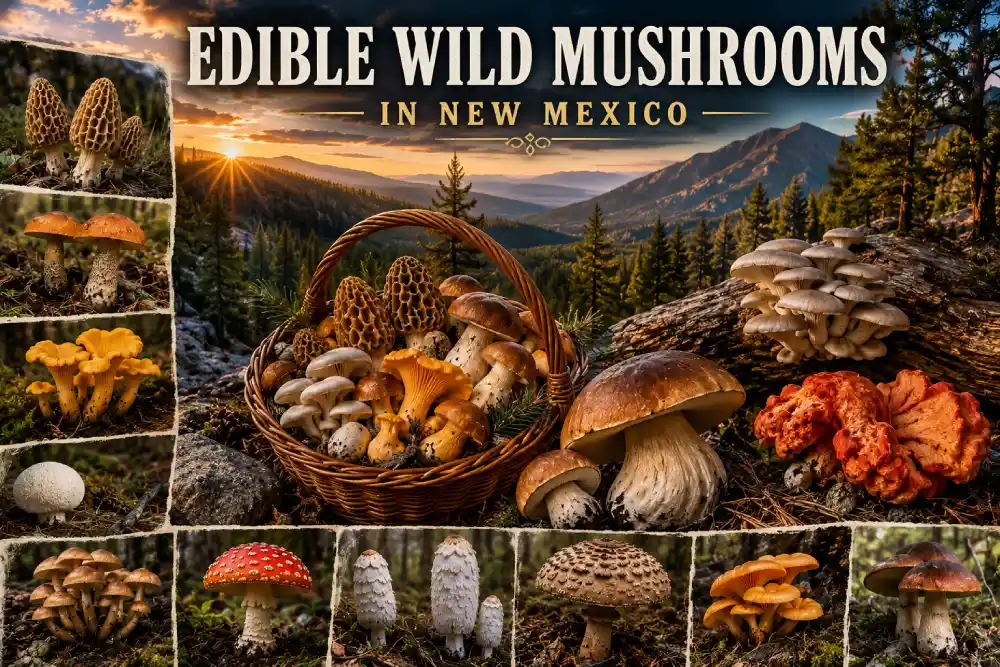
New Mexico is home to a surprising variety of edible wild mushrooms, especially during the summer monsoon season when mountain forests come alive with...