Honey Mushroom Identification Guide

Nathan Cole
Mycologist · Author · Fungi Expert
Updated
Apr 15, 2026
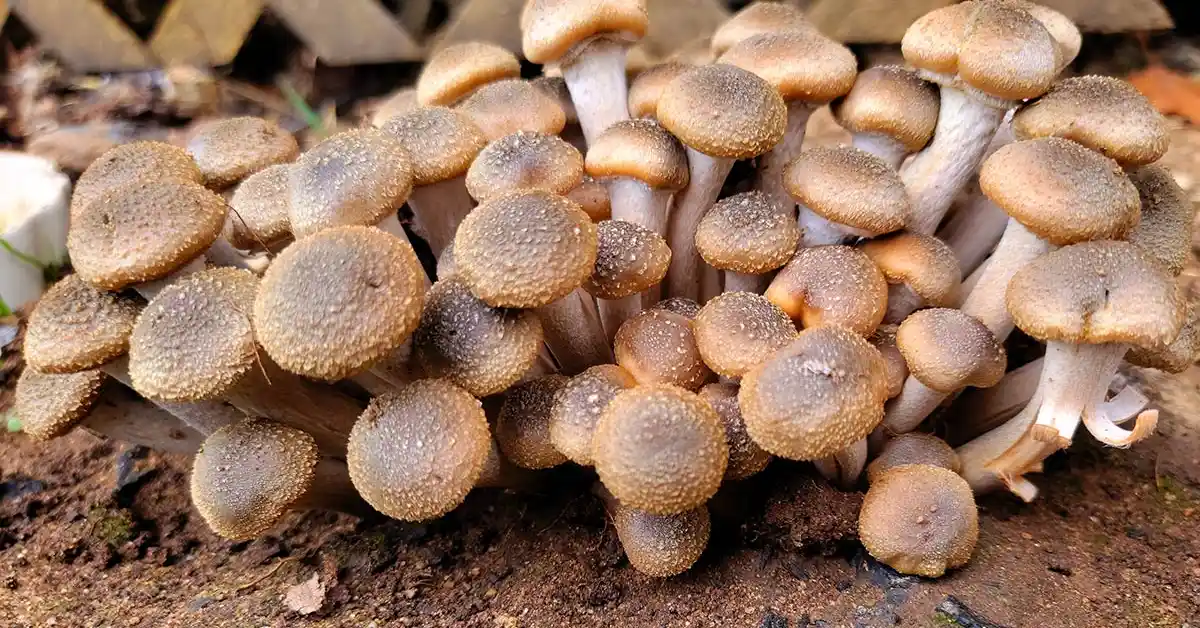
Honey mushroom identification focuses on recognizing cluster-growing fungi with honey-colored caps, a ring on the stem, and growth around trees or roots. The main species, Armillaria mellea, is commonly found in forests, gardens, and even urban areas in regions like the UK.
To identify it correctly, you need to check cap color, Gill structure, stem ring, habitat, and confirm with a Spore print. Using a honey mushroom identification chart, pictures, or app can help, but accurate identification always depends on combining multiple features.
Introduction to Honey Mushroom Identification and Armillaria mellea
Honey mushrooms, also known as honey fungus, are a group of fungi that grow in dense clusters around trees, stumps, and roots. The most well-known species is Armillaria mellea, which is widely distributed across Europe, including the UK.
What makes honey mushrooms unique is their role as a Parasitic fungus. They can infect and weaken trees by spreading through underground root systems, making them important in both forest ecosystems and garden management.
Why identification matters?
- They grow near trees and can be confused with toxic species
- Many lookalikes share similar colors and cluster growth
-
They are often searched using:
- honey mushroom identification chart
- honey mushroom identification pictures
- honey fungus UK identification
Key insight
Correct mushroom identification depends on structure + habitat + growth pattern, not just color or pictures.
Key Identification Features of Honey Mushrooms Using Gill structure and Spore print
Honey mushrooms have several consistent features that make them identifiable when examined carefully.
Cap (Top Surface)
- Honey-yellow to brown color
- Often slightly sticky when wet
- May have small scales or darker center
Underside (Gills)
- Study the Gill structure
-
Gills are:
- White to cream
- Closely spaced
Stem Features
- Presence of a ring (annulus) near the top
- Long, fibrous stem
- Slightly thicker at the base
Growth Pattern
- Appears in large clusters
- Mushrooms grow tightly grouped together
Spore Print
- Confirm with a Spore print
- Spore color is typically white
Quick Identification Chart
| Feature | Honey Mushroom |
|---|---|
| Cap | Honey-colored, slightly sticky |
| Gills | White/cream |
| Stem | Ring present |
| Growth | Clustered |
| Spore Color | White |
Key Insight
The combination of honey-colored caps + ring + clustered growth near trees is a strong identification pattern.
Step-by-Step Honey Mushroom Identification Guide (Chart, Pictures, and Field Method)
To identify honey mushrooms accurately, follow a structured process used in field guides and honey mushroom identification apps.
Step 1: Check Growth Location
- Growing at the base of trees or on stumps
- Often connected to roots
Step 2: Observe Cluster Formation
- Multiple mushrooms growing together
- Dense clusters
Step 3: Examine Cap Color and Texture
- Honey-yellow to brown
- Slightly sticky or smooth
Compare with honey mushroom identification pictures.
Step 4: Inspect the Underside
- Look for white or cream gills
- Confirm spacing and attachment
Step 5: Check the Stem Ring
- Look for a clear ring near the top of the stem
- This is a key feature
Step 6: Confirm Habitat
- Near trees or roots
- Woodland or garden areas
Step 7: Take a Spore Print
- Use a Spore print
- Confirm white spore color
Step 8: Use Chart or App
-
Compare with:
- Honey mushroom identification chart
- Mushroom scan apps
Important Rule
Always confirm multiple features before identifying any mushroom.
Honey Mushroom Lookalikes and How to Identify the Difference
Honey mushrooms have several lookalikes, some of which are toxic. Understanding these differences is essential.
Common Lookalikes
- Galerina marginata
- Hypholoma fasciculare
- Pholiota squarrosa
Comparison Chart
| Feature | Honey Mushroom | Galerina | Sulphur Tuft |
|---|---|---|---|
| Cap Color | Honey-yellow | Brown | Yellow-green |
| Gills | White/cream | Brown | Yellow |
| Stem Ring | Present | Sometimes faint | Absent |
| Habitat | Trees/roots | Wood | Wood |
Key Differences
Galerina marginata
- Brown cap
- Grows on wood
- Dangerous and easily confused
Hypholoma fasciculare
- Bright yellow color
- No ring on stem
Key Insight
Color alone is unreliable—stem ring and gill color are more important.
Habitat and Tree-Based Identification (Roots, Stumps, and Rhizomorph)
Honey mushrooms are strongly connected to trees, which makes habitat one of the most important identification factors.
Where They Grow?
- Base of trees
- Tree stumps
- Underground roots
Rhizomorph Identification
Honey mushrooms produce Rhizomorph, which are:
- Black, root-like strands
- Found under bark or in soil
- Used to spread between trees
Tree Association
- Common around hardwood trees
- Often found in gardens and forests
Habitat Chart
| Location | Honey Mushroom Likelihood |
|---|---|
| Tree base | Very high |
| Stump | High |
| Open soil | Low |
Key Insight
If mushrooms are growing directly from soil away from trees, they are unlikely to be honey mushrooms.
Key Takeaway
Honey mushroom identification becomes reliable when you combine:
- Cluster growth near trees
- Honey-colored caps
- Stem ring
- White spore print
- Presence of rhizomorphs
Using charts, pictures, and apps helps, but accurate identification always depends on checking physical features and habitat together.
Sign in to leave a comment and join the discussion.
 Species Guide
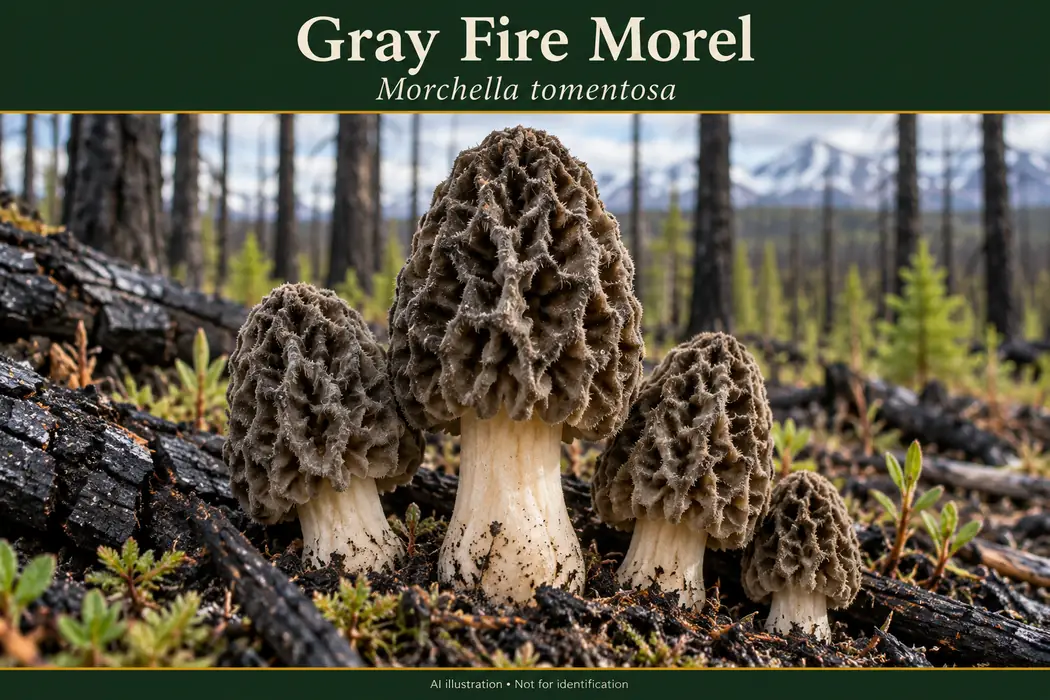
Alaska has many edible mushrooms, including morels, king boletes, golden chanterelles, hedgehogs, oyster mushrooms and bear’s head mushrooms. Most appear...
 Species Guide
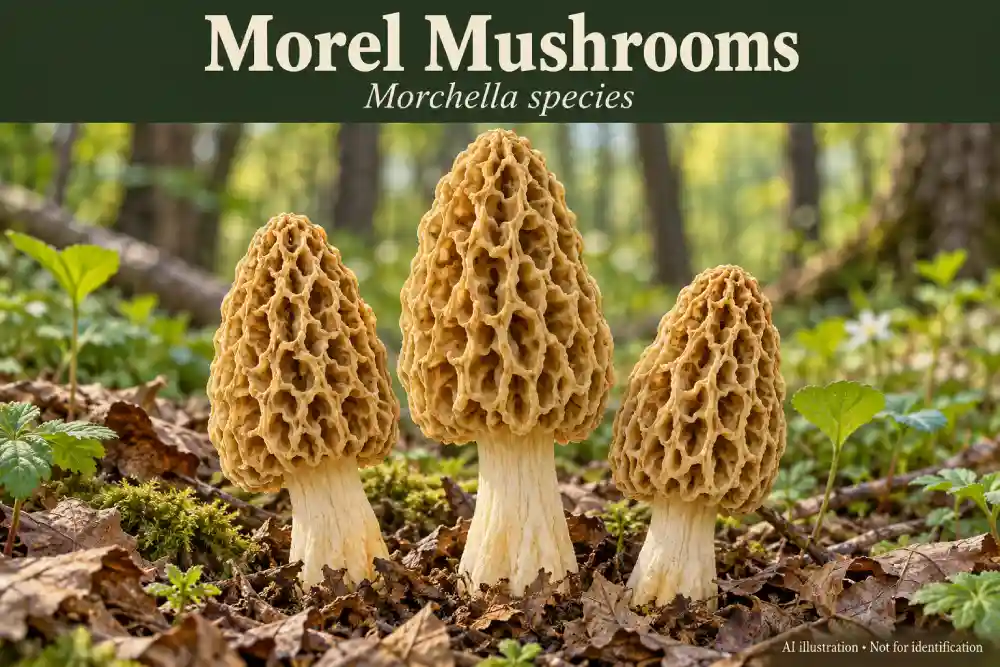
Wisconsin is home to edible mushrooms such as morels, chanterelles, oyster mushrooms, hen of the woods, chicken of the woods and giant puffballs. Different...
 Species Guide
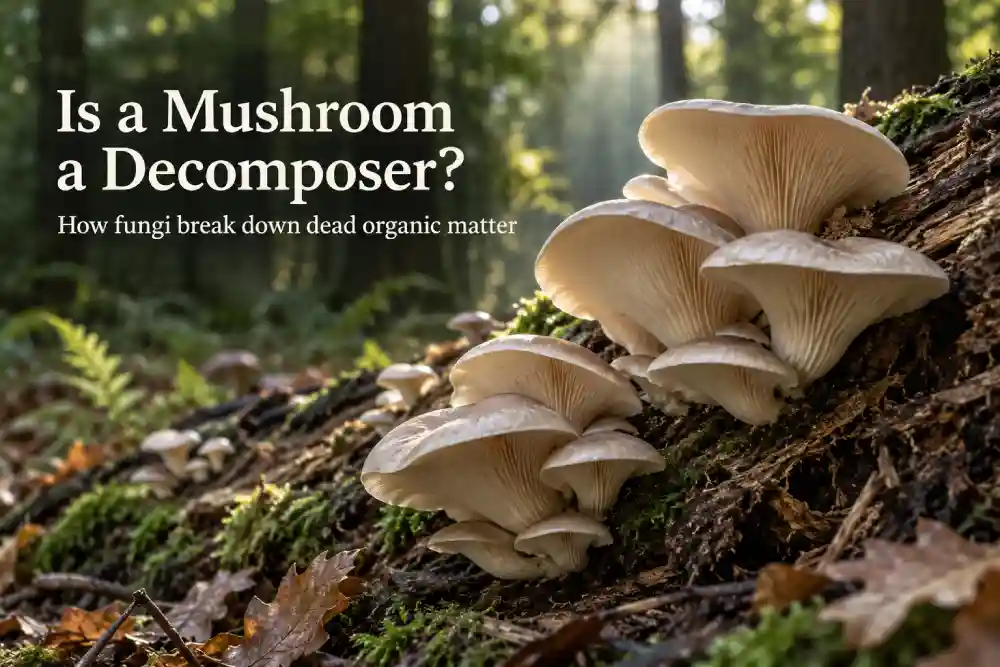
Is a Mushroom a Decomposer? Yes, many mushroom-forming fungi are decomposers. They break down dead wood, fallen leaves and other organic material, helping...