Hypholoma fasciculare (Sulfur Tuft) – Identification, Toxicity & Lookalikes

Nathan Cole
Mycologist · Author · Fungi Expert
Updated
Apr 11, 2026
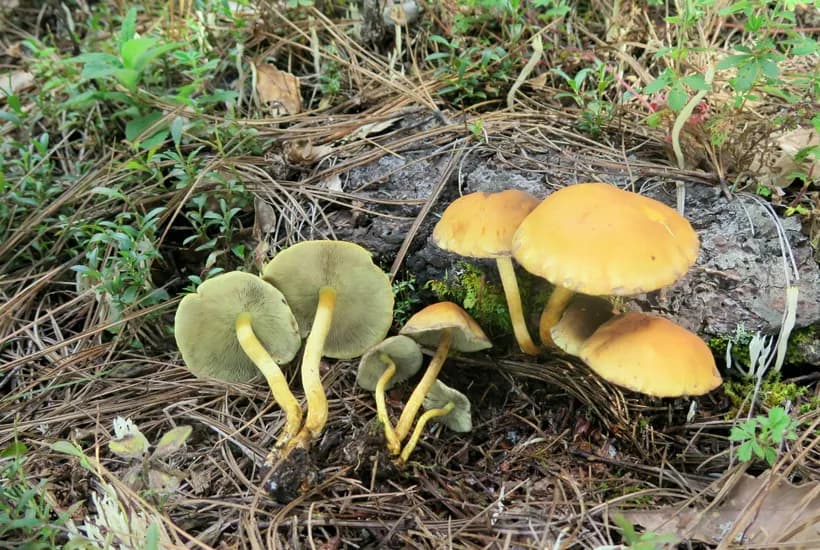
Hypholoma fasciculare, commonly known as the sulfur tuft, is a toxic woodland mushroom that grows in dense clusters on decaying wood. It is easily recognized by its bright yellow color, greenish gills, and bitter taste, but it is often mistaken for edible species by beginners. Found across Europe, North America, and Asia, this mushroom plays an important ecological role as a decomposer but is unsafe to eat due to compounds that cause gastrointestinal poisoning.
If your goal is accurate identification, focus on clustered growth on wood, sulfur-yellow caps, and olive-green gills. For added safety, many foragers now use a mushroom identifier tool or AI mushroom identification app to confirm species and avoid toxic lookalikes.
Scientific Classification & Taxonomy
| Kingdom | Fungi |
| Phylum | Basidiomycota |
| Class | Agaricomycetes |
| Order | Agaricales |
| Family | Strophariaceae |
| Genus | Hypholoma |
| Species | Hypholoma fasciculare |
Closely related to other Hypholoma species, some of which are edible or mildly toxic. The sulfur tuft belongs to the Strophariaceae family and is one of the most common wood-decomposing mushrooms in temperate forests worldwide.
Key Features (Identification Essentials)
Cap Characteristics
- Color: Sulfur-yellow with darker orange or reddish center
- Shape: Convex when young, flattening with age
- Size: 2–6 cm diameter
- Surface: Smooth, sometimes slightly sticky when wet
Gills (Important ID Feature)
- Young: Start pale yellow
- Mature: Turn greenish to olive (key identification feature)
- Attachment: Crowded and attached to the stem
Stem (Stipe)
- Color: Slender, yellowish
- Base: Often darker toward the base (brownish)
- Ring: No prominent ring
- Texture: Fibrous, sometimes curved
Growth Pattern
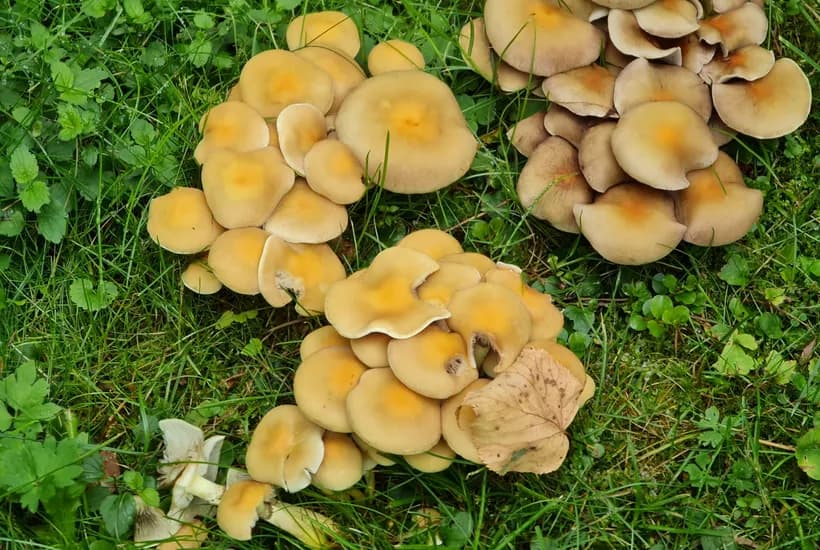
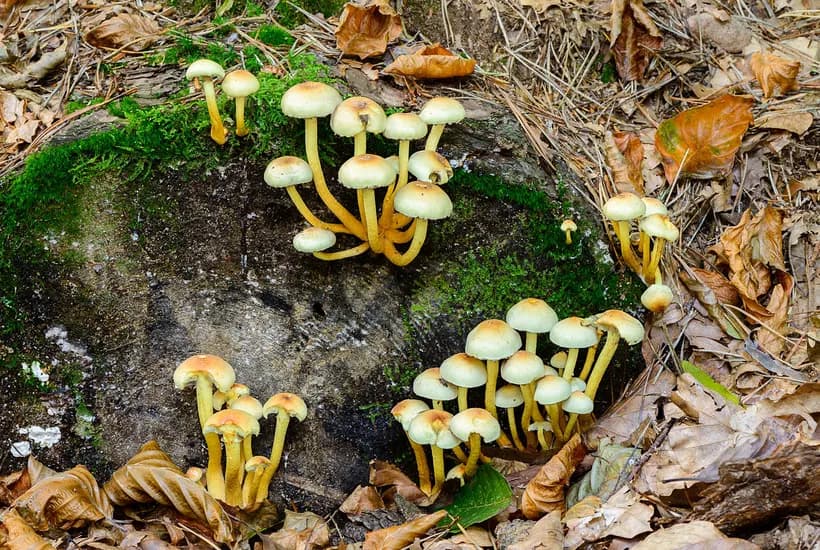
- Grows in tight clusters (tufts) — rarely solitary
- Almost always found on wood (stumps, logs, buried roots)
Color, Smell & Taste
Color
- Cap: Bright sulfur-yellow
- Center: Darker orange-brown
- Gills: Greenish to olive
Smell
- Mild, sometimes earthy
- Not strongly distinctive
Taste
- Extremely bitter (key warning sign)
- ⚠️ Never taste mushrooms intentionally
Physical Dimensions & Structure
Environment & Habitat
Habitat
- Decaying logs and stumps
- Woodland floors
- Buried tree roots
Seasonality
- Spring to late autumn
- Can appear year-round in mild climates
Growth Behavior
- Saprotrophic fungus
- Breaks down dead wood
- Always on or near wood
Geographic Distribution
Toxicity & Health Risks
Toxic Compounds
Contains compounds that irritate the digestive system and can cause significant gastrointestinal distress.
Symptoms of Poisoning
- Nausea and vomiting
- Diarrhea
- Abdominal cramps
- General malaise
Onset Time
Typically within a few hours after ingestion.
Risk Level Assessment
| Toxicity | 🔴 Moderate–High |
| Fatality Risk | 🟠 Low |
| Misidentification Risk | 🔴 High |
| Edibility | ❌ Not edible |
Similar Species (Critical Comparison)
| Feature | Sulfur Tuft (Toxic) | Edible Wood Mushrooms |
|---|---|---|
| Color | Bright sulfur-yellow | Brown, honey-colored |
| Gills | Greenish to olive | White to cream |
| Taste | Bitter | Mild, pleasant |
| Growth | Dense clusters on wood | Clusters or scattered |
| Toxicity | Toxic ☠️ | Edible ✓ |
Common Confusion Species
- Hypholoma capnoides (Conifer Tuft) — edible, grayish gills (not greenish), grows on conifer wood
- Kuehneromyces mutabilis (Sheathed Woodtuft) — edible but risky lookalike, brown cap, ring on stem
- Galerina marginata (Funeral Bell) — deadly, brown cap, ring on stem — important to distinguish
Growth Pattern & Life Cycle
Ecological Role
- Saprotrophic — decomposes dead wood
- Essential for nutrient cycling in forests
- Helps break down fallen trees and stumps
Life Cycle
- Spores disperse through wind
- Mycelium colonizes dead wood
- Fruiting bodies appear in clusters
- Spores released from mature gills
Economic & Ecological Value
Ecological Importance
- Breaks down dead wood efficiently
- Recycles nutrients back into soil
- Supports forest ecosystem health
Economic Value
- No edible or commercial value
- Important in ecological research
- Studied for wood decomposition processes
Pros and Cons
Pros
- ✓ Important wood decomposer in forest ecosystems
- ✓ Easy to spot due to bright yellow color
- ✓ Widely studied and well-documented species
Cons
- ✗ Toxic — causes gastrointestinal illness
- ✗ Easily mistaken for edible wood mushrooms
- ✗ Common in areas where foragers search for edible species
How to Identify Hypholoma fasciculare Safely
For improved accuracy, use a mushroom identifier free by photo tool or AI-based mushroom identification system to analyze photos and confirm species.
Expert Identification Tips
- Always check gill color carefully — greenish gills are the strongest warning sign
- Avoid relying on color alone — many edible mushrooms also grow on wood
- Confirm habitat (wood vs soil) to narrow down species
- Compare with similar species, especially Hypholoma capnoides
Frequently Asked Questions
Is sulfur tuft edible?+
Why is it called sulfur tuft?+
How can I identify it quickly?+
Can it kill you?+
What should I do if I eat it?+
Can AI identify sulfur tuft mushrooms?+
Final Thoughts
Hypholoma fasciculare is a common but toxic woodland mushroom that plays a valuable ecological role while posing risks to foragers. Its bright yellow color, clustered growth, and greenish gills make it identifiable with practice.
Combining field knowledge with a reliable mushroom identifier tool can significantly reduce misidentification and ensure safer mushroom exploration.
Learn more about mushroom anatomy and identification features to build your knowledge, or check our guide on Galerina marginata (Funeral Bell) — another dangerous wood-growing species to watch out for.
 GeneralYard Guide
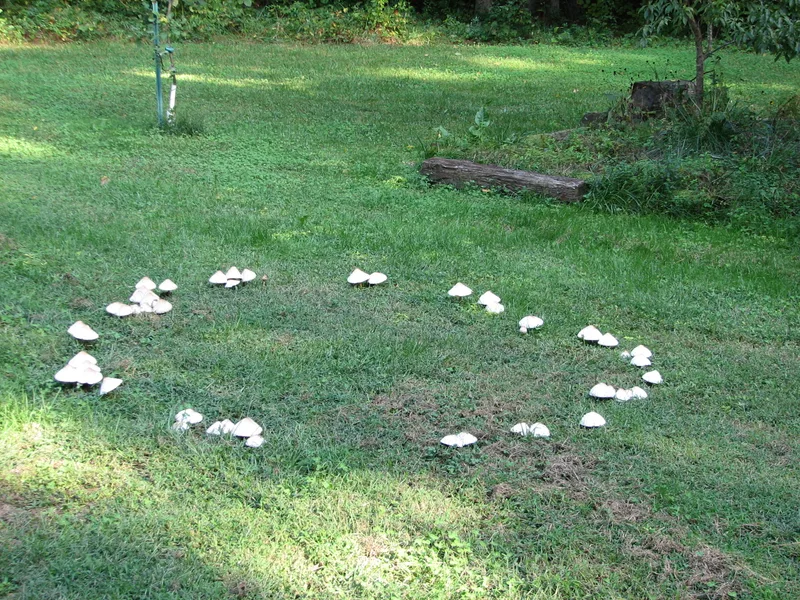
Mushrooms grow in your yard because underground fungi (mycelium) are actively breaking down organic matter in moist, shaded soil.
 GeneralLawn Guide
Remove lawn mushrooms fast by fixing moisture, drainage, and organic matter. Full step-by-step guide to stop mushrooms coming back.
 GeneralGuide
A mushroom identifier book helps you recognize fungi by cap shape, gills, habitat, season and spore print. Find the best field guide for your skill level.
Sign in to leave a comment and join the discussion.