Wild Mushroom Identification Guide

Nathan Cole
Mycologist · Author · Fungi Expert
Updated
Apr 23, 2026
Wild mushroom identification means recognizing species in nature by combining cap shape, Gill structure, stem features, habitat, and a Spore print—not by color alone.
Many mushrooms look alike across regions like the UK and Ireland, so accurate ID requires cross-checking multiple traits and using reliable tools (field guides, a mushroom identification app, or online databases).
This guide shows how to identify wild mushrooms safely, compare species with charts, and avoid dangerous lookalikes such as Amanita phalloides.
Introduction to Wild Mushroom Identification and Mycology
Wild mushrooms are fungi that grow naturally in forests, fields, and on wood. In Mycology, identification relies on structure, habitat, and repeatable tests, not just appearance.
Why Identification Matters?
- Edible and toxic species often look similar
- The same habitats in the UK and Ireland can host mixed species
- Misidentification is common without a methodical approach
Modern Identification Tools
- Mushroom identification app / mushroom scan tools (for quick suggestions)
- Online mushroom identification databases (for deeper comparison)
- Printed field guides (region-specific)
Best practice: Use apps and online tools to narrow options, then confirm with physical features and charts.
Check our top notch Wild mushroom guides:
Key Identification Features of Wild Mushrooms Using Gill structure and Spore print
Accurate identification comes from combining visible traits with confirmatory clues.
Core Features Checklist
- Cap (pileus): shape (convex, flat, conical), surface (smooth, scaly), color changes
- Underside: gills, pores, or ridges; spacing and attachment
- Stem (stipe): thickness, ring (annulus), base (bulb/volva)
- Spore color: confirmed via a Spore print
- Bruising: color change when handled
Quick Identification Chart
| Feature | What to Look For | Why It Matters |
|---|---|---|
| Gills/Pores | Gills vs pores vs ridges | Separates major groups |
| Spore Print | White, brown, black, etc. | Narrows species |
| Stem Base | Ring or volva present | Flags risky genera |
| Habitat | Wood, soil, grass | Filters possibilities |
Key rule: No single feature confirms identity—use a chart + multiple checks.
Step-by-Step Wild Mushroom Identification Guide (Using Chart, App, and Online Tools)
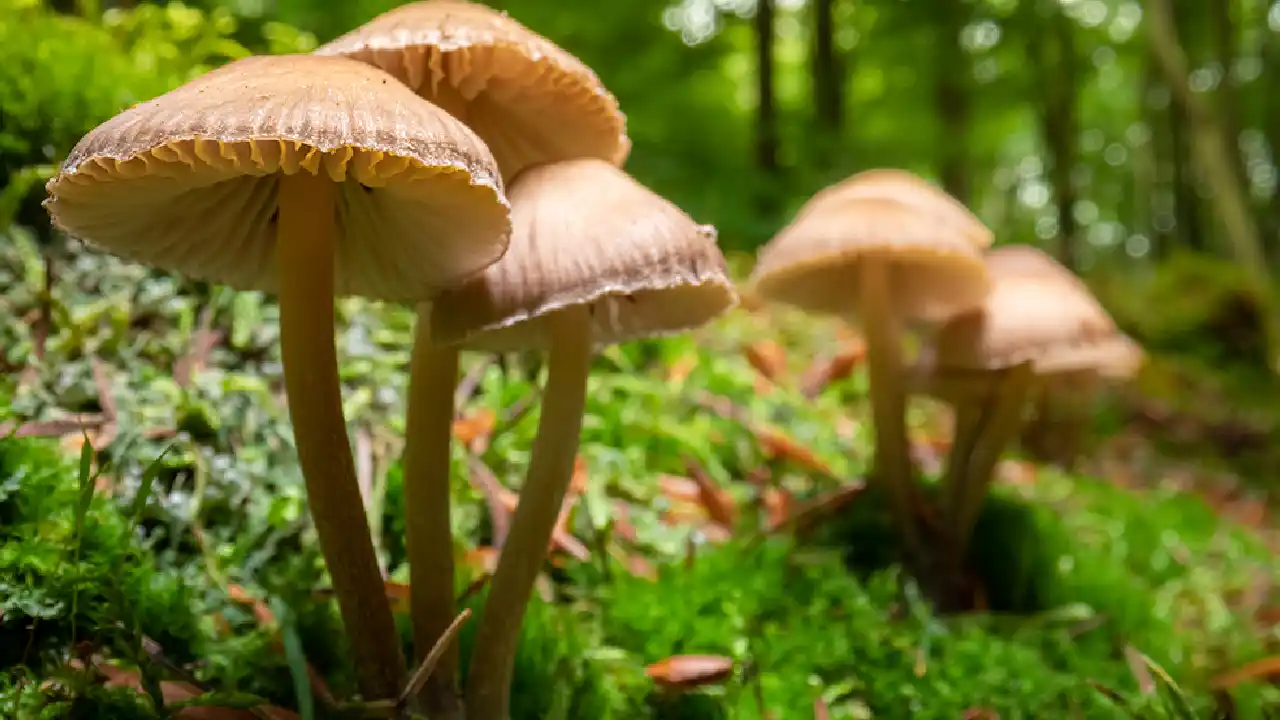
A structured workflow reduces errors and improves consistency.
Step 1: Observe Overall Form
- Size, shape, and growth pattern (single, cluster, ring)
Step 2: Examine Cap and Texture
- Note color changes (wet vs dry) and surface details
Step 3: Check the Underside
- Identify gills, pores, or ridges and their color
Step 4: Inspect the Stem
- Look for ring (annulus) or bulb/volva at the base
Step 5: Record Habitat
- Forest floor, grassland, wood, or mulch (common across UK/Ireland)
Step 6: Take a Spore Print
- Use a Spore print to confirm spore color
Step 7: Compare with a Chart or App
- Use a mushroom identification chart and a mushroom scan app to narrow candidates
- Verify with online references and regional guides
Final check: Match at least 3–4 features before considering an ID.
Do you have good mushroom knowledge? Let's try our Mushroom Identification Quiz
Common Edible Wild Mushrooms (UK & Ireland) and How to Identify Them
Certain species are widely recognized, but still require careful verification.
Key Examples
| Species | Identification Traits | Habitat |
|---|---|---|
| Cantharellus cibarius | Yellow, ridged underside (not true gills) | Forests |
| Morchella esculenta | Honeycomb cap, hollow inside | Woodland edges |
| Pleurotus ostreatus | Fan-shaped, decurrent gills | Dead wood |
Identification Insights
- Chanterelles: ridges, not thin gills
- Morels: hollow stem and cap (key test)
- Oyster mushrooms: grow in clusters on wood
Use a comparison chart + habitat check to confirm each species.
Dangerous Wild Mushrooms to Avoid (Identification and Risk Factors)
Some wild mushrooms are highly toxic and can resemble edible species.
High-Risk Species
-
Amanita phalloides
- White gills, ring, and a volva (cup) at the base
- Often found near trees
-
Amanita virosa
- All-white appearance, similar structure to death cap
-
Galerina marginata
- Small brown mushrooms on wood
Warning Signs Chart
| Warning Feature | Risk Indicator |
|---|---|
| White gills + volva | High-risk species |
| Small brown caps on wood | Possible toxic species |
| Unknown forest mushroom | Requires expert verification |
Key safety rule: If identification is uncertain, do not consume. Use charts, apps, and online tools for guidance—but rely on multi-feature verification and expert input.
Habitat-Based Wild Mushroom Identification (UK and Ireland Context)
Habitat is one of the most practical filters for wild mushroom identification, especially in regions like the UK and Ireland where similar-looking species grow side by side.
While habitat alone cannot confirm a species, it helps narrow down possibilities before using charts or a mushroom identification app.
Common Habitat Categories
Woodlands and Forests
- High diversity of species
- Includes edible types like Cantharellus cibarius
- Also home to toxic species such as Amanita phalloides
Grasslands and Meadows
- Often contain field mushrooms like Agaricus campestris
- May also include small brown mushrooms (higher risk group)
Wood and Logs
- Common for species like Pleurotus ostreatus
- Also a habitat for dangerous species such as Galerina marginata
Habitat Identification Insight
- Mushrooms growing on wood vs soil belong to very different groups
- Seasonal conditions (autumn in UK/Ireland) increase variety
Use habitat as a filter in your identification chart, not as final proof.
Identifying Wild Mushrooms by Spore Color and Bruising (Chart-Based Approach)
Spore color and bruising reactions are widely used in mushroom identification charts and apps to refine results.
Spore Color Identification
A Spore print helps confirm the species group.
Common Spore Colors
- White
- Brown
- Black
- Rusty orange
Example Spore Chart
| Spore Color | Possible Group |
|---|---|
| White | Amanita species |
| Brown | Agaricus species |
| Rusty | Cortinarius group |
Bruising Reaction
The Bruising reaction occurs when the mushroom is handled or cut.
What to Check
- Does the color change?
- How quickly does it react?
- What color appears?
Limitations
- Multiple species share the same spore color
- Bruising is not unique to one group
These features should be used as supporting evidence alongside charts and apps.
Wild Mushroom Identification Chart (Edible vs Poisonous)
Using a structured comparison chart helps distinguish safe species from dangerous lookalikes.
Identification Comparison Chart
| Feature | Edible Example (Morchella esculenta) | Toxic Example (Amanita phalloides) |
|---|---|---|
| Cap | Honeycomb structure | Smooth or slightly sticky |
| Underside | Hollow interior | White gills |
| Habitat | Woodland edges | Near trees |
| Stem Base | No volva | Volva present |
Key Insight
Small structural differences—such as gills vs hollow interior or presence of a volva—can clearly separate edible and toxic mushrooms.
Safety Guidelines for Wild Mushroom Identification
Wild mushroom identification carries risk, especially for beginners relying on visual similarities or online images.
Essential Safety Rules
- Never rely on a single feature
- Always confirm using multiple characteristics
- Avoid consuming any unidentified mushroom
High-Risk Situations
- Small brown mushrooms (LBMs)
- Mushrooms growing on wood
- White-gilled mushrooms with a bulbous base
Responsible Use of Tools
- Mushroom scan apps provide suggestions, not confirmation
- Online identification tools should be cross-checked with physical features
The safest approach is to treat all unknown mushrooms as potentially dangerous.
Tools and Resources for Accurate Wild Mushroom Identification
Accurate identification improves significantly when using the right combination of tools and references.
Practical Tools
- Mushroom identification chart (printed or digital)
- Magnifying lens for examining gills and pores
- Spore print setup
Digital and Online Resources
- Mushroom identification apps (image-based scan tools)
- Online fungal databases
- Regional identification guides (UK and Ireland)
Expert Support
- Local mycology groups
- Foraging communities
- Professional identification services
Important Note
Apps and online tools should be used as supporting tools, not final decision-makers.
Check also: Basics of Wild Harvested Mushroom Identification
Frequently Asked Questions
How do I identify wild mushrooms accurately?
Use a combination of cap, gill structure, stem, habitat, and spore print, then verify with charts or expert input.
Can I use a mushroom identification app safely?
Apps can help narrow options, but they should always be confirmed with physical features and expert guidance.
Are wild mushrooms in the UK and Ireland safe to eat?
Some are edible, but many are toxic. Proper identification is essential before any decision.
What is the easiest way to avoid toxic mushrooms?
Avoid:
- White-gilled mushrooms with a bulb
- Small brown mushrooms
- Unknown species
Is spore print necessary for identification?
It is not always required, but it is one of the most reliable confirmation methods.
Conclusion: Identifying Wild Mushrooms Safely
Wild mushroom identification is a multi-step process that requires observation, comparison, and verification. Because many species look similar, accuracy depends on combining:
- Physical features
- Habitat
- Spore color
- Reliable tools such as charts and apps
The most important principle remains:
never rely on a single feature and never assume identification without proper verification.
Sign in to leave a comment and join the discussion.
 Species Guide
Alaska has many edible mushrooms, including morels, king boletes, golden chanterelles, hedgehogs, oyster mushrooms and bear’s head mushrooms. Most appear...
 Species Guide
Wisconsin is home to edible mushrooms such as morels, chanterelles, oyster mushrooms, hen of the woods, chicken of the woods and giant puffballs. Different...
 Species Guide
Is a Mushroom a Decomposer? Yes, many mushroom-forming fungi are decomposers. They break down dead wood, fallen leaves and other organic material, helping...