Backyard Mushroom Identification Guide

Nathan Cole
Mycologist · Author · Fungi Expert
Updated
Apr 15, 2026
Backyard mushroom identification starts with a simple principle: observe structure, not just appearance. To identify mushrooms growing in your lawn or garden, you need to check cap shape, Gill structure, stem features, habitat, and confirm with a Spore print.
Many common lawn mushrooms look alike, which is why tools like a backyard mushroom identification chart, lawn mushroom identification pictures, and a backyard mushroom identification app are useful—but only when combined with real observation.
This guide will help you identify common and poisonous lawn mushroom types safely and accurately.
Introduction to Backyard Mushroom Identification and Mycology
Backyard mushrooms appear naturally due to moist soil, organic matter, and changing weather conditions. In Mycology, these fungi are classified based on structure and ecological role, not just color or size.
Many people search for answers using:
- Backyard mushroom identification chart
- Lawn mushroom identification pictures
- White lawn mushroom identification pictures
These resources are helpful for comparison, but they can be misleading if used alone. A mushroom that looks identical in pictures may differ in gill structure or spore color, which are critical for identification.
Why backyard mushrooms are difficult to identify?
- Many species share similar brown or white colors
- Edible and poisonous lawn mushroom types can grow side by side
- Appearance changes with age and weather
Key takeaway
Identification requires combining visual comparison (pictures) with physical features, not relying on images alone.
Key Identification Features of Backyard Mushrooms Using Gill structure and Spore print
To identify backyard mushrooms correctly, you need to follow a consistent checklist used in both field guides and backyard mushroom identification apps.
Cap (Top Surface)
- Shape: round, flat, or conical
- Texture: smooth, sticky, or scaly
- Color: white, brown, tan (often changes with moisture)
Underside Structure
- Study the Gill structure carefully
-
Look for:
- Gills
- Pores
- Ridges
This is one of the most important steps when comparing with lawn mushroom identification pictures.
Stem Features
- Thickness and height
- Presence of a ring (annulus)
- Bulb or base structure
Spore Color
- Confirm with a Spore print
-
Common lawn spore colors:
- White
- Brown
- Green (important for identifying toxic species)
Bruising Reaction
- Check if the mushroom changes color when touched
- Use as a supporting feature only
Quick Feature Chart
| Feature | What to Check | Why It Matters |
|---|---|---|
| Cap | Shape and texture | Initial grouping |
| Underside | Gills or pores | Critical ID feature |
| Stem | Ring or bulb | Identifies risky species |
| Spore Print | Color | Confirms species group |
| Habitat | Lawn, mulch, wood | Filters possibilities |
Step-by-Step Backyard Mushroom Identification Guide (Chart, App, and Pictures)
A structured approach is the safest way to identify mushrooms in your yard.
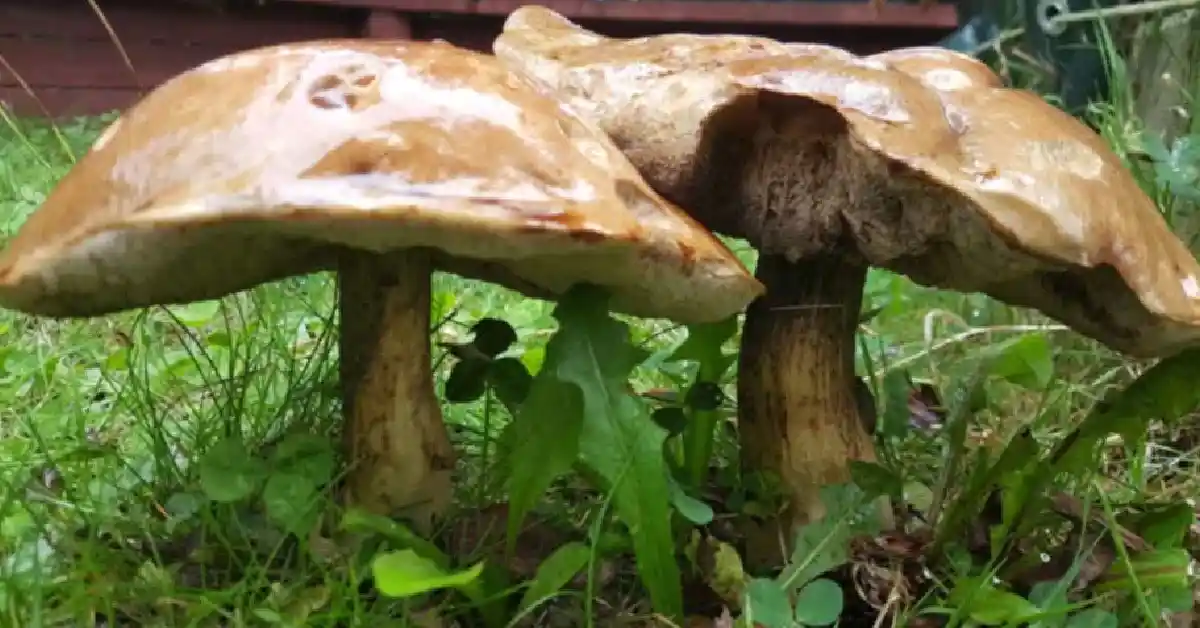
Step 1: Observe Growth Pattern
- Growing alone or in clusters
- Forming rings in grass (common in lawns)
Step 2: Check Location
- Lawn (grass)
- Mulch or compost
- Near trees
This helps narrow results in a backyard mushroom identification chart.
Step 3: Examine Cap and Surface
- Note color and texture
- Compare with lawn mushroom identification pictures
Step 4: Inspect the Underside
- Look at gills or pores
- Compare with white lawn mushroom identification pictures if applicable
Step 5: Study the Stem
- Look for ring or unusual base
- Check thickness and texture
Step 6: Take a Spore Print
- Use a Spore print
- Compare color with chart references
Step 7: Use App or Online Tool
- Upload clear photos to a backyard mushroom identification app
- Use results as suggestions only
Step 8: Cross-Check Results
-
Compare:
- Chart
- Pictures
- App results
- Ensure multiple features match
Important Rule
Never rely only on:
- Pictures
- Apps
- One feature
Common Backyard Mushrooms and How to Identify Them
Several mushrooms appear frequently in lawns and gardens. Learning these helps improve identification accuracy.
Identification Chart
| Mushroom | Key Features | Habitat |
|---|---|---|
| Agaricus campestris | Pink → brown gills, smooth cap | Grass lawns |
| Marasmius oreades | Small tan caps, grows in rings | Lawns |
| Coprinus comatus | Tall white shaggy cap | Soil, grass |
Key Identification Insights
Field mushroom
- Gills change from pink to dark brown
- No bulbous base
Fairy ring mushroom
- Appears in circular patterns
- Small caps with uniform shape
Shaggy mane
- Distinct tall white cap
- Dissolves into black liquid as it ages
These species are often searched using:
- Lawn mushroom identification pictures
- Backyard mushroom identification chart
Poisonous Lawn Mushroom Types (Identification and Warning Signs)
Understanding poisonous lawn mushroom types is critical because many grow in the same areas as harmless species.
High-Risk Backyard Mushrooms
Backyard Mushroom Identification Chart for Toxic Types
| Feature | Risk Indicator |
|---|---|
| Green spore print | Common toxic lawn species |
| White gills + bulb base | High-risk mushrooms |
| Small brown caps on wood | Potentially dangerous |
Example: Green-Spored Parasol
Chlorophyllum molybdites is one of the most common toxic lawn mushrooms.
How to identify:
- Large white cap
- Green spore print
- Found in lawns
Many people search for:
- Poisonous lawn mushroom types pictures
- White lawn mushroom identification pictures
This species is often mistaken for edible mushrooms, making it especially important to confirm spore color.
Key Safety Insight
- Visual similarity is common
- Toxic mushrooms often look harmless
- Always confirm with structure and spore print
Key Takeaway
Backyard mushroom identification works best when you combine:
- Visual comparison (charts and pictures)
- Physical features (gills, stem, spores)
- Tools like apps and online guides
The most important rule is simple:
never rely on one feature or one image when identifying mushrooms in your yard.
Lawn vs Garden vs Mulch Mushroom Identification
Backyard mushrooms vary greatly depending on where they grow. Identifying whether a mushroom appears in a lawn, garden bed, or mulch is one of the fastest ways to narrow down possibilities before using a backyard mushroom identification chart or app.
Lawn Mushrooms (Grass Areas)
These are the most common and are often searched using:
- Lawn mushroom identification pictures
- White lawn mushroom identification pictures
Typical traits:
- Grow directly from soil in grass
- Often appear after rain
- May form rings (fairy rings)
Common examples:
- Agaricus campestris
- Marasmius oreades
Garden Bed Mushrooms
These grow in richer soil with organic matter like compost.
Traits:
- Found near plants or vegetables
- Often influenced by fertilizers and decaying matter
- May grow in clusters
Mulch and Wood Chip Mushrooms
These are commonly misidentified and often appear in landscaping.
Traits:
- Grow on wood chips or bark
- Often appear in clusters
- Includes both harmless and dangerous species
Example:
- Galerina marginata
Habitat Comparison Chart
| Location | Key Features | Risk Level |
|---|---|---|
| Lawn | Grass growth, rings | Moderate |
| Garden Bed | Rich soil, clusters | Low–Moderate |
| Mulch/Wood | Wood-based growth | Higher risk |
Key insight:
If a mushroom is growing on wood instead of grass, it belongs to a completely different group—this is critical when using online mushroom identification tools.
Do you have good mushroom knowledge? Let's try our Mushroom Identification Quiz
Identifying Backyard Mushrooms by Spore Color and Bruising
Spore color and bruising reactions are essential tools used in both backyard mushroom identification apps and traditional guides.
Spore Print Identification
A Spore print helps confirm the species group.
Common lawn spore colors:
- White
- Brown
- Green (important warning sign)
Spore Color Chart
| Spore Color | Possible Meaning |
|---|---|
| White | Common in many lawn species |
| Brown | Field mushrooms and similar |
| Green | Often toxic lawn mushrooms |
Bruising Reaction
The Bruising reaction can provide additional clues.
What to observe:
- Does it change color when touched?
- How quickly does the change occur?
Limitations
- Many species share the same spore color
- Bruising is not always visible
- Should only support other identification features
Key takeaway:
Spore print and bruising help confirm identification, but they must be combined with structure and habitat.
Backyard Mushroom Identification Chart (Edible vs Poisonous)
A comparison chart is one of the most effective ways to identify backyard mushrooms quickly and safely.
Identification Chart
| Feature | Edible Example (Agaricus campestris) | Toxic Example (Chlorophyllum molybdites) |
|---|---|---|
| Gill Color | Pink → brown | White → green spores |
| Habitat | Grass lawns | Lawns and open areas |
| Stem | No bulb | Thick stem |
| Spore Color | Brown | Green |
How to Use This Chart?
- Compare at least 3 features
- Confirm with spore print
- Cross-check using lawn mushroom identification pictures
Key Insight
Even small differences—like spore color—can clearly separate safe and poisonous lawn mushroom types.
Are Backyard Mushrooms Dangerous? Safety Guidelines
Many people worry about mushrooms appearing in their yard, especially around children and pets.
Are backyard mushrooms harmful?
- Most are harmless to touch
- Some are toxic if eaten
- Risk depends on species, not appearance
Safety Guidelines
- Do not consume unidentified mushrooms
- Remove mushrooms if children or pets are present
- Use a backyard mushroom identification app to narrow possibilities
High-Risk Warning Signs
- White mushrooms with bulbous base
- Green spore prints
- Small brown mushrooms on wood
Practical Advice
If unsure:
- Remove mushrooms carefully
- Avoid direct contact with hands if concerned
- Dispose of safely
Tools and Apps for Backyard Mushroom Identification
Modern tools make identification easier but must be used correctly.
Digital Tools
- Backyard mushroom identification app
- Mushroom scan tools
- Online mushroom identification platforms
How to Use Apps Effectively?
-
Take clear photos:
- Cap
- Underside
- Stem
- Habitat
-
Compare results with:
- Backyard mushroom identification chart
- Lawn mushroom identification pictures
Limitations of Apps
- Can misidentify similar-looking species
- May not detect dangerous lookalikes
- Should not replace physical inspection
Best Approach
Combine:
- App results
- Chart comparison
- Physical features
Frequently Asked Questions
Why do mushrooms grow in my lawn?
Mushrooms grow due to moist soil, organic matter, and fungal networks under the ground.
How can I identify mushrooms in my backyard?
Use:
- Backyard mushroom identification chart
- Lawn mushroom identification pictures
- Spore print and physical features
Are white lawn mushrooms dangerous?
Some are harmless, but others can be toxic. Always verify using white lawn mushroom identification pictures and structure.
Can I rely on a mushroom identification app?
Apps help, but they must be combined with manual inspection and feature verification.
Should I remove backyard mushrooms?
Yes, especially if children or pets are present and identification is uncertain.
Conclusion: Identifying Backyard Mushrooms Safely
Backyard mushroom identification requires a careful, multi-step approach. Because many species look similar, the safest method is to combine:
- Visual comparison (charts and pictures)
- Physical features (gills, stem, spores)
- Digital tools like apps
The most important rule remains:
never rely on a single feature or image when identifying mushrooms in your backyard.
Sign in to leave a comment and join the discussion.
 Species Guide
Alaska has many edible mushrooms, including morels, king boletes, golden chanterelles, hedgehogs, oyster mushrooms and bear’s head mushrooms. Most appear...
 Species Guide
Wisconsin is home to edible mushrooms such as morels, chanterelles, oyster mushrooms, hen of the woods, chicken of the woods and giant puffballs. Different...
 Species Guide
Is a Mushroom a Decomposer? Yes, many mushroom-forming fungi are decomposers. They break down dead wood, fallen leaves and other organic material, helping...