Morchella esculenta (True Morel) – Identification, Edibility & Lookalikes

Nathan Cole
Mycologist · Author · Fungi Expert
Updated
Apr 11, 2026
What is Morchella esculenta?
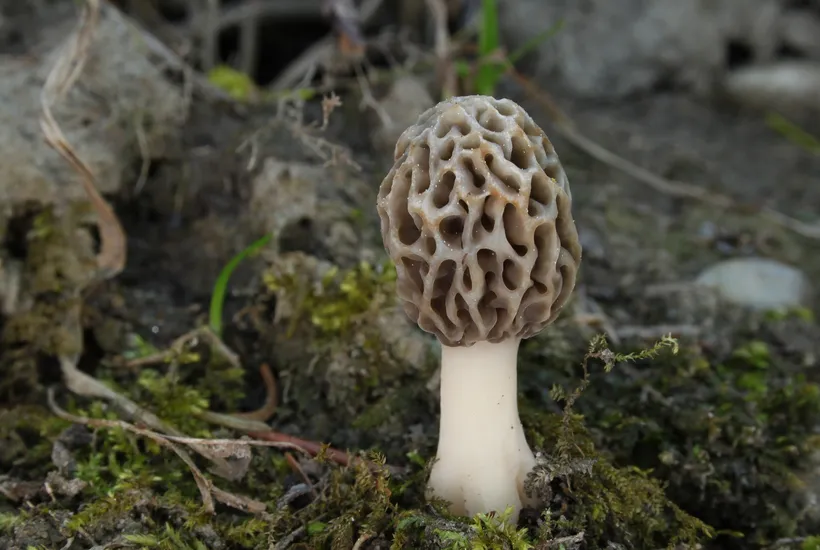
Morchella esculenta, commonly known as the true morel, is one of the most sought-after edible wild mushrooms in the world. It is easily recognized by its honeycomb-like cap, hollow interior, and earthy flavor, making it a favorite among foragers and chefs. True morels grow in spring across temperate regions and are considered safe when properly cooked.
For identification, the most important features are a fully hollow interior from cap to stem, a sponge-like honeycomb cap, and growth on soil rather than wood. Because false morels like Gyromitra esculenta can be toxic, accurate identification is essential. Many foragers now use a mushroom identifier tool or AI mushroom identification app alongside field knowledge for extra safety.
Scientific Classification & Taxonomy
| Kingdom | Fungi |
| Phylum | Ascomycota |
| Class | Pezizomycetes |
| Order | Pezizales |
| Family | Morchellaceae |
| Genus | Morchella |
| Species | Morchella esculenta |
True morels belong to the Morchella genus, a group of fungi known for their distinctive structure and culinary value. Several closely related species exist, often grouped as the “morel complex,” with slight variations in color and habitat.
Key Features (Identification Essentials)
Cap Characteristics
The cap of a true morel is distinctly honeycombed, with a network of ridges and pits forming a sponge-like structure. It ranges in color from pale yellow to golden brown and is usually oval or egg-shaped. This unique surface pattern is one of the most reliable identification features.
- Shape: Oval or egg-shaped, honeycombed
- Color: Pale yellow to golden brown
- Surface: Network of ridges and pits
- Height: 3–10 cm
Interior Structure (Most Important Feature)
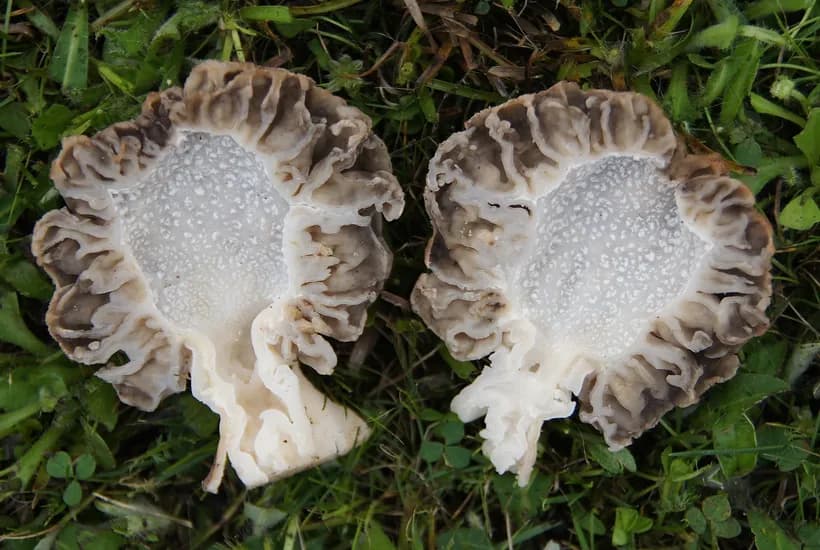
A defining characteristic of true morels is that they are completely hollow inside, from the tip of the cap down through the stem. When sliced lengthwise, there should be no cottony or chambered material inside—this helps distinguish them from toxic false morels.
Stem (Stipe)
The stem is short, thick, and white to cream-colored, supporting the cap seamlessly. It is attached directly to the cap without gaps, forming a continuous hollow chamber. The texture is slightly grainy but firm.
- Shape: Short, thick, continuous with cap
- Color: White to cream
- Interior: Completely hollow
- Height: 2–6 cm
Color, Smell & Texture
True morels have a mild, earthy aroma and a pleasant, nutty taste when cooked. The flesh is delicate yet slightly firm, making it ideal for sautéing or drying. The color varies depending on age and environment but generally stays within yellow to brown tones.
Environment & Habitat
Habitat & Distribution
True morels are widely found across Europe, North America, and Asia, particularly in temperate climates. They grow in association with trees like elm, ash, apple, and oak, often appearing in disturbed soils or post-fire environments.
Seasonality
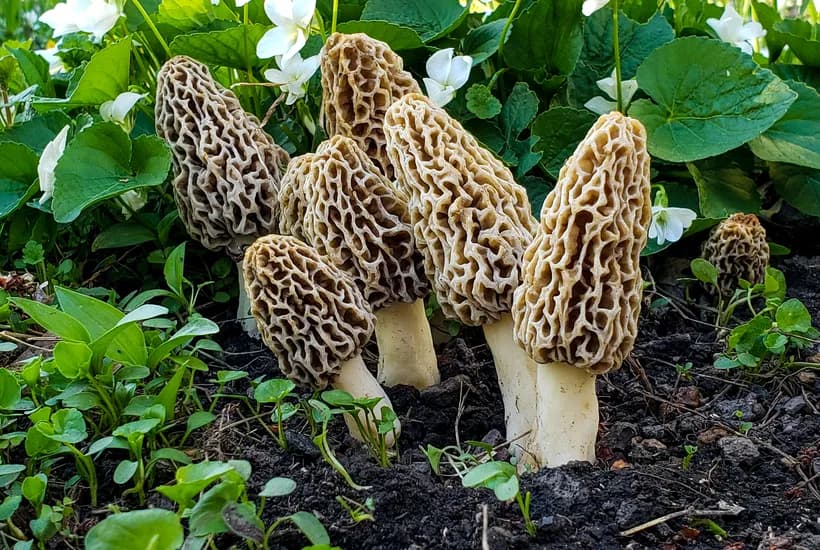
They are a spring mushroom, typically appearing between March and May. Their growth is closely linked to soil temperature and moisture, often emerging after rain and warming conditions.
Growth Pattern
Morels grow singly or in scattered groups, usually on soil rather than wood. They are often found near tree roots, in leaf litter, or in areas that have recently experienced environmental disturbance.
Physical Dimensions & Structure
| Feature | Measurement |
|---|---|
| Cap Height | 3–10 cm |
| Stem Height | 2–6 cm |
| Overall Height | 5–15 cm |
| Structure | Fully hollow |
Their lightweight yet structured form makes them easy to identify once key features are understood.
Edibility & Nutritional Value
Is Morchella esculenta edible? Yes — highly edible and considered a gourmet delicacy.
Culinary Uses
Morels are used in sautéed dishes, sauces, risottos, and gourmet recipes. They are often dried to preserve flavor and rehydrated for cooking. Their unique texture and earthy taste make them a prized ingredient in fine dining.
Nutritional Benefits
They are rich in protein, fiber, antioxidants, and vitamins, supporting a balanced diet.
Important: Morels must always be cooked before eating. Raw morels contain hydrazine compounds that are destroyed by heat.
Risk Level Assessment
| Factor | Level |
|---|---|
| Edibility | Excellent |
| Toxicity Risk | Moderate (misidentification risk) |
| Fatality Risk | High if confused with false morels |
| Identification Difficulty | Moderate |
While safe when correctly identified, confusion with toxic false morels (Gyromitra esculenta) can be dangerous. Always verify with a reliable mushroom identification app.
Similar Species (Critical Comparison)
True Morel vs False Morel
| Feature | True Morel (M. esculenta) | False Morel (Gyromitra) |
|---|---|---|
| Cap | Honeycomb pattern | Brain-like, wrinkled |
| Interior | Completely hollow | Chambered, cottony |
| Shape | Symmetrical, uniform | Irregular, lumpy |
| Attachment | Cap attached at base | Cap hangs free |
| Toxicity | Edible (cook first) | Toxic (gyromitrin) |
The most common dangerous lookalike is Gyromitra esculenta, which has a wrinkled, brain-like cap and is not fully hollow inside. For more on identifying dangerous species, see our death cap identification guide.
Growth Pattern & Life Cycle
True morels are partially mycorrhizal, meaning they can form relationships with tree roots but also act as decomposers. Their life cycle includes spore dispersal, underground mycelium growth, and seasonal fruiting triggered by environmental conditions.
Did you know? Morels are one of the few mushrooms that frequently appear in areas after forest fires, earning them the nickname “fire morels.” The disturbed soil and reduced competition create ideal growing conditions.
Regions Where It Is Found
True morels are widely distributed and especially common in temperate forests and grasslands:
Economic & Ecological Value
True morels have high economic value due to their demand in global markets. They are often sold fresh or dried at premium prices. Ecologically, they contribute to nutrient cycling and may support tree health through symbiotic relationships. Understanding mushroom parts and anatomy helps appreciate these ecological roles.
Pros and Cons
Pros
- ✓ Highly edible and flavorful
- ✓ Nutritionally beneficial
- ✓ Valuable in culinary markets
- ✓ Dries well for long-term storage
Cons
- ✗ Seasonal and unpredictable
- ✗ Easily confused with toxic false morels
- ✗ Must be cooked before eating
- ✗ Difficult to cultivate commercially
How to Identify Morchella esculenta Safely
Step-by-Step Identification
For better accuracy, use a mushroom identifier free by photo tool or AI-based mushroom identification system to confirm findings.
Expert Identification Tips
Always slice the mushroom lengthwise to verify its hollow structure. Avoid any specimen with irregular folds or internal chambers. Cross-check multiple features and never rely on appearance alone. For a comprehensive visual reference, explore our mushroom identification book recommendations.
False morels (Gyromitra esculenta) contain gyromitrin, a toxin that can cause severe illness or death. Always cut your morel in half lengthwise to verify the completely hollow interior before consuming.
People Also Ask (FAQs)
Are true morels safe to eat?+
What do morels taste like?+
How do you identify a true morel?+
Can beginners forage morels?+
Where do morels grow?+
Can AI identify morel mushrooms?+
Final Thoughts
Morchella esculenta is one of the most prized wild mushrooms due to its unique appearance and exceptional flavor. While relatively easy to identify compared to many species, caution is still essential due to toxic lookalikes.
By combining field knowledge with a reliable mushroom identifier tool, you can safely enjoy foraging and avoid dangerous mistakes.
Sign in to leave a comment and join the discussion.