Garden Mushroom Identification: How to Safely Identify Mushrooms in Your Yard?

Nathan Cole
Mycologist · Author · Fungi Expert
Updated
Apr 13, 2026
Garden mushroom identification is the process of recognizing mushrooms in your lawn or soil by observing gill color, cap shape, stem structure, and growth patterns.
Garden Mushroom Identification Guide 2026
Garden mushrooms can appear suddenly in lawns, flower beds, or after rainfall, often leaving homeowners wondering whether they are safe or dangerous. The key to identifying them correctly is to observe multiple features—such as gill color, cap shape, stem structure, and growing environment—rather than relying on a single trait.
Many garden mushrooms are harmless and play an important role in breaking down organic matter. However, some species closely resemble edible varieties while actually being toxic, including dangerous types like Amanita phalloides. This makes careful identification essential before touching or consuming any mushroom.
In this guide, you’ll learn a simple, practical method to identify garden mushrooms using proven techniques like Spore print and understanding Gill structure—so you can make safe and confident decisions.
What Are Garden Mushrooms?
Garden mushrooms are fungi that grow naturally in lawns, soil, mulch, or near plants and trees. They are part of a larger biological system studied in Mycology and play a vital role in recycling nutrients.
Why Mushrooms Grow in Gardens
- Moist conditions after rain or watering
- Organic matter like compost, mulch, or decaying roots
- Underground fungal networks (mycelium)
These mushrooms can vary widely in size, color, and shape. Some resemble edible species like Agaricus bisporus, while others may belong to toxic groups such as Amanita virosa.
👉 Important: Appearance alone can be misleading—proper identification is always necessary.
🔍 Step-by-Step Garden Mushroom Identification Guide
Use this simple, reliable process to identify mushrooms growing in your garden.
✅ Step 1: Observe the Habitat
- Growing on grass, soil, mulch, or wood?
- Near trees or open lawn?
👉 Habitat helps narrow down possible species quickly.
✅ Step 2: Examine the Cap
- Shape: round, flat, cone-shaped
- Color: white, brown, yellow, or mixed
- Texture: smooth, sticky, dry, or scaly
👉 Cap features often change as the mushroom matures.
✅ Step 3: Check the Underside (Critical Step)
- Look for gills, pores, or ridges
- Study Gill structure
Key Rule:
- Pink → brown gills → often safe species
- White gills → ⚠️ possible toxic mushrooms
✅ Step 4: Inspect the Stem
- Check for a ring (annulus)
- Look at thickness and texture
👉 A ring alone is not dangerous—but combined with other features, it can be.
⚠️ Step 5: Dig and Check the Base
- Carefully remove the mushroom completely
- Look for a cup-like base (volva)
👉 This is a major warning sign of toxic species like Amanita phalloides
✅ Step 6: Take a Spore Print
- Place cap on paper (white + black)
- Wait a few hours
- Observe color
👉 Use Spore print:
- Brown → often safer garden species
- White → caution
✅ Step 7: Smell and Texture
- Smell: earthy, mild, or unpleasant
- Texture: firm, soft, or brittle
👉 Some toxic mushrooms have strong or unusual odors.
🔍 Key Identification Features of Garden Mushrooms
When identifying mushrooms in your garden, the goal is to observe multiple features together rather than relying on a single clue. Even small details—like gill color or the presence of a base structure—can determine whether a mushroom is safe or dangerous.
These key identification features are used in Mycology and help distinguish harmless species from toxic ones like Amanita phalloides.
✅ Cap (Top Surface)
- Shape: domed, flat, or conical
- Color: white, brown, yellow, or mixed
- Texture: smooth, slimy, dry, or scaly
👉 The cap often changes as the mushroom ages, so observe both young and mature forms.
✅ Underside (Gills, Pores, or Spines)
-
Check if the mushroom has:
- Gills (most common)
- Pores (like sponge texture)
- Teeth/spines (rare types)
👉 Study the Gill structure carefully:
- White gills → ⚠️ possible toxic species
- Pink or brown gills → often safer varieties
✅ Stem (Stipe)
- Thickness and length
- Presence of a ring (annulus)
- Bulbous base or cup (volva)
👉 A combination of ring + volva is a strong warning sign of dangerous mushrooms like Amanita virosa.
✅ Growth Pattern
-
Growing:
- Alone
- In clusters
- In circular rings
👉 Example: Fairy ring patterns are common with Marasmius oreades.
✅ Substrate (Where It Grows)
- Soil or grass
- Wood (logs, stumps)
- Mulch or compost
👉 Habitat helps narrow identification quickly:
- Wood → often oyster-type mushrooms
- Soil → wider variety (including toxic species)
✅ Bruising or Color Change
- Cut or press the mushroom
- Observe any color change (blue, red, yellow)
👉 This reaction is a useful clue for identifying certain species.
✅ Spore Print (Most Reliable Test)
- Place the cap on paper overnight
- Observe spore color
👉 Use Spore print:
- Brown → often edible types
- White → caution
🔑 Key Insight
👉 Safe identification always combines:
- Cap + gills + stem + habitat + spore print
Never rely on a single feature alone.
🌱 Should I Worry About Mushrooms Growing in the Garden?
In most cases, mushrooms growing in your garden are not a cause for concern. They are a natural part of the ecosystem and play an important role in breaking down organic matter, improving soil health, and recycling nutrients.
However, while many garden mushrooms are harmless, some can be toxic if ingested, especially to children or pets. This is why awareness and proper identification are important.
Do you have good mushroom knowledge? Let's try our Mushroom Identification Quiz
🍄 Common Garden Mushrooms (Identification + Safety Guide)
Garden mushrooms can look similar at first glance, but small differences in gills, cap, stem, and habitat make a big difference in identification.
The table below gives a quick overview, followed by detailed explanations to help you recognize each type confidently.
Mushroom | Key Features | Habitat | Spore Color | Safety |
|---|---|---|---|---|
White cap, pink → brown gills | Grass, lawns | Brown | ✅ Edible | |
Agaricus bisporus (wild relatives) | Pink → brown gills, smooth cap | Lawns | Brown | Often edible |
Turns bright yellow when cut | Lawns, gardens | Brown | ⚠️ Poisonous | |
Coprinus comatus | Shaggy cap, dissolves into ink | Grass, soil | Black | Edible (young) |
Marasmius oreades | Small tan cap, grows in rings | Lawns | White | Edible |
Large cap, green spores | Lawns | Green | ⚠️ Toxic | |
Red cap with white spots | Near trees | White | ⚠️ Toxic | |
Amanita phalloides | White gills, ring, volva | Near trees | White | ☠️ Deadly |
Lacrymaria lacrymabunda | Brown cap, “tears” on gills | Wood, mulch | Brown | ⚠️ Inedible |
1. Agaricus campestris
This is one of the most common edible mushrooms found in lawns and is often what people hope to find in their garden. It closely resembles store-bought mushrooms but grows naturally in grassy areas.
Because it belongs to the same genus as cultivated mushrooms, it is generally safe—but only when correctly identified.
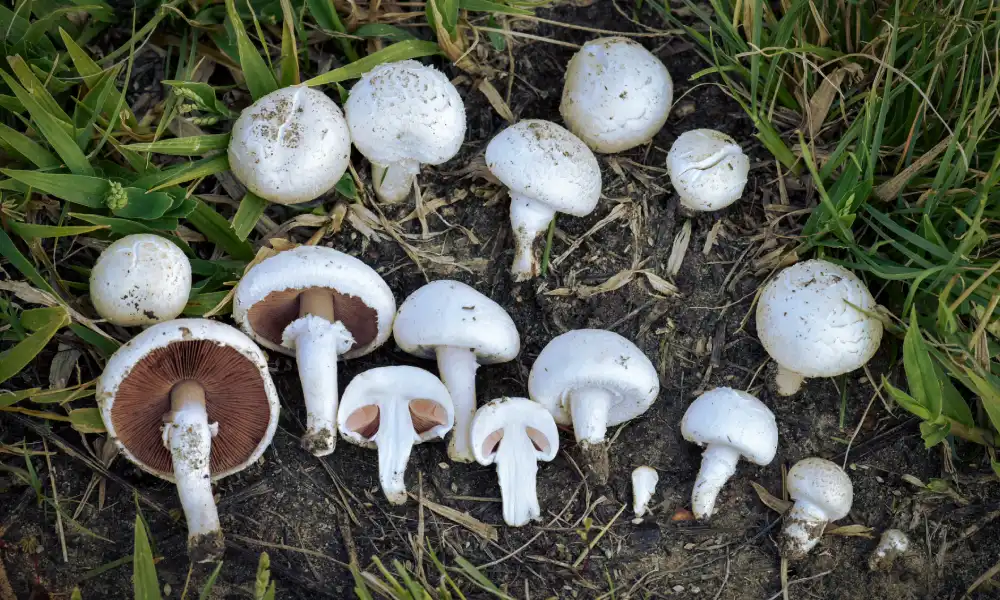
How to Identify:
- White cap, smooth surface
- Gills start pink → turn dark brown
- Mild mushroom smell
- Slight pinkish bruising
👉 Key difference: never has white gills in maturity
2. Agaricus xanthodermus
This is the most dangerous lookalike of field mushrooms and a common cause of poisoning. It looks very similar at first glance, which makes it risky for beginners.
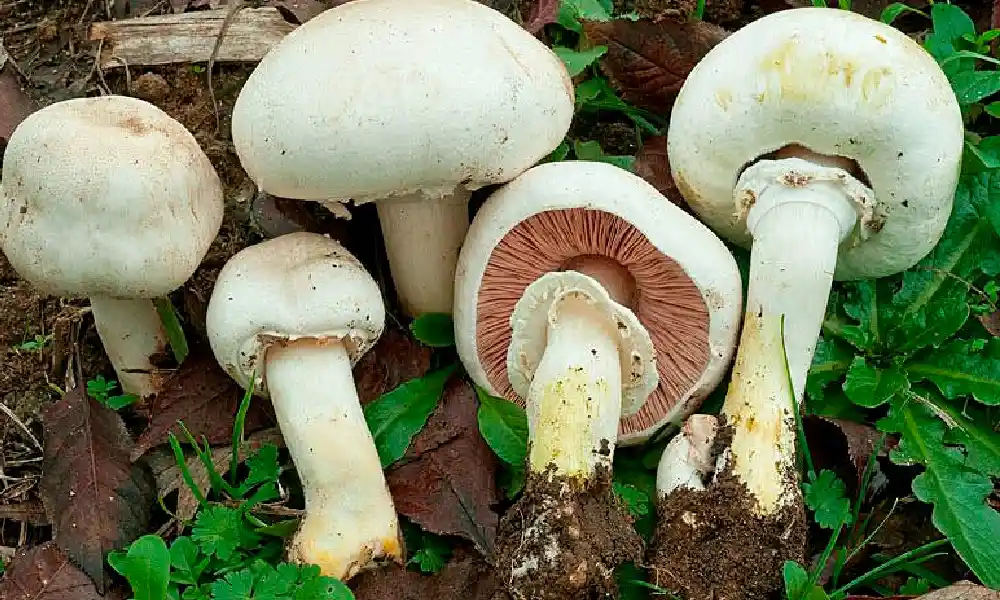
The main difference appears when the mushroom is handled or cut.
How to Identify:
- Turns bright yellow when bruised (especially at base)
- Strong chemical or ink-like smell
- White cap, similar to edible species
⚠️ Causes stomach poisoning—never consume.
3. Coprinus comatus (Shaggy Mane / Lawyer’s Wig)
This is one of the easiest mushrooms to recognize due to its distinct shaggy appearance and melting behavior.
It is considered edible, but only at a very early stage.
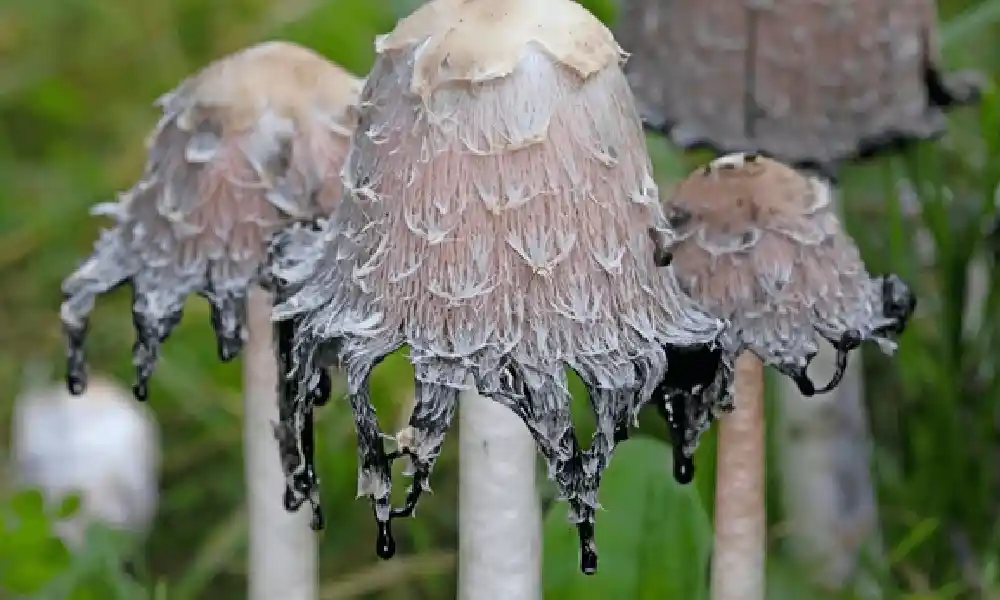
How to Identify:
- Tall, white, shaggy cap
- Gills turn black and dissolve into liquid
- Cylindrical shape when young
👉 Must be eaten quickly after harvesting—spoils fast.
4. Amanita muscaria
This is one of the most visually recognizable mushrooms due to its bright red cap with white spots. It often appears in gardens near trees.
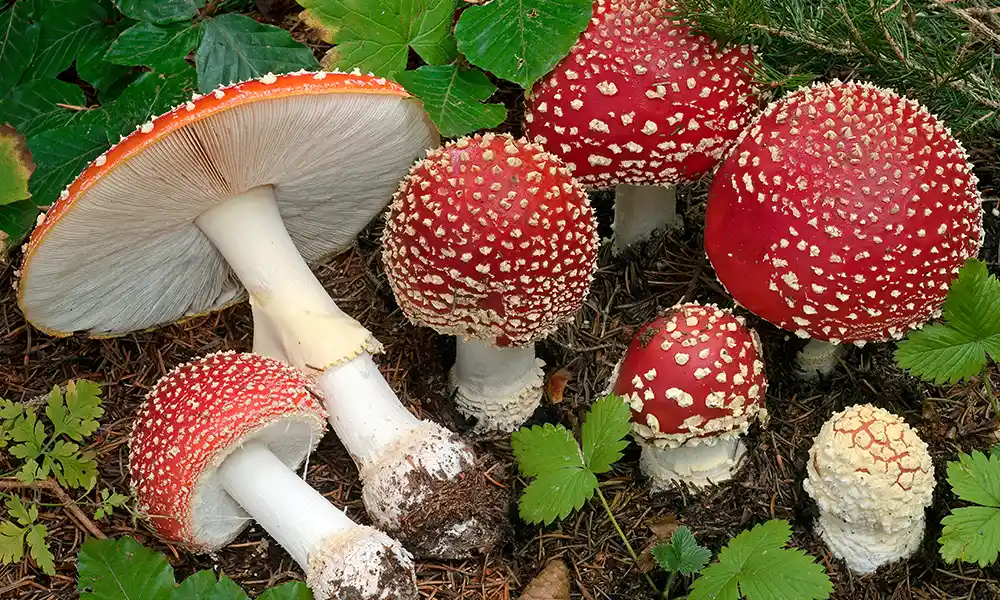
Despite its iconic look, it is toxic and not safe to eat.
How to Identify:
- Bright red cap with white patches
- White gills
- Ring on stem
⚠️ Toxic—can cause hallucinations and illness.
5. Chlorophyllum molybdites
This is one of the most common lawn mushrooms worldwide and frequently causes poisoning.
It is often mistaken for edible parasol mushrooms.
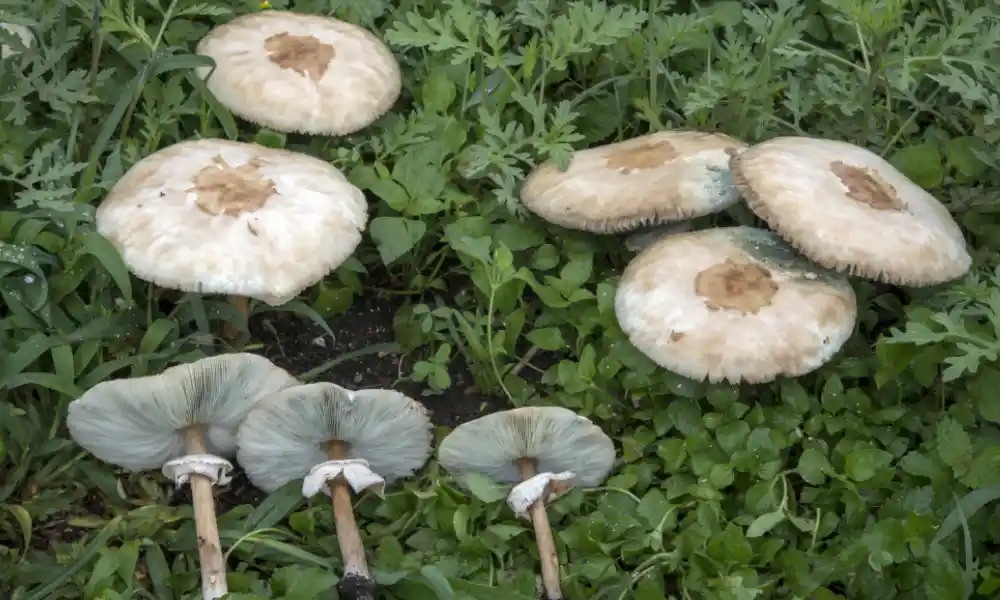
How to Identify:
- Large umbrella-shaped cap
- Gills turn green with age
- Green spore print
⚠️ Causes severe stomach upset.
6. Lacrymaria lacrymabunda (Brick-Red Tear Type)
This mushroom commonly grows on wood, mulch, or decaying material in gardens.
It is not considered edible and may cause digestive issues.
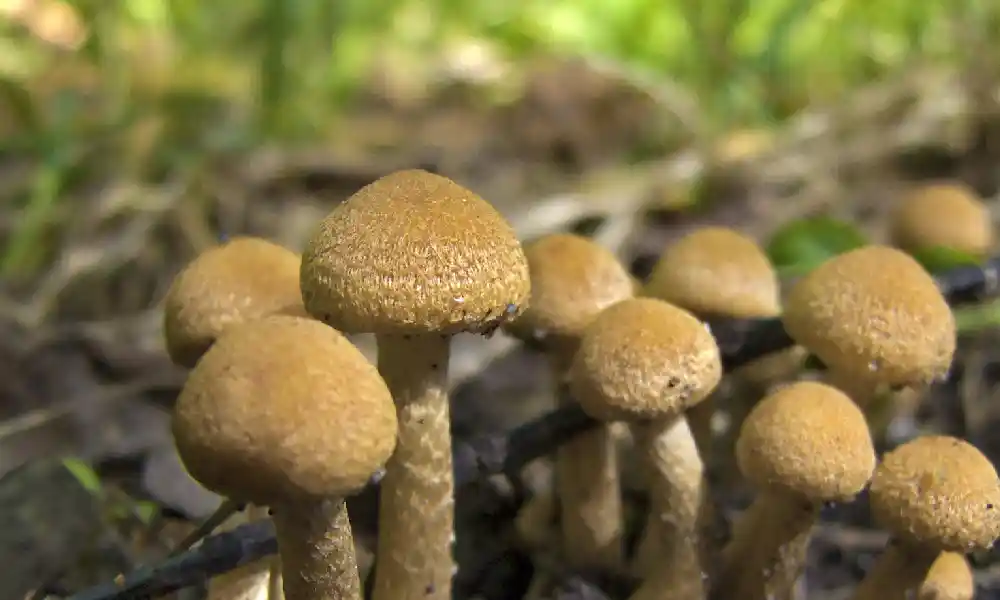
How to Identify:
- Brown to yellowish cap
- Dark gills with “teardrop” moisture spots
- Grows on wood or mulch
⚠️ Inedible—avoid consumption.
7. Amanita phalloides
This is the most dangerous garden mushroom, especially in areas with trees.
It can look harmless or similar to edible species, making it extremely risky.
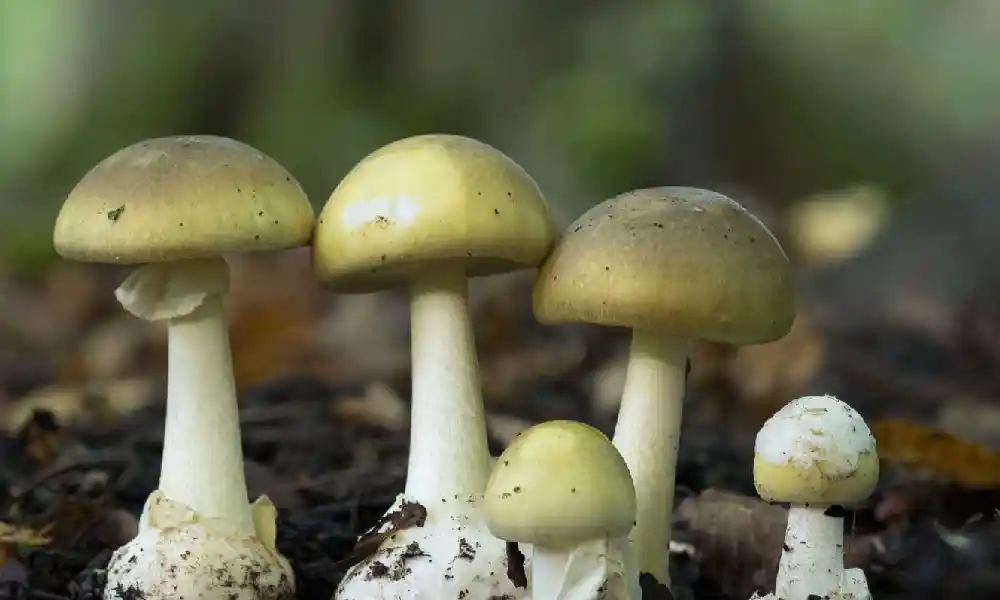
How to Identify:
- White gills
- Ring on stem
- Cup-like base (volva)
- Pale green or yellow cap
☠️ Even a small amount can be fatal.
❓FAQs
How do I identify mushrooms growing in my garden?
Check gills, stem, cap, and habitat, then confirm with a spore print and compare with known species.
Are garden mushrooms safe to eat?
Some are safe, but many are toxic. Never eat them unless you are 100% certain of identification.
What is the most common edible garden mushroom?
Species related to Agaricus bisporus are common, but they can be confused with toxic lookalikes.
How do I know if a garden mushroom is poisonous?
Look for:
- White gills
- Ring + volva
- Unknown species
👉 These are warning signs of dangerous mushrooms.
How to grow a mushroom garden?
Growing a mushroom garden is simple if you recreate the right conditions for fungi. Start by choosing a suitable species like Agaricus bisporus or Pleurotus ostreatus, then prepare a moist, nutrient-rich environment.
Quick Steps:
- Choose a shaded, humid area (garden bed, container, or indoors)
- Use organic substrate (compost, straw, wood chips)
- Add mushroom spawn (starter culture)
- Keep the area moist but not waterlogged
- Maintain moderate temperature (around 15–24°C)
What to Expect:
- Mycelium (fungal network) spreads first
- Mushrooms begin to appear within a few weeks
Sign in to leave a comment and join the discussion.
 Guide
GuideCan Mushroom Coffee Raise Blood Pressure? A Mycologist's Honest Answer The short answer is: it depends on the blend. Mushroom coffee can raise blood...
 Guide
GuideCan Chickens Eat Mushrooms? Yes — but with conditions. Chickens can safely eat certain mushrooms, like button, oyster, shiitake, portobello, and cremini....
 Guide
GuideMedicinal mushroom identification means accurately recognizing fungi with proven health-supporting compounds —and distinguishing them from toxic lookalikes....