Tree Mushroom Identification: How to Identify Mushrooms Growing on Trees

Nathan Cole
Mycologist · Author · Fungi Expert
Updated
Apr 13, 2026
Tree mushroom identification starts with observing growth pattern (shelf vs gilled), color, texture, and the type of tree, then confirming with features like Gill structure and a Spore print. Most mushrooms on wood are Bracket fungus, which grow in layers on trunks or logs, while others grow in clusters like Pleurotus ostreatus.
To identify them safely, you must also consider tree type (oak, birch), habitat, and toxic lookalikes such as Galerina marginata. Always verify multiple features before consuming any wild mushroom.
About Tree Mushroom Identification and Bracket fungus
Tree mushrooms are fungi that grow directly on living or dead wood, feeding on organic material through underground networks known as Mycelium. Unlike ground mushrooms, they often appear as shelf-like layers, clusters, or brackets attached to tree bark.
Why Mushrooms Grow on Trees
- Break down dead wood and recycle nutrients
- Form relationships with tree roots
- Thrive in moist, shaded environments
👉 Most tree mushrooms fall into the category of bracket fungi, making growth shape one of the first identification clues.
How to Identify Mushrooms Growing on Trees (Step-by-Step Guide)?
Identifying mushrooms on trees requires a structured approach, focusing on visual and environmental clues.
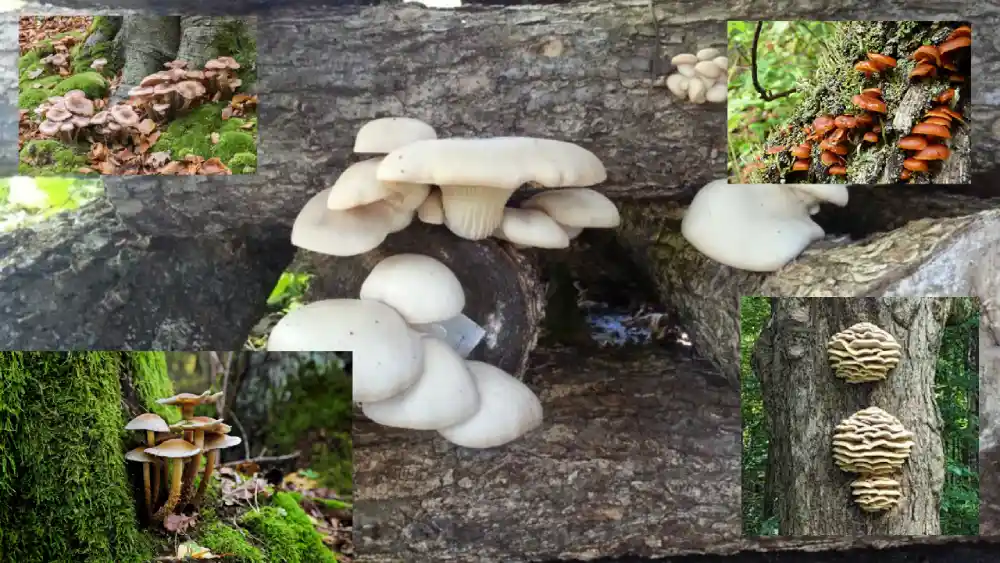
✅ Step 1: Check the Growth Pattern
- Shelf (bracket-like layers)
- Clusters growing from wood
- Individual caps
👉 Example: Pleurotus ostreatus grows in overlapping clusters.
✅ Step 2: Examine Color and Texture
- Bright orange, white, brown, or multicolored
- Smooth, velvety, or woody texture
👉 Color alone is not enough—always combine with other features.
✅ Step 3: Look at the Underside
- Gills, pores, or smooth surface
- Use Gill structure for identification
✅ Step 4: Identify the Tree Type
- Oak, birch, or other hardwood
- Dead vs living tree
👉 Many mushrooms are tree-specific, which helps narrow identification.
✅ Step 5: Confirm with Spore Print
- Place a sample on paper
- Observe color
👉 Use Spore print for final confirmation.
Tree Mushroom Identification Chart (Quick Reference)
| Mushroom | Growth Pattern | Key Identification Features | Tree / Habitat | Spore Color | Safety |
|---|---|---|---|---|---|
| Pleurotus ostreatus | Clustered, shelf-like | Fan-shaped, white/gray, short stem | Dead hardwood | White | ✅ Edible |
| Laetiporus sulphureus | Shelf (bracket) | Bright orange/yellow, thick shelves | Oak, hardwood | White | ✅ Edible |
| Grifola frondosa | Clustered | Leaf-like clusters at tree base | Oak trees | White | ✅ Edible |
| Trametes versicolor | Shelf (thin layers) | Multicolor rings, velvety | Dead wood | White | ⚠️ Inedible (medicinal) |
| Omphalotus illudens | Clustered | Bright orange, gilled | Tree bases | White | ⚠️ Toxic |
| Galerina marginata | Small clusters | Brown caps, thin stems | Wood, logs | Brown | ☠️ Deadly |
Detailed Tree Mushroom Identification (Step-by-Step by Species)
1. Pleurotus ostreatus
Oyster mushrooms are one of the most common and beginner-friendly tree mushrooms. They grow in clusters on dead or dying wood and are widely known for being edible and relatively easy to recognize.
Their distinct fan shape and layered growth make them stand out compared to many other mushrooms.
How to Identify:
- Fan-shaped caps, often overlapping
- White to gray color
- Short or no visible stem
- Gills run down the stem (decurrent)
👉 Commonly found on hardwood trees, especially after rain.
2. Laetiporus sulphureus
This mushroom is famous for its bright orange color and shelf-like growth, making it one of the easiest tree mushrooms to spot.
It grows in large clusters and is highly valued by foragers.
How to Identify:
- Bright orange to yellow color
- Thick, layered shelves
- No gills (smooth underside with pores)
👉 Often grows on oak trees—always check the tree type.
3. Grifola frondosa
Hen of the woods grows in large, leafy clusters at the base of trees, especially oak. It looks very different from typical mushrooms due to its overlapping, ruffled structure.
It is both edible and medicinal, making it highly sought after.
How to Identify:
- Large cluster resembling leaves or petals
- Gray-brown color
- Found at base of trees, not on trunk
👉 Often appears in late summer to autumn.
4. Trametes versicolor
This is a very common bracket fungus known for its colorful, layered appearance. While not edible in the traditional sense, it is widely used for medicinal purposes.
It grows in thin, overlapping shelves on dead wood.
How to Identify:
- Thin, fan-shaped layers
- Multicolored rings (brown, white, blue tones)
- Velvety texture
👉 One of the easiest mushrooms to recognize visually.
5. Omphalotus illudens
This mushroom is a dangerous lookalike of edible species like oyster mushrooms. Its bright color can attract beginners, but it is toxic.
How to Identify:
- Bright orange color
- Gills under the cap (not pores)
- Grows in dense clusters
👉 Unlike oyster mushrooms, it has true gills and a central stem.
6. Galerina marginata
This is one of the most dangerous mushrooms found on wood, often overlooked due to its small size.
It closely resembles harmless brown mushrooms, which makes it extremely risky.
How to Identify:
- Small brown caps
- Thin stems
- Grows on wood and logs
- Brown spore print
👉 Contains deadly toxins—avoid completely.
Do you have good mushroom knowledge? Let's try our Mushroom Identification Quiz
Common Edible Tree Mushrooms like Pleurotus ostreatus and Laetiporus sulphureus
Many mushrooms growing on trees are edible—but only when correctly identified.
Quick Comparison
| Mushroom | Key Features | Habitat | Safety |
|---|---|---|---|
| Pleurotus ostreatus | Fan-shaped, white/gray | Dead wood | ✅ Edible |
| Laetiporus sulphureus | Bright orange shelves | Tree trunks | ✅ Edible |
| Grifola frondosa | Clustered, leafy structure | Tree bases | ✅ Edible |
Key Identification Traits
- Grow directly on wood
- Distinct shapes (shelf or clustered)
- Usually found on specific tree types
👉 These mushrooms are popular among foragers due to their distinct appearance and low confusion risk (when identified correctly).
Toxic Tree Mushrooms to Avoid such as Omphalotus illudens and Galerina marginata
Not all tree mushrooms are safe—some are highly toxic and resemble edible species.
🚫 Dangerous Examples
-
Omphalotus illudens
- Bright orange, grows in clusters
- Causes severe illness
-
Galerina marginata
- Small brown mushroom
- Contains deadly toxins
⚠️ Warning Signs
- Small brown mushrooms on wood
- Bright colors without clear identification
- Unknown species growing in clusters
👉 Always compare with known edible mushrooms before making any decision.
Oak Tree Mushroom Identification (Common Species and Features)
Oak trees are one of the most common hosts for mushrooms, making oak tree mushroom identification a high-value skill for foragers. Many edible and medicinal fungi grow specifically on oak due to its dense hardwood and rich nutrients.
🍄 Common Mushrooms Found on Oak Trees
| Mushroom | Key Features | Safety |
|---|---|---|
| Laetiporus sulphureus | Bright orange shelves, soft texture | ✅ Edible |
| Grifola frondosa | Large clustered growth at base | ✅ Edible |
| Galerina marginata | Small brown caps on wood | ☠️ Deadly |
🔍 Identification Tips for Oak Trees
- Look for shelf-like growth (bracket fungi)
- Check if the mushroom grows on living or dead oak wood
-
Observe color:
- Bright orange → often chicken of the woods
- Brown small clusters → ⚠️ possible toxic species
👉 Oak trees support both edible and deadly mushrooms—always verify carefully.
Birch Tree Mushroom Identification (Key Mushrooms and Growth Patterns)
Birch trees host unique fungi that are often easier to identify due to their distinct shapes and textures. This makes birch tree mushroom identification slightly more beginner-friendly.
🍄 Common Mushrooms on Birch Trees
- Fomitopsis betulina
- Inonotus obliquus
🔍 How to Identify Birch Mushrooms
- Often appear as hard, shelf-like growths
- Grow directly from birch trunks
-
Texture:
- Smooth and rounded (birch polypore)
- Black, cracked mass (chaga)
👉 Birch mushrooms are usually non-gilled and woody, which helps distinguish them from soft edible species.
Check also about: How to Safely Identify Mushrooms in Your Yard?
White Tree Mushroom Identification (How to Identify White Mushrooms on Wood?)
White mushrooms growing on trees can be safe, edible, or highly dangerous, making this one of the most searched topics: white tree mushroom identification.
🍄 Common White Tree Mushrooms
- Pleurotus ostreatus (edible)
- Galerina marginata (toxic lookalike)
🔍 Key Identification Differences
| Feature | Oyster Mushroom | Toxic Lookalike |
|---|---|---|
| Shape | Fan-shaped, layered | Small caps |
| Color | White to gray | Brownish-white |
| Growth | Large clusters | Scattered small groups |
⚠️ Safety Tip
- White mushrooms with gills + small size → high risk
- Large fan-shaped clusters → often safer
👉 Always confirm using a Spore print.
Tree Mushroom Identification by Growth Pattern (Shelf, Cluster, or Gilled)
Growth pattern is one of the fastest ways to identify mushrooms on trees.
🔍 Main Growth Types
1. Shelf (Bracket Fungi)
- Attached directly to wood
- No stem
- Example: Trametes versicolor
2. Clustered Mushrooms
- Grow in groups from one point
- Example: Pleurotus ostreatus
3. Gilled Mushrooms on Wood
- Have visible gills under cap
- Often higher risk (some toxic species)
👉 Shelf fungi are usually easier to identify safely than small gilled mushrooms.
Habitat-Based Tree Mushroom Identification (Dead vs Living Trees)
The condition of the tree plays a major role in identification.
🌳 Dead Trees
- More likely to host edible species
- Rich in decaying organic matter
🌿 Living Trees
- Often host parasitic fungi
- Some may indicate tree disease
🔍 Key Insight
- Mushrooms growing on dead logs → often decomposers
- Mushrooms on living trees → may be parasitic
👉 Always combine tree condition + mushroom features for accurate identification.
Safety Guidelines for Identifying Tree Mushrooms
Before consuming any mushroom found on a tree:
🚫 Avoid If:
- You cannot identify it with certainty
- It resembles toxic species
- It is small and brown (common danger type)
✅ Best Practices:
- Use multiple identification features
- Compare with known species
- Consult experts or guides
👉 Tree mushrooms can be safe—but only with accurate mushroom identification.
Frequently Asked Questions
How do I identify mushrooms growing on trees?
Check growth pattern, color, underside structure, and tree type, then confirm with a spore print.
Are tree mushrooms edible?
Some are edible (like oyster mushrooms), but many are toxic. Only eat mushrooms you can 100% identify.
What is the easiest tree mushroom to identify?
Pleurotus ostreatus is one of the easiest due to its shape and growth pattern.
Sign in to leave a comment and join the discussion.
 Species Guide
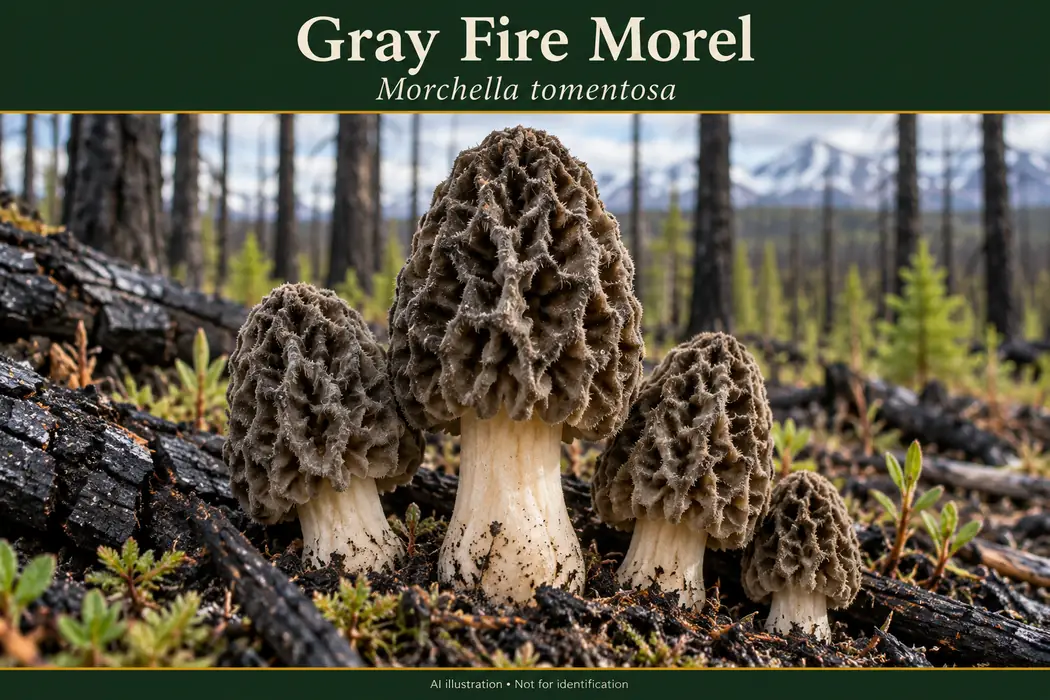
Alaska has many edible mushrooms, including morels, king boletes, golden chanterelles, hedgehogs, oyster mushrooms and bear’s head mushrooms. Most appear...
 Species Guide
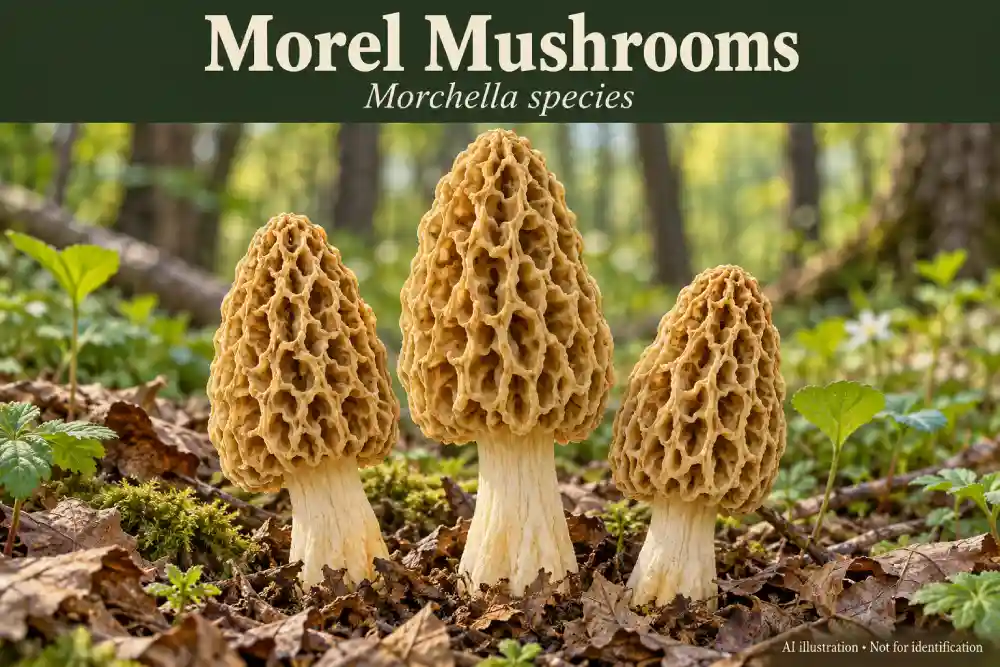
Wisconsin is home to edible mushrooms such as morels, chanterelles, oyster mushrooms, hen of the woods, chicken of the woods and giant puffballs. Different...
 Species Guide
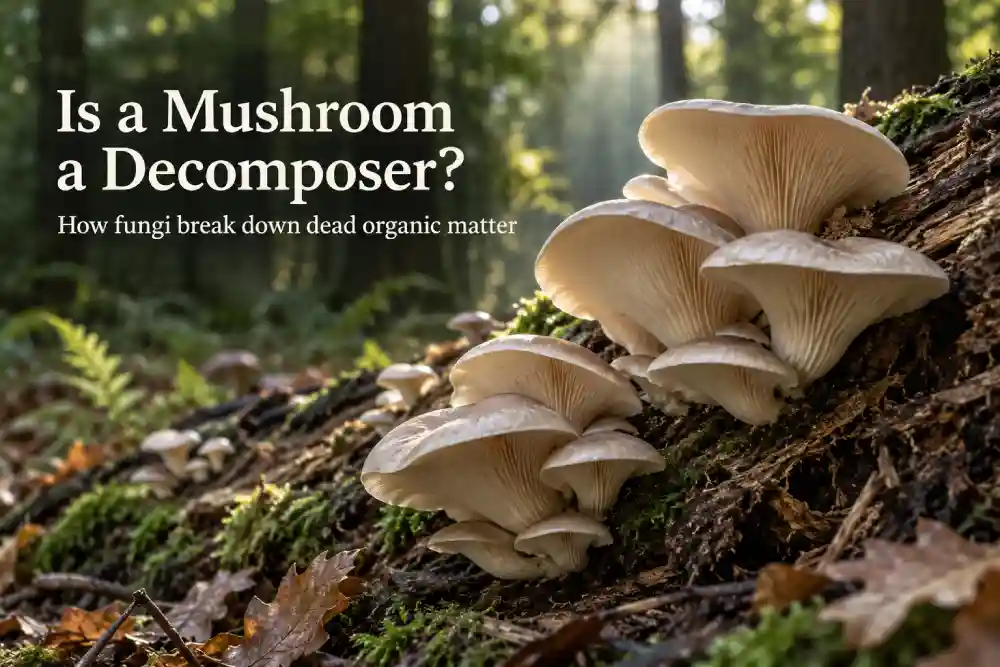
Is a Mushroom a Decomposer? Yes, many mushroom-forming fungi are decomposers. They break down dead wood, fallen leaves and other organic material, helping...