Omphalotus illudens (Jack-o'-Lantern Mushroom)

Nathan Cole
Mycologist · Author · Fungi Expert
Updated
Apr 11, 2026
What is Omphalotus illudens?
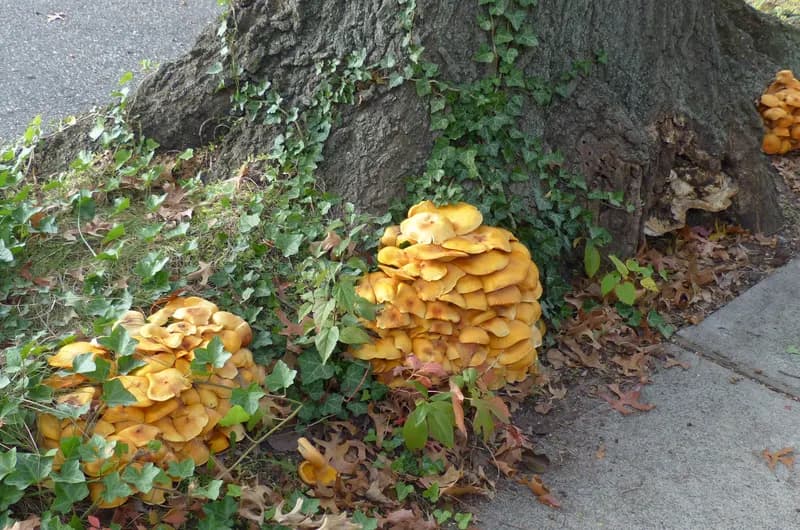
Omphalotus illudens, commonly known as the jack-o'-lantern mushroom, is a bright orange, bioluminescent fungus found mainly in North America. It is toxic and not edible, often mistaken for edible chanterelles due to its color. However, unlike chanterelles, it grows in clusters on wood and can cause severe gastrointestinal poisoning. Its unique glow in the dark (bioluminescence) makes it one of the most fascinating yet dangerous mushrooms in the wild. Accurate identification is crucial, and tools like a mushroom identifier can help distinguish it from edible look-alikes.
Omphalotus illudens Scientific Classification & Taxonomy
Kingdom
Fungi
Phylum
Basidiomycota
Class
Agaricomycetes
Order
Agaricales
Family
Marasmiaceae
Genus
Omphalotus
Species
Omphalotus illudens
Closely related species include Omphalotus olearius (European jack-o'-lantern). Both share bioluminescence and toxicity.
Omphalotus illudens Key Features (Identification Essentials)
Understanding its features is critical for safe mushroom identification:
Visual Characteristics
- Color: Bright orange to pumpkin-orange
- Cap Shape: Convex → flat → slightly funnel-shaped
- Cap Size: 5–20 cm wide
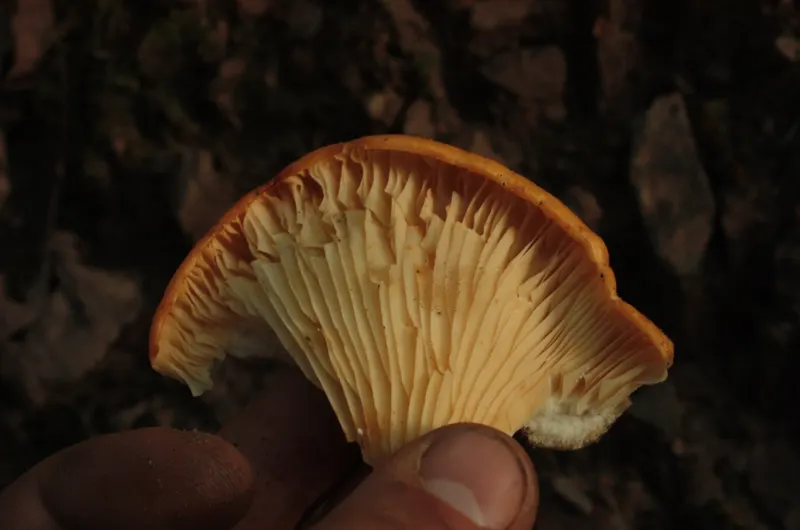
- Gills: Sharp, deep, decurrent (run down the stem)
- Stem: Central, firm, orange
Bioluminescence
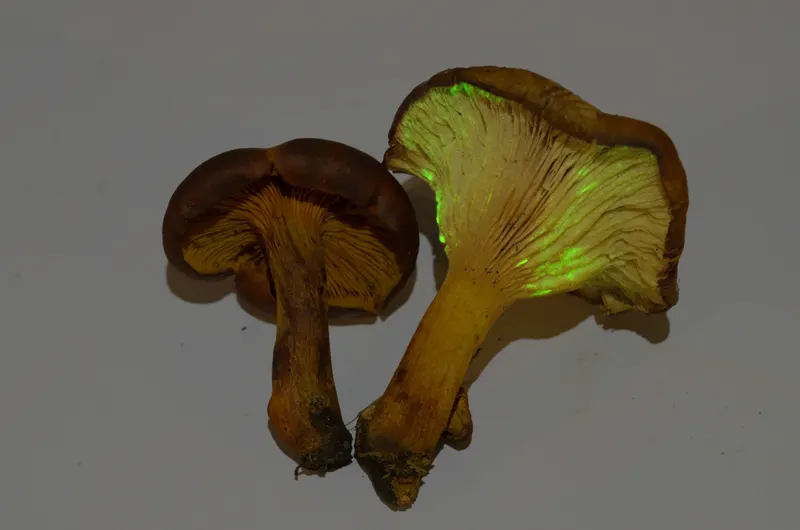
- Emits a faint green glow in dark environments
- Caused by natural compounds like luciferin and luciferase
Growth Pattern
- Grows in dense clusters
- Often found at the base of trees or on decaying wood
Omphalotus illudens Environment & Habitat
Habitat & Distribution
Common in:
- Eastern North America
- Midwest USA
- Southeastern forests
Typically grows on:
- Decaying hardwood stumps
- Buried roots
- Dead logs
Seasonality
- Late summer to fall (peak growth period)
Preferred Environment
- Moist woodland areas
- Rich organic soil near tree bases
Omphalotus illudens Physical Dimensions & Structure
Cap Diameter
5–20 cm
Stem Height
5–15 cm
Stem Thickness
1–3 cm
Gills Depth
Deep and crowded
Smell, Taste & Texture
- Smell: Mild to slightly unpleasant
- Taste: Bitter (should NEVER be tasted intentionally)
- Texture: Fibrous and firm
Important: Never taste unknown mushrooms for identification.
Omphalotus illudens Toxicity & Health Risks
Yes — highly toxic (moderate severity). Not edible under any circumstances.
Symptoms of Poisoning
- Nausea
- Vomiting
- Abdominal cramps
- Diarrhea
Symptoms usually appear within a few hours after ingestion.
Toxic Compounds
- Contains illudin S, a cytotoxic compound
While rarely fatal, it can cause severe distress and dehydration. Unlike Death Cap (Amanita phalloides) which contains amatoxins, the toxins in jack-o'-lantern mushroom are less lethal but still dangerous.
Omphalotus illudens Risk Level Assessment
Similar Species (Critical Comparison)
One of the biggest dangers is confusion with edible mushrooms:
Chanterelles (Cantharellus cibarius)
| Feature | Jack-o'-Lantern | Chanterelle |
|---|---|---|
| Color | Bright orange | Yellow/orange |
| Growth | Clusters on wood | Scattered on soil |
| Gills | True gills | False gills (ridges) |
| Glow | Yes (bioluminescent) | No |
Other False Lookalikes
- Omphalotus olearius (European jack-o'-lantern)
- Some orange Gymnopilus species
Growth Pattern & Life Cycle
Growth Behavior
- Saprotrophic fungus (feeds on decaying organic matter)
- Breaks down wood and recycles nutrients
Life Cycle
- Spore release
- Mycelium formation in wood
- Fruiting body (mushroom)
- Spore dispersal
Omphalotus illudens Economic & Ecological Value
Ecological Role
- Important decomposer in forest ecosystems
- Helps recycle nutrients
Economic Value
- No culinary value (toxic)
- Studied in medicine due to illudin compounds
- Potential anti-cancer research applications
Pros and Cons
✅ Pros
- Unique bioluminescent properties
- Important ecological role
- Valuable in scientific research
❌ Cons
- Toxic and unsafe to eat
- Easily confused with edible species
- Can cause severe illness
Regions Where It Is Found
- 🇺🇸 United States (East, Midwest, Southeast)
- 🇨🇦 Parts of Canada (less common)
- Rare outside North America (related species exist elsewhere)
How to Identify Omphalotus illudens (Field Guide)
Step-by-Step Identification
- Check color → bright orange
- Observe growth → clustered on wood
- Inspect gills → true, sharp, deep
- Look for glow in darkness
- Compare with chanterelles carefully
You can also use a mushroom identification app to upload photos and confirm species safely. This helps reduce misidentification risks and supports beginners. For a deeper understanding of mushroom structures like gills and caps, check our mushroom parts explained guide.
Expert Tips for Safe Mushroom Identification
- Never rely on color alone
- Always check habitat (wood vs soil)
- Use multiple identification factors
- Cross-check with field guides or experts
When in doubt → DO NOT CONSUME. For more on distinguishing deadly species, see our Death Cap vs Destroying Angel comparison guide.
Frequently Asked Questions
Is jack-o'-lantern mushroom edible?
No, it is toxic and can cause severe gastrointestinal illness.
Why does Omphalotus illudens glow?
It produces light through a chemical reaction involving luciferin and luciferase, a natural bioluminescent process.
Can it kill you?
It is rarely fatal but can cause intense poisoning symptoms requiring medical attention.
How do you tell it apart from chanterelles?
Look for growth on wood (not soil), true gills (not ridges), and cluster formation.
Can AI identify this mushroom?
Yes, modern tools and apps can help identify it using images, but always verify with expert sources.
What should I do if I eat one?
Seek medical help immediately. Do not wait for symptoms to worsen.
Final Thoughts
Omphalotus illudens (jack-o'-lantern mushroom) is a perfect example of nature's beauty hiding danger. Its glowing appearance and vibrant color attract attention, but its toxicity makes it unsafe for consumption. Proper identification using habitat, structure, and expert tools is essential. Whether you're a beginner or an experienced forager, always prioritize safety and verification.
Sign in to leave a comment and join the discussion.