Edible Mushrooms – Oyster Mushroom Identification (Pleurotus ostreatus)

Nathan Cole
Mycologist · Author · Fungi Expert
Updated
Apr 11, 2026
What are Oyster Mushrooms?
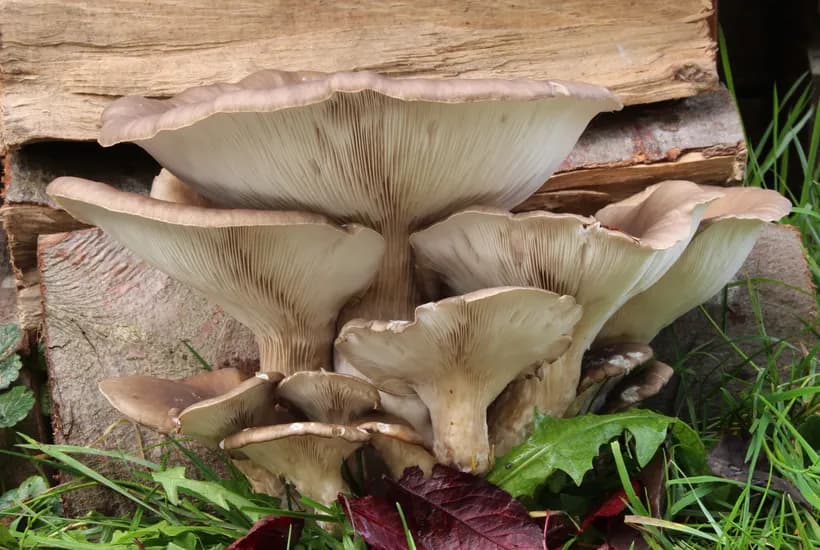
Pleurotus ostreatus, commonly known as oyster mushrooms, are one of the most popular and easy-to-identify edible wild mushrooms. They are named for their oyster-shaped caps, soft texture, and mild, slightly sweet flavor. Found worldwide, they grow naturally on decaying wood and are also widely cultivated for food.
For identification, key features include fan-shaped caps, white to cream gills that run down the stem (decurrent gills), and growth in layered clusters on wood. Oyster mushrooms are generally safe for beginners, but they can still be confused with toxic lookalikes. To improve accuracy, many foragers use a mushroom identifier tool or AI mushroom identification app alongside field observation.
Scientific Classification & Taxonomy
| Kingdom | Fungi |
| Phylum | Basidiomycota |
| Class | Agaricomycetes |
| Order | Agaricales |
| Family | Pleurotaceae |
| Genus | Pleurotus |
| Species | Pleurotus ostreatus |
Oyster mushrooms belong to the Pleurotus genus, a group of fungi known for their wood-decaying abilities and commercial cultivation. Several related species exist, including Pleurotus pulmonarius and Pleurotus eryngii, all valued for their culinary uses.
Key Features (Identification Essentials)
Cap Characteristics
The cap of oyster mushrooms is fan-shaped, shell-like, and smooth, often resembling an oyster. Colors range from white and cream to gray or light brown, depending on age and environment. Caps typically grow in overlapping layers, forming shelf-like clusters on wood.
- Shape: Fan-shaped, shell-like, overlapping
- Color: White, cream, gray, or light brown
- Surface: Smooth with slightly inrolled edges
- Size: 5–20 cm diameter
Gills (Decurrent Structure)
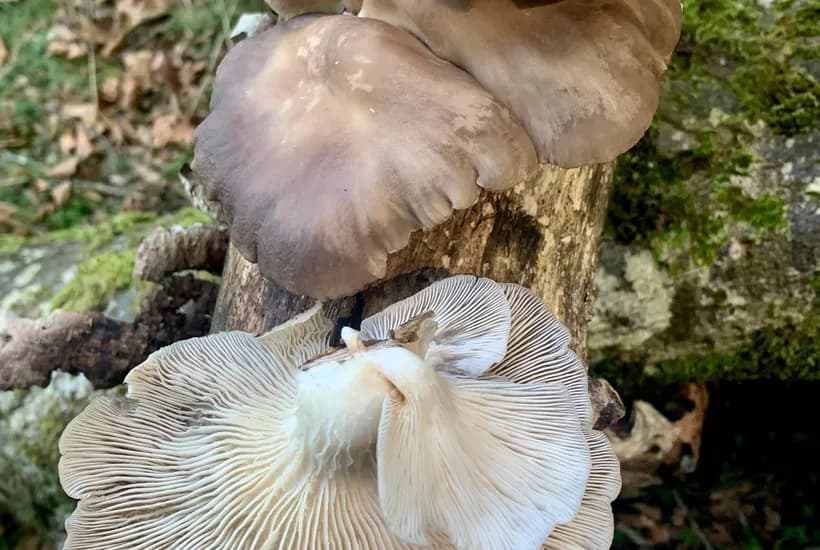
Oyster mushrooms have white, closely spaced gills that run down the stem (decurrent). This feature is one of the most reliable identification markers. Unlike many mushrooms, the gills extend seamlessly onto the stem.
Stem (Stipe)
The stem is usually short, off-center, or sometimes absent, depending on how the mushroom grows. It is firm, white, and often attached laterally to wood, giving the mushroom its characteristic sideways appearance.
- Shape: Short, off-center, or absent
- Color: White
- Attachment: Lateral, directly to wood
- Length: 1–5 cm
Color, Smell & Texture
Oyster mushrooms have a mild, slightly sweet aroma, sometimes described as faintly anise-like. The flesh is soft, tender, and white, making it ideal for cooking. Their texture becomes velvety when cooked, which is why they are popular in many cuisines.
Environment & Habitat
Habitat & Distribution
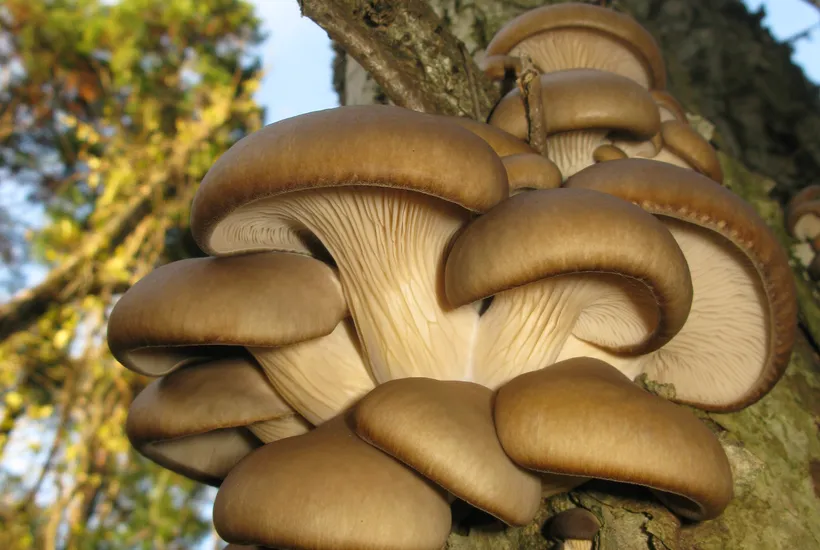
Oyster mushrooms are found across Europe, North America, Asia, and Africa, growing naturally on hardwood trees such as oak, beech, and poplar. They are also widely cultivated in controlled environments.
Seasonality
They typically appear in autumn and winter, although some species grow in spring. Moist conditions and cooler temperatures favor their growth.
Growth Pattern
They grow in dense, layered clusters on dead or dying wood, often forming large groups. This clustered growth is a key identification feature.
Physical Dimensions & Structure
| Feature | Measurement |
|---|---|
| Cap Diameter | 5–20 cm |
| Stem Length | 1–5 cm |
| Thickness | 1–3 cm |
| Growth | Clustered, shelf-like |
Their layered growth and broad caps make them visually distinctive and easy to spot in the wild.
Edibility & Nutritional Value
Are oyster mushrooms edible? Yes — highly edible and widely cultivated worldwide.
Culinary Uses
Oyster mushrooms are used in stir-fries, soups, pasta, and vegan dishes, often as a meat substitute due to their texture. Their mild flavor absorbs seasonings well, making them extremely versatile in the kitchen.
Nutritional Benefits
They are rich in protein, fiber, antioxidants, and B vitamins, supporting immune health and overall nutrition.
Risk Level Assessment
| Factor | Level |
|---|---|
| Edibility | Excellent |
| Toxicity Risk | Low |
| Misidentification Risk | Moderate |
| Fatality Risk | Very Low |
Oyster mushrooms are considered beginner-friendly but still require careful identification to avoid confusion with toxic lookalikes.
Similar Species (Critical Comparison)
Lookalikes
| Feature | Oyster Mushroom | Toxic Lookalikes |
|---|---|---|
| Growth | On dead/dying wood | On wood (clusters) |
| Gills | White, decurrent | True gills, sharp |
| Spore Color | White to lilac | Brown or other |
| Flesh | White, soft, tender | May vary |
| Toxicity | Edible (excellent) | Some toxic |
Common confusion species: Omphalotus illudens (toxic) and Crepidotus species (inedible). Key difference: oyster mushrooms have white spores and soft flesh, while some lookalikes have different spore colors or textures. Read our jack-o'-lantern mushroom guide for detailed comparison.
Growth Pattern & Life Cycle
Oyster mushrooms are saprotrophic fungi, meaning they feed on dead organic material, especially wood. They play a crucial role in breaking down lignin and cellulose, recycling nutrients back into the ecosystem. Their life cycle includes spore dispersal, mycelium growth, and fruiting body formation.
Did you know? Oyster mushrooms are one of the few mushroom species that are carnivorous—they can trap and digest nematodes (tiny worms) to supplement their nitrogen intake. They are also used in environmental cleanup (bioremediation) to break down pollutants.
Regions Where It Is Found
Oyster mushrooms are one of the most globally cultivated mushrooms and are widely distributed:
Economic & Ecological Value
Oyster mushrooms have high economic value due to their ease of cultivation and demand in global markets. Ecologically, they are important decomposers that help maintain forest health and are even used in environmental cleanup (bioremediation). Understanding mushroom parts and anatomy helps appreciate how these structures enable their decomposing role.
Pros and Cons
Pros
- ✓ Easy to identify for beginners
- ✓ Highly edible and nutritious
- ✓ Widely available (wild and cultivated)
- ✓ Versatile in cooking
Cons
- ✗ Can be confused with some toxic species
- ✗ Short shelf life after harvesting
- ✗ Requires proper identification in the wild
- ✗ Delicate texture bruises easily
How to Identify Oyster Mushrooms Safely
Step-by-Step Identification
For additional safety, use a free mushroom identifier app or AI-based mushroom identification system to confirm species before consumption.
Expert Identification Tips
Always confirm multiple features before harvesting. Avoid mushrooms growing on unusual substrates or with unusual colors. Check spore color if unsure, and cross-reference with reliable sources or tools. For a comprehensive visual reference, explore our mushroom identification book recommendations.
While oyster mushrooms are beginner-friendly, always verify that you are not collecting Crepidotus or Omphalotus species. Check for white spore print, decurrent gills, and growth on hardwood.
People Also Ask (FAQs)
Are oyster mushrooms safe to eat?+
What do oyster mushrooms taste like?+
Where do oyster mushrooms grow?+
Can beginners forage oyster mushrooms?+
Can AI identify oyster mushrooms?+
Are there poisonous oyster mushroom lookalikes?+
Final Thoughts
Pleurotus ostreatus is one of the best mushrooms for beginners due to its distinct appearance, excellent taste, and wide availability. Its role in both ecosystems and global cuisine makes it highly valuable.
By combining field knowledge with a reliable mushroom identifier tool, you can safely identify and enjoy oyster mushrooms while avoiding potential lookalikes.
Sign in to leave a comment and join the discussion.