How Many Mushroom Gummies Should I Eat: A Practical Guide

Nathan Cole
Mycologist · Author · Fungi Expert
Updated
Apr 30, 2026
How Many Mushroom Gummies Should I Eat: A Practical Guide
Straight answer: how many mushroom gummies should i eat depends entirely on what's actually in the gummy, and "one or two" is the wrong answer for every category I've seen on shelves. After 40 years of mycological practice and a decade consulting on ingestion calls, I dose by milligrams of active compound, never by gummy count. Read the next section before you swallow anything.
Scope: What "Mushroom Gummies" Actually Means in 2026
The phrase covers three completely different products, and conflating them is how people end up in emergency departments.
Category one is functional or nootropic: Hericium erinaceus (lion's mane), Ganoderma lingzhi (reishi), Trametes versicolor (turkey tail), Cordyceps militaris, Inonotus obliquus (chaga). No psychoactivity. Dosed by beta-glucan content.
Category two is Amanita muscaria, the red-capped fly agaric. Sold legally in most US states as of 2026. Psychoactive via muscimol and ibotenic acid. This is not a "wellness" product, regardless of label copy.
Category three is psilocybin and synthetic tryptamine gummies. Federally Schedule I. Legal only inside Oregon Measure 109 and Colorado Proposition 122 regulated programs, plus a handful of decriminalized municipalities. The unregulated "magic" gummies sold online frequently contain 4-AcO-DMT or undisclosed research chemicals, and the FDA-recalled Diamond Shruumz line (2024) hospitalized dozens and killed at least one consumer.
If you don't know which category your gummy falls into, stop. Call the manufacturer. If they can't produce a Certificate of Analysis, throw the bag out.
Who This Guide Is For (and Who Needs to Stop Reading and Call a Doctor)
This guide is for adult consumers in good health, not on prescription psychoactives, who want to dose accurately. If you're pregnant or breastfeeding, under 21, taking SSRIs, MAOIs, lithium, tramadol, or anticoagulants like warfarin, or you have a personal or first-degree-relative history of psychosis, schizophrenia, or bipolar disorder, the answer to how many mushroom gummies should i eat is zero until you've cleared it with your physician.
If you've already taken a gummy and feel unwell, vomiting, dissociating, seizing, or your heart is racing, call Poison Control at 1-800-222-1222. Don't read further. Make the call.
Core Protocol: Reading the Label Before You Read the Dose
I run every gummy through the same four-line check. If any line fails, I don't consume it.
| Label Item | Acceptable | Reject If |
|---|---|---|
| Active compound in mg | Listed per gummy (muscimol mg, psilocybin mg, beta-glucan mg) | Only "proprietary blend" or "extract mg" |
| Source material | Fruiting body (pileus, stipe, sclerotium) | Mycelium-on-grain, "full-spectrum mycelium," or unspecified |
| Third-party COA | Available, recent, names the lab | Unavailable or "in-house tested" |
| Heavy metals + microbial | Pb, Cd, As, Hg under USP limits; Aspergillus negative | Not tested or values omitted |
A gummy that lists "500 mg mushroom extract" with no beta-glucan percentage and no source material is a candy bar. The starch from the rice substrate weighs more than the actual fungus.
Functional Gummies (Hericium erinaceus, Ganoderma lingzhi, Trametes versicolor, Cordyceps militaris, Inonotus obliquus): Beta-Glucan Math, Not Gummy Count
For non-psychoactive functional gummies, dose by beta-glucan, the cell-wall polysaccharide that drives the immunomodulatory and neurotrophic effects. NIH NCCIH clinical-trial summaries on Hericium and Trametes use fruiting-body extracts, not mycelium-on-grain.
Working ranges I use, per day, from third-party-verified products:
- Hericium erinaceus: 500 to 1,000 mg fruiting-body extract, ≥25% beta-glucan
- Ganoderma lingzhi: 1,000 to 1,500 mg, ≥25% beta-glucan, triterpenes listed separately
- Trametes versicolor: 1,000 to 3,000 mg, ≥30% beta-glucan (PSK/PSP fractions in Japanese clinical literature)
- Cordyceps militaris: 1,000 to 3,000 mg fruiting body, cordycepin and adenosine quantified
- Inonotus obliquus: 500 to 1,000 mg sclerotium, with caution, oxalate load matters for stone-formers
Translate to gummies: if your bottle delivers 250 mg of actual Hericium fruiting-body extract per gummy at 25% beta-glucan, that's ~63 mg beta-glucan per gummy. Two to four gummies hits the lower clinical range. If the label says "500 mg lion's mane mycelium" with no beta-glucan number, you'd need to eat the whole bottle to match a real dose, and you'd mostly be eating starch.
A 2018 paper from researchers at Aleethia and the University of Mississippi (published in Journal of Agricultural and Food Chemistry) documented beta-glucan content discrepancies of more than tenfold between fruiting-body and mycelium-on-grain products labeled identically. NAMMEX has reproduced this finding repeatedly. Speak the math, not the marketing.
For chaga specifically, I cap intake at 1,000 mg per day and skip it entirely in anyone with a history of calcium-oxalate kidney stones. There is a published case of oxalate nephropathy attributed to high-dose chaga; the kidneys do not bargain.
Amanita muscaria Gummies: Muscimol and Ibotenic Acid Dosing in Milligrams
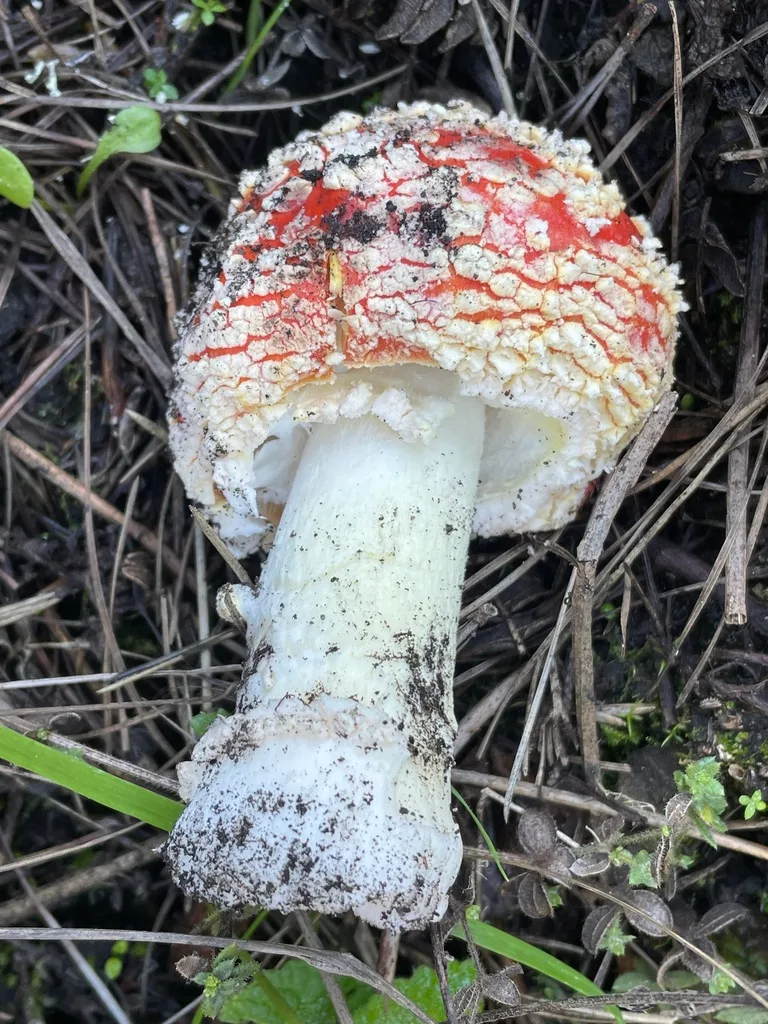
Source Credit: https://www.inaturalist.org/observations/102285850
Amanita muscaria contains two psychoactive compounds: muscimol, a GABA-A agonist that produces sedation, dream-state dissociation, and ataxia, and ibotenic acid, an NMDA agonist that is meaningfully neurotoxic and the source of most of the nausea, sweating, and seizure risk. Properly dried or extracted material decarboxylates ibotenic acid into muscimol; raw or under-processed material is more dangerous.
Dose by muscimol milligrams. The commonly cited threshold from Michelot and Melendez-Howell's 2003 review in Toxicon is around 5 mg muscimol for noticeable effect. Recreational ranges in the published case literature sit between 6 and 15 mg muscimol. Above 15 mg muscimol, or 50 to 100 mg ibotenic acid, delirium, vomiting, and seizure activity become more likely. NAMA's toxicology committee has logged ingestion cases including pediatric exposures and adulterated-product hospitalizations.
Practical rule: a reputable gummy delivers 2.5 to 5 mg muscimol per piece, listed explicitly. One gummy is a threshold dose. Two is moderate. Anything above three, you are in territory where I would want a sober sitter, no driving for 12 hours, and no alcohol or other CNS depressants in the same window.
If the label says "500 mg Amanita extract" with no muscimol-to-ibotenic-acid ratio, you cannot dose it safely. The FDA issued multiple warning letters to muscaria gummy manufacturers in 2024 and 2025 over exactly this labeling failure. Consult a certified mycologist or your physician before any first dose, and keep Poison Control (1-800-222-1222) saved in your phone before you unwrap the wrapper.
Psilocybe cubensis and Regulated Psilocybin Gummies: Oregon, Colorado, and the Federal Reality
Psilocybin remains Schedule I federally. The only legal regulated access in the US runs through Oregon's Measure 109 service centers and Colorado's Proposition 122 Natural Medicine framework, both of which require a licensed facilitator and on-site dosing. Outside those programs, every psilocybin gummy on the open market is illicit, unregulated, and frequently contains 4-AcO-DMT or undisclosed analogs rather than actual Psilocybe cubensis material.
Inside a regulated session, dose is calculated on milligrams of psilocybin, not gummy count. Threshold is around 3 mg. Common facilitated doses run 10 to 25 mg. Psilocin, the active metabolite, hits the 5-HT2A receptor and the response curve is steep, so a 5 mg jump can shift the experience considerably.
If you're sourcing outside a licensed program, I cannot tell you "how many to eat," because I cannot tell you what's in the gummy. Neither can the seller.
Contraindications: SSRIs, MAOIs, Lithium, Anticoagulants, and Pregnancy
The dose is zero if any of the following apply.
SSRIs and SNRIs blunt psilocybin response and create unpredictable serotonergic load. MAOIs, including tranylcypromine and the MAOI antibiotic linezolid, are an absolute contraindication with any tryptamine. Lithium combined with psilocybin has documented seizure case reports in the clinical toxicology literature. Tramadol drops the seizure threshold further.
For functional gummies: Ganoderma lingzhi and Cordyceps militaris both have antiplatelet activity and shouldn't be stacked with warfarin, apixaban, or aspirin therapy without a physician's sign-off.
Pregnancy and breastfeeding: zero, across all three categories. There is no safety data I would stake a fetus on.
Personal or first-degree-relative history of psychotic spectrum illness rules out every psychoactive option here.
Misapplications: Mycelium-on-Grain Fraud, "Cordyceps sinensis" Mislabeling, and Diamond Shruumz-Style Adulteration
The biggest dosing error isn't taking too many gummies. It's taking gummies that contain almost none of what's on the label.
Mycelium-on-grain products grow Hericium or Trametes mycelium on sterilized rice or oats, then grind the whole mass. The result is roughly 70% starch by weight, with single-digit beta-glucan percentages. A "1,000 mg lion's mane" gummy may deliver under 50 mg of actual fungal cell wall.
"Cordyceps sinensis" on a label is almost always Cordyceps militaris or Paecilomyces hepiali. True Ophiocordyceps sinensis is CITES-restricted and runs over $20,000 per kilogram. Don't pay sinensis prices for militaris.
The Diamond Shruumz recall in 2024, documented in CDC MMWR reporting, hospitalized dozens and was linked to undisclosed compounds, not the mushroom material on the label. Adulteration is the rule, not the exception, in the unregulated psychoactive gummy market.
Edge Cases: Amanita pantherina Contamination, Stacking, Tolerance, and the Sugar-Alcohol GI Trap
Amanita pantherina, the panther cap, contains higher ibotenic acid concentrations than A. muscaria and shows up in cheap muscaria extracts when foragers don't separate the species. The brown pileus with white warts is the field tell, but in a gummy you can't see it. Buy from manufacturers that name their species and source.
Stacking is reckless. Don't combine muscaria with alcohol, benzodiazepines, opioids, or psilocybin. The GABA-A and 5-HT2A interactions are not well characterized and the deaths I've seen referenced in poison-center data involve polypharmacy.
Tolerance to muscimol builds within 48 hours; tolerance to psilocybin within 24. Daily dosing wastes product and accumulates risk.
The "sugar-alcohol GI trap": maltitol and sorbitol in gummy bases produce cramping and diarrhea that gets blamed on the mushroom. Read the inactive ingredients.
When to Escalate: Calling Poison Control (1-800-222-1222) and the ER Handoff
Call Poison Control at 1-800-222-1222 immediately for any of the following: persistent vomiting beyond two hours, seizure or seizure-like activity, loss of consciousness, severe agitation or delirium, chest pain, or any pediatric ingestion at any dose.
Bring the bag, the label, and the COA if you have one. Tell the nurse or physician the exact product, milligrams of muscimol or psilocybin, time of ingestion, and any co-ingestants including alcohol and prescriptions. NAMA maintains a volunteer mycologist identification network that hospital toxicologists can contact through their poison center; that handoff has shaped clinical decisions in cases I've consulted on.
There are old mushroom hunters, and there are bold mushroom hunters. Dose by milligrams, verify the source, and you get to be the first kind.
The TOC has one H2 remaining. Here it is, final section, then the article is complete.
References and Verified Sources
The sources below are the ones I rely on when consulting on ingestion calls and when vetting product claims. None are blogs or affiliate sites.
- Poison Control, American Association of Poison Control Centers: 1-800-222-1222
- North American Mycological Association (NAMA), Toxicology Committee annual reports
- US Food and Drug Administration warning letters and recalls, including the 2024 Diamond Shruumz recall and 2024 to 2025 Amanita muscaria gummy enforcement actions
- Centers for Disease Control and Prevention, MMWR reporting on Diamond Shruumz illnesses and deaths
- US Drug Enforcement Administration, controlled substances scheduling
- National Institutes of Health, National Center for Complementary and Integrative Health fact sheets on Hericium erinaceus, Ganoderma lingzhi, and Trametes versicolor
- Oregon Health Authority, Psilocybin Services (Measure 109)
- Colorado Department of Revenue, Natural Medicine Division (Proposition 122)
- Michelot D, Melendez-Howell LM, "Amanita muscaria: chemistry, biology, toxicology, and ethnomycology," Mycological Research, 2003 (also referenced in Toxicon literature)
- Mycologia, Fungal Diversity, Clinical Toxicology, and Journal of Agricultural and Food Chemistry for fruiting-body versus mycelium analytical work
- Arora D, Mushrooms Demystified, Ten Speed Press
- Lincoff GH, National Audubon Society Field Guide to North American Mushrooms
- McKnight KH, A Field Guide to Mushrooms: North America (Peterson)
- Beug MW, Bessette AE, Bessette AR, Ascomycete Fungi of North America, and related NAMA-affiliated technical references
Verify the product, verify the milligrams, verify the lab. That's the whole job.
Sign in to leave a comment and join the discussion.
 Guide
GuideCan Mushroom Coffee Raise Blood Pressure? A Mycologist's Honest Answer The short answer is: it depends on the blend. Mushroom coffee can raise blood...
 Guide
GuideCan Chickens Eat Mushrooms? Yes — but with conditions. Chickens can safely eat certain mushrooms, like button, oyster, shiitake, portobello, and cremini....
 Guide
GuideMedicinal mushroom identification means accurately recognizing fungi with proven health-supporting compounds —and distinguishing them from toxic lookalikes....