Poisonous vs Edible Mushrooms: How to Identify Safe vs Toxic Species?

Nathan Cole
Mycologist · Author · Fungi Expert
Updated
Apr 16, 2026
Poisonous vs edible mushrooms can look almost identical, which is why accurate identification depends on examining structure, habitat, and scientific features—not just appearance. To tell the difference, you must check cap shape, Gill structure, stem features like rings or bulbs, and confirm findings with a Spore print. Many dangerous species, such as Amanita phalloides, closely resemble edible mushrooms, making visual guesses risky.
The safest approach is to combine multiple identification steps and avoid relying on color or pictures alone. This guide explains how to identify edible mushrooms, recognize toxic lookalikes, and follow proven safety rules used by experts.
Mushroom identification is challenging because environment, age, and moisture can change how a mushroom looks, and edible and poisonous species often grow in the same place. Beginners frequently rely on photos or apps, but without checking gills, spore color, and habitat, mistakes can happen.
Understanding the difference between edible and poisonous mushrooms is not just about knowledge—it’s about safety.
Key Differences Between Poisonous and Edible Mushrooms (Identification Basics)
The difference between edible and poisonous mushrooms is not based on one feature. Instead, it comes from a combination of structural characteristics, growth patterns, and biological traits.
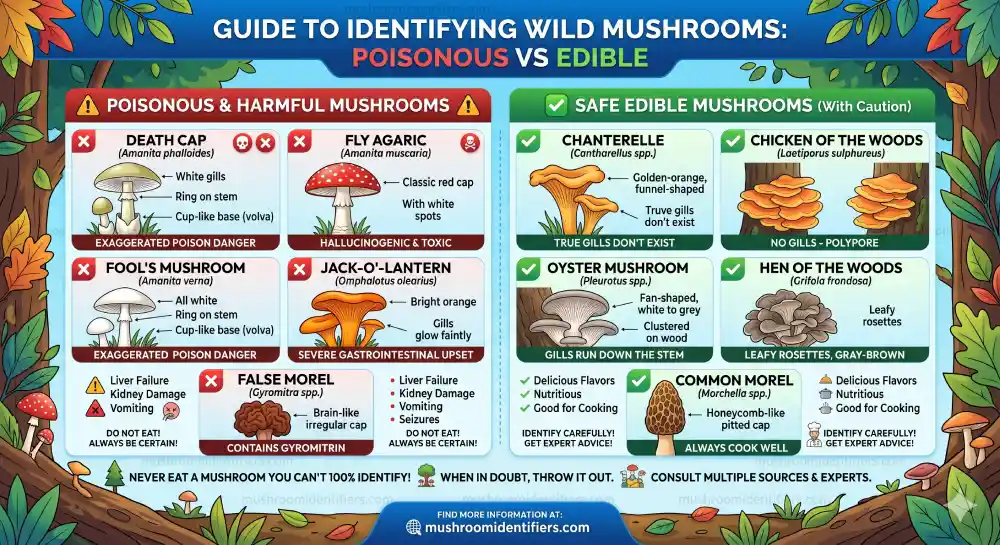
Why visual appearance is not enough?
- Many toxic mushrooms mimic edible species
- Color varies widely depending on environment
- Young and mature mushrooms can look completely different
For example, a safe species like Cantharellus cibarius can be confused with the toxic Omphalotus illudens if you only compare color.
| Feature | Edible Mushrooms | Poisonous Mushrooms |
|---|---|---|
| Color | Often natural tones, but variable | Can be similar or brighter |
| Gills | Structured, species-specific | May look similar but differ in detail |
| Stem | Usually consistent structure | May have bulb or volva |
| Spore Print | Predictable color patterns | Often different from edible lookalikes |
| Habitat | Specific environments | Often overlap with edible species |
Key Insight
There is no single universal rule to separate edible from poisonous mushrooms. Instead, identification requires:
- Multiple feature checks
- Cross-referencing with charts or guides
- Understanding species-specific traits
Key Differences and Identification Tips
To accurately identify mushrooms, experts rely on a set of consistent features that appear across species. These features are also used in mushroom identification charts and field guides.
Cap Shape and Surface
- Edible mushrooms often have recognizable shapes (e.g., funnel, honeycomb)
- Toxic mushrooms may appear smooth and perfect but lack distinctive structure
- Texture (sticky, dry, scaly) can provide clues
Underside Structure
The Gill structure is one of the most important identification features.
- Edible species like Cantharellus cibarius have ridge-like structures, not true gills
- Toxic lookalikes often have thin, blade-like gills
Stem Features (Ring and Base)
-
Some poisonous mushrooms, like Amanita phalloides, have:
- A ring (annulus)
- A bulb or cup (volva) at the base
- These features are strong warning signs
Spore Color
Using a Spore print helps confirm species.
- Edible mushrooms often have predictable spore colors
- Toxic species may differ significantly from similar-looking edible ones
Habitat Clues
- Wood-growing vs soil-growing mushrooms
- Tree association vs open grass
- Seasonal patterns
Key Identification Tips
- Always check multiple features together
- Never rely on a single characteristic
- Compare with a reliable identification chart
Dangerous Poisonous Look-alikes
One of the biggest risks in mushroom identification is confusing edible species with toxic lookalikes. Many dangerous mushrooms evolved to resemble safe ones.
Common Lookalike Pairs
Chanterelle vs Jack O’Lantern
- Edible: Cantharellus cibarius
- Toxic: Omphalotus illudens
Key differences:
- Chanterelle has ridges, not true gills
- Jack o’lantern has thin, sharp gills
- Jack o’lantern is often brighter orange
Morel vs False Morel
- Edible: Morchella esculenta
- Toxic: Gyromitra esculenta
Key differences:
- True morels are hollow inside
- False morels have irregular, brain-like folds
Oyster vs Lookalike Species
- Edible: Pleurotus ostreatus
- Lookalike: Lentinellus cochleatus
Key differences:
- Oyster mushrooms have decurrent gills
- Lookalikes may have different gill structure and odor
Edible Mushroom | Lookalike | Key Difference |
|---|---|---|
Chanterelle | Jack o’lantern | Ridges vs true gills |
Morel | False morel | Hollow vs solid interior |
Oyster | Funnel species | Gill structure difference |
Key Insight
Most identification mistakes happen when people:
- Focus only on appearance
- Ignore structure
- Skip verification steps
Key Takeaway (So Far)
Understanding poisonous vs edible mushrooms requires:
- Structural analysis (gills, stem, spores)
- Habitat awareness
- Comparison with known species
The most important rule remains:
If multiple features do not clearly match, do not assume a mushroom is safe.
Key Rules for Safety
When it comes to poisonous vs edible mushrooms, safety rules matter more than identification speed. Even experienced foragers follow strict guidelines because many toxic species closely resemble edible ones.
Core Safety Rules
-
Never rely on one feature
A mushroom cannot be identified by color, size, or shape alone. Always confirm multiple characteristics. -
Avoid picture-only identification
Using photos or “lawn mushroom identification pictures” without checking real features like gills and stem base is a common mistake. -
Always check the underside and base
Many dangerous species, including Amanita phalloides, are identified by features hidden at the base (volva). -
Use a Spore print when unsure
Spore color is one of the most reliable confirmation tools. -
Avoid unknown mushrooms completely
If identification is not 100% certain, do not consume it.
High-Risk Warning Signs
| Warning Feature | Risk Level |
|---|---|
| White gills + bulbous base | Very high |
| Small brown mushrooms | High |
| Brightly colored mushrooms | Moderate–High |
| Mushrooms on wood | Mixed (can include deadly species) |
Practical Safety Insight
Beginners often ask: “How do I know if a mushroom is edible?”
The answer is simple: you don’t—unless multiple features confirm it clearly.
List of Common Edible Mushrooms (Identification Guide)
Understanding edible mushrooms helps build a safe foundation, but each species must still be verified carefully.
Cantharellus cibarius
Chanterelles are one of the most recognized edible mushrooms, known for their distinct structure and growth in woodland areas.
Identification features:
- Yellow to golden color
- Ridge-like folds instead of true gills
- Wavy cap edges
- Fruity or apricot-like smell
- Grows on soil, not wood
Morchella esculenta
Morels are highly valued and relatively easy to identify when you know the key features.
Identification features:
- Honeycomb or sponge-like cap
- Completely hollow interior
- Cap attached directly to stem
- Found in spring
- Grows near trees or disturbed soil
Pleurotus ostreatus
Oyster mushrooms are common and often found growing in clusters on wood.
Identification features:
- Fan-shaped cap
- White to gray color
- Decurrent gills
- Short or absent stem
- Grows on dead wood
Boletus edulis
Porcini mushrooms are a well-known edible species found in forests.
Identification features:
- Thick, bulbous stem
- Brown cap
- Sponge-like pores instead of gills
- Firm texture
- Found in woodland areas
Key Insight
Even edible mushrooms must be:
- Verified using structure
- Checked against lookalikes
- Confirmed using multiple features
List of Dangerous Poisonous Mushrooms (Identification Guide)
Recognizing dangerous mushrooms is essential because some species can cause severe illness or death even in small amounts.
Amanita phalloides
One of the most dangerous mushrooms in the world, responsible for many poisoning cases.
Warning signs:
- White gills
- Smooth cap (greenish, yellowish, or pale)
- Ring on stem
- Cup-like volva at base
- Found near trees
Amanita virosa
A highly toxic all-white mushroom often mistaken for edible species.
Warning signs:
- Pure white color
- White gills
- Ring on stem
- Bulbous base
- Clean, symmetrical appearance
Galerina marginata
A small but extremely dangerous mushroom that grows on wood.
Warning signs:
- Brown cap
- Thin stem
- Rusty brown spores
- Grows on logs or stumps
- Easily confused with harmless species
Cortinarius rubellus
A toxic forest mushroom with delayed symptoms.
Warning signs:
- Rusty brown color
- Fibrous stem
- Found in woodland areas
- Spore color is rusty
- Symptoms may appear days later
Gyromitra esculenta
Often mistaken for morels but highly toxic.
Warning signs:
- Brain-like cap structure
- Irregular folds
- Not hollow inside
- Found in forests
- Can cause severe poisoning
Key Insight
Poisonous mushrooms often:
- Mimic edible species
- Have subtle but critical differences
- Require careful inspection to identify
Symptoms of Mushroom Poisoning and What to Do
Mushroom poisoning can range from mild discomfort to life-threatening conditions depending on the species.
Mushroom poisoning Symptoms
Early symptoms:
- Nausea
- Vomiting
- Stomach cramps
- Diarrhea
Delayed symptoms (dangerous cases):
- Symptoms appear after 6–24 hours
- Liver damage
- Organ failure
What to Do Immediately?
- Seek medical help immediately
- Do not wait for symptoms to worsen
- Keep a sample of the mushroom if possible
- Avoid self-treatment
Key Insight
Delayed symptoms are often more dangerous because they indicate serious internal damage.
How to Use Them Properly?
-
Take clear photos:
- Cap
- Gills
- Stem
- Habitat
- Compare with identification charts
- Cross-check multiple sources
Limitations
- Apps can misidentify similar species
- Photos cannot show all features
- Should not replace physical inspection
Frequently Asked Questions
What is the difference between edible and poisonous mushrooms?
The difference between edible and poisonous mushrooms lies in their biological structure, chemical composition, and toxicity, not just appearance. Edible mushrooms, such as Cantharellus cibarius, have distinct structural traits that can be consistently identified—like specific gill patterns, growth habits, and predictable spore colors.
Poisonous mushrooms, including Amanita phalloides, often contain toxic compounds (like amatoxins) that can cause severe organ damage. The key differences include:
- Presence of dangerous features like a volva (cup at the base)
- Differences in Gill structure
- Toxicity levels, which are invisible to the eye
👉 The most important rule: you cannot reliably tell by color or taste—only by detailed identification.
Is mushroom good for high blood pressure?
Yes, many edible mushrooms can support heart health and may help manage high blood pressure. Common edible species like Pleurotus ostreatus are:
- Low in sodium
- Rich in potassium
- High in antioxidants
These nutrients help regulate blood pressure by improving circulation and reducing strain on blood vessels. However:
- Only properly identified edible mushrooms should be consumed
- Wild mushrooms should never be eaten unless safely identified
👉 Always focus on safe, edible species, not wild unidentified mushrooms.
How to tell if you've eaten a poisonous mushroom?
If you’ve eaten a poisonous mushroom, symptoms may not appear immediately. In cases involving dangerous species like Amanita phalloides, symptoms can be delayed by 6–24 hours.
Common symptoms of Mushroom poisoning:
- Nausea and vomiting
- Severe stomach pain
- Diarrhea
- Dizziness or confusion
Warning signs of serious poisoning:
- Symptoms appearing after a delay
- Temporary improvement followed by worsening condition
- Signs of liver damage
👉 What to do immediately:
- Seek emergency medical help
- Do not wait for symptoms to worsen
- Keep a sample of the mushroom if possible
Which mushroom should not be eaten?
You should never eat any mushroom that has not been 100% positively identified. Some of the most dangerous species include:
- Amanita phalloides
- Amanita virosa
- Galerina marginata
High-risk characteristics:
- White gills and a bulbous base
- Small brown mushrooms growing on wood
- Unknown mushrooms in forests or lawns
👉 The safest rule is simple: if you are not completely certain, do not eat it.
How to tell which mushroom is poisonous?
There is no single feature that identifies a mushroom as poisonous. Instead, identification requires a multi-step verification process.
Key steps:
- Examine cap shape and surface
- Check Gill structure
- Look for a ring or volva on the stem
- Confirm with a Spore print
- Identify habitat (wood, soil, grass)
Important insight:
Poisonous mushrooms often:
- Mimic edible species
- Have subtle structural differences
- Cannot be identified by taste or smell
👉 Always use multiple features + trusted guides.
What is the Devil's mushroom?
The term “Devil’s mushroom” is not a single scientific name but is commonly used to describe highly toxic species. It often refers to dangerous mushrooms like Amanita phalloides or other deadly fungi.
In some regions, it may also refer to:
- Boletus satanas
Key traits of so-called “Devil’s mushrooms”:
- Bright or unusual coloration
- Strong odor
- Toxic or inedible properties
👉 The name reflects their dangerous nature, not a specific identification feature.
How can I tell if a mushroom is edible or poisonous?
By checking multiple features such as gills, stem, spore print, and habitat—not just appearance.
Are all white mushrooms poisonous?
No, but many dangerous species are white, so extra caution is needed.
Can I use apps to identify mushrooms?
Apps help narrow options, but they are not fully reliable without manual verification.
What is the safest rule for mushroom identification?
If you are not completely sure, do not eat it.
Conclusion:
Identifying poisonous vs edible mushrooms requires a careful, structured approach. The most reliable method combines:
- Structural analysis (gills, stem, spores)
- Habitat observation
- Comparison with known species
The most important rule remains:
Never rely on a single feature or image when identifying mushrooms.
Sign in to leave a comment and join the discussion.
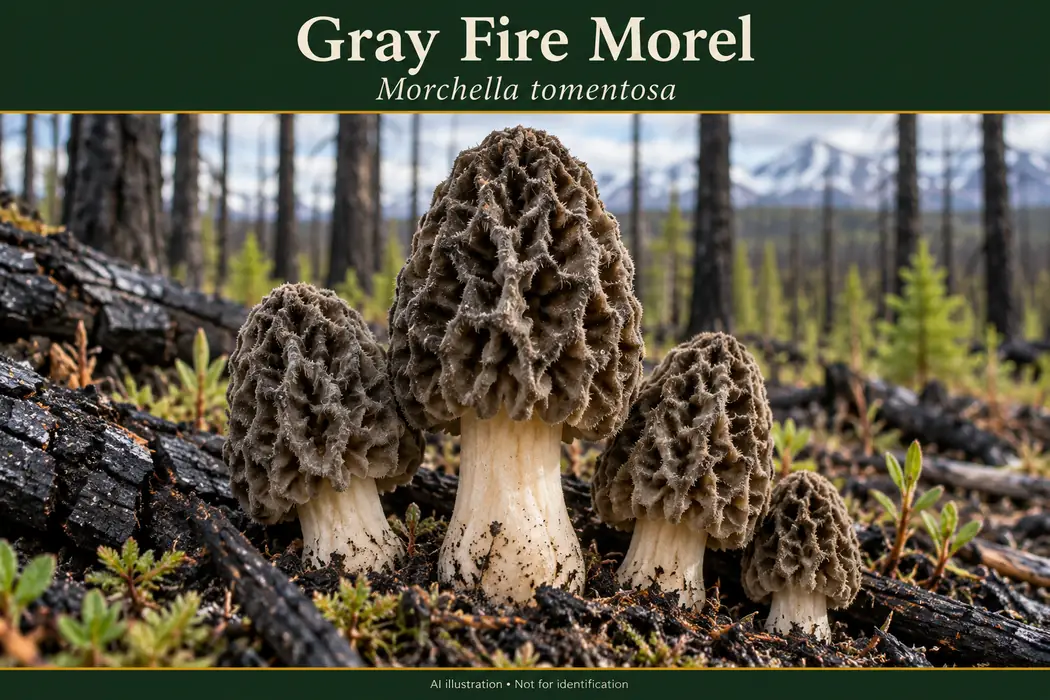 Species Guide
Alaska has many edible mushrooms, including morels, king boletes, golden chanterelles, hedgehogs, oyster mushrooms and bear’s head mushrooms. Most appear...
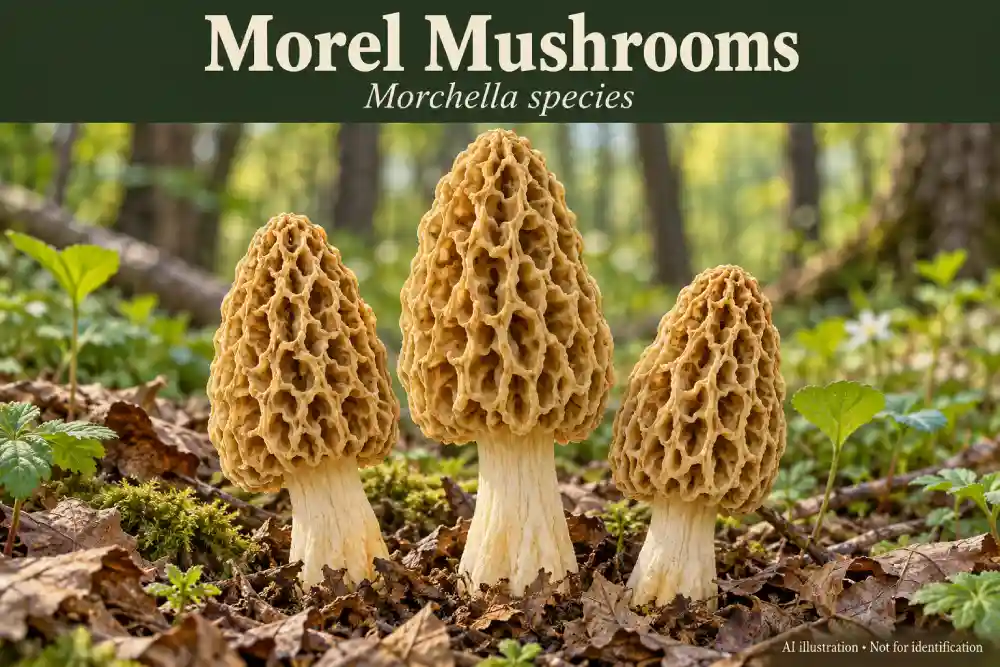 Species Guide
Wisconsin is home to edible mushrooms such as morels, chanterelles, oyster mushrooms, hen of the woods, chicken of the woods and giant puffballs. Different...
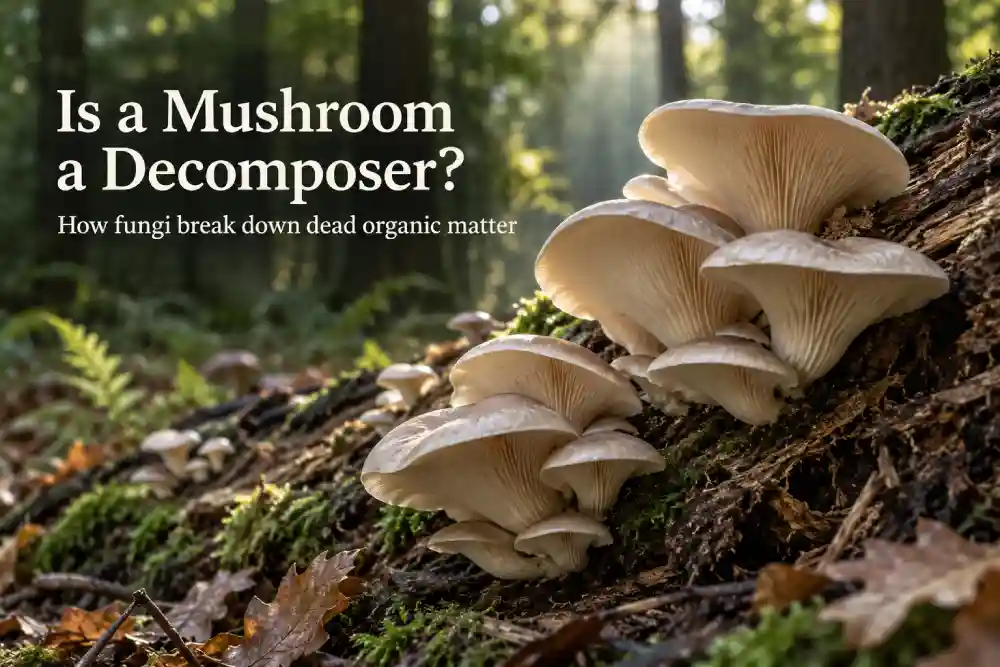 Species Guide
Is a Mushroom a Decomposer? Yes, many mushroom-forming fungi are decomposers. They break down dead wood, fallen leaves and other organic material, helping...