Edible Mushrooms in Illinois: Complete Identification and Foraging Guide

Nathan Cole
Mycologist · Author · Fungi Expert
Updated
Jun 1, 2026
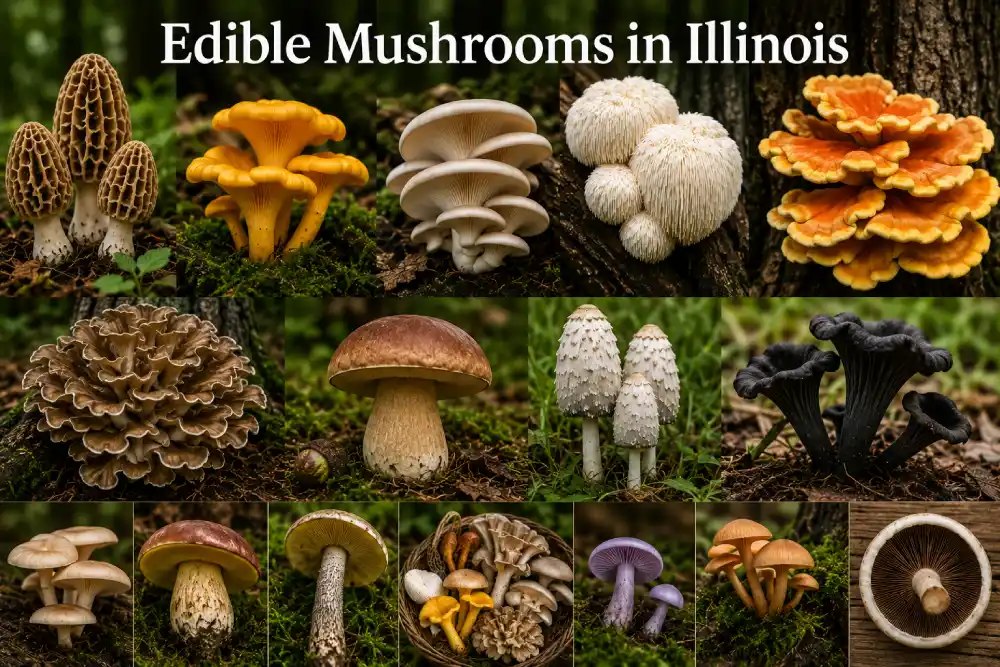
If you're wondering what edible mushrooms grow in Illinois, the state is home to a remarkable variety of wild fungi that are prized by foragers and mushroom enthusiasts. Popular edible species include the Morchella esculenta, Cantharellus cibarius, Pleurotus ostreatus, and Grifola frondosa.
Thanks to its hardwood forests, river valleys, and diverse woodland ecosystems, Illinois provides excellent conditions for mushroom growth throughout spring, summer, and fall. Proper identification remains essential because some edible mushrooms have poisonous lookalikes.
Across Illinois, mushroom hunters explore forests, parks, and wooded areas in search of seasonal fungi that offer unique flavors, textures, and ecological importance.
Top 10 Edible Mushrooms in Illinoi
Illinois supports a wide variety of edible mushrooms, ranging from spring morels to autumn maitake. These species are among the most commonly sought-after by foragers.
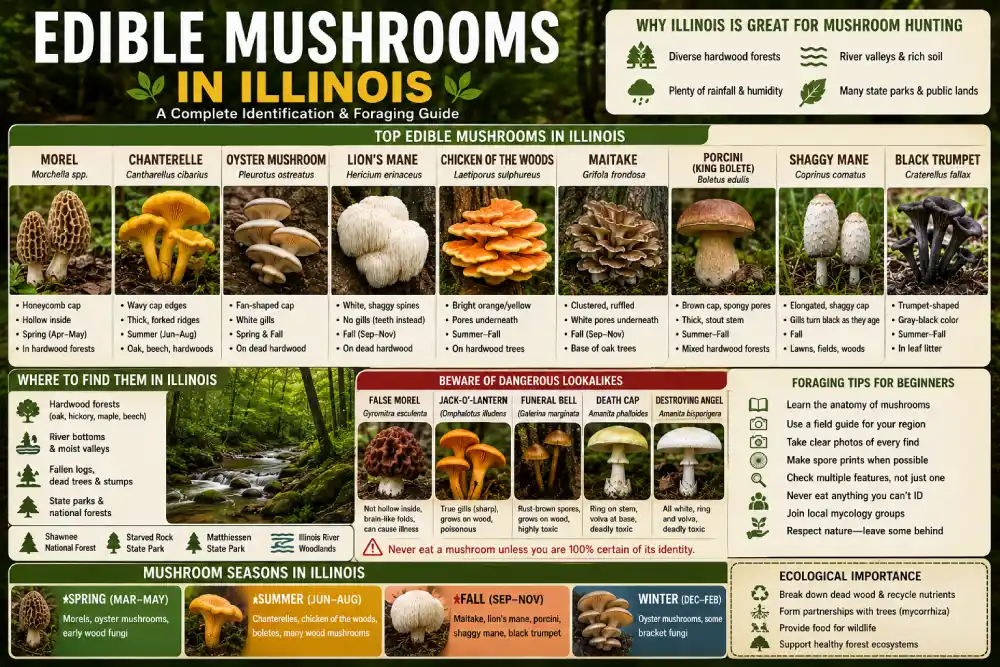
Morchella esculenta (Morel Mushroom)
Morels are often considered the crown jewel of mushroom hunting in Illinois.
Identification Features
- Honeycomb-like cap
- Hollow interior
- Cream to yellow coloration
- Distinct ridged structure
Habitat
Morels commonly grow near:
- Elm trees
- Ash trees
- Tulip poplars
- Disturbed woodland soil
Spring is the prime season for finding morels throughout Illinois.
Cantharellus cibarius (Chanterelle Mushroom)
Chanterelles are highly valued for their fruity aroma and rich culinary flavor.
Identification Features
- Golden-yellow color
- Wavy cap edges
- Thick false gills
- Firm texture
Habitat
They often appear beneath:
- Oak trees
- Beech trees
- Mixed hardwood forests
Summer rainfall frequently produces large chanterelle flushes.
Pleurotus ostreatus (Oyster Mushroom)
Oyster mushrooms are among the easiest edible species for beginners to recognize.
Identification Features
- Fan-shaped caps
- White gills
- Clustered growth
- Soft texture
Habitat
Usually found growing on:
- Dead hardwood logs
- Fallen trees
- Decaying stumps
They are commonly encountered during spring and fall.
Other Popular Edible Species
Additional edible mushrooms found in Illinois include:
- Hericium erinaceus
- Laetiporus sulphureus
- Grifola frondosa
- Boletus edulis
- Coprinus comatus
- Craterellus fallax
Edible Mushrooms in Illinois Identification Chart
Correct identification is one of the most important skills for mushroom foragers. Comparing characteristics side by side helps reduce mistakes and improves confidence in the field.
| Mushroom | Cap Type | Underside | Habitat | Season |
|---|---|---|---|---|
| Morel | Honeycomb | Hollow | Forest floor | Spring |
| Chanterelle | Wavy | False gills | Hardwood forests | Summer |
| Oyster | Fan-shaped | White gills | Dead wood | Spring/Fall |
| Lion's Mane | White clusters | Teeth | Hardwood trees | Fall |
| Maitake | Layered rosettes | Pores | Oak tree bases | Fall |
| Chicken of the Woods | Bright shelves | Pores | Hardwood trees | Summer/Fall |
Identification Features to Observe
When identifying mushrooms, examine:
- Cap shape
- Gill, pore, or tooth structure
- Stem characteristics
- Growth pattern
- Habitat
- Seasonal timing
Professional identification always uses multiple features together.
Why Identification Matters?
Several poisonous mushrooms can resemble edible species. Learning key differences helps prevent accidental poisoning and improves foraging safety.
Why Illinois Is One of the Best States for Mushroom Foraging?
Illinois offers a combination of climate, forest diversity, and habitat conditions that support a rich variety of fungi.
Hardwood Forest Ecosystems
Many edible mushrooms rely on mature hardwood forests.
Common tree species include:
- Oak
- Hickory
- Maple
- Beech
- Elm
Many fungi form underground relationships through Mycorrhiza, exchanging nutrients with these trees.
River Valley Habitats
The ecosystems surrounding the Mississippi River and Illinois River provide:
- Rich soil
- High moisture levels
- Diverse vegetation
- Excellent fungal habitats
These conditions often support large mushroom populations.
Protected Forest Areas
Public lands such as:
- Shawnee National Forest
- Starved Rock State Park
- Matthiessen State Park
contain some of the state's most productive mushroom habitats.
Where to Find Edible Mushrooms in Illinois?
Knowing where mushrooms grow can significantly improve foraging success. Different species prefer different habitats and tree associations.
Oak and Hickory Forests
Many edible mushrooms thrive in forests dominated by:
- Oak trees
- Hickory trees
- Maple trees
- Beech trees
These forests provide ideal soil conditions and fungal partnerships.
Fallen Logs and Dead Trees
Wood-decaying mushrooms commonly grow on:
- Dead hardwood logs
- Rotting stumps
- Fallen branches
- Decaying trunks
Examples include:
- Pleurotus ostreatus
- Hericium erinaceus
- Laetiporus sulphureus
Moist Woodland Areas
Ideal mushroom habitats often include:
- Creek banks
- Shaded forests
- Moss-covered ground
- Leaf-litter-rich soil
Moisture is one of the most important factors influencing mushroom growth.
National Forests and State Parks
Popular mushroom-hunting regions include:
- Shawnee National Forest
- Starved Rock State Park
- Matthiessen State Park
These areas contain some of Illinois' richest fungal ecosystems.
Mushroom Hunting Seasons in Illinois
One of the reasons mushroom foraging is so popular in Illinois is that different edible mushrooms appear throughout the year. Understanding seasonal growth patterns helps foragers know when and where to search for specific species.
Weather conditions such as rainfall, temperature, humidity, and soil moisture play a major role in mushroom production.
Spring Mushroom Season
Spring is the most anticipated mushroom season in Illinois because it marks the arrival of morels.
Common Spring Mushrooms
- Morchella esculenta
- Morchella americana
- Oyster mushrooms
- Dryad's saddle mushrooms
Best Conditions for Morels
Morels often appear when:
- Soil temperatures reach suitable levels
- Spring rains increase moisture
- Daytime temperatures warm consistently
- Trees begin leafing out
Many Illinois foragers spend weeks searching hardwood forests during morel season.
Summer Mushroom Season
Summer rainfall triggers the growth of many highly prized edible mushrooms.
Common Summer Species
- Cantharellus cibarius
- Laetiporus sulphureus
- Black trumpet mushrooms
- Various boletes
Warm temperatures combined with humidity create ideal growing conditions.
Fall Mushroom Season
Fall offers some of the largest and most productive mushroom harvests.
Common Fall Species
- Grifola frondosa
- Hericium erinaceus
- Boletus edulis
- Oyster mushrooms
Cool weather and abundant leaf litter make autumn one of the best seasons for mushroom observation.
Winter Mushroom Opportunities
While winter is quieter, some fungi remain active.
Examples include:
- Oyster mushrooms
- Certain bracket fungi
- Jelly fungi
Wood-growing species can often be found even during colder months.
Edible vs Poisonous Mushrooms in Illinois
Learning to distinguish edible mushrooms from dangerous lookalikes is one of the most important aspects of .
Several toxic species found in Illinois closely resemble edible mushrooms.
Morels vs False Morels
The edible Morchella esculenta is frequently confused with Gyromitra esculenta.
True Morels
- Hollow interior
- Honeycomb cap
- Uniform structure
False Morels
- Cotton-like interior
- Brain-like folds
- Irregular shape
False morels contain toxins that can cause serious illness.
Chanterelles vs Jack-o'-Lantern Mushrooms
Omphalotus illudens is one of the most common chanterelle lookalikes.
Chanterelles
- Thick false gills
- Fruity aroma
- Wavy edges
Jack-o'-Lantern Mushrooms
- Sharp true gills
- Bright orange coloration
- Dense clustered growth
Jack-o'-lantern mushrooms are poisonous and should never be consumed.
Oyster Mushrooms vs Funeral Bells
Wood-growing mushrooms can create identification challenges.
Oyster Mushrooms
- White gills
- Fan-shaped caps
- Soft flesh
Funeral Bells
- Brown caps
- Rust-colored spores
- Smaller growth habit
Galerina marginata contains dangerous toxins and should be avoided.
Common Identification Mistakes
Mistakes often occur because of:
- Similar cap colors
- Environmental changes
- Aging mushrooms
- Poor photographs
- Incomplete identification
Safe foraging requires examining multiple characteristics before making any decision.
Mushroom Foraging Tips for Beginners
Successful mushroom hunting combines observation, patience, and education. Even experienced foragers continue learning throughout their lives.
Learn Mushroom Anatomy
Understanding fungal structure is essential.
Important features include:
- Cap shape
- Gills
- Pores
- Teeth
- Stem structure
- Spore prints
These characteristics form the foundation of mushroom identification.
Carry a Regional Field Guide
Field guides help identify:
- Local species
- Seasonal mushrooms
- Habitat preferences
- Poisonous lookalikes
Illinois-specific guides are particularly valuable.
Use Spore Prints
A Spore Print provides important diagnostic information.
Spore colors may include:
- White
- Brown
- Black
- Pink
- Purple-brown
Spore prints often reveal differences invisible to casual observation.
Photograph Every Mushroom
Helpful photographs include:
- Cap surface
- Gills or pores
- Stem
- Stem base
- Nearby trees
- Habitat
Good documentation improves identification accuracy.
Never Eat an Unknown Mushroom
Even experienced mushroom hunters avoid consuming unidentified fungi.
The safest rule is simple:
If you are uncertain, do not eat it.
Health Benefits of Edible Mushrooms
Beyond their culinary appeal, many edible mushrooms provide valuable nutrients and bioactive compounds.
Nutritional Value
Many edible mushrooms contain:
- Protein
- Dietary fiber
- B vitamins
- Potassium
- Selenium
They are naturally low in calories and fat.
Antioxidant Compounds
Certain mushrooms contain compounds that help protect cells from oxidative stress.
Examples include:
- Lion's mane
- Maitake
- Chanterelles
Researchers continue studying the health-promoting properties of wild fungi.
Culinary Versatility
Illinois mushrooms are used in:
- Soups
- Pasta dishes
- Stir-fries
- Risottos
- Sauces
Different species provide unique textures and flavors.
Why Foragers Value Wild Mushrooms?
Many enthusiasts appreciate:
- Seasonal availability
- Unique taste profiles
- Outdoor experiences
- Connection with nature
Foraging combines recreation, education, and culinary discovery.
Ecological Importance of Mushrooms in Illinois
Mushrooms play a critical role in maintaining healthy ecosystems throughout Illinois forests and woodlands.
Without fungi, forests would struggle to recycle nutrients and support plant growth.
Forest Nutrient Cycling
Many fungi break down:
- Fallen leaves
- Dead wood
- Organic debris
- Decaying roots
This process supports Wood Decay and returns nutrients to the soil.
Tree-Fungi Relationships
Many edible mushrooms form partnerships with trees through Mycorrhiza.
Benefits include:
- Improved nutrient uptake
- Better water absorption
- Increased forest resilience
These relationships are essential for healthy woodland ecosystems.
Wildlife Food Sources
Mushrooms provide food for:
- Deer
- Squirrels
- Insects
- Small mammals
Fungi contribute significantly to forest biodiversity.
Underground Mycelium Networks
Most fungal life exists underground as mycelium.
These networks help:
- Connect plant roots
- Move nutrients
- Retain moisture
- Support ecosystem stability
Scientists often refer to these hidden networks as one of nature's most important ecological systems.
Frequently Asked Questions About Edible Mushrooms in Illinois
What edible mushrooms grow in Illinois?
Illinois is home to many edible mushrooms, including morels, chanterelles, oyster mushrooms, lion's mane, chicken of the woods, maitake, porcini, shaggy mane, and black trumpet mushrooms. These species grow in hardwood forests, river valleys, state parks, and woodland habitats throughout spring, summer, and fall.
What Are the Most Common Edible Mushrooms in Illinois?
Some of the most commonly foraged edible mushrooms in Illinois include:
- Morchella esculenta
- Cantharellus cibarius
- Pleurotus ostreatus
- Hericium erinaceus
- Laetiporus sulphureus
- Grifola frondosa
These mushrooms are popular among foragers because of their distinctive appearance, culinary value, and widespread distribution throughout Illinois forests.
When Is Mushroom Season in Illinois?
Illinois offers mushroom hunting opportunities throughout much of the year.
Seasonal Overview
| Season | Common Edible Mushrooms |
|---|---|
| Spring | Morels, oyster mushrooms |
| Summer | Chanterelles, chicken of the woods |
| Fall | Maitake, lion's mane, porcini |
| Winter | Oyster mushrooms, bracket fungi |
Weather conditions, rainfall, and temperature often influence the timing and abundance of mushroom growth.
Where Can I Find Morels in Illinois?
Morels are commonly found in:
- Hardwood forests
- Areas with dying elm trees
- Ash tree stands
- River-bottom woodlands
- Recently disturbed forest areas
Many successful hunters search near mature hardwood trees during spring.
Tree Associations
Morels are often associated with:
- Elm trees
- Ash trees
- Tulip poplars
- Apple trees
While morels grow from the soil, nearby tree species can help identify productive habitats.
What Poisonous Mushrooms Look Like Edible Mushrooms?
Several toxic mushrooms resemble edible species.
Common Examples
| Edible Mushroom | Dangerous Lookalike |
| Morel | False morel |
| Chanterelle | Jack-o'-lantern |
| Oyster mushroom | Funeral bell |
| White edible mushrooms | Destroying angel |
This is why proper identification should always involve multiple characteristics rather than appearance alone.
How Do I Safely Identify Wild Mushrooms?
Safe identification requires careful observation and patience.
Important features include:
- Cap shape
- Gill, pore, or tooth structure
- Stem characteristics
- Spore print color
- Habitat
- Seasonal timing
- Growth pattern
A Spore Print remains one of the most reliable identification methods.
Are Mushrooms Growing on Trees Edible?
Some tree-growing mushrooms are edible, while others are not.
Common edible examples include:
- Pleurotus ostreatus
- Hericium erinaceus
- Laetiporus sulphureus
However, proper identification is essential because toxic wood-growing species also exist.
Can Beginners Go Mushroom Hunting in Illinois?
Yes. Illinois is an excellent state for beginners because of its diverse habitats and abundance of recognizable edible mushrooms.
New foragers should:
- Learn mushroom anatomy
- Carry a field guide
- Study poisonous lookalikes
- Practice using spore prints
- Join local mushroom clubs
- Avoid eating unidentified mushrooms
Starting with easily recognized species such as morels and oyster mushrooms is often the safest approach.
-size: 1.5rem; font-weight: 700; letter-spacing: -0.02em;">Final Thought
Illinois offers some of the best mushroom foraging opportunities in the Midwest. Its hardwood forests, river valleys, state parks, and diverse ecosystems provide ideal conditions for a wide variety of edible fungi throughout the year.
From spring morels and summer chanterelles to autumn maitake and lion's mane, Illinois supports an impressive range of edible mushrooms that attract both beginners and experienced foragers. However, successful mushroom hunting depends on accurate identification, habitat knowledge, and understanding the differences between edible species and poisonous lookalikes.
By learning the principles of Mycology, practicing responsible harvesting, and respecting natural ecosystems, foragers can safely enjoy one of Illinois' most fascinating natural resources.
Whether you're exploring Shawnee National Forest, hiking near the Illinois River, or searching local hardwood forests, Illinois remains one of the top destinations for wild mushroom enthusiasts.
Sign in to leave a comment and join the discussion.
 Species Guide
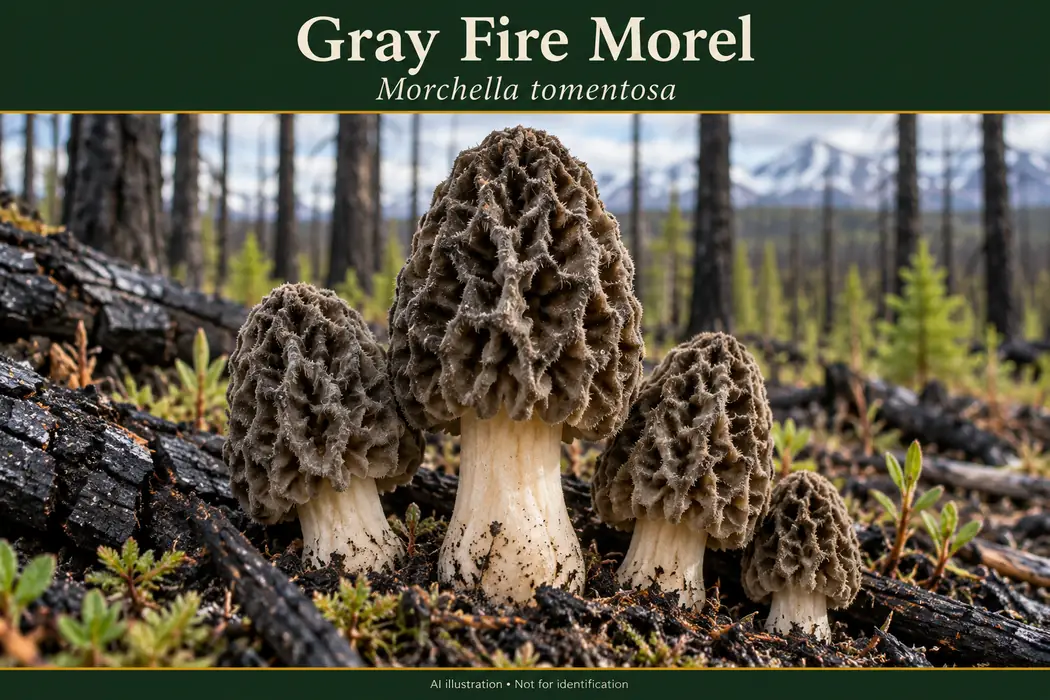
Alaska has many edible mushrooms, including morels, king boletes, golden chanterelles, hedgehogs, oyster mushrooms and bear’s head mushrooms. Most appear...
 Species Guide
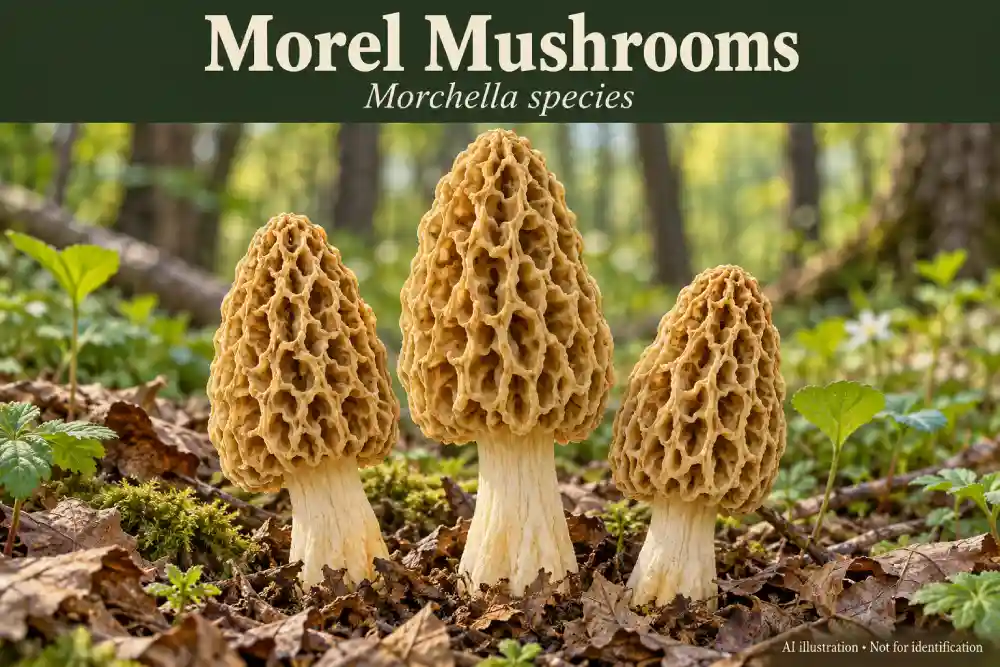
Wisconsin is home to edible mushrooms such as morels, chanterelles, oyster mushrooms, hen of the woods, chicken of the woods and giant puffballs. Different...
 Species Guide
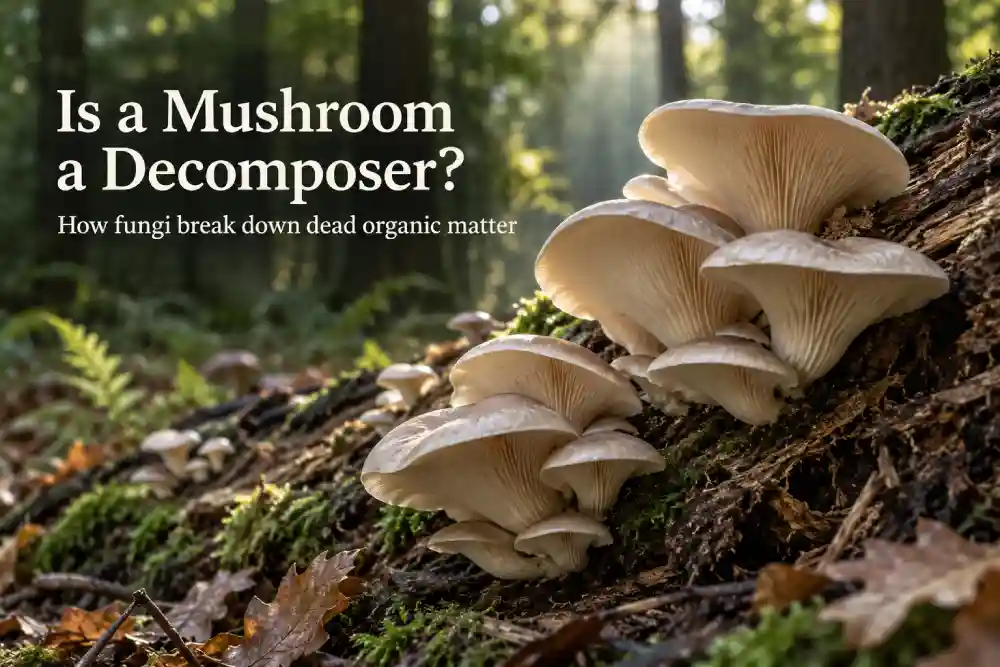
Is a Mushroom a Decomposer? Yes, many mushroom-forming fungi are decomposers. They break down dead wood, fallen leaves and other organic material, helping...