Edible Mushrooms in Missouri: Complete Identification Guide with Pictures, Habitats, and Lookalikes

Nathan Cole
Mycologist · Author · Fungi Expert
Updated
Aug 22, 2026
Missouri is home to a remarkable variety of edible wild mushrooms that thrive in the Ozark Mountains, Mark Twain National Forest, hardwood river valleys, and deciduous woodlands. Popular species such as morels, chanterelles, lion's mane, oyster mushrooms, chicken of the woods, and hen of the woods appear throughout the year under different growing conditions.
Correct identification is essential because several edible mushrooms have poisonous lookalikes. This guide explains how to identify Missouri's edible mushrooms, where they grow, when to find them, and the key characteristics that separate safe species from toxic ones.
How to Identify Edible Mushrooms in Missouri?
Successful mushroom identification involves examining several characteristics rather than relying on a single feature. Cap shape, stem structure, spore surface, habitat, nearby trees, and season all work together to accurately identify a mushroom.
Why Correct Identification Matters?
Missouri has numerous edible mushrooms, but it also contains dangerous poisonous species that can closely resemble them.
Proper identification helps you:
- Avoid poisonous mushrooms
- Recognize edible species confidently
- Understand habitat preferences
- Harvest responsibly
- Reduce the risk of mushroom poisoning
Never assume a mushroom is edible because it resembles a photo or because animals have eaten it.
Learn Basic Mushroom Anatomy
Every mushroom hunter should become familiar with these identification features:
Cap
Examine:
- Shape
- Size
- Surface texture
- Color
- Margin
Caps may be:
- Convex
- Flat
- Funnel-shaped
- Honeycomb
- Fan-shaped
- Shelf-like
Stem
Observe:
- Hollow or solid
- Thickness
- Color
- Surface texture
- Presence of a ring
- Bulbous base
Stem characteristics often distinguish edible mushrooms from toxic lookalikes.
Spore Surface
Missouri mushrooms produce spores on:
- True gills
- False gills
- Pores
- Teeth
For example:
- Chanterelles have false gills.
- Morels have pits and ridges.
- Porcini-type mushrooms have pores.
- Lion's Mane has hanging spines.
Spore Prints
Taking a spore print helps confirm identification.
Common spore colors include:
- White
- Cream
- Pink
- Brown
- Black
Common Identification Mistakes
Many beginners make the mistake of identifying mushrooms using only color.
Instead, always consider:
- Habitat
- Nearby trees
- Fruiting season
- Growth pattern
- Odor
- Bruising reaction
- Spore print
These characteristics provide much more reliable identification.
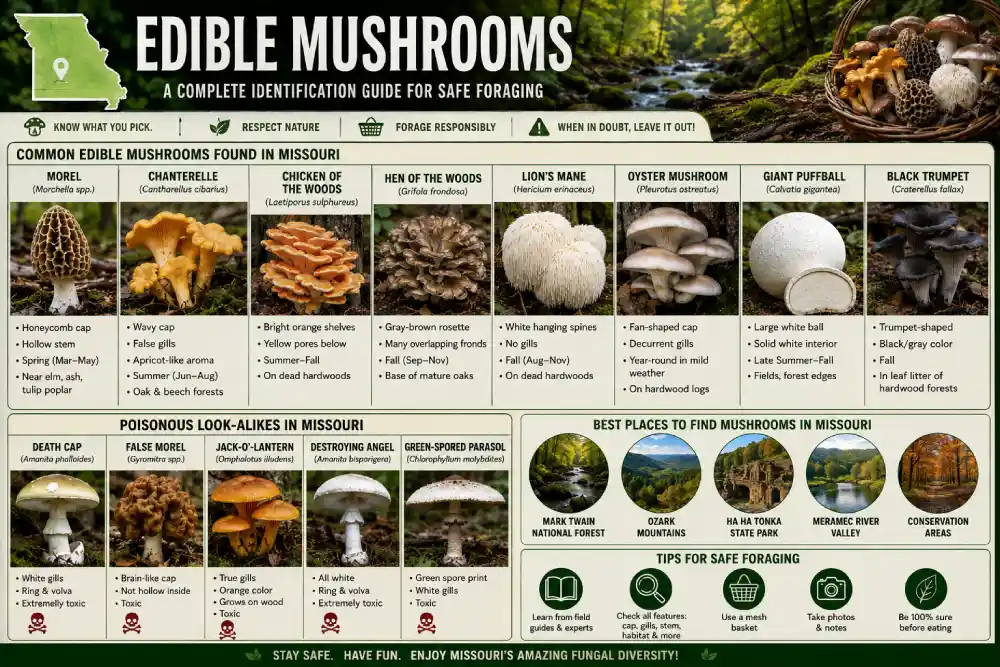
The Most Common Edible Mushrooms Found in Missouri
Missouri's hardwood forests produce excellent edible mushrooms from early spring through late fall.
Popular Species
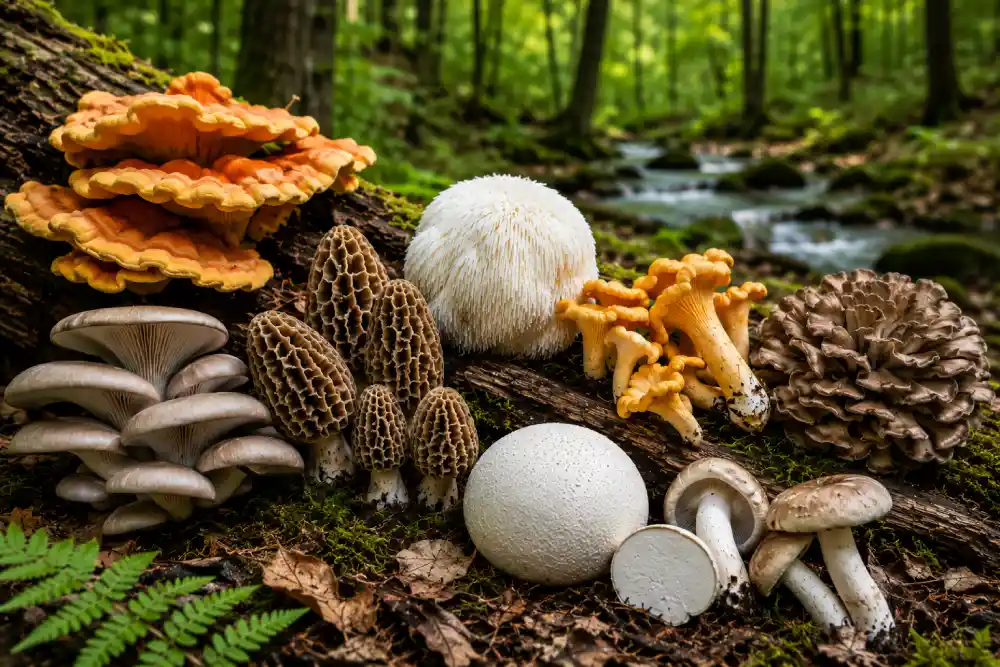
Common edible mushrooms include:
- Morel Mushroom (Morchella spp.)
- Golden Chanterelle (Cantharellus cibarius)
- Smooth Chanterelle (Cantharellus lateritius)
- Chicken of the Woods (Laetiporus sulphureus)
- Hen of the Woods (Grifola frondosa)
- Lion's Mane (Hericium erinaceus)
- Oyster Mushroom (Pleurotus ostreatus)
- Giant Puffball (Calvatia gigantea)
- Black Trumpet (Craterellus fallax)
- Dryad's Saddle (Cerioporus squamosus)
Each species has unique identification features, preferred habitats, and fruiting seasons.
Quick Identification Table
| Mushroom | Best Season | Main Identification Feature | Habitat |
|---|---|---|---|
| Morel | Spring | Honeycomb cap and hollow interior | Elm, ash, tulip poplar |
| Chanterelle | Summer | Wavy cap with false gills | Oak and beech forests |
| Chicken of the Woods | Summer–Fall | Bright orange shelf clusters | Dead hardwood trees |
| Hen of the Woods | Fall | Gray-brown rosette cluster | Base of mature oak trees |
| Lion's Mane | Fall | Long white hanging spines | Dead hardwood logs |
| Oyster Mushroom | Spring–Winter | Fan-shaped caps with decurrent gills | Dead hardwood logs |
Best Mushrooms for Beginners
Some edible mushrooms have distinctive characteristics that make them easier to recognize.
Many experienced foragers recommend starting with:
- Morels
- Lion's Mane
- Giant Puffballs
- Hen of the Woods
- Chicken of the Woods
Even these mushrooms should be carefully identified before eating.
Missouri's Mushroom Habitats
Knowing where mushrooms grow is one of the fastest ways to improve identification accuracy.
Many species are closely associated with particular forests, tree species, or environmental conditions.
Ozark Hardwood Forests
The Ozark Plateau provides some of Missouri's richest mushroom habitats.
Common tree species include:
- White Oak
- Red Oak
- Hickory
- American Beech
- Sugar Maple
- Black Walnut
These forests support numerous mycorrhizal mushrooms, including morels, chanterelles, and black trumpets.
Mark Twain National Forest
Mark Twain National Forest contains thousands of acres of productive mushroom habitat.
Foragers frequently find:
- Morels
- Chanterelles
- Lion's Mane
- Chicken of the Woods
- Hen of the Woods
Moist valleys and mature hardwood stands are especially productive after rainfall.
River Bottoms and Floodplain Forests
Missouri's river systems create ideal growing conditions.
Productive areas include:
- Missouri River Valley
- Meramec River
- Current River
- Gasconade River
- Mississippi River floodplains
Moist soils and abundant hardwoods support a diverse fungal community.
Dead Logs and Woodland Edges
Many edible mushrooms are saprobic and grow directly on decaying wood.
Common species include:
- Oyster Mushrooms
- Lion's Mane
- Chicken of the Woods
- Dryad's Saddle
Look for fallen logs, standing dead trees, and old stumps throughout Missouri's forests.
When to Find Edible Mushrooms in Missouri?
Different mushrooms fruit at different times of the year.
Weather conditions often influence mushroom production more than calendar dates.
Spring Mushroom Season
Spring is famous for:
- Morels
- Dryad's Saddle
- Early Oyster Mushrooms
Warm soil temperatures and spring rainfall usually trigger fruiting.
Summer Mushroom Season
Summer brings:
- Chanterelles
- Chicken of the Woods
- Oyster Mushrooms
High humidity and frequent thunderstorms create excellent growing conditions.
Fall Mushroom Season
Autumn is one of Missouri's best mushroom seasons.
Popular fall mushrooms include:
- Hen of the Woods
- Lion's Mane
- Black Trumpets
- Giant Puffballs
- Honey Mushrooms
Cool nights combined with regular rainfall often produce abundant harvests.
Winter Mushroom Opportunities
During mild winters, experienced foragers may still discover:
- Oyster Mushrooms
- Velvet Foot
- Other cold-tolerant wood-decaying fungi
Weather Conditions That Trigger Mushroom Growth
The largest mushroom flushes often appear after:
- Steady rainfall
- Warm daytime temperatures
- Cool nights
- High humidity
- Moist forest soils
Monitoring weather patterns can greatly improve your chances of finding edible mushrooms.
Mushroom Identification Features Explained
Learning the key physical features of mushrooms makes identification much more accurate and reliable.
Cap Shape and Surface
Important characteristics include:
- Color
- Texture
- Shape
- Diameter
- Margin
These traits often change as mushrooms mature, so examine specimens carefully.
Stem Characteristics
Study the stem for:
- Thickness
- Hollow or solid interior
- Color
- Fibers
- Ring
- Bulbous base
Stem details help separate similar-looking species.
Gills, Pores, and Teeth
One of the easiest ways to narrow identification is by examining the underside of the mushroom.
- True gills: Thin blade-like structures
- False gills: Thick ridges that branch and merge
- Pores: Tiny tubes instead of gills
- Teeth: Hanging spines beneath the fruiting body
These structures are among the most reliable identification features.
Bruising Reactions and Odor
Some mushrooms change color when touched or cut.
Others produce distinctive scents such as:
- Fruity
- Apricot-like
- Nutty
- Earthy
Always include bruising reactions and odor as part of your identification process.
Morel Mushroom Identification
Morels are Missouri's most famous wild edible mushrooms and one of the first signs of spring for mushroom hunters. Their distinctive honeycomb appearance makes them easier to recognize than many other species, but they still require careful identification because poisonous false morels grow in the same season.
Key Identification Features
A true morel has several characteristics that separate it from lookalikes.
Cap
Look for:
- Honeycomb or sponge-like surface
- Deep pits and raised ridges
- Cone or oval shape
- Tan, yellow, gray, or dark brown color depending on species
Unlike false morels, the cap is attached directly to the stem at its lower edge.
Stem
A true morel stem is:
- White to cream colored
- Smooth or slightly granular
- Completely hollow
- Thick and sturdy
Slice It in Half
One of the easiest identification tests is to cut the mushroom from top to bottom.
A true morel will be:
- Completely hollow from the tip of the cap to the base of the stem.
If the inside contains cottony fibers or chambered tissue, it is not a true morel.
Habitat
Missouri morels commonly grow in:
- Oak forests
- Elm groves
- Ash woodlands
- Tulip poplar stands
- Old apple orchards
- Burn areas
- Creek bottoms
- South-facing hillsides
Recently disturbed ground and areas with rich leaf litter often produce excellent morel crops.
Best Season
Morels usually appear from:
- Late March
- April
- Early May
depending on rainfall, soil temperature, and elevation.
Poisonous Lookalikes
The biggest danger comes from False Morels (Gyromitra spp.)
Key Differences
| True Morel | False Morel |
|---|---|
| Honeycomb pits and ridges | Brain-like, wrinkled cap |
| Completely hollow | Chambered or cotton-filled interior |
| Cap attached to stem | Cap often hangs freely |
| Even ridges | Irregular folds |
False morels contain gyromitrin, a toxin that can cause severe illness and should never be consumed.
Chanterelle Mushroom Identification
Golden chanterelles are among Missouri's most popular summer mushrooms because of their excellent flavor and distinctive appearance.
Identification Features
Cap
- Bright golden yellow to orange
- Wavy or irregular margins
- Funnel-shaped as it matures
- Smooth surface
False Gills
The underside has:
- Thick blunt ridges
- Forking patterns
- Ridges that run down the stem
These are false gills, not true gills.
Stem
- Thick
- Solid
- Usually the same color as the cap
- No ring
Aroma
Fresh chanterelles often smell like:
- Apricots
- Peaches
- Fresh fruit
This fruity aroma is one of their most recognizable characteristics.
Habitat
Chanterelles grow directly from the soil in:
- Oak forests
- Beech woodlands
- Hickory forests
- Mixed hardwood forests
- Moss-covered hillsides
They do not grow directly from wood.
Season
Most Missouri chanterelles fruit from:
- June
- July
- August
- Early September
after periods of warm rain.
False Chanterelle Comparison
| True Chanterelle | False Chanterelle |
| Thick false gills | Thin true gills |
| Fruity aroma | Little or no aroma |
| Firm flesh | Thin, fragile flesh |
| Solid stem | Often hollow stem |
Also avoid confusing chanterelles with Jack-o'-Lantern Mushrooms, which have sharp true gills and grow in clusters on wood.
Chicken of the Woods Identification
Chicken of the Woods is one of Missouri's easiest mushrooms to recognize because of its vivid colors and shelf-like growth.
Identification Features
Appearance
Look for:
- Bright orange upper surface
- Yellow pore layer underneath
- Shelf-shaped brackets
- Overlapping clusters
- Soft flesh when young
Older specimens become dry, tough, and less desirable.
Host Trees
This mushroom commonly grows on:
- Oak
- Cherry
- Beech
- Maple
- Other hardwoods
It usually appears on:
- Dead trees
- Standing trunks
- Fallen logs
- Large stumps
Fruiting Season
Typically appears between:
- May
- October
with multiple flushes possible after heavy rainfall.
Similar Species
Several Laetiporus species are edible, but beginners should always confirm:
- Pore surface (never gills)
- Bright orange and yellow coloration
- Shelf-like growth
- Hardwood host tree
Avoid old, discolored, or insect-infested specimens.
Hen of the Woods (Maitake) Identification
Hen of the Woods is one of Missouri's largest edible mushrooms and a favorite among autumn foragers.
Identification Features
Appearance
Characteristics include:
- Large rosette-shaped cluster
- Numerous overlapping gray-brown fronds
- White pore surface
- Thick branching stem
Individual clusters may exceed:
- 20 pounds
- 50 pounds under ideal conditions
Tree Association
Hen of the Woods almost always grows at the base of:
- Mature White Oaks
- Red Oaks
- Bur Oaks
Occasionally it appears near decaying stumps connected to living root systems.
Fruiting Season
Usually found from:
- September
- October
- November
following cool autumn rains.
Similar Species
Possible lookalikes include:
- Berkeley's Polypore
- Black-Staining Polypore
Hen of the Woods has thinner, more delicate fronds and does not blacken quickly when bruised.
Lion's Mane Identification
Lion's Mane is among Missouri's most distinctive edible mushrooms and is difficult to confuse with most other fungi.
Instead of a cap and gills, it produces cascading white spines that resemble a lion's mane.
Identification Features
Appearance
Look for:
- Bright white color
- Long hanging spines
- Rounded ball-like form
- No cap
- No stem
- No gills
The soft spines can reach several centimeters in length as the mushroom matures.
Habitat
Lion's Mane grows on:
- Dead oak trees
- Beech logs
- Maple trunks
- Standing dead hardwoods
- Fallen hardwood logs
It is a saprobic fungus that helps decompose wood and recycle nutrients in Missouri forests.
Fruiting Season
Most commonly found during:
- Late August
- September
- October
- November
especially after periods of cool, wet weather.
Similar Tooth Fungi
Other edible Hericium species, such as Bear's Head Tooth (Hericium americanum), have branched structures with hanging spines. While they look slightly different, they are also considered edible.
Identification Tip
Lion's Mane should always be:
- Pure white when fresh
- Firm to the touch
- Free of discoloration
Yellowing or browning usually indicates the mushroom is aging and past its best quality for eating.
Oyster Mushroom Identification
Oyster mushrooms are among the most common edible mushrooms in Missouri and can be found almost year-round under favorable conditions. Their shelf-like growth and clusters on dead hardwood trees make them relatively easy to identify.
Key Identification Features
Cap
Fresh oyster mushrooms typically have:
- Fan-shaped or oyster-shaped caps
- Smooth surface
- White, cream, gray, or light tan coloration
- Inward-curved margins when young
- Broad caps ranging from 2 to 10 inches (5–25 cm)
The cap often grows sideways because the mushroom attaches directly to wood.
Gills
One of the easiest identification features is the gill structure.
Look for:
- White to cream-colored gills
- Closely spaced gills
- Gills extending down the stem (decurrent gills)
This feature helps distinguish oyster mushrooms from many similar-looking species.
Stem
The stem is usually:
- Very short or nearly absent
- Off-center or attached to one side
- White and smooth
- Thick and firm
Many specimens appear to grow directly from the tree without a noticeable stem.
Aroma
Fresh oyster mushrooms usually have:
- Mild earthy aroma
- Slight anise scent
- Pleasant mushroom fragrance
Older mushrooms may develop a stronger odor and become tough.
Habitat
Oyster mushrooms grow on:
- Dead oak trees
- Beech logs
- Maple trunks
- Elm trees
- Cottonwood
- Sycamore
They commonly appear on:
- Fallen logs
- Standing dead trees
- Broken branches
- Rotting hardwood stumps
Unlike chanterelles or morels, oyster mushrooms never grow directly from soil.
Fruiting Season
Missouri oyster mushrooms may appear during:
- Spring
- Autumn
- Mild winters
- After extended rainfall
Cool temperatures and high humidity often produce the largest flushes.
Lookalikes
One of the most discussed lookalikes is the Angel Wing Mushroom (Pleurocybella porrigens).
Key Differences
| Oyster Mushroom | Angel Wing |
|---|---|
| Usually grows on hardwoods | Usually grows on conifers |
| Thick flesh | Thin, delicate flesh |
| Cream to gray color | Pure white |
| More substantial cap | Fragile cap |
Although Angel Wings are not commonly associated with Missouri hardwood forests, correct tree identification remains important.
Giant Puffball Identification
Giant puffballs are among the easiest edible mushrooms for beginners because of their unique appearance.
However, proper identification is still essential.
Identification Features
Appearance
Look for:
- Large white ball-shaped fruiting body
- Smooth outer surface
- No visible cap
- No stem
- No gills
- No pores
Some giant puffballs can exceed:
- 12 inches (30 cm) in diameter
- 20 pounds (9 kg) in weight
Interior
Cut every puffball in half before eating.
A safe edible puffball should have:
- Completely solid white flesh
- Uniform texture
- No developing structures inside
If you see:
- Gills
- Cap formation
- Stem outline
- Yellow discoloration
- Olive spores
do not eat it.
Habitat
Missouri puffballs commonly grow in:
- Open fields
- Woodland edges
- Meadows
- Pastures
- Forest clearings
They often appear after periods of heavy rain.
Season
Most giant puffballs fruit from:
- August
- September
- October
Dangerous Lookalikes
Young Amanita mushrooms can resemble small puffballs before they emerge.
Always slice every puffball from top to bottom.
If any internal mushroom structure is visible, discard it immediately.
Poisonous Mushrooms in Missouri
Missouri is home to several highly toxic mushrooms that every forager should learn to recognize.
Accurate identification can prevent serious illness and potentially fatal poisoning.
Death Cap (Amanita phalloides)
Identification
- Olive-green to yellow cap
- White gills
- White stem
- Large white cup-like volva
- Ring on stem
Toxicity
Contains amatoxins, which can cause severe liver failure even in small amounts.
Destroying Angel (Amanita bisporigera)
Identification
- Completely white appearance
- White cap
- White gills
- White stem
- Large underground volva
Often mistaken for edible white mushrooms by inexperienced foragers.
False Morels (Gyromitra spp.)
Identification
- Brain-like cap
- Wrinkled folds
- Chambered interior
- Irregular shape
Unlike true morels, they are never completely hollow.
Jack-o'-Lantern Mushroom (Omphalotus illudens)
Identification
- Bright orange color
- Sharp true gills
- Dense clusters
- Usually grows on wood
Frequently confused with chanterelles.
Green-spored Parasol (Chlorophyllum molybdites)
One of the most common causes of mushroom poisoning in North America.
Identification
- Large white cap
- Brown scales
- Green spore print
- White gills that turn greenish with age
Often grows in lawns, parks, and grassy areas.
Poisonous Mushroom Comparison
| Poisonous Species | Often Confused With | Key Difference |
| Death Cap | Caesar-like Amanitas | White gills and volva |
| False Morel | True Morel | Chambered interior |
| Jack-o'-Lantern | Chanterelle | Sharp true gills |
| Green-spored Parasol | Parasol Mushroom | Green spore print |
| Destroying Angel | Puffball (young) | Developing mushroom inside |
Best Places to Find Edible Mushrooms in Missouri
Missouri's varied landscapes provide outstanding mushroom habitat throughout the growing season.
Mark Twain National Forest
One of the state's premier mushroom destinations.
Popular species include:
- Morels
- Chanterelles
- Lion's Mane
- Hen of the Woods
- Chicken of the Woods
Mature hardwood forests and moist valleys produce excellent conditions.
Ozark Mountains
The Ozarks offer exceptional fungal diversity because of their:
- Hardwood forests
- Limestone soils
- Moist hollows
- Spring-fed streams
Many experienced foragers consider this Missouri's best mushroom region.
Ha Ha Tonka State Park Region
Surrounding hardwood forests provide habitat for:
- Morels
- Chanterelles
- Oyster Mushrooms
- Dryad's Saddle
Always verify current regulations before collecting on public lands.
Meramec River Valley
Floodplain forests and mature woodlands support many edible mushrooms during spring and autumn.
Moist soils near the river often remain productive after rainfall.
Conservation Areas
Several conservation areas throughout Missouri provide excellent natural habitats.
Focus on:
- Mature hardwood forests
- Dead standing trees
- Moss-covered logs
- Woodland edges
- Creek bottoms
Tree Associations That Help Identify Mushrooms
Many edible mushrooms have close relationships with particular tree species.
Recognizing nearby trees often improves identification accuracy and helps locate productive mushroom patches.
Oak Forests
Oak trees support many of Missouri's most prized edible mushrooms.
Common species include:
- Morels
- Chanterelles
- Hen of the Woods
- Black Trumpets
Mature oak woodlands are among the most productive mushroom habitats in the state.
Hickory Woodlands
Mixed oak-hickory forests frequently produce:
- Chanterelles
- Hedgehog Mushrooms
- Various boletes
These woodlands dominate much of the Ozark Plateau.
Elm and Ash Trees
During spring, morels are commonly associated with:
- Dead elm trees
- Dying ash trees
- Tulip poplar
- Old apple orchards
Searching around declining hardwoods can greatly increase morel success.
Dead Hardwood Logs
Saprobic mushrooms depend on decaying wood rather than living trees.
Common examples include:
- Lion's Mane
- Oyster Mushrooms
- Chicken of the Woods
- Dryad's Saddle
Look for fallen logs, standing dead trees, and rotting stumps in mature forests.
Why Tree Identification Matters?
Learning to identify Missouri's common trees can dramatically improve mushroom hunting success.
Tree associations help you:
- Narrow down possible species
- Find productive habitats
- Reduce identification mistakes
- Understand mushroom ecology
Combining tree knowledge with careful observation of mushroom features is one of the most reliable ways to identify edible species safely.
Beginner's Guide to Mushroom Identification in Missouri
Learning to identify wild mushrooms takes patience, observation, and continuous practice. Instead of trying to identify every mushroom you encounter, begin by studying a few distinctive edible species and gradually expand your knowledge as your experience grows.
Start With Easy-to-Identify Mushrooms
Beginners should focus on mushrooms that have unique characteristics and fewer dangerous lookalikes.
Good starter species include:
- Morel Mushrooms
- Lion's Mane
- Giant Puffballs
- Hen of the Woods
- Chicken of the Woods
Even these mushrooms should always be identified using multiple characteristics before consumption.
Learn Missouri's Common Trees
Many edible mushrooms form close relationships with certain trees. Learning basic tree identification will greatly improve your ability to locate mushrooms.
Become familiar with:
- White Oak
- Red Oak
- Hickory
- American Elm
- White Ash
- American Beech
- Sugar Maple
- Tulip Poplar
- Sycamore
Knowing which trees surround a mushroom often provides valuable identification clues.
Study Habitat Before Picking
Habitat can be just as important as the mushroom itself.
Observe:
- Forest type
- Soil moisture
- Elevation
- Nearby streams
- Decaying logs
- Leaf litter
- Tree species
- Sunlight exposure
Many mushrooms consistently fruit in the same habitat year after year when conditions are favorable.
Carry the Right Equipment
A basic mushroom hunting kit should include:
- Mesh basket
- Mushroom knife
- Soft cleaning brush
- Field guide
- GPS or smartphone
- Notebook
- Camera
- Drinking water
- Hiking boots
Taking clear photographs before harvesting can also help with later identification.
Keep a Mushroom Journal
Recording your observations is one of the fastest ways to improve your identification skills.
Include details such as:
- Date
- Weather conditions
- Habitat
- Tree associations
- Mushroom species
- Fruiting stage
- GPS location (if appropriate)
Over time, these records reveal seasonal patterns and productive foraging locations.
Frequently Asked Questions About Edible Mushrooms in Missouri
1. What edible mushrooms grow in Missouri?
Missouri is home to many edible mushrooms, including morels, chanterelles, chicken of the woods, hen of the woods, lion's mane, oyster mushrooms, giant puffballs, black trumpets, dryad's saddle, and hedgehog mushrooms.
2. When is mushroom season in Missouri?
The main mushroom season typically runs from March through November.
- Spring: Morels, dryad's saddle, oyster mushrooms
- Summer: Chanterelles, chicken of the woods
- Fall: Hen of the woods, lion's mane, black trumpets, puffballs
- Winter: Oyster mushrooms and velvet foot during mild weather
3. Where can I find morels in Missouri?
Morels are commonly found near:
- Dead or dying elm trees
- White ash
- Tulip poplar
- Old apple orchards
- Creek bottoms
- South-facing wooded slopes
- Burn areas
Warm spring temperatures combined with recent rainfall often produce the best flushes.
4. What are the best places to hunt mushrooms in Missouri?
Some of the most productive mushroom habitats include:
- Mark Twain National Forest
- Ozark Mountains
- Ha Ha Tonka region
- Meramec River Valley
- Current River watershed
- Ozark hardwood forests
- Conservation areas throughout the state
Always follow local regulations before collecting on public land.
5. Are there poisonous mushrooms in Missouri?
Yes. Missouri contains several dangerous species, including:
- Death Cap
- Destroying Angel
- False Morels
- Jack-o'-Lantern Mushroom
- Green-spored Parasol
Some contain toxins capable of causing severe illness or death.
6. How do I identify an edible mushroom?
Safe identification requires examining multiple characteristics, including:
- Cap shape
- Stem structure
- Gills, pores, or teeth
- Spore print
- Odor
- Bruising reaction
- Habitat
- Tree associations
- Season
Never rely on a single feature alone.
7. What trees help locate edible mushrooms?
Many edible mushrooms grow near:
- White Oak
- Red Oak
- Hickory
- Elm
- Ash
- American Beech
- Sugar Maple
- Tulip Poplar
Learning tree identification is one of the best ways to improve foraging success.
8. Are chanterelles common in Missouri?
Yes. Golden chanterelles are widespread in Missouri during summer, especially in mature oak and beech forests after periods of steady rainfall.
9. What is the easiest mushroom for beginners?
Many experienced foragers recommend beginning with:
- Morels
- Lion's Mane
- Giant Puffballs
- Hen of the Woods
These mushrooms have distinctive features but still require careful identification.
10. Can I forage mushrooms in Missouri state parks?
Rules vary by location. Some public lands allow limited personal-use collecting, while others prohibit harvesting. Always check current regulations before foraging.
11. What nutrients do edible mushrooms contain?
Wild mushrooms provide:
- Protein
- Dietary fiber
- Potassium
- Selenium
- Copper
- B vitamins
- Vitamin D (in some species)
- Ergothioneine
- Beta-glucans
- Antioxidants
They are naturally low in calories while offering a wide range of beneficial nutrients.
12. What weather conditions are best for mushroom growth?
The best mushroom flushes usually occur after:
- Steady rainfall
- Warm daytime temperatures
- Cool nights
- High humidity
- Moist forest soils
Weather patterns often have a greater influence on mushroom growth than calendar dates.
13. Why is sustainable mushroom foraging important?
Responsible harvesting helps preserve:
- Underground mycelium
- Forest biodiversity
- Wildlife habitat
- Future mushroom populations
Harvest only what you need and avoid disturbing surrounding vegetation.
14. Can mushrooms grow in the same place every year?
Yes. Many species return to the same locations because their underground mycelium remains alive for many years, producing mushrooms whenever environmental conditions are favorable.
15. What equipment should I bring mushroom hunting?
Recommended equipment includes:
- Mesh basket
- Mushroom knife
- Field guide
- GPS or smartphone
- Camera
- Notebook
- Soft brush
- Hiking boots
- Water bottle
These tools help improve both identification accuracy and specimen quality.
Conclusion
Missouri's forests offer outstanding opportunities to discover and identify edible wild mushrooms throughout much of the year. From the famous spring morels to colorful summer chanterelles and impressive autumn species like hen of the woods and lion's mane, the state's diverse woodlands support an incredible variety of fungi.
Accurate identification depends on understanding much more than appearance alone. Habitat, nearby tree species, fruiting season, spore-producing structures, and growth patterns all provide important clues that help distinguish edible mushrooms from poisonous lookalikes.
Whether you're exploring the Ozark Mountains, hiking through Mark Twain National Forest, or searching along Missouri's river valleys, taking the time to study mushrooms carefully will improve both your confidence and your safety. As your knowledge grows, you'll begin to recognize the close relationship between fungi, forests, and the ecosystems that support them.
Key Takeaways
- Missouri is home to many edible mushroom species found in hardwood forests, river valleys, and the Ozarks.
- Morels, chanterelles, chicken of the woods, hen of the woods, lion's mane, oyster mushrooms, and giant puffballs are among the state's most sought-after edible mushrooms.
- Correct identification requires examining cap, stem, gills or pores, spore print, odor, habitat, and tree associations.
- Oak, hickory, elm, ash, beech, and tulip poplar trees are commonly associated with edible mushrooms.
- Weather conditions, especially rainfall and humidity, play a major role in mushroom growth.
- Responsible harvesting protects Missouri's forests and supports healthy fungal biodiversity.
Final Safety Reminder
Never eat a wild mushroom unless you are completely certain of its identification. Many edible mushrooms have poisonous lookalikes that can cause severe illness or death. If you are uncertain about a mushroom's identity, leave it where you found it or seek confirmation from an experienced mycologist or local mushroom club before considering consumption.
Sign in to leave a comment and join the discussion.
 Species Guide
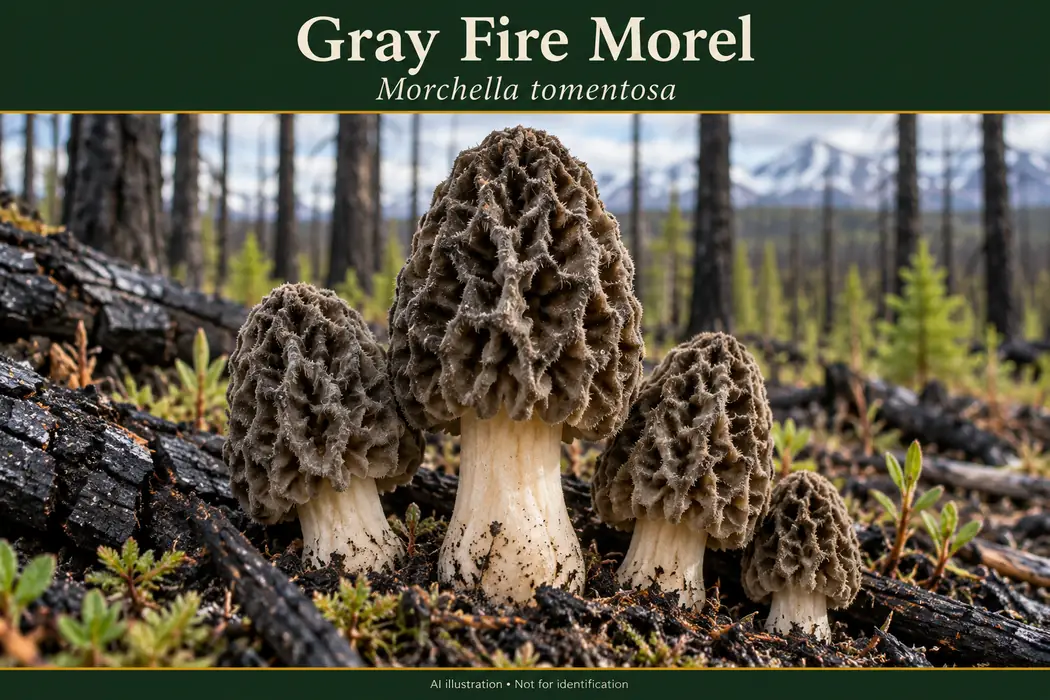
Alaska has many edible mushrooms, including morels, king boletes, golden chanterelles, hedgehogs, oyster mushrooms and bear’s head mushrooms. Most appear...
 Species Guide
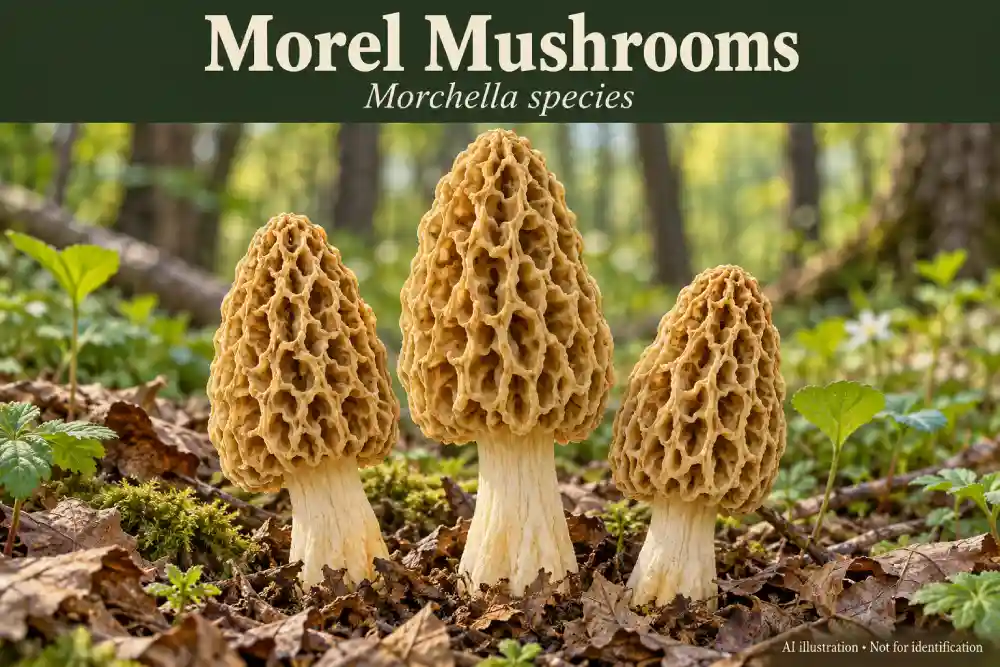
Wisconsin is home to edible mushrooms such as morels, chanterelles, oyster mushrooms, hen of the woods, chicken of the woods and giant puffballs. Different...
 Species Guide
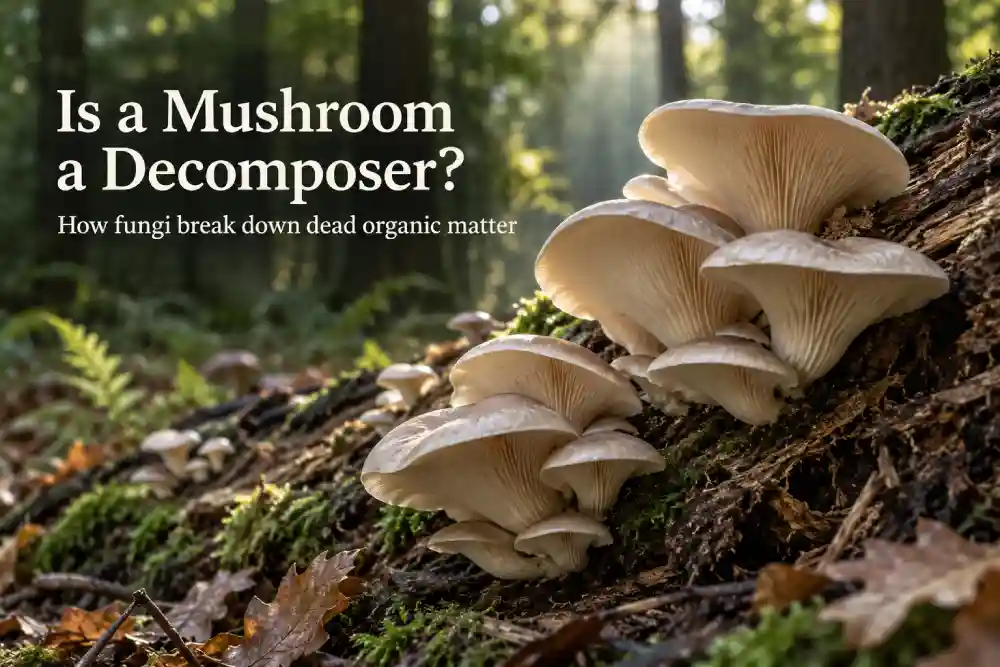
Is a Mushroom a Decomposer? Yes, many mushroom-forming fungi are decomposers. They break down dead wood, fallen leaves and other organic material, helping...