Edible Mushrooms in Greece: Guide to Identification, Habitat, and Safe Foraging

Nathan Cole
Mycologist · Author · Fungi Expert
Updated
Aug 22, 2026
Greece is one of Europe's most underrated destinations for wild mushroom foraging. From the oak and chestnut forests of Epirus to the beech woodlands of Macedonia and the high-elevation slopes of the Pindus Mountains, the country supports an extraordinary diversity of edible fungi.
Popular species include porcini, Caesar's mushroom, chanterelles, saffron milk caps, black trumpets, and morels. However, Greece is also home to several deadly poisonous mushrooms, making proper identification essential.
This guide explores the best edible mushrooms in Greece, where they grow, how to identify them safely, and the habitats that support their growth.
What Are the Most Popular Edible Mushrooms in Greece?
Greece's diverse landscapes support hundreds of mushroom species, many of which have been collected and eaten for generations in mountain villages and rural communities.
The most sought-after edible mushrooms are prized not only for their flavor but also for their cultural importance in traditional Greek cuisine.
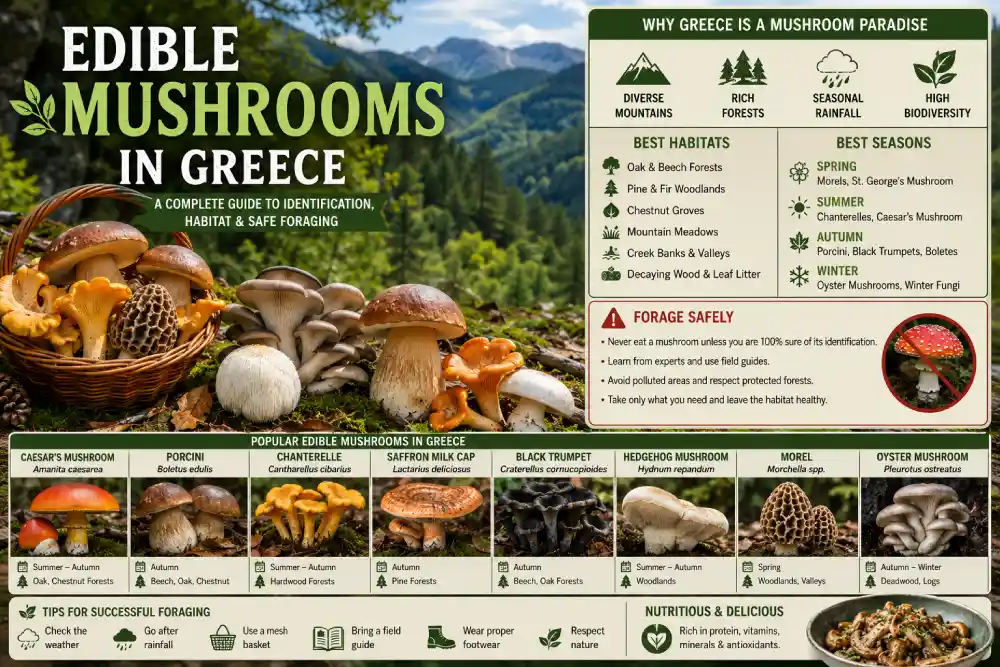
Most Common Edible Mushrooms Found in Greece
Some of the best-known edible species include:
- Caesar's Mushroom (Amanita caesarea)
- Porcini (Boletus edulis)
- Summer Bolete (Boletus reticulatus)
- Chanterelle (Cantharellus cibarius)
- Saffron Milk Cap (Lactarius deliciosus)
- Black Trumpet (Craterellus cornucopioides)
- Hedgehog Mushroom (Hydnum repandum)
- Oyster Mushroom (Pleurotus ostreatus)
- Morels (Morchella spp.)
- Parasol Mushroom (Macrolepiota procera)
- St. George's Mushroom (Calocybe gambosa)
Many of these mushrooms are sold in local markets throughout northern Greece during autumn and are featured in regional dishes, soups, pies, and stews.
Mushroom | Season | Habitat | Edibility |
|---|---|---|---|
Caesar's Mushroom | Summer–Autumn | Oak forests | Excellent |
Porcini | Autumn | Beech, oak, chestnut forests | Excellent |
Chanterelle | Summer–Autumn | Hardwood forests | Excellent |
Saffron Milk Cap | Autumn | Pine forests | Excellent |
Black Trumpet | Autumn | Beech and oak forests | Excellent |
Morel | Spring | River valleys and woodlands | Excellent |
Why Greece Is One of Europe's Best Mushroom Destinations?
While countries such as Italy, France, and Spain often receive attention for mushroom foraging, Greece possesses many of the same ecological advantages.
Its combination of Mediterranean climates, mountain ecosystems, and extensive forests creates ideal conditions for fungal biodiversity.
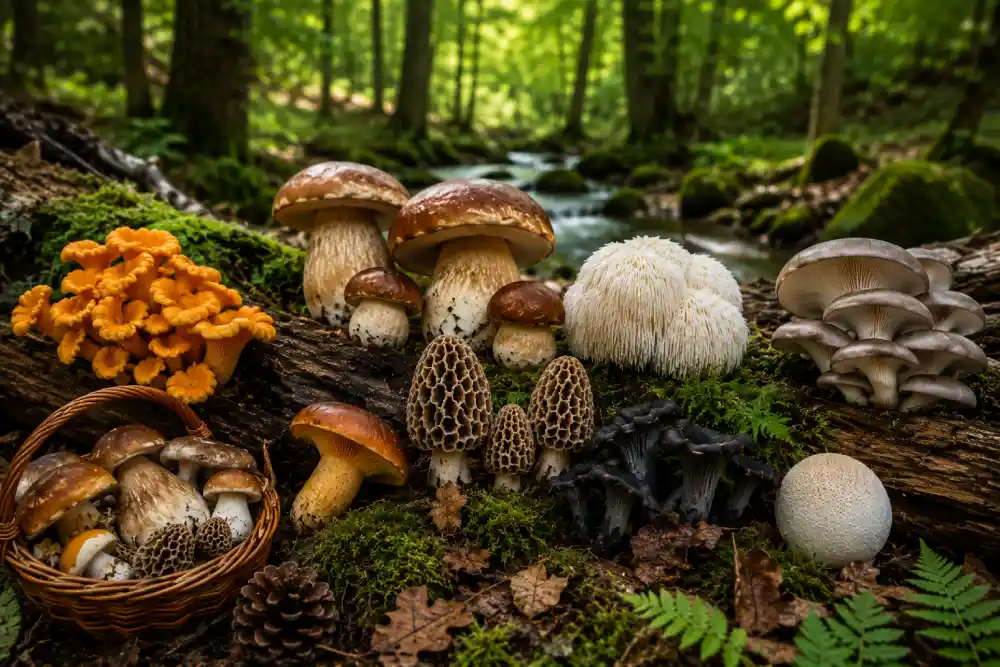
Diverse Climate Zones
Greece contains several distinct climatic regions.
These include:
- Mediterranean coastal climates
- Mountain climates
- Alpine environments
- Humid northern forests
- Dry southern landscapes
Because elevation changes dramatically across the country, mushrooms can fruit over a much longer period than in many other European nations.
The Importance of the Pindus Mountains
The Pindus Mountains are often considered the heart of Greek mushroom country.
These mountains provide:
- High annual rainfall
- Extensive hardwood forests
- Rich organic soils
- Cool summer temperatures
- Long autumn growing seasons
Many prized edible species reach peak abundance in these forests.
Forest Biodiversity
Greek forests contain a mixture of:
- Oak woodlands
- Beech forests
- Chestnut groves
- Fir forests
- Pine forests
This diversity allows both mycorrhizal and saprobic fungi to thrive throughout the country.
How to Identify Edible Mushrooms Safely?
Accurate identification is the foundation of safe mushroom foraging.
Many edible species found in Greece have toxic lookalikes, some of which can be fatal if consumed.
Examine the Cap Carefully
Important cap characteristics include:
- Shape
- Texture
- Color
- Size
- Margin structure
For example:
- Caesar's Mushroom develops a bright orange cap.
- Chanterelles display irregular, wavy caps.
- Porcini produce thick, rounded brown caps.
Study the Stem
Stem features often provide critical identification clues.
Observe:
- Thickness
- Color
- Surface texture
- Presence of a ring
- Bulbous base
- Hollow or solid interior
Particular attention should be paid to species in the Amanita genus, which often possess distinctive stem structures.
Check the Spore-Bearing Surface
Different mushrooms produce spores on:
- True gills
- False gills
- Pores
- Teeth
Examples include:
- Chanterelles with false gills
- Porcini with pores
- Hedgehog mushrooms with teeth
These characteristics are among the most reliable identification features.
Use Spore Prints and Odor
Spore print color can help separate similar species.
Common colors include:
- White
- Cream
- Yellow
- Brown
- Olive-brown
Odor can also be useful, with some mushrooms producing fruity, nutty, or earthy aromas.
Where Do Edible Mushrooms Grow in Greece?
Understanding habitat preferences dramatically improves mushroom hunting success.
Many edible species only grow under specific trees or within particular ecosystems.
Oak Forests
Oak forests are among the most productive mushroom habitats in Greece.
Common species include:
- Caesar's Mushroom
- Chanterelles
- Black Trumpets
- Hedgehog Mushrooms
These forests are especially abundant throughout Epirus, Macedonia, and Thessaly.
Beech Forests
Higher-elevation beech forests support:
- Porcini
- Black Trumpets
- Hedgehog Mushrooms
- Various bolete species
The cool, moist conditions beneath beech trees create excellent fungal habitat.
Chestnut Groves
Traditional chestnut forests provide rich organic soils that support a wide range of edible fungi during autumn.
Many local foragers specifically target chestnut woodlands for porcini mushrooms.
Pine and Fir Forests
Conifer forests produce species adapted to these environments, including:
- Saffron Milk Caps
- Various boletes
- Oyster Mushrooms
Pine forests are particularly important in northern Greece and mountainous regions.
Mountain Meadows and Forest Edges
Open woodland margins and mountain grasslands often produce:
- Parasol Mushrooms
- St. George's Mushrooms
- Spring morels
These habitats frequently become productive after seasonal rainfall.
Best Seasons to Find Edible Mushrooms in Greece
Seasonality varies significantly depending on elevation, rainfall, and local climate.
Some regions begin fruiting in spring, while mountain forests may continue producing mushrooms into late autumn.
Spring Mushroom Season
Spring is best known for:
- Morels
- St. George's Mushroom
- Early Oyster Mushrooms
The combination of warming temperatures and spring rains creates ideal fruiting conditions.
Summer Mushroom Season
At higher elevations, summer brings:
- Chanterelles
- Caesar's Mushroom
- Early boletes
Mountain forests remain productive due to cooler temperatures and increased moisture.
Peak Autumn Mushroom Season
Autumn is widely regarded as the best mushroom season in Greece.
Popular species include:
- Porcini
- Black Trumpets
- Saffron Milk Caps
- Hedgehog Mushrooms
- Parasol Mushrooms
Many experienced foragers consider October and November the most productive months.
Winter Opportunities
In southern Greece and coastal regions, mild winters may still produce:
- Oyster Mushrooms
- Winter fungi
- Various saprobic species
Weather Conditions That Trigger Mushroom Growth
The best mushroom flushes often occur after:
- Steady rainfall
- Mild temperatures
- Cool nights
- High humidity
- Moist forest soils
Successful foragers often monitor weather patterns closely and plan trips shortly after significant rainfall events.
Top Edible Mushroom Species Found in Greece
Greece hosts an impressive variety of edible mushrooms thanks to its combination of Mediterranean forests, mountain ecosystems, and diverse tree species. While hundreds of fungi grow throughout the country, a handful are especially valued by foragers and chefs.
Caesar's Mushroom (Amanita caesarea)
Often considered the king of Mediterranean mushrooms, Caesar's mushroom has been prized since ancient Roman times.
Identification
- Bright orange to red-orange cap
- Yellow gills
- Yellow stem
- White volva at the base
- Smooth cap surface
Habitat
Typically found in:
- Oak forests
- Chestnut woodlands
- Warm Mediterranean forests
- Southern and central Greece
Season
Summer through autumn following rainfall.
Porcini (Boletus edulis)
Porcini is one of Europe's most valuable wild mushrooms and is highly sought after across Greece.
Identification
- Thick brown cap
- White to olive pore surface
- Bulbous stem
- Dense white flesh
- Pleasant nutty aroma
Habitat
Found in:
- Beech forests
- Oak woodlands
- Chestnut groves
- Mountain forests
Porcini frequently appear after autumn rains in northern Greece.
Chanterelle (Cantharellus cibarius)
Among the easiest mushrooms to recognize, chanterelles are prized for their fruity aroma and excellent flavor.
Identification
- Golden-yellow color
- Funnel-shaped cap
- Thick false gills
- Firm flesh
- Apricot-like scent
Habitat
- Oak forests
- Beech forests
- Moss-covered woodland floors
- Humus-rich soils
Saffron Milk Cap (Lactarius deliciosus)
One of the most popular mushrooms in Mediterranean pine forests.
Identification
- Orange cap with concentric rings
- Orange gills
- Produces orange latex when cut
- Greenish staining with age
Habitat
Strongly associated with:
- Pine forests
- Mediterranean conifer woodlands
- Mountain pine ecosystems
Black Trumpet (Craterellus cornucopioides)
Sometimes called the "horn of plenty," this mushroom is highly prized despite being difficult to spot.
Identification
- Dark gray to black coloration
- Funnel-shaped body
- Thin flesh
- Smooth underside
Habitat
- Oak forests
- Beech forests
- Moist mountain woodlands
Other Popular Edible Mushrooms in Greece
Additional edible species include:
- Hedgehog Mushroom (Hydnum repandum)
- Oyster Mushroom (Pleurotus ostreatus)
- Morels (Morchella spp.)
- Parasol Mushroom (Macrolepiota procera)
- St. George's Mushroom (Calocybe gambosa)
- Lion's Mane (Hericium erinaceus)
Each contributes to Greece's rich fungal diversity and culinary traditions.
Caesar's Mushroom: Greece's Most Famous Wild Edible Mushroom
Few mushrooms hold the same reputation as Caesar's mushroom.
Its historical significance dates back thousands of years, and it remains one of the most highly valued mushrooms found in Mediterranean Europe.
Key Identification Features
Caesar's mushroom can be recognized by its:
- Brilliant orange cap
- Bright yellow gills
- Yellow stem
- White sac-like volva
- Smooth cap texture
Young specimens emerge from a white egg-like structure before expanding.
Habitat and Tree Associations
This species forms mycorrhizal relationships with:
- Oak trees
- Chestnut trees
- Cork oak
- Mediterranean hardwoods
It thrives in warm forests with well-drained soils.
Culinary Value
Many mushroom enthusiasts consider Caesar's mushroom among the finest edible species due to its:
- Mild nutty flavor
- Firm texture
- Delicate aroma
It is commonly:
- Sautéed
- Grilled
- Added to pasta
- Served in traditional Mediterranean dishes
Dangerous Lookalikes
Because Caesar's mushroom belongs to the Amanita genus, extreme caution is required.
Potentially deadly relatives include:
- Death Cap (Amanita phalloides)
- Destroying Angel (Amanita virosa)
Proper identification is absolutely essential.
Porcini Mushrooms in Greece
Porcini are among the most sought-after mushrooms by foragers throughout northern and mountainous Greece.
Their rich flavor and versatility make them a staple ingredient in European mushroom cuisine.
How to Identify Porcini?
Key characteristics include:
- Thick brown cap
- White pore surface when young
- Bulbous stem
- Dense white flesh
- Pleasant earthy aroma
Unlike many mushrooms, porcini have pores instead of gills.
Best Habitats
Porcini commonly grow in:
- Beech forests
- Oak woodlands
- Chestnut groves
- Fir forests
- Mountain ecosystems
The forests of Epirus, Macedonia, and the Pindus Mountains are particularly productive.
Culinary Uses
Porcini are highly valued because they:
- Dry exceptionally well
- Retain flavor after preservation
- Work well in soups and sauces
- Enhance risotto and pasta dishes
Many Greek foragers dry porcini for year-round use.
Similar Species
While many boletes are edible, some are not.
Careful identification is necessary to avoid confusion with:
- Bitter boletes
- Satan's Bolete
- Other lookalike species
Poisonous Lookalikes You Should Never Ignore
One of the most important aspects of mushroom foraging is recognizing dangerous species.
Several poisonous mushrooms in Greece closely resemble edible mushrooms.
Dangerous Species Found in Greece
Foragers should learn to identify:
- Death Cap (Amanita phalloides)
- Destroying Angel (Amanita virosa)
- Panther Cap (Amanita pantherina)
- False Morels (Gyromitra spp.)
- Fool's Funnel (Clitocybe rivulosa)
- Satan's Bolete (Rubroboletus satanas)
Some contain toxins capable of causing liver failure, neurological symptoms, or death.
Edible Mushroom | Dangerous Lookalike | Main Difference |
|---|---|---|
Caesar's Mushroom | Death Cap | Yellow gills vs white gills |
Morel | False Morel | Hollow interior vs chambered interior |
Porcini | Satan's Bolete | Red pores and blue bruising |
Chanterelle | False Chanterelle | True false gills vs thin gills |
Parasol Mushroom | Toxic Lepiota species | Smaller size and spore characteristics |
Essential Safety Rule
Never eat a wild mushroom unless you are completely certain of its identification.
If any doubt exists, do not consume it.
Best Mushroom Hunting Regions in Greece
Certain regions consistently produce outstanding mushroom harvests due to their climate, forests, and elevation.
Pindus Mountains
Often considered Greece's premier mushroom destination.
Known for:
- Porcini
- Chanterelles
- Black Trumpets
- Hedgehog Mushrooms
The combination of rainfall and extensive forests supports exceptional fungal diversity.
Epirus
This northwestern region is famous among Greek mushroom hunters.
Key habitats include:
- Oak forests
- Beech woodlands
- Mountain valleys
- Chestnut forests
Many local mushroom festivals take place in this region.
Macedonia
Northern Greece's forests produce large numbers of:
- Porcini
- Caesar's Mushroom
- Chanterelles
- Saffron Milk Caps
Autumn is especially productive.
Mount Olympus
The slopes of Greece's most famous mountain provide:
- Diverse forest habitats
- Elevation gradients
- High biodiversity
These conditions support numerous edible fungi.
Peloponnese
Mountain forests throughout the Peloponnese contain productive habitats for:
- Caesar's Mushroom
- Chanterelles
- Parasol Mushrooms
- Various boletes
Crete
Although drier than northern Greece, certain mountain forests and higher elevations can still support seasonal mushroom growth after rainfall.
Top Edible Mushroom Species Found in Greece
Greece hosts an impressive variety of edible mushrooms thanks to its combination of Mediterranean forests, mountain ecosystems, and diverse tree species. While hundreds of fungi grow throughout the country, a handful are especially valued by foragers and chefs.
Caesar's Mushroom (Amanita caesarea)
Often considered the king of Mediterranean mushrooms, Caesar's mushroom has been prized since ancient Roman times.
Identification
- Bright orange to red-orange cap
- Yellow gills
- Yellow stem
- White volva at the base
- Smooth cap surface
Habitat
Typically found in:
- Oak forests
- Chestnut woodlands
- Warm Mediterranean forests
- Southern and central Greece
Season
Summer through autumn following rainfall.
Porcini (Boletus edulis)
Porcini is one of Europe's most valuable wild mushrooms and is highly sought after across Greece.
Identification
- Thick brown cap
- White to olive pore surface
- Bulbous stem
- Dense white flesh
- Pleasant nutty aroma
Habitat
Found in:
- Beech forests
- Oak woodlands
- Chestnut groves
- Mountain forests
Porcini frequently appear after autumn rains in northern Greece.
Chanterelle (Cantharellus cibarius)
Among the easiest mushrooms to recognize, chanterelles are prized for their fruity aroma and excellent flavor.
Identification
- Golden-yellow color
- Funnel-shaped cap
- Thick false gills
- Firm flesh
- Apricot-like scent
Habitat
- Oak forests
- Beech forests
- Moss-covered woodland floors
- Humus-rich soils
Saffron Milk Cap (Lactarius deliciosus)
One of the most popular mushrooms in Mediterranean pine forests.
Identification
- Orange cap with concentric rings
- Orange gills
- Produces orange latex when cut
- Greenish staining with age
Habitat
Strongly associated with:
- Pine forests
- Mediterranean conifer woodlands
- Mountain pine ecosystems
Black Trumpet (Craterellus cornucopioides)
Sometimes called the "horn of plenty," this mushroom is highly prized despite being difficult to spot.
Identification
- Dark gray to black coloration
- Funnel-shaped body
- Thin flesh
- Smooth underside
Habitat
- Oak forests
- Beech forests
- Moist mountain woodlands
Additional edible species include:
- Hedgehog Mushroom (Hydnum repandum)
- Oyster Mushroom (Pleurotus ostreatus)
- Morels (Morchella spp.)
- Parasol Mushroom (Macrolepiota procera)
- St. George's Mushroom (Calocybe gambosa)
- Lion's Mane (Hericium erinaceus)
Each contributes to Greece's rich fungal diversity and culinary traditions.
Caesar's Mushroom: Greece's Most Famous Wild Edible Mushroom
Few mushrooms hold the same reputation as Caesar's mushroom.
Its historical significance dates back thousands of years, and it remains one of the most highly valued mushrooms found in Mediterranean Europe.
Key Identification Features
Caesar's mushroom can be recognized by its:
- Brilliant orange cap
- Bright yellow gills
- Yellow stem
- White sac-like volva
- Smooth cap texture
Young specimens emerge from a white egg-like structure before expanding.
Habitat and Tree Associations
This species forms mycorrhizal relationships with:
- Oak trees
- Chestnut trees
- Cork oak
- Mediterranean hardwoods
It thrives in warm forests with well-drained soils.
Culinary Value
Many mushroom enthusiasts consider Caesar's mushroom among the finest edible species due to its:
- Mild nutty flavor
- Firm texture
- Delicate aroma
It is commonly:
- Sautéed
- Grilled
- Added to pasta
- Served in traditional Mediterranean dishes
Dangerous Lookalikes
Because Caesar's mushroom belongs to the Amanita genus, extreme caution is required.
Potentially deadly relatives include:
- Death Cap (Amanita phalloides)
- Destroying Angel (Amanita virosa)
Proper identification is absolutely essential.
Porcini Mushrooms in Greece
Porcini are among the most sought-after mushrooms by foragers throughout northern and mountainous Greece.
Their rich flavor and versatility make them a staple ingredient in European mushroom cuisine.
How to Identify Porcini?
Key characteristics include:
- Thick brown cap
- White pore surface when young
- Bulbous stem
- Dense white flesh
- Pleasant earthy aroma
Unlike many mushrooms, porcini have pores instead of gills.
Best Habitats
Porcini commonly grow in:
- Beech forests
- Oak woodlands
- Chestnut groves
- Fir forests
- Mountain ecosystems
The forests of Epirus, Macedonia, and the Pindus Mountains are particularly productive.
Culinary Uses
Porcini are highly valued because they:
- Dry exceptionally well
- Retain flavor after preservation
- Work well in soups and sauces
- Enhance risotto and pasta dishes
Many Greek foragers dry porcini for year-round use.
Similar Species
While many boletes are edible, some are not.
Careful identification is necessary to avoid confusion with:
- Bitter boletes
- Satan's Bolete
- Other lookalike species
Poisonous Lookalikes You Should Never Ignore
One of the most important aspects of mushroom foraging is recognizing dangerous species.
Several poisonous mushrooms in Greece closely resemble edible mushrooms.
Dangerous Species Found in Greece
Foragers should learn to identify:
- Death Cap (Amanita phalloides)
- Destroying Angel (Amanita virosa)
- Panther Cap (Amanita pantherina)
- False Morels (Gyromitra spp.)
- Fool's Funnel (Clitocybe rivulosa)
- Satan's Bolete (Rubroboletus satanas)
Some contain toxins capable of causing liver failure, neurological symptoms, or death.
Edible Mushroom | Dangerous Lookalike | Main Difference |
|---|---|---|
Caesar's Mushroom | Death Cap | Yellow gills vs white gills |
Morel | False Morel | Hollow interior vs chambered interior |
Porcini | Satan's Bolete | Red pores and blue bruising |
Chanterelle | False Chanterelle | True false gills vs thin gills |
Parasol Mushroom | Toxic Lepiota species | Smaller size and spore characteristics |
Essential Safety Rule
Never eat a wild mushroom unless you are completely certain of its identification.
If any doubt exists, do not consume it.
Best Mushroom Hunting Regions in Greece
Certain regions consistently produce outstanding mushroom harvests due to their climate, forests, and elevation.
Pindus Mountains
Often considered Greece's premier mushroom destination.
Known for:
- Porcini
- Chanterelles
- Black Trumpets
- Hedgehog Mushrooms
The combination of rainfall and extensive forests supports exceptional fungal diversity.
Epirus
This northwestern region is famous among Greek mushroom hunters.
Key habitats include:
- Oak forests
- Beech woodlands
- Mountain valleys
- Chestnut forests
Many local mushroom festivals take place in this region.
Macedonia
Northern Greece's forests produce large numbers of:
- Porcini
- Caesar's Mushroom
- Chanterelles
- Saffron Milk Caps
Autumn is especially productive.
Mount Olympus
The slopes of Greece's most famous mountain provide:
- Diverse forest habitats
- Elevation gradients
- High biodiversity
These conditions support numerous edible fungi.
Peloponnese
Mountain forests throughout the Peloponnese contain productive habitats for:
- Caesar's Mushroom
- Chanterelles
- Parasol Mushrooms
- Various boletes
Crete
Although drier than northern Greece, certain mountain forests and higher elevations can still support seasonal mushroom growth after rainfall.
National Parks and Forests for Mushroom Foraging
Greece's protected forests and mountain landscapes contain some of the country's richest mushroom habitats. These areas support diverse ecosystems where edible fungi thrive alongside ancient woodlands and healthy wildlife populations.
Pindus National Park
Located in the heart of the Pindus Mountains, this park is one of Greece's premier mushroom destinations.
Common Mushroom Species
- Porcini
- Chanterelles
- Black Trumpets
- Hedgehog Mushrooms
- Various boletes
Habitat Features
- Dense beech forests
- Fir woodlands
- Mountain meadows
- Moist valleys
- Rich organic soils
Autumn is generally the most productive season.
Mount Olympus National Park
The forests surrounding Greece's highest mountain provide a variety of mushroom habitats at different elevations.
Productive Forest Types
- Beech forests
- Oak woodlands
- Fir forests
- Mixed mountain forests
The park's elevation gradient allows mushrooms to fruit over an extended season.
Valia Kalda Forest
Often called one of Greece's most pristine wilderness areas, Valia Kalda contains old-growth forests with exceptional fungal diversity.
Common habitats include:
- Ancient beech stands
- Black pine forests
- Moist ravines
- Moss-covered woodland floors
Frakto Virgin Forest
One of the last remaining virgin forests in Europe.
This protected area supports:
- Rare fungi
- Large porcini populations
- Mycorrhizal mushroom communities
- High biodiversity ecosystems
Its untouched environment provides ideal conditions for fungal development.
Mainalo and Elatia Forests
These mountain forests are well-known among Greek mushroom enthusiasts for producing a wide range of edible species during autumn.
Popular finds include:
- Porcini
- Chanterelles
- Caesar's Mushroom
- Saffron Milk Caps
Habitat and Tree Associations
Understanding tree associations is one of the most effective ways to locate edible mushrooms.
Many fungi depend on specific trees through underground symbiotic relationships.
Oak Forest Mushrooms
Oak woodlands are among the most productive mushroom habitats in Greece.
Common species include:
- Caesar's Mushroom
- Chanterelles
- Black Trumpets
- Hedgehog Mushrooms
Oak roots provide ideal partners for many mycorrhizal fungi.
Beech Forest Mushrooms
Beech forests support some of Greece's most valuable edible mushrooms.
Typical species include:
- Porcini
- Black Trumpets
- Hedgehog Mushrooms
- Various boletes
The deep leaf litter and moist soils beneath beech trees create excellent fruiting conditions.
Chestnut Woodland Fungi
Chestnut forests are highly regarded by experienced foragers.
Common mushrooms include:
- Porcini
- Chanterelles
- Caesar's Mushroom
These forests often remain productive throughout autumn.
Pine Forest Species
Conifer forests host species adapted to pine ecosystems.
Important examples include:
- Saffron Milk Caps
- Certain boletes
- Oyster Mushrooms
Many pine-associated mushrooms form specialized relationships with conifer roots.
Deadwood and Saprobic Species
Not all mushrooms depend on living trees.
Species such as:
- Oyster Mushrooms
- Lion's Mane
- Chicken of the Woods
grow on:
- Fallen logs
- Dead trunks
- Rotting stumps
- Decaying branches
These fungi play an essential role in forest decomposition.
The Ecology of Mushrooms in Greece
Mushrooms are far more than edible forest products. They are critical components of healthy ecosystems.
Without fungi, forests would struggle to recycle nutrients and maintain biodiversity.
Mycorrhizal Relationships
Many edible mushrooms form partnerships with tree roots.
Benefits to trees include:
- Improved nutrient absorption
- Better water uptake
- Increased drought tolerance
- Enhanced soil health
In return, fungi receive carbohydrates produced through photosynthesis.
This mutually beneficial relationship helps sustain entire forest ecosystems.
Saprobic Decomposition
Saprobic fungi break down:
- Dead wood
- Fallen leaves
- Organic debris
This process returns nutrients to the soil and supports future plant growth.
Examples include:
- Oyster Mushrooms
- Lion's Mane
- Chicken of the Woods
Forest Biodiversity
Fungi contribute significantly to biodiversity by:
- Creating wildlife food sources
- Supporting insects and microorganisms
- Improving soil structure
- Enhancing forest resilience
Healthy fungal communities are indicators of healthy forests.
Conservation Importance
As climate patterns change and habitats face increasing pressure, protecting fungal diversity becomes increasingly important.
Sustainable foraging and habitat conservation help preserve Greece's unique mushroom ecosystems for future generations.
Nutritional Benefits of Wild Edible Mushrooms
Wild mushrooms are nutrient-rich foods that offer valuable vitamins, minerals, fiber, and antioxidants while remaining naturally low in calories.
Nutritional Overview
| Nutrient | Function |
|---|---|
| Protein | Supports muscle maintenance |
| Dietary Fiber | Promotes digestive health |
| Potassium | Supports fluid balance |
| Selenium | Supports immune function |
| Copper | Essential for metabolism |
| Iron | Supports oxygen transport |
| Zinc | Supports immune health |
| Vitamin D | Supports bone health |
| Riboflavin | Helps energy production |
| Niacin | Supports nervous system function |
Antioxidants and Bioactive Compounds
Many mushrooms contain:
- Ergothioneine
- Polyphenols
- Beta-glucans
- Natural antioxidants
These compounds continue to be studied for their potential health-supporting properties.
Low-Calorie Nutritional Value
Most edible mushrooms are:
- Low in calories
- Low in fat
- Naturally cholesterol-free
- Rich in micronutrients
This makes them a valuable addition to Mediterranean-style diets.
Traditional Greek Uses of Wild Mushrooms
Wild mushrooms have long been part of local traditions in Greece's mountainous regions.
While not every region has a strong mushroom culture, many northern communities have collected mushrooms for generations.
Mountain Village Traditions
In regions such as:
- Epirus
- Macedonia
- Thessaly
families often gather mushrooms during autumn and preserve them for winter use.
Foraging remains both a cultural activity and a source of seasonal food.
Traditional Mushroom Recipes
Popular dishes include:
- Wild mushroom stews
- Mushroom soups
- Mushroom pies
- Sautéed mushrooms with herbs
- Grilled forest mushrooms
Many recipes highlight the natural flavor of freshly harvested fungi.
Drying Porcini for Winter
One of the most common preservation methods involves drying porcini mushrooms.
Dried porcini are often used in:
- Soups
- Sauces
- Risottos
- Pasta dishes
Their flavor becomes even more concentrated during the drying process.
Modern Greek Mushroom Cuisine
Today, many chefs throughout Greece incorporate wild mushrooms into contemporary Mediterranean cuisine.
Popular preparations include:
- Gourmet risottos
- Wild mushroom pasta
- Truffle-inspired dishes
- Mushroom appetizers
- Farm-to-table seasonal menus
This growing appreciation has helped increase interest in mushroom foraging, conservation, and mycological education throughout the country.
Culinary Uses and Cooking Ideas
Wild mushrooms play an important role in both traditional and modern Greek cuisine. Their rich flavors and diverse textures make them versatile ingredients that can be incorporated into a wide variety of dishes.
Popular Cooking Methods
Most edible mushrooms are best enjoyed when thoroughly cooked.
Common preparation techniques include:
- Sautéing with olive oil and garlic
- Roasting with Mediterranean herbs
- Grilling over charcoal
- Stir-frying with seasonal vegetables
- Adding to soups and stews
- Mixing into pasta and risotto
- Using as pizza toppings
- Incorporating into savory pies
These methods help enhance flavor while improving texture and digestibility.
Flavor Profiles of Popular Greek Mushrooms
| Mushroom | Flavor | Texture |
|---|---|---|
| Porcini | Rich, nutty, earthy | Dense and meaty |
| Caesar's Mushroom | Mild and delicate | Firm |
| Chanterelle | Fruity and peppery | Tender |
| Saffron Milk Cap | Mild and slightly nutty | Firm |
| Black Trumpet | Deep, smoky flavor | Thin and delicate |
| Lion's Mane | Mild seafood-like flavor | Dense and tender |
Each species offers unique culinary possibilities, making wild mushroom cooking one of the highlights of foraging in Greece.
Traditional and Modern Recipes
Wild mushrooms are commonly used in:
- Mushroom pies
- Forest mushroom stews
- Risotto
- Pasta dishes
- Omelets
- Grilled vegetable platters
- Mediterranean-style appetizers
Many chefs also combine mushrooms with local ingredients such as olive oil, thyme, oregano, rosemary, and regional cheeses.
Best Ways to Preserve Wild Mushrooms
Preserving mushrooms allows foragers to enjoy seasonal harvests throughout the year while maintaining much of their flavor and nutritional value.
Drying Mushrooms
Drying is one of the most popular preservation methods in Greece.
Ideal mushrooms for drying include:
- Porcini
- Morels
- Chanterelles
- Black Trumpets
- Hedgehog Mushrooms
After drying, mushrooms should be stored in airtight containers away from moisture and direct sunlight.
Freezing Mushrooms
Many mushrooms freeze well after light cooking.
Good candidates include:
- Oyster Mushrooms
- Lion's Mane
- Caesar's Mushroom
- Hen of the Woods
Light sautéing before freezing often helps preserve texture and flavor.
Pickling Mushrooms
Pickling remains a traditional preservation method in some regions.
Benefits include:
- Extended shelf life
- Unique flavor development
- Convenient storage
Young, firm mushrooms generally produce the best pickled products.
Long-Term Storage Tips
To maximize quality:
- Store dried mushrooms in sealed containers
- Keep preserved mushrooms away from heat
- Label storage dates
- Check regularly for moisture contamination
Proper storage ensures mushrooms remain usable for many months.
Responsible and Sustainable Mushroom Foraging
Sustainable harvesting helps preserve Greece's forests and fungal biodiversity.
Responsible foraging protects habitats while ensuring future mushroom populations remain healthy.
Follow Ethical Harvesting Practices
Responsible foragers should:
- Harvest only what they need
- Leave immature specimens behind
- Avoid damaging surrounding vegetation
- Respect wildlife habitats
- Follow local regulations
These simple practices help maintain healthy fungal ecosystems.
Protect Underground Mycelium
The visible mushroom is only the fruiting body.
Beneath the soil lies an extensive network of mycelium responsible for future mushroom growth.
Foragers should:
- Minimize soil disturbance
- Avoid unnecessary digging
- Leave portions of productive patches untouched
Protecting mycelium supports long-term sustainability.
Use Mesh Baskets
Mesh baskets provide several advantages:
- Better airflow
- Reduced spoilage
- Natural spore dispersal
- Improved specimen protection
Many experienced mushroom hunters consider mesh baskets essential equipment.
Respect Protected Areas
Some national parks, reserves, and protected habitats may have restrictions regarding mushroom collection.
Always verify regulations before harvesting.
Essential Mushroom Hunting Equipment
Having the proper equipment improves both safety and success in the field.
Basic Equipment Checklist
Every forager should consider carrying:
- Mushroom knife
- Mesh basket
- Field guide
- GPS device or smartphone
- Compass
- Soft cleaning brush
- Camera
- Water bottle
- Notebook
- Hiking boots
These tools help with collection, identification, and documentation.
Advanced Equipment
Experienced foragers may also use:
- Hand lens
- Wax paper bags
- Trekking poles
- First-aid kit
- Rain gear
- Portable identification references
Additional equipment can be especially useful during long trips in mountainous terrain.
Keeping Records
Many successful foragers maintain detailed records of:
- Mushroom species
- Habitat types
- Tree associations
- Weather conditions
- Fruiting dates
Over time, these observations reveal valuable patterns and improve future success.
Common Mushroom Identification Mistakes
Many mushroom poisoning incidents occur because people rely on assumptions rather than careful identification.
Understanding common mistakes can help prevent serious errors.
Depending on Color Alone
Color is often unreliable because it can vary based on:
- Age
- Weather
- Sun exposure
- Moisture levels
Always examine multiple characteristics.
Ignoring Habitat Clues
Habitat often provides critical identification information.
Consider:
- Tree species
- Soil type
- Elevation
- Moisture levels
- Growth pattern
Many mushrooms grow only in specific environments.
Skipping Spore Prints
Spore prints remain one of the most valuable identification tools.
Spore color can help distinguish between visually similar species and confirm an identification.
Harvesting Old or Damaged Mushrooms
Avoid mushrooms that are:
- Slimy
- Moldy
- Waterlogged
- Heavily insect-infested
Fresh specimens generally provide better quality and safer consumption.
Trusting Internet Photos Alone
Online images rarely provide enough information for accurate identification.
Always verify:
- Multiple identifying features
- Habitat information
- Spore characteristics
- Expert resources
When uncertainty exists, do not consume the mushroom.
The Most Important Safety Rule
Regardless of experience level, every forager should remember:
Never eat a wild mushroom unless you are completely certain of its identification.
A single mistake can have serious or even fatal consequences, particularly when poisonous Amanita species are involved.
Sign in to leave a comment and join the discussion.
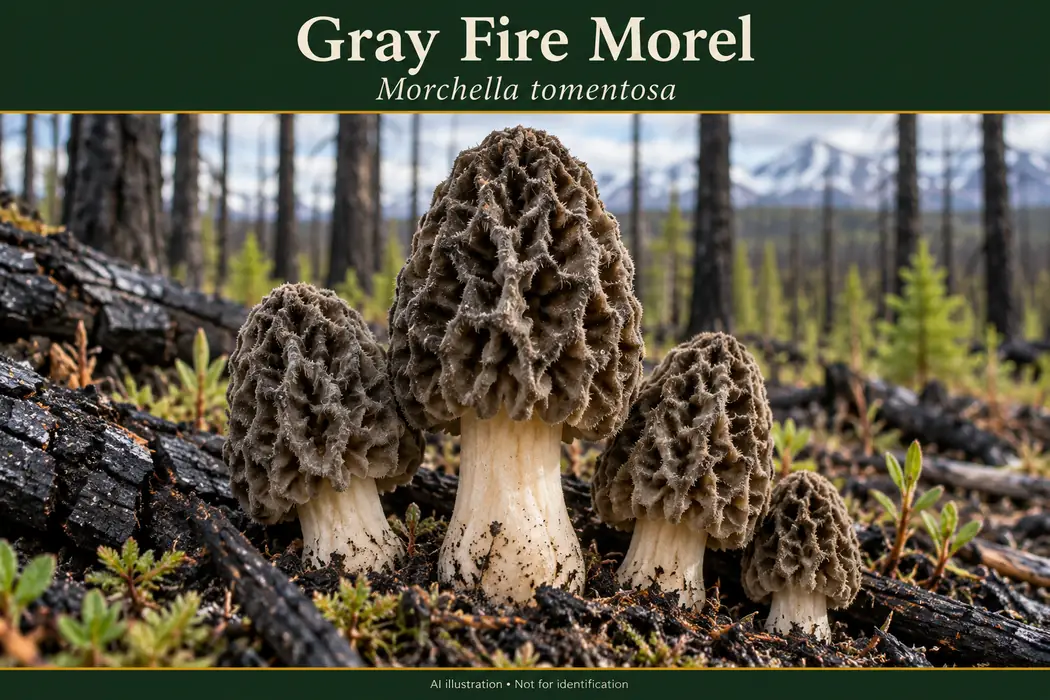 Species Guide
Alaska has many edible mushrooms, including morels, king boletes, golden chanterelles, hedgehogs, oyster mushrooms and bear’s head mushrooms. Most appear...
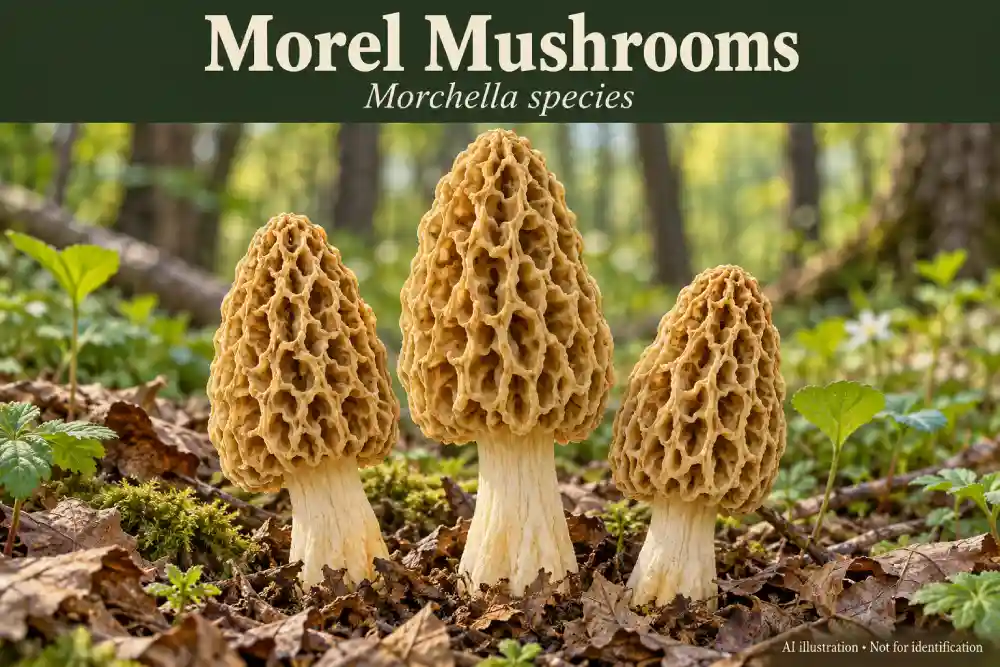 Species Guide
Wisconsin is home to edible mushrooms such as morels, chanterelles, oyster mushrooms, hen of the woods, chicken of the woods and giant puffballs. Different...
 Species Guide
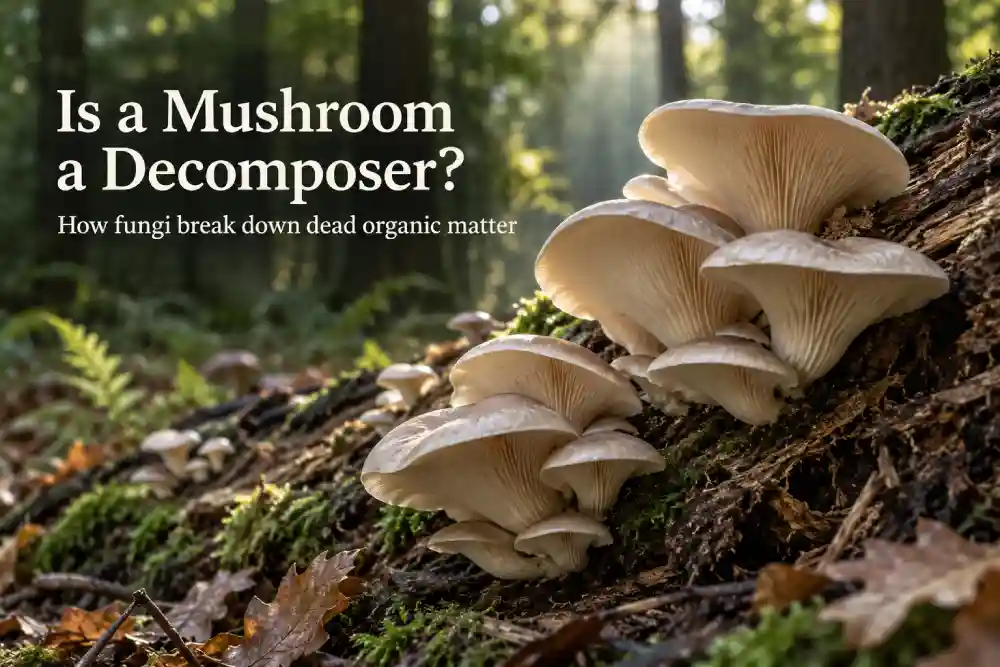
Is a Mushroom a Decomposer? Yes, many mushroom-forming fungi are decomposers. They break down dead wood, fallen leaves and other organic material, helping...