Edible Mushrooms in Indiana: A Complete Guide to Identification, Habitat, and Safe Foraging

Nathan Cole
Mycologist · Author · Fungi Expert
Updated
Aug 22, 2026
If you're looking for edible mushrooms in Indiana, you'll find a surprising diversity of species growing in the state's hardwood forests, river valleys, and wooded parks throughout the year. Popular edible mushrooms such as morels, chanterelles, hen of the woods, oyster mushrooms, and lion's mane can be found in suitable habitats during different seasons.
However, proper identification is essential because many edible mushrooms have poisonous lookalikes. Learning where they grow, how to identify them, and how to forage responsibly will help you enjoy Indiana's rich fungal diversity safely.
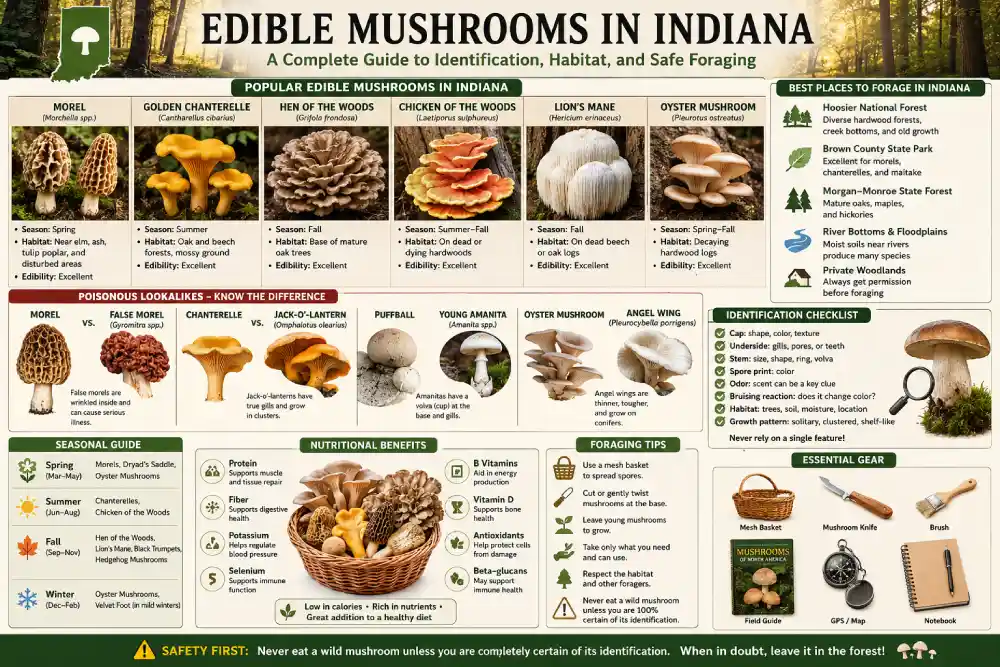
What Are the Most Popular Edible Mushrooms in Indiana?
Indiana's temperate climate and extensive deciduous forests create ideal conditions for dozens of edible wild mushroom species. Southern Indiana, particularly areas with mature oak, maple, beech, elm, and hickory trees, offers excellenst foraging opportunities.
Some of the most sought-after edible mushrooms include:
- Morel mushrooms
- Golden chanterelles
- Hen of the Woods (Maitake)
- Chicken of the Woods
- Oyster mushrooms
- Lion's Mane
- Giant Puffballs
- Hedgehog mushrooms
- Black Trumpets
- Dryad's Saddle
Each species occupies a unique ecological niche, contributing to forest health by forming mycorrhizal partnerships with trees or decomposing dead wood and organic matter.
| Mushroom | Primary Season | Habitat | Edibility |
|---|---|---|---|
| Morel | Spring | Elm, ash, tulip poplar forests | Excellent |
| Chanterelle | Summer | Oak and beech forests | Excellent |
| Hen of the Woods | Fall | Base of mature oak trees | Excellent |
| Chicken of the Woods | Summer-Fall | Dead or dying hardwoods | Excellent |
| Lion's Mane | Fall | Dead beech and oak logs | Excellent |
| Oyster Mushroom | Spring-Fall | Decaying hardwood logs | Excellent |
Check also our Mushroom Identification Quiz
Why Indiana Is an Excellent State for Mushroom Foraging?
Indiana combines fertile soils, abundant rainfall, and diverse hardwood ecosystems that support a rich fungal community.
Several environmental factors contribute to successful mushroom growth:
Diverse Forest Ecosystems
The state's oak-hickory forests, beech-maple woodlands, and mixed hardwood stands provide ideal habitats for mycorrhizal fungi that depend on tree roots for survival.
Moist Climate
Frequent spring and summer rains, combined with humid conditions, encourage mushroom fruiting after warm weather.
Deadwood Availability
Many edible mushrooms, including oyster mushrooms and lion's mane, are saprobic species that recycle nutrients by breaking down fallen logs, stumps, and decaying trees.
Rich Organic Soil
Leaf litter and decomposing plant material create humus-rich soils that support extensive underground mycelial networks, the hidden fungal structures responsible for producing mushrooms.
These ecological relationships make mushrooms an essential part of Indiana's forest ecosystems while providing rewarding opportunities for responsible foragers.
How to Identify Edible Mushrooms Safely?
Correct identification should always be your first priority before consuming any wild mushroom.
Instead of relying on a single feature, examine multiple characteristics together.
Cap
Observe the cap shape, texture, color, and size.
Examples include:
- Honeycomb caps on morels
- Funnel-shaped caps on chanterelles
- Shelf-like caps on chicken of the woods
- Rounded white caps on giant puffballs
Stem
Look for:
- Hollow or solid interior
- Thickness
- Surface texture
- Presence of rings
- Color changes
Gills, Pores, or Teeth
Different mushroom groups have unique spore-bearing surfaces.
- True gills
- False gills
- Pores
- Teeth or spines
- Smooth undersides
These structures are often among the most important identification features.
Spore Print
Taking a spore print helps distinguish similar-looking species by revealing spore color, which may be white, cream, yellow, pink, brown, or black depending on the species.
Odor and Bruising Reaction
Some edible mushrooms have fruity or apricot-like aromas, while others smell earthy or nutty.
Certain species also bruise blue, yellow, brown, or red when handled, providing another useful identification clue.
Never depend on folklore or myths such as silver spoon tests or whether animals eat a mushroom. These methods are unreliable and can be dangerous.
Where Do Edible Mushrooms Grow in Indiana?
Habitat is one of the strongest clues when identifying mushrooms.
Knowing the surrounding trees, soil type, and moisture level greatly improves identification accuracy.
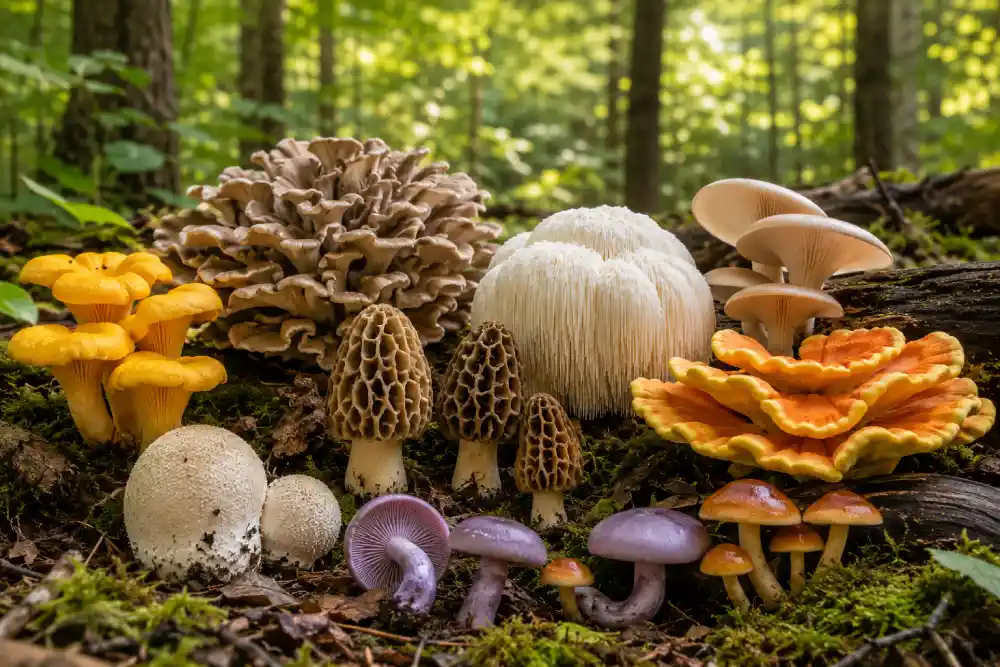
Hardwood Forests
Many prized edible mushrooms associate with mature hardwood species including:
- White oak
- Red oak
- Sugar maple
- American beech
- Tulip poplar
- Elm
- Hickory
Creek Bottoms and River Valleys
Moist soils near streams and floodplains often produce abundant spring and summer mushrooms because of higher humidity and nutrient-rich sediments.
Decaying Logs and Stumps
Saprobic mushrooms frequently grow on:
- Fallen logs
- Dead standing trees
- Rotting stumps
- Large branches
Lion's mane, oyster mushrooms, and chicken of the woods commonly fruit on hardwood debris.
Mossy Woodland Floors
Dense leaf litter and moss-covered forest floors create stable moisture conditions that support chanterelles, black trumpets, and many other forest fungi.
Understanding habitat preferences allows experienced foragers to locate productive mushroom patches year after year.
Best Seasons to Find Edible Mushrooms in Indiana
Mushroom hunting opportunities exist throughout much of the year, but different species appear during different seasons.
| Season | Common Edible Species |
| Spring | Morels, Dryad's Saddle, Oyster Mushrooms |
| Summer | Chanterelles, Chicken of the Woods |
| Early Fall | Hen of the Woods, Lion's Mane |
| Late Fall | Black Trumpets, Hedgehog Mushrooms |
| Mild Winter | Velvet Foot, Oyster Mushrooms |
Weather often influences mushroom production more than the calendar.
Warm temperatures following steady rainfall typically trigger large flushes of mushrooms, making conditions ideal for foraging. Experienced hunters monitor soil moisture, overnight temperatures, and recent precipitation rather than relying solely on specific dates.
Because mushroom fruiting varies from year to year, patience and repeated visits to productive habitats often yield the best results.
Top Edible Mushroom Species Found in Indiana
Indiana is home to a wide variety of edible mushrooms, but only a handful are commonly sought after by experienced foragers due to their flavor, texture, and culinary versatility.
Morel Mushrooms (Morchella spp.)
Morels are widely considered the crown jewel of spring mushroom hunting in Indiana. Their distinctive honeycomb-like cap and hollow stem make them relatively easy to recognize when mature.
Identification
- Honeycomb or sponge-like cap
- Hollow from tip to base
- Cream to yellow-brown coloration
- Attached cap and stem
Typical Habitat
- Near dead or dying elm trees
- Ash, tulip poplar, apple, and sycamore trees
- Woodland edges and south-facing slopes
- Areas disturbed by flooding or fire
Best Season
- Late March through May, depending on weather conditions
Golden Chanterelle (Cantharellus cibarius)
Chanterelles are prized for their fruity aroma and delicate flavor. Unlike many mushrooms, they have false gills that run down the stem rather than true blade-like gills.
Identification
- Golden yellow to orange cap
- Wavy margins
- Thick false gills
- Apricot-like fragrance
- Firm flesh
Habitat
- Mature oak and beech forests
- Moss-covered woodland floors
- Well-drained soils with abundant leaf litter
Hen of the Woods (Grifola frondosa)
Also known as Maitake, this mushroom forms large clusters at the base of mature oak trees during autumn.
Key Features
- Large overlapping fronds
- Gray-brown coloration
- White pore surface underneath
- Dense rosette growth pattern
Its rich, savory flavor makes it one of the most popular wild edible mushrooms in North America.
Lion's Mane (Hericium erinaceus)
Lion's mane stands out because it lacks caps and gills, instead producing cascading white spines.
It commonly grows on:
- Dead beech trees
- Oak logs
- Standing dead hardwoods
Many people value lion's mane not only for its seafood-like texture but also for ongoing research into its bioactive compounds.
Oyster Mushroom (Pleurotus ostreatus)
Oyster mushrooms grow in overlapping shelves on hardwood logs throughout much of the year.
Characteristics include:
- Fan-shaped caps
- White to gray coloration
- Decurrent gills extending down the stem
- Mild aroma
- Soft, tender texture
Their adaptability makes them one of the easiest edible mushrooms for beginners to recognize.
Poisonous Lookalikes: Why Careful Identification Matters
Many edible mushrooms have toxic counterparts that can cause severe illness or even death. Visual similarities alone should never be used as proof of edibility.
Comparison Table
| Edible Mushroom | Dangerous Lookalike | Major Difference |
|---|---|---|
| Morel | False Morel | Wrinkled interior, not hollow |
| Chanterelle | Jack-o'-lantern | True gills and clustered growth |
| Puffball | Young Amanita | Amanitas reveal internal structures when sliced |
| Honey Mushroom | Deadly Galerina | Rust-brown spores and different habitat |
| Oyster Mushroom | Angel Wing | Thinner flesh and conifer association |
Common Toxic Species in Indiana
Some of the most dangerous mushrooms found in Indiana include:
- Destroying Angel
- Death Cap
- False Morels
- Jack-o'-lantern Mushroom
- Deadly Galerina
- Green-spored Parasol
Several contain potent toxins that attack the liver, kidneys, or nervous system.
Warning Signs
Exercise extra caution if a mushroom has:
- A cup-like volva at the base
- White gills with white spores
- Unusual odor
- Milky latex
- Unknown bruising reactions
Never eat a wild mushroom unless you are completely certain of its identification. When in doubt, leave it in the forest.
Nutritional Benefits of Edible Mushrooms
Wild mushrooms are naturally low in calories while providing valuable vitamins, minerals, and antioxidants.
Nutritional Profile
| Nutrient | Benefits |
| Protein | Supports muscle maintenance |
| Fiber | Promotes digestive health |
| Potassium | Helps regulate blood pressure |
| Selenium | Supports immune function |
| Copper | Essential for energy metabolism |
| Vitamin D | Supports bone health when naturally present |
| B Vitamins | Aid energy production |
| Ergothioneine | Powerful antioxidant compound |
| Beta-glucans | May support immune response |
Many edible mushrooms also contain unique phytochemicals that contribute to their nutritional value and continue to be studied in fungal biology and nutrition research.
Culinary Uses and Cooking Methods
Indiana's edible mushrooms can be incorporated into a wide range of recipes, from simple side dishes to gourmet meals.
Popular Cooking Methods
- Sautéing with butter and herbs
- Roasting
- Grilling
- Stir-frying
- Cream soups
- Risotto
- Pasta dishes
- Pizza toppings
- Mushroom gravies
- Stuffings
Preservation Techniques
Many mushrooms can be preserved for later use through:
- Air drying
- Dehydration
- Freezing after cooking
- Pickling
- Powdering for seasoning blends
Proper preservation allows foragers to enjoy seasonal harvests long after the growing season ends.
Because some wild mushrooms are difficult to digest when raw, thorough cooking is recommended for most edible species.
Responsible and Sustainable Mushroom Foraging
Ethical harvesting helps protect fungal populations and ensures healthy forests for future generations.
Best Practices
- Harvest only mature specimens.
- Leave young mushrooms to continue developing.
- Cut or gently twist mushrooms without disturbing surrounding habitat.
- Use a mesh basket to disperse spores while walking.
- Avoid overharvesting productive areas.
- Respect public land regulations and private property.
- Stay on established trails whenever possible.
Essential Foraging Gear
- Mesh basket
- Mushroom knife
- Soft brush
- Field guide
- GPS or map
- Hiking boots
- Drinking water
- Notebook for habitat observations
Why Sustainable Harvesting Matters
The visible mushroom is only the fruiting body. Beneath the soil lies an extensive network of mycelium that plays a vital role in forest ecosystems by recycling organic matter and forming beneficial relationships with tree roots.
Protecting these underground fungal networks supports biodiversity, soil health, and long-term forest resilience, ensuring that Indiana's woodlands continue to produce mushrooms for years to come.
Best Places to Find Edible Mushrooms in Indiana
Indiana's forests, parks, and protected lands offer excellent mushroom habitat thanks to their mature hardwood trees, abundant rainfall, and rich organic soils. While mushroom growth varies each year depending on weather conditions, certain regions are consistently productive.
Southern Indiana Hardwood Forests
Southern Indiana is widely regarded as the state's best mushroom-foraging region due to its rolling hills and extensive deciduous forests.
Common habitats include:
- Mature oak-hickory forests
- Beech-maple woodlands
- Moist ravines
- Limestone hillsides
- Leaf-litter-covered slopes
Species commonly found include morels, chanterelles, hen of the woods, lion's mane, and chicken of the woods.
Hoosier National Forest
Covering more than 200,000 acres, Hoosier National Forest provides a diverse range of habitats for wild fungi.
Potential mushroom habitats include:
- Creek bottoms
- Old logging roads
- Decaying hardwood stands
- Moss-covered woodland floors
- Mixed hardwood forests
Always check current regulations before collecting mushrooms on public lands, as harvesting rules may vary by location.
State Parks and State Forests
Indiana's state parks and forests contain healthy woodland ecosystems that support fungal biodiversity.
Productive forest types often occur in:
- Brown County region
- Morgan-Monroe State Forest
- Yellowwood State Forest
- Jackson-Washington State Forest
- Harrison-Crawford State Forest
Visitors should verify park-specific regulations regarding mushroom collection before foraging.
River Valleys and Floodplains
Floodplain forests near rivers often provide ideal moisture conditions for mushrooms.
Look around:
- Old cottonwood trees
- Elm stands
- Sycamore groves
- Sandy loam soils
- Areas with heavy leaf accumulation
These environments frequently produce spring morels and various saprobic mushrooms throughout the growing season.
Common Habitats and Tree Associations
One of the most valuable skills in mushroom hunting is learning tree identification. Many edible mushrooms have close ecological relationships with specific tree species or types of decaying wood.
Mycorrhizal Mushrooms
These fungi form mutually beneficial partnerships with tree roots.
| Mushroom | Common Tree Associations |
|---|---|
| Morel | Elm, ash, tulip poplar, apple |
| Chanterelle | Oak, beech, maple |
| Black Trumpet | Oak and beech |
| Hedgehog Mushroom | Mixed hardwoods |
These underground relationships allow fungi and trees to exchange water and nutrients, supporting overall forest health.
Saprobic Mushrooms
Saprobic fungi obtain nutrients by decomposing dead organic matter.
Examples include:
- Oyster mushrooms
- Lion's mane
- Chicken of the woods
- Dryad's saddle
These species commonly grow on:
- Fallen logs
- Dead standing trees
- Rotting stumps
- Large hardwood branches
By breaking down wood, they recycle nutrients back into the ecosystem and contribute to soil formation.
Understanding these ecological relationships helps foragers locate mushrooms more efficiently while gaining a deeper appreciation of forest biodiversity.
Beginner Tips for Mushroom Hunting in Indiana
Successful mushroom hunting requires patience, observation, and continuous learning.
Start with Easy-to-Recognize Species
Beginners should focus on mushrooms with distinctive features, such as:
- Morels
- Giant puffballs
- Lion's mane
- Hen of the woods
Avoid collecting species that require microscopic examination or advanced identification skills.
Learn the Habitat
Instead of searching randomly, pay attention to:
- Tree species
- Soil moisture
- Recent rainfall
- Slope direction
- Decaying wood
- Elevation changes
Mushrooms often return to favorable habitats year after year.
Carry Proper Equipment
Essential gear includes:
- Mesh basket for collecting
- Sharp mushroom knife
- Soft brush for cleaning
- Field identification guide
- GPS or smartphone map
- Notebook or camera for documenting finds
Taking photographs before harvesting can also help with later identification and learning.
Join Local Mycology Groups
Foraging with experienced mushroom hunters provides valuable hands-on experience and reduces the risk of misidentification.
Educational workshops and guided walks can improve identification skills far more quickly than relying on books or online photos alone.
Common Mushroom Identification Mistakes
Many accidents occur because beginners rely on a single identifying feature rather than examining the entire mushroom.
Mistake 1: Looking Only at the Cap
Cap color and shape can vary significantly with age and weather.
Always examine:
- Stem
- Gills or pores
- Spore print
- Habitat
- Growth pattern
- Odor
- Internal structure
Mistake 2: Ignoring Tree Associations
Many edible mushrooms grow only with certain tree species or on specific types of wood.
Knowing whether a mushroom is growing under an oak, on a dead beech log, or near an elm can provide critical identification clues.
Mistake 3: Trusting Internet Photos Alone
Lighting, camera angles, and color variation can make different species appear nearly identical.
Use multiple reputable resources and compare several characteristics before making an identification.
Mistake 4: Harvesting Old or Decaying Mushrooms
Even edible mushrooms can become unsuitable for consumption if they are:
- Waterlogged
- Infested with insects
- Moldy
- Slimy
- Overly decomposed
Fresh, healthy specimens provide the best quality and reduce the risk of digestive upset.
Conclusion
Indiana offers outstanding opportunities to discover and enjoy edible wild mushrooms, from prized spring morels to autumn favorites like hen of the woods and lion's mane. Its hardwood forests, rich soils, and diverse ecosystems support an impressive range of fungal species that play essential roles in nutrient cycling and forest health.
Successful mushroom foraging depends on understanding identification features, habitat preferences, seasonal patterns, and ecological relationships rather than relying on appearance alone. Learning to recognize tree associations, growth habits, and key diagnostic characteristics will make your foraging trips both more productive and more rewarding.
Equally important is practicing ethical harvesting by protecting habitats, preserving mycelial networks, and collecting responsibly so future generations can continue to enjoy Indiana's remarkable fungal diversity.
Key Takeaways
- Indiana's hardwood forests provide excellent habitat for many edible mushroom species.
- Morels, chanterelles, lion's mane, oyster mushrooms, and hen of the woods are among the most popular edible varieties.
- Tree associations and habitat are often as important as physical appearance for accurate identification.
- Sustainable foraging helps maintain healthy forest ecosystems and fungal biodiversity.
- Never eat a wild mushroom unless you are completely certain of its identification, as many edible species have poisonous lookalikes that can cause serious illness or death.
Whether you're a beginner or an experienced mushroom hunter, continuous learning and careful observation are the foundations of safe and enjoyable wild mushroom foraging in Indiana.
- Poisonous Mushrooms in Iowa
- Edible Mushrooms in Michigan
- Poisonous Mushrooms in Minnesota
- Edible Mushrooms in PA
- Edible Mushrooms in Illinois
Frequently Asked Questions About Edible Mushrooms in Indiana
1. What edible mushrooms grow in Indiana?
Indiana is home to many edible wild mushrooms, including morels, golden chanterelles, hen of the woods (maitake), chicken of the woods, lion's mane, oyster mushrooms, giant puffballs, black trumpets, hedgehog mushrooms, and dryad's saddle. Each species grows during different seasons and in specific forest habitats.
2. When is the best time to find edible mushrooms in Indiana?
The best time depends on the species.
- Spring (March–May): Morels and dryad's saddle
- Summer (June–August): Chanterelles and chicken of the woods
- Fall (September–November): Hen of the woods, lion's mane, black trumpets, and hedgehog mushrooms
- Mild winters: Oyster mushrooms and velvet foot
Warm temperatures after steady rainfall usually produce the best conditions.
3. Where do morel mushrooms grow in Indiana?
Morels are commonly found in hardwood forests near dead or dying elm trees, ash, tulip poplar, apple trees, and sycamores. They often appear on south-facing slopes, creek bottoms, old orchards, and areas with rich leaf litter.
4. Can you legally forage mushrooms in Indiana?
Mushroom foraging is allowed in many public areas, but regulations vary by location. Some state parks, forests, and protected lands have restrictions on collecting plants and fungi. Always check local rules before harvesting and obtain permission when foraging on private property.
5. What is the easiest edible mushroom for beginners to identify?
Many experienced foragers recommend starting with species that have distinctive features, such as:
- Morels
- Giant puffballs
- Lion's mane
- Hen of the woods
Even with these species, beginners should confirm identification using multiple reliable characteristics before consumption.
6. Are there poisonous mushrooms that look like edible mushrooms?
Yes. Several edible mushrooms have dangerous lookalikes.
Examples include:
| Edible Mushroom | Poisonous Lookalike |
|---|---|
| Morel | False morel |
| Chanterelle | Jack-o'-lantern mushroom |
| Puffball | Young Amanita species |
| Honey mushroom | Deadly Galerina |
Proper identification is essential because some poisonous mushrooms contain life-threatening toxins.
7. How can you identify a wild mushroom safely?
Safe identification involves examining multiple characteristics, including:
- Cap shape and texture
- Stem structure
- Gills, pores, or teeth
- Spore print color
- Odor
- Bruising reaction
- Growth pattern
- Habitat and nearby tree species
Never rely on color or a single identifying feature alone.
8. What trees are associated with edible mushrooms in Indiana?
Many edible mushrooms grow near or on specific trees.
Common tree associations include:
- White oak
- Red oak
- Sugar maple
- American beech
- Elm
- Tulip poplar
- Hickory
- Sycamore
- Ash
Learning tree identification can significantly improve mushroom hunting success.
9. Are wild mushrooms healthier than cultivated mushrooms?
Wild mushrooms often contain a wide range of vitamins, minerals, antioxidants, and bioactive compounds. However, nutrient levels vary by species, growing conditions, and maturity. Both wild and cultivated mushrooms can be nutritious additions to a balanced diet when properly identified and prepared.
10. What nutrients do edible mushrooms provide?
Edible mushrooms are naturally rich in:
- Protein
- Dietary fiber
- Potassium
- Selenium
- Copper
- B vitamins
- Vitamin D (in some species)
- Ergothioneine
- Beta-glucans
- Antioxidants
They are also low in calories and fat.
11. What equipment should you bring when mushroom hunting?
Recommended gear includes:
- Mesh basket
- Mushroom knife
- Soft cleaning brush
- Field identification guide
- GPS or smartphone map
- Camera
- Drinking water
- Hiking boots
- Notebook for recording locations and habitats
A mesh basket helps disperse spores as you walk, supporting natural mushroom reproduction.
12. Why is sustainable mushroom foraging important?
Responsible harvesting helps protect fungal populations and forest ecosystems.
Good practices include:
- Harvest only what you will use
- Leave young mushrooms to mature
- Avoid damaging the surrounding habitat
- Respect public land regulations
- Preserve underground mycelium by minimizing disturbance
Sustainable foraging supports biodiversity and future mushroom growth.
13. Can mushrooms grow in the same location every year?
Yes. Many mushrooms return to productive habitats because their underground mycelium can survive for many years. If environmental conditions remain favorable, the same area may produce mushrooms season after season, although timing and abundance can vary.
14. What weather conditions are best for mushroom growth?
Mushrooms generally thrive after periods of steady rainfall followed by warm temperatures and high humidity. Moist soil, cool nights, and moderate daytime temperatures often trigger large fruiting events, especially during spring and fall.
15. Should you eat a wild mushroom if you are unsure of its identity?
No. Never consume a wild mushroom unless you are completely certain of its identification. Some poisonous species closely resemble edible mushrooms and can cause severe illness, permanent organ damage, or death. When in doubt, leave the mushroom untouched and seek guidance from an experienced mycologist or local mushroom club.
16. What role do mushrooms play in Indiana's forests?
Mushrooms are essential to healthy forest ecosystems. Mycorrhizal species form beneficial relationships with tree roots, helping trees absorb water and nutrients, while saprobic fungi break down dead wood and organic matter, recycling nutrients back into the soil. These ecological processes support biodiversity, soil fertility, and long-term forest health.
17. Can beginners learn mushroom foraging safely?
Yes, but education is critical. Beginners should start with a few distinctive species, use trusted field guides, attend guided forays or mycology workshops, and verify every identification using multiple characteristics. Building knowledge gradually is the safest approach to enjoying wild mushroom foraging.
Sign in to leave a comment and join the discussion.
 Species Guide
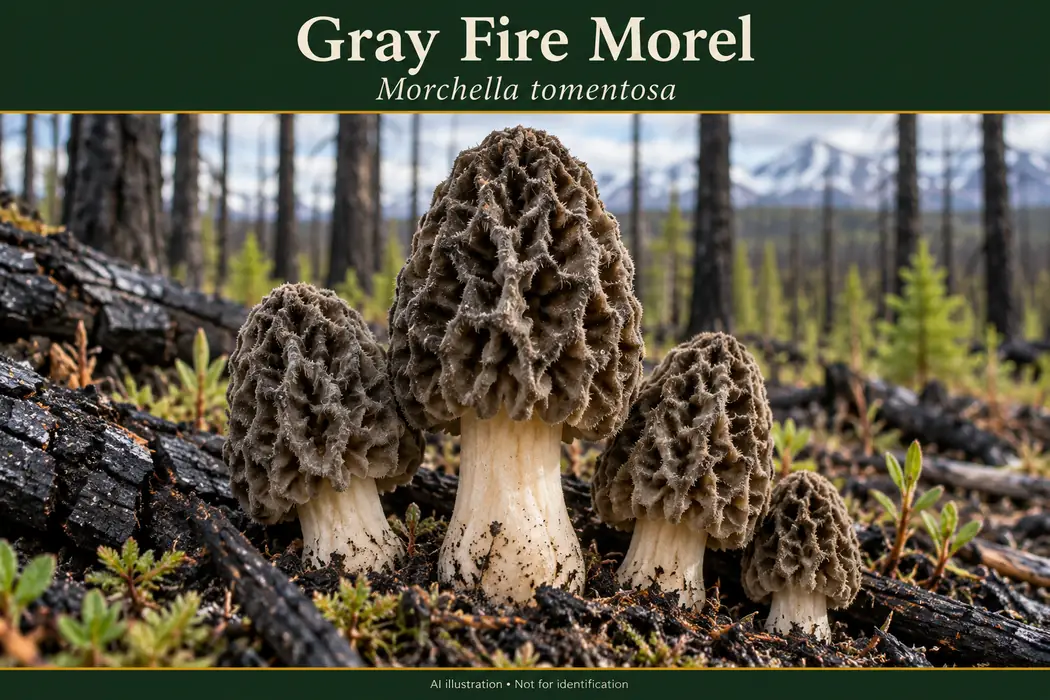
Alaska has many edible mushrooms, including morels, king boletes, golden chanterelles, hedgehogs, oyster mushrooms and bear’s head mushrooms. Most appear...
 Species Guide
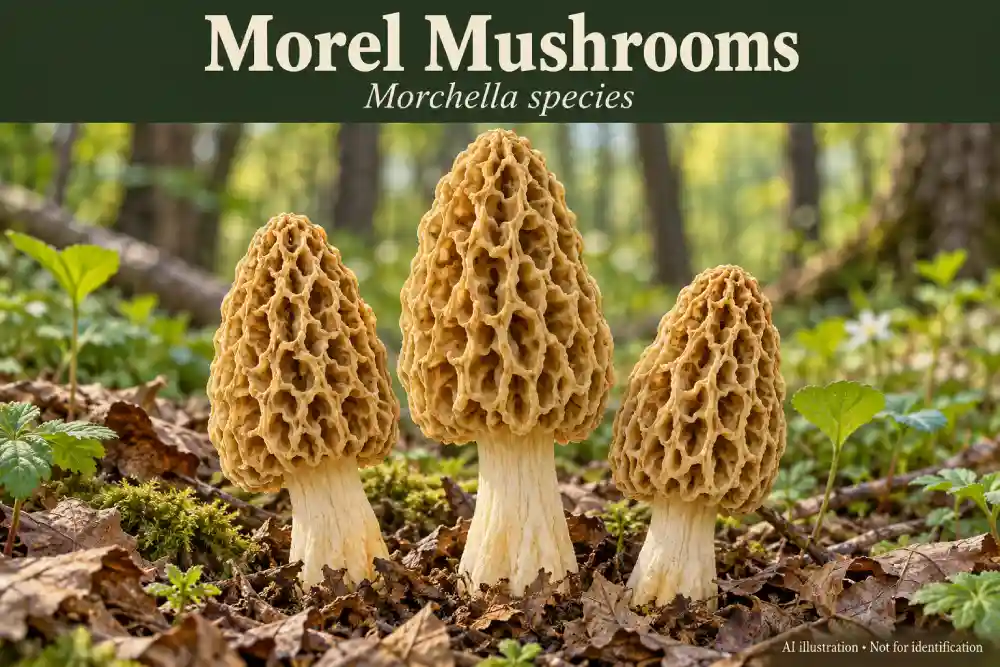
Wisconsin is home to edible mushrooms such as morels, chanterelles, oyster mushrooms, hen of the woods, chicken of the woods and giant puffballs. Different...
 Species Guide
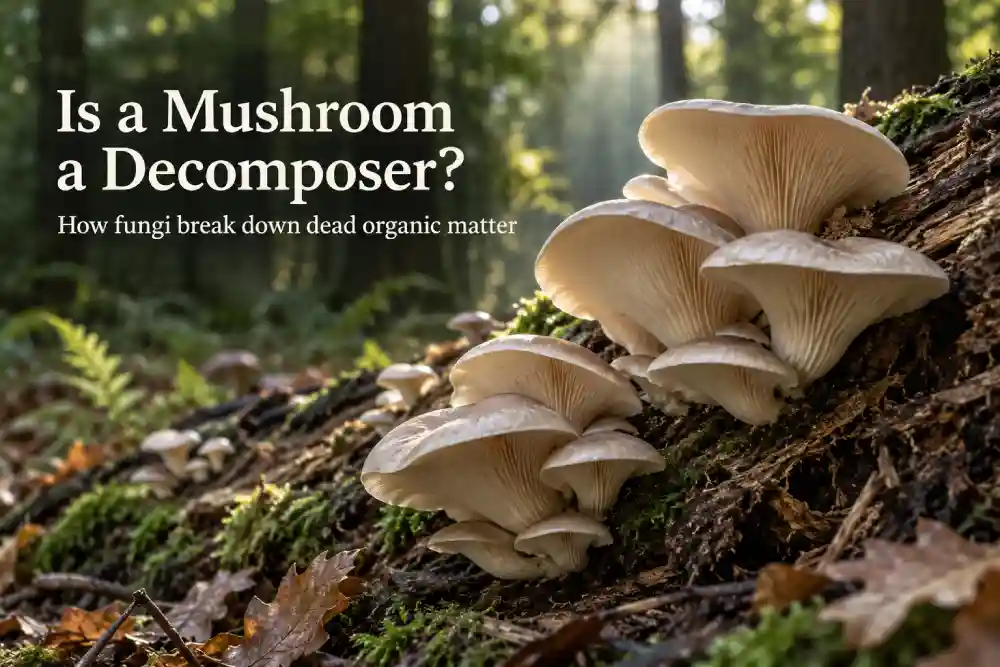
Is a Mushroom a Decomposer? Yes, many mushroom-forming fungi are decomposers. They break down dead wood, fallen leaves and other organic material, helping...