Edible Mushrooms in Utah: Complete Identification and Foraging Guide

Nathan Cole
Mycologist · Author · Fungi Expert
Updated
Aug 22, 2026
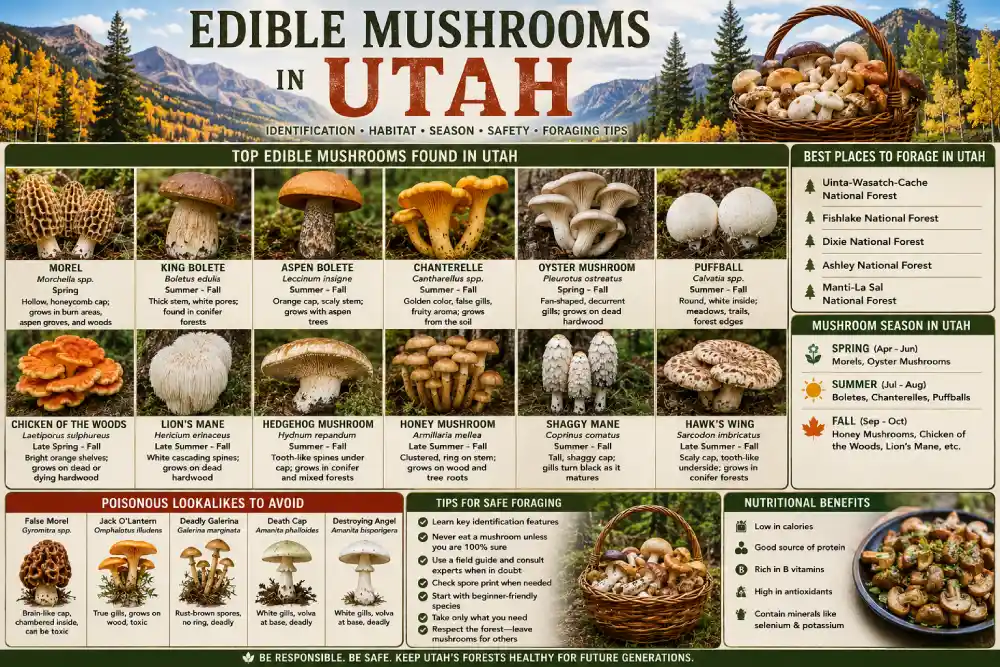
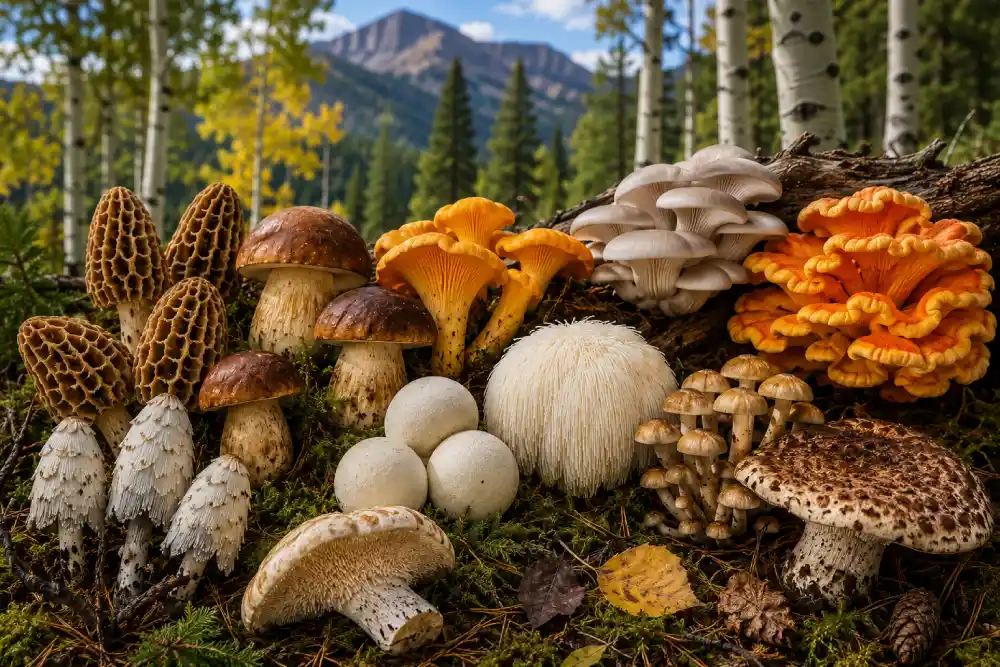
Utah is home to a remarkable variety of edible wild mushrooms that thrive in its mountains, national forests, and alpine ecosystems. Popular edible species include Morels (Morchella spp.), King Boletes (Boletus edulis), Aspen Boletes (Leccinum insigne), Chanterelles (Cantharellus spp.), Oyster Mushrooms (Pleurotus ostreatus), Puffballs (Calvatia spp.), and Chicken of the Woods (Laetiporus sulphureus).
While Utah offers excellent mushroom-foraging opportunities, accurate identification is essential because several edible species have poisonous lookalikes.
What Are the Best Edible Mushrooms in Utah?
The most commonly foraged edible mushrooms in Utah include:
| Mushroom | Scientific Name | Best Season | Beginner Friendly |
|---|---|---|---|
| Morel | Morchella spp. | Spring | Moderate |
| King Bolete | Boletus edulis | Summer–Fall | Yes |
| Aspen Bolete | Leccinum insigne | Summer | Yes |
| Chanterelle | Cantharellus spp. | Summer–Fall | Moderate |
| Oyster Mushroom | Pleurotus ostreatus | Spring–Fall | Yes |
| Puffball | Calvatia spp. | Summer–Fall | Yes |
These mushrooms are highly valued for their flavor and can be found in Utah's mountain forests after favorable moisture conditions.
Why Utah Is an Excellent State for Mushroom Foraging?
Although Utah is known for deserts and red rock landscapes, its higher elevations support thriving fungal ecosystems.
The state's mountain ranges and forests create ideal habitats for dozens of edible mushroom species.
Diverse Mountain Ecosystems
Utah contains several productive mushroom habitats, including:
- Aspen forests
- Spruce-fir forests
- Mixed conifer forests
- Ponderosa pine forests
- Alpine meadows
- Riparian woodlands
Different mushrooms associate with different tree species, making habitat knowledge one of the most valuable tools for successful foraging.
Elevation and Climate
Elevation greatly influences mushroom diversity.
Lower elevations warm earlier in spring, while high-elevation forests often produce mushrooms well into autumn.
Mountain regions frequently receive:
- Cooler temperatures
- Higher humidity
- Increased rainfall
- Longer snowpack retention
These conditions favor fungal growth.
How Seasonal Moisture Influences Mushroom Growth?
Unlike plants, mushrooms emerge from underground fungal networks that respond quickly to moisture.
Periods of:
- Spring snowmelt
- Summer thunderstorms
- Late-summer monsoons
- Early autumn rain
often trigger productive mushroom flushes throughout Utah's forests.
Experienced foragers frequently plan trips a few days after significant rainfall events.
Morel Mushrooms (Morchella Species)
Morels are among the most sought-after edible mushrooms in Utah and attract thousands of foragers every spring.
Their short growing season and exceptional culinary quality make them one of the state's most prized wild foods.
Identification Features
True morels have several distinctive characteristics:
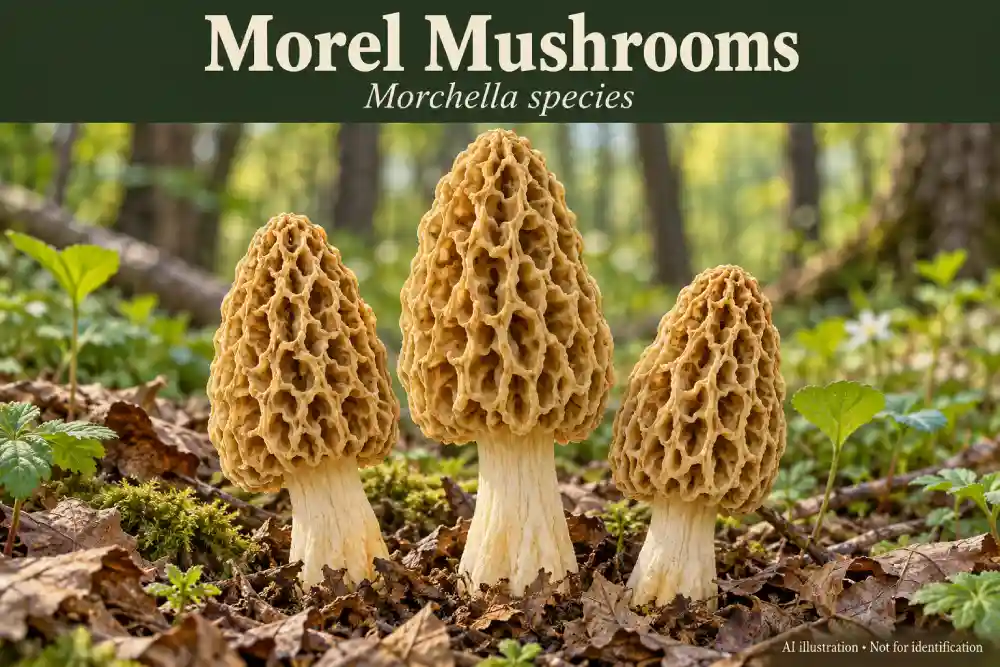
- Honeycomb-like cap
- Deep pits and ridges
- Hollow interior
- Cone-shaped appearance
- Tan to dark brown coloration
When sliced lengthwise, a true morel should be completely hollow from the cap to the stem.
Habitat in Utah
Morels commonly grow:
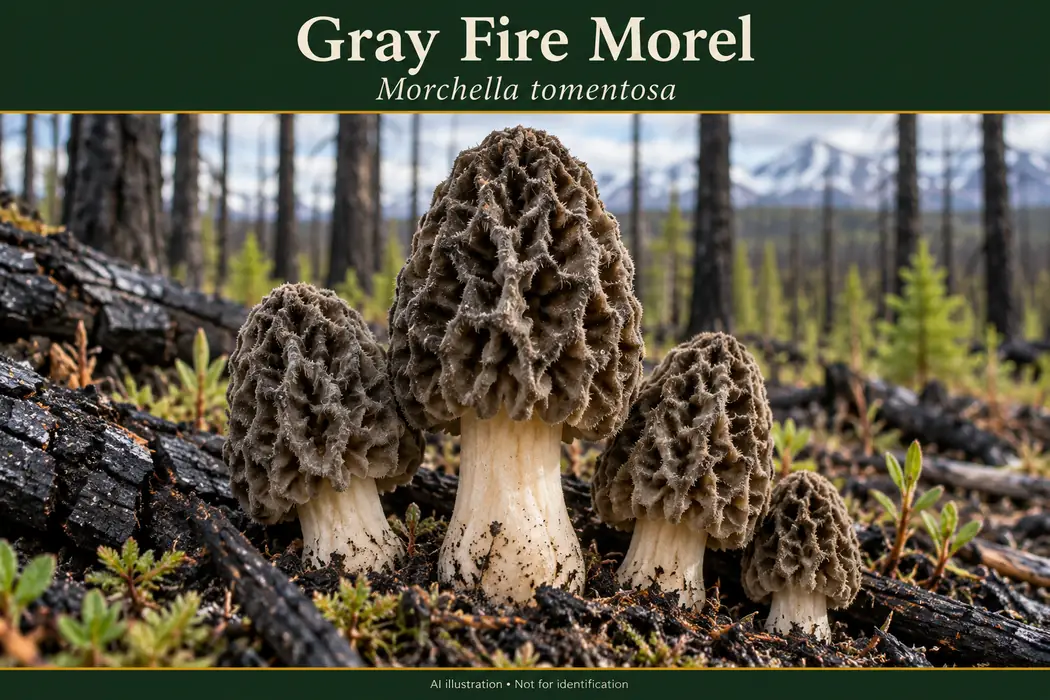
- In burn scars
- Under cottonwood trees
- Near aspen groves
- Along creek bottoms
- In mountain forests
Burned areas often produce excellent morel harvests for several years following wildfires.
Season
Morels generally appear:
- April through June
- Earlier at lower elevations
- Later in high mountain forests
Snowpack and spring temperatures strongly influence annual production.
Culinary Uses
Morels are prized for their:
- Nutty flavor
- Meaty texture
- Rich aroma
They are commonly used in:
- Cream sauces
- Risotto
- Pasta dishes
- Wild mushroom soups
- Butter sautés
Poisonous Lookalike
False Morels (Gyromitra species) can resemble true morels.
Unlike true morels:
- Their interiors contain folds and chambers.
- The cap resembles a brain rather than a honeycomb.
Every morel should be cut open before cooking to verify identification.
King Bolete (Boletus edulis)
The King Bolete, also known as Porcini, is one of the world's most celebrated edible mushrooms and is found in suitable habitats throughout Utah.
Its thick stem and sponge-like pore surface make it relatively easy to recognize.
Identification Features
King Boletes typically have:
- Brown cap
- Thick white stem
- White flesh
- Pore surface instead of gills
- Mild earthy aroma
The pore layer remains white to yellowish when young.
Habitat in Utah
King Boletes grow:
- Under spruce trees
- Under fir trees
- In mixed conifer forests
- Along mountain slopes
They form beneficial mycorrhizal relationships with tree roots.
Season
Most commonly found:
- July through September
- Following summer rainfall
Good moisture often leads to abundant flushes.
Culinary Value
King Boletes are appreciated for their:
- Dense texture
- Rich flavor
- Excellent drying qualities
Popular recipes include:
- Grilled mushrooms
- Risotto
- Soups
- Pasta
- Mushroom powders
Why Beginners Like Them?
Because they have pores rather than gills and possess a robust appearance, King Boletes are often recommended as one of the easier edible mushrooms for new foragers to learn.
Aspen Bolete (Leccinum insigne)
The Aspen Bolete is closely associated with Utah's beautiful aspen forests and is commonly encountered during summer and early fall.
Its striking orange cap makes it one of the most recognizable boletes in mountain habitats.
Identification Features
Typical characteristics include:
- Bright orange cap
- Thick stem
- Dark scab-like scales on the stem
- White pore surface
- Firm flesh
The stem scales become more pronounced as the mushroom matures.
Habitat
Aspen Boletes are strongly associated with:
- Aspen groves
- Mixed mountain forests
- Moist woodland soils
- High-elevation forests
Finding healthy aspen stands significantly increases the chances of locating this species.
Season
Most productive during:
- July
- August
- September
Especially after periods of rainfall.
Culinary Uses
Aspen Boletes are valued for:
- Mild flavor
- Firm texture
- Excellent cooking qualities
They perform well in sautés, soups, and roasted mushroom dishes.
Identification Tip
Several orange-capped boletes exist in North America.
Correct identification should consider:
- Tree association
- Stem scales
- Pore characteristics
- Flesh color changes after cutting
Chanterelle (Cantharellus Species)
Chanterelles are among the most desirable edible mushrooms found in Utah's mountain forests. Their golden color, fruity aroma, and excellent flavor make them a favorite among experienced foragers and chefs alike.
Although less abundant than in the Pacific Northwest, chanterelles can be found in suitable habitats after periods of consistent summer moisture.
Identification Features
True chanterelles are characterized by:
- Golden yellow to orange cap
- Wavy cap margins
- Thick flesh
- Blunt, forked ridges instead of true gills
- Fruity aroma similar to apricots
The false gills extend down the stem and cannot be separated easily from the cap.
Habitat in Utah
Chanterelles commonly grow:
- Under conifer trees
- In mixed forests
- Along mossy forest floors
- Near oak woodlands
- In shaded mountain habitats
Unlike many mushrooms, they grow directly from soil rather than decaying wood.
Season
Peak fruiting usually occurs:
- July through September
- After monsoon rains
- During periods of high soil moisture
Culinary Uses
Chanterelles are highly valued because of their:
- Delicate texture
- Rich flavor
- Pleasant aroma
Popular dishes include:
- Cream sauces
- Pasta
- Risotto
- Omelets
- Butter sautés
Poisonous Lookalike
The primary lookalike is the Jack O'Lantern Mushroom.
Key differences include:
| Chanterelle | Jack O'Lantern |
|---|---|
| False ridges | True gills |
| Grows from soil | Grows on wood |
| Fruity aroma | Mild odor |
| Edible | Poisonous |
Oyster Mushroom (Pleurotus ostreatus)
Oyster Mushrooms are considered one of the easiest wild mushrooms for beginners to identify.
Their shelf-like growth habit and preference for dead wood make them relatively distinctive.
Identification Features
Oyster Mushrooms typically have:
- Fan-shaped cap
- White, gray, or tan coloration
- Decurrent gills
- Soft texture
- Short or absent stem
- Clustered growth
Young specimens are usually the most desirable for cooking.
Habitat in Utah
They commonly grow on:
- Cottonwood trees
- Aspen logs
- Dead hardwoods
- Fallen branches
- Riparian forests
Moist creek corridors often provide ideal growing conditions.
Season
Oyster Mushrooms may appear:
- Spring
- Summer
- Fall
- Occasionally after extended moisture
Culinary Value
Oyster Mushrooms are appreciated for:
- Mild flavor
- Tender texture
- Excellent versatility
They work well in:
- Stir-fries
- Soups
- Pasta
- Grilled dishes
Beginner Advantage
Because dangerous lookalikes are relatively uncommon, Oyster Mushrooms are frequently recommended as one of the safest edible species for new mushroom hunters.
Puffball Mushrooms (Calvatia Species)
Puffballs differ dramatically from typical mushrooms because they lack visible caps and gills.
When harvested young and correctly identified, they are excellent edible mushrooms.
Identification Features
Young edible puffballs have:
- Round or pear-shaped form
- Smooth white exterior
- Pure white interior
- Firm texture
- No visible gills
Every puffball should be sliced in half before cooking.
Habitat in Utah
Puffballs grow:
- In meadows
- Along trails
- In grasslands
- At forest edges
- In mountain valleys
Large specimens may reach impressive sizes after rainy periods.
Season
Most commonly found:
- Summer
- Early fall
- Following thunderstorms
Culinary Uses
Puffballs are valued for their:
- Mild flavor
- Soft texture
- Ability to absorb seasonings
Popular preparations include:
- Fried slices
- Soups
- Grilled recipes
- Vegetarian dishes
Critical Safety Rule
Never consume a puffball unless the interior is completely white.
Young poisonous Amanita mushrooms may resemble puffballs before their caps develop.
If any developing stem or gill structure is visible inside, discard the mushroom immediately.
Chicken of the Woods (Laetiporus sulphureus)
Chicken of the Woods is one of Utah's most colorful edible mushrooms.
Its bright orange shelves make it one of the easiest mushrooms to spot in the forest.
Identification Features
Characteristics include:
- Bright orange upper surface
- Yellow edges
- Shelf-like growth
- No gills
- Soft flesh when young
Large clusters may weigh several pounds.
Habitat
Chicken of the Woods commonly grows:
- On hardwood trees
- On stumps
- On fallen logs
- Along forest edges
Some species may also occur on conifers.
Season
Most abundant:
- Late spring
- Summer
- Early fall
Culinary Value
Its texture resembles cooked chicken, giving the mushroom its common name.
It is popular in:
- Tacos
- Sandwiches
- Stir-fries
- Vegetarian recipes
Harvest Tip
Choose young, tender growth for the best flavor and texture.
Older specimens become tough and woody.
Lion's Mane (Hericium erinaceus)
Lion's Mane is one of the most fascinating edible mushrooms found in North America.
Instead of a traditional cap, it produces cascading white spines that resemble a lion's mane or waterfall.
Identification Features
Lion's Mane displays:
- White coloration
- Hanging icicle-like spines
- Rounded growth habit
- Soft flesh
- No gills or pores
Its appearance is unlike almost any other edible mushroom.
Habitat in Utah
Lion's Mane grows:
- On dead hardwood trees
- On wounded trunks
- In mature forests
- In moist woodland habitats
Although uncommon, finding one is a highlight for many foragers.
Season
Typically appears:
- Late summer
- Fall
- Early winter
Culinary Uses
Lion's Mane is prized for:
- Seafood-like texture
- Mild flavor
- Versatility in cooking
Popular preparations include:
- Crab-style cakes
- Stir-fries
- Soups
- Pan-seared dishes
Nutritional Interest
Lion's Mane contains unique bioactive compounds that are being studied for their potential role in supporting cognitive function, nerve health, and overall brain wellness. While research is ongoing, it remains one of the most sought-after gourmet and functional mushrooms.
Hedgehog Mushroom (Hydnum repandum)
The Hedgehog Mushroom is one of the safest edible mushrooms for beginner foragers because of its distinctive tooth-like structures beneath the cap.
Unlike many mushrooms with gills, Hedgehogs have soft spines that make identification much easier.
Identification Features
Hedgehog Mushrooms typically have:
- Cream to pale orange cap
- Thick flesh
- Soft white teeth underneath
- Firm stem
- Mild earthy aroma
The tooth-like spines are the easiest identifying characteristic.
Habitat in Utah
They commonly grow:
- In mixed conifer forests
- Under spruce and fir trees
- On mossy forest floors
- Along shaded mountain trails
Season
Most productive during:
- Late summer
- Fall
- After periods of rainfall
Culinary Uses
Hedgehog Mushrooms are appreciated for their:
- Nutty flavor
- Firm texture
- Excellent storage quality
They are commonly sautéed, roasted, or added to soups and pasta dishes.
Honey Mushroom (Armillaria mellea)
Honey Mushrooms are widespread throughout Utah and often grow in impressive clusters around trees and stumps.
Identification Features
Look for:
- Honey-brown cap
- White gills
- White spore print
- Stem ring
- Clustered growth
Cap color may vary from pale yellow to dark brown depending on age and moisture.
Habitat
Honey Mushrooms grow:
- Around tree roots
- On buried wood
- On decaying stumps
- In mixed forests
- Along woodland edges
Season
Most commonly found:
- Late summer
- Fall
- Following rainfall
Culinary Notes
When thoroughly cooked, Honey Mushrooms develop a pleasant earthy flavor and firm texture.
They are commonly used in:
- Mushroom stews
- Pasta dishes
- Stir-fries
- Soups
Safety Consideration
Some people experience digestive discomfort after eating Honey Mushrooms. Beginners should consume only a small amount the first time and always cook them thoroughly.
Shaggy Mane (Coprinus comatus)
The Shaggy Mane is one of the easiest mushrooms to recognize due to its tall cylindrical cap covered in shaggy white scales.
Identification Features
Shaggy Manes display:
- Tall white cap
- Shaggy scales
- Hollow stem
- White gills when young
- Black liquid as they mature
As the mushroom ages, it self-digests into an inky black fluid.
Habitat
Often found:
- Along roadsides
- In parks
- In lawns
- On disturbed soil
- Along hiking trails
Season
Appears during:
- Summer
- Fall
- After significant rainfall
Culinary Uses
Young specimens are prized for their:
- Delicate texture
- Mild flavor
- Fast cooking time
Harvest only mushrooms with white gills before decomposition begins.
Hawk's Wing Mushroom (Sarcodon imbricatus)
Hawk's Wing is an unusual edible mushroom found in Utah's higher-elevation conifer forests.
Its large scaly cap makes it relatively easy to distinguish from many other species.
Identification Features
Typical characteristics include:
- Brown scaly cap
- Thick flesh
- White tooth-like underside
- Firm stem
- Dense texture
Habitat
Usually found:
- Under spruce trees
- In pine forests
- In mountain conifer ecosystems
- On well-drained forest soils
Season
Most common:
- Late summer
- Fall
Culinary Value
Young Hawk's Wing mushrooms have:
- Mild earthy flavor
- Firm texture
- Excellent grilling qualities
Older specimens may become bitter and are generally less desirable.
Best Places to Find Edible Mushrooms in Utah
Utah's mountain regions provide the best opportunities for mushroom hunting.
Uinta-Wasatch-Cache National Forest
Popular species include:
- Morels
- King Boletes
- Chanterelles
- Aspen Boletes
Fishlake National Forest
Known for:
- Aspen Boletes
- Puffballs
- Oyster Mushrooms
- Chicken of the Woods
Dixie National Forest
Excellent habitat for:
- Boletes
- Morels
- Honey Mushrooms
- Shaggy Manes
Ashley National Forest
Productive areas support:
- Chanterelles
- Puffballs
- Hedgehog Mushrooms
- Oyster Mushrooms
Manti-La Sal National Forest
Mountain forests produce:
- Morels
- King Boletes
- Hawk's Wing
- Aspen Boletes
High-elevation conifer forests often provide excellent late-summer foraging.
Mushroom Season in Utah
Spring (April–June)
Common mushrooms include:
- Morels
- Oyster Mushrooms
Spring snowmelt creates ideal growing conditions.
Summer (July–August)
Typical species include:
- King Boletes
- Aspen Boletes
- Chanterelles
- Puffballs
Monsoon storms often trigger large flushes.
Fall (September–October)
Fall is one of Utah's best mushroom seasons.
Common finds include:
- Honey Mushrooms
- Shaggy Manes
- Chicken of the Woods
- Hedgehog Mushrooms
- Hawk's Wing
How to Identify Edible Mushrooms Safely?
Safe identification requires evaluating multiple characteristics rather than relying on a single feature.
Always examine:
- Cap shape and color
- Gills, pores, or teeth
- Stem characteristics
- Habitat
- Season
- Spore print
- Growth pattern
When possible, consult regional field guides or experienced local mushroom clubs.
Poisonous Lookalikes to Avoid
Several edible mushrooms in Utah have dangerous counterparts.
| Edible Mushroom | Poisonous Lookalike |
|---|---|
| Morel | False Morel |
| Chanterelle | Jack O'Lantern |
| Honey Mushroom | Deadly Galerina |
| Puffball | Young Death Cap |
| White Mushrooms | Destroying Angel |
Learning these comparisons is one of the most effective ways to avoid accidental poisoning.
Sustainable Mushroom Foraging Tips
Practice ethical harvesting by:
- Cutting mushrooms instead of pulling them
- Leaving immature specimens
- Carrying mushrooms in mesh bags or baskets
- Avoiding habitat damage
- Leaving part of each patch to release spores
Responsible harvesting helps preserve mushroom populations for future seasons.
Nutritional Benefits of Edible Wild Mushrooms
Many Utah mushrooms provide valuable nutrients, including:
- Protein
- Dietary fiber
- Potassium
- Selenium
- Copper
- B vitamins
- Vitamin D
- Antioxidants
- Beta-glucans
They are low in calories and can be a nutritious addition to a balanced diet.
Conclusion
Utah offers excellent opportunities for mushroom foraging across its mountain forests, aspen groves, and high-elevation ecosystems. Species such as Morels, King Boletes, Chanterelles, Oyster Mushrooms, Puffballs, Chicken of the Woods, Lion's Mane, Hedgehog Mushrooms, Honey Mushrooms, and Hawk's Wing provide rewarding experiences for both beginners and experienced foragers.
Success depends on understanding habitat, seasonality, identification features, and poisonous lookalikes. By combining careful observation with responsible harvesting practices, foragers can safely enjoy Utah's rich diversity of edible wild mushrooms.
- Poisonous Mushrooms in Iowa
- Edible Mushrooms in Michigan
- Poisonous Mushrooms in Minnesota
- Edible Mushrooms in PA
- Edible Mushrooms in Illinois
Frequently Asked Questions
What edible mushrooms grow in Utah?
Morels, King Boletes, Aspen Boletes, Chanterelles, Oyster Mushrooms, Puffballs, Chicken of the Woods, Lion's Mane, Honey Mushrooms, Hedgehog Mushrooms, Shaggy Manes, and Hawk's Wing Mushrooms are among the most common edible species.
When is mushroom season in Utah?
Mushroom season generally runs from spring through fall, with peak production occurring after spring snowmelt and summer monsoon rains.
Are morels found in Utah?
Yes. Morels grow in burn scars, aspen forests, creek bottoms, and mountain woodlands throughout the state.
Where can I forage mushrooms in Utah?
Popular locations include Uinta-Wasatch-Cache, Fishlake, Dixie, Ashley, and Manti-La Sal National Forests.
What mushrooms grow after summer rain in Utah?
King Boletes, Aspen Boletes, Chanterelles, Puffballs, and Chicken of the Woods commonly appear after monsoon rainfall.
Which edible mushrooms have poisonous lookalikes?
Morels, Chanterelles, Honey Mushrooms, Puffballs, and several white mushrooms have dangerous toxic lookalikes.
Can you forage mushrooms in Utah National Forests?
Many National Forests allow personal-use mushroom harvesting, but regulations and collection limits may vary by location.
What is the safest mushroom for beginner foragers?
Oyster Mushrooms, King Boletes, and Hedgehog Mushrooms are often recommended because of their distinctive identification features.
How do I safely identify wild mushrooms?
Use multiple characteristics, including habitat, cap shape, gills or pores, stem features, season, and spore prints. Never rely on color alone.
What is the most important rule of mushroom foraging?
Never eat a wild mushroom unless you are completely certain of its identification.
Sign in to leave a comment and join the discussion.
 Species Guide
Alaska has many edible mushrooms, including morels, king boletes, golden chanterelles, hedgehogs, oyster mushrooms and bear’s head mushrooms. Most appear...
 Species Guide
Wisconsin is home to edible mushrooms such as morels, chanterelles, oyster mushrooms, hen of the woods, chicken of the woods and giant puffballs. Different...
 Species Guide
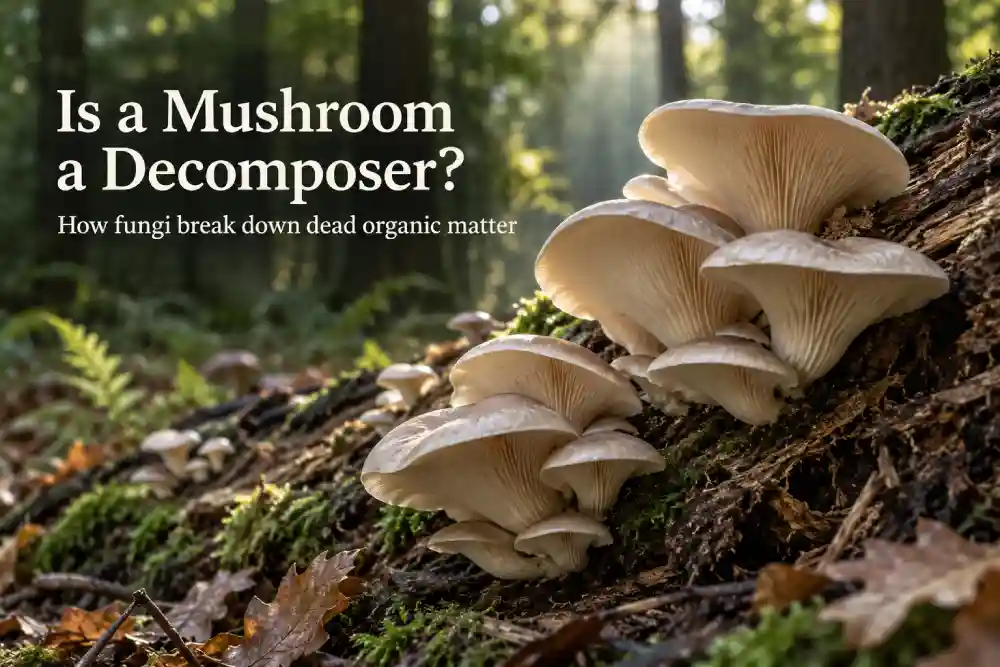
Is a Mushroom a Decomposer? Yes, many mushroom-forming fungi are decomposers. They break down dead wood, fallen leaves and other organic material, helping...