Gyromitra esculenta (False Morel): Identification, Toxicity, Habitat & Safety Guide

Nathan Cole
Mycologist · Author · Fungi Expert
Updated
Apr 11, 2026
Gyromitra esculenta, commonly known as the false morel, is a highly controversial wild mushroom that superficially resembles edible true morels but contains dangerous toxins. Found in spring across coniferous forests in the Northern Hemisphere, this species is responsible for serious poisonings and fatalities. Accurate identification is essential to avoid confusing it with the prized true morel (Morchella esculenta).
Quick Identification Summary
Family and Species
| Kingdom | Fungi |
| Division | Ascomycota |
| Class | Pezizomycetes |
| Order | Pezizales |
| Family | Discinaceae |
| Genus | Gyromitra |
| Species | Gyromitra esculenta |
Unlike true morels which belong to Morchellaceae (Ascomycota), Gyromitra esculenta belongs to the Discinaceae family. Despite the species name “esculenta” meaning “edible,” this mushroom is toxic and should be treated with extreme caution.
Dimensions
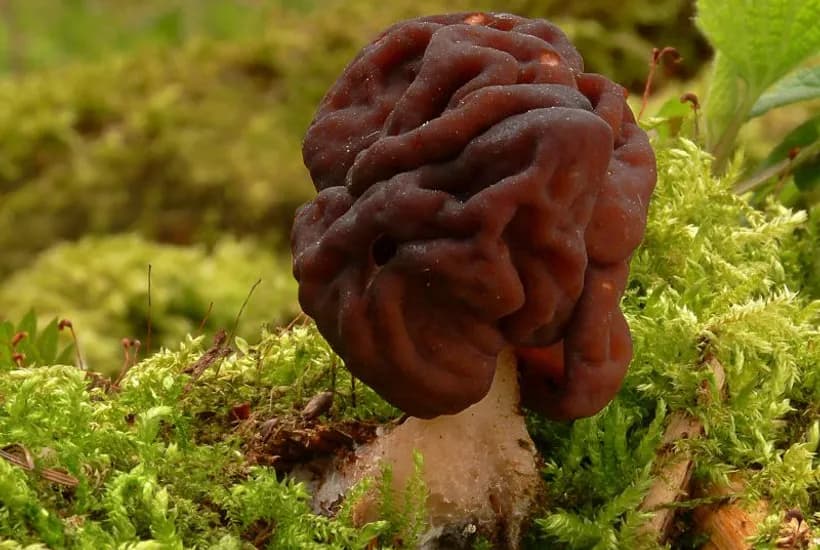
The false morel is a medium-sized mushroom with a disproportionately large, irregularly shaped cap sitting on a relatively short, stout stem. Its unusual proportions and brain-like appearance make it visually distinctive once you know what to look for.
Key Features (Identification Characteristics)
Cap (Pileus)
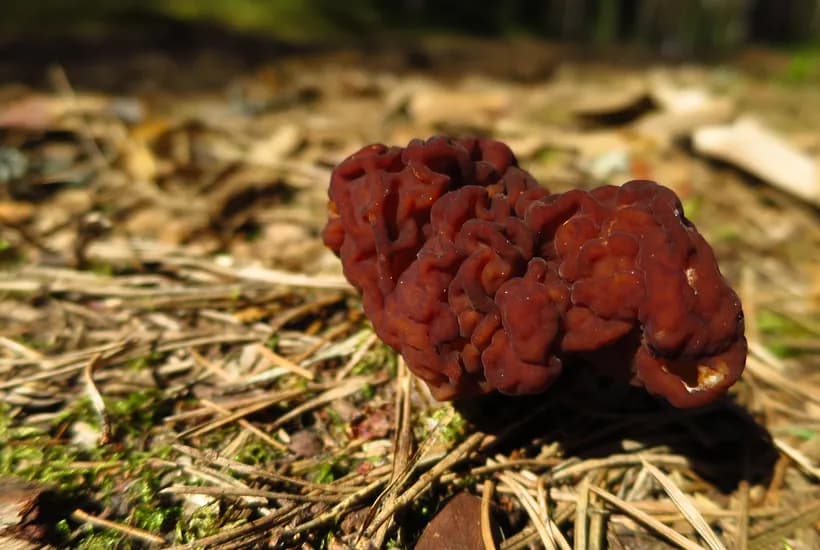
- Shape: Irregularly wrinkled, lobed, and brain-like
- Color: Reddish-brown to dark brown, sometimes yellowish-brown
- Surface: Deeply convoluted with folds and ridges, not pitted like true morels
- Attachment: Attached to stem at several points, not fused at the base like morels
The wrinkled, brain-like cap is the most distinctive feature and the key to distinguishing it from the honeycomb-patterned true morel.
Interior (Cross-Section)
- Structure: Chambered with cottony tissue inside
- Not hollow: Unlike true morels, which are completely hollow when cut in half
Stem (Stipe)
- Color: Whitish to pale cream
- Structure: Thick, irregularly shaped, often grooved or folded
- Texture: Brittle, sometimes chambered inside
Spore Print
- Color: Cream to pale yellow
- Shape: Elliptical with two oil droplets
Color, Smell, and Taste
Color
- Cap: Reddish-brown to dark brown
- Stem: Whitish to pale cream
- Interior: Whitish with chambered tissue
Smell
- Pleasant, mushroom-like aroma
- Some describe a faintly fruity scent
Taste
- Mild when raw
- ⚠️ Do not taste — contains toxic gyromitrin
Growth Pattern and Seasonality
Growth Pattern
- Grows solitary or in small groups
- Often found on or near decaying wood
- Prefers sandy, disturbed soils
Seasonality
- Spring (March–May in Northern Hemisphere)
- Appears at the same time as true morels
- Fruiting triggered by warming soil temperatures
Habitat, Environment & Distribution
Habitat
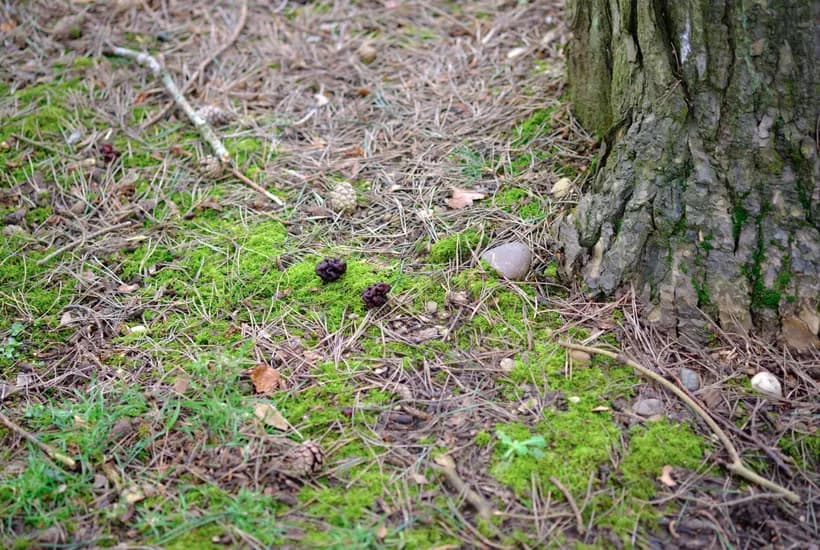
- Coniferous and mixed forests
- Disturbed ground, roadsides, burn sites
Environment
- Sandy or gravelly soil
- Near decaying wood or stumps
Tree Association
- Pine
- Spruce
- Fir
- Occasionally hardwoods
Geographic Distribution
- Widespread across Europe (especially Nordic countries, Eastern Europe)
- Common in North America (northern states, Canada)
- Found in parts of Asia (Turkey, Iran)
Gyromitra esculenta is one of the most commonly encountered spring fungi in boreal and temperate coniferous forests.
Edibility, Safety & Risk Level
Toxicity
Contains gyromitrin, which is converted to monomethylhydrazine (MMH) in the body:
- MMH is a known carcinogen and organ toxin
- Damages the liver, kidneys, and central nervous system
- Toxic levels vary between individual mushrooms and regions
- Even vapors from cooking raw specimens can be harmful
Symptoms of Poisoning
- Onset: 6–12 hours after ingestion
- Nausea, vomiting, severe abdominal pain, diarrhea
- Dizziness, headache, fatigue
- In severe cases: jaundice, liver failure, kidney failure, death
Cultural Consumption Controversy
In Finland, Sweden, and parts of Eastern Europe, Gyromitra esculenta is traditionally consumed after repeated parboiling (boiling in large volumes of water, discarding the water each time) or prolonged drying. This reduces but does not fully eliminate gyromitrin.
Similar Species (Look-Alikes Comparison)
| Feature | Gyromitra esculenta (False Morel) | Morchella esculenta (True Morel) |
|---|---|---|
| Cap Shape | Brain-like, irregularly wrinkled | Honeycomb pattern with uniform pits |
| Interior | Chambered, cottony tissue | Completely hollow |
| Cap Color | Reddish-brown to dark brown | Yellowish-brown to gray-brown |
| Cap Attachment | Attached at multiple points | Fused to stem at base |
| Stem | Short, thick, sometimes grooved | Smooth to granular, evenly shaped |
| Risk | Toxic ☠️ | Edible ✓ (when cooked) |
Other Gyromitra Species
- Gyromitra infula — saddle-shaped cap, found in autumn on decaying wood
- Gyromitra gigas — larger, paler, found near snowmelt areas
- Verpa bohemica — cap hangs freely like a thimble, different from Gyromitra
Benefits and Value
Scientific Importance
- Extensively studied in toxicology for its unique gyromitrin compound
- Research into MMH has applications in pharmaceutical and industrial chemistry
- Important in mycology education for teaching the concept of toxic look-alikes
- Plays an ecological role in forest decomposition cycles
Pros and Cons
Pros
- ✓ Scientifically valuable for toxicology research
- ✓ Important in forest ecosystem decomposition
- ✓ Educational value — teaches look-alike awareness
- ✓ Cultural significance in Nordic cuisine traditions
Cons
- ✗ Toxic — contains carcinogenic gyromitrin (MMH)
- ✗ Easily confused with edible true morels
- ✗ Even cooking vapors can cause poisoning
- ✗ Responsible for serious poisonings and fatalities
- ✗ Traditional preparation does not fully eliminate toxins
How Our Mushroom Identifier Helps Identify False Morel
Our mushroom identifier uses AI-powered image recognition to analyze:
By combining these visual features, the system helps distinguish false morels from true morels, reducing the risk of dangerous misidentification. For best results, upload a clear photo showing the cap surface and a cross-section if available.
Try our free mushroom identifier by photo to analyze any mushroom you find — but always verify AI results with an expert before making any consumption decision.
Frequently Asked Questions
Is Gyromitra esculenta poisonous?+
How to tell false morel from true morel?+
Where does Gyromitra esculenta grow?+
Can you eat false morels after cooking?+
What are the symptoms of Gyromitra poisoning?+
Related Mushroom Guides
Explore more species identification guides to build your knowledge:
- Morchella esculenta (True Morel) — Identification & Edibility Guide — Learn the key differences between true morels and false morels
- Mushroom Parts Explained — Cap, Gills, Stem & More — Understand the anatomy that makes identification possible
- Best Mushroom Identification Books — Recommended field guides for foragers
Final Thoughts
Gyromitra esculenta (false morel) is one of the most dangerous spring mushrooms due to its resemblance to the highly prized true morel. Its brain-like cap, chambered interior, and presence of gyromitrin toxin set it apart from the honeycomb-patterned, hollow true morel. Understanding these differences is critical for anyone foraging in spring.
Using a mushroom identifier tool can help analyze features, but it should always be combined with expert knowledge and the simple cross-section test. When it comes to wild mushrooms — if in doubt, do not touch or consume.
 GeneralYard Guide
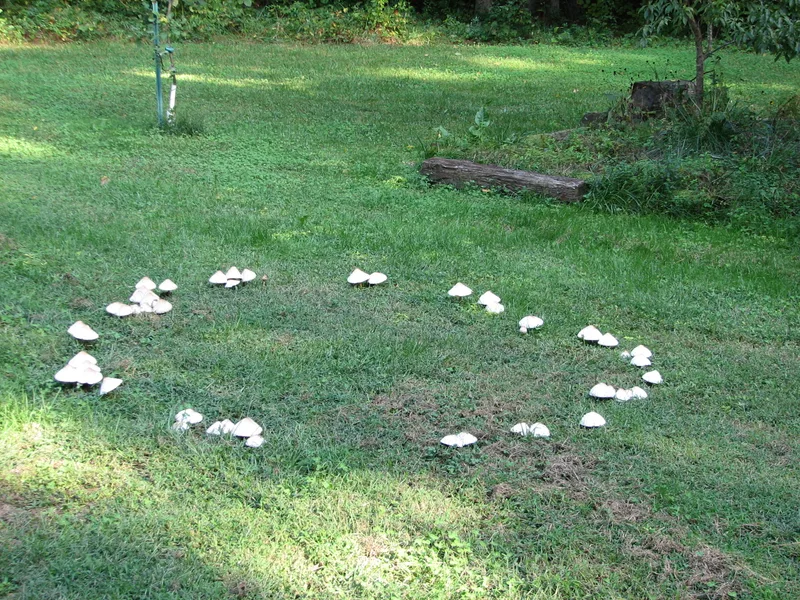
Mushrooms grow in your yard because underground fungi (mycelium) are actively breaking down organic matter in moist, shaded soil.
 GeneralLawn Guide
Remove lawn mushrooms fast by fixing moisture, drainage, and organic matter. Full step-by-step guide to stop mushrooms coming back.
 GeneralGuide
A mushroom identifier book helps you recognize fungi by cap shape, gills, habitat, season and spore print. Find the best field guide for your skill level.
Sign in to leave a comment and join the discussion.