Brown Mushroom Identification Guide

Nathan Cole
Mycologist · Author · Fungi Expert
Updated
Apr 13, 2026
Brown mushroom identification is challenging because many unrelated species share similar brown colors. To identify a brown mushroom correctly, you must examine cap shape, gill color, stem structure, habitat, and a Spore print together. Color alone is unreliable.
Safe identification depends on understanding Gill structure and growth patterns, while carefully ruling out toxic species such as Galerina marginata.
The most accurate method is to cross-check multiple features before making any conclusion.
Introduction to Brown Mushroom Identification and Mycology
Brown mushrooms are one of the most difficult groups to identify because they include hundreds of species with overlapping features. In Mycology, identification is based on structure, habitat, and reproducible characteristics rather than surface appearance.
The challenge comes from the fact that edible and toxic brown mushrooms often grow in the same environments and look nearly identical. This is especially true for small brown mushrooms, which are commonly grouped together due to their similarity.
For this reason, identification must be approached carefully and systematically.
Key Identification Features of Brown Mushrooms Using Gill structure and Spore print
Reliable identification depends on analyzing a combination of visible and testable features.
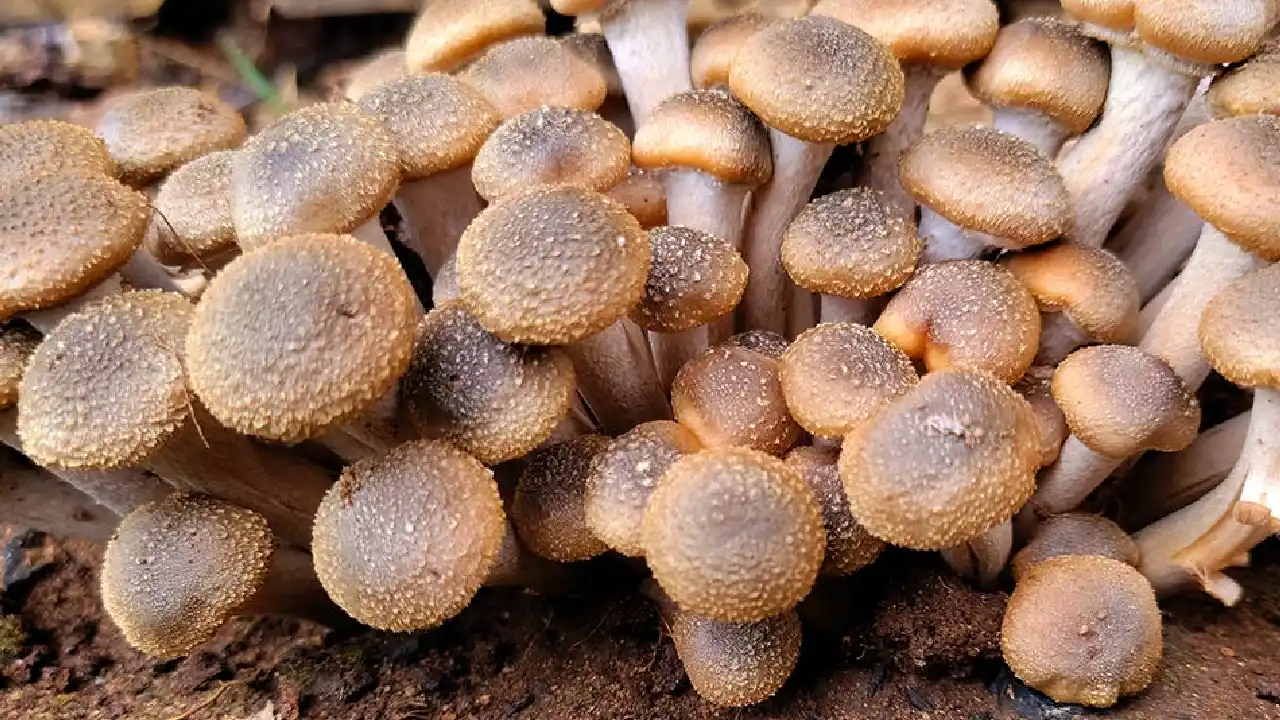
Cap Characteristics
- Shape: convex, flat, or conical
- Surface: smooth, sticky, or scaly
- Color variation depending on moisture and age
Underside Structure
- Study Gill structure
- Note spacing, attachment, and color changes
Stem Features
- Thickness and length
- Presence or absence of a ring
- Texture and surface detail
Spore Color
- Confirm with a Spore print
- Common colors include brown, white, and rusty tones
Bruising Reaction
- Observe any color change when handled
- Use Bruising reaction as a supporting indicator
Accurate identification requires combining these features rather than relying on one alone.
Step-by-Step Brown Mushroom Identification Guide
A structured process helps reduce confusion and improves identification accuracy.
Step 1: Observe Overall Form
- Note size, shape, and whether it grows alone or in clusters
Step 2: Examine the Cap
- Identify shape, color, and texture
- Check for changes when wet or dry
Step 3: Inspect the Underside
- Determine whether it has gills, pores, or ridges
- Observe color and spacing
Step 4: Check the Stem
- Look for rings, bulbs, or unusual structures
- Evaluate thickness and texture
Step 5: Identify Habitat
- Grass, forest, wood, or compost
Step 6: Confirm with Spore Print
- Use a Spore print to narrow possibilities
The most important principle is to verify multiple characteristics before drawing conclusions.
Do you have good mushroom knowledge? Let's try our Mushroom Identification Quiz
Common Edible Brown Mushrooms such as Agaricus bisporus and Agaricus campestris
Some brown mushrooms are widely recognized and commonly encountered in controlled or natural environments.
Key Examples
| Species | Identification Traits | Habitat |
|---|---|---|
| Agaricus bisporus | Brown cap, dark gills | Grass, cultivated areas |
| Agaricus campestris | Pink to brown gills, smooth cap | Fields and lawns |
Identification Insights
- Gills typically change from pink to dark brown
- No cup-like base structure
- Mild, neutral odor
Even with these traits, identification should always be confirmed through multiple features and environmental context.
Dangerous Brown Mushrooms to Avoid Including Galerina marginata and Cortinarius rubellus
Certain brown mushrooms are highly toxic and can closely resemble harmless species. This makes careful identification critical.
High-Risk Species
-
Galerina marginata
- Small brown caps
- Typically grows on wood
- Contains life-threatening toxins
-
Cortinarius rubellus
- Rusty brown coloration
- Found in forested areas
- Associated with severe poisoning
Warning Indicators
- Small brown mushrooms growing on wood
- Rusty or orange-brown spore coloration
- Unknown species in forest environments
The safest approach is to treat any unidentified brown mushroom as potentially dangerous and avoid assumptions based on appearance alone.
Small Brown Mushrooms (LBMs): Why Identification Is Difficult
In Mycology, the term LBMs (Little Brown Mushrooms) is used informally to describe numerous small, similar-looking species. This group includes edible, harmless, and highly toxic mushrooms that often share nearly identical size, color, and habitat.
The difficulty comes from low visual distinction. Many LBMs lack bold features, making field identification unreliable without careful analysis.
Why LBMs Are Confusing
- Similar brown caps and thin stems
- Overlapping habitats (lawns, forests, wood)
- Minimal distinguishing features at a glance
Practical Implication
- LBMs require advanced identification methods
- Visual identification alone is often insufficient
The safest approach is to treat unknown small brown mushrooms as unidentified and potentially hazardous until verified.
Habitat-Based Brown Mushroom Identification
Habitat provides valuable context but should be used as a supporting factor rather than a final decision point. Many brown mushrooms grow in specific environments, which helps narrow possibilities.
Common Habitats
Lawns and Grasslands
- Often host species like Agaricus campestris
- May also contain toxic lawn species
Wood and Logs
- Common for species such as Galerina marginata
- Indicates wood-decaying fungi
Forest Floors
- High diversity of brown mushrooms
- Includes species like Cortinarius rubellus
Key Insight
Habitat helps filter possibilities, but identification must still rely on structure and features.
Identifying Brown Mushrooms by Spore Color and Bruising
Spore color and bruising reactions are advanced identification tools that help narrow species when used correctly.
Spore Color Analysis
A Spore print reveals the color of spores deposited by the mushroom.
Common spore colors include:
- Brown
- White
- Rusty orange
This information helps distinguish between similar-looking species.
Bruising Reaction
The Bruising reaction refers to color changes when a mushroom is handled or cut.
Observations may include:
- Darkening or discoloration
- Color shifts over time
Limitations
- Many species share similar spore colors
- Bruising is not unique to one group
These methods should be used as supporting evidence, not final confirmation.
Brown Mushroom Identification Chart (Edible vs Poisonous)
A comparison approach helps highlight differences between commonly confused species.
| Feature | Edible Species (e.g., Agaricus campestris) | Toxic Species (e.g., Galerina marginata) |
|---|---|---|
| Gill Color | Pink → dark brown | Brown or rusty |
| Habitat | Grass, fields | Wood, logs |
| Stem | Smooth, no volva | Thin, fragile |
| Spore Color | Brown | Rusty brown |
Key Insight
Small differences in gill color, habitat, and spore print can separate safe and dangerous species.
Safety Guidelines for Identifying Brown Mushrooms
Because of the high risk of confusion, safety should always be the priority.
Essential Guidelines
- Do not rely on color alone
- Use multiple identification features
- Avoid consuming any unidentified mushroom
Risk Factors
- Small brown mushrooms (LBMs)
- Wood-growing brown species
- Forest mushrooms with rusty spores
Best Practice
If identification is uncertain, do not attempt to classify or consume the mushroom.
Tools and Resources for Accurate Identification
Accurate identification improves significantly with proper tools and references.
Useful Tools
- Hand lens for examining fine details
- Field guides specific to your region
- Clear photo documentation
Learning Resources
- Local mycology groups
- Educational databases
- Expert consultation
Digital tools can assist, but they should always be combined with manual observation and verification.
Frequently Asked Questions
How do you identify a brown mushroom safely?
By combining cap, gill structure, stem features, habitat, and a spore print, then verifying with reliable sources.
Are all brown mushrooms dangerous?
No, but many are toxic. Accurate identification is necessary to distinguish safe species.
Why are small brown mushrooms hard to identify?
Because many species share similar size, color, and habitat, making visual differences minimal.
Is spore color enough to identify a mushroom?
No. It helps narrow possibilities but must be used with other features.
What is the safest approach to unknown mushrooms?
Treat them as unidentified and avoid consumption until confirmed by an expert.
Conclusion:
Brown mushroom identification requires a methodical, multi-step approach. Because many species look alike, accuracy depends on combining:
- Structural features
- Habitat
- Spore characteristics
The most important rule is simple:
never rely on a single feature and never assume identification without verification.
Sign in to leave a comment and join the discussion.
 Guide
GuideCan Mushroom Coffee Raise Blood Pressure? A Mycologist's Honest Answer The short answer is: it depends on the blend. Mushroom coffee can raise blood...
 Guide
GuideCan Chickens Eat Mushrooms? Yes — but with conditions. Chickens can safely eat certain mushrooms, like button, oyster, shiitake, portobello, and cremini....
 Guide
GuideMedicinal mushroom identification means accurately recognizing fungi with proven health-supporting compounds —and distinguishing them from toxic lookalikes....