Cortinarius rubellus (Deadly Cortinarius) – Identification, Toxicity & Lookalikes

Nathan Cole
Mycologist · Author · Fungi Expert
Updated
Apr 11, 2026
Cortinarius rubellus, commonly known as the deadly cortinarius or deadly webcap, is one of the most dangerous poisonous mushrooms in the world. It contains orellanine, a toxin that causes delayed kidney failure, often appearing days after ingestion — making it especially deceptive. Found in Europe and parts of North America, this mushroom can resemble edible species, increasing the risk of accidental poisoning.
For accurate identification, focus on its rusty-orange color, fibrous cap, and cobweb-like veil (cortina) in young specimens. Because of its high risk and delayed symptoms, using a mushroom identifier tool or AI mushroom identification app is strongly recommended for safe foraging and verification.
Scientific Classification & Taxonomy
| Kingdom | Fungi |
| Phylum | Basidiomycota |
| Class | Agaricomycetes |
| Order | Agaricales |
| Family | Cortinariaceae |
| Genus | Cortinarius |
| Species | Cortinarius rubellus |
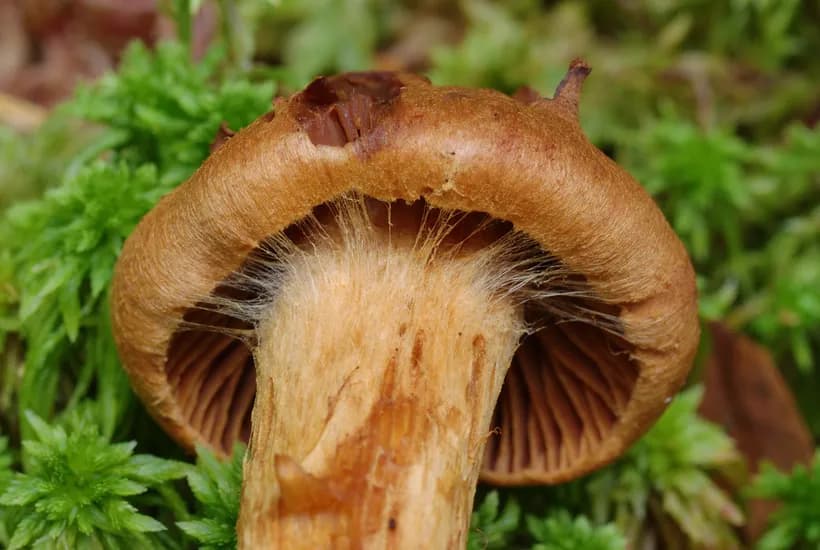
Part of the large Cortinarius genus, which contains thousands of species — many of which are extremely difficult to distinguish from one another. This genus includes several other deadly species, making it one of the most dangerous groups for foragers to encounter.
Key Features (Identification Essentials)
Cap Characteristics
- Color: Rusty-orange to reddish-brown
- Shape: Convex, flattening with age, often with a slight central bump (umbo)
- Surface: Dry, fibrous, sometimes scaly
- Size: 3–8 cm diameter
Gills
- Young: Initially pale, covered by cortina
- Mature: Turn rusty-brown as spores develop
- Spacing: Moderately spaced
- Attachment: Adnate (broadly attached to stem)
Stem (Stipe)
- Color: Yellowish-orange with darker fibers
- Structure: Slender, fibrous
- Cortina remnants: Often shows rusty spore traces from the veil
Cortina (Unique Feature)
- Fine, cobweb-like structure visible in young mushrooms
- Leaves rusty spore traces on the upper stem as it collapses
- Distinguishes Cortinarius from most other genera
Color, Smell & Texture
Color
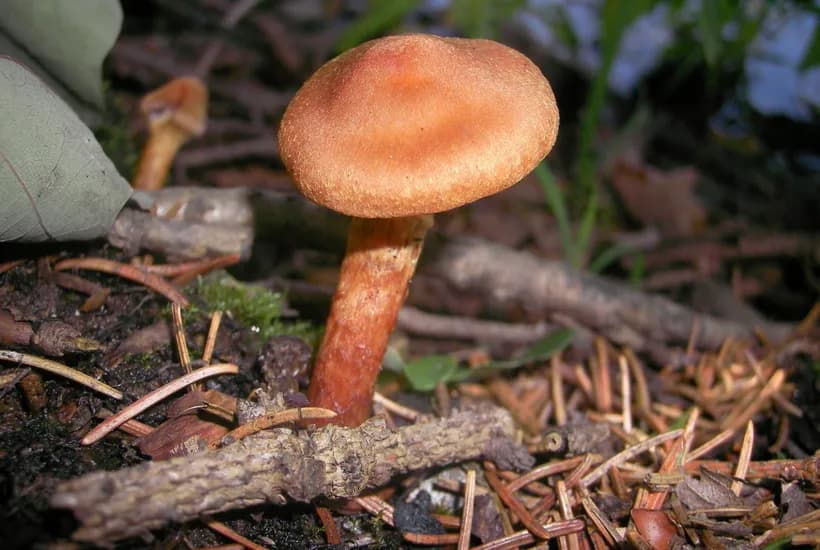
- Cap: Rusty-orange to reddish-brown
- Gills: Pale → rusty-brown
- Stem: Yellowish-orange
Smell
- Mild or slightly earthy
- Not strongly distinctive
Texture
- Dry, fibrous cap surface
- Slender fibrous stem
- ⚠️ Do not taste — deadly toxic
Physical Dimensions & Structure
Environment & Habitat
Habitat
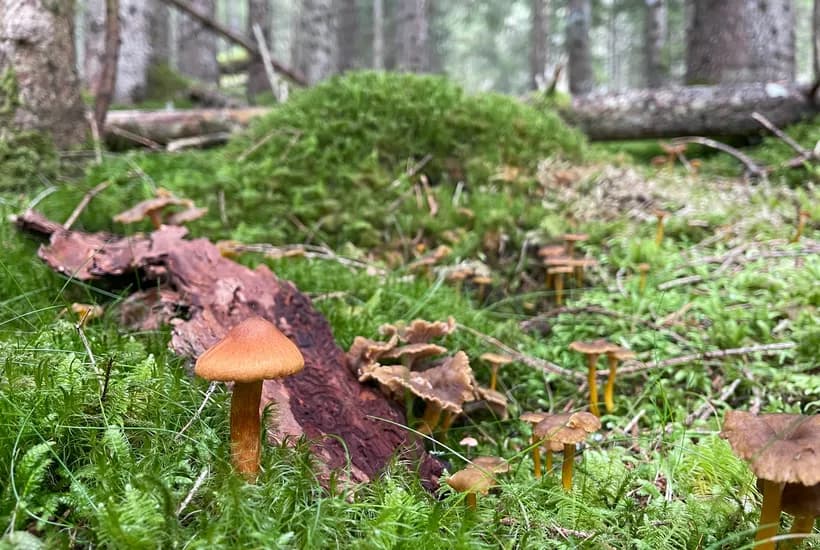
- Coniferous forests
- Mixed woodlands
- Near spruce, pine, and birch
Seasonality
- Late summer to autumn
- Appears after rain periods
Growth Pattern
- Singly or in small groups
- Mycorrhizal (associated with tree roots)
Geographic Distribution
Toxicity & Health Risks
Toxic Compound — Orellanine
Orellanine is a nephrotoxin (kidney-destroying toxin) that:
- Causes progressive, irreversible kidney damage
- Has a dangerously delayed onset (2–14 days after ingestion)
- Is not destroyed by cooking, drying, or freezing
- Has no known antidote — treatment is supportive only
Symptoms of Poisoning
- Early (2–14 days): Intense thirst, dry mouth, fatigue
- Progressing: Nausea, vomiting, headache, muscle pain
- Severe: Kidney failure, reduced urine output, back pain
- Critical: Complete renal failure requiring dialysis or transplant
Risk Level Assessment
| Toxicity | 🔴 Extreme |
| Fatality Risk | 🔴 High |
| Misidentification Risk | 🔴 Very High |
| Edibility | ❌ Deadly poisonous |
Similar Species (Critical Comparison)
| Feature | Deadly Cortinarius | Edible Mushrooms |
|---|---|---|
| Color | Rusty-orange | Variable (brown, white, etc.) |
| Veil | Cobweb-like cortina | Usually absent |
| Toxicity | Deadly ☠️ | Safe ✓ |
| Identification Difficulty | Very high | Easier with practice |
| Spore Color | Rusty-brown | Varies by species |
Common Confusion Species
- Cortinarius orellanus (Fool's Webcap) — also deadly, contains orellanine
- Various small brown/orange forest mushrooms — many harmless species look similar
- Some edible Cantharellus and Craterellus species — can grow in the same habitat
Growth Pattern & Life Cycle
Ecological Role
- Mycorrhizal fungus
- Forms symbiotic relationships with tree roots
- Helps trees absorb nutrients from soil
Life Cycle
- Spores disperse through wind
- Mycelium forms connections with tree roots
- Fruiting bodies appear in autumn
- Spores released from mature gills
Economic & Ecological Value
Ecological Importance
- Supports forest ecosystems through mycorrhizal networks
- Enhances nutrient exchange between soil and trees
- Part of complex woodland fungal communities
Economic Value
- No edible value (deadly toxic)
- Important in toxicology research
- Orellanine studied for medical applications
Pros and Cons
Pros
- ✓ Important ecological role in forest ecosystems
- ✓ Significant scientific research value
- ✓ Helps forest nutrient cycles through mycorrhizal networks
Cons
- ✗ Extremely toxic — can cause fatal kidney failure
- ✗ Delayed symptoms (2–14 days) increase danger
- ✗ Difficult to identify accurately — genus has thousands of species
How to Identify Cortinarius rubellus Safely
For safety, always use a mushroom identifier free by photo tool or AI-based mushroom identification system to cross-check findings. Never rely on AI alone for Cortinarius identification — expert verification is essential.
Expert Identification Tips
- Avoid picking small brown/orange mushrooms unless absolutely certain of identification
- Check for cortina remnants carefully — they may be faint on older specimens
- Use multiple identification features, never rely on a single trait
- When in doubt — do not consume
Frequently Asked Questions
Is Cortinarius rubellus edible?+
Why is it so dangerous?+
How long do symptoms take to appear?+
Can it kill you?+
Where does it grow?+
Can AI identify this mushroom?+
Final Thoughts
Cortinarius rubellus is one of the most dangerous mushrooms due to its delayed toxicity and severe kidney damage effects. Its resemblance to harmless species makes it particularly risky for foragers.
Understanding its color, cortina feature, and habitat is essential, but even experienced foragers should exercise extreme caution. Using a trusted mushroom identifier tool adds an extra layer of safety and helps prevent life-threatening mistakes.
Learn more about other deadly species like Amanita phalloides (Death Cap) and Galerina marginata (Funeral Bell) to expand your knowledge of dangerous mushrooms to avoid.
 GeneralYard Guide
Mushrooms grow in your yard because underground fungi (mycelium) are actively breaking down organic matter in moist, shaded soil.
 GeneralLawn Guide
Remove lawn mushrooms fast by fixing moisture, drainage, and organic matter. Full step-by-step guide to stop mushrooms coming back.
 GeneralGuide
A mushroom identifier book helps you recognize fungi by cap shape, gills, habitat, season and spore print. Find the best field guide for your skill level.
Sign in to leave a comment and join the discussion.