Death Cap Mushroom Identification: How to Recognize and Avoid the Most Dangerous Mushroom?

Nathan Cole
Mycologist · Author · Fungi Expert
Updated
Apr 13, 2026
To identify the Amanita phalloides, look for a combination of key features: white gills, a ring (annulus) on the stem, and a cup-like base called a volva. The cap is usually greenish-yellow to pale olive, and the mushroom grows on soil near trees. A white Spore print confirms its identity.
Because it contains deadly Amatoxins that cause severe Liver failure, even a small amount can be fatal. If you see these features together, do not consume it—avoid contact and verify with an expert.
What Is the Death Cap Mushroom?
The Amanita phalloides is considered the most dangerous mushroom in the world. It belongs to the Amanita genus, a group known for highly toxic species.
Why It’s So Dangerous
- Contains potent Amatoxins
- Causes delayed symptoms, making poisoning harder to detect early
- Responsible for the majority of fatal mushroom poisonings globally
Where It Grows
- Near oak, beech, and other hardwood trees
- Typically found in forests, parks, and gardens
- Appears during late summer to autumn
Step-by-Step Death Cap Mushroom Identification (Improved Practical Guide)
This guide combines expert knowledge and real-world identification methods.
✅ Step 1: Look at the Cap (Color + Shape)
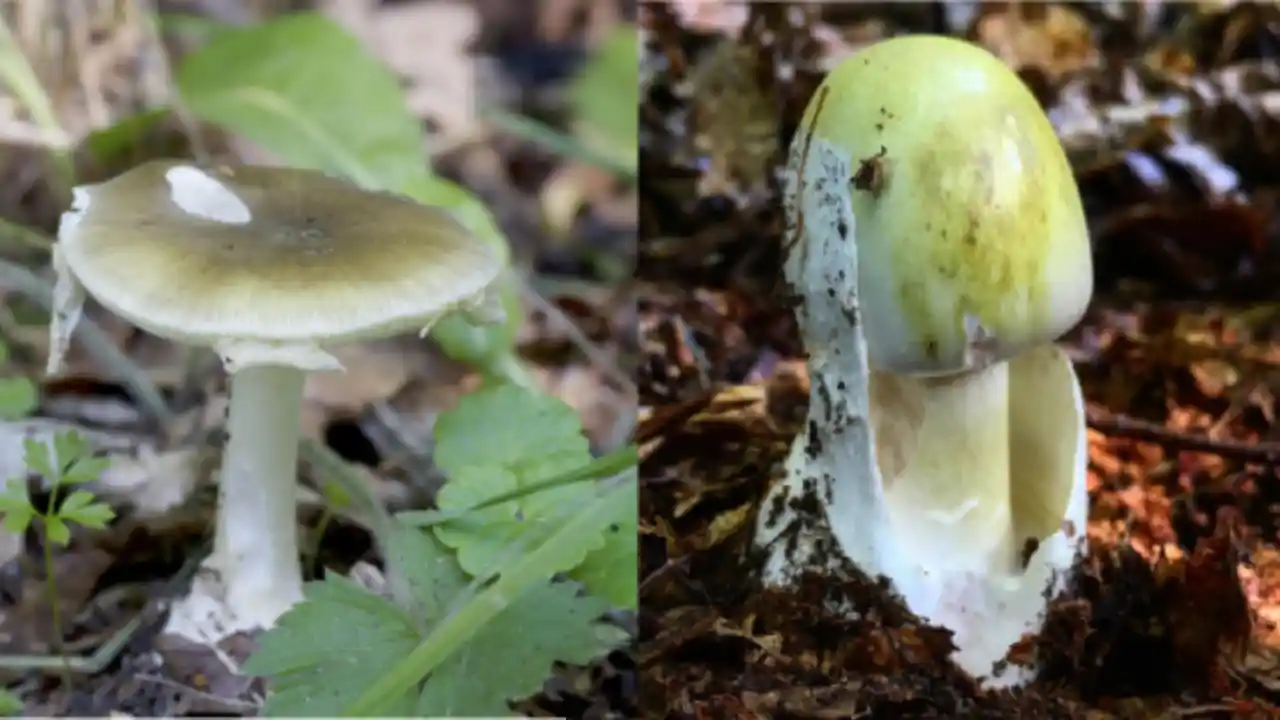
- Color: pale green, olive, yellow, or sometimes almost white
-
Shape:
- Young → rounded like an egg
- Mature → flat and spread out
- Surface: smooth, slightly sticky when wet
👉 The color can vary a lot, which is why many people misidentify it.
✅ Step 2: Check the Gills (Most Reliable Feature)
- Always pure white gills
- Closely spaced and free from the stem
- Do NOT turn brown with age
👉 This is critical because edible mushrooms like Agaricus bisporus develop brown gills, not white.
✅ Step 3: Inspect the Stem and Ring (Annulus)
- White stem with a hanging skirt-like ring
- This ring is called the Annulus
- May become loose or disappear in older mushrooms
👉 The “skirt” is one of the most visible warning signs.
⚠️ Step 4: DIG the Base (Most Important Step)
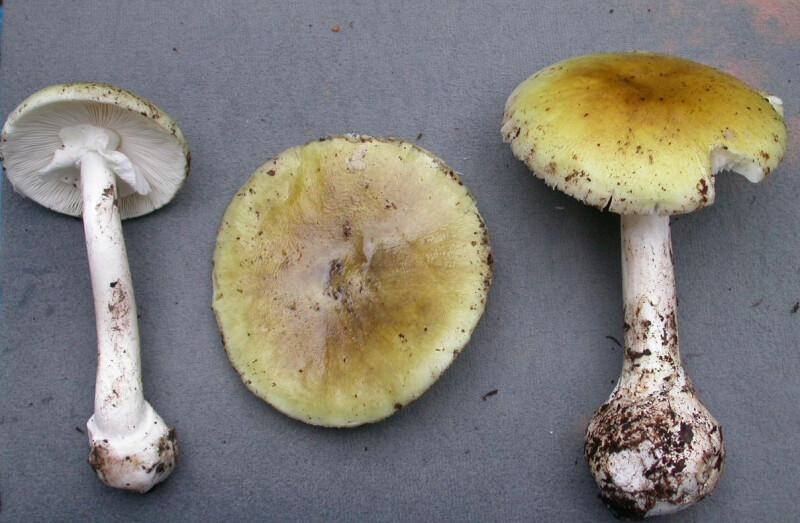
- Carefully dig the mushroom out of the ground
- Look for a bulbous base inside a sac-like cup
- This structure is called the Volva
👉 This feature is often hidden underground and is the #1 reason people misidentify it.
✅ Step 5: Take a Spore Print (Confirmation Test)
- Place cap gills-down on paper
- Wait several hours
- Result: white spore print
👉 Use Spore print to confirm identification.
✅ Step 6: Smell and Growth Stage Clues
- Young mushrooms look like white eggs before opening
-
Smell:
- Young → mild or slightly sweet
- Older → unpleasant or sickly sweet
👉 This “egg stage” often causes confusion with edible puffballs.
✅ Step 7: Check Habitat and Location
- Grows in soil (not directly on wood)
-
Found near:
- Oak trees
- Beech trees
- Appears in forests, parks, and even gardens
👉 Habitat is a strong supporting clue.
Do you have good mushroom knowledge? Let's try our Mushroom Identification Quiz
Key Identification Features of the Death Cap Mushroom
Correct Mushroom identification depends on recognizing multiple features together, not just one.
1. Cap (Top Surface)
- Color: greenish, yellowish, or pale olive
- Smooth texture, slightly sticky when wet
- Can fade to almost white over time
2. Gills (Underside)
- Pure white and closely spaced
- Free from the stem
- Key feature: Gill structure
3. Stem (Stipe)
- White with a skirt-like ring
- Known as the Annulus
4. Base (Most Important Feature ⚠️)
- Bulbous base hidden underground
- Surrounded by a cup-like structure called the Volva
👉 Many people miss this because they don’t dig up the full mushroom.
5. Spore Print
- Always white
- Confirm using Spore print
⚖️ Death Cap vs Edible Lookalikes
One of the biggest risks is confusing the death cap with edible mushrooms.
🔎 Comparison Table
| Feature | Death Cap | Edible Lookalike |
|---|---|---|
| Gills | White | Pink → brown (in Agaricus bisporus) |
| Base | Volva present | No volva |
| Ring | Present | Sometimes present |
| Spore Color | White | Brown (Agaricus species) |
Common Lookalikes
- Agaricus bisporus
- Volvariella volvacea
- Amanita virosa
👉 The danger comes from similar appearance but completely different toxicity.
⚠️ Symptoms of Death Cap Poisoning
Poisoning from Amanita phalloides often occurs in stages.
⏱️ Timeline of Symptoms
-
6–24 hours (Delayed phase)
- No symptoms
-
24–48 hours
- Severe vomiting and diarrhea
- Abdominal pain
-
48–72 hours
- Temporary improvement (misleading)
-
After 72 hours
- Rapid Liver failure
- Possible death without treatment
👉 Immediate medical attention is critical.
🛑 Safety Checklist: How to Avoid Death Cap Mushrooms
Before consuming any wild mushroom, check:
- Does it have white gills?
- Is there a ring on the stem?
- Does the base have a volva?
- Is the spore print white?
👉 If YES to multiple → DO NOT EAT
🧠 Expert Identification Tips
- Always dig out the entire mushroom (don’t cut it)
- Check multiple features—not just color
- Avoid all Amanita species if unsure
- Use field guides and expert verification
FAQs
What is the difference between a death cap and a false death cap?
The true death cap, Amanita phalloides, is one of the most toxic mushrooms in the world and contains deadly Amatoxins that can cause severe organ failure. In contrast, “false death cap” is not a single scientific species but a general term people use for mushrooms that look similar but are less toxic or non-lethal.
Key Differences:
- Toxicity: Death cap is highly lethal; false lookalikes may be less dangerous
- Base structure: Death cap has a clear Volva
- Spore print: Death cap produces a white Spore print
- Risk level: Death cap causes Liver failure; many lookalikes do not
👉 Because lookalikes can still be harmful, never rely on “false vs true” assumptions—always verify carefully.
Where is the death cap mushroom found?
The Amanita phalloides is commonly found in temperate regions around the world, especially in Europe, North America, Asia, and Australia.
Typical Habitats:
- Grows in soil (not directly on wood)
- Found near trees such as oak, beech, and chestnut
- Appears in forests, parks, gardens, and even urban areas
Seasonal Pattern:
- Most common in late summer to autumn, especially after rain
👉 Its ability to grow in parks and gardens makes it particularly dangerous for beginners.
What color is a death cap?
The color of the Amanita phalloides can vary, which is one reason it is often misidentified.
Common Colors:
- Pale green
- Olive green
- Yellowish-green
- Sometimes almost white
Important Note:
Even when the cap appears light or white, the mushroom still has:
- White gills
- A ring (annulus)
- A Volva
👉 Color alone is not reliable—always check multiple features.
What is the most poisonous mushroom—death cap?
Yes, the Amanita phalloides is widely considered the most poisonous mushroom in the world.
Why It’s So Dangerous:
- Contains powerful Amatoxins
- Toxins are heat-stable (not destroyed by cooking)
- Causes severe Liver failure
Key Risk:
- Even a small amount can be fatal
- Symptoms are delayed, which makes early treatment difficult
👉 Because of its high toxicity and resemblance to edible mushrooms, it is responsible for the majority of fatal mushroom poisonings worldwide.
How can you tell a death cap mushroom?
Look for white gills, a ring on the stem, and a volva at the base, along with a pale greenish cap.
What makes the death cap so deadly?
It contains Amatoxins, which destroy liver cells and lead to organ failure.
Can you survive eating a death cap mushroom?
Yes, but only with immediate medical treatment. Without it, mortality rates are very high.
What mushrooms are commonly mistaken for death caps?
- Agaricus bisporus
- Volvariella volvacea
Is cooking or boiling enough to make it safe?
No. The toxins are heat-stable and remain dangerous even after cooking.
Final Thoughts
The Amanita phalloides is a perfect example of why mushroom identification must be precise and cautious. Its resemblance to edible species makes it especially dangerous for beginners.
Key Takeaways
- Learn to identify volva + ring + white gills combination
- Always confirm with multiple features
- Never take risks with unknown mushrooms
👉 The rule is simple:
If you are not 100% certain, don’t eat it.
Sign in to leave a comment and join the discussion.
 Species Guide
Alaska has many edible mushrooms, including morels, king boletes, golden chanterelles, hedgehogs, oyster mushrooms and bear’s head mushrooms. Most appear...
 Species Guide
Wisconsin is home to edible mushrooms such as morels, chanterelles, oyster mushrooms, hen of the woods, chicken of the woods and giant puffballs. Different...
 Species Guide
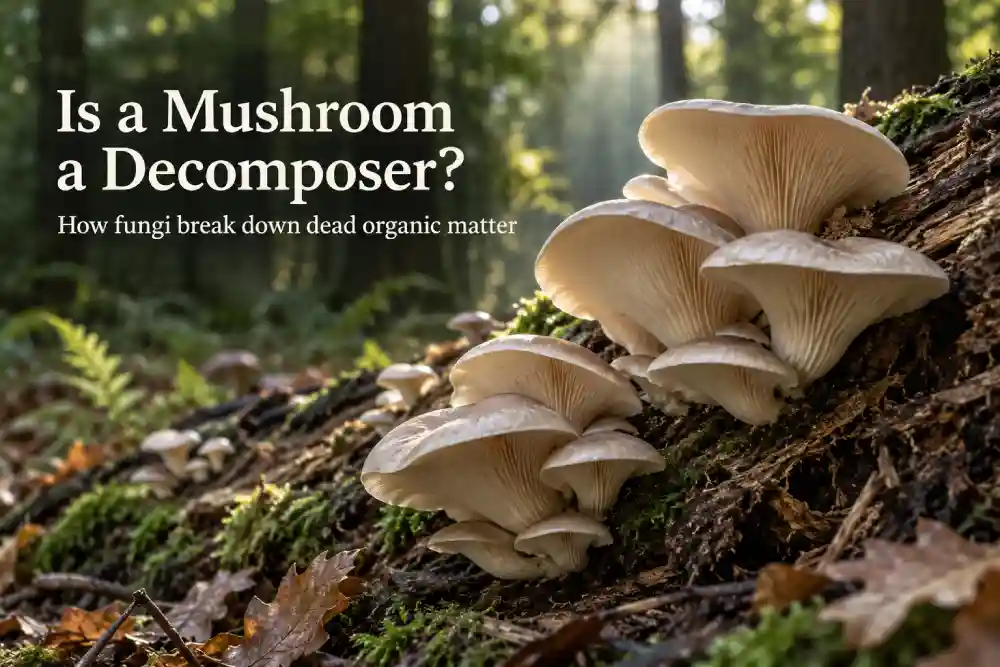
Is a Mushroom a Decomposer? Yes, many mushroom-forming fungi are decomposers. They break down dead wood, fallen leaves and other organic material, helping...