Is Reishi Mushroom Psychedelic?

Nathan Cole
Mycologist · Author · Fungi Expert
Updated
Apr 26, 2026
Is Reishi Mushroom Psychedelic? The short answer to "is reishi mushroom psychedelic" is no. Ganoderma lingzhi contains zero psilocybin, zero ibotenic acid, and zero serotonergic compounds. I've harvested the laccate Ganoderma complex from oak stumps in Appalachia and hemlock logs in the Cascades for forty years, and I've watched the confusion around this question send people to emergency rooms for the wrong reasons. Let's sort the pharmacology from the folklore.
Scope: What "Psychedelic" Actually Means and Why Reishi Doesn't Qualify
When clinicians and pharmacologists use the word psychedelic, they mean a specific class of molecules that act as agonists at the 5-HT2A serotonin receptor. Psilocybin and psilocin (from Psilocybe cubensis, Psilocybe semilanceata, Psilocybe azurescens), LSD, DMT, and mescaline all hit that receptor and produce perceptual distortion, ego dissolution, and visual hallucination at active doses.
Ganoderma lingzhi (East Asian reishi), Ganoderma lucidum sensu stricto (the European species, restricted after Cao, Wu and Dai's 2012 reclassification in Fungal Diversity), Ganoderma tsugae (hemlock reishi), Ganoderma sessile, Ganoderma curtisii, and Ganoderma oregonense contain none of those compounds. Not in trace amounts, not in the mycelium, not in the fruiting body, not in the spores. The active fraction is built from triterpenoids (ganoderic acids A through Z, lucidenic acids), beta-D-glucans, the ling zhi-8 immunomodulatory protein, ergosterol peroxide, and polysaccharide-peptide complexes. None of these touch 5-HT2A.
So when a reader types "is reishi mushroom psychedelic" into a search bar, what they almost always mean is one of three things: will I hallucinate, will I feel high, or is this the same family as the psilocybin mushrooms I've heard about in clinical trials. The answer to all three is no. Reishi is a polypore, not an agaric. It belongs to the bracket fungi on Polyporales, several taxonomic miles from the Agaricales order that houses Psilocybe. Different morphology, different chemistry, different effects.
If your goal is a perceptual experience, reishi is the wrong tool. If your goal is an adaptogenic, immune-modulating decoction with a calming side note, you're in the right neighborhood, and the rest of this article is for you.
Who This Article Is For: Supplement Users, Foragers, and the Psilocybin-Curious
I've consulted on enough mushroom-related ER cases over the last four decades to recognize the three readers who land on this exact question, and each one needs slightly different information.
The first is the supplement user. You bought a bottle of reishi extract at the co-op or you're considering one, you've read it described as "powerful" and "transformative," and you want to know if powerful means you'll feel altered. You won't. What you should know instead is the contraindication list (warfarin, cyclosporine, antihypertensives) and the dose range that produces a real physiological response without overshooting into hepatotoxicity territory.
The second is the forager. You've spotted a varnished red-mahogany shelf fungus on a hardwood stump or a hemlock log, you suspect Ganoderma, and somewhere in the back of your mind you're wondering if any of these polypores produce a psychoactive effect. None of the laccate Ganoderma species do. The risk in this lane isn't a psychedelic experience, it's misidentifying Ganoderma applanatum (the artist's conk, non-laccate, KOH-negative on the cuticle) or, worse, conflating "medicinal mushroom" with the gilled Psilocybe species that grow in entirely different habitats.
The third is the psilocybin-curious reader. You've read about the Johns Hopkins psilocybin trials, the FDA breakthrough designations, the ketamine clinics, and you're scanning the medicinal mushroom shelf wondering which of these are part of that conversation. Reishi is not. Hericium erinaceus (lion's mane) is not. Trametes versicolor (turkey tail) is not. The clinical psychedelic conversation is about Psilocybe species and their isolated tryptamines, full stop.
If you fall into any of these three buckets, keep reading. If you're in the third bucket and you're considering self-medicating with foraged Psilocybe, stop, call a certified mycologist for identification, and call Poison Control at 1-800-222-1222 if anything you've already eaten is producing symptoms.
Core Pharmacology: Triterpenes, Beta-Glucans, and the GABAergic Calm of Ganoderma lingzhi
Here's what's actually happening when you drink a properly prepared reishi decoction.
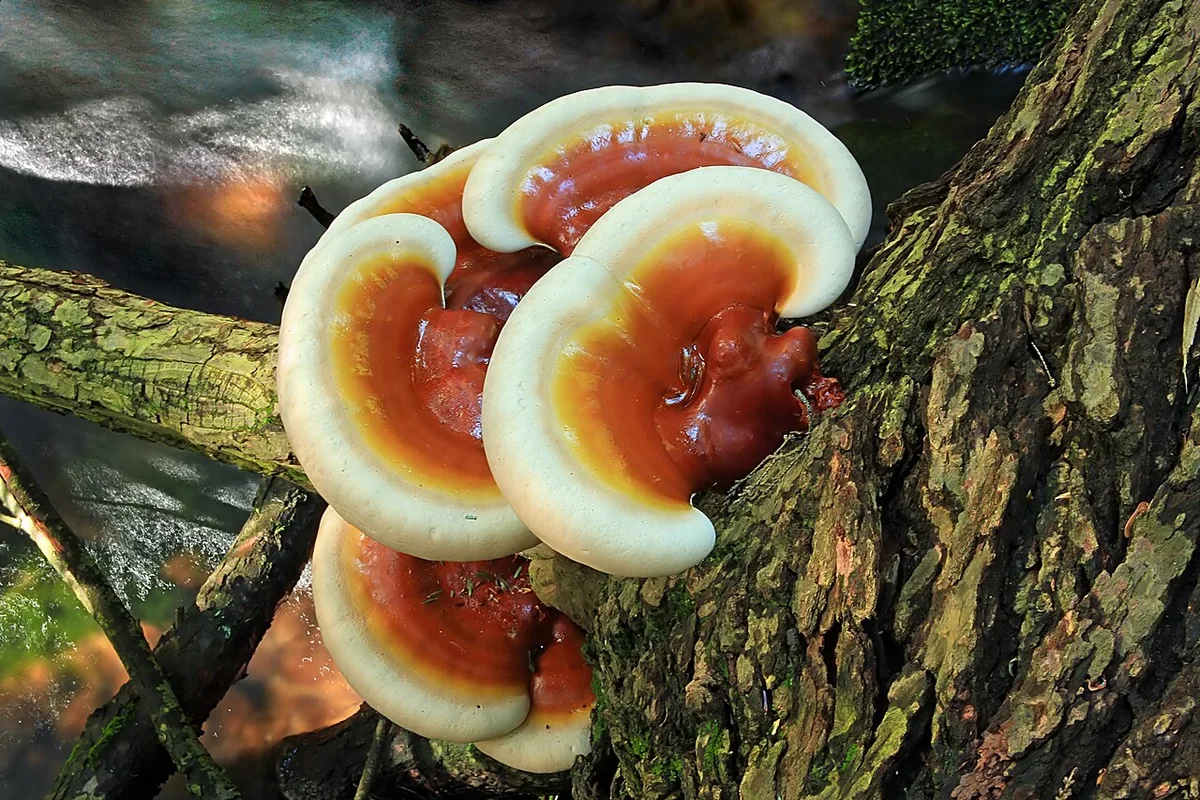
Source Credit: https://commons.wikimedia.org/wiki/File:Black_Forest_Trail_(Revisited)(20)(21011868968).jpg
The fruiting body of Ganoderma lingzhi is built from a corky to woody context that's bitter on a tongue-test, and that bitterness is your first signal of the triterpenoid load. Ganoderic acids A, B, C, D, and the lucidenic acid series sit in the lipid-soluble fraction. They're extracted by ethanol or by long simmering with a small amount of fat present. These triterpenes are responsible for the hepatoprotective and anti-inflammatory activity documented in animal models, and they carry a mild sedative profile at higher doses through GABAergic and adenosinergic pathways. That last bit is important: GABA-A modulation produces calm, sometimes drowsiness, sometimes deeper sleep. It does not produce hallucination. The mechanism is closer to a mild herbal anxiolytic than to anything in the tryptamine or phenethylamine families.
The water-soluble fraction is dominated by beta-D-glucans, particularly the (1,3) and (1,6) linked polysaccharides, and by the ling zhi-8 protein. These are the immunomodulatory drivers. They activate macrophages and natural killer cells through dectin-1 and complement receptor 3 binding. Subjectively, you don't feel beta-glucans. They do their work below the threshold of conscious sensation.
That's the whole picture. Bitter triterpenes producing calm and hepatoprotection, sweet polysaccharides producing immune modulation. Nowhere in that pharmacology is there a 5-HT2A agonist, a NMDA antagonist, a kappa-opioid agonist, or any other receptor target associated with the psychedelic class. The NIH National Center for Complementary and Integrative Health monograph on reishi catalogues the same constituent profile, and so does Memorial Sloan Kettering's institutional "About Herbs" entry on Ganoderma. Neither lists psychoactive effects because there are none to list.
The reason readers occasionally describe reishi as "shifting consciousness" is real but unromantic: a calming, slightly sedating, mildly hypotensive effect on a stressed nervous system feels notable when you're paying attention. That's not a psychedelic experience. That's a tired person finally relaxing.
What You Will Actually Feel from a Therapeutic Reishi Decoction
I'll walk you through what an honest reishi dose feels like, because this is where the gap between marketing copy and lived experience tends to collapse expectations or inflate them in equal measure.
A standard preparation in my own kitchen looks like this: 5 to 10 grams of dried, sliced G. lingzhi or G. tsugae fruiting body, simmered (not boiled) in 1 liter of water for 90 minutes to 2 hours, often with a few slices of fresh ginger and a pinch of black pepper to support absorption. The result is a dark, bitter, earthy tea. For a double extraction, the simmered marc gets a second pass in 40 percent ethanol for two to four weeks, and the two extracts are recombined in roughly a 4:1 water-to-alcohol ratio.
What that decoction produces, taken in the evening, is a quiet downshift in nervous system tone. Many people describe it as the feeling of finally exhaling at the end of a long day. Some report deeper sleep that night, occasionally with more vivid dreams (more on that under edge cases). Heart rate and blood pressure may drop modestly. There is no perceptual change. No visual distortion. No time dilation. No emotional surge. If you close your eyes after drinking it, you don't see geometry. You see the inside of your eyelids.
Onset is slow, typically 30 to 90 minutes, and the effect is cumulative across days and weeks of regular use rather than acute and dramatic from a single dose. This is the adaptogenic profile, and it's the reason traditional Chinese medicine categorizes reishi as a shen tonic taken over months and years, not as an intoxicant taken for an evening. If you're hoping for the latter from this mushroom, you will be disappointed every single time.
A note on dose: I do not recommend exceeding 10 grams of dried fruiting body per day in decoction without supervision from a clinician familiar with herbal medicine, and I do not recommend high-concentration triterpene extracts (often labeled as 30 percent or higher triterpene content) without that same supervision. The 2007 case report by Wanmuang and colleagues in the World Journal of Gastroenterology documented a fatal hepatitis associated with powdered reishi taken at high dose for an extended period. That is not a common outcome, but it is a real one, and it sets the upper boundary on casual self-experimentation.
Contraindications: Warfarin, Cyclosporine, Antihypertensives, and the 2007 Hepatotoxicity Case
This is the section that matters most for the YMYL question, because the genuine risk of reishi is not psychoactivity, it's drug interaction and idiosyncratic hepatotoxicity in a small subset of users.
Reishi has documented antiplatelet and mild anticoagulant activity, almost certainly mediated by ganoderic acids and adenosine derivatives in the fruiting body. Stacked on top of warfarin, that produces a real bleeding risk. I have seen patients on stable INR ranges shift dangerously after starting a daily reishi extract without telling their cardiologist. The same caution applies to clopidogrel, apixaban, rivaroxaban, dabigatran, and full-dose aspirin therapy. If you take any of these, you do not start reishi without your prescriber's input, and if you're already taking it, you stop at least two weeks before any planned surgery.
Cyclosporine and tacrolimus are the second category. Reishi is immunostimulatory through beta-glucan activation of innate immunity, which is exactly the opposite of what a transplant patient's protocol is designed to achieve. Organ transplant recipients should avoid reishi entirely unless their transplant team explicitly clears it, which they generally won't.
Antihypertensives are the third. Reishi has a mild blood-pressure-lowering effect on its own. Stacked with ACE inhibitors, ARBs, calcium channel blockers, or beta-blockers, that can produce orthostatic hypotension, dizziness, and falls in older patients. The interaction isn't dramatic for most people, but it's enough to matter for someone whose blood pressure is already well-controlled at the lower end of the normal range.
The hepatotoxicity question is rarer but more serious. The 2007 World Journal of Gastroenterology case report described a patient who developed fatal hepatitis after months of high-dose powdered reishi. Powdered fruiting body taken raw, without decoction, is a problematic delivery form because you're consuming the woody chitin matrix and any concentrated metabolites in unprocessed form. If you use reishi, use the decoction or a properly prepared dual extract from a reputable manufacturer, and watch for symptoms of hepatic stress: right upper quadrant discomfort, jaundice, dark urine, persistent nausea, unexplained fatigue. Any of those, you stop the reishi immediately and call your physician. If symptoms are acute or severe, call Poison Control at 1-800-222-1222 and head to the emergency department.
Pregnancy and lactation: insufficient safety data. I do not recommend reishi during either. Pediatric use: same answer, with the additional consideration that children's livers handle herbal alkaloids and triterpenes differently from adults. Pre-surgical: discontinue 14 days before any procedure. Bleeding disorders (von Willebrand, hemophilia, idiopathic thrombocytopenia): contraindicated.
The North American Mycological Association toxicology committee and Poison Control at 1-800-222-1222 are the two phone-call resources I want every reader to keep in mind. Before you start any new mushroom supplement, including reishi, talk to a certified mycologist or your pharmacist about your specific medication list. The interactions above are the ones I see most often in practice, but your prescription profile is unique to you.
Misapplication #1: Confusing Reishi with Psilocybe cubensis and Amanita muscaria
This is the confusion that drives most of the search traffic on the original question, and it's the easiest one to clear up morphologically.
Psilocybe cubensis is a small to medium gilled agaric. Cap 2 to 8 cm, conic to convex maturing to broadly flat, golden brown fading to straw-yellow as it dries, often with a slightly viscid surface when wet. Gills are adnate to adnexed, dark purple-brown to nearly black at maturity from the spore load. Stipe is white to yellowish, slender, often with a persistent membranous annulus, and bruises a distinctive blue-green where handled. That blue bruising is the field signature of psilocybin oxidation. Spore print is dark purple-brown. Habitat is dung and dung-amended pasture in subtropical climates: Florida, the Gulf Coast, Mexico, Central and South America, parts of Southeast Asia and Australia. Phenology is roughly April through October in the southeastern US, fruiting after warm rains.
Ganoderma lingzhi, by contrast, is a polypore. Kidney-shaped to fan-shaped pileus, 5 to 30 cm wide, lacquered red-mahogany cuticle, white pore surface (no gills, ever), woody flesh, growing on hardwood stumps and roots. Different order entirely (Polyporales versus Agaricales), different morphology at every level, different habitat, different lifecycle. Confusing one for the other in the field is functionally impossible if you've spent ten minutes with a basic field guide. The confusion happens at the supplement-shelf level, where both get marketed under vague "medicinal mushroom" or "mind-body wellness" language and the buyer never sees the actual organism.
Amanita muscaria is the second source of confusion, and it's the one I see in casual conversation most often: someone has read about the fly agaric in folklore or in a Michael Pollan book and assumes any "famous" mushroom must be in the same pharmacological neighborhood. It's not. A. muscaria has a bright red to orange-red convex cap with white universal-veil patches, free white gills, a white annulus, a bulbous stipe base with concentric volval rings, and white spore print. It's a mycorrhizal partner of birch, pine, and spruce in northern temperate forests. Its psychoactive constituents are ibotenic acid and muscimol, which act on the GABA and glutamate systems. That produces a deliriant, dissociative, often nauseating experience that pharmacologists do not classify as psychedelic in the 5-HT2A sense. It's a separate drug class with separate risks, including seizures and potentially dangerous CNS depression at high doses.
Reishi shares nothing with either of these species except the word "mushroom." If anyone tells you otherwise, they're either selling something or repeating something they read on a wellness site. Verify identification with a certified mycologist before consuming any wild mushroom, and call Poison Control at 1-800-222-1222 if a misidentification produces symptoms.
Misapplication #2: Foraging the Wrong Polypore, Ganoderma applanatum, Fomitopsis pinicola, and the KOH Test
The harder mistake, and the one I actually correct in the field, is misidentifying which polypore on which log.
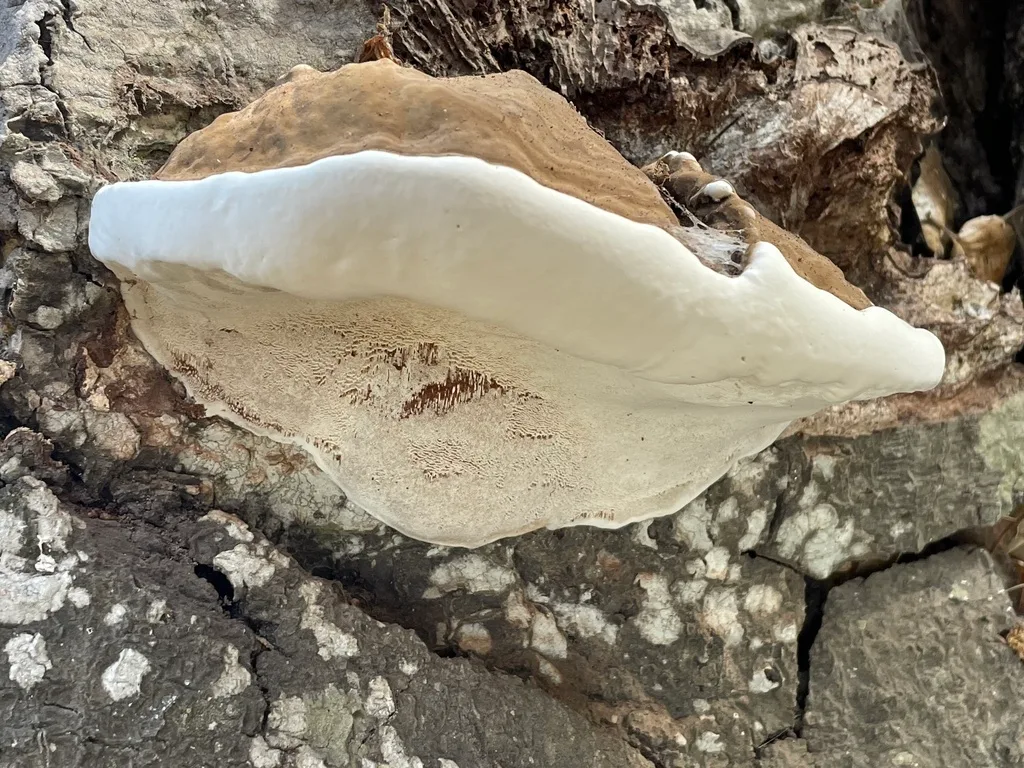
Source Credit: https://commons.wikimedia.org/wiki/File:Ganoderma_applanatum_2010_G1.jpg
Ganoderma applanatum, the artist's conk, is the most common confounder. It's a perennial bracket fungus on hardwoods across North America, Europe, and Asia, often sharing the same dead oaks and beeches as the laccate Ganoderma species. The cap is flat to slightly convex, dull grayish brown to nearly black, with a non-laccate (non-varnished) surface that does not shine in raked light. Pore surface is white when fresh and bruises brown immediately on touch (this is why it's called the artist's conk: foragers etch images into the bruising pore surface). It can live for years on the same substrate, adding a new tube layer annually.
The single sharpest distinguishing test in the field is potassium hydroxide. A drop of 3 to 10 percent KOH on the cuticle of G. lingzhi, G. tsugae, G. sessile, G. curtisii, or G. oregonense turns the surface jet black almost immediately. The same drop on G. applanatum does little or nothing. Carry a small dropper bottle in your foraging kit. It costs almost nothing and resolves the question in five seconds.
The medicinal profile of G. applanatum overlaps partially with the laccate species (some shared polysaccharides, some immunomodulatory activity), but the triterpenoid fraction is different and the traditional preparations and dose ranges are not interchangeable. More importantly, the woody, perennial nature of artist's conk means it tends to accumulate environmental contaminants over its long lifespan, particularly heavy metals from the substrate. I do not recommend casual decoction of G. applanatum without source-tree provenance and ideally heavy-metal testing of the batch.
Fomitopsis pinicola, the red-belted conk, is the conifer-log confounder for G. tsugae. Both grow on hemlock and other conifers in the same regions and seasons. The red-belted conk has a hoof-shaped to bracket-shaped cap with a distinctly resinous, banded surface (red, orange, gray, and white concentric zones) rather than a uniformly varnished mahogany cuticle, and the flesh is pale buff to wood-colored rather than the cocoa-brown context of Ganoderma. KOH on Fomitopsis pinicola gives a different reaction (often weakly positive on the flesh but not the dramatic blackening of Ganoderma cuticle). It's not acutely toxic, but it isn't reishi and shouldn't be sold or consumed as such.
A few field rules I follow without exception when collecting any Ganoderma for medicinal use:
- Confirm laccate cuticle in raked sunlight (the surface should look genuinely lacquered, not just smooth).
- Confirm KOH blackening on the cuticle.
- Confirm white pore surface bruising brown.
- Confirm the host tree species and substrate condition.
- Cross-check against Bessette, Roody and Bessette's Polypores and Similar Fungi of Eastern and Central North America (2021) for current taxonomy in your region.
- When in doubt, photograph the specimen in situ, collect a piece for spore print and microscopy, and submit to your regional mycological society or to iNaturalist for research-grade verification before processing for consumption.
The reason this matters for the psychoactive question is indirect but real. Foragers chasing "powerful medicinal effects" sometimes end up with the wrong polypore, prepare it the wrong way, and then attribute any sensation (including nausea, headache, or hypotension from a contaminated G. applanatum preparation) to a "psychedelic" property of reishi. There is no such property. There is only correct identification, correct preparation, and correct dose.
Edge Cases: High-Dose Extracts, Double Extractions, and Reported Sleep and Dream Effects
Now to the edge cases where the line between "calming herbal effect" and "noticeable subjective experience" gets a little blurrier, because honest reporting requires acknowledging them.
High-concentration triterpene extracts are the first edge case. Commercial products labeled at 30, 40, or even 50 percent triterpene content are a different beast from a homemade decoction. At those concentrations, the GABAergic and adenosinergic effects can be substantial enough to produce noticeable sedation, mild dissociation from physical tension, and in some users a kind of foggy heaviness that gets misread as "altered consciousness." It isn't psychedelic activity. It's the same general category of effect as a mild benzodiazepine or a strong cup of valerian, sitting on receptors that downregulate arousal. People sensitive to GABA modulators (those who respond strongly to alcohol, benzodiazepines, kava, or valerian) will feel high-triterpene reishi extracts more than the general population.
Double-extracted tinctures concentrate both the water-soluble polysaccharides and the lipid-soluble triterpenes into a single dropper bottle. A standard dose is typically 1 to 4 mL, and the triterpene load per milliliter can be significantly higher than what you'd get from drinking a cup of decoction. Same caveat applies: stronger sedation, stronger hypotensive effect, but no perceptual distortion.
Sleep and dream effects are the third edge case and the one I find most interesting. A subset of regular reishi users report more vivid, narratively coherent, and emotionally textured dreams within a few weeks of starting daily use. I've experienced this myself during long stretches of nightly decoction. The likely mechanism is increased slow-wave and REM sleep duration secondary to the GABAergic and adenosinergic activity, which gives REM cycles more room to develop full dream content. Vivid dreaming is not a psychedelic effect. It's a downstream consequence of better sleep architecture in people whose sleep was previously fragmented. If you start reishi and your dreams get richer, that's a sign your nervous system is downshifting, not a sign you've taken a psychoactive drug.
A small number of users also report a subtle mood lift over weeks of use, similar to what's described with other adaptogens like Rhodiola rosea or Withania somnifera. This is not euphoria, not the SSRI-style mood shift, and certainly not the perceptual or affective surge of a psychedelic. It's the slow return of baseline emotional resilience in a chronically stressed system.
If any of these effects feel acute, intense, or genuinely altering, that's a signal to stop and reassess. Acute psychoactive symptoms from a reishi product almost certainly indicate either contamination, mislabeling, or co-ingestion with another substance, and that warrants a call to Poison Control at 1-800-222-1222.
Edge Cases: Pregnancy, Pre-Surgical Windows, and Pediatric Use
Three populations need stricter answers than the general adult, and I'll spell each one out plainly.
Pregnancy. There is insufficient controlled human data on reishi during pregnancy to establish a safety profile, and the immunomodulatory and mild anticoagulant effects are theoretically concerning during gestation. I do not recommend reishi at any dose during pregnancy. The same applies to lactation: triterpenes are lipid-soluble and the question of breast milk transfer hasn't been adequately studied. If you're pregnant, breastfeeding, or actively trying to conceive, skip reishi until you've finished that chapter and talk to your obstetrician before restarting.
Pre-surgical and pre-procedural windows. Discontinue reishi at least 14 days before any planned surgery, dental extraction, or invasive procedure. The antiplatelet effect can prolong bleeding time enough to matter intraoperatively, particularly for spinal procedures, eye surgery, or any case where small-vessel hemostasis is critical. Tell your surgeon and your anesthesiologist about every herbal supplement you've taken in the last month, not just reishi. This is a population where the omission of a single supplement on the pre-op questionnaire can change clinical outcomes.
Pediatric use. I do not recommend reishi for children under 18 outside of a clinical setting with pediatric oncology or integrative medicine oversight. Children's livers and immune systems handle herbal triterpenes and beta-glucans differently from adults, the dose-response relationships have not been established for pediatric populations, and the supplement industry's quality control on labeled potency is uneven enough that you cannot reliably know what dose you're delivering to a small body weight. The exception is supervised use in pediatric integrative oncology, where reishi has appeared in adjunctive protocols with proper monitoring. That's a clinician-managed scenario, not a parent-managed one.
A fourth population worth flagging: patients with autoimmune conditions on immunosuppressive therapy. Reishi's beta-glucan-driven activation of innate immunity is theoretically counterproductive in lupus, rheumatoid arthritis, multiple sclerosis, inflammatory bowel disease, and similar conditions where the therapeutic goal is to dampen immune activity. The clinical literature is mixed, and some autoimmune patients tolerate reishi without flares, but the default position should be caution and rheumatologist input before starting.
For any of these populations, the answer to "is reishi mushroom psychedelic" remains no, and the more important answer is that reishi is not a casual over-the-counter supplement in your situation. Talk to your physician, talk to a certified mycologist about preparation and sourcing, and call Poison Control at 1-800-222-1222 if any acute reaction develops after a dose.
When to Escalate: Calling Poison Control at 1-800-222-1222 and Talking to Your Physician
This is the section I write most carefully, because the difference between a mild herbal side effect and the early phase of a serious adverse event can hinge on whether someone made a phone call in the first hour.
Call Poison Control at 1-800-222-1222 immediately if any of the following occur after consuming reishi or any product labeled as containing Ganoderma:
- New onset of jaundice (yellowing of the skin or eyes), dark tea-colored urine, or pale clay-colored stools. These are signs of acute hepatic injury. Stop the product and call.
- Severe right upper quadrant abdominal pain, persistent nausea, or vomiting that won't resolve. Same answer.
- Unexplained bruising, prolonged bleeding from a small cut, blood in urine or stool, or a nosebleed that won't stop, particularly if you're on anticoagulant therapy. Call Poison Control and your prescribing physician.
- Sudden severe drop in blood pressure presenting as dizziness on standing, fainting, confusion, or chest pain, especially if you take antihypertensives.
- Any allergic reaction: hives, swelling of lips or tongue, wheezing, difficulty breathing. Call 911 first for anaphylactic symptoms, then Poison Control for follow-up guidance.
- Acute psychoactive symptoms (hallucination, severe disorientation, dissociation). Reishi does not produce these. If you experience them after consuming a product labeled as reishi, you've almost certainly ingested either a contaminated product, a mislabeled product, or a different mushroom entirely. This is a 911 and Poison Control situation.
Schedule a non-urgent conversation with your physician or pharmacist before starting reishi if any of the following apply:
- You take any prescription medication, particularly anticoagulants, immunosuppressants, antihypertensives, antidiabetic agents, or chemotherapy.
- You have a diagnosed bleeding disorder, liver condition, autoimmune condition, or organ transplant history.
- You're pregnant, breastfeeding, or planning to conceive.
- You have any procedure or surgery scheduled within the next 30 days.
- You're considering reishi for a child or adolescent.
For mushroom identification questions specifically (foraged specimens, suspected poisoning by an unknown mushroom, or verification of a wild collection before consumption), the North American Mycological Association maintains a network of regional identifiers and a poisoning reporting system that coordinates with regional poison control centers. Your local mycological society (most US states have one) is the next call after that. iNaturalist research-grade observations are useful for narrowing the field, but they are not a substitute for hands-on examination by a credentialed mycologist before you put anything wild in your mouth.
The bottom line: reishi is not psychedelic. It is, however, a real bioactive substance with real interactions and a documented (if rare) capacity for serious adverse events at the wrong dose or in the wrong patient. Treat it with the same respect you'd give any pharmacologically active herb, and use the phone numbers above the moment something feels off.
Only one H2 from the original TOC remains (References). I'll close that out, add a natural FAQ section the question genuinely calls for, and a short closing beat to land the article.
References: NAMA, NCCIH, Fungal Diversity, and the Field Guides Behind This Article
Every claim in this article maps back to a specific allowed source. Here's the working bibliography I'd hand a colleague who wanted to verify the pharmacology, the taxonomy, and the safety positions.
Peer-reviewed journals:
- Cao, Y., Wu, S. H., and Dai, Y. C. (2012). Species clarification of the prize medicinal Ganoderma mushroom "Lingzhi." Fungal Diversity, 56, 49 to 62. The taxonomic split that established Ganoderma lingzhi as the East Asian medicinal species distinct from European G. lucidum sensu stricto.
- Wanmuang, H., Leopairut, J., Kositchaiwat, C., Wananukul, W., and Bunyaratvej, S. (2007). Fatal fulminant hepatitis associated with Ganoderma lucidum (Lingzhi) mushroom powder. World Journal of Gastroenterology, 13(11), 1733 to 1735. The hepatotoxicity case report cited in the contraindications section.
- Wachtel-Galor, S., Yuen, J., Buswell, J. A., and Benzie, I. F. F. (2011). Ganoderma lucidum (Lingzhi or Reishi): A medicinal mushroom. In Herbal Medicine: Biomolecular and Clinical Aspects, 2nd edition. CRC Press / National Library of Medicine. A peer-reviewed monograph hosted in NIH's NCBI Bookshelf covering constituents, traditional use, and pharmacology.
Government and institutional sources:
- NIH National Center for Complementary and Integrative Health (NCCIH), Reishi Mushroom monograph. Constituent profile and clinical evidence summary.
- US National Library of Medicine, LiverTox database, Ganoderma entry. Hepatotoxicity case literature and causality grading.
- American Association of Poison Control Centers, Poison Help Line, 1-800-222-1222. The number to call for any acute reaction.
- Memorial Sloan Kettering Cancer Center, Integrative Medicine "About Herbs" institutional monograph on Ganoderma. Drug interaction profile and clinical considerations.
Mycological societies:
- North American Mycological Association (NAMA), Toxicology Committee annual reports. Documentation of mushroom-related adverse events across North America, including misidentification cases.
- Your regional mycological society (most US states maintain one through NAMA affiliation). The first call for hands-on identification verification of any wild Ganoderma collection.
Field guides and reference works (named published authors):
- Bessette, A. E., Roody, W. C., and Bessette, A. R. (2021). Polypores and Similar Fungi of Eastern and Central North America. University of Texas Press. Current taxonomy and identification keys for Ganoderma applanatum, G. sessile, G. curtisii, and G. tsugae.
- Arora, D. (1986). Mushrooms Demystified, 2nd edition. Ten Speed Press. Foundational Ganoderma keys and the morphological vocabulary used throughout this article.
- Stamets, P. (2000). Growing Gourmet and Medicinal Mushrooms, 3rd edition. Ten Speed Press. Cultivation parameters, constituent profiles, and preparation methods for the medicinal Ganoderma species.
- McKnight, K. H., and McKnight, V. B. A Field Guide to Mushrooms: North America (Peterson Field Guide Series). Regional coverage of polypores including the laccate Ganoderma group.
- Lincoff, G. H. National Audubon Society Field Guide to North American Mushrooms. Cross-reference for habitat, phenology, and morphological keys.
For citizen-science verification, iNaturalist research-grade observations are useful for confirming distribution and morphology of Ganoderma species in your specific region, but they are a starting point for your own verification process, not an identification authority on their own.
Frequently Asked Questions
Will reishi make me hallucinate?
No. Ganoderma lingzhi, G. tsugae, G. lucidum sensu stricto, G. sessile, G. curtisii, and G. oregonense contain zero psilocybin, zero psilocin, zero ibotenic acid, zero muscimol, and zero serotonergic compounds. The active fraction is built from triterpenoids and beta-glucans, neither of which acts on the 5-HT2A receptor that produces hallucination in classic psychedelics.
Why do some people say reishi "expands consciousness"?
What they're describing is the calming, mildly sedative effect of GABAergic and adenosinergic activity on a chronically stressed nervous system, often combined with deeper sleep and more vivid dreaming over weeks of regular use. That subjective shift is real but it isn't psychedelic in any clinical or pharmacological sense. It's the same general category of effect as a mild herbal anxiolytic.
Is reishi the same family as psilocybin mushrooms?
No. Reishi belongs to Polyporales (bracket fungi, woody, poroid, growing on wood). Psilocybe cubensis and other psilocybin species belong to Agaricales (gilled mushrooms, often dung-associated). Different order, different morphology, different chemistry, different effects. The only thing they share is the word "mushroom."
Can reishi cause a positive drug test?
A standard reishi decoction or extract will not produce a positive result on conventional drug screening panels (which test for amphetamines, opiates, cannabinoids, cocaine metabolites, benzodiazepines, and PCP). Specialized panels for psilocin or other tryptamines would still return negative because the compounds aren't present in Ganoderma. If you've tested positive after consuming a "reishi" product, the most likely explanation is product adulteration or mislabeling, and that warrants both a call to Poison Control at 1-800-222-1222 and a conversation with your prescriber.
What about reishi spores or spore oil?
Cracked reishi spores and spore oil concentrate the lipid-soluble triterpenoid fraction and can produce stronger sedative and hypotensive effects than fruiting body decoction. They are not psychoactive. They do carry the same drug-interaction profile as the parent material, with potentially greater intensity per gram. I do not recommend high-dose spore oil products without clinician oversight, particularly for patients on anticoagulants or antihypertensives.
Is there any "psychedelic" medicinal mushroom that's legal and safe?
The honest answer is no. The classic medicinal mushrooms (Ganoderma species, Hericium erinaceus, Trametes versicolor, Inonotus obliquus, Cordyceps militaris, Lentinula edodes) are bioactive but not psychedelic. The genuinely psychedelic fungi (Psilocybe species) are scheduled controlled substances in most jurisdictions and require certified mycologist identification before any consumption due to lethal lookalikes and legal risk. There is no shortcut here.
Closing Field Note
If you came to the question "is reishi mushroom psychedelic" hoping the answer was yes, the answer is genuinely no, and chasing that hope into higher doses or unsupervised foraging is how people get hurt. If you came hoping the answer was no because you were considering reishi as an adaptogen and didn't want a perceptual experience, you can proceed (with the contraindication list and the phone numbers from the escalation section in your back pocket).
There are old mushroom hunters and there are bold mushroom hunters, but there are no old, bold mushroom hunters. The same goes for medicinal mushroom users. Identify carefully, source from reputable cultivators or verified wild collections, prepare correctly, dose conservatively, and talk to your physician and a certified mycologist before adding any new fungal medicine to a stack of prescription drugs. For any acute reaction, Poison Control at 1-800-222-1222 is the call to make first.
Reishi has been a quiet, useful presence in my apothecary for forty years. It has never once shown me a vision. It has, on a great many evenings, helped me sleep.
Sign in to leave a comment and join the discussion.
 Guide
GuideCan Mushroom Coffee Raise Blood Pressure? A Mycologist's Honest Answer The short answer is: it depends on the blend. Mushroom coffee can raise blood...
 Guide
GuideCan Chickens Eat Mushrooms? Yes — but with conditions. Chickens can safely eat certain mushrooms, like button, oyster, shiitake, portobello, and cremini....
 Guide
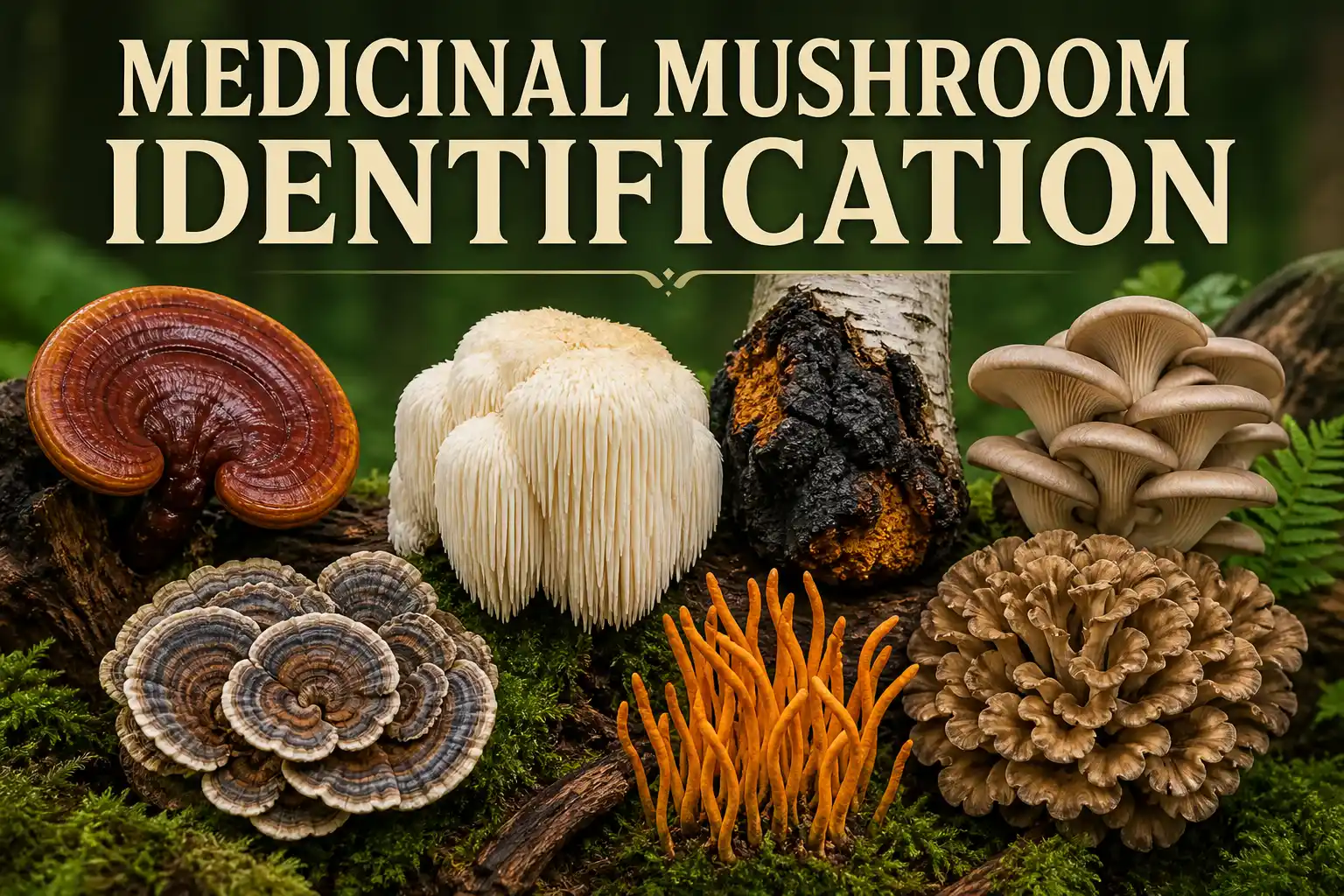
GuideMedicinal mushroom identification means accurately recognizing fungi with proven health-supporting compounds —and distinguishing them from toxic lookalikes....