Cordyceps militaris Fungi Identification Guide

Nathan Cole
Mycologist · Author · Fungi Expert
Updated
Apr 24, 2026
Cordyceps militaris (L.) Fr. is a parasitic fungus in the family Cordycipitaceae that kills insect pupae and fruits from their bodies as bright orange clubs. It's the cultivatable, research-backed species behind virtually every "Cordyceps" supplement sold today, and the primary natural source of cordycepin (3′-deoxyadenosine) — a bioactive nucleoside with documented immunomodulatory, anti-tumor, and performance-relevant mechanisms.
If you want to know what this fungus actually is, what it contains, how it works, and whether the traditional claims survive modern scrutiny: all of that is here.
What Is Cordyceps militaris?
I've found Cordyceps militaris fruiting from buried moth pupae in old-growth Douglas fir stands in the Cascade foothills, and I've seen it growing on brown rice in purpose-built cultivation rooms in Oregon. That range — ancient forest floor to industrial grow tray — tells you something essential about this fungus. It's adaptable, reproducible, and that makes it uniquely valuable among medicinal fungi.
C. militaris was first formally described by Carolus Linnaeus in 1753 as Clavaria militaris, then transferred to Cordyceps by Elias Magnus Fries in 1818 — giving us the full authority citation Cordyceps militaris (L.) Fr. It sits in the order Hypocreales, class Sordariomycetes, family Cordycipitaceae.
That family placement is meaningful: it separates C. militaris from the bulk of what used to be called "Cordyceps" species, many of which were reclassified into Ophiocordyceps and Metacordyceps in the landmark 2007 phylogenetic paper by Sung, Sung, Hywel-Jones, and Spatafora in Studies in Mycology (Vol. 57). If you're still seeing old literature that treats these as one genus, it predates that reclassification.
1.1 Taxonomy and Classification
| Rank | Name |
|---|---|
| Kingdom | Fungi |
| Phylum | Ascomycota |
| Class | Sordariomycetes |
| Order | Hypocreales |
| Family | Cordycipitaceae |
| Genus | Cordyceps |
| Species | C. militaris (L.) Fr. |
The genus name comes from the Greek kordyle (club) and ceps (head) — a direct nod to the club-shaped stroma. Militaris is Latin for "of soldiers," almost certainly a reference to those upright orange clubs standing to attention from the soil.
The anamorphic (asexual) stage has historically been associated with Isaria species — particularly Isaria farinosa and Isaria tenuipes — though modern molecular work has clarified these relationships. When you see loose white mycelium on a dead insect without the characteristic orange stroma, you may be looking at the anamorph stage, not a separate species. Don't confuse it with Beauveria bassiana, another entomopathogenic fungus that produces a white powdery coating on dead insects. B. bassiana has no stroma, no perithecia, and none of the medicinal bioactive profile of C. militaris.
MycoBank lists Cordyceps militaris under registration number MB 315980. For field specimen verification, I cross-reference NAMA foray records and iNaturalist research-grade observations — but neither replaces formal identification by a certified mycologist.
1.2 How It Differs from Ophiocordyceps sinensis
This is the confusion that costs people money and, occasionally, health outcomes.
Ophiocordyceps sinensis (Berk.) G.H. Sung — the famous caterpillar fungus, known in Tibetan as yartsa gunbu and in Chinese as Dong Chong Xia Cao (冬虫夏草, literally "winter worm, summer grass") — is a different species in a different genus. It parasitizes ghost moth (Hepialus spp.) larvae at elevations of 3,000–5,000 meters across the Tibetan Plateau and Himalayan range. It cannot be cultivated to produce fruiting bodies under commercial conditions. Wild-harvested material sells for thousands of dollars per kilogram. Its bioactive profile differs from C. militaris in ways that matter clinically.
Here's the comparison that matters:
| Feature | Cordyceps militaris | Ophiocordyceps sinensis |
|---|---|---|
| Family | Cordycipitaceae | Ophiocordycipitaceae |
| Primary host | Lepidoptera pupae (various) | Hepialus moth larvae |
| Habitat | Temperate worldwide | Tibetan Plateau, 3,000–5,000 m |
| Cultivation | Fully cultivatable | No commercial fruiting body production |
| Cordycepin content | High (fruiting body) | Low to trace |
| Market price | $20–$80 / 100g | $2,000–$20,000 / kg |
| Traditional designation | Frequently mislabeled as Dong Chong Xia Cao | True Dong Chong Xia Cao |
The mislabeling is pervasive and commercially motivated. A 2017 study in Fungal Diversity by Shrestha et al. used ITS-region DNA barcoding to authenticate commercial samples and found widespread species confusion. If a supplement reads "Cordyceps sinensis" and retails for $30, it is not O. sinensis. It's either C. militaris — possibly fine, depending on product quality — or myceliated grain dressed up as something it isn't.
My position: C. militaris is the honest species to study and use. It's cultivatable, its bioactive content is measurable and reproducible, and the research base is growing steadily. O. sinensis carries enormous ethnobotanical weight and genuine pharmacological interest, but the supply chain is opaque, prices invite adulteration, and cordycepin content is lower than a well-made C. militaris fruiting body extract delivers.
Field Identification
Cordyceps militaris isn't a difficult field identification once you've seen it. That bright cadmium-orange stroma erupting from the soil is striking. But "distinctive" doesn't mean "foolproof," and finding it requires knowing exactly where and when to look.
2.1 Morphology: Stroma, Perithecia, Ascospores
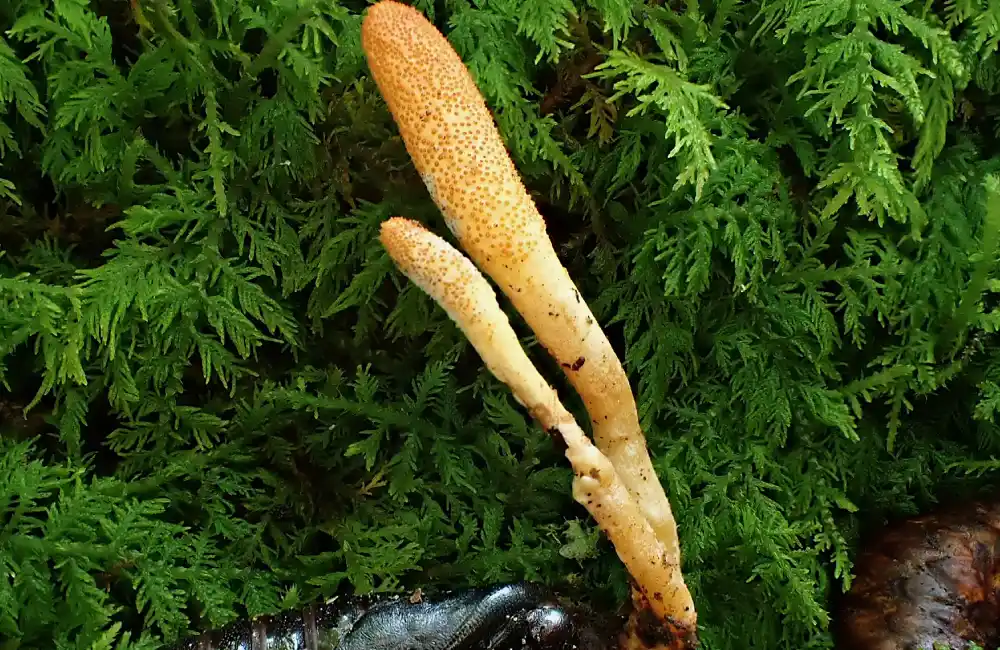
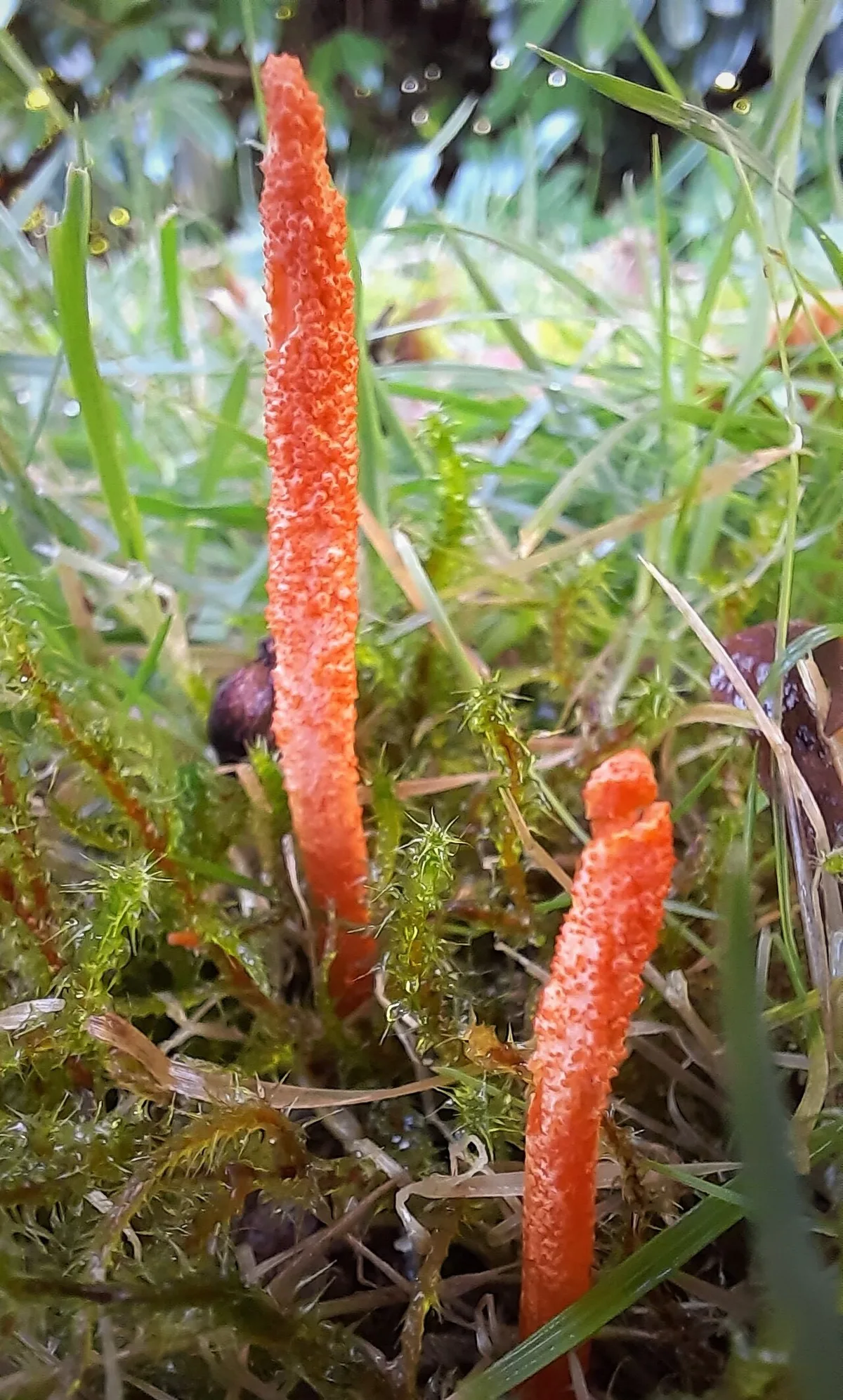
The stroma is the fruiting body — the visible above-ground structure. In C. militaris it's club-shaped to cylindrical, 2–8 cm tall, with a granular, roughened fertile head (the capitulum) clearly distinct from a smoother, paler stipe below. Color runs bright orange to orange-red when fresh, fading to dull yellow-orange with age or drought.
That rough texture on the fertile head is structural. It's formed by perithecia — flask-shaped ascomata embedded in the stroma surface with their ostiolar necks barely protruding. Under a hand lens you can see them as tiny raised bumps arranged around the upper portion of the club. Each perithecium contains elongated asci (spore sacs), each holding thread-like ascospores that are multiseptate — divided by cross-walls into segments — and ultimately fragment into shorter cylindrical part-spores (secondary conidia) for wind dispersal.
Key morphological features:
- Color: cadmium orange → faded yellow-orange with age
- Stroma height: 2–8 cm
- Capitulum texture: rough, granular (perithecia embedded)
- Stipe: smooth, slightly paler orange, occasionally compressed
- Attachment: base anchored to host insect below soil surface
- Flesh: white to pale orange, fibrous
- Odor: faint, mildly sweet-fungal
- Spore print: white to pale yellow
For microscopic confirmation: ascospores in Melzer's reagent show no amyloid reaction. Under compound microscope, multiseptate ascospores fragmenting into cylindrical part-spores are diagnostic for the species.
2.2 Host Substrate and Ecology
Cordyceps militaris is an obligate entomopathogen — it requires a living insect host to complete its life cycle in the wild. Fungal spores infect a larva or pupa, colonize it from within, consume it entirely, and then push the stroma upward through the soil toward light.
Primary wild hosts:
- Lepidoptera pupae — moth and butterfly pupae buried during metamorphosis; overwhelmingly dominant in my field experience
- Lepidoptera larvae — less common, more variable in appearance
- Coleoptera larvae — occasional; beetle grubs in decaying wood litter
- Diptera — rare, documented but not typical
The host is almost always buried. This is why the stroma appears to emerge from bare soil, leaf litter, or moss with no obvious substrate visible at the surface. Dig carefully directly below the stipe — 2–5 cm down — and you'll find a mummified, orange-stained pupa with its internal contents entirely replaced by dense white mycelium.
Ecologically, look for C. militaris in:
- Temperate deciduous and mixed conifer-hardwood forests
- Grassy woodland margins with adjacent canopy
- Sandy or loamy soils with good organic content
- Areas sustaining healthy lepidopteran populations
It's neither a decomposer nor a mycorrhizal partner. It's a predator, in the strictly fungal sense of that word.
2.3 Season and Geographic Range
In the Northern Hemisphere, C. militaris fruits late summer through early autumn — August through October is the core window across most temperate zones. I've pulled fresh specimens into early November in mild Appalachian autumns, and the British Isles records extend similarly late. Cold snaps accelerate senescence; the orange fades fast after first frost.
Geographic distribution:
| Region | Notes |
|---|---|
| Pacific Northwest, USA/Canada | Douglas fir and mixed hardwood understory; personally documented in Skagit, Whatcom, and Clallam Counties, WA |
| Appalachian range | Mixed hardwood forests of Virginia, North Carolina, West Virginia; near Quercus alba stands |
| British Isles | Well-documented; Hywel-Jones and CABI colleagues produced important Cordycipitaceae taxonomy work here |
| Continental Europe | Scattered temperate records; stronger representation in Central Europe |
| East Asia | China, Japan, Korea — both wild harvest and intensive cultivation |
| Elevation range | Sea level to 2,000+ m |
For current regional records, NAMA's foray database and iNaturalist research-grade C. militaris observations (verified by at least two qualified identifiers) are the most reliable living resources. MushroomExpert.com (Michael Kuo) offers a useful morphological comparison page — use it for photo reference alongside physical specimens, never as a sole identification source.
Bioactive Compounds
Cordyceps militaris produces a suite of pharmacologically active compounds. The supplement industry tends to lead with one or two and bury the rest. That selective framing obscures the full picture — and, in some cases, the full risk.
3.1 Cordycepin (3′-Deoxyadenosine) — The Primary Driver
Cordycepin is the compound that put C. militaris on the pharmacological map. It's a structural analog of adenosine: specifically, 3′-deoxyadenosine, meaning the hydroxyl group at the 3′ carbon of the ribose sugar is replaced by a hydrogen. That single molecular difference produces profound downstream pharmacological effects.
Cordycepin was first isolated from C. militaris in 1950 by Cunningham, Hutchinson, and Manson — one of the early victories of natural product chemistry. Research has continued steadily since, with primary literature in Phytomedicine, Journal of Ethnopharmacology, Mycologia, and oncology journals.
What cordycepin does at the molecular level:
- Integrates into RNA chains and disrupts polyadenylation — the poly-A tail addition essential to mRNA stability and translation
- Inhibits protein synthesis in rapidly dividing cells, which is why oncology researchers are interested
- Acts as an adenosine receptor agonist (A1, A2A, A2B, A3 — covered in detail in the next section)
- Has its metabolic half-life extended significantly by pentostatin (deoxycoformycin), also produced by C. militaris, which inhibits adenosine deaminase — the enzyme that would otherwise degrade cordycepin within minutes
Fruiting body cordycepin concentration typically runs 0.1–1.0% dry weight, varying with substrate, cultivation method, and extraction process. That's measurable, reproducible, and commercially meaningful under controlled cultivation. In myceliated grain products — the dominant supplement format — cordycepin is essentially absent. I'll cover that fully in Section 7.
3.2 Adenosine, Beta-Glucans, and Supporting Nucleosides
Beyond cordycepin, C. militaris delivers a full cast of bioactives:
Adenosine — present in meaningful quantities in quality fruiting body extracts. This is not a passive bystander compound. Adenosine regulates heart rate, dilates coronary arteries, and exerts direct signaling activity at A1 and A2A receptors. Anyone on adenosine-pathway cardiac medications needs to know this before supplementing.
Cordycepic acid — early literature made much of this compound; it turns out to be D-mannitol, a sugar alcohol. A minor osmolyte and antioxidant contributor. Not the primary bioactive it was once described as.
Polysaccharides (beta-glucans, CS-4 fraction) — the CS-4 strain is a patented mycelium fermentation product developed by the Chinese Academy of Sciences. It's been used in Chinese clinical trials and has the most human data of any C. militaris-derived product. Beta-glucan percentage is one of the few quality markers actually testable in commercial products.
Additional nucleosides — fruiting bodies contain uridine, guanosine, and thymidine in supporting quantities, each contributing to cellular metabolism and immune function.
Ergosterol — the fungal provitamin D2 precursor. UV exposure converts it to ergocalciferol (vitamin D2). Standard in most edible and medicinal fungi; not a unique selling point for C. militaris specifically.
| Compound | Class | Primary Documented Activity |
|---|---|---|
| Cordycepin (3′-deoxyadenosine) | Nucleoside analog | Anti-tumor, antiviral, adenosine receptor agonism |
| Adenosine | Purine nucleoside | Cardiovascular, immunomodulatory |
| Beta-glucans (CS-4) | Polysaccharide | Immune modulation |
| Cordycepic acid (D-mannitol) | Sugar alcohol | Minor antioxidant |
| Ergosterol | Sterol | Provitamin D2 precursor |
| Uridine, guanosine, thymidine | Nucleosides | Cellular metabolism |
| Pentostatin | Enzyme inhibitor | Extends cordycepin half-life in vivo |
3.3 Militarinone Alkaloids and Emerging Compounds
The militarinone alkaloids — militarinone A, B, C, and D — are a group of polyketide pyridone alkaloids isolated from C. militaris in the early 2000s. They're structurally unusual and have demonstrated neurotrophic activity in cell culture: specifically, they appear to promote nerve growth factor (NGF) synthesis and neuronal differentiation. Published characterization work appeared in Journal of Natural Products and Phytochemistry.
We're early. I won't overstate what's known from cell culture to human outcomes. But the neurotrophic angle is genuinely worth watching — particularly given parallel interest in Hericium erinaceus hericenones and erinacines for neurodegenerative disease applications. Militarinones add another data point to the argument that entomopathogenic fungi are a pharmacological resource we've barely begun to catalog.
Cyclosporin-related compounds — C. militaris produces cyclosporin analogs. This partly explains the immunomodulatory effects and, critically, is why this supplement is not benign for everyone. Cyclosporin itself (originally from Tolypocladium inflatum) is a front-line immunosuppressant in transplant medicine. The C. militaris analogs appear to have immunomodulatory rather than fully immunosuppressive activity — a meaningful distinction — but anyone on prescribed immunosuppressants must consult a physician before adding C. militaris to their regimen. Full stop.
How It Works in the Body
The pharmacology here is real. Not supplement-catalog marketing language — documented mechanisms with published primary literature behind them. Let me walk through each one clearly.
4.1 Adenosine Receptor Agonism
Cordycepin and adenosine both act on adenosine receptors — a family of G-protein-coupled receptors distributed throughout the cardiovascular system, immune tissue, central nervous system, and kidneys. Four subtypes, four distinct profiles:
- A1 receptors: heart rate reduction, neuroprotection, renal tubular protection
- A2A receptors: anti-inflammatory signaling, vasodilation, immune checkpoint regulation — the same pathway that some checkpoint immunotherapy drugs target in oncology
- A2B receptors: vasodilation, mast cell regulation, some metabolic effects
- A3 receptors: cardioprotection, anti-tumor activity in some models
Cordycepin doesn't act identically to adenosine at these receptors — the 3′-deoxy structure alters binding kinetics — but the overlap is substantial enough to produce real cardiovascular and immunological effects. Combined with pentostatin extending cordycepin's plasma half-life, you have a compound that persists in circulation longer than most marketing copy acknowledges.
This is not theoretical. For anyone taking theophylline, relying on caffeine (a competitive adenosine receptor antagonist), or using adenosine-regulating cardiac medications, this interaction deserves direct clinical attention.
4.2 Immune Modulation: NK Cells and Macrophage Activation
Multiple cell culture and animal studies consistently show C. militaris extracts:
- Activate natural killer (NK) cells — innate immune cells that target virally infected and neoplastic cells without prior sensitization
- Stimulate macrophage activity — increasing phagocytic capacity and pro-inflammatory cytokine output (TNF-α, IL-1β, IL-6, IL-12)
- Suppress NF-κB pathway signaling — the master transcription factor regulating inflammatory gene expression; suppression here drives anti-inflammatory outcomes
- Modulate T-cell differentiation — shifting toward Th1 responses in certain experimental models
The immunostimulatory effects are real and published in Phytomedicine and Journal of Ethnopharmacology. But here's what the supplement industry reliably omits: immunostimulation is not universally beneficial. In autoimmune conditions — rheumatoid arthritis, lupus, multiple sclerosis, inflammatory bowel disease — stimulating immune activity is potentially harmful. People with these conditions should not be self-prescribing C. militaris without physician oversight. That's not a disclaimer; it's pharmacology.
4.3 Anti-Tumor Mechanisms
This is where the most research attention has concentrated — and where I'll be most precise about what the evidence actually shows.
Demonstrated in cell culture and animal models:
- Apoptosis induction — cordycepin triggers programmed cell death in leukemia, breast, colorectal, and bladder tumor cell lines via caspase-dependent pathways
- Anti-angiogenesis — suppression of new tumor blood vessel formation through VEGF pathway inhibition
- mTOR pathway modulation — mTOR (mechanistic target of rapamycin) regulates cell growth and proliferation; cordycepin suppresses mTOR signaling in multiple cancer cell line models
- HIF-1α inhibition — HIF-1α (hypoxia-inducible factor 1-alpha) drives tumor adaptation to low-oxygen microenvironments; C. militaris extracts show inhibitory activity in several cell line studies
- Cell cycle arrest — cordycepin induces G2/M phase arrest in rapidly dividing tumor cells
What I will not tell you: that C. militaris treats or cures cancer. In vitro and rodent data is mechanistically coherent and genuinely interesting. Human clinical trials meeting modern evidence standards don't yet exist for C. militaris as a therapeutic cancer intervention. Memorial Sloan Kettering's integrative medicine database states this clearly. C. militaris as an oncology adjunct may eventually have a defined role — but that conversation belongs between a patient and their oncologist, not in a product description.
4.4 ATP Synthesis and Physical Performance
The performance angle drove much of C. militaris's Western market entry, partly because of the 1993 Chinese women's track team at the Stuttgart World Championships. Three world records broken. Coach Ma Junren attributed part of the results to O. sinensis supplementation. No banned substances were detected. The full explanation remains disputed — training methods, altitude preparation, and dietary regimens were all implicated. The attribution to Cordyceps was never rigorously confirmed.
What the research actually supports for C. militaris:
- Enhanced ATP synthesis — cordycepin and adenosine contribute to purine nucleotide pools; some animal model evidence of improved mitochondrial ATP production
- Improved oxygen utilization — Hirsch et al. (Journal of Alternative and Complementary Medicine, 2010) showed improved VO2 max in older adults supplementing with C. militaris fruiting body powder vs. placebo in a small RCT
- Reduced lactic acid accumulation — primarily rodent data; human evidence thin
- Anti-fatigue effects — multiple animal studies; mechanism likely involves glycogen preservation and oxidative stress reduction via beta-glucan and cordycepin activity
The honest assessment: plausible mechanism, supportive animal data, a small number of positive human trials that need replication at larger scale and in younger athletic populations. If you're a competitive athlete supplementing with C. militaris, you're working with early-stage evidence. That's a choice you can make — but make it with accurate information, not borrowed mythology from 1993 Stuttgart.
Traditional Use vs. Modern Research
5.1 TCM, Tibetan Medicine, and the Dong Chong Xia Cao Confusion
The ethnomycological history here is genuinely fascinating — and genuinely tangled by the species-name problem I've already flagged.
Dong Chong Xia Cao (冬虫夏草) has been documented in Chinese materia medica since at least the 15th century, with systematic descriptions in Ben Cao Bei Yao (1694) and Ben Cao Cong Xin (1757). The traditional preparation was whole dried fungus — host body and stroma together — typically steeped as a tonic broth or decocted in water with other herbs. Traditional indications: chronic fatigue, cough, lung weakness, impotence, and post-illness convalescence — patterns that TCM classifies broadly as kidney and lung deficiency.
In Tibetan medicine, yartsa gunbu harvest predates Chinese documentation, with collection by herder communities in the Himalayan grasslands forming both a medicinal tradition and an economic cornerstone that continues today. Current wild O. sinensis harvest is under real ecological pressure — overharvesting, climate change disrupting host moth (Hepialus) populations, and extraordinary price pressure have all strained supply. This is a conservation issue, not merely a market dynamics story.
Here's the point I need to make plainly: every classical TCM and Tibetan reference to Dong Chong Xia Cao refers to Ophiocordyceps sinensis, not Cordyceps militaris. C. militaris has its own traditional use history in China, Japan, and Korea — Korean Dong Chung Ha Cho preparations do include it — but it's not the Dong Chong Xia Cao of the canonical texts. Supplement companies that use that name or associated imagery to market C. militaris products are being misleading. Not necessarily illegal under DSHEA — but misleading.
Japanese Kampo medicine treats C. militaris more directly and honestly, using it as an immune tonic and anti-fatigue agent without the false O. sinensis equivalence.
5.2 What the Peer-Reviewed Literature Actually Says
Here's a straight summary of where the evidence stands, drawing from Mycologia, Fungal Diversity, Phytomedicine, Journal of Ethnopharmacology, and Mycoscience:
Well-supported — multiple independent studies, consistent findings:
- Immunomodulatory activity via beta-glucans and cordycepin — yes
- In vitro anti-tumor activity via cordycepin mechanism — yes, across multiple cell line models
- Anti-inflammatory effects via NF-κB suppression — yes, in animal and cell models
- Adenosine receptor pharmacology of cordycepin — yes, well-characterized mechanistically
Moderately supported — promising, but limited human data:
- Athletic performance enhancement — small trials, need replication in larger, controlled studies
- Anti-fatigue effects — some positive RCT data for CS-4 mycelium product, methodologically modest
- Hypoglycemic effects — animal data and one small human trial
- Sexual function — primarily rodent studies; one small human trial
Early stage — not yet established in humans:
- Neurotrophic effects from militarinone alkaloids — cell culture only
- Direct anti-cancer therapy — no qualifying human clinical trials
- Renal protection in nephropathy — Chinese clinical data exists, methodological quality variable
What the literature does not support:
- C. militaris as pharmacologically equivalent to O. sinensis for traditional indications
- The majority of commercial "energy" and "performance" claims as specifically stated
- Any established therapeutic dosing protocol for humans
The American Herbal Pharmacopoeia has not yet published a full C. militaris monograph. NAMA does not issue therapeutic recommendations. For clinical drug interaction data, the Memorial Sloan Kettering Integrative Medicine database is the most rigorously maintained English-language resource.
If you're treating a medical condition and considering C. militaris supplementation, speak with your physician first. If you've consumed wild Cordyceps and develop any unusual symptoms, call Poison Control immediately: 1-800-222-1222. That line is free, staffed around the clock, and the people on the other end know their mycology.
Sections 6 through 9 — drug interactions and contraindications, supplement quality, cultivation, and safety with dosing — continue in Part 2.
Drug Interactions and Contraindications
I've consulted on mushroom poisoning cases at emergency rooms, and every time I do, the same pattern holds: the person assumed that because something is natural and sold in a health food store, it's inert. Cordyceps militaris is not inert. It contains pharmacologically active compounds — cordycepin, adenosine, cyclosporin analogs, beta-glucans — that interact with biological systems in documented, measurable ways. Which means they interact with drugs.
This section is the one you read before you buy anything.
6.1 Anticoagulants and Platelet Effects
Adenosine inhibits platelet aggregation via A2A receptor signaling. Cordycepin shares adenosine's receptor pharmacology to a meaningful degree. Combine those two compounds — both present in quality C. militaris fruiting body extracts — and you have a supplemental product with real antiplatelet activity.
For most healthy adults, this is clinically insignificant. For anyone on anticoagulation therapy, it's not.
Specific drug classes at risk:
- Warfarin (Coumadin) — INR changes have been reported with fungi containing adenosine-active compounds; even modest INR shifts increase bleeding risk in patients on therapeutic anticoagulation
- Heparin and low-molecular-weight heparins (enoxaparin, dalteparin) — additive anticoagulant effect
- Antiplatelet agents — aspirin, clopidogrel (Plavix), ticagrelor; additive platelet inhibition
- Novel oral anticoagulants (NOACs) — rivaroxaban (Xarelto), apixaban (Eliquis), dabigatran (Pradaxa); limited specific interaction data, but mechanism-based concern is real
Surgical patients: the antiplatelet activity of C. militaris extracts should prompt cessation at least two weeks before any elective surgical procedure. This is the same window recommended for fish oil and other antiplatelet supplements by most surgical anesthesia protocols.
6.2 Immunosuppressants
This is the interaction that concerns me most, because the population at risk is the one least equipped to handle it.
Organ transplant recipients are maintained on lifelong immunosuppressive regimens — cyclosporine, tacrolimus, mycophenolate mofetil, sirolimus — to prevent rejection. Cordyceps militaris contains cyclosporin-related compounds and produces significant NK cell and macrophage activation via its beta-glucan and cordycepin content. These effects directly counter the therapeutic goal of immunosuppression.
The theoretical risk: C. militaris supplementation in a transplant patient could reduce the efficacy of their immunosuppressive regimen, increasing rejection risk. The reverse is also possible — if cyclosporin analogs from C. militaris stack additively with prescribed cyclosporine, drug toxicity becomes a concern.
Either way: transplant recipients should never take C. militaris without explicit approval from their transplant team. This is not overcautious language. It's a straightforward pharmacological reality.
The same logic applies to anyone on immunosuppressants for autoimmune conditions — methotrexate, azathioprine, biologics (TNF inhibitors, IL-6 inhibitors, JAK inhibitors). Immunostimulating a system that's being deliberately suppressed for clinical reasons is not harmless.
6.3 Antidiabetics, MAOIs, and Chemotherapy Agents
Antidiabetic medications — C. militaris polysaccharides and cordycepin have demonstrated hypoglycemic activity in animal models and one small human trial. Additive hypoglycemia is a genuine concern for patients on:
- Metformin
- Sulfonylureas (glipizide, glyburide, glimepiride)
- Insulin (all forms)
- GLP-1 agonists (semaglutide, liraglutide)
- SGLT-2 inhibitors (empagliflozin, dapagliflozin)
Monitor blood glucose carefully if combining, and notify your prescribing physician.
Monoamine oxidase inhibitors (MAOIs) — the interaction here is theoretical rather than clinically established, rooted in cordycepin's adenosine-analog activity and adenosine's role in neurotransmitter modulation. The combination hasn't been studied. With MAOIs, the conservative position is always to flag any new bioactive before combining.
Chemotherapy agents — this is where I want to be particularly precise. Cordycepin is a nucleoside analog. Several first-line chemotherapy drugs are also nucleoside analogs: gemcitabine, cytarabine, fludarabine, cladribine. Combining nucleoside analogs can produce additive cytotoxicity or, counterintuitively, competitive antagonism at the same metabolic pathways — the outcome depends on the specific drug combination and tumor type. This is not a calculation for a supplement label. It requires an oncologist's input. Every time.
Cardiac medications — adenosine is used therapeutically in clinical settings to terminate supraventricular tachycardia (SVT). Exogenous adenosine from C. militaris extracts could interact unpredictably with digoxin, beta-blockers, and calcium channel blockers used for rate control. Patients with cardiac arrhythmias, heart block, or bradycardia should approach this supplement with particular caution.
6.4 Who Should Not Take C. militaris
Direct list. No equivocation.
Absolute caution — consult a physician before use:
- Organ transplant recipients on immunosuppressive regimens
- Anyone on therapeutic anticoagulation (warfarin, heparin, NOACs)
- Patients undergoing active chemotherapy
- Individuals with autoimmune conditions (lupus, multiple sclerosis, rheumatoid arthritis, IBD, psoriasis)
- Anyone with known bleeding disorders
Strong caution — discuss with your doctor:
- Type 1 or Type 2 diabetes on pharmacological management
- Cardiac arrhythmia patients on rate-control medications
- Anyone on MAOIs
- Patients with chronic renal or hepatic impairment (altered clearance of cordycepin and adenosine)
- Pre-surgical patients (cease at least two weeks prior)
Insufficient safety data — avoid or use with caution:
- Pregnant women — no human safety data; animal studies insufficient to clear
- Breastfeeding women — unknown transfer in breast milk
- Children and adolescents — entirely unstudied population
If you've consumed any wild-collected Cordyceps specimen and develop gastrointestinal symptoms, cardiac irregularities, rash, or difficulty breathing: call Poison Control at 1-800-222-1222 immediately. Don't wait to see if it passes.
Supplement Quality: What You're Actually Buying
I'll be blunt: the Cordyceps militaris supplement market is a mess. There are excellent products being made by rigorous manufacturers — and there is a much larger volume of product that is essentially grain flour with a mushroom label. Knowing the difference is the single most practically important piece of information in this entire article.
7.1 Myceliated Grain vs. Fruiting Body — The Critical Difference
Most commercially sold "Cordyceps" supplements are not fruiting body products. They're myceliated grain — grain (typically brown rice, oats, or sorghum) inoculated with C. militaris mycelium, allowed to colonize partially, then dried and ground whole. The grain is never separated from the mycelium. What you're consuming is primarily grain starch with fungal mycelium running through it.
Why does this matter? Because cordycepin is produced primarily in the fruiting body and in the entomopathogenic infection stage — not in mycelium growing on grain substrate. Multiple analytical studies testing commercial supplements by HPLC have found cordycepin levels in myceliated grain products at or below the detection threshold. Effectively zero.
The contrast is stark:
| Product Type | Cordycepin Content | Beta-Glucan (true fungal) | Primary Constituent |
|---|---|---|---|
| Fruiting body powder | 0.1–1.0% DW | 15–30% DW | Fungal tissue |
| Fruiting body extract (10:1) | 1.0–5.0%+ DW | Concentrated | Fungal extract |
| Myceliated grain (MOG) | Trace to undetectable | <5% actual fungal | Grain starch + mycelium |
| CS-4 strain fermentation | Variable (mycelium-specific profile) | Moderate | Fermented mycelium broth |
One important exception: the CS-4 strain. This is a patented mycelium fermentation product developed by the Chinese Academy of Sciences — a specific strain grown under controlled liquid fermentation conditions, harvested as mycelium broth rather than grown on grain to completion. CS-4 has been used in Chinese clinical trials and has its own established bioactive profile. It's not a fruiting body product, but it's also not generic myceliated grain. It's categorically different and should be evaluated on its own merits.
For everything else: if a product doesn't clearly state "fruiting body" and doesn't provide third-party cordycepin testing data, assume you're buying grain.
7.2 Cordycepin Content as the Real Quality Marker
Beta-glucan content appears on many supplement labels as a quality indicator, and it does matter — but it's an easy number to misrepresent when the product contains grain starch.
Standard beta-glucan assays (including many commercially used kits) don't distinguish well between fungal beta-glucans and grain starches unless an amylase pre-treatment step is included to remove the starch fraction first. The Megazyme assay with amylase pre-treatment is the methodological standard for accurate fungal beta-glucan quantification. If a CoA doesn't specify the assay method, treat the beta-glucan number with skepticism.
Cordycepin is harder to fake. It requires HPLC (high-performance liquid chromatography) for quantification, it's not present in grain, and its absence in a myceliated grain product is detectable. A quality C. militaris fruiting body product should show:
- Cordycepin: ≥0.3% DW minimum in raw powder; ≥1.0% DW in a concentrated extract
- Adenosine: detectable and listed separately
- Beta-glucan: tested with amylase pre-treatment, ≥15% DW for fruiting body powder
If these numbers aren't on the certificate of analysis, contact the manufacturer and ask for lot-specific HPLC data. A serious company has this and will provide it without hesitation.
7.3 How to Read a Certificate of Analysis
A Certificate of Analysis (CoA) is only as good as the laboratory that produced it and the scope of what was tested. Here's what a CoA for C. militaris should contain:
Identity verification:
- Species confirmation — ideally ITS DNA barcoding, at minimum microscopic/chemical confirmation
- Lot number (not a generic CoA that applies to all batches)
- Harvest date and origin
Potency markers:
- Cordycepin (mg/g or %) by HPLC — this is non-negotiable
- Adenosine (mg/g or %) by HPLC
- Beta-glucan (%) with assay method specified
- Total polysaccharides (%)
Purity and safety:
- Heavy metals panel: cadmium, lead, arsenic, mercury — all within USP/NSF limits (cadmium is particularly important for fungi, which bioaccumulate it readily)
- Microbial contamination: total aerobic count, yeast/mold, E. coli, Salmonella
- Pesticide residues — especially relevant for imported products from regions with different agricultural chemical regulations
- Solvent residues (for extracts)
Third-party testing — the laboratory conducting the analysis should be independent from the manufacturer. In-house testing is not adequate verification. NSF Certified for Sport and USP verification programs are the strongest third-party certification standards currently available in the US supplement market. Informed Sport is the equivalent standard for UK/European products.
The FDA regulates supplements under the Dietary Supplement Health and Education Act (DSHEA, 1994) — which means manufacturers are responsible for safety but don't require pre-market approval. The burden of verification falls on the buyer. A quality CoA is your primary tool.
7.4 DNA Barcoding and Species Authentication
ITS (internal transcribed spacer) barcoding is the current gold standard for fungal species authentication. The ITS1 and ITS2 regions of nuclear ribosomal DNA are species-specific and can definitively distinguish Cordyceps militaris from Ophiocordyceps sinensis, Beauveria bassiana, or undeclared filler species.
Shrestha et al. (2017) in Fungal Diversity applied ITS barcoding to commercial Cordyceps supplements and found species mislabeling was widespread. This is not ancient history — it's a current market problem. A meaningful number of products sold as C. militaris contain either different species, grain-only material with no fungal tissue of significance, or outright adulteration.
When evaluating a product:
- Ask whether species verification was performed by ITS sequencing, and if so, what the sequence matched to in GenBank or MycoBank
- NCBI GenBank and MycoBank are the public reference databases; C. militaris reference sequences are well-established there
- iNaturalist can be used for comparing voucher specimens and community-verified observations, though not as a commercial authentication tool
The market is moving toward better documentation under pressure from informed consumers and a few key NAMA-adjacent advocacy voices. But it's moving slowly. Verify before you buy.
Cultivation
I've grown Cordyceps militaris in my own research facility in Olympia, Washington, and consulted with commercial cultivators from Oregon to South Korea. The biology is demanding but learnable. This is a fungus with precise environmental requirements — get them right and you'll see those orange clubs push through substrate within weeks. Get them wrong and you'll have a tray of green mold and a hard lesson.
8.1 Substrates: Brown Rice vs. Silkworm Pupa
Brown rice is the dominant commercial substrate for C. militaris cultivation worldwide, and for straightforward reasons: it's cheap, available, consistent, and produces reliable stroma under controlled conditions. Cooked brown rice at approximately 60–65% moisture content, sterilized by pressure cooking or autoclave, provides the carbohydrate and nutrient base for both mycelial colonization and subsequent fruiting.
Brown rice fruiting body cordycepin yields typically run 2–6 mg/g dry weight under optimized conditions. That's reproducible and commercially meaningful — the basis for most quality fruiting body supplements on the market.
Silkworm pupa (Bombyx mori) substrate is the traditional artisan method and produces a dramatically different product. The pupal tissue more closely approximates the natural insect host, and cordycepin yields on pupal substrate can reach 8–12 mg/g dry weight — two to three times the brown rice baseline. The resulting fruiting bodies are also morphologically closer to wild specimens. The tradeoffs: pupal substrate is expensive, supply is less consistent, and allergen considerations exist for individuals with arthropod or shellfish sensitivities.
Other substrates in use:
- Wheat bran supplemented rice — higher nitrogen content, slightly elevated cordycepin; used by some Korean commercial operations
- Potato dextrose agar (PDA) — standard laboratory medium for culture maintenance and spawn preparation, not for commercial fruiting
- Sabouraud dextrose agar — microbiology-grade medium for laboratory culture; same role as PDA
- Liquid culture — for rapid spawn production; liquid grain spawn inoculations colonize faster than solid grain spawn
| Substrate | Cordycepin Yield (mg/g DW) | Cost | Complexity |
|---|---|---|---|
| Brown rice | 2–6 | Low | Low |
| Wheat bran/rice blend | 3–7 | Low | Low |
| Silkworm pupa (B. mori) | 8–12 | High | Medium |
| Wild insect host (not cultivated) | Variable | N/A | Field-dependent |
8.2 Environmental Controls: Light, Temperature, Humidity, CO₂
Cordyceps militaris is one of those organisms that will teach you humility in the grow room. It's not forgiving of approximation.
Light — the stroma induction trigger:
This fungus requires light to fruit. In the wild, the upward-growing stroma is phototropic — it orients toward light. In cultivation, a 12-hour photoperiod is the standard induction protocol. Light intensity: 200–500 lux is sufficient; this is relatively dim by horticultural standards. Wavelength matters: orange-red spectra (600–700 nm) appear most effective for stroma elongation; blue light (400–500 nm) in isolation can suppress fruiting. Full-spectrum LEDs at appropriate distance work reliably. In the dark colonization phase, no light at all — premature light exposure before full mycelial colonization can trigger abortive primordia that never develop properly.
Temperature — two distinct phase requirements:
- Colonization phase: 22–25°C. Mycelium runs fastest in this range. Above 28°C, contamination risk increases dramatically; below 18°C, colonization stalls.
- Fruiting phase: 18–22°C. A temperature drop of 3–5°C from the colonization temperature serves as an additional induction signal. Fruiting above 25°C produces stunted, pale, poorly-formed stroma. I've seen commercially attractive harvests come from rooms held at a consistent 20°C throughout, with the drop achieved by simply not heating the fruiting chamber as aggressively as the colonization space.
Humidity:
- Colonization: 65–70% RH. Too high during this phase promotes surface molds.
- Fruiting: 80–90% RH. Stroma desiccate quickly below 75%; surface cracking and stunting follow. Maintain through regular misting (wall or floor, not directly onto substrate surfaces) or ultrasonic humidification.
CO₂ — the variable most often overlooked:
This is the one that catches new cultivators out repeatedly. Cordyceps militaris stroma will not elongate properly in elevated CO₂ environments. Above approximately 800 ppm CO₂, stromata tend to stay squat and malformed — you get a flat orange crust rather than upright clubs. Fresh air exchange during the fruiting phase is non-negotiable. Ambient outdoor CO₂ is around 420 ppm currently; target 500–700 ppm in the fruiting chamber through active ventilation or passive fresh air exchange vents.
The full cultivation timeline:
- Inoculation: sterile substrate inoculated with liquid culture or grain spawn
- Colonization: 20–30 days, 22–25°C, complete darkness, limited ventilation
- Induction: temperature drop, 12-hour light cycle, increase fresh air exchange
- Primordia formation: 7–14 days post-induction; small orange pins appear
- Stroma elongation: 30–60 days to harvest maturity
- Harvest point: at full orange development, before white powdery spore release begins at the stroma tips
8.3 Yield and Cordycepin Concentration by Substrate
Yield figures vary considerably with strain genetics, substrate batch quality, and environmental precision. The numbers below represent achievable yields under reasonably controlled conditions — not laboratory optimums, not marketing claims.
| Substrate | Fresh Yield (g/kg substrate) | DW Cordycepin (mg/g) | Notes |
|---|---|---|---|
| Brown rice | 60–120 | 2–6 | Most consistent commercially |
| Brown rice + wheat bran (10%) | 70–130 | 3–7 | Improved nitrogen supports higher cordycepin |
| Silkworm pupa (B. mori) | 40–80 | 8–12 | Higher bioactive density, lower volume |
| PDA (lab, not commercial) | N/A | Variable | Spawn preparation only |
Drying method affects cordycepin content. Freeze-drying (lyophilization) best preserves cordycepin integrity; hot-air drying at temperatures above 55°C degrades it measurably. A quality commercial operation dries fruiting bodies at 45–50°C maximum, or freeze-dries. Check whether your supplement manufacturer specifies drying method — the good ones do.
Safety, Dosing, and When to Call Poison Control
I've spent forty years working with fungi — edible, medicinal, toxic, and everything in between. And I'll tell you what that experience has taught me about safety: the danger is almost never in the fungus itself. It's in the gap between what people assume and what the evidence actually says.
Cordyceps militaris has a reasonable safety profile in healthy adults at typical supplemental doses. Rodent toxicity studies show a very high LD50 — you'd have to consume an implausible quantity to produce acute toxicity. But "not acutely toxic in rats" is a long way from "safe for everyone in any context." Here's what the actual evidence supports.
General safety profile:
In healthy adults without contraindicated medications or conditions, C. militaris fruiting body powder at doses used in clinical trials has not produced serious adverse events in published literature. Reported side effects are mild and predominantly gastrointestinal: nausea, loose stools, or mild abdominal discomfort, typically dose-dependent and resolving with dose reduction or administration with food.
Allergic hypersensitivity reactions are possible, as with any fungal product. Individuals with known mold allergies or fungal sensitivities should start at very low doses and monitor for urticaria, rhinitis, or respiratory symptoms.
Dosing — what clinical research has actually used:
There is no FDA-approved therapeutic dose for C. militaris. What follows reflects dosages used in published trials — not a therapeutic recommendation. Consult a physician before beginning any supplementation protocol.
| Product Form | Dose Used in Research | Duration (trials) |
|---|---|---|
| Fruiting body powder | 1,000–3,000 mg/day | 4–12 weeks |
| CS-4 mycelium fermentation | 3,000–6,000 mg/day | 8–12 weeks |
| Standardized extract (cordycepin-verified) | 500–1,500 mg/day (extract equivalent) | Variable |
| Cordycepin isolated | No established human therapeutic dose | N/A |
Timing: most trials administer doses split between morning and afternoon, with food. There's no strong evidence for a specific timing protocol for performance enhancement, despite what some supplement marketing suggests.
For athletic performance specifically, the Hirsch et al. (2010) trial used 3 g/day of C. militaris powder over 12 weeks in older adults (average age 58). VO2 max improvements were statistically significant vs. placebo. Whether the same effect holds in trained younger athletes remains unknown — and that's the population most likely to be buying "performance" supplements based on this study.
Long-term safety: human data beyond 12 weeks of continuous supplementation is sparse. I would not recommend indefinitely continuous use without periodic breaks and monitoring, particularly for any individual with cardiovascular or immune considerations.
Adverse event reporting: if you experience unexpected effects while taking C. militaris supplements, report to the FDA via MedWatch (fda.gov/safety/medwatch). This is how post-market safety signals get built. The system only works if people use it.
When to call Poison Control — 1-800-222-1222:
This number works 24 hours a day, 7 days a week, at no cost. Call immediately if:
- You've consumed wild-foraged Cordyceps or any unidentified entomopathogenic fungus and develop any symptoms — gastrointestinal, neurological, cardiovascular, or dermatological
- You experience unusual cardiac symptoms (palpitations, irregular heartbeat, bradycardia) after beginning C. militaris supplementation, particularly if you're on any cardiac medication
- A child has ingested any Cordyceps product or wild fungal material
- You've started C. militaris alongside a prescribed medication and develop unexpected symptoms suggesting drug interaction
- You've purchased a supplement from an unfamiliar source and are uncertain about species identity
The toxicologists at Poison Control are familiar with fungal compounds. Give them the product name, the lot number if you have it, and a description of symptoms and their timeline. Don't wait to see if symptoms resolve on their own.
A final word on wild foraging:
Cordyceps militaris in the field is not a species I recommend harvesting for personal consumption without formal identification training and, ideally, verification by a NAMA-affiliated mycologist or regional mycological society. The orange stroma is distinctive, yes — but distinctive enough that an inexperienced forager might collect the wrong entomopathogenic fungus, or confuse C. militaris with a degraded or unusual specimen of something else entirely. Beauveria bassiana produces no stroma and presents no identification confusion for the experienced eye, but early-stage or abnormal C. militaris growth can be less diagnostic than the textbook description implies.
There are old mushroom hunters, and there are bold mushroom hunters, but there are no old, bold mushroom hunters. That applies to Cordyceps as much as it does to Amanita.
Sign in to leave a comment and join the discussion.
 Guide
GuideCan Mushroom Coffee Raise Blood Pressure? A Mycologist's Honest Answer The short answer is: it depends on the blend. Mushroom coffee can raise blood...
 Guide
GuideCan Chickens Eat Mushrooms? Yes — but with conditions. Chickens can safely eat certain mushrooms, like button, oyster, shiitake, portobello, and cremini....
 Guide
GuideMedicinal mushroom identification means accurately recognizing fungi with proven health-supporting compounds —and distinguishing them from toxic lookalikes....