Scleroderma citrinum (Earthball Mushroom) – Identification, Toxicity & Lookalikes

Nathan Cole
Mycologist · Author · Fungi Expert
Updated
Apr 11, 2026
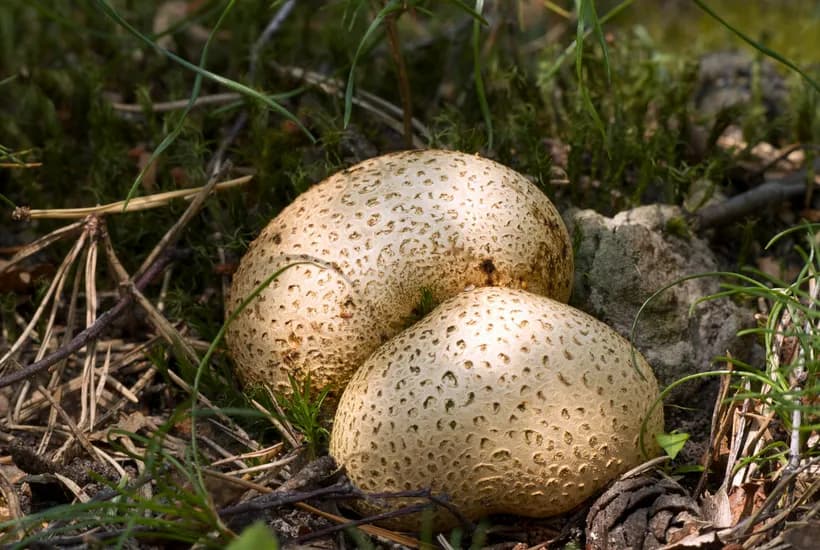
Scleroderma citrinum, commonly known as the earthball mushroom, is a toxic, puffball-like fungus found in woodlands, gardens, and sandy soils across many parts of the world. Unlike true puffballs, it has a thick, tough outer skin and dark, purplish-black spore mass inside. It is not edible and can cause gastrointestinal poisoning if consumed. Proper identification is essential because beginners often confuse it with edible puffballs.
Scientific Classification & Taxonomy
| Kingdom | Fungi |
| Phylum | Basidiomycota |
| Class | Agaricomycetes |
| Order | Boletales |
| Family | Sclerodermataceae |
| Genus | Scleroderma |
| Species | Scleroderma citrinum |
Related to other earthball species and distinct from true puffballs like Lycoperdon. Despite its superficial resemblance to edible puffballs, Scleroderma citrinum belongs to a completely different order (Boletales), highlighting why visual identification alone is unreliable.
Key Features (Identification Essentials)
Outer Appearance (Peridium)
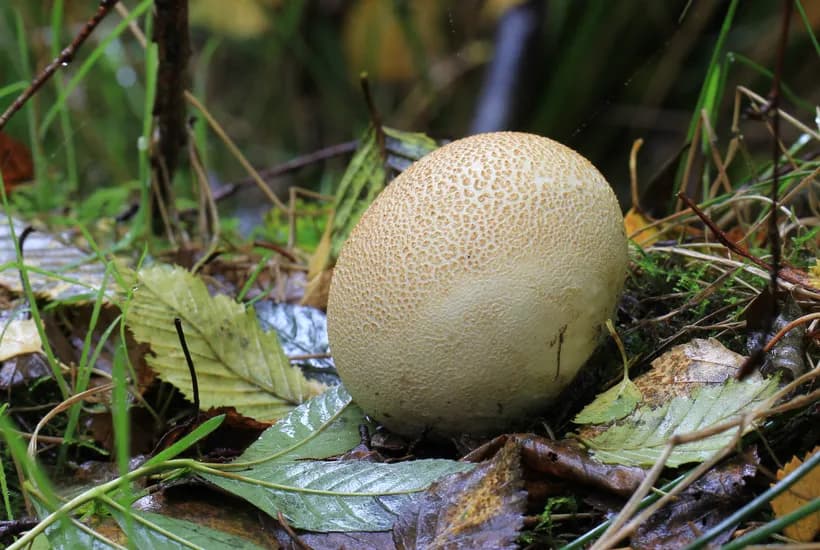
- Color: Yellowish to brown
- Surface: Rough, cracked, wart-like texture
- Shape: Round or irregular (2–10 cm wide)
- Skin: Thick and tough — much thicker than edible puffball skin
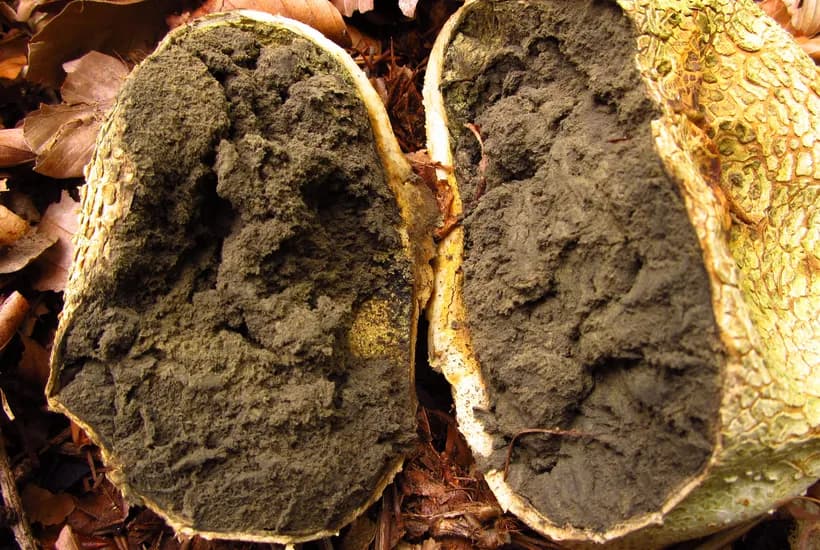
Interior (Gleba) — Critical ID Feature
- Young: White, quickly darkening
- Mature: Dark purple to black with white veins (marbled appearance)
- Not uniform like the pure white interior of edible puffballs
Structure
- Thick, tough outer skin (peridium)
- No visible stem (or very short, rudimentary base)
- Attached to soil by root-like mycelial cords
Smell, Taste & Texture
Smell
- Slightly unpleasant or rubbery
- Earthy, sometimes metallic
Taste
- Not recommended (toxic)
- ⚠️ Never taste wild mushrooms
Texture
- Hard, tough outer skin
- Powdery spore mass inside when mature
- Firm and dense when young
Physical Dimensions & Structure
Environment & Habitat
Habitat
- Woodlands and heathlands
- Sandy soils
- Garden edges and paths
Seasonality
- Summer to late autumn
- Appears after warm rain
Growth Pattern
- Singly or in clusters
- Often near tree roots (ectomycorrhizal)
Geographic Distribution
Toxicity & Health Risks
Toxic Effects
Causes gastrointestinal irritation through toxic compounds in the flesh and spores.
Symptoms of Poisoning
- Nausea and vomiting
- Diarrhea
- Abdominal discomfort and cramping
Onset Time
Usually within a few hours after ingestion.
Risk Level Assessment
| Toxicity | 🟠 Moderate |
| Fatality Risk | 🟢 Low |
| Misidentification Risk | 🔴 High |
| Edibility | ❌ Not edible |
Similar Species (Critical Comparison)
| Feature | Earthball (S. citrinum) | True Puffball (Edible) |
|---|---|---|
| Interior | Dark, marbled | Pure white (young) |
| Skin | Thick, rough | Thin, smooth |
| Toxicity | Toxic ☠️ | Edible ✓ |
| Texture | Firm, tough | Soft, spongy |
| Spore Color | Dark purple-black | Olive-brown |
Common Lookalikes
- Lycoperdon perlatum (Common Puffball) — edible when young and white inside
- Bovista species — edible, thin-skinned, white interior
- Other Scleroderma species — also toxic, similar appearance
Growth Pattern & Life Cycle
Ecological Role
- Ectomycorrhizal fungus
- Forms symbiotic relationships with tree roots
- Helps trees absorb water and nutrients
Life Cycle
- Spore release through cracks in outer skin
- Mycelium connects with tree roots
- Fruiting body develops at soil surface
- Spores disperse through wind and rain
Economic & Ecological Value
Ecological Importance
- Supports forest ecosystems through mycorrhizal networks
- Improves soil health and structure
- Helps trees grow through symbiotic nutrient exchange
Economic Value
- No culinary value (toxic)
- Studied for ecological roles in forestry
- Important in mycology education
Pros and Cons
Pros
- ✓ Important ecological role in forest ecosystems
- ✓ Easy to recognize with practice (thick skin + dark interior)
- ✓ Helps tree nutrient cycles through mycorrhizal networks
Cons
- ✗ Toxic and inedible
- ✗ Easily confused with edible puffballs by beginners
- ✗ Can cause gastrointestinal illness if consumed
How to Identify Scleroderma citrinum Safely
For better accuracy, use a wild mushroom identifier tool or AI-based mushroom identification app to confirm findings. Always verify with the cross-section test.
Expert Identification Tips
- Always slice the mushroom vertically to check interior color
- Never rely on outer appearance alone — thick skin is a clue but not definitive
- Check internal color carefully — any darkness means toxic
- Cross-reference with multiple features before deciding
Frequently Asked Questions
Is earthball mushroom edible?+
How do you tell if it is an earthball or puffball?+
Can Scleroderma citrinum kill you?+
Where does it grow?+
What happens if you eat it?+
Can AI identify earthball mushrooms?+
Final Thoughts
Scleroderma citrinum is a common but often misunderstood mushroom that can easily be mistaken for edible puffballs. Its dark interior, tough skin, and toxic nature make it important to identify correctly.
Combining field knowledge with a reliable mushroom identifier tool ensures safer exploration and helps prevent accidental poisoning.
Learn more about mushroom anatomy and identification features to build your knowledge, or explore our recommended mushroom identification books for in-depth field guides.
 GeneralYard Guide
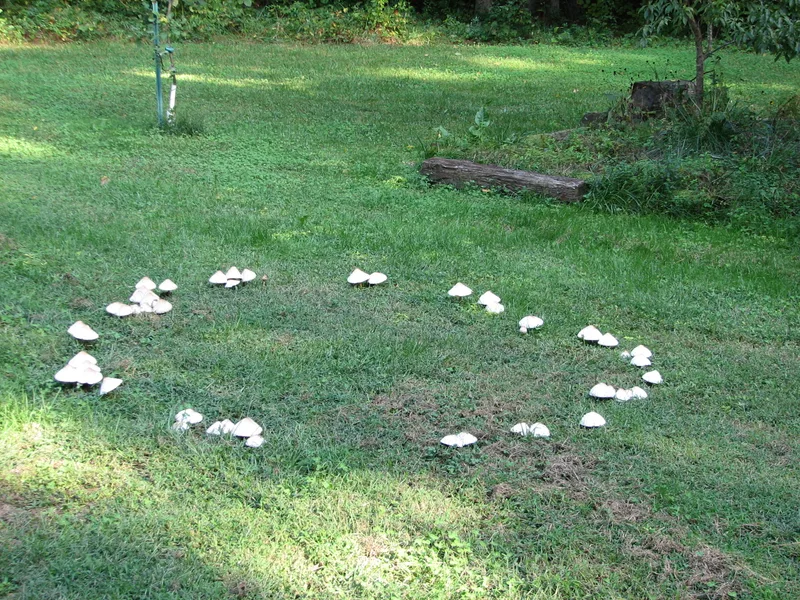
Mushrooms grow in your yard because underground fungi (mycelium) are actively breaking down organic matter in moist, shaded soil.
 GeneralLawn Guide
Remove lawn mushrooms fast by fixing moisture, drainage, and organic matter. Full step-by-step guide to stop mushrooms coming back.
 GeneralGuide
A mushroom identifier book helps you recognize fungi by cap shape, gills, habitat, season and spore print. Find the best field guide for your skill level.
Sign in to leave a comment and join the discussion.