Amanita ocreata: Identification, Features, Habitat & Safety Guide (Toxic Amanita Species)

Nathan Cole
Mycologist · Author · Fungi Expert
Updated
Apr 10, 2026
Amanita ocreata, commonly known as the Western Destroying Angel, is a highly toxic Amanita species found in North America. It contains deadly amatoxins that can cause severe liver and kidney failure, often leading to fatal outcomes if untreated. This mushroom is typically identified by its white cap, white gills, ring on the stem, and a volva at the base, making it similar to other dangerous Amanita species. Accurate identification requires examining all mushroom parts (cap, gills, stem, ring, volva) together or using a mushroom identifier as a supporting tool.
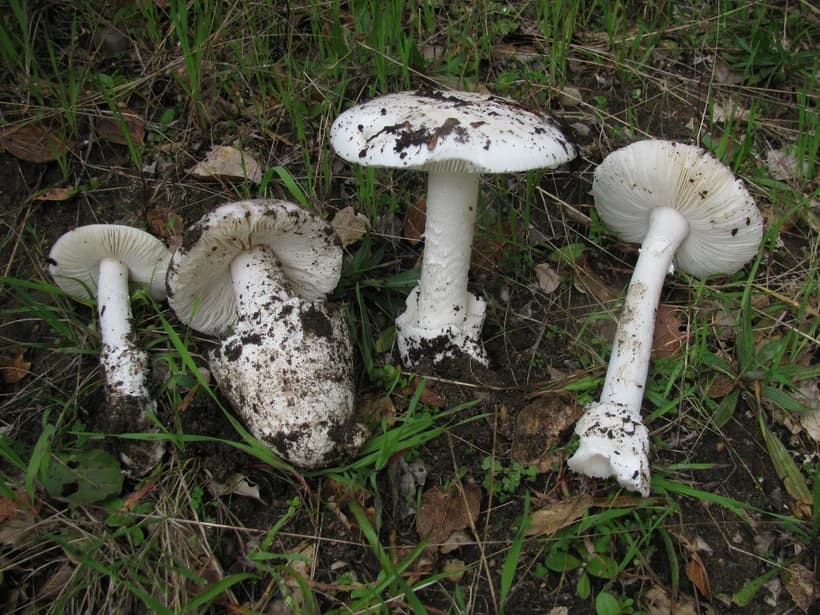
Amanita ocreata Identification Summary
Family and Species
| Kingdom | Fungi |
| Division | Basidiomycota |
| Class | Agaricomycetes |
| Order | Agaricales |
| Family | Amanitaceae |
| Genus | Amanita |
| Species | Amanita ocreata |
This species belongs to the Amanitaceae family, which includes some of the most dangerous fungi in mycology. Members of the Amanita genus are known for their volva, ring, and white gills — key identification features that are also shared by the closely related Amanita bisporigera (Destroying Angel).
Amanita ocreata Dimensions
The mushroom is relatively tall with a slender but sturdy stem and a prominent base.
Amanita ocreata Key Features (Identification Characteristics)
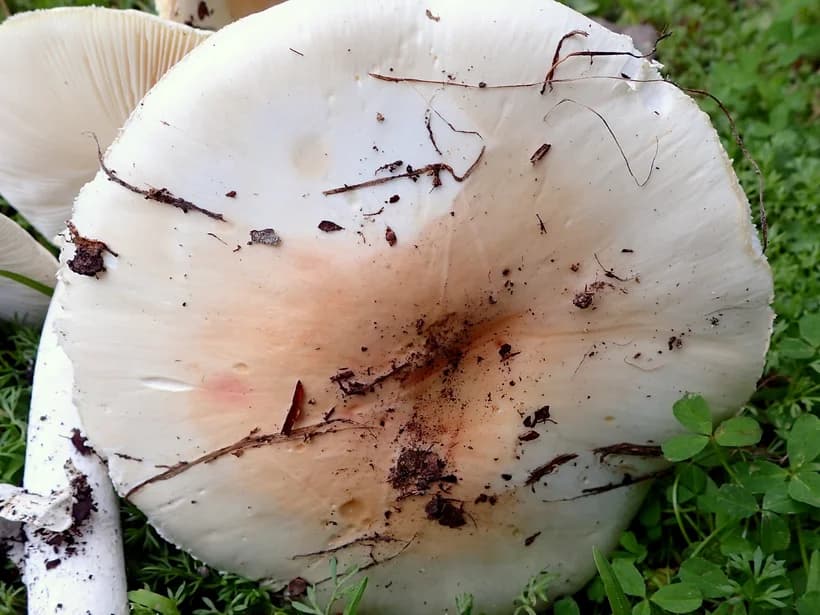
Cap (Pileus)
- Shape: Convex when young, flattening with age
- Color: White to creamy white
- Surface: Smooth, sometimes slightly sticky when wet
Gills (Lamellae)
- Color: Pure white
- Attachment: Free gills (not attached to stem)
- Density: Crowded
Gills remain white throughout maturity — a critical warning sign when combined with other features.
Stem (Stipe)
- White and smooth in color
- Slender with a slightly bulbous base
- Firm structure throughout
Ring (Annulus)
- Present on the upper portion of stem
- Thin and fragile in texture
- May disappear or become torn with age
Volva (Basal Cup)
- Large, cup-like structure surrounding the base
- Often hidden partially underground
- Must be carefully dug up to reveal
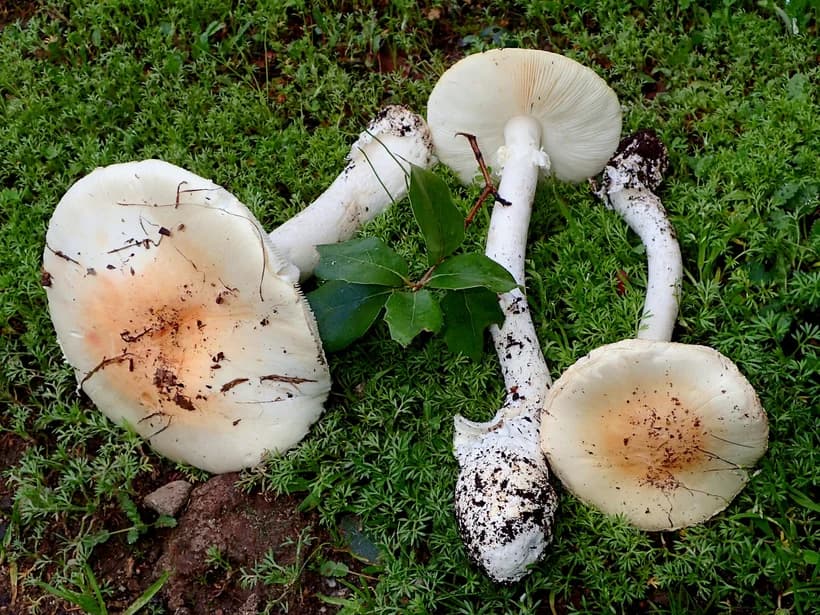
Amanita ocreata Color, Smell, and Taste
Color
- Cap: White to off-white
- Gills: Pure white
- Stem: White
Smell
- Mild when young
- Slightly unpleasant in older specimens
- Not particularly distinctive
Taste
- ⚠️ Never taste — highly toxic
- Not a reliable identification method
Amanita ocreata Growth Pattern and Seasonality
Growth Pattern
- Typically grows single or scattered
- Rarely forms dense clusters
Seasonality
- Winter to early spring (key difference from other Amanitas)
- Often appears after rainfall
Habitat, Environment & Distribution
Habitat
- Woodland and forest areas
- Near tree roots
- Coastal and inland forest zones
Tree Association
- Oak trees (especially in California)
- Other hardwood species
- Forms mycorrhizal relationships
Environment
- Moist soil after rainfall
- Shaded environments
- Well-drained woodland floor
Geographic Distribution
- Western United States (primary range)
- Especially abundant in California
- Rare outside North America
Amanita ocreata forms mycorrhizal relationships with oak trees, meaning it lives in a symbiotic association with tree roots. This makes oak woodlands the most likely habitat to encounter this dangerous species.
Edibility, Safety & Risk Level
Toxicity
Amanita ocreata contains amatoxins, which:
- Destroy liver cells progressively
- Cause kidney failure
- Lead to fatal poisoning even in small amounts
Symptoms (Critical Awareness)
- Delayed onset: 6–24 hours after ingestion
- Initial phase: vomiting and diarrhea
- Temporary false recovery phase (person may seem to improve)
- Severe liver and kidney failure follows
Similar Species (Look-Alikes Comparison)
| Feature | Amanita ocreata | Edible Look-Alike |
|---|---|---|
| Gills | White | Pink → brown (Agaricus) |
| Volva | Present | Absent |
| Ring | Present | May vary |
| Smell | Mild | Pleasant |
| Season | Winter – early spring | Varies |
| Risk | Deadly ☠️ | Safe ✓ |
Common Confusions
- Agaricus species (common field mushrooms)
- Immature white puffballs
- Other white Amanita species
For a detailed comparison between related deadly Amanita species, see our guide on Death Cap vs Destroying Angel.
Economic Value and Uses
Scientific Importance
- Studied extensively in toxicology research
- Helps advance understanding of amatoxin poisoning mechanisms
- Important for medical and forensic mycology studies
Pros and Cons
Pros
- ✓ Scientifically valuable for toxicology research
- ✓ Important role in forest ecosystem balance
- ✓ Advances mycology knowledge and safety education
Cons
- ✗ Highly toxic — potentially fatal even in small amounts
- ✗ Easily misidentified with edible white mushrooms
- ✗ Responsible for severe poisoning cases in western US
How Our Mushroom Identifier Helps Identify Amanita ocreata
Our mushroom identifier by picture uses AI and image recognition to analyze:
By combining these features, the tool helps distinguish Amanita ocreata from edible look-alikes, improving identification accuracy. However, AI results should always be verified by an expert before any consumption decision.
Frequently Asked Questions
What is Amanita ocreata?+
Why is Amanita ocreata dangerous?+
Where does Amanita ocreata grow?+
How can I identify Amanita ocreata?+
Can AI identify Amanita ocreata?+
Final Thoughts
Amanita ocreata (Western Destroying Angel) is one of the most dangerous mushrooms in North America. Its simple white appearance makes it highly deceptive and easy to confuse with edible species. Understanding its cap, gills, stem, ring, volva, habitat, and seasonality is essential for safe identification.
Using a free mushroom identifier app can help analyze these features, but it should always be used alongside expert knowledge and field guides. When it comes to wild mushrooms — if in doubt, do not touch or consume.
 GeneralYard Guide
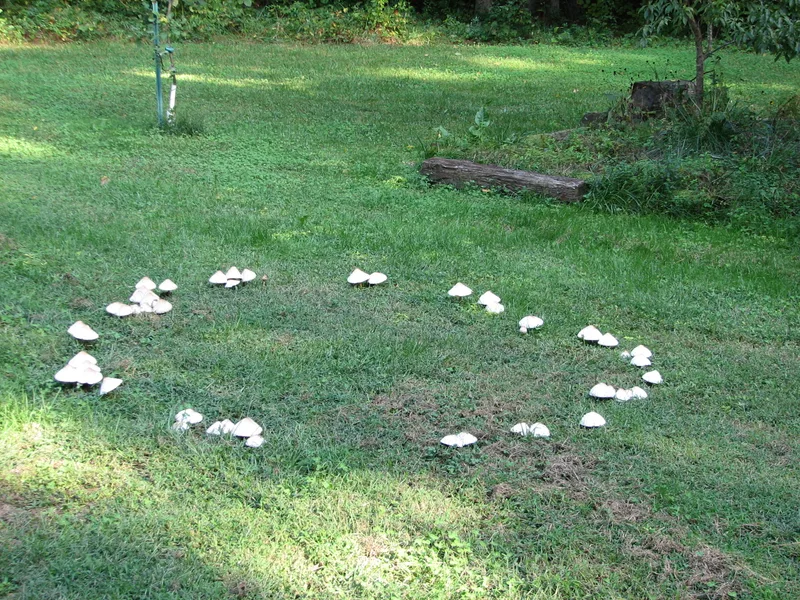
Mushrooms grow in your yard because underground fungi (mycelium) are actively breaking down organic matter in moist, shaded soil.
 GeneralLawn Guide
Remove lawn mushrooms fast by fixing moisture, drainage, and organic matter. Full step-by-step guide to stop mushrooms coming back.
 GeneralGuide
A mushroom identifier book helps you recognize fungi by cap shape, gills, habitat, season and spore print. Find the best field guide for your skill level.
Sign in to leave a comment and join the discussion.