Hericium erinaceus (Lion's Mane Mushroom): Complete Field Guide to Identification, Lookalikes, Habitat & Medicinal Science

Nathan Cole
Mycologist · Author · Fungi Expert
Updated
Apr 22, 2026
Hericium erinaceus (Lion's Mane Mushroom): Complete Field Guide to Identification, Lookalikes, Habitat & Medicinal Science
Hericium erinaceus — lion's mane, bearded tooth, monkey head mushroom — is one of the most distinctive edible and medicinally significant fungi in the Northern Hemisphere. You can identify it in the field by its single, unbranched mass of long white pendulous spines growing directly from hardwood wounds — no gills, no cap, no stipe. It's a choice edible and the subject of serious peer-reviewed research into nerve growth factor (NGF) stimulation via its bioactive hericenones and erinacines. This guide covers field identification, congener lookalikes, host tree associations, and the actual science — clearly, without the hype.
1. Taxonomy & Classification
1.1 Accepted Binomial, Basionym & Nomenclature History
The species we call Hericium erinaceus was first formally described by French mycologist Pierre Bulliard in 1781 under the name Hydnum erinaceus Bull., placing it among the tooth fungi. Christiaan Hendrik Persoon transferred it to the genus Hericium in 1794, giving us the accepted binomial Hericium erinaceus (Bull.) Pers. — the name recognized by both MycoBank and Index Fungorum today.
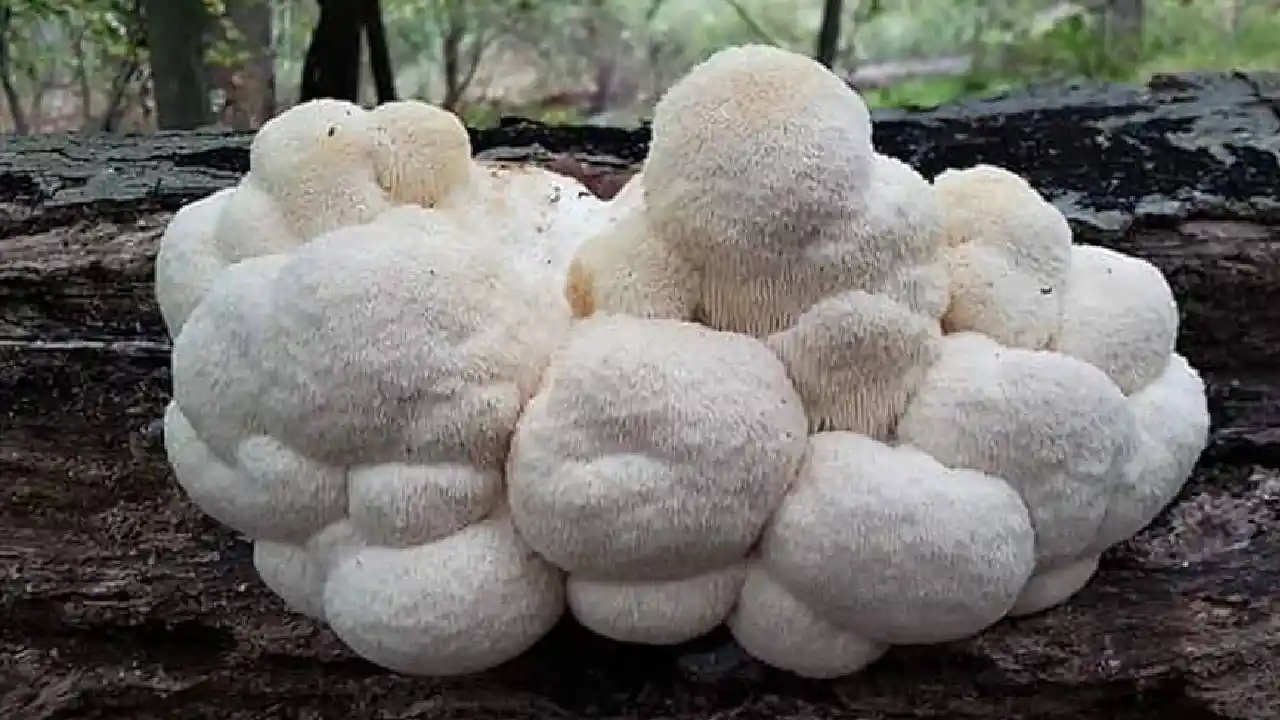
The epithet erinaceus is Latin for hedgehog. Hold a fresh specimen and the name makes immediate sense.
You'll find synonyms floating through older literature — Hydnum erinaceum, Dryodon erinaceus — but these are obsolete. In any scientific, clinical, or culinary context, use Hericium erinaceus (Bull.) Pers., full stop.
1.2 Position in the Fungal Tree of Life
| Rank | Name |
|---|---|
| Kingdom | Fungi |
| Phylum | Basidiomycota |
| Class | Agaricomycetes |
| Order | Russulales |
| Family | Hericiaceae |
| Genus | Hericium |
| Species | H. erinaceus |
Placement in Russulales surprises students every time — they expect bracket-like tooth fungi to sit closer to the polypores. But molecular phylogenetics has consistently confirmed the Russulales position, putting Hericium in the same order as Russula and Lactarius. Morphology doesn't always predict relatedness in fungi. This is a clean example of exactly that.
The family Hericiaceae is small and coherent: all members bear spores on spines or teeth rather than gills or pores, and all are saprotrophic or weakly parasitic on hardwood.
1.3 Common Names Across Cultures
Lion's mane dominates in North America — it's on every cultivated product label and most field guides. In the UK, bearded tooth is the standard vernacular name, reflecting the British tradition of descriptive common naming.
In China, where this fungus has been cultivated and eaten since at least the Song Dynasty, it's 猴头菇 — hóu tóu gū, literally "monkey head mushroom." It's a prized culinary and traditional medicine ingredient across East Asia.
Other regional names worth knowing:
- Pom pom mushroom — American cultivation and farmers' market contexts
- Yamabushitake (山伏茸) — Japanese; "mountain priest mushroom," referencing the robes of Yamabushi Buddhist monks
- Igelstachelbart — German; "hedgehog beard"
For scientific and clinical communication, always use the Latin binomial. Common names shift by region and create real confusion — particularly significant for a species with this much pharmacological interest.
2. Field Identification
Hericium erinaceus is among the more forgiving large fungi to identify in the field. That said, "more forgiving" and "foolproof" are not the same thing. Here's what you're actually examining.
2.1 Morphology: Spines, Flesh, Color & Size
The fruiting body is everything. Unlike anything with gills or pores, H. erinaceus produces all its spores on long, pendulous spines — teeth — hanging downward from a single, undivided, cauliflower-like mass. This is the structural character that separates it from every common edible in its range.
What you're looking at in the field:
- Overall form: A compact, globe-shaped mass. No branching whatsoever. This single character separates it from H. coralloides and H. americanum, both of which branch extensively — more on that in Section 3.
- Spines (teeth): White to cream when young, elongating to 1–5 cm at maturity. They hang in parallel, like a cascade of teeth. These spines are the hymenophore — the spore-bearing surface.
- Color progression: Brilliant white in prime young specimens. With age, rain, or warm temperatures, it shifts to pale yellow, then buff, then dull brownish cream. Old yellowed specimens aren't worth eating and have likely begun breaking down their own tissue.
- Stipe: Rudimentary or effectively absent. The fruiting body attaches directly to substrate at a narrow basal point, often tucked into a wound cavity.
- Flesh (context): White, firm, fleshy in young specimens — noticeably juicy when cut. High moisture content. That matters for the kitchen.
- Size: Typically 5–25 cm across. I've pulled specimens from American beech wounds in the Appalachians that pushed 40 cm — the size of a child's head, with a weight to match.
| Feature | H. erinaceus |
|---|---|
| Form | Single, unbranched mass |
| Spines | Long, pendulous, white to cream |
| Pileus (cap) | Absent |
| Gills | Absent |
| Pores | Absent |
| Stipe | Rudimentary or absent |
| Flesh | White, firm, fleshy |
| Aging color | Yellowing to buff-brown |
2.2 Spore Print & Microscopic Features
Getting a spore print isn't as simple as with a gilled species, but it's achievable. Place a fresh spine cluster face-down on dark paper overnight. Result: white spore print.
Under the microscope:
- Shape: Broadly ellipsoid to subglobose
- Size: 5–7 × 4–5 µm
- Surface: Finely warted (minutely echinulate)
- Melzer's reaction: Amyloid — the spores turn blue-black. This is the single most important microscopic character, taxonomically consistent across the entire genus Hericium, and confirms placement in Russulales.
Basidia are clavate (club-shaped), typically 4-spored, measuring around 25–35 × 5–7 µm. Cystidia are present but not dramatically ornamented.
For any voucher submission or herbarium deposit, microscopic examination with Melzer's confirmation is the standard. MushroomExpert.com carries excellent photomicrographs for comparison — use them to support your own examination, never as a replacement for it.
2.3 Chemical Reagent Reactions
Hericium erinaceus doesn't require the battery of spot tests you'd run on an Amanita or a Russula — the morphology is usually definitive. But a working mycologist knows the reagent reactions.
- Melzer's reagent: Spores amyloid (blue-black reaction). Most diagnostically useful chemical character for the genus.
- KOH (potassium hydroxide): Applied to fresh flesh produces a pale yellow reaction. Consistent but not dramatic.
- Iron salts (FeSO₄): No significant reaction on flesh.
- Sulfovanillin: Not diagnostically useful for Hericium.
These reactions earn their value when you're working with deteriorated or fragmentary specimens — a piece of fallen fruiting body you can't examine intact, or a dried herbarium collection.
2.4 Odor, Taste & Tactile Cues in the Field
Smell it. Fresh H. erinaceus has a mild, pleasant odor — slightly sweet, occasionally carrying a faint marine quality that many foragers describe as crab-like or seafood-adjacent. This is exactly what makes it so appealing in the kitchen.
Taste a small piece of fresh flesh: mild, slightly sweet, no bitterness, no heat, no astringency. Clean.
Texture: the spines are firm and slightly resilient when fresh, with real density behind them — high moisture content throughout. Once a specimen begins yellowing significantly, the texture softens and the odor turns unpleasant. That's your signal to leave it where it is.
3. Dangerous Lookalikes & Congeners
I want to be direct here: Hericium erinaceus has no deadly lookalikes. That's the good news, and it's genuinely good news. But the genus Hericium contains closely related species — congeners — that are routinely misidentified as lion's mane, and this matters for two distinct reasons.
First, all the Hericium congeners are edible, so the immediate safety stakes are lower than misidentifying, say, an Amanita. Second — and this is the point most foragers miss — different Hericium species carry different bioactive compound profiles. If you're harvesting specifically for the neurological compounds that have clinical research behind them, species identity is not academic. It's essential.
For any wild-harvested specimen you're considering consuming, consult a certified mycologist before eating it. For suspected poisoning or adverse reaction, call Poison Control immediately: 1-800-222-1222.
3.1 Hericium coralloides — Coral Tooth
Hericium coralloides (Scop.) Pers. is the species most commonly confused with lion's mane, and at a distance the confusion is understandable. Both are large, white tooth fungi on hardwood. Up close, the difference is not subtle.
Where H. erinaceus presents as a single, unbranched mass, H. coralloides is a branching, coral-like structure — multiple arms radiating from a central base, each arm terminating in tight clusters of short, fine spines. The overall impression is white staghorn coral, or a reef miniaturized on a log.
| Character | H. erinaceus | H. coralloides |
|---|---|---|
| Branching | None — single mass | Extensively branched |
| Spine arrangement | Long spines, single surface | Short spines in clusters at branch tips |
| Spine length | 1–5 cm | Typically < 1 cm |
| Substrate | Wounds in standing hardwood | Dead hardwood, fallen logs |
| Common name | Lion's Mane, Bearded Tooth | Coral Tooth |
| European status | Uncommon | Rare — protected in Netherlands, other EU states |
H. coralloides is edible and worth eating. But it is not the species behind the hericenone and erinacine research. Getting them confused matters if you're making medicinal claims about what you've harvested.
3.2 Hericium americanum — Bear's Head Tooth
Hericium americanum Ginns was formally described as a distinct North American species in 1984, separated from the European H. coralloides on morphological and distributional grounds. Michael Kuo's account on MushroomExpert.com is the clearest treatment I know for a North American forager.
Like H. coralloides, H. americanum branches — but its spines are typically longer than those of coralloides, and the fruiting body often hangs from a more defined central attachment point, giving it a cascading, waterfall-like appearance rather than the lateral coral architecture of its European counterpart.
In the eastern deciduous forests — the Appalachians, Great Lakes region, New England — you'll encounter all three North American species: H. erinaceus, H. coralloides, and H. americanum. When I'm teaching field identification workshops in the Southeast, this is where most participants get tripped up. The rule to memorize: if it branches, it isn't lion's mane.
3.3 Hericium abietis — Western Coral Hedgehog
Hericium abietis (Weir ex Hubert) K.A. Harrison is the Pacific Northwest species, and the one that breaks the hardwood substrate rule everyone else follows.
H. abietis grows on conifers — primarily grand fir (Abies grandis), Douglas-fir (Pseudotsuga menziesii), and other Pacific Northwest softwoods. When I'm working the forests of Washington and Oregon, this is the Hericium I encounter. If you find a large white tooth fungus in the Pacific Northwest on a conifer, you've found H. abietis — not H. erinaceus.
Morphologically it's a branching species, closer in form to H. coralloides than to lion's mane. Edible and genuinely delicious in the field. Different species, different chemistry, different substrate ecology.
3.4 Side-by-Side Differentiation Key
| Character | H. erinaceus | H. americanum | H. coralloides | H. abietis |
|---|---|---|---|---|
| Branching | None | Branched | Branched | Branched |
| Spine length | Long (1–5 cm) | Medium-long | Short (< 1 cm) | Medium |
| Substrate | Hardwood wounds | Hardwood logs | Hardwood logs | Conifers |
| Primary range | E. North America, Europe, Asia | E. North America | Europe, N. America | Pacific Northwest |
| Amyloid spores | Yes | Yes | Yes | Yes |
| Edibility | Choice | Edible | Edible | Edible |
Note that all four species share the amyloid spore reaction — that's a genus-level character, not a differentiator. The key separation is branching pattern and substrate. Get those two right and you've solved 95% of field identifications.
4. Habitat, Host Trees & Fruiting Season
Where and when Hericium erinaceus fruits is half the work of finding it. This is a species with strong preferences — it's not a generalist.
4.1 Primary Hardwood Hosts
Hericium erinaceus is a wound associate — it establishes in stressed, injured, or dying hardwood trees, then continues fruiting from dead wood for several seasons after the tree dies. I've returned to the same American beech (Fagus grandifolia) wound cavity in the Appalachians four autumns running, finding fresh fruiting bodies each time from the same crevice.
Primary host trees in North America:
- Quercus spp. (oaks) — the most consistent host across the eastern deciduous range; both white oak and red oak support the species reliably
- Fagus grandifolia (American beech) — particularly productive in the Appalachians and New England; the ongoing beech decline from beech leaf disease has, unfortunately, increased fruiting opportunities
- Acer spp. (maples) — sugar maple and red maple; common in Great Lakes and New England
- Juglans spp. (walnuts) — black walnut particularly; I've found excellent specimens on walnut in Kentucky and Tennessee
- Betula spp. (birches) — yellow and paper birch; northern range, Adirondacks through Maine
- Prunus spp. (cherries) — black cherry is a notable host in mixed Appalachian forest
- Platanus spp. (sycamores) — riparian zones; less common but reliable where present
What you won't find it on: conifers. East of the Rockies, H. erinaceus is essentially confined to hardwood. A large white tooth fungus on Pacific Northwest fir is H. abietis. Know your region.
4.2 White Rot Biology & Wound Association
Hericium erinaceus is a white rot fungus — it breaks down both lignin and cellulose, leaving behind pale, spongy, fibrous residue as it works through the wood. This contrasts with brown rot fungi, which degrade cellulose while leaving lignin intact, producing the characteristic brown cubical fractures you see in species like Phaeolus schweinitzii on conifers.
The wound association is non-negotiable in the field. Look for:
- Branch scars — where limbs have snapped off and the wound hasn't occluded
- Storm damage — trunk splits, torn bark, exposed sapwood from wind or ice
- Basal rot pockets — wounds at or near ground level, sometimes partially buried
- Dying crowns — as the tree's vascular system fails, the mycelium fruits from weakened tissue in the upper trunk
This pattern means H. erinaceus is rarely on fallen logs on the forest floor — that's more H. coralloides territory. Look up. Look at wounds on standing trees, both living and recently dead.
4.3 Geographic Range
Eastern North America is the primary range — from the Great Lakes south through Appalachia, across the Southeast and Midwest. Present but less common in New England and Maritime Canada. In the Pacific Northwest, the genus is represented by H. abietis on conifers; genuine H. erinaceus is rare there.
Europe: Present across temperate Europe — the UK, France, Germany, Scandinavia, and east through Russia. In Western Europe, the loss of old-growth deciduous forest has made H. erinaceus genuinely rare. It holds IUCN-recognized vulnerable status in multiple EU member states and appears on national red lists in Germany, the Netherlands, and several Scandinavian countries. This is not a species to harvest casually in Europe. The photograph of H. coralloides above is from the Netherlands — where both species are legally protected.
Asia: Native across Japan, Korea, and China, with a cultivation history in China stretching back well over a thousand years. Fujian Province is now the world's dominant producer of cultivated lion's mane.
4.4 Seasonal Window & Fruiting Triggers
In the eastern United States, H. erinaceus is a late summer through late autumn fungus:
- Earliest reliable finds: Late August, following the first sustained breaks in summer heat
- Peak season: September through November — the best specimens come in October
- Latest finds: December, in mild years, particularly in the mid-Atlantic and Southeast
The primary fruiting trigger is dropping nighttime temperatures — the same cool nights that ignite the maples across the Northeast. Once nights consistently hold in the low 50s Fahrenheit (10–12°C), start walking your hardwood wounds.
Rain matters, but temperature leads. A wet September with warm nights will produce fewer lion's mane specimens than a drier October with cold nights. I've found my best and most consistent populations between 1,000–3,000 feet elevation in the Appalachians, where the day-to-night temperature differential is most pronounced through early October. That thermal stress is what triggers fruiting.
5. Bioactive Compounds
Here is where Hericium erinaceus becomes genuinely remarkable — and where a substantial amount of popular writing goes off the rails. The pharmacological profile of this species is real, peer-reviewed, and specific. It's also frequently overstated, misattributed between fruiting body and mycelium, and misrepresented in the supplement market. Let me give you the actual picture.
5.1 Hericenones (Fruiting Body) — Structure & Function
Hericenones A through H are aromatic compounds isolated specifically from the fruiting body of Hericium erinaceus. They were first characterized by Kawagishi and colleagues in a series of papers through the 1990s that remain foundational in fungal chemistry.
Structurally, hericenones are phenol-derived compounds with a characteristic aromatic benzene ring. Their pharmacological significance centers on their capacity to stimulate synthesis of Nerve Growth Factor (NGF) — a protein essential to the growth, maintenance, and survival of neurons in both the peripheral and central nervous system.
A critical distinction that popular media almost universally misses: hericenones come from the fruiting body, not the mycelium. This has direct implications for supplement evaluation. Most commercially available lion's mane products are mycelium-based. They may contain erinacines (see 5.2 below), but not hericenones — or they contain an incompletely characterized mixture with no disclosed ratios.
Hericenones are numbered sequentially by isolation order, not pharmacological potency. Hericenone C and hericenone D have received the most research attention for in vitro NGF stimulation.
5.2 Erinacines (Mycelium) — Blood-Brain Barrier Penetration
Erinacines A through I — with additional variants still being characterized — are cyathane-type diterpenoids isolated from the mycelium of Hericium erinaceus. Also first isolated by Kawagishi's group in the 1990s, these compounds have become the focus of serious neurological research for a specific reason: they cross the blood-brain barrier.
The blood-brain barrier excludes most large molecules from the central nervous system. The fact that erinacines — particularly erinacine A — cross this barrier in animal models is what elevates them beyond in vitro cell culture findings. CNS penetration in live animal studies is a fundamentally different claim from "stimulates NGF in a petri dish."
Erinacine A research summary:
- Stimulates NGF synthesis in the hippocampus in rodent models
- Demonstrated blood-brain barrier penetration in murine studies
- Neuroprotective effects shown in Alzheimer's disease animal models (Zhang et al.; Ryu et al.)
The supplement quality problem: Mycelium products theoretically contain erinacines — but only if grown on hardwood substrate and properly extracted. Grain-grown mycelium produces primarily starch. Multiple independent market analyses have found commercial "lion's mane" products with no detectable erinacine content. This is a quality-control failure in the supplement industry, not a problem with the compounds themselves. Know what you're buying.
5.3 Beta-Glucans & Immunomodulatory Polysaccharides
Beyond the neurotropic compounds, H. erinaceus produces a suite of beta-1,3/1,6-glucans — the same polysaccharide class responsible for immunomodulatory effects documented across Ganoderma lucidum (reishi), Lentinula edodes (shiitake), and Grifola frondosa (maitake).
Beta-glucans are classified as biological response modifiers. They interact with pattern-recognition receptors on macrophages, natural killer cells, and dendritic cells, upregulating innate immune function without triggering inflammatory cascades in healthy tissue.
Specific to H. erinaceus:
- Amyloban — a characterized polysaccharide fraction with documented in vitro neuroprotection and neuronal differentiation activity
- HEP-A / HEP-B fractions — hot-water-extracted polysaccharides with immunostimulatory activity in cell culture
The polysaccharide research is methodologically more mature than much of the hericenone and erinacine literature, largely because this compound class is better understood across multiple medicinal mushroom species. NAMA considers the immunomodulatory polysaccharide evidence the best-supported pillar of medicinal mushroom pharmacology overall.
5.4 Ergosterol, Phenolics & Secondary Metabolites
Like all Basidiomycota, H. erinaceus contains ergosterol — the fungal membrane sterol and precursor to vitamin D₂ (ergocalciferol) upon UV exposure. Standard across edible fungi, not specific to lion's mane, but a meaningful contributor to its nutritional profile as a food.
Phenolic compounds — gallic acid derivatives and related antioxidant phenolics characterized in work by Wong and colleagues — contribute to the species' antioxidant activity in DPPH and ABTS assays. The clinical significance of mushroom-derived antioxidants consumed as whole food remains incompletely understood and should not be overstated.
Hericerin, a cytotoxic compound isolated from the fruiting body, has been investigated for anti-cancer activity in cell lines. As with most natural cytotoxic compounds, in vitro cytotoxicity does not equal clinical anti-cancer efficacy. The hericerin research is early-stage. Do not cite it as evidence that lion's mane treats cancer.
| Compound Class | Source | Primary Studied Activity |
|---|---|---|
| Hericenones A–H | Fruiting body | NGF synthesis stimulation (in vitro) |
| Erinacines A–I | Mycelium | NGF synthesis; blood-brain barrier penetration |
| Beta-glucans (Amyloban) | Both | Immunomodulation; neuroprotection |
| Ergosterol | Both | Vitamin D₂ precursor |
| Phenolics (gallic acid) | Both | Antioxidant activity |
| Hericerin | Fruiting body | Cytotoxicity (in vitro only; early-stage) |
Sections 6 through 10 continue in Part 2.
6. Medicinal Research & Clinical Evidence
This is the section where I need to be most rigorous — and most honest. Hericium erinaceus has genuine, peer-reviewed clinical research behind it. It also has a supplement market built on extrapolations, misattributed findings, and marketing language that consistently outruns the science. I've sat through enough pharmacology conferences and reviewed enough papers to separate the signal from the noise. Here's the signal.
6.1 NGF & BDNF Stimulation — What the Science Actually Shows
As covered in Section 5, the hericenones from the fruiting body and erinacines from the mycelium stimulate synthesis of Nerve Growth Factor (NGF) — a neurotrophin essential to neuron survival, maintenance, and differentiation in both the peripheral and central nervous system. The early mechanistic work establishing this was conducted by Kawagishi and colleagues through the 1990s, and Mori et al. subsequently demonstrated NGF mRNA upregulation in cell culture (Mori K. et al., Mycoscience, 2008).
Brain-Derived Neurotrophic Factor (BDNF) has also appeared in the H. erinaceus literature — animal studies suggest some erinacine fractions may influence BDNF signaling pathways alongside NGF. But the BDNF data is considerably thinner than the NGF research, and most peer-reviewed reviews (Lai P.L. et al., J. Agricultural and Food Chemistry, 2013) are careful to note that NGF remains the primary mechanistic focus.
What the science shows, precisely stated:
- In vitro: hericenones and erinacines stimulate NGF synthesis in cell culture. Consistent across multiple labs.
- In animal models: erinacine A crosses the blood-brain barrier and stimulates NGF in the hippocampus. Replicated.
- In humans: two small randomized controlled trials. These need examining carefully.
6.2 Mild Cognitive Impairment: Mori et al. 2009 RCT
The most-cited clinical study on H. erinaceus and cognitive function is Mori K. et al., published in Phytotherapy Research in 2009. This is a real randomized, double-blind, placebo-controlled trial — the standard against which supplement claims should be measured. Here's what it actually found.
Study design:
- 30 Japanese men and women, aged 50–80, diagnosed with mild cognitive impairment (MCI)
- Double-blind, placebo-controlled, parallel-group
- Treatment: 250 mg tablets of Yamabushitake (96% dry powder), three times daily — 750 mg/day total
- Duration: 16 weeks
- Primary outcome: Revised Hasegawa Dementia Scale scores
Results:
- Cognitive function scores were significantly higher in the treatment group at weeks 8, 12, and 16 compared to placebo
- No adverse effects reported
- Critical finding: four weeks after stopping supplementation, scores returned toward baseline
That last point is the one the supplement industry almost never mentions. The benefit appears to be contingent on continued consumption. There's no evidence of structural neural repair or permanent cognitive improvement from this trial. It suggests a modulatory effect, not a regenerative one — which is a meaningful distinction if you're making purchasing decisions.
The study is also small. Thirty participants across two groups is a preliminary signal, not a definitive clinical endpoint. It warrants further research — and has received it — but no single study of this size should anchor health claims.
6.3 Depression & Anxiety: Nagano et al. 2010 RCT
Nagano M. et al. published a separate randomized controlled trial in Biomedical Research in 2010, investigating H. erinaceus effects on menopausal symptoms, depression, and anxiety in women.
Study design:
- 30 women, mean age approximately 41 years
- Double-blind, placebo-controlled
- Intervention: cookies containing 500 mg of Hericium erinaceus powder, consumed over 4 weeks
- Outcome measures: self-reported depression, anxiety, concentration difficulties, and sleep quality
Results:
- Significant reductions in self-reported depression and anxiety scores vs. placebo
- Improvements in concentration and reduced irritability
- No adverse effects
Limitations that must be stated: Thirty participants. Four weeks. Self-reported outcomes via questionnaire — not clinically evaluated depression or anxiety disorders. The cookie delivery format makes dose standardization imprecise. These results are interesting and hypothesis-generating. They don't establish H. erinaceus as an evidence-based treatment for clinical depression or generalized anxiety disorder.
What they do suggest is worth taking seriously: something in the fruiting body preparation appears to have measurable effects on mood-related self-reporting in a healthy adult population. The mechanism is likely neurotrophin-related — NGF and BDNF influence limbic system function — but this is extrapolation, not proven mechanism.
6.4 Neuroprotection, Peripheral Neuropathy & Alzheimer's Research
Beyond the two RCTs above, the bulk of H. erinaceus neurological research is animal-model and in vitro work. That doesn't make it uninteresting — it makes it preliminary.
Alzheimer's disease models:
- Several rodent studies have shown erinacine A reduces amyloid-beta plaque deposition and tau phosphorylation in Alzheimer's mouse models (Ryu et al.; Zhang et al.)
- Reduced oxidative stress and neuroinflammatory markers in hippocampal tissue
- These results justify human trials. They do not justify telling patients to use lion's mane supplements instead of prescribed medications.
Peripheral neuropathy:
- Animal work by Mori and colleagues demonstrated accelerated nerve regeneration following crush injury in rodents treated with H. erinaceus aqueous extract
- The proposed mechanism is NGF-mediated axonal sprouting and myelination support
- No human RCT data for peripheral neuropathy at time of writing
Parkinson's disease:
- Early-stage animal work showing neuroprotective effects on dopaminergic neurons
- Far too preliminary for clinical application claims
The consistent message from the Lai et al. 2013 review in J. Agricultural and Food Chemistry — the most comprehensive synthesis of available evidence — is that the neurotrophin research pathway is genuinely promising but requires larger, longer, better-controlled human trials before clinical recommendations can be responsibly made.
6.5 Gastric Mucosal Protection Studies
Less discussed than the neurological research but arguably more methodologically mature: the evidence for H. erinaceus in gastric health is solid at the animal level and has some human correlates.
Zhang et al. published work demonstrating that polysaccharide fractions from H. erinaceus protect gastric mucosal tissue against ethanol-induced ulceration in rodent models — proposing mechanisms involving antioxidant activity and upregulation of mucosal defense factors.
Separately, traditional Chinese medicine has used hóu tóu gū preparations for stomach ailments for centuries, including conditions we'd now describe as gastritis and peptic ulcer disease. That's not clinical evidence — but it's not nothing, either, when the pharmacological work is finding plausible mechanisms.
The beta-glucan fractions appear to be the primary active agents in gastric protection, rather than the neurotropic hericenones or erinacines. This is relevant for product formulation: a hot-water polysaccharide extract may be better positioned for gut health applications than a high-temperature alcohol extract optimized for erinacine yield.
6.6 What Remains Unproven — Separating Hype from Peer-Reviewed Data
I'm going to be blunt here, because patients and consumers deserve clarity.
Not supported by current evidence:
- H. erinaceus as a treatment or cure for Alzheimer's disease
- H. erinaceus as a treatment for clinical depression or anxiety disorders
- H. erinaceus as a cancer treatment (hericerin in vitro cytotoxicity ≠ clinical oncology)
- Permanent cognitive enhancement from supplementation
- Any specific dosing protocol with established clinical backing
Supported by current evidence:
- NGF stimulation in vitro and in animal models — consistent, replicated
- Erinacine A crosses the blood-brain barrier in animal models — replicated
- Short-term improvement in MCI cognitive scores in one small RCT (Mori et al. 2009)
- Mood improvements in one small RCT in healthy women (Nagano et al. 2010)
- Gastric mucosal protection in animal models — consistent
- Immunomodulatory beta-glucan activity — well-supported across medicinal fungi literature
The gap between what the science supports and what supplement marketing claims is wide. Consult a physician before using H. erinaceus preparations for any medical condition. If you're evaluating products, look for third-party tested, hardwood-substrate-grown mycelium extracts with verified erinacine content, or hot-water extracted fruiting body preparations for polysaccharide content.
7. Edibility, Preparation & Safety
7.1 Edibility Status & Known Toxicity Record
Hericium erinaceus is a choice edible — that's the highest category in the forager's lexicon, reserved for fungi that are not merely safe but genuinely excellent eating. There are no documented cases of toxicity from correctly identified, properly prepared H. erinaceus in the peer-reviewed literature or in NAMA's poisoning case records.
A small number of reported adverse reactions exist in the literature — primarily isolated cases of allergic dermatitis and one case series from Japan involving respiratory symptoms in individuals with underlying conditions. These are rare and appear to involve hypersensitivity reactions rather than intrinsic toxicity. If you have known mold allergies or hypersensitivity to fungi, approach any edible mushroom cautiously and in small amounts on first consumption.
The safety record for cultivated H. erinaceus — grown on sterilized hardwood sawdust blocks and sold through farms and farmers' markets — is effectively unblemished. This is one species where the cultivated product is identical in culinary and pharmacological quality to a well-timed wild harvest, which is not always true in mycology.
The critical safety caveat: This record applies to correctly identified Hericium erinaceus. It does not apply to anything you've misidentified. The congener species covered in Section 3 are all edible, so misidentification within the genus isn't catastrophic. But a forager who thinks "white tooth fungus = safe to eat" and applies that logic outside the genus is operating without a margin. Every identification must be confirmed before consumption. If you have any doubt, contact a NAMA-affiliated mycologist in your region or submit to iNaturalist for community review — understanding that neither constitutes a formal identification.
7.2 Field-to-Kitchen: Cleaning, Cooking & Moisture Management
Fresh H. erinaceus holds an extraordinary amount of water — more per gram than almost any other commonly foraged edible. This is the single most important thing to understand about cooking it, and it's where most first-timers go wrong.
Cleaning:
Don't soak it. Don't run it under heavy water. The spines trap debris and moisture, and once waterlogged, it becomes nearly impossible to sauté properly.
- Trim the basal attachment point, removing any discolored or woody tissue
- Use a soft brush or dry cloth to remove debris from between the spines
- If washing is necessary, do it quickly under a light stream and pat thoroughly dry
- Use immediately — H. erinaceus does not store well once wet
Cooking — the moisture problem:
The single technique that elevates lion's mane cooking is understanding its moisture release. When you put fresh lion's mane in a pan, it will shed water. A lot of water. If your pan isn't hot enough, you'll steam the mushroom rather than sear it — and you'll end up with a gray, soft, slightly rubbery result instead of the golden-edged, meaty texture this species is capable of delivering.
The method that works:
- Slice or tear into pieces roughly 1–2 cm thick — cross-sections through the spine mass
- Dry pan first: Heat a cast iron or stainless steel pan over medium-high to high heat until very hot
- Add butter or neutral oil — butter for flavor, a high-smoke-point oil for higher heat
- Place pieces in the pan without overcrowding — work in batches
- Don't move them. Let the water cook off and the surface begin to brown, 3–5 minutes per side
- Season at the end — salt draws out moisture and interferes with browning if added too early
The resulting texture is genuinely remarkable: firm at the center, golden and slightly crisp at the edges, with a savory depth that justifies every comparison to shellfish.
Drying:
Acceptable as a preservation method but degrades texture significantly. Dried lion's mane is best rehydrated and used in soups or broths rather than sautéed applications — the spine structure softens to mush after rehydration and doesn't recover its fresh texture. For medicinal preparations (teas, tinctures, capsules), drying is appropriate and widely practiced.
7.3 Flavor Profile & Culinary Applications
The flavor of fresh, well-cooked H. erinaceus consistently surprises people who expect mushroom. It's umami-forward without being earthy — sweet, subtle, with that marine undertone that makes crab and lobster comparisons inevitable. The texture, when cooked correctly, reinforces this: firm, slightly springy, with a satisfying resistance that most mushrooms don't offer.
Classic applications:
- Sautéed as a standalone: The baseline preparation. Butter, heat, patience. Nothing else required except salt and maybe a little thyme.
- As a seafood substitute: Slices sautéed in butter with garlic and lemon work convincingly in crab cake preparations, seafood pastas, and fish tacos. The marine flavor note is genuine, not forced.
- In Chinese preparations: Hóu tóu gū has centuries of use in Chinese cuisine — braised with soy and ginger, in hot pot, or as a centerpiece in Buddhist vegetarian cooking where its meat-like texture serves an obvious purpose.
- In soups and broths: Works well, though the textural interest is lost. Best for medicinal preparations or background flavor.
Lion's mane pairs well with:
- Brown butter and fresh herbs (tarragon, chervil, thyme)
- Acid (lemon, white wine, rice vinegar) — balances the richness
- Aged cheeses — particularly nutty styles like Gruyère or Comté
- Shellfish — actually enhances the marine character
7.4 When to Call Poison Control (1-800-222-1222)
Even with a species as morphologically distinctive as H. erinaceus — and even with its clean toxicity record — there are circumstances that warrant calling Poison Control without hesitation.
Call 1-800-222-1222 immediately if:
- Any person develops nausea, vomiting, diarrhea, abdominal cramping, or sweating within minutes to hours of eating wild-foraged mushrooms
- A child has eaten any portion of an unidentified or questionably identified mushroom
- You experience difficulty breathing, hives, or throat swelling after eating any mushroom — cultivated or wild
- Any symptom appears and the identification of the consumed species is not 100% certain
The symptom timeline matters to the toxicologists on the line. Amatoxin poisoning — from Amanita phalloides (death cap) and related species — presents with a deceptively mild initial GI phase followed by a delayed, catastrophic assault on the liver 24–72 hours after ingestion. By the time severe liver failure is apparent, the treatment window has often closed. Early reporting saves lives.
Keep Poison Control's number in your phone: 1-800-222-1222. Program it now, before you go into the field.
8. Cultivation
Hericium erinaceus is one of the most satisfying mushrooms to cultivate at home — it's forgiving, fast, and rewarding. I've grown it in my laboratory at Fungi Perfecti and taught the methods to hundreds of students. Here's what actually works.
8.1 Spawn Types & Substrate Recipes
Spawn options:
- Grain spawn (rye or wheat berries) — the standard for laboratory and commercial production; fastest mycelial colonization, high vigor, excellent for inoculating bulk substrate
- Sawdust spawn — slower than grain but lower contamination risk; good for home cultivators working without a sterile flow hood
- Plug spawn — wooden dowels colonized with mycelium; used for log inoculation in outdoor cultivation; slower but low-maintenance
Substrate formulations:
The baseline substrate that has produced the most consistent results in my experience:
| Component | Percentage by dry weight |
|---|---|
| Hardwood sawdust (oak, alder, beech) | 80% |
| Wheat bran or rice bran | 18% |
| Gypsum (calcium sulfate) | 2% |
Mix dry ingredients, add water to field capacity (roughly 60–65% moisture — a handful squeezed tightly should release only a few drops), pack into autoclavable polypropylene bags with filter patches, and sterilize at 15 PSI for 2.5–3 hours.
Inoculate at 15–20% grain spawn to substrate by weight once cooled to below 75°F (24°C). H. erinaceus colonizes aggressively — healthy mycelium is bright white, ropy, and slightly fuzzy.
What to avoid: Corn-based substrates. Softwood sawdust without hardwood supplementation. Over-supplementation (more than 20% bran) increases contamination risk faster than it increases yields.
8.2 Fruiting Conditions: Temperature, Humidity & CO₂ Sensitivity
Getting H. erinaceus to fruit is generally not the challenge — it wants to fruit. The challenge is producing high-quality, tight-spined fruiting bodies rather than elongated, stringy, etiolated growth.
Optimal fruiting parameters:
| Parameter | Optimal Range |
|---|---|
| Temperature | 60–75°F (15–24°C) |
| Relative humidity | 85–95% |
| Fresh air exchanges | 4–8 per hour |
| Light | Indirect; 12 hours light/dark cycle |
| CO₂ | < 1,000 ppm |
The CO₂ problem is the most commonly misunderstood variable in lion's mane cultivation. H. erinaceus is exceptionally sensitive to carbon dioxide accumulation. In a poorly ventilated fruiting chamber, CO₂ builds up quickly — and the mushroom responds by producing elongated, branching, oddly textured growth that looks nothing like the compact white globe you want. High CO₂ is the most common reason home cultivators get strange-looking specimens.
The fix is simple: more fresh air exchange. A fruiting tent or chamber with at least 4–6 fan-driven air changes per hour will keep CO₂ below the threshold where morphology suffers. If your lion's mane is growing long stringy teeth rather than a dense compact mass, check your ventilation before anything else.
Humidity is maintained by misting — 2–3 times daily, never misting directly onto the developing fruiting body. Direct misting causes yellowing and promotes bacterial contamination on the spine surfaces.
8.3 Contamination Risks & Troubleshooting
Hericium erinaceus is relatively contamination-resistant compared to oyster mushrooms or shiitake, but it's not invulnerable.
Primary contamination threats:
Trichoderma spp. (Green Mold) The most serious contamination you'll encounter. Trichoderma presents initially as white mycelium indistinguishable from H. erinaceus colonization, then rapidly sporulates green — at that point it's releasing millions of airborne conidia and the block is finished. Causes: poor sterilization, contaminated spawn, broken bag integrity, or inoculation in non-sterile conditions.
Response: Remove contaminated blocks from the grow space immediately. Bag them before moving to contain spore spread. Never try to cut out and "save" a partially contaminated block — the mycelium is already compromised beyond what's visible.
Bacterial blotch Presents as wet, slimy, foul-smelling patches on the developing fruiting body surface — typically Pseudomonas spp. Caused by water sitting on the fruiting body surface (direct misting), poor air circulation, or inoculating with contaminated water.
Response: Improve ventilation, stop direct misting, reduce humidity slightly. Affected tissue won't recover, but a healthy block can still produce clean subsequent flushes if the bacterial colonization hasn't penetrated deep.
Yellowing without contamination
Old age, heat stress, or over-misting can cause yellowing without microbial contamination. Harvest at peak white, before yellowing begins. Once the spines start yellowing, quality and flavor decline quickly.
Troubleshooting quick-reference:
| Symptom | Likely Cause | Fix |
|---|---|---|
| Green patches on substrate | Trichoderma contamination | Remove block; audit sterilization |
| Elongated, stringy teeth | CO₂ too high | Increase fresh air exchange |
| Wet, slimy surface patches | Bacterial blotch | Reduce direct misting; improve airflow |
| Yellowing fruiting body | Age or heat | Harvest earlier; check temperature |
| No pinning after 3 weeks | Cold shock needed | Drop temp to 55–60°F overnight |
8.4 Yield Timeline & Flush Management
Under optimal conditions, the colonization-to-harvest timeline runs approximately:
- Colonization: 12–18 days at 70°F (21°C)
- Pin initiation (primordia): 5–10 days after initiating fruiting conditions
- First flush harvest: 7–14 days after pinning — typically 18–28 days from inoculation to harvest
Harvest timing: Cut or twist-pull the fruiting body at peak white, before any yellowing appears on spine tips. Use a clean knife at the base; don't tear.
Subsequent flushes: After first-flush harvest, rest the block at lower humidity (75–80% RH) for 5–7 days, then resume fruiting conditions. H. erinaceus typically produces 2–3 flushes from a single block before substrate exhaustion.
Yield expectations:
A well-prepared 5-lb (2.3 kg) block — the standard home cultivation unit — yields:
- First flush: 150–300 g fresh weight (biological efficiency 15–30%)
- Second flush: 75–150 g
- Third flush: 50–100 g or less
Total biological efficiency for a well-run block: 35–50% of dry substrate weight in fresh mushrooms across all flushes. For commercial-scale operations in China, optimized conditions push biological efficiency above 70%, but that requires environmental control beyond what most home setups can achieve.
Tradd Cotter's Organic Mushroom Farming and Mycoremediation (Chelsea Green, 2014) is the most practical cultivation reference I'd recommend for anyone going beyond basics.
9. Conservation Status
9.1 European Vulnerability & IUCN Context
In North America, where the eastern deciduous forest biome remains relatively intact, Hericium erinaceus is locally common and not under immediate conservation pressure. The picture in Europe is very different, and worth understanding — particularly if you're foraging in the UK or Western Europe.
Across Europe, old-growth and ancient woodland has been reduced to fragments. H. erinaceus depends on large-diameter, mature hardwood trees with significant wound cavities — the kind of trees that take 150–200 years to develop the structural features this fungus requires. When old-growth goes, this species goes with it.
Current conservation status by country:
| Country/Region | Status |
|---|---|
| Netherlands | Protected by law; red list — rare |
| Germany | Red list — endangered |
| Sweden | Red list — vulnerable |
| UK | Notable species; biodiversity action plan focus in Wales |
| European Union generally | Biodiversity Strategy 2030 target species |
The IUCN assessment for European populations cites ongoing habitat loss — specifically the removal of veteran trees, dead wood clearing, and intensive woodland management — as the primary threats. In several EU member states, disturbing, harvesting, or damaging H. erinaceus fruiting bodies is a legal offense.
This context matters for a global readership. The conservation picture is highly regional. What is a legitimate foraging target in the Appalachians is a legally protected organism in the Dutch countryside.
9.2 Sustainable Wild Harvesting Practices
For North American foragers where the species is not under conservation pressure, sustainable harvest is straightforward — but it still requires discipline.
Core principles I follow and teach:
- Take no more than 50% of any single fruiting body. The fungus is still active in the wood; leaving substrate encourages return fruiting in subsequent seasons. I've proven this works repeatedly with marked return sites.
- Never harvest every fruiting body at a site. Leave at least one fully mature specimen to sporulate — lion's mane produces a white spore print, and that spore dispersal matters for natural spread.
- Don't disturb the substrate. Tearing away bark or prying at the wood to access the fruiting base damages the mycelium and reduces the likelihood of the tree producing again.
- Don't mark your sites publicly. GPS coordinates of productive H. erinaceus sites shared on social media lead to overharvesting. Keep your spots to a small, trusted circle.
- Know your local regulations. State and national parks have varying rules on mushroom collection. Some permit personal harvest with a day limit; others prohibit it entirely.
The goal is to be a net positive for the ecosystem you're walking. Every productive H. erinaceus site I've visited repeatedly over decades has remained productive because I — and the people I've taught — treat it that way.
10. Authoritative Sources & Further Reading
The following are the sources I trust, use personally, and recommend to students — organized by type.
Field Identification & Taxonomy
- Arora, D. — Mushrooms Demystified, 2nd ed. (Ten Speed Press, 1986). The foundational North American field guide. The Hericium account remains accurate and useful forty years later.
- Lincoff, G. — National Audubon Society Field Guide to North American Mushrooms (Knopf, 1981). Excellent photographs; essential companion to Arora.
- McKnight, K.H. & McKnight, V.B. — A Field Guide to Mushrooms: North America (Peterson Field Guides, 1987). Reliable regional accounts.
- MushroomExpert.com (Michael Kuo) — The most rigorously maintained free online resource for North American species. Kuo's Hericium accounts are authoritative. Use for comparison and confirmation, not as a sole identification source.
- iNaturalist — Research-grade observations tagged Hericium erinaceus provide useful geographic and seasonal data and photographic comparison. Never a substitute for physical examination.
Taxonomic Authorities
- MycoBank (mycobank.org) — The IUMS-sanctioned global nomenclature repository. Authoritative for accepted binomials, basionyms, and synonymy.
- Index Fungorum (indexfungorum.org) — Complementary nomenclature database; the two should be cross-checked for any formal taxonomic work.
Peer-Reviewed Literature: Key Papers
- Kawagishi H. et al. — Original hericenone and erinacine isolation papers (1990s, multiple journals). The foundational chemistry.
- Mori K. et al. — NGF stimulation in vitro, Mycoscience, 2008.
- Mori K. et al. — Mild Cognitive Impairment RCT, Phytotherapy Research, 2009.
- Nagano M. et al. — Depression and anxiety RCT, Biomedical Research, 2010.
- Lai P.L. et al. — Neurotrophic properties review, Journal of Agricultural and Food Chemistry, 2013. The most comprehensive review of the neurological evidence available at time of writing.
Journals
- Mycologia — The journal of the Mycological Society of America; peer-reviewed; North American focus.
- Fungal Diversity — High-impact international journal; strong in taxonomy and phylogenetics.
- Mycoscience — Japanese peer-reviewed journal; substantial H. erinaceus pharmacology content.
- Phytotherapy Research and Biomedical Research — Key venues for the clinical trial literature on this species.
Cultivation
- Cotter, T. — Organic Mushroom Farming and Mycoremediation (Chelsea Green, 2014). The best practical cultivation reference currently in print.
- Stamets, P. — Mycelium Running: How Mushrooms Can Help Save the World (Ten Speed Press, 2005). Chapter-level treatment of H. erinaceus cultivation and medicinal properties, with substrate formulations.
Professional Organizations
- NAMA (North American Mycological Association) — nama.org. The primary professional society for North American mycologists and serious amateurs. Regional chapter events, forays, and identification workshops. If you're pursuing foraging seriously, membership and foray attendance are the fastest routes to field competence.
Poison Control
- US Poison Control Network: 1-800-222-1222 — Available 24 hours a day, 365 days a year. Program this number before your first foray. The toxicologists are trained in mushroom poisoning and will triage you correctly.
Sign in to leave a comment and join the discussion.
 Guide
GuideCan Mushroom Coffee Raise Blood Pressure? A Mycologist's Honest Answer The short answer is: it depends on the blend. Mushroom coffee can raise blood...
 Guide
GuideCan Chickens Eat Mushrooms? Yes — but with conditions. Chickens can safely eat certain mushrooms, like button, oyster, shiitake, portobello, and cremini....
 Guide
GuideMedicinal mushroom identification means accurately recognizing fungi with proven health-supporting compounds —and distinguishing them from toxic lookalikes....