Trametes versicolor (Turkey Tail) Mushroom Identification Guide
Nathan Cole
Mycologist · Author · Fungi Expert
Updated
Apr 25, 2026
Trametes versicolor (Turkey Tail): Complete Field & Science Guide
Trametes versicolor — turkey tail — is a thin, leathery bracket fungus found on dead hardwood across every continent except Antarctica. It's one of the most scientifically studied medicinal mushrooms on earth: the source of Polysaccharide-K (PSK / Krestin), an approved cancer-adjunct pharmaceutical in Japan and China, and the subject of NIH-funded clinical trials at Bastyr University. You'll recognize it by its concentric color bands and — critically — its white pore surface underneath. No pores? That's not turkey tail. Full stop.
1. What Is Trametes versicolor?
1.1 Taxonomy and Name History
The name has moved around more than most people realize, and that matters if you're trying to read the medical literature.
Elias Magnus Fries first described this fungus as Boletus versicolor in 1821. It then traveled through Polyporus versicolor before Curtis Gates Lloyd formalized Trametes versicolor in 1921 — the name that holds today under the International Code of Nomenclature for algae, fungi, and plants.
Here's the practical issue: if you're reading PSK research and immunotherapy trials from the 1970s through the 1990s — foundational literature, the stuff that got this species on the oncology map — you'll encounter Coriolus versicolor throughout. That's the same fungus. Japanese pharmaceutical researchers, including those working with Kureha Corporation to develop Krestin, used Coriolus almost universally in that era. Don't let the synonym throw you.
Full classification:
| Rank | Name |
|---|---|
| Kingdom | Fungi |
| Phylum | Basidiomycota |
| Class | Agaricomycetes |
| Order | Polyporales |
| Family | Polyporaceae |
| Genus | Trametes |
| Species | T. versicolor |
| Synonyms | Coriolus versicolor, Polyporus versicolor, Boletus versicolor |
The species epithet versicolor means "of several colors" in Latin — a direct nod to those concentric color bands that make this one of the more visually striking polypores in any temperate woodland.
1.2 Common Names Across Cultures
"Turkey tail" dominates in North America, and it's an apt name — a fan of overlapping brackets on a fallen oak log, banded in brown and rust, really does echo a wild turkey's spread tail feathers. It sticks.
In China, it's Yun Zhi (云芝) — "cloud mushroom" — used for centuries in traditional Chinese medicine as a decoction for respiratory health and general vitality. In Japan, Kawaratake (カワラタケ), roughly "mushroom of the riverbank," reflects where it was historically gathered along stream-side logs. The pharmaceutical name Krestin came later, when Kureha Corporation extracted and standardized its polysaccharide-K fraction as a registered drug.
Same mycelium, same compounds — centuries of independent cultural relationships converging on the same organism.
2. How to Identify Turkey Tail in the Field
I want to say something direct before we get into features: turkey tail is one of the most misidentified mushrooms I encounter in the field. Not because it's genuinely difficult, but because people don't flip it over. They see the bands, they think "turkey tail," and they stop looking. That's the mistake. The underside is where the identification actually happens.
2.1 Cap (Pileus) — Zones, Colors, and Velvet Texture
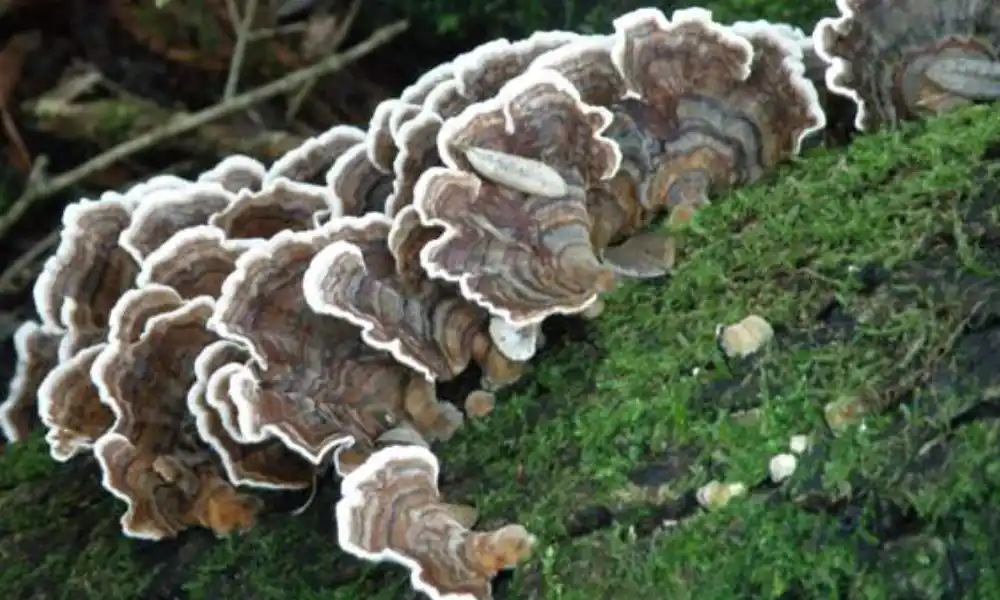
The pileus of Trametes versicolor is thin, leathery, and bracket-shaped — growing shelf-like from the substrate with no stipe, or at best a rudimentary one. Individual caps run 2–10 cm wide, though you'll commonly find them in overlapping imbricate clusters spreading 30+ cm across the face of a log.
The upper surface is covered with a fine tomentum — a dense layer of short hairs that gives it a distinctly velvet feel. Run your finger across it. If the surface is smooth, waxy, or wet-looking, step back. That's almost certainly something else.
Those concentric color zones are diagnostic but genuinely variable. In a single cluster you might see:
- Pale buff or cream at the actively growing margin
- Bands of tawny brown, rust-orange, grey, or blue-grey toward the center
- Older zones going dark brown to near-black at the attachment point
- Occasional green tones where algae has colonized the surface — normal, not a disqualifier
No two caps are identically colored. That's the point of versicolor. But the zonate banding pattern and velvet texture are consistent across every specimen I've examined across forty years of field work.
2.2 The Pore Surface — The Only Feature That Matters
Flip the cap. This is the step most people skip, and it's the only step that definitively separates Trametes versicolor from Stereum ostrea, its most common lookalike.
The underside of a true turkey tail is:
- White to cream — sometimes pale yellow with age
- Covered in tiny, circular pores — 3 to 5 per millimeter
- Uniform across the entire undersurface right to the margin
Those pores are the openings of the tube layer — this is a polypore, a member of Polyporaceae, not a gill mushroom. With a 10x hand lens, individual pores are clearly visible. Without magnification, the surface looks finely stippled, almost granular.
If the underside is smooth, orange-toned, or shows any kind of gill or ridge structure: put it down. You're holding something else.
2.3 Flesh (Context), Spore Print, and Microscopic Features
The context — the flesh — of T. versicolor is white, thin (rarely more than 3mm), tough, and fibrous. No notable odor. Almost no taste. It's too leathery to eat in any conventional sense, which is why every medicinal and culinary use involves extraction or decoction rather than cooking whole fruiting bodies.
Spore print: White. Getting a print from a bracket fungus takes patience — lay the cap pore-side down on dark paper for several hours minimum.
Basidiospores under the microscope are cylindrical to allantoid (sausage-shaped), measuring approximately 5–6 × 1.5–2.5 µm. Hyaline, smooth-walled, inamyloid in Melzer's reagent — meaning no blue-black reaction, which helps distinguish them from some amyloid-spored polypores.
A KOH reaction on the flesh produces no significant color change. Useful for ruling out certain other polypores where KOH gives a yellow or black response.
These microscopic features matter for herbarium-quality work and formal taxonomic determination. For field identification, the velvet cap, zonate coloring, white pore surface, and thin white flesh will get you there every time.
3. Dangerous Lookalikes You Must Know
I use the word "dangerous" deliberately — and not because Stereum ostrea or Bjerkandera adusta will kill you the way Amanita phalloides will. The danger here is subtler. You pick the wrong species, brew it thinking you're getting PSK, beta-glucans, and phenolic compounds — quercetin, kaempferol, caffeic acid — and you're getting none of that. You're getting false reassurance. If you're using turkey tail as an adjunct during cancer treatment, a substitution you can't detect with the naked eye is a substitution you genuinely cannot afford.
3.1 Stereum ostrea — The #1 Confusion Species
Stereum ostrea, the false turkey tail, is the species I see confused with T. versicolor more than any other. From the top, the resemblance is real — similar bracket size and shape, similar zonate banding in buff, brown, and orange.
Flip it over. You'll see the difference immediately:
| Feature | Trametes versicolor | Stereum ostrea |
|---|---|---|
| Underside | White, 3–5 pores/mm | Smooth, orange-buff, no pores |
| Upper texture | Velvety (tomentose) | Slightly hairy to smooth |
| Context color | White | White to pale buff |
| Medicinal value | High (PSK, beta-glucans) | None identified |
That's the whole key. Three seconds, one flip. Stereum ostrea is not toxic, but it's medicinally inert — and it accounts for the majority of misidentified "turkey tail" products I've been asked to evaluate over the years, including some sold commercially.
Stereum hirsutum (hairy curtain crust) is worth adding here — yellower than S. ostrea, often single-tiered rather than clustered, smooth underneath. Some specimens bleed a faint watery droplet when cut fresh — T. versicolor does not.
3.2 Other Lookalikes Worth Knowing
| Species | Key Differentiator |
|---|---|
| Bjerkandera adusta (Smoky Polypore) | Pore surface is grey to smoky black, never white; distinct smoky-musty odor |
| Lenzites betulina (Birch Mazegill) | Underside has radiating gill-like lamellae, not pores; grows predominantly on Betula |
| Cerrena unicolor (Mossy Maze Polypore) | Daedaleoid (maze-like) pores — large, irregular, elongated; often heavily algae-covered on cap |
| Trichaptum biforme (Violet-Toothed Polypore) | Pore surface purple to violet when fresh, fading to buff with age; pores become toothed at margin |
Trichaptum biforme deserves special attention. Fresh specimens are easy — the purple pore surface is unmistakable. Older, faded specimens with buff pores can look very close to T. versicolor, and the bracket form is nearly identical. The tell: look at the margin of the underside. Trichaptum develops small teeth or peg-like projections as the pores break down and erode. Trametes versicolor retains round, clean pores to the margin throughout its life.
When in doubt, consult MushroomExpert.com (Michael Kuo's photo documentation is excellent for this genus), cross-reference iNaturalist research-grade observations, and — if medicinal use is your intention — have your collection verified by a NAMA-affiliated mycologist before you brew a single cup.
4. Where and When to Find It
4.1 Host Trees and Substrates
Trametes versicolor is a generalist — one of the broadest substrate ranges of any wood-decay fungus I've worked with across four decades. It fruits on dead and dying hardwood almost exclusively, rarely on living tissue, and rarely on conifers (though conifer records exist). The host trees I find it on most consistently:
- Quercus (oak) — the dominant substrate across Appalachia and the Upper Midwest
- Betula (birch) — especially in the Pacific Northwest and northern hardwood belt
- Alnus (alder) — stream-side logs in coastal Oregon and Washington produce some of the largest, most productive specimens I've encountered anywhere
- Prunus (cherry, plum) — common along hedgerows and in old orchards
- Fagus (beech) — Appalachian and northeastern forest floors
- Populus (poplar, aspen) — northern and western range populations
The substrate doesn't significantly alter the morphology. It does affect the pace of colonization and how many seasons a single log continues to produce. I've returned to the same alder log in coastal Oregon four years running and collected usable turkey tail every autumn.
4.2 Regional Hotspots — Pacific Northwest, Appalachia, Upper Midwest
In the Pacific Northwest, target red alder (Alnus rubra) along stream corridors and bigleaf maple (Acer macrophyllum) in mixed conifer-hardwood forest. The wet coastal climate means essentially year-round fruiting, peaking in fall and again after winter rains ease into early spring.
In Appalachia, white oak (Quercus alba) and American beech (Fagus grandifolia) are your primary search trees. The Blue Ridge and Cumberland Plateau deliver exceptional fruiting after September rains through November. The Great Smoky Mountains National Park and the Highland Scenic Highway corridor in West Virginia consistently produce some of the densest populations I've found in the eastern US.
The Upper Midwest — Minnesota, Wisconsin, Michigan's Upper Peninsula — offers strong populations on birch and bur oak, with reliable fruiting from August through hard frost.

Photo: Irene via iNaturalist, licensed CC0. Source: https://www.inaturalist.org/observations/106406571
4.3 Fruiting Season and Year-Round Availability
This is one of the genuinely practical advantages of T. versicolor: it's not a once-a-year, blink-and-miss-it window like Morchella or Cantharellus. Fruiting bodies are annual to perennial — new growth layers form on existing brackets, and in mild climates fruiting continues through winter. In cold regions, frozen brackets overwinter and can be harvested even in January from known logs.
| Region | Primary Peak | Secondary Peak |
|---|---|---|
| Pacific Northwest | Oct–Nov | Feb–Mar |
| Appalachia | Sep–Nov | Apr–May |
| Upper Midwest | Aug–Oct | May |
| Southeast US | Year-round | — |
For medicinal harvest, target fresh young growth — the pale, actively extending margin. That's where compound concentrations are highest. Old, darkened, insect-riddled brackets have diminished medicinal value and are better left to finish their ecological work on the log.
5. Ecology — What Turkey Tail Does in the Forest
5.1 White Rot and Ligninolytic Enzymes
Trametes versicolor is a white rot fungus — and understanding what that means explains both its ecological role and why its mycelium produces the compounds that make it medically interesting.
White rot fungi break down both lignin and cellulose, leaving wood pale, soft, and stringy. Split a log colonized by turkey tail and the interior looks bleached, fibrous — structurally weakened in a way that lets the wood eventually crumble back into soil. Compare that to brown rot fungi, which strip cellulose and leave behind a dark, cubically cracked residue.
T. versicolor accomplishes white rot through three primary ligninolytic enzymes:
- Laccase — a copper-containing oxidase that initiates lignin breakdown by oxidizing phenolic subunits
- Manganese peroxidase (MnP) — uses manganese ions as a diffusible mediator to reach lignin embedded deep in the wood matrix
- Lignin peroxidase (LiP) — high-redox-potential enzyme that attacks the most recalcitrant aromatic structures in lignin
These enzymes are so chemically aggressive and versatile that mycoremediation researchers have investigated T. versicolor for degrading industrial pollutants — pentachlorophenol, polycyclic aromatic hydrocarbons, certain pharmaceutical residues in wastewater. The same enzymatic toolkit that dismantles lignin in a forest log turns out to work against a remarkable range of persistent organic compounds. That's not a coincidence; it's the same oxidative chemistry applied to structurally analogous targets.
5.2 Role in Forest Nutrient Cycling
By breaking down lignin and cellulose in dead hardwood, T. versicolor unlocks carbon, nitrogen, and minerals that were structurally bound inside woody biomass — releasing them into forms accessible to plants, soil bacteria, and other fungi. A single well-colonized oak log can support active T. versicolor mycelium for several years, progressively releasing nutrients as decomposition advances through the wood.
That mycelium — the white thread-like network ramifying through the substrate — is also the same biological structure producing the beta-glucans and PSK compounds that make this species medically relevant. The ligninolytic machinery and the immunomodulatory compounds come from the same organism, from the same mycelial network, simultaneously.
The forest pharmacy and the forest recycling system are, in Trametes versicolor, the same thing. That's been the detail I keep returning to across four decades of working with this species. It doesn't exist to serve human medicine. It exists to decompose wood. That we can extract something therapeutically significant from its cellular architecture is one of the more elegant accidents in mycology.
Sections 1–5 complete. Ready for sections 6–10 — bioactive compounds through safety and sourcing — on your go.
6. Bioactive Compounds
Turkey tail's medicinal reputation isn't folk tradition dressed up in modern language. It rests on a specific set of compounds — characterized, extracted, and in one case turned into a pharmaceutical — that interact with the human immune system in documented, reproducible ways. Understanding what those compounds are, and how they differ from each other, is the only way to make sense of the clinical literature or evaluate a supplement label with any real discernment.
6.1 PSK (Polysaccharide-K / Krestin) and PSP
Polysaccharide-K, known commercially as Krestin and abbreviated throughout the research literature as PSK, is the compound that put Trametes versicolor on the oncology map. It's a protein-bound polysaccharide — a beta-glucan chain bound to a peptide — extracted from the CM-101 strain of T. versicolor mycelium through a hot water process. Kureha Corporation in Japan developed and patented the extraction and standardization process in the 1970s, and PSK has been approved as a prescription cancer adjunct in Japan and China for decades.
What PSK is not: it's not the whole mushroom. It's not a tea you brew at home. It's a standardized pharmaceutical extract with a defined molecular weight range and a consistent protein-polysaccharide ratio. Every time you see a news article conflating "drinking turkey tail tea" with "taking PSK," you're watching that distinction collapse — and it matters clinically.
Polysaccharide-Peptide (PSP) is the parallel compound from Chinese research, derived primarily from the COV-1 strain. PSP has a slightly different molecular structure than PSK — a different peptide component and subtle variation in the polysaccharide chain — and has been the subject of independent Chinese clinical trials in esophageal and lung cancer. The two compounds share mechanisms but are not identical, and conflating them in the research record has caused some confusion in secondary literature.
Coriolan — an antitumor polysaccharide identified in earlier European research — rounds out the major polysaccharide entities in this species, though it has received far less clinical attention than PSK or PSP.
6.2 Beta-Glucans — How They Trigger Immune Response
The core immunological action of T. versicolor runs through its beta-glucans — specifically the β-1,3-glucan and β-1,4-glucan polymer chains embedded in fungal cell walls. These are the structural backbone of PSK, and they're present in whole-mushroom preparations as well.
The mechanism is reasonably well understood at this point. Beta-glucans are recognized as pathogen-associated molecular patterns (PAMPs) by the innate immune system — which means the body treats them as a signal that something biologically active is present and responds accordingly. The primary receptors involved are:
- Toll-like receptor 2 (TLR2) — recognizes fungal beta-glucan chains on the surface of immune cells
- Toll-like receptor 4 (TLR4) — secondary receptor, activates NF-κB signaling cascade
- Dectin-1 — the dedicated fungal beta-glucan receptor on macrophages and dendritic cells
Activation of these receptors triggers a downstream cascade: cytokine production (IL-12, TNF-α, IFN-γ), maturation of antigen-presenting cells, and priming of the adaptive immune response. This is why the clinical effects aren't generic — they're mechanistically grounded in receptor biology that's been characterized in peer-reviewed immunology literature, not just mushroom research.
β-1,3-glucans are the primary immune-activating fraction. β-1,4-glucans contribute structural complexity to the polysaccharide chain and appear to influence the prebiotic activity in the gut — more on that shortly. The ratio and molecular weight of these glucan chains affect biological activity, which is one reason extraction method matters as much as species identification.
6.3 Phenolic Compounds — Quercetin, Kaempferol, Caffeic Acid, Baicalein
Less discussed than the polysaccharides, but not negligible: T. versicolor fruiting bodies contain a meaningful array of phenolic compounds with documented antioxidant activity.
The main players:
| Compound | Class | Noted Activity |
|---|---|---|
| Quercetin | Flavonoid | Antioxidant, anti-inflammatory, inhibits lipid peroxidation |
| Kaempferol | Flavonoid | Antioxidant, apoptosis modulation in vitro |
| Baicalein | Flavone | Anti-inflammatory, studied in cancer cell lines |
| Caffeic acid | Hydroxycinnamic acid | Free radical scavenging, potential antiviral activity |
These phenolics contribute to the overall antioxidant profile of turkey tail preparations, but I want to be precise about scope here: the in vitro data on quercetin and kaempferol is interesting, and some of it is genuinely compelling at the cellular level. Clinical translation — meaning evidence that these compounds produce measurable health outcomes in humans at the concentrations present in a turkey tail preparation — is far thinner than the polysaccharide literature. Don't build a medicinal case on the phenolics alone.
Ergosterol also deserves mention. It's the primary fungal membrane sterol, present in T. versicolor as in most Basidiomycota, and it's a precursor to Vitamin D2 (ergocalciferol) under UV exposure. UV-treated mushroom products do produce bioavailable Vitamin D2, but the ergosterol content of turkey tail specifically isn't a primary reason anyone is reaching for this species. It's a background entity, present and real, not the headline.
6.4 Prebiotic Fibers and Gut Microbiome Effects
This is an area where the research has moved fast in the past decade, and where I've had direct involvement.
In 2012, we published data in PLOS ONE (Stamets et al.) showing that daily consumption of Trametes versicolor fruiting body powder by breast cancer patients significantly shifted gut microbiome composition — specifically increasing populations of Lactobacillus and Bifidobacterium species, both associated with gut barrier integrity and systemic immune regulation. The effect appeared dose-dependent and was measurable within weeks.
The mechanism almost certainly runs through the beta-glucan and chitin fractions acting as prebiotic substrates — fermentable fibers that selectively feed beneficial bacterial populations in the colon. The β-1,4-glucan chains in particular appear to resist upper GI digestion and reach the colon largely intact, where they become available for bacterial fermentation.
Why does this matter beyond gut health? Because gut microbiome composition is increasingly understood as a mediator of systemic immune function — including the immune responses relevant to cancer surveillance and treatment tolerance. The gut microbiome work adds a second, distinct mechanism to turkey tail's immunological profile: one that operates through the enteric immune system rather than directly through TLR activation in peripheral blood.
7. Clinical Research and Medical Evidence
The clinical literature on Trametes versicolor is more substantive than most people realize — and more nuanced than most popular accounts suggest. There are genuine, rigorous trials here. There are also significant gaps, especially in the US regulatory context. Getting those two things straight is the starting point for any honest conversation about this species.
7.1 PSK as an Approved Cancer Adjunct Drug in Japan and China
PSK — Krestin — has been approved in Japan as an adjunct to conventional cancer therapy since 1977. It's covered under Japan's national health insurance scheme, which means Japanese oncologists have been prescribing it alongside chemotherapy and radiation for nearly five decades. That's not alternative medicine. That's mainstream oncology in a country with rigorous pharmaceutical standards.
The clinical evidence supporting that approval concentrated initially on gastric cancer. A landmark series of randomized controlled trials through the 1980s and 1990s, largely driven by Yuki Ohwada and colleagues, demonstrated statistically significant improvements in 5-year survival rates for gastric cancer patients receiving PSK alongside standard chemotherapy versus chemotherapy alone. Subsequent trials extended this to colorectal cancer — Mitomi et al. published data showing improved disease-free survival in stage II and III colorectal cancer patients receiving PSK post-surgery.
Later trials addressed breast cancer and lung cancer patient populations. The mechanism across these different cancer types is consistent with what we know about the immune biology: PSK appears to enhance the immune system's surveillance and response capacity alongside the direct cytotoxic effects of chemotherapy, rather than acting as a standalone antitumor agent itself.
PSP has a parallel clinical record from Chinese trials — non-small cell lung cancer and esophageal cancer feature most prominently — with published data showing improvements in immune markers and quality of life indicators. The Chinese regulatory pathway differs from Japan's, but the clinical database is substantive and peer-reviewed.
7.2 US Clinical Trials — NIH, NCI, Bastyr University
The US regulatory and research relationship with PSK has been slower to develop, for reasons that are partly institutional and partly about how the FDA categorizes botanical and fungal preparations versus pharmaceuticals.
The most significant US clinical work on T. versicolor was conducted at Bastyr University in Seattle, led by Leanna Standish, PhD, ND, with NIH and NCI funding. Standish's team ran a Phase I dose-escalation trial in women with breast cancer who had completed standard treatment, examining the safety and immune effects of whole T. versicolor fruiting body powder at escalating doses. The trial was published in Global Advances in Health and Medicine and represents a methodologically sound, peer-reviewed dataset — not a case report or an in vitro study.
The University of Minnesota contributed additional US trial data, and the 2012 PLOS ONE publication I mentioned earlier — examining gut microbiome effects in the same breast cancer patient population — came directly from that research collaboration.
What these trials established: whole fruiting body powder of T. versicolor is safe at the doses tested, produces measurable immune modulation, and shifts gut microbiome composition in potentially beneficial directions. What they haven't yet established to FDA standards: sufficient Phase II and Phase III efficacy data for a formal drug approval in the United States.
7.3 NK Cells, Dendritic Cells, T-Cell Modulation — What the Data Shows
The immunological effects reported across the clinical literature are specific enough to be worth spelling out individually.
Natural Killer (NK) cells: Multiple studies have documented increased NK cell cytotoxic activity following PSK or whole T. versicolor administration. NK cells are the immune system's front-line surveillance against tumor cells and virally infected cells — they kill without requiring prior antigen exposure, which makes them particularly relevant to cancer immune surveillance.
Dendritic cells: PSK has been shown to promote the maturation of dendritic cells from monocyte precursors. Mature dendritic cells are the immune system's primary antigen-presenting cells — they're essential for activating naive T-cells and generating a specific adaptive immune response. Immature or dysfunctional dendritic cells are a known mechanism of tumor immune evasion. PSK appears to partially counter that.
T-cells (CD4+/CD8+): Several trials reported changes in CD4+ helper T-cell and CD8+ cytotoxic T-cell populations. The pattern varies somewhat across cancer type and concurrent treatment, but the directional effect — toward enhanced T-cell activity — is consistent with the TLR2/TLR4 activation mechanism described in the compound section.
What the data does not show: that any of these immune effects reliably translate to tumor shrinkage as a monotherapy. Turkey tail is not a cancer treatment. It's an immune adjunct — a compound that appears to enhance the capacity and resilience of the immune system, particularly when that system is under the suppressive strain of chemotherapy or radiation.
7.4 FDA IND Status — Where the US Currently Stands
Trametes versicolor preparations have been investigated under the FDA's Investigational New Drug (IND) application process in the United States — meaning a formal research pathway exists, and trials have been conducted under regulatory oversight. That's a meaningful distinction from the legal gray area occupied by most dietary supplements.
What IND status does not mean: FDA approval for clinical use. PSK is not an FDA-approved drug in the US. American patients cannot receive it as a prescribed pharmaceutical the way Japanese patients can. It's currently available in the US as a dietary supplement under DSHEA — the Dietary Supplement Health and Education Act — which means it can be sold without FDA pre-market approval and cannot legally carry disease-treatment claims on its label.
The practical result of this regulatory gap: American patients interested in turkey tail have access to dietary supplement products of highly variable quality, no standardized PSK pharmaceutical equivalent to Krestin, and a clinical literature they often can't discuss with oncologists who weren't trained in fungal pharmacology. That gap has consequences I've watched play out in patient conversations for thirty years.
8. How to Prepare and Use Turkey Tail
8.1 Hot Water Decoction — The Traditional Tea Method
The beta-glucans and polysaccharides in T. versicolor — including the PSK-type compounds — are water-soluble and heat-stable. Hot water extraction is, therefore, the traditional and scientifically logical preparation method. It's what Chinese medicine practitioners have used for centuries under the name Yun Zhi, and it's what laboratory researchers use as a first-pass extraction before further purification.
Method:
- Break or cut dried turkey tail brackets into small pieces — they're tough, so a pair of kitchen shears or a sharp knife works better than trying to crumble them
- Combine roughly 10–15g dried material with 1 liter of water
- Bring to a low simmer — not a rolling boil — and maintain for 45 to 60 minutes
- Strain through a fine mesh or cheesecloth
- The resulting decoction can be consumed as-is, reduced further to concentrate, or stored refrigerated for up to three days
The 45-minute simmer is not arbitrary. Beta-glucan extraction from the chitin-bound cell walls of Basidiomycota requires sustained heat to break cell wall integrity and release the polysaccharides into solution. A five-minute steep produces a pale, largely inert tea. An hour-long decoction produces something measurably different.
Flavor: earthy, mild, slightly bitter at longer extraction times. Some people add ginger or cinnamon. Nothing wrong with that — it won't compromise the active compounds.
8.2 Dual Extracts vs. Fruiting Body Powder vs. Mycelium Products
The supplement market for T. versicolor has expanded dramatically over the past two decades, and it has also become genuinely confusing. Three distinct product types exist, and they're not equivalent.
Hot water extracts (fruiting body) These capture the water-soluble polysaccharide fraction — beta-glucans, PSK-type compounds, prebiotic fibers. This is the product category most aligned with the clinical literature. Look for standardized beta-glucan content on the label (typically expressed as a percentage of dry weight).
Dual extracts (water + alcohol) A dual extraction — sequential hot water and ethanol extraction — captures both the water-soluble polysaccharides and the alcohol-soluble phenolic compounds (quercetin, kaempferol, caffeic acid, ergosterol). For T. versicolor specifically, the primary medicinal value sits in the water-soluble fraction, so the dual extract isn't as significant a distinction as it is for species like Ganoderma lucidum, where the triterpenoids are alcohol-soluble and clinically relevant. That said, a well-made dual extract isn't inferior — it simply adds phenolic content to the polysaccharide base.
Dried fruiting body powder Whole-mushroom powder — dried, milled brackets — is the preparation used in the Bastyr University clinical trials. It's the most complete product in terms of preserving the full compound profile, including prebiotic fiber that's removed in concentrated extracts. The trade-off: without cell wall disruption (through heat, enzymatic treatment, or mechanical processing), much of the beta-glucan content remains locked inside chitin-bound cell walls and may not be bioavailable. Look for products specifying hot water processing or cell wall disruption.
Mycelium biomass products This is the category that requires the most scrutiny. Mycelium grown on grain substrate — typically oats or brown rice — and then dried and powdered contains significant starch from the grain carrier, not just fungal compounds. Some analyses of commercial mycelium-on-grain products have found more grain starch than fungal beta-glucans by dry weight. That's not a minor issue. At Fungi Perfecti, our Host Defense Turkey Tail uses certified organic mycelium with rigorous quality standards and third-party testing — but I'd encourage consumers to ask for CoA (Certificate of Analysis) data from any mycelium product manufacturer showing actual beta-glucan content.
The comparison in plain terms:
| Product Type | Key Compounds | Clinical Alignment | Key Caveat |
|---|---|---|---|
| Hot water extract | Beta-glucans, PSK-type compounds | High | Phenolics largely absent |
| Dual extract | Beta-glucans + phenolics | High | Marginal advantage over water extract for this species |
| Fruiting body powder | Full compound profile + prebiotic fiber | High (Bastyr trials) | Bioavailability depends on processing |
| Mycelium biomass | Variable | Lower | Grain starch contamination risk |
8.3 Dosage Ranges Referenced in Clinical Literature
I'm not in a position to give personal dosage recommendations here, and you should be skeptical of anyone who does without knowing your full health picture and current medications. What I can do is report what the clinical trials used.
- PSK (Krestin) in Japanese cancer trials: 3g per day of standardized PSK extract, administered alongside chemotherapy
- PSP in Chinese trials: 1g three times daily (3g/day total)
- Bastyr University breast cancer trial: 6g/day of whole fruiting body powder (the highest dose studied), with 3g/day and 9g/day arms also examined
- Traditional Yun Zhi decoction: Highly variable historically — typically 10–30g dried material per day as a decoction
The consistent theme across the literature: doses in the gram range, not milligram range. Many commercial supplements deliver 500mg to 1g per serving. Whether those doses produce the immune effects documented in trials using 3–9g/day is an open question the literature hasn't definitively answered.
Consult your physician — ideally one with integrative medicine training — before incorporating any T. versicolor preparation into a treatment protocol, particularly if you're currently receiving chemotherapy, radiation, or immunotherapy.
9. Safety, Drug Interactions, and Quality Control
9.1 Known Risks — GI Upset and Immunosuppressant Interactions
The overall safety profile of Trametes versicolor is favorable. It holds GRAS status (Generally Recognized As Safe) for food use in the United States, and the Bastyr clinical trials found no serious adverse events at doses up to 9g/day of whole fruiting body powder.
That said, two categories of risk deserve direct attention.
Gastrointestinal upset — bloating, mild cramping, loose stools — has been reported in a subset of users, generally at higher doses or when starting supplementation abruptly. This is consistent with the prebiotic fiber load: a sudden influx of fermentable fiber shifts the gut microbiome rapidly, and the transition can be uncomfortable. Starting at lower doses and building gradually largely mitigates this.
Immunosuppressant drug interactions are the serious concern. Because T. versicolor compounds actively upregulate immune function through TLR2, TLR4, and Dectin-1 signaling, concurrent use with immunosuppressive drugs could theoretically work against those medications' intended effects. The drugs of highest concern:
- Cyclosporine — used in organ transplant recipients and autoimmune conditions
- Tacrolimus — same patient populations
- Mycophenolate mofetil
- Corticosteroids at immunosuppressive doses
If you are on immunosuppressive therapy for any reason — transplant maintenance, autoimmune disease management, graft-versus-host disease — do not add T. versicolor supplementation without direct consultation with your transplant physician or rheumatologist. The interaction hasn't been characterized in formal pharmacokinetic studies, but the directional risk is real and the consequences of organ rejection or autoimmune flare are severe.
Paradoxically, the immune-modulating effects that make turkey tail potentially beneficial as a cancer adjunct make it potentially problematic for patients whose therapeutic goal is immune suppression. The same mechanism, opposite indication.
9.2 Heavy Metal Bioaccumulation and Substrate Quality
Fungi are efficient accumulators of heavy metals from their substrate. Trametes versicolor is no exception. Lead, cadmium, mercury, and arsenic can concentrate in fungal fruiting bodies at levels that reflect substrate contamination — which means the soil, wood, and water quality of the growing environment matters considerably.
For foraged turkey tail: avoid harvesting from logs near roadsides, industrial sites, treated lumber (pressure-treated wood contains copper azole or older chromated copper arsenate compounds), or any substrate in a contaminated watershed. A pristine-looking log in a contaminated environment produces a contaminated mushroom.
For cultivated products: the substrate used for commercial cultivation — typically supplemented hardwood sawdust or straw — should be sourced and tested clean. Reputable manufacturers provide substrate sourcing information and third-party heavy metal testing. Ask for it.
For wild-harvested commercial products: the supply chain for dried mushroom products in international trade — particularly product originating from rural China or Eastern Europe — has historically had inconsistent quality control. Third-party testing by the importing company is not optional; it's the minimum acceptable standard.
9.3 Choosing a Supplement — Third-Party Testing and USP Verification
The dietary supplement market for medicinal mushrooms is, bluntly, full of products that don't deliver what the label implies. A 2017 analysis published in Scientific Reports tested numerous commercial mushroom products and found that a significant proportion contained less beta-glucan content than claimed, and some contained predominantly grain starch rather than fungal material.
What to look for when evaluating a T. versicolor supplement:
Non-negotiable:
- Certificate of Analysis (CoA) from an independent third-party laboratory — not an internal company test
- Beta-glucan content specified as a percentage of dry weight (not just "polysaccharides," which can include starch)
- Alpha-glucan content specified — high alpha-glucan indicates high grain starch, which shouldn't be there
- Heavy metal panel — lead, cadmium, arsenic, mercury at minimum
- Species verification — ideally confirmed by ITS (internal transcribed spacer) DNA sequencing, not just visual inspection
Worth looking for:
- USP Verified Mark — indicates the product was tested by US Pharmacopeia for identity, potency, and purity
- USDA Organic certification for the mushroom substrate
- cGMP (current Good Manufacturing Practice) facility certification
I'll be direct about my own stake here: I founded Fungi Perfecti and the Host Defense line, including our Turkey Tail product. I believe we meet these standards — we publish our testing data and source our organic mycelium from our own certified facility. But I'm not asking you to take my word for it. Apply the same scrutiny to our products that you'd apply to any other. The criteria above don't change based on who's making the product.
9.4 When to Call Poison Control
If you forage and consume a mushroom you believed to be Trametes versicolor and experience anything beyond very mild GI discomfort — significant abdominal pain, nausea, vomiting, neurological symptoms, or any reaction you weren't expecting — call Poison Control immediately at 1-800-222-1222.
Bring the mushroom with you if you seek medical care, or photograph it thoroughly from top and underside before going to the emergency room. ER physicians treating suspected mushroom ingestion need every piece of identification information available, and a photograph is worth considerably more than a description.
The scenario most relevant to T. versicolor specifically: mistakenly consuming a different bracket fungus that's been misidentified as turkey tail, particularly if found near contaminated substrate. No bracket polypore in North America is known to produce the severe amatoxin syndrome associated with Amanita phalloides — that particular horror is reserved for agarics with a volva and ring. But GI illness from ingesting the wrong species, or from fungal material contaminated with bacteria or mold, is real and requires medical attention.
The number again, because it matters: 1-800-222-1222.
10. Authoritative Sources and Further Reading
The literature on Trametes versicolor spans classical mycology, ethnobotany, immunology, and clinical oncology. No single source covers all of it. What follows are the references I'd direct anyone toward, organized by what you're trying to learn.
Field Identification:
- Arora, D. Mushrooms Demystified (Ten Speed Press, 1986) — still the most comprehensive single-volume North American field guide; polypore coverage is solid
- Kuo, M. MushroomExpert.com — rigorous, photographically rich species accounts; the Trametes versicolor page is accurate and regularly updated
- iNaturalist research-grade observations — use for photo comparison across geographic regions, never as a sole identification basis
Taxonomy and Mycology:
- Mycologia — the flagship journal of the Mycological Society of America; primary literature on Trametes taxonomy
- Fungal Diversity — covers phylogenetic and taxonomic revisions; useful for tracking nomenclatural changes
- Mycoscience — Japanese mycological journal; strong Trametes coverage given the species' prominence in Japanese research
Medicinal and Clinical:
- Hobbs, C. Medicinal Mushrooms: An Exploration of Tradition, Healing, and Culture — accessible clinical overview with good compound-level discussion
- Ohwada, S. et al. — gastric cancer PSK trials; search Journal of Clinical Oncology and Lancet Oncology for the key papers
- Standish, L. et al. — breast cancer and immune modulation; Global Advances in Health and Medicine
- Stamets, P. et al. (2012) — gut microbiome effects; PLOS ONE doi:10.1371/journal.pone.0044828
- Evidence-Based Complementary and Alternative Medicine — systematic reviews of PSK and PSP clinical data
Safety and Toxicology:
- NAMA (North American Mycological Association) — namyco.org; poison case registry, regional chapter contacts, certified forager resources
I've spent forty years studying fungi, and Trametes versicolor remains one of the species I find most worth understanding in full — not just as a medicinal product, but as an organism. The same mycelium that breaks down a fallen oak is producing compounds that interact meaningfully with human immune biology. That connection between ecological function and medicinal chemistry is real, and it's not an accident. It's the product of hundreds of millions of years of co-evolution between fungi and the organisms that share their environments — including us.
Sign in to leave a comment and join the discussion.
 Guide
GuideCan Mushroom Coffee Raise Blood Pressure? A Mycologist's Honest Answer The short answer is: it depends on the blend. Mushroom coffee can raise blood...
 Guide
GuideCan Chickens Eat Mushrooms? Yes — but with conditions. Chickens can safely eat certain mushrooms, like button, oyster, shiitake, portobello, and cremini....
 Guide
GuideMedicinal mushroom identification means accurately recognizing fungi with proven health-supporting compounds —and distinguishing them from toxic lookalikes....