Is a Mushroom a Decomposer? How Fungi Recycle Nutrients

Nathan Cole
Mycologist · Author · Fungi Expert
Updated
Sep 25, 2026
Is a Mushroom a Decomposer?
Yes, many mushroom-forming fungi are decomposers. They break down dead wood, fallen leaves and other organic material, helping recycle nutrients through ecosystems. However, not every mushroom belongs to a decomposer fungus. Some fungi form beneficial relationships with living plants, while others obtain nutrients by infecting living organisms.
Technically, a mushroom is the fruiting body of a fungus—the structure that produces and releases spores. Most decomposition happens through the fungus’s mycelium, a network of fine threads growing inside its food source.
How do mushrooms break down dead material?
Decomposer fungi, also called saprotrophic fungi, digest food outside their bodies. Their mycelium releases enzymes into the surrounding material, breaks it down and absorbs the resulting nutrients.
The process works in four stages:
- The fungus grows through dead material. Fungal threads, called hyphae, spread through suitable wood, leaves or other organic matter.
- It releases digestive enzymes. These enzymes break complex substances into smaller molecules. Depending on the species, fungi can digest cellulose, hemicellulose and sometimes lignin.
- It absorbs nutrients. The fungus uses the products of decomposition for energy, growth and reproduction.
- Nutrients cycle through the ecosystem. Decomposition, fungal activity and the eventual breakdown of fungal tissue help return nutrients to the wider environment.
For example, an oyster mushroom growing on a dead hardwood log is the visible reproductive structure of a fungus whose mycelium is breaking down the wood.
Is a mushroom a producer, consumer or decomposer?
In a basic food-chain classification, a mushroom growing on dead material belongs in the decomposer category.
Fungi are also heterotrophs, meaning they obtain organic food from other organisms or their remains. Decomposers are therefore a type of heterotroph; the categories describe related aspects of how an organism feeds.
| Category | How it gets food or energy | Examples |
|---|---|---|
| Producer | Makes organic food, usually using sunlight | Grass, trees and algae |
| Consumer | Gets organic food from other organisms | Deer, birds and wolves |
| Decomposer | Chemically breaks down dead organic material and absorbs nutrients | Many fungi and bacteria |
Mushrooms are not producers. They do not contain chlorophyll or make food through photosynthesis.
Are all mushrooms decomposers?
No. Mushroom-forming fungi have different ways of obtaining nutrients.
| Ecological role | How the fungus gets nutrients | Example |
|---|---|---|
| Saprotrophic: decomposer | Breaks down dead organic material | Oyster mushrooms growing on dead wood |
| Mycorrhizal: mutualist | Exchanges resources with a living plant; typically receives sugars while helping the plant obtain water and mineral nutrients | Many chanterelles associated with tree roots |
| Parasitic or pathogenic | Obtains nutrients from a living host, potentially causing harm | Many honey fungi infecting tree roots |
These roles can overlap. Some fungi can infect a living tree and continue decomposing its wood after it dies.
A mushroom growing near a tree is therefore not automatically decomposing that tree. Its fungus may be feeding on buried dead wood, partnering with roots or infecting living tissue.
Why are decomposer fungi important?
Decomposer fungi help keep organic material moving through ecosystems.
- They break down plant remains. Many species digest tough materials that would otherwise accumulate.
- They support nutrient cycling. Their activity helps nutrients move between dead material, organisms and soil.
- They contribute to soil organic matter. Fungal growth and decomposition influence soil structure and composition.
- They participate in the carbon cycle. Fungi use carbon from organic matter and release some as carbon dioxide through respiration.
Fungi do not create nutrients from nothing. They transform existing material and help redistribute its components.
Frequently asked questions
Is a mushroom a decomposer or a scavenger?
A mushroom-forming fungus that feeds on dead material is a decomposer. Scavengers, such as vultures, eat dead organisms. Fungi release enzymes into material and absorb the products of external digestion.Which part of the fungus does the decomposing?
The mycelium does most of the work. Its branching hyphae grow through the material, release enzymes and absorb nutrients. The mushroom primarily produces spores.Are mushrooms on a dead log decomposers?
They are often the fruiting bodies of wood-decomposing fungi. However, identifying the species provides a more reliable explanation of its ecological role than appearance alone.Are bacteria decomposers too?
Yes. Many bacteria also break down dead organic matter. Fungi and bacteria both play major roles in decomposition.What is a simple school answer?
A mushroom is commonly classified as a decomposer because many mushroom-forming fungi break down dead plants and other organic material, helping recycle nutrients.Sign in to leave a comment and join the discussion.
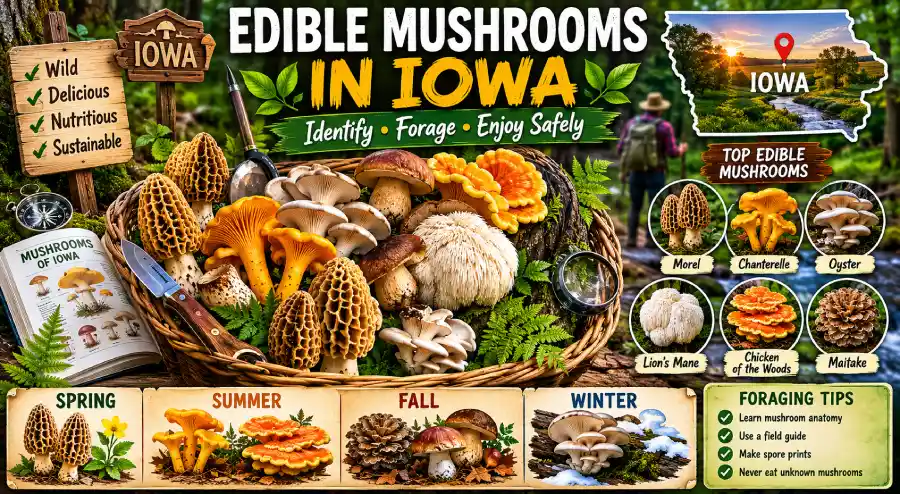 Species Guide
If you're looking for edible mushrooms in Iowa, you'll find a surprising variety of delicious wild fungi growing in forests, river valleys, woodlands, and...
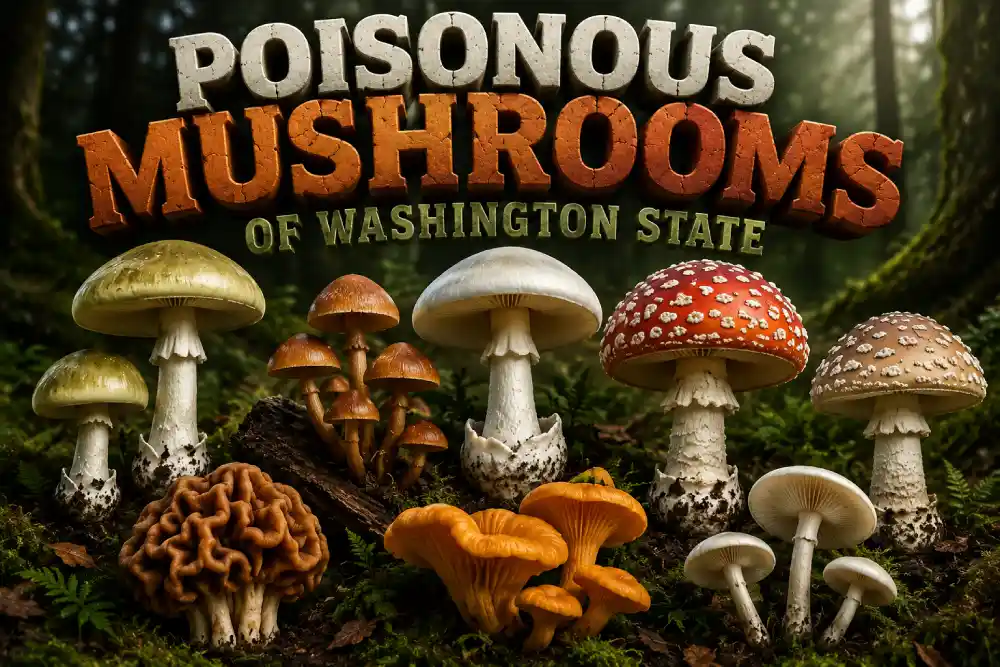 Species Guide
Washington State is home to some of North America's most dangerous wild mushrooms, including the Death Cap ( Amanita phalloides ), Destroying Angel (...
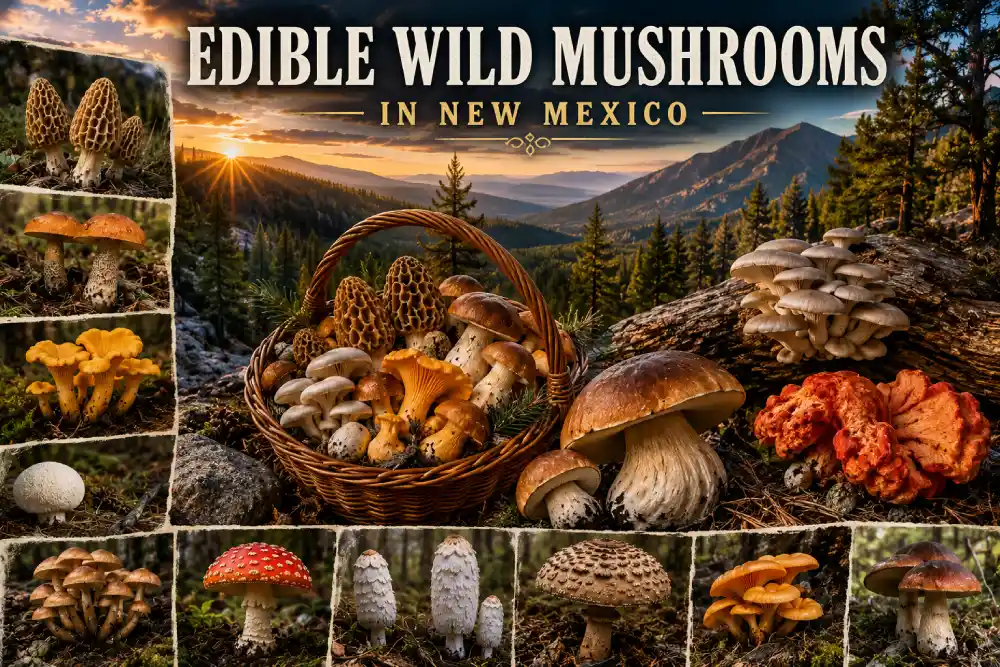 Species Guide
New Mexico is home to a surprising variety of edible wild mushrooms, especially during the summer monsoon season when mountain forests come alive with...