Golden Oyster Mushroom Identification Chart With Pictures
— views
The golden oyster mushroom (Pleurotus citrinopileatus) is a bright yellow oyster mushroom that grows in dense, bouquet-like clusters on dead hardwood, especially elm, in summer and fall. It is native to Asia. It escaped from cultivation and now spreads through US forests, where a 2025 study linked it to a sharp drop in native wood fungi. Poisonous jack-o'-lanterns and sulfur tuft can look similar, so every wild find needs expert confirmation.
This golden oyster mushroom identification chart with pictures shows how to tell a wild golden oyster from other oysters and from its poisonous look-alikes. It also covers what the research says about its spread and what to know before growing one from a kit.
Key Takeaways
- Golden oysters have yellow caps, whitish gills that run down the stem nearly to the base, and stems fused into one whitish mass.
- The spore print is pale lilac. A print rules out sulfur tuft and Crepidotus, but not the jack-o'-lantern.
- Cut the stem. White flesh fits a golden oyster, while orange gills and pale orange flesh point to the poisonous jack-o'-lantern.
- The golden oyster is not native to North America. It escaped into the wild around the early 2010s and now has records in more than 25 US states.
- In a 2025 Wisconsin study, dead elms with golden oysters hosted about half as many fungal species as dead elms without them.
- Researchers ask home growers to consider skipping golden oyster kits and never to compost a used one.
- The golden oyster is a widely grown edible, but a wild cluster still needs expert confirmation before anyone eats it.
Golden Oyster Mushroom Identification Chart
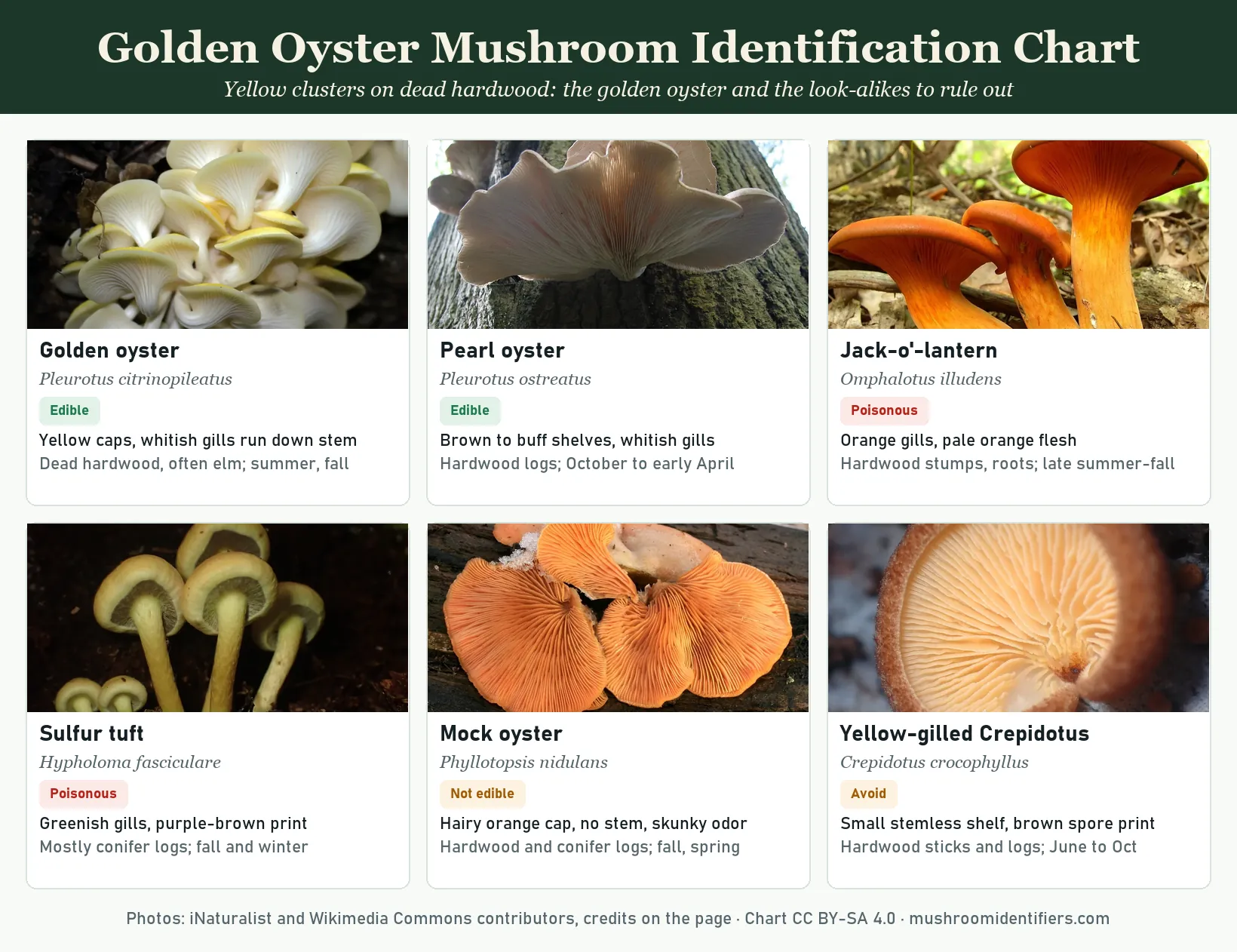
Use this chart to compare a yellow cluster on wood with the golden oyster and the mushrooms most often mistaken for it. Check the gills, the flesh, the spore print and the season together, because color alone does not separate them.
| Mushroom | Key features | Where and when | Spore print | Edibility or risk |
|---|---|---|---|---|
| Golden oyster (Pleurotus citrinopileatus) | Yellow caps 3 to 8 cm; whitish gills run nearly to the base; stems fused | Dead hardwood, especially elm; summer and fall | Pale lilac | Edible and widely grown; nonnative and invasive |
| Pearl oyster (Pleurotus ostreatus) | Brown to buff shelves 3 to 15 cm; whitish gills; stem short or absent | Hardwood logs and trunks; October to early April | White, faintly yellowish or lilac | Edible |
| Summer oyster (Pleurotus pulmonarius) | Often paler than the pearl oyster; same shelf form | Hardwood logs; late April to September | White to grayish lilac | Edible |
| Elm oyster (Hypsizygus ulmarius) | Whitish to tan caps 5 to 15 cm; gills do not run down the stalk | Wounds on hardwoods, often box elder | White to buff | Native; displaced by golden oysters in the 2025 study |
| Mock oyster (Phyllotopsis nidulans) | Hairy orange cap; orange gills; no stem; often a skunk-like smell | Hardwood and conifer logs; fall to spring | Very pale pink | Not edible |
| Jack-o'-lantern (Omphalotus illudens) | Pumpkin-orange caps 3 to 20 cm; orange gills; pale orange flesh | Hardwood stumps and buried roots, especially oak; late summer and fall | White to cream or pale yellow | Poisonous |
| Sulfur tuft (Hypholoma fasciculare) | Yellow to orange caps 2 to 5 cm; gills yellow, then greenish, then purple-brown | Clusters on logs and stumps, mainly conifers; fall and winter | Purple-brown | Poisonous |
| Ringless honey mushroom (Armillaria tabescens) | Tan to cinnamon caps 3 to 6 cm, sometimes yellow, with darker scales; no ring | Hardwood roots, especially silver maple and oak; late summer and fall | White | Avoid without expert ID |
| Yellow-gilled Crepidotus (Crepidotus crocophyllus) | Stemless shelf 1 to 3 cm; yellow to orange gills that turn brownish | Hardwood sticks, stumps and logs; June to October | Brown | Avoid |
Details come from the Missouri Department of Conservation and MykoWeb. The chart pictures show the typical form, so compare your find with several real photographs too.
What Is a Golden Oyster Mushroom?
The golden oyster is a yellow species of oyster mushroom, native to Asia, that people brought to North America to grow for food and that has since gone wild. It shares the genus Pleurotus with the pearl oyster. It feeds on dead hardwood, as a saprobe. It appears to have escaped from cultivation and begun naturalizing in eastern North America.
The species was first described from southeastern Russia. It is also found in China and western Europe. The Wisconsin DNR describes it as native to eastern Asia. For the native species, see our oyster mushroom identification guide.
How Do You Identify a Golden Oyster Mushroom?
A golden oyster is a cluster of yellow, funnel-shaped caps on dead hardwood, with whitish gills running far down the stems and the stems joined at the base. No single feature is enough. The cap color fades with age, and several poisonous mushrooms are also yellow or orange. Check every feature below on the same specimen.
Cap
The cap is bright to medium yellow, often with a whitish edge, and 3 to 8 cm across. University of Minnesota Extension gives 0.75 to 4 inches and a dry, velvety surface. The center sinks into a funnel with age. Older caps fade to pale yellow or white, the Invasive Species Centre notes.
Gills
The gills are whitish to cream. They run deeply down the stem, nearly its full length. Sources disagree on spacing. One field guide calls the gills distant or nearly so, while University of Minnesota Extension calls them closely spaced.
Stem and Base
The stems are whitish to grayish, central or slightly off-center, and 2 to 8 cm long. They fuse at the base into one whitish mass. Most pearl oysters grow as side-attached shelves instead.
Flesh and Smell
The flesh is white and does not change color when cut. Sources differ on the smell. A North American field guide calls it strong and sweetish, while University of Minnesota Extension calls it mild.
Spore Print
One species account records a pale lilac spore print. A pale print does not rule out the jack-o'-lantern, which also leaves a pale print.
Habitat and Season
Golden oysters grow on dead hardwood, especially elm. The Invasive Species Centre also lists oak, beech, black cherry, maple, ash, cottonwood, mulch and straw. They fruit in summer and fall, or from May to September by the Invasive Species Centre's count.
The Flip, Cut and Print Test
Six quick checks on one mushroom separate a golden oyster from the look-alikes on this page: look at the base, flip it, cut it, smell it, print it and check the date. Each check rules out different mushrooms. Only the gill and flesh color exclude the jack-o'-lantern. Do all six, then still ask an expert.
| Check | Golden oyster | Points elsewhere |
|---|---|---|
| Look at the base | Many stems fused into one whitish mass | Single side-attached caps with no stem: mock oyster or Crepidotus |
| Flip it | Whitish to cream gills running nearly to the base | Orange gills: jack-o'-lantern or mock oyster. Yellow-green or purple-brown gills: sulfur tuft |
| Cut it | White flesh that does not change | Pale orange flesh: jack-o'-lantern or mock oyster |
| Smell it | Sweetish or mild | Skunk-like or foul: mock oyster |
| Print it | Pale lilac | Purple-brown: sulfur tuft. Brown: Crepidotus. Pale pink: mock oyster. A pale print does not exclude a jack-o'-lantern |
| Check the date | Summer and fall | October to early April: more likely a pearl oyster. Sulfur tuft fruits mostly in fall and winter |
Our guide on how to take a spore print explains the method.
Is the Golden Oyster Mushroom Invasive?
Yes. Researchers, state agencies and the Invasive Species Centre describe the golden oyster as a nonnative, invasive fungus that escaped from cultivation and is spreading through North American forests. It is not known to threaten living trees, according to the Invasive Species Centre. The concern is its effect on native fungi in dead wood.
| When | What sources record |
|---|---|
| Early 2000s | Brought into North America for cultivation, per the Wisconsin DNR forest health news |
| Around 2010 to the early 2010s | Escaped into the wild. Wisconsin DNR says around 2010. A 2018 thesis puts the first wild fruitings about six years before 2018 |
| 2013 to 2015 | Single records in Athens, New York (2013), Madison, Wisconsin (2014) and Ohio (2015), per the Invasive Species Centre |
| 2016 | Wild populations in five states, all in the Midwest and Northeast |
| 2018 | Sightings from nine states |
| End of 2023 | Reports from 23 US states and Ontario |
| 2026 | More than 25 states, including Texas, Virginia, North Carolina, Alabama, Louisiana and the District of Columbia |
The 2016 and 2026 figures come from University of Florida forest pathologist Michelle Jusino, as reported by ScienceDaily. Jusino estimates that fewer than 10 states east of the Mississippi River now lack wild records. The 2023 figure comes from Mongabay. The Invasive Species Centre adds Quebec and about 12,000 iNaturalist reports, and notes that the range follows that of American elm. It asks people to log sightings on iNaturalist, EDDMapS or Mushroom Observer.
What the Genetics Show
A 2018 University of Wisconsin-La Crosse thesis by Andrea L. Bruce compared 29 wild specimens from six states with 6 commercial strains. All the wild samples were highly similar to two of the commercial strains, which points to those strains as possible sources. The wild samples did not group by geography, which suggests multiple introductions and spread by people. The abstract calls it the first known case of a cultivated mushroom spreading quickly and widely outside its native range.
A standard reference, updated in October 2024, still gives the range as Iowa to New York through the Great Lakes states. Newer records reach much farther south.
Why Are Golden Oysters Bad for Forests?
Golden oysters appear to crowd out native wood fungi: dead elms with golden oysters held about half as many fungal species as dead elms without them. That is the main finding of a 2025 study in Current Biology by Aishwarya Veerabahu, Mark Banik, Daniel Lindner, Anne Pringle and Michelle Jusino. The University of Wisconsin-Madison led it, with support from the USDA Forest Service and the UW Arboretum.
- What they sampled: 78 wood samples drilled from 26 dead elm trees near Madison, Wisconsin, with the fungi identified by DNA, according to Mongabay.
- Species count: about half as many fungal species where golden oysters were present, and a different mix of species. The Invasive Species Centre summarizes this as 22 species against 40.
- Native fungi pushed out: the mossy maze polypore (Cerrena unicolor), the elm oyster (Hypsizygus ulmarius) and Nemania serpens, the lead author writes in Great Lakes Now.
The study compares trees with and without golden oysters, so it shows an association rather than a tested cause. The authors suspect effects on wood decay, carbon release and dead-wood habitat for birds and mammals, but they have not studied them. Climate models predict that the habitable range will grow as the planet warms. A 2026 Current Biology commentary from Clark University reviews it alongside new genetic work.
Golden Oyster and Other US Oyster Mushrooms
The golden oyster's yellow color, warm-weather season and clustered central stems separate it from the native oyster mushrooms. Faded golden oysters can turn pale yellow or white, though. At that stage the season and the fused stem base matter more than color.
Golden Oyster (Pleurotus citrinopileatus)
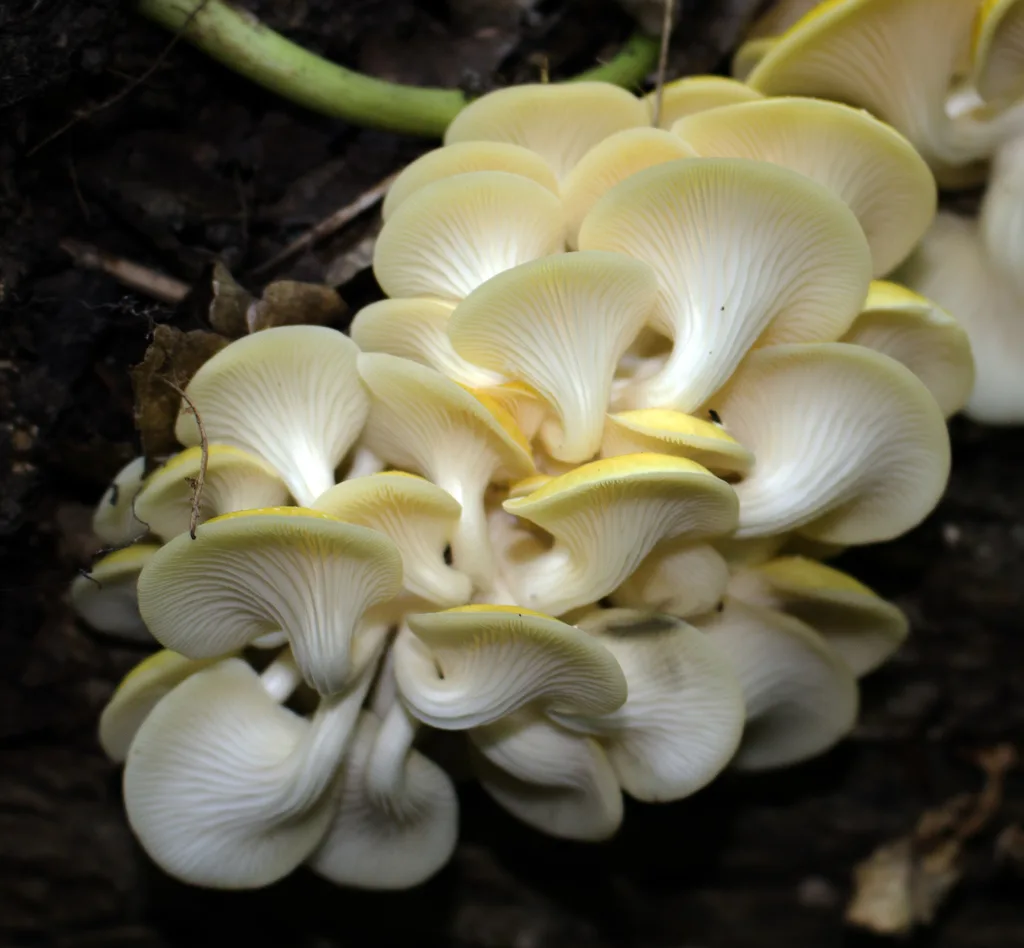
The golden oyster forms a bouquet of yellow, funnel-shaped caps on central stems that fuse at the base. It grows on dead hardwood, especially elm, in summer and fall. Its gills are whitish and run nearly to the base of the stems.
Pearl Oyster (Pleurotus ostreatus)
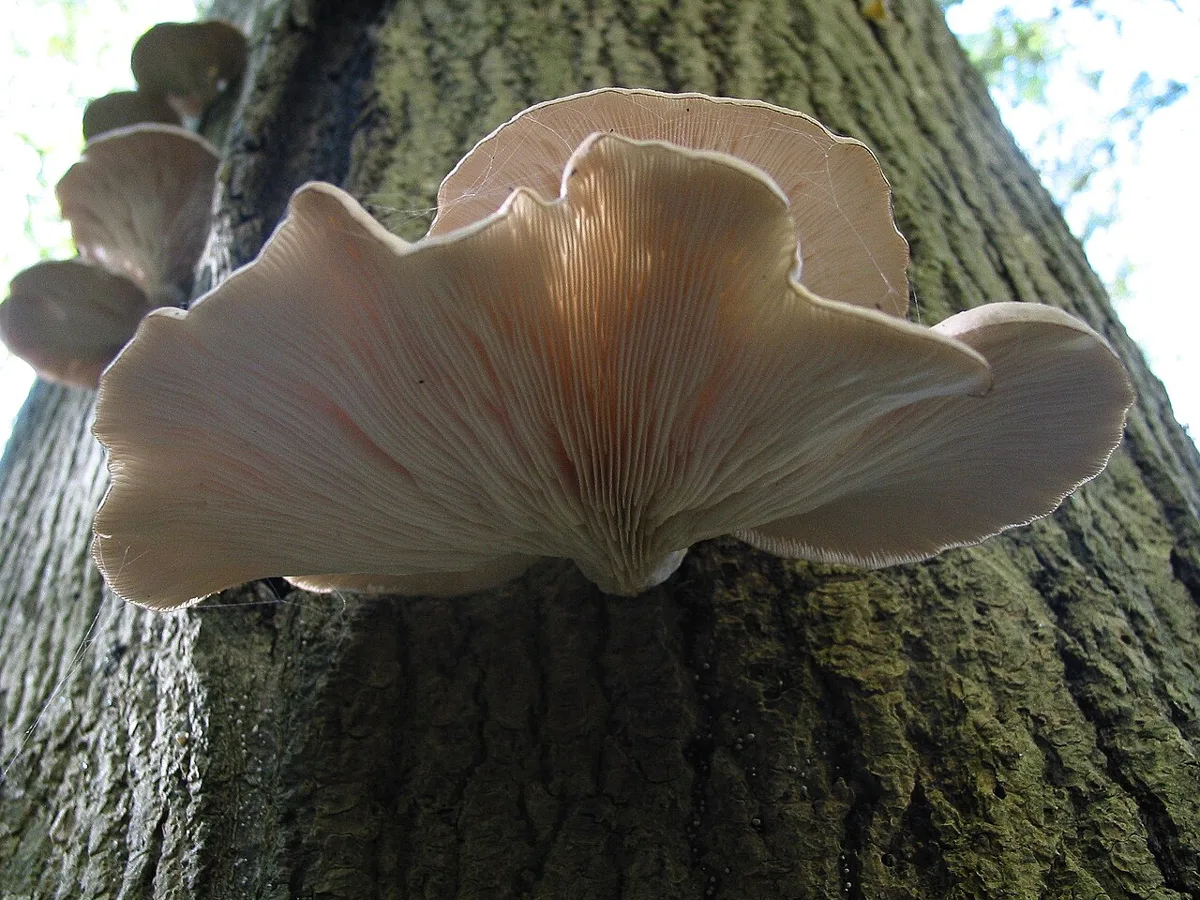
The pearl oyster has brown to buff, fan-shaped caps 3 to 15 cm across. It grows in shelves on dead logs and living trees, mainly hardwoods. Its stem is short or almost absent. One field guide gives its season as October through early April, the opposite of the golden oyster's season.
Two more pale oysters share the same wood. The summer oyster, Pleurotus pulmonarius, is often paler and fruits from late April through September. The native elm oyster, Hypsizygus ulmarius, has whitish to tan caps and gills that attach to the stalk without running down it. It grows singly or in small groups from wounds on hardwoods, often living box elder, according to the Fungi on Wood key by Gary Emberger.
Golden Oyster Look-Alikes: Side-by-Side Comparison
The two dangerous look-alikes are the jack-o'-lantern and sulfur tuft, both poisonous yellow-to-orange mushrooms that grow in clusters on wood. The mock oyster and Crepidotus are not known as dangerous, but they are not food. A North American field guide also names yellow forms of the ringless honey mushroom, which have darker cap scales and grow from roots. The Missouri Department of Conservation now uses the newer name Desarmillaria caespitosa for it. See our honey mushroom identification guide.
| Look-alike | Risk | Spore print | Best separator |
|---|---|---|---|
| Jack-o'-lantern (Omphalotus illudens) | Poisonous: nausea and vomiting | White to cream or pale yellow | Orange gills and pale orange flesh |
| Sulfur tuft (Hypholoma fasciculare) | Poisonous | Purple-brown | Gills turn greenish, then purple-brown |
| Mock oyster (Phyllotopsis nidulans) | Not edible | Very pale pink | Hairy cap, no stem, skunk-like smell |
| Yellow-gilled Crepidotus (Crepidotus crocophyllus) | Avoid | Brown | Small, stemless, scaly cap |
| Ringless honey mushroom (Armillaria tabescens) | Avoid without expert ID | White | Darker cap scales; gills run less far down |
Jack-o'-Lantern (Omphalotus illudens)
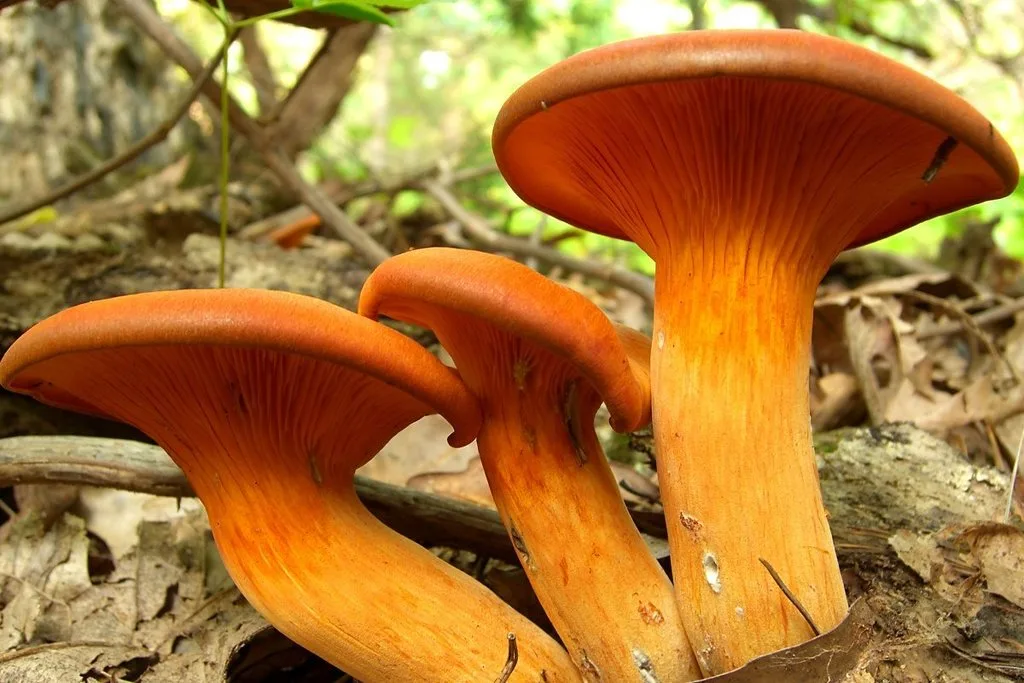
This is the most dangerous mix-up. The jack-o'-lantern has pumpkin-orange caps, orange gills that run down the stem and pale orange flesh. It grows in large clusters on hardwood stumps and buried roots, especially of oaks, in late summer and fall. Its gills can glow when fresh. NAMA reports that symptoms usually start one to three hours after a meal, with nausea and vomiting most common. Most victims recover within 12 hours. See our jack-o'-lantern mushroom guide.
Sulfur Tuft (Hypholoma fasciculare)
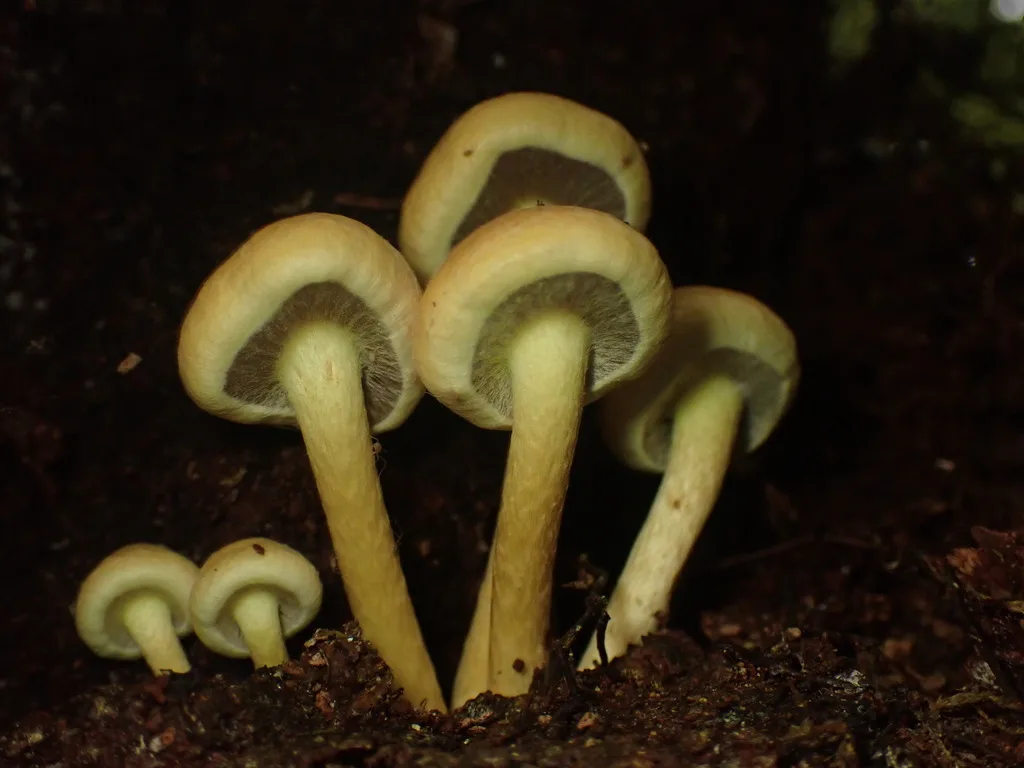
Sulfur tuft forms clusters of yellow to orange caps 2 to 5 cm across. Its gills start yellow, turn greenish and then purple-brown as spores build up. The spore print is purple-brown, which no golden oyster produces. One species account places it mainly on conifer logs and stumps in fall and winter. MykoWeb rates it probably poisonous. Read our sulfur tuft guide for the poisoning reports.
Mock Oyster (Phyllotopsis nidulans)
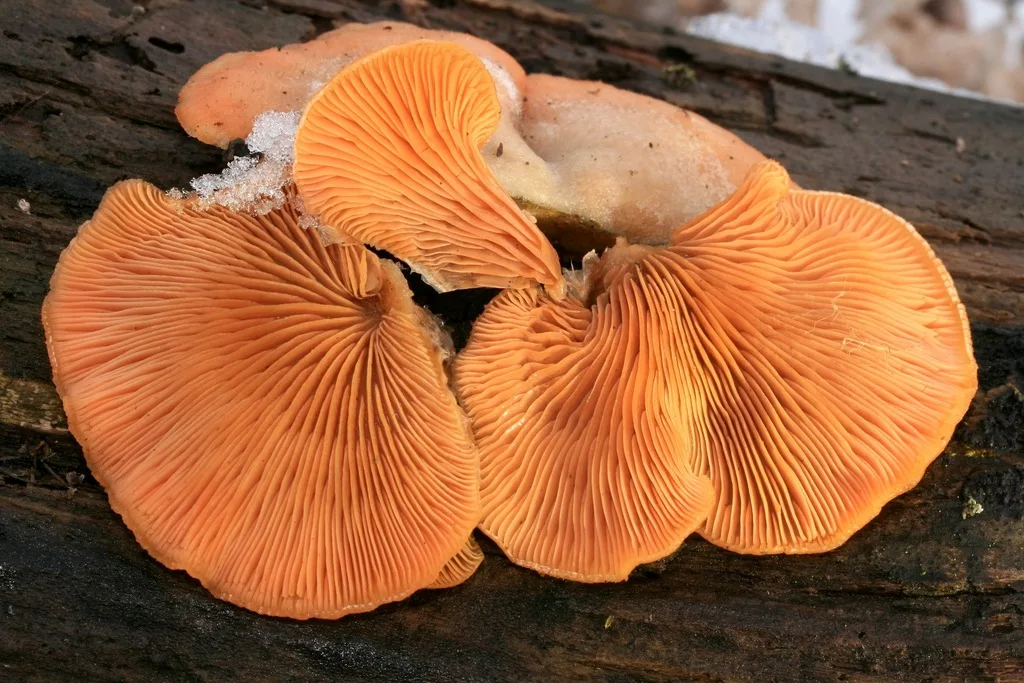
The mock oyster is a fan-shaped, densely hairy, orange cap with orange gills and no real stem. A standard reference describes a strong, foul smell, sometimes compared to skunk cabbage, although some collections have no odor. Its spore print is very pale pink. It grows on hardwood and conifer logs in fall and spring. MykoWeb calls its edibility unknown, citing tough flesh and a fetid smell.
Yellow-Gilled Crepidotus (Crepidotus crocophyllus)
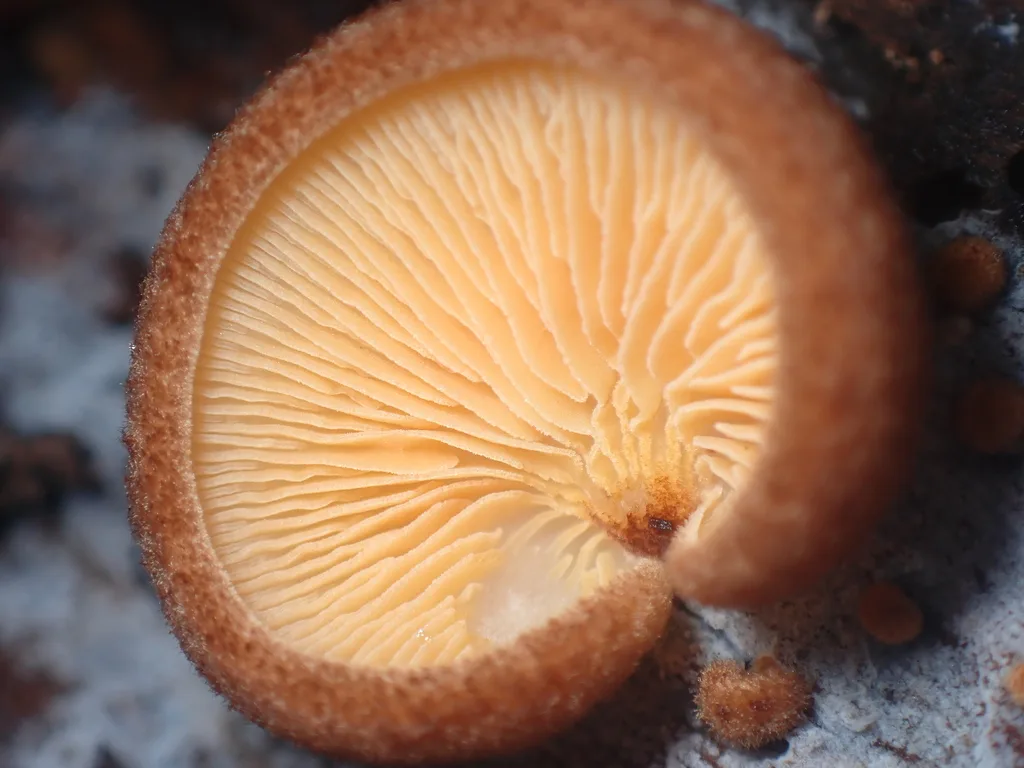
Crepidotus are small, brown-spored, stemless shelves. This common species has yellow to orange gills that fade to brownish, and a cap 1 to 3 cm across with cinnamon fibers or scales. It grows on hardwood sticks, stumps and logs from June to October. A brown spore print rules out a golden oyster at once.
Can You Eat Golden Oyster Mushrooms?
Golden oysters are a cultivated edible sold in stores, markets and grow kits, but a wild yellow cluster should never be eaten on the strength of a chart or app. University of Minnesota Extension describes the fruiting bodies as edible. The Invasive Species Centre says harvesting is allowed, but only after the identification is confirmed, because toxic look-alikes exist. Nobody should eat a wild mushroom based on this page.
- Confirm the species with an experienced local identifier.
- Know the jack-o'-lantern, which fruits in overlapping months and causes vomiting within hours.
- Expect individual reactions. NAMA lists the related Pleurotus ostreatus group under alcohol-related reactions, with stomach upset in susceptible people up to 5 hours later.
Simple rules such as "it grows on wood, so it is safe" fail with this group. Our guide to poisonous vs edible mushrooms explains why.
Should You Grow Golden Oysters From a Kit?
The researchers who documented the invasion ask home growers to consider skipping golden oyster kits, because escape from cultivation is the main suspected route into forests. The exact route is unknown. The study's lead author names grow kits, commercial farms and outdoor logs inoculated with golden oysters as possibilities. The Wisconsin DNR notes that spores from cultivated mushrooms can be carried by air to nearby forests.
The lead author, the Wisconsin DNR and the Invasive Species Centre give this advice:
- Choose a native species for a kit when you can.
- Grow indoors. The lead author asks sellers to advise this.
- Never compost or dump a used kit. Spent blocks can still hold live mycelium.
- Dispose of it sealed. The Invasive Species Centre advises sealing used kits in plastic bags, leaving them in the sun and then putting them in the garbage.
The lead author also suggests sporeless kit strains as a future option. Compare indoor options in our oyster mushroom grow kit review and our roundup of mushroom grow kits.
Common Identification Mistakes
Most golden oyster mistakes come from trusting one feature, usually the yellow color, instead of checking the base, gills, flesh and spore print together. The poisonous look-alikes share the color and the clustered habit. The four errors below follow from the sources on this page.
Trusting Yellow Color Alone
Golden oysters fade to pale yellow or white with age. Sulfur tuft and the ringless honey mushroom can also be yellow. Color starts the search but never ends it.
Skipping the Cut
The jack-o'-lantern is the look-alike a spore print cannot exclude. Cut the stem and look at the gills. Orange gills or pale orange flesh mean it is not a golden oyster.
Calling Any Cluster on Wood an Oyster
Jack-o'-lanterns, sulfur tuft and honey mushrooms all grow in clusters on wood. A cluster that seems to rise from the soil around a stump may be growing from buried roots, which fits a jack-o'-lantern or honey mushroom.
Composting a Spent Kit
A used block can still hold live golden oyster mycelium. Seal it and put it in the garbage instead of a compost pile.
Frequently Asked Questions
What does a golden oyster mushroom look like?
A golden oyster is a cluster of bright yellow, funnel-shaped caps about 3 to 8 cm across. The whitish gills run down the stems nearly to the base, and the stems fuse into one whitish mass. It grows on dead hardwood, especially elm.
Is golden oyster mushroom invasive?
Yes. The golden oyster is native to Asia and escaped from cultivation into US forests around the early 2010s. By 2026 it had wild records in more than 25 states.
Can you eat golden oyster mushrooms?
Golden oysters are a cultivated edible sold in stores and grow kits. A wild cluster still needs expert confirmation, because the poisonous jack-o'-lantern and sulfur tuft can look similar. Never eat a wild mushroom based on a chart or an app.
What looks like a golden oyster mushroom?
The jack-o'-lantern and sulfur tuft are the poisonous look-alikes. The mock oyster, yellow-gilled Crepidotus and the ringless honey mushroom can also be confused with it. Orange gills, orange flesh or a brown or purple-brown spore print rule out a golden oyster.
Where do golden oysters grow?
Golden oysters grow on dead hardwood, most often elm. Wild records began in the Midwest and Northeast. They now reach the South, including Texas, Alabama and Louisiana.
Why are golden oysters bad for forests?
A 2025 study of 26 dead elms near Madison, Wisconsin found about half as many fungal species on trees with golden oysters. Native fungi such as the elm oyster and the mossy maze polypore were pushed out. The study shows an association, and effects on wood decay have not yet been tested.
When do golden oyster mushrooms grow?
Golden oysters fruit in summer and fall. The Invasive Species Centre gives May to September. A pale oyster found between October and early April is more likely a native pearl oyster.
What color is a golden oyster spore print?
One field guide records a pale lilac spore print. The jack-o'-lantern also leaves a pale print, so check the gill and flesh color too.
Is it OK to grow golden oyster mushrooms at home?
Researchers ask growers to consider native species instead, because escape from cultivation is the suspected cause of the invasion. Keep any golden oyster kit indoors. Seal the used block in a bag and put it in the garbage, never in compost.
Final Safety Reminder
A bright yellow cluster on a dead elm is easy to spot, and so is an orange jack-o'-lantern on an oak stump. Never eat a wild mushroom based on a chart, a photo or an app. Photograph the caps, the gills, the base and a cut stem using our guide on how to photograph mushrooms for identification, then check them with our free mushroom identifier and a local mycological club. If someone may have eaten a poisonous mushroom in the US, call Poison Control at 1-800-222-1222.
Sign in to leave a comment and join the discussion.
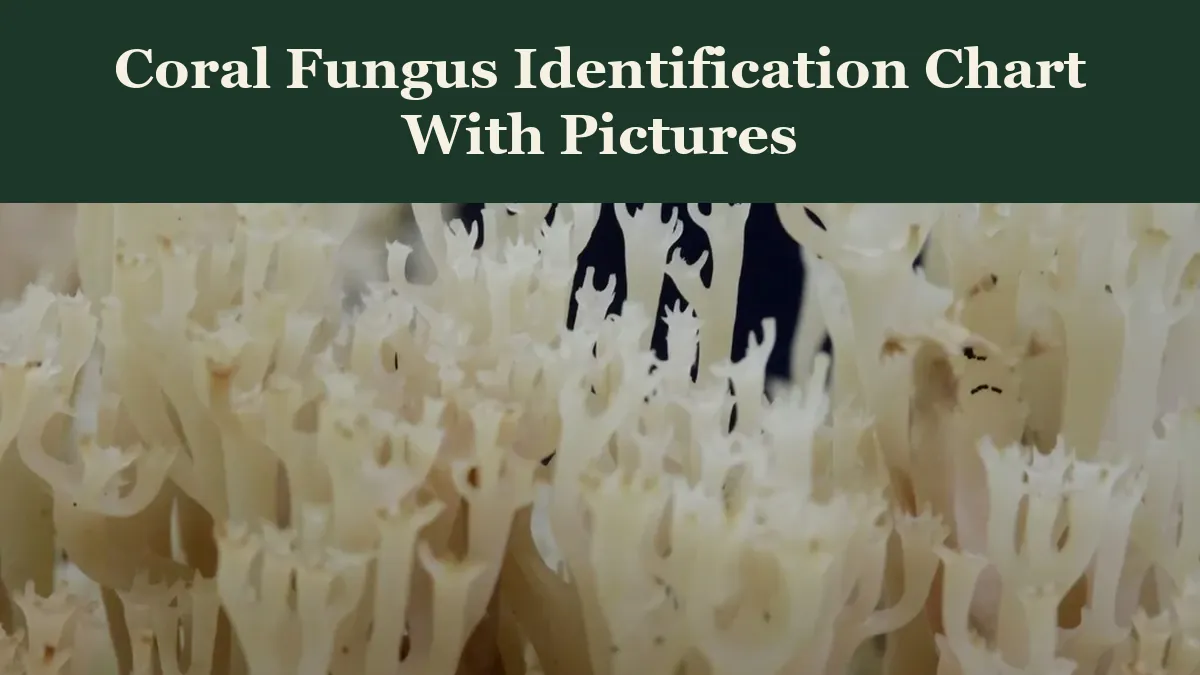 Species Guide
A coral fungus is a mushroom shaped like branching sea coral or a tuft of upright clubs, with no cap and no gills. Most US corals grow from soil in the...
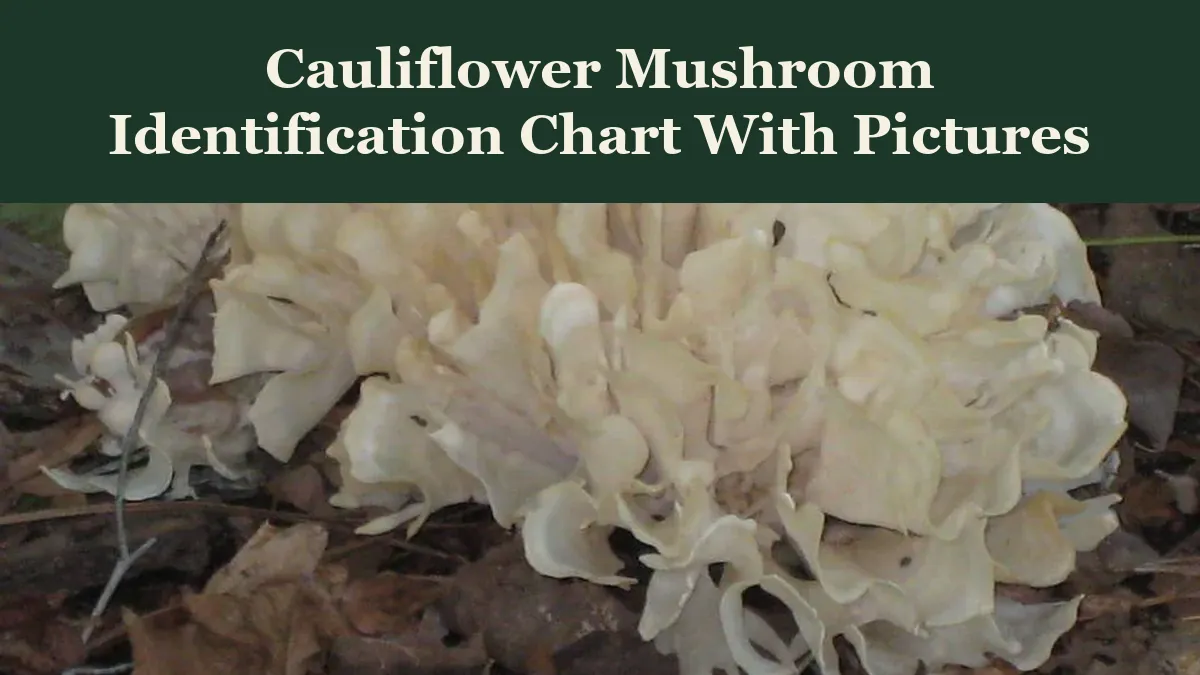 Species Guide
A cauliflower mushroom ( Sparassis ) is a large, cream-colored rosette of flat, wavy, ribbon-like lobes that grows at the base of a tree. It has no caps, no...
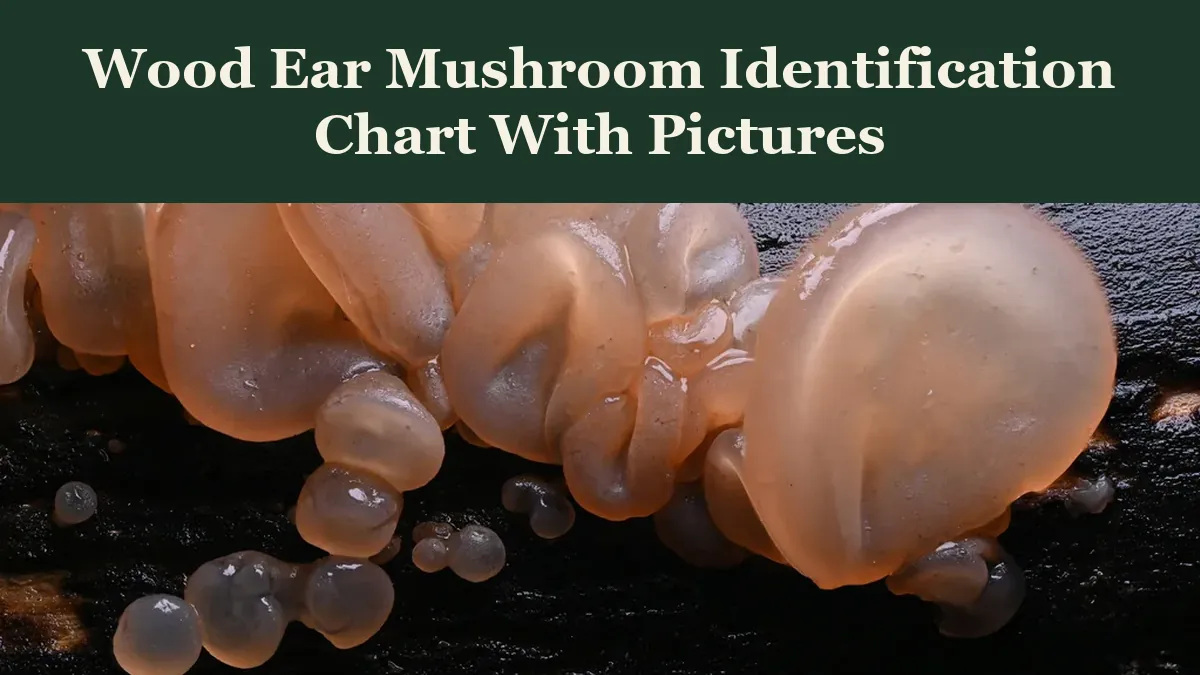 Species Guide
A wood ear mushroom is a brown, rubbery, ear-shaped jelly fungus in the genus Auricularia that grows on dead wood. In North America the hardwood species is...