How to Make a Spore Print and Read Its Color
— views
A spore print is the colored dust a mushroom cap drops onto paper, and its color is one of the first clues in mushroom identification. To make one, cut off the stem, set the cap gills down on half-white, half-black card, cover it with a bowl and wait 2 to 24 hours. Then match the color to the chart below. A print narrows the options, but it never proves a mushroom is safe.
This guide gives the steps, the best paper, the waiting time and the reasons prints fail. The spore print color chart shows what each color rules out, including the green print of Chlorophyllum molybdites and the white print of deadly Amanita species. The last sections show how a print fits with the cap, gills, stem and habitat.
Key Takeaways
- Use half-white, half-black card, because a white print can vanish on white paper.
- Cover the cap with a bowl to stop it drying out and to block air currents.
- Expect a spore print to take 2 to 24 hours. Humidity and freshness set the time.
- A white print fits the deadly death cap and many other mushrooms, so white never clears a mushroom.
- A green print points to Chlorophyllum molybdites, a poisonous lawn mushroom.
- Gill color is not spore color, because gills change as spores mature.
- A print removes candidates. It cannot confirm a species on its own.
Spore Print Color Chart
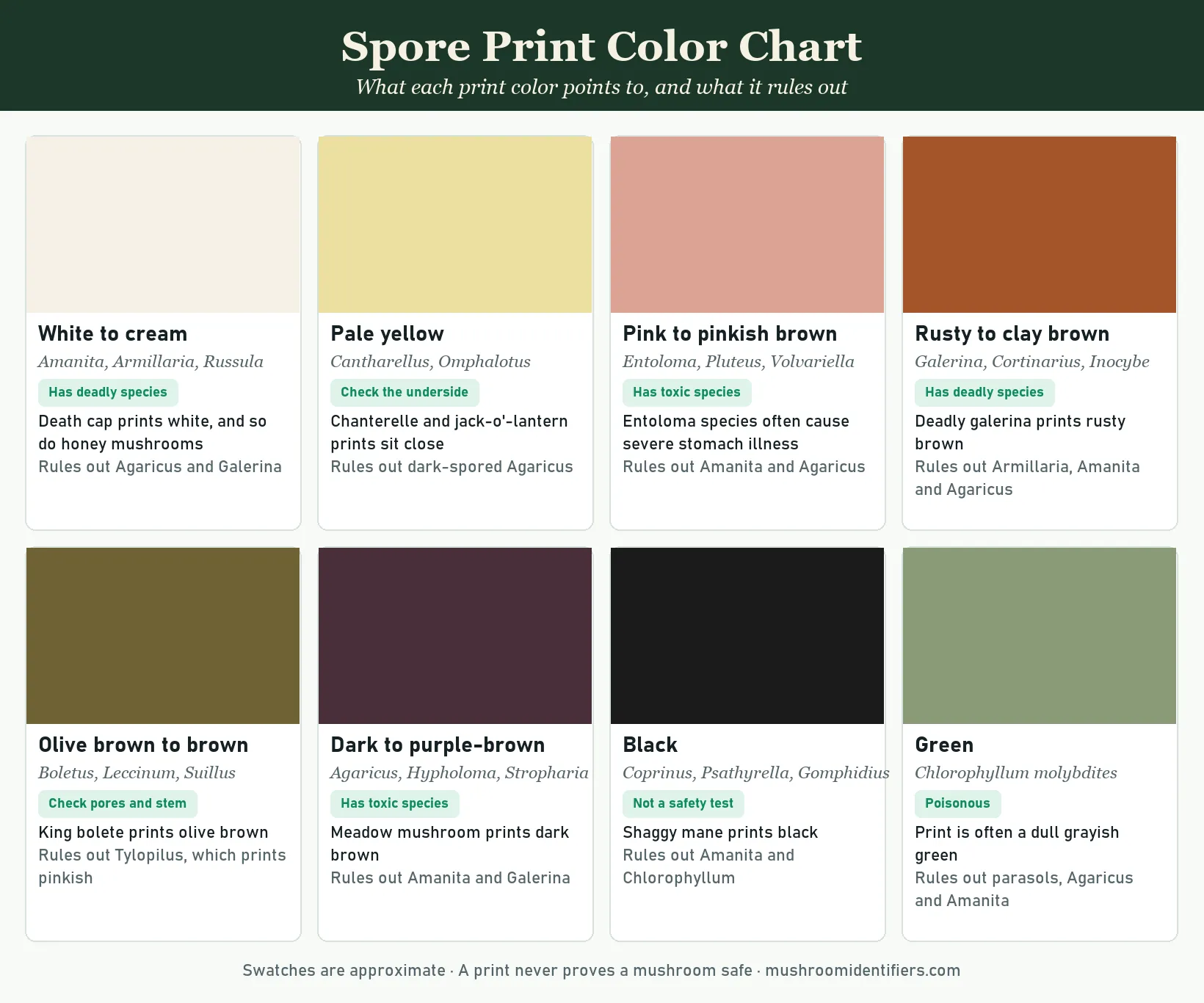
A spore print color chart matches each print color to the genera that produce it and shows which groups that color removes. Read your color, then read the last column. That column says what the print cannot clear.
| Print color | Example genera | What it rules out | What it does not clear |
|---|---|---|---|
| White to cream | Amanita, Armillaria, Lepiota, Russula | Agaricus, Galerina, mature Chlorophyllum molybdites | Deadly Amanita. Check the stem base for a sac. |
| Pale yellow | Cantharellus, Omphalotus | Dark-spored genera such as Agaricus | Jack-o'-lantern. Check for true gills. |
| Pink to pinkish brown | Entoloma, Pluteus, Volvariella | Amanita, Agaricus | Toxic Entoloma species. Avoid them all. |
| Rusty to clay brown | Galerina, Cortinarius, Inocybe, Hebeloma | Armillaria, Amanita, Agaricus | Deadly Galerina. Check for clusters on rotting wood. |
| Olive brown to brown | Boletus, Leccinum, Suillus | Tylopilus, which prints pinkish | Any bolete. Check the pores and stem. |
| Dark brown to purple-brown | Agaricus, Hypholoma, Stropharia | Amanita, Galerina, Chlorophyllum molybdites | Toxic Agaricus xanthodermus. Check for yellow staining. |
| Black | Coprinus, Psathyrella, Gomphidius | White-spored Amanita, Chlorophyllum molybdites | Any of these as food. |
| Green to grayish green | Chlorophyllum molybdites | Parasols, Agaricus, Amanita | Nothing. This species is poisonous. |
The genus groups follow the MykoWeb California Fungi list of gilled mushrooms and its guide to boletes. Sources name some colors differently. MykoWeb places Agaricus in its purple-brown group, one field guide gives the meadow mushroom a dark brown print, and MykoWeb's yellow stainer page says chocolate brown. Treat these as neighbors on one scale. A color rules out a group only when the cap was mature, as the mistakes section below explains. The Entoloma warning comes from MykoWeb's Toxic Fungi of Western North America, which says these species often cause severe stomach illness and that all should be avoided.
How to Make a Spore Print
To make a spore print, rest a mature cap on card, cover it and leave it undisturbed for 2 to 24 hours. You need a mushroom, a knife, white and black card, and a bowl. These steps combine the methods of the North American Mycological Association (NAMA) and the British Mycological Society.
- Record the whole mushroom first. Dig it up instead of pulling it, because Tom Volk's University of Wisconsin page warns that pulling can leave the volva behind. Photograph the cap, gills, stem and base.
- Pick a mature cap. The cap should have expanded so the gills show.
- Cut off the stem. Keep the stem with your notes. If you have only one mushroom, NAMA suggests using part of the cap.
- Lay the cap gills down. Place it across the join of white and black card. Do not press it.
- Add one drop of water to the top of the cap. NAMA says this helps release the spores.
- Cover the cap with a bowl, cup or glass. The cover keeps the cap from drying out and blocks air currents.
- Wait at least 2 hours. Leave it overnight if the cap is store-bought or the print looks faint.
- Lift off the cover and cap carefully. A pattern matching the gills should remain.
- Read the color and write it down. Note the date, the place and any nearby trees. Then match the color to the chart.
Wash your hands each time you handle a mushroom, as UF/IFAS Extension advises. To stop a print smudging, spray it lightly with hair spray or artist fixative. NAMA says to hold the spray at least 12 to 15 inches above the print, so it does not blow the spores away.
What Paper Should You Use for a Spore Print?
Use half-white, half-black card for a spore print, because the two colors show both pale and dark spores. The British Mycological Society recommends half-black, half-white card when the spore color is unknown. UF/IFAS Extension warns that a blank white sheet may only mean the spores are white.
| Surface | Best for | Note |
|---|---|---|
| Half-white, half-black card | Any unknown mushroom | Shows pale and dark prints |
| White paper or index card | Dark prints | White prints can vanish |
| Black paper | White and pale prints | Dark prints are harder to read |
| Aluminum foil | Collecting trips | Wrap the cap in foil in your basket |
| Glass microscope slide | Viewing spores under a microscope | Single spores need a microscope |
NAMA and UF/IFAS Extension both list foil. NAMA says a cap wrapped in foil in your basket can give you a print by the time you get home.
How Long Does a Spore Print Take?
A spore print takes 2 to 24 hours, depending on humidity and the freshness of the mushroom, according to NAMA. Other sources give different figures:
- The British Mycological Society says at least 2 hours for a freshly picked mushroom and overnight for a store-bought one.
- UF/IFAS Extension says to let the cap sit for a day.
- A Wytham Woods handout from the University of Oxford site says some fungi take up to a day to release spores.
These figures fit together. Check the print at 2 hours, then leave the cap overnight if the print is faint.
Why Spore Prints Fail
Most failed spore prints come from an old or dry cap, too little time, or paper that hides the spore color. Use this table to find the fix.
| Problem | Likely cause | What to do |
|---|---|---|
| Blank white paper | Spores may be white | Repeat on black paper |
| No print on any paper | Cap too old or too dry, or too little time | Wait up to a day or try a fresher cap |
| Blurred, scattered print | Air currents moved the spores | Cover the cap with a bowl |
| Print smudges later | Loose spores rub off | Fix it with hair spray from 12 to 15 inches |
| Hard bracket gives no print | Tough polypores are hard to print | Wrap in wet paper towels or newspaper overnight first |
| Black puddle under the cap | Inky caps dissolve with age | Use a fresh cap and check it sooner |
| Pale print from a young cap | Spores are not mature | Repeat with a mature cap |
The causes come from NAMA, UF/IFAS Extension and the Wytham Woods handout. The Missouri Department of Conservation notes that the shaggy mane's cap turns to ink with age. The fix for that row is practical advice, not a sourced rule.
Is Gill Color the Same as Spore Print Color?
Gill color is not the same as spore print color, because many gills change color as the spores mature. A young mushroom can show gills that look nothing like its print.
| Mushroom | Young gills | Mature gills | Spore print |
|---|---|---|---|
| Green-spored lepiota | White | Grayish green to brownish green | Dull grayish green |
| Deadly galerina | Yellowish | Rusty brown | Rusty brown |
| Meadow mushroom | Deep pink | Dark chocolate brown | Dark brown |
| Death cap | White | White, sometimes with a slight greenish tint | White |
The descriptions come from a North American field guide pages on Chlorophyllum molybdites, Galerina marginata, Agaricus campestris and Amanita phalloides.
Which Look-Alikes Can a Spore Print Separate?
A spore print separates look-alikes only when their spore colors differ, so it settles some dangerous pairs and fails on others. Check the last column before you trust the color.
| Look-alike pair | Print colors | Does the print settle it? |
|---|---|---|
| Green-spored lepiota vs parasol | Green vs not green | Helps, if the cap is mature |
| Death cap vs meadow mushroom | White vs dark brown | Helps. Still check the base |
| Amanita vs Volvariella | White vs pink | Helps. Both can have a sac at the base |
| Deadly galerina vs honey mushroom | Rusty brown vs white | Helps |
| Deadly galerina vs Pholiota | Rusty brown vs dark brown | Partly. The colors are close |
| Jack-o'-lantern vs chanterelle | Cream vs pale or pinkish yellow | No. Check for gills or blunt ridges |
| Yellow stainer vs meadow mushroom | Chocolate brown vs dark brown | No. Check staining and odor |
Green-spored lepiota: Chlorophyllum molybdites is the clearest case. Tom Volk's 1999 article calls spore color the major difference from parasols and calls this species among the most common causes of poisoning in North America. A 2006 NAMA registry summary of about 2,000 reports lists 60 adults made ill by cooked specimens and 116 people made ill by raw ones. The Missouri Department of Conservation says it grows in lawns and meadows, often in fairy rings, and can cause severe vomiting and diarrhea.
Sources differ on how far this species can go. The Missouri Department of Conservation says it is not deadly. Volk says death is unlikely but records one fatality in a child.
White-spored Amanita: One species account gives the death cap a white print and a sacklike white volva. Tom Volk's page says Amanita prints white and Volvariella prints pink, which is one way to tell them apart.
Rusty brown prints: A standard reference separates deadly galerina from honey mushrooms by print color: rusty brown against white. The same page says Pholiota prints dark brown, which is closer, so that pair needs more checks.
Where a print does not help: The jack-o'-lantern prints white to creamy or pale yellow. The Missouri Department of Conservation says a golden chanterelle prints pinkish yellow. Those colors sit too close to settle anything, so the underside has to decide. The toxic yellow stainer also prints in the same range as the meadow mushroom. MykoWeb separates it by a stem that bruises yellow at the base and an odor of phenol.
How a Spore Print Fits With Cap, Gills, Stem and Habitat
A spore print is one line in a full identification record, alongside the cap, gills, stem base and habitat. Start with the parts of a mushroom, then record each feature below before you open a field guide.
| Feature | What to record | Why it matters |
|---|---|---|
| Cap | Color, surface, shape | Narrows the group |
| Gills or underside | Gills, pores, ridges or teeth, plus color | Separates chanterelle ridges from true gills |
| Stem | Ring, surface, base | A sac at the base warns of Amanita |
| Habitat | Lawn, soil or wood, plus nearby trees | Deadly galerina grows on rotting wood |
| Spore print | Color on white and black card | Removes whole groups at once |
The clues work best in combination:
- A white print, a ring and a sac at the base fit a deadly Amanita. Stop there and get expert help.
- A rusty brown print from a cluster on rotting wood fits deadly galerina.
- A green print from a large lawn mushroom fits Chlorophyllum molybdites.
Our guide on how to identify a mushroom you found walks through the full process.
Tools for Reading a Spore Print
A spore print needs only card, a bowl and a knife, but a hand lens and a field guide make the result easier to use. A hand lens shows gill edges and stem surfaces up close. A field guide lets you check your print color against full species descriptions. Our list of mushroom identification books by region covers more options.
Common Identification Mistakes
The most common spore print mistakes are using one paper color, printing a young cap and treating a single color as a verdict.
Using Only White Paper
A white print can look like a failed print on white paper. Use both colors every time.
Printing a Young Cap
Tom Volk warns that young specimens of Chlorophyllum molybdites may still have white spores. A white print from a young cap therefore does not rule out that species. Repeat the print with a mature cap.
Reading the Gills Instead of the Print
White gills on a young lawn mushroom can come from a green-spored species. Only the print shows the spore color.
Treating White as a Verdict
The death cap prints white, and so does the honey mushroom. A white print means keep checking.
Forgetting the Stem Base
The death cap's volva is sometimes underground or broken up. A cap on a card tells you nothing about the base.
Stopping at One Clue
The jack-o'-lantern and the yellow stainer both show that a matching color proves nothing. Check every feature in the table above.
What We Could Not Confirm
We found no study measuring how often a home spore print leads to a wrong identification. The methods here come from mycological societies, extension services and field references, not from controlled tests.
- Time by species: We found no table of print times by species. The 2 to 24 hour range is a general guide.
- Case numbers: NAMA's registry is voluntary, and its 2006 summary estimates that it received about 1% of the mushroom cases reported to poison centers. Its counts show patterns, not national totals.
- Color names: The sources here use different color names for similar prints, so two guides may describe one print differently.
Frequently Asked Questions
What is a spore print?
A spore print is the deposit of spores a mushroom cap drops onto a surface. The spores land in a pattern that resembles the gills. The color helps narrow an identification.
How do you make a spore print?
Cut off the stem and set the cap gills down on half-white, half-black card. Cover it with a bowl and wait 2 to 24 hours. Lift off the bowl and cap carefully, then read the color.
How long does a spore print take?
NAMA gives 2 to 24 hours, depending on humidity and freshness. The British Mycological Society says at least 2 hours for a freshly picked mushroom. UF/IFAS Extension says to wait a day.
What paper is best for a spore print?
Half-white, half-black card is best because it shows pale and dark spores. Aluminum foil, index cards and glass slides also work. A white print can vanish on plain white paper.
What does a white spore print mean?
A white spore print places a mushroom in a group that includes Amanita, Armillaria, Lepiota and Russula. The deadly death cap prints white. A white print means keep checking, and it never clears a mushroom.
What mushroom has a green spore print?
Chlorophyllum molybdites, the green-spored lepiota, has a green to grayish green print. It grows in lawns and meadows and is poisonous. Young specimens may still have white spores.
Can a spore print tell you if a mushroom is safe to eat?
No. A spore print removes some candidates, but dangerous and harmless mushrooms can share a color. Expert confirmation is needed before anyone eats a wild mushroom.
Why is a spore print blank?
The spores may match the paper, so try the other color. The cap may also be too old or too dry, or it may need more time. Some fungi take up to a day to release spores.
Can you make a spore print from a mushroom with pores?
Yes. NAMA says boletes print the same way as gilled mushrooms, and the print reflects the size and shape of the pores. Hard polypores may need wrapping in wet paper towels or newspaper overnight first.
Is spore print color the same as gill color?
No. Gills often change color as spores mature. Chlorophyllum molybdites has white gills when young, yet it gives a green print once mature.
Final Safety Reminder
A spore print is a clue, not a safety test. Never eat a wild mushroom based on a print, a chart, a photo or an app. Keep unknown mushrooms away from children and pets. If someone may have eaten a poisonous mushroom, call Poison Help at 1-800-222-1222, or 911 in an emergency. For a second opinion, take clear pictures of the top, the underside and the base, using our guide on how to photograph mushrooms for identification. Then check them with our free mushroom identifier and a local expert.
Sign in to leave a comment and join the discussion.
 Guide
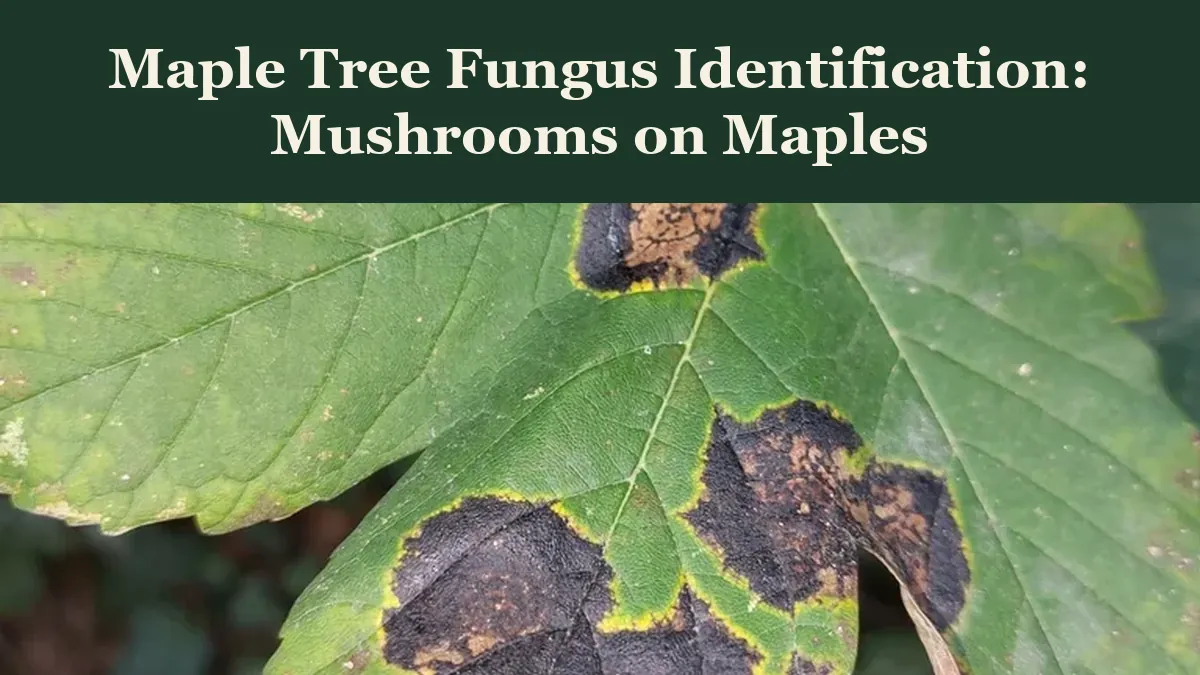
Most maple tree fungus is either a leaf spot that looks alarming but rarely hurts the tree, or a decay fungus fruiting from wood that is already rotting...
 Guide
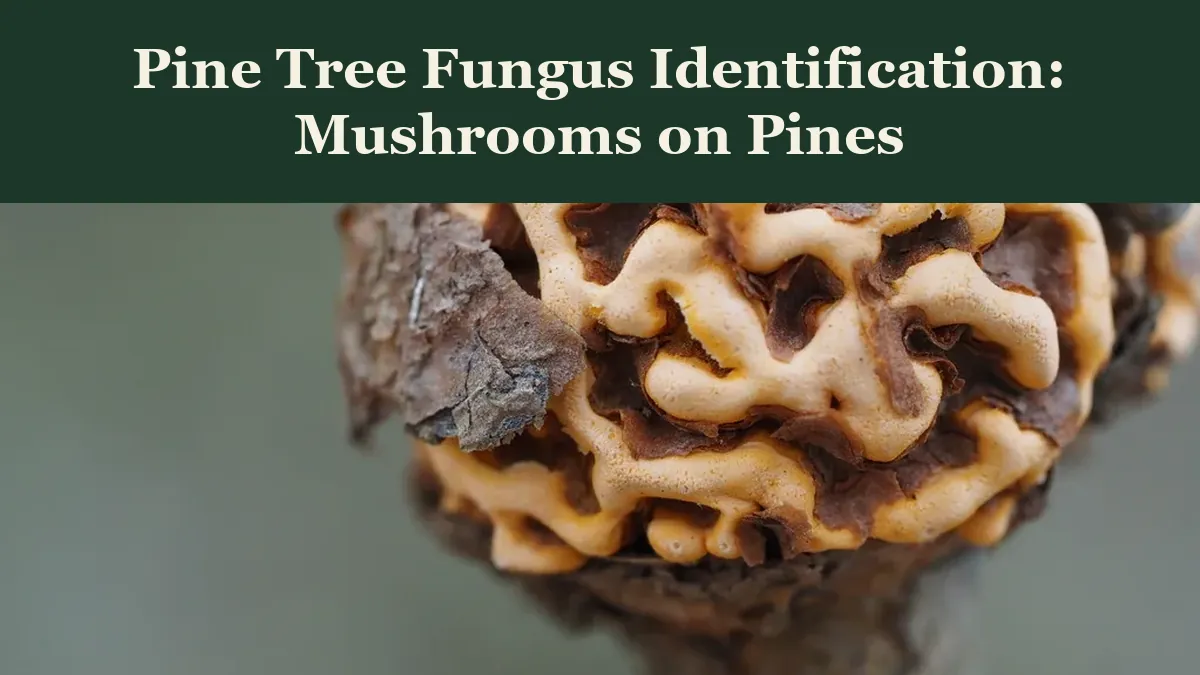
Pine tree fungus identification starts with color and place: orange powder on a woody gall is a rust, brown dead shoot tips are a blight, a conk at the base...
 Guide
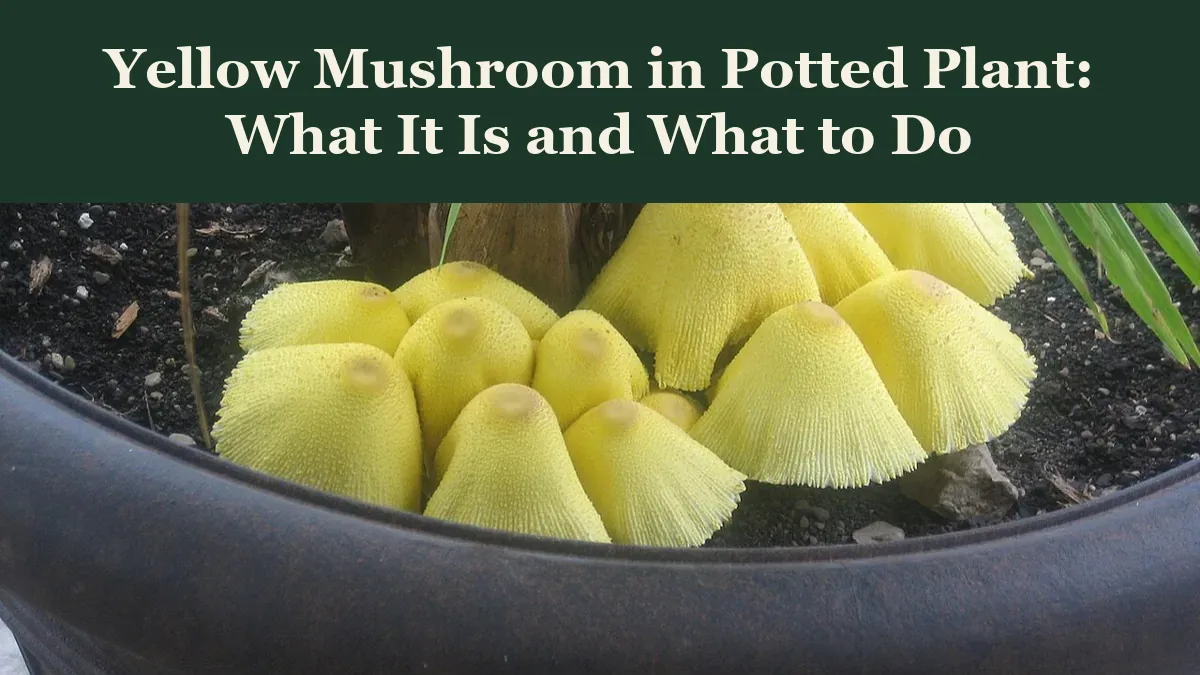
A yellow mushroom in a potted plant is almost always the flowerpot parasol, Leucocoprinus birnbaumii , a lemon-yellow mushroom that feeds on dead organic...