Maple Tree Fungus Identification: Mushrooms on Maples
— views
Most maple tree fungus is either a leaf spot that looks alarming but rarely hurts the tree, or a decay fungus fruiting from wood that is already rotting inside the trunk or roots. Black spots on the leaves are usually tar spot, which is cosmetic. A gray or black crust at the base, a conk at the root flare, or a cluster of honey-colored mushrooms are the signs that matter, because they point to root and butt rot.
This maple tree fungus identification guide sorts what you can see by where it grows: leaves, branches, bark, trunk, base and the lawn underneath. It says what each one means for the tree, what extension services advise, and which mushrooms on maples are dangerous.
Key Takeaways
- Black spots on maple leaves in late summer are tar spot. It generally does not harm the tree, and raking up fallen leaves is the main control.
- Branches that suddenly wilt on one side of a maple can be Verticillium wilt. Peel the bark on an affected branch and look for green or brown streaks in the sapwood.
- A gray crust at the base in spring that turns black and brittle by summer is brittle cinder. Purdue says infected trees will eventually die, and the decay raises the risk of collapse even when the crown looks healthy.
- A conk or a cluster of honey mushrooms at the base means root or butt rot. No spray cures it. Near a house, call a certified arborist.
- Maples partner with root fungi that do not form mushrooms, so mushrooms in the lawn under a maple are feeding on something else, possibly a root infected with Armillaria.
- The deadly Galerina grows on rotting wood next to honey and oyster mushrooms. Every wild mushroom needs expert confirmation before anyone eats it.
Maple Tree Fungus Identification Chart
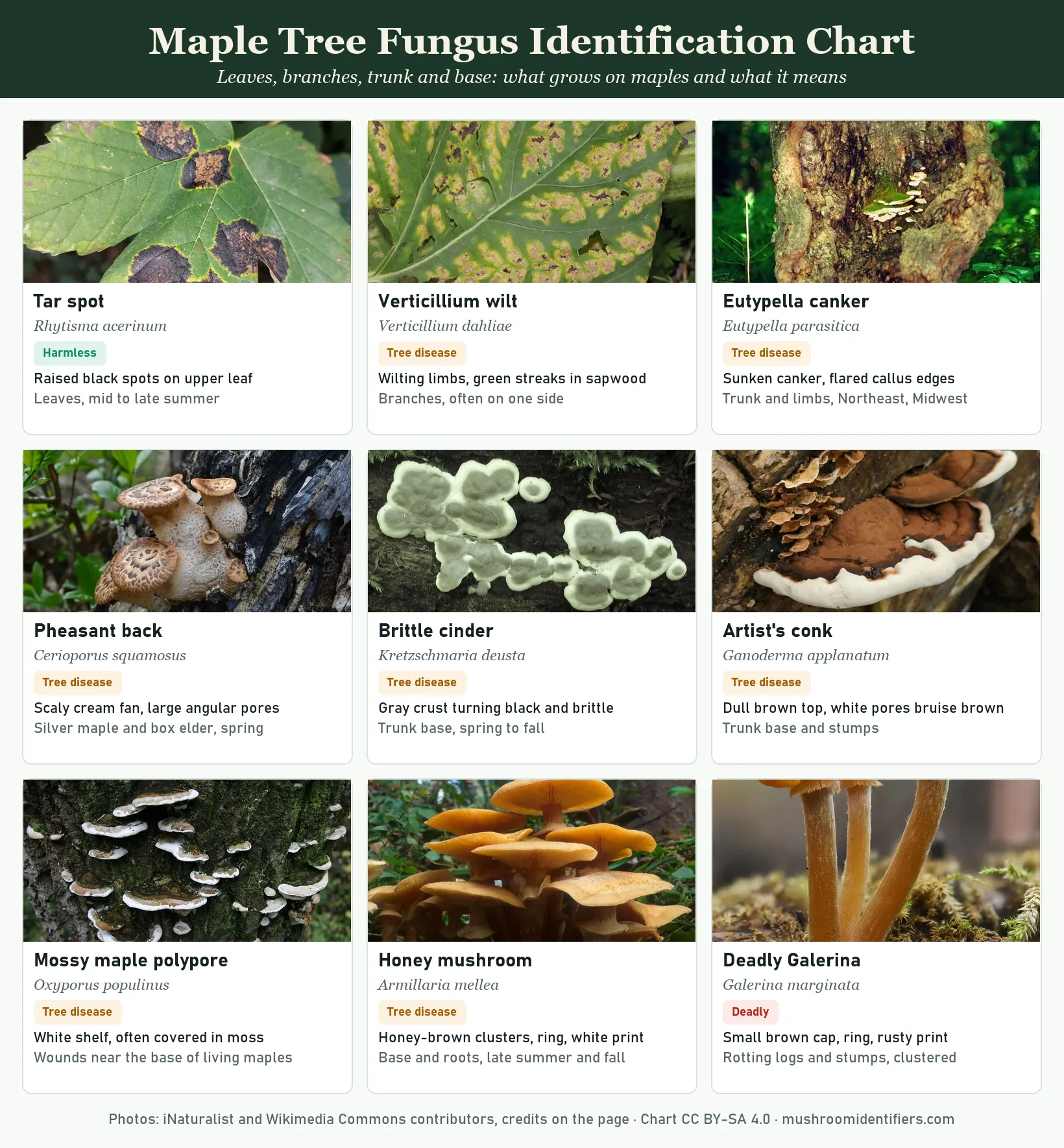
Find the row that matches where the growth appears on your maple, then read the species section below. Location is the best first clue, and the season is the second. Problems on the leaves are rarely serious, while anything at the base of the trunk deserves a closer look from a professional.
| Where you see it | What it looks like | Most likely | What it means for the tree | What to do |
|---|---|---|---|---|
| Leaves, mid to late summer | Raised black spots on the upper surface | Tar spot (Rhytisma) | Cosmetic | Rake and remove leaves in fall |
| Branches wilting, often on one side | Leaves yellow and wilt suddenly; streaked sapwood | Verticillium wilt (Verticillium dahliae) | Incurable; likely fatal in time | Water in drought, prune dead limbs |
| Sunken canker on trunk or limb | Bark stays on; callus flares at the sides | Eutypella canker (Eutypella parasitica) | Kills small trees; big ones can snap | Arborist check if low on the trunk |
| Bark falling off, black powder | Brown-black sooty spore masses | Sooty bark disease (Cryptostroma corticale) | Kills the cambium; mainly sycamore maple | Do not cut it yourself; spores harm lungs |
| Scaly cream shelf on the trunk in spring | Brown scales, large angular pores | Pheasant back (Cerioporus squamosus) | White heart rot | Arborist check if large |
| Gray, then black crust at the base | Gray patches with white edges, then black and brittle | Brittle cinder (Kretzschmaria deusta) | Fast decay; collapse risk | Professional hazard assessment soon |
| Hard conk at the base | Dull brown top; white underside that bruises brown | Artist's conk (Ganoderma applanatum) | Root and butt rot; can blow down | Structural inspection |
| Whitish mossy shelf low on the trunk | White to gray cap, white to cream underside | Mossy maple polypore (Oxyporus populinus) | Parasitic decay at a wound | Arborist check |
| Mushroom clusters at the base in fall | Honey-brown gilled caps with a ring | Honey mushroom (Armillaria) | Root rot; decline that can kill | Arborist assessment |
| Mushrooms on a dead log or stump | Gilled shelves, or small brown caps with a ring | Oysters, shaggy scalycap or deadly Galerina | The wood is already dead | Spore print; keep children and pets away |
| Mushrooms in the lawn under a maple | Gilled mushrooms rising from turf | Fungi on buried roots or wood | Fine, unless they are honey mushrooms | Identify before child or pet contact |
For the same chart on another host, see our oak tree fungus identification guide.
Is Fungus on a Maple Tree a Sign It Is Dying?
Fungus on a maple means disease or decay, but how serious it is depends on where it grows. Leaf spots in late summer matter least, because the leaves fall soon anyway. Shelves on the trunk mean the wood behind them is decaying. Crusts, conks and mushroom clusters at the base matter most, because they mean rot in the roots and butt, the part that anchors the tree.
Knocking off a conk does not remove the fungus, which lives in the wood. The Texas Plant Disease Diagnostic Lab names maples, oaks and honeylocusts as particularly susceptible to Ganoderma root rot, and notes that advanced root decay often shows only after the tree blows down. Our guide to mushrooms growing on trees covers other hosts.
Common Maple Tree Fungus Types in the US
The fungi found on maples fall into three groups: leaf diseases, diseases of the living bark and wood, and decay fungi that fruit as conks, crusts or mushrooms. They are listed below from the top of the tree to the ground, with the deadly mushroom that shares their stumps at the end.
Tar Spot (Rhytisma acerinum and Relatives)
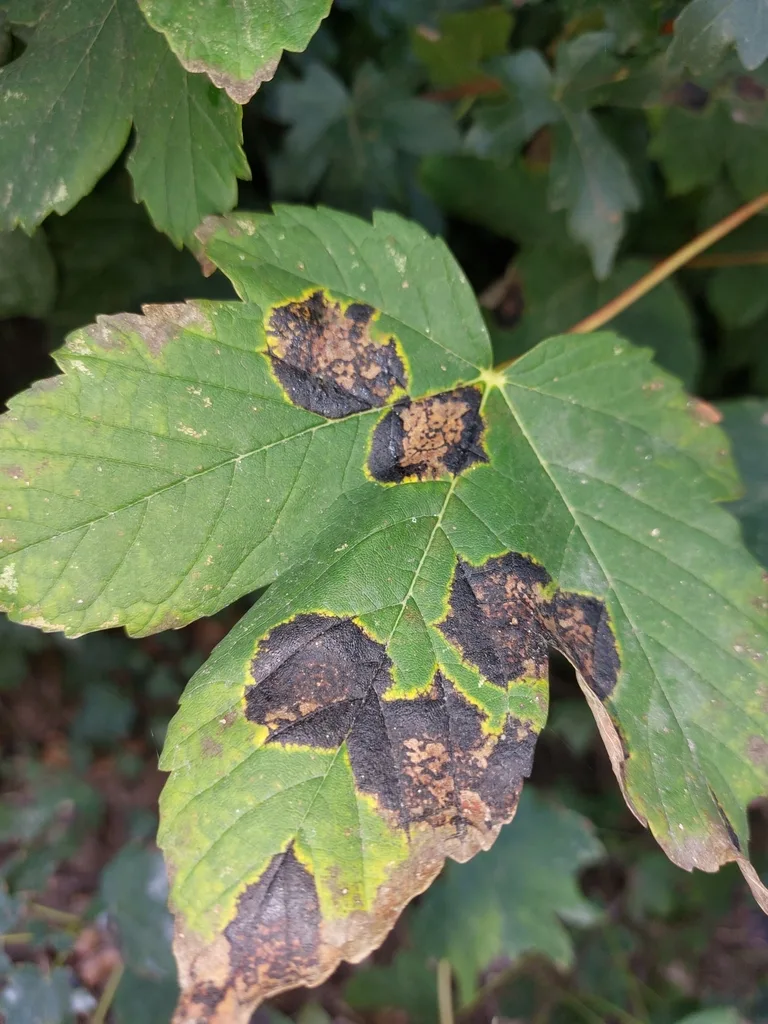
Tar spot is the black spotting behind most searches for maple tree fungus on leaves. The UConn Home and Garden Education Center describes three species. Rhytisma americanum is the most common on native maples, with raised spots 0.25 to 0.5 inch across. Rhytisma acerinum, the giant tar spot of Norway maple, makes patches 1 to 1.5 inches across. Rhytisma punctatum makes speckles about 1 mm wide.
Infection starts in spring, and the black spots form in mid to late summer. UConn states that the disease generally does not harm trees. Spores come from last year's fallen leaves, so the control is to rake and dispose of them in fall. Iowa State Extension describes a second leaf problem, leaf blister, with dark brown blisters between the veins after cool, wet springs; it is not serious unless it is severe for several years running.
Verticillium Wilt (Verticillium dahliae)
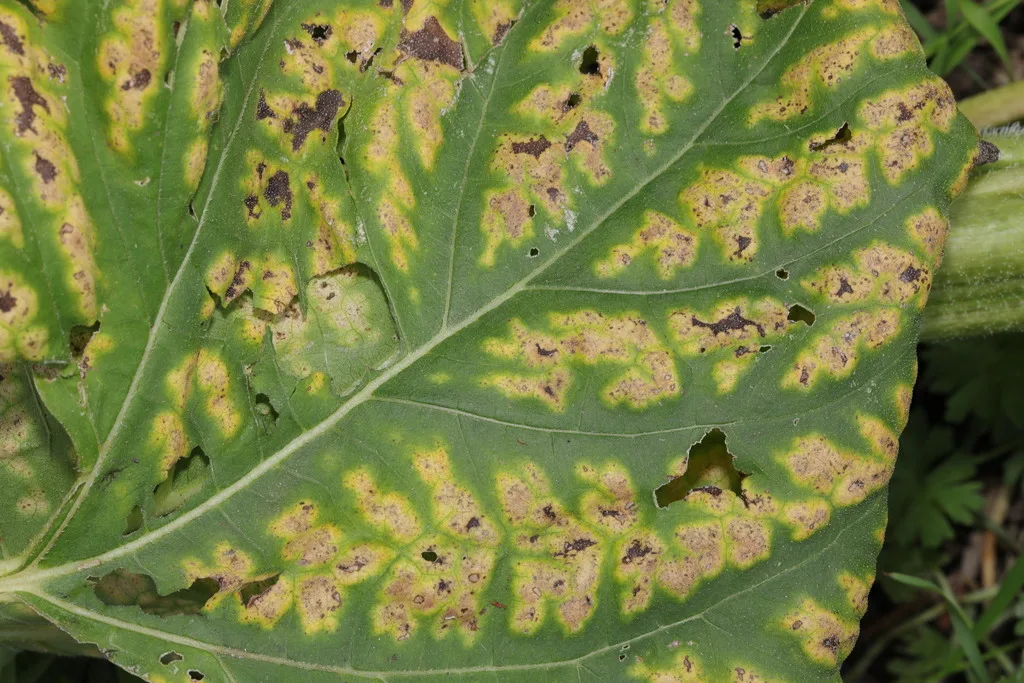
Verticillium wilt is the disease to suspect when whole maple branches suddenly wilt and die while the rest of the tree looks normal. University of Wisconsin-Madison Extension names Verticillium dahliae and V. albo-atrum as the causes, and lists maple and ash as the trees most commonly and severely affected. The fungi live in soil, enter through the roots and block the sapwood. Affected branches may sit on one side of the tree or be scattered through it.
The peel test: cut off a wilting branch, peel back the bark and look at the wood just under it. Brown or green streaks in the sapwood are a strong clue, and Wisconsin notes that streaking is common in maples. It is not always present, so a plant diagnostic lab should confirm the cause.
Wisconsin states that infected trees cannot be cured and will likely die eventually, but good care extends their life. Water about 1 inch per week in dry spells, prune dead branches, and disinfect tools between cuts with 70% alcohol or 10% bleach for at least 30 seconds. Do not use mulch from infected trees. For replanting, Wisconsin lists pines, spruces and firs as apparently immune, and oak, honeylocust and ginkgo among the resistant trees.
Eutypella Canker (Eutypella parasitica)
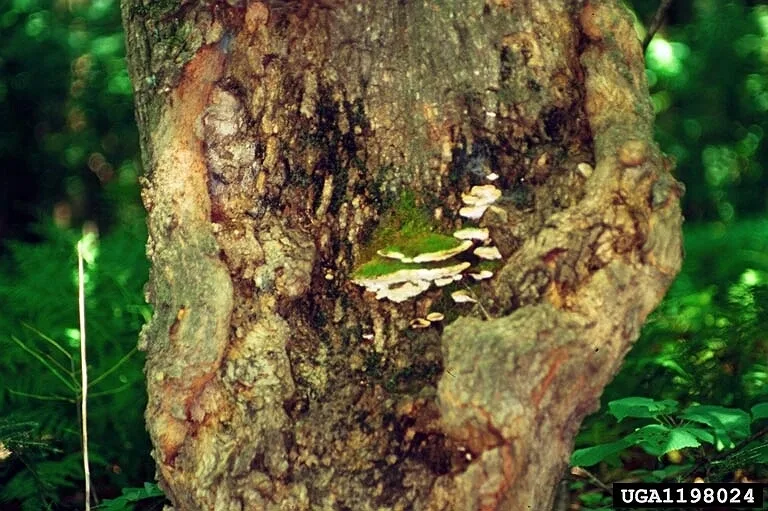
Eutypella canker is a slow, perennial trunk canker of maples. Forestpathology.org calls it an important disease of sugar maple in the Midwest and Northeast, and notes that Norway maple is often infected in cities. The canker is sunken, the bark usually stays on over it, and callus builds mostly at the sides, giving flared edges. Thick white to buff fans of fungus sit under the bark at the edge.
The fungus usually enters through small dead branch stubs. Trees under about 12 cm (5 inches) in trunk diameter can be killed outright, and larger trees can snap at the canker. About 60% of cankers sit in the lowest 2.5 meters (8 feet) of the stem. Cutting out the diseased bark can make a canker inactive, which is a job for an arborist.
Sooty Bark Disease (Cryptostroma corticale)
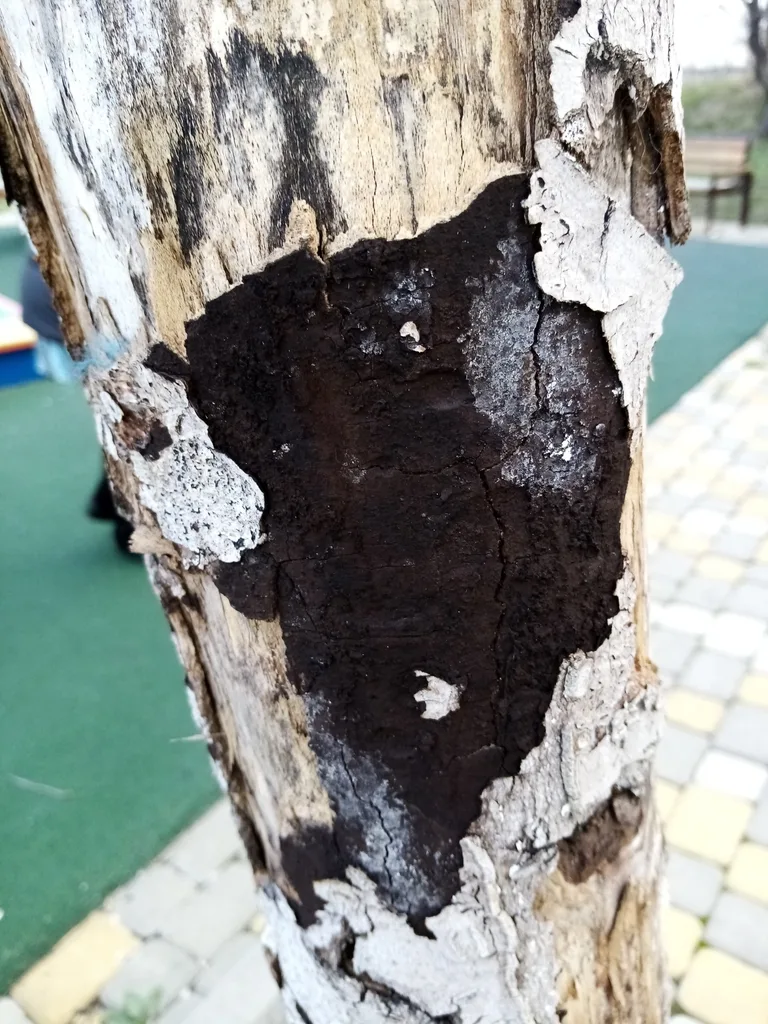
Sooty bark disease shows as bark falling away from a maple trunk to reveal brown-black, sooty spore masses. Forestpathology.org lists sycamore maple as the main host, with Norway, red, bigleaf, Japanese and box elder maples also recorded. In the Great Lakes region the fungus is a common decomposer on maples and is not considered a disease. As a disease, it was first reported in North America in Seattle in early 2020. Outbreaks follow hot, dry summers.
The spores are highly allergenic. Forestpathology.org states that they can cause severe asthma and hypersensitivity pneumonitis, known as maple bark stripper's disease in people who cut maple logs. Removal calls for professionals with respirators and protective clothing, and the wood should not be used as firewood.
Pheasant Back (Cerioporus squamosus)
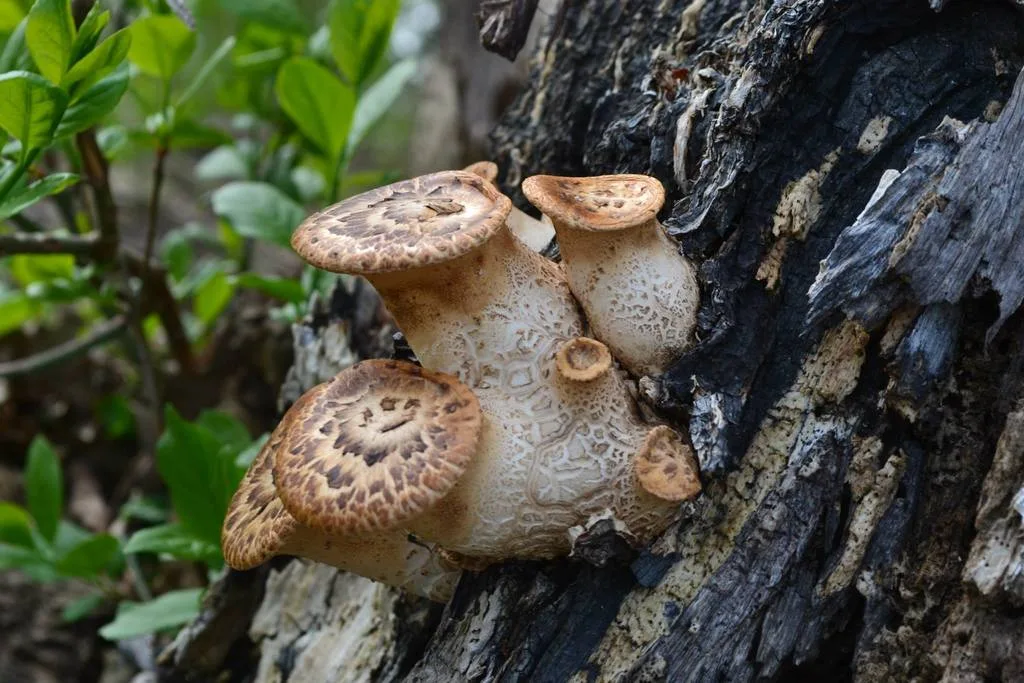
Pheasant back, also called dryad's saddle, is the large scaly shelf on maple trunks in spring. One field guide describes it as parasitic on living hardwoods, causing a white heart rot, and especially common on silver maple and box elder in the Midwest and East. The cap is 5 to 30 cm, pale tan to creamy, with flattened brown to blackish scales. The pores are large and angular.
The Missouri Department of Conservation uses the current name Cerioporus squamosus; a North American field guide still uses Polyporus squamosus. The sources disagree on the smell: one species account calls it strongly mealy, and Missouri compares it to watermelon rind. Missouri lists it as edible when young, and any wild mushroom still needs an experienced identifier's confirmation.
Oyster Mushrooms (Pleurotus ostreatus)
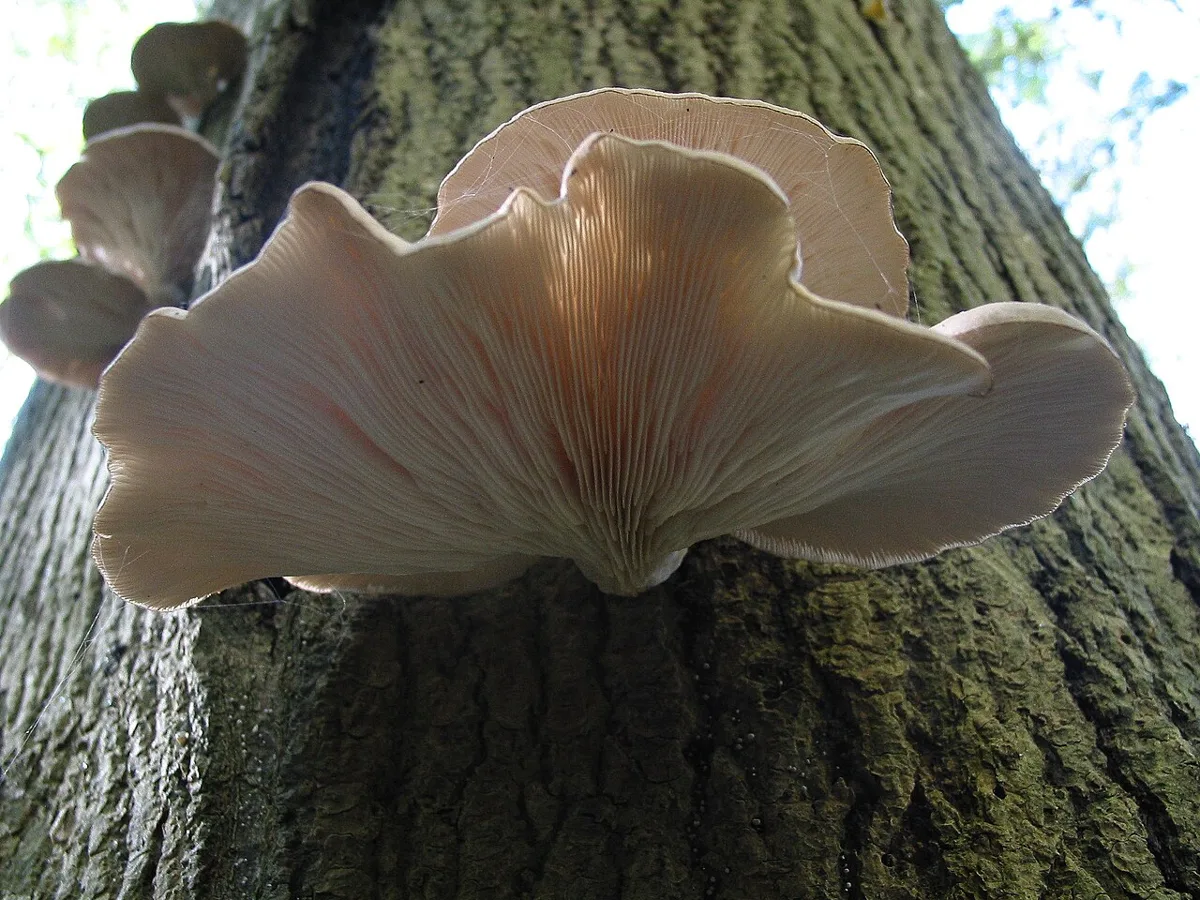
Oyster mushrooms grow in shelf-like clusters on dead logs and living trees, mostly hardwoods, so dead maple limbs and stumps suit them. A North American field guide places Pleurotus ostreatus from late fall to early spring and the paler Pleurotus pulmonarius from late April to September. The gills run down the stem, and the spore print is white to faintly yellowish or lilac. Our oyster mushroom identification guide covers the look-alikes.
Shaggy Scalycap (Pholiota squarrosa)
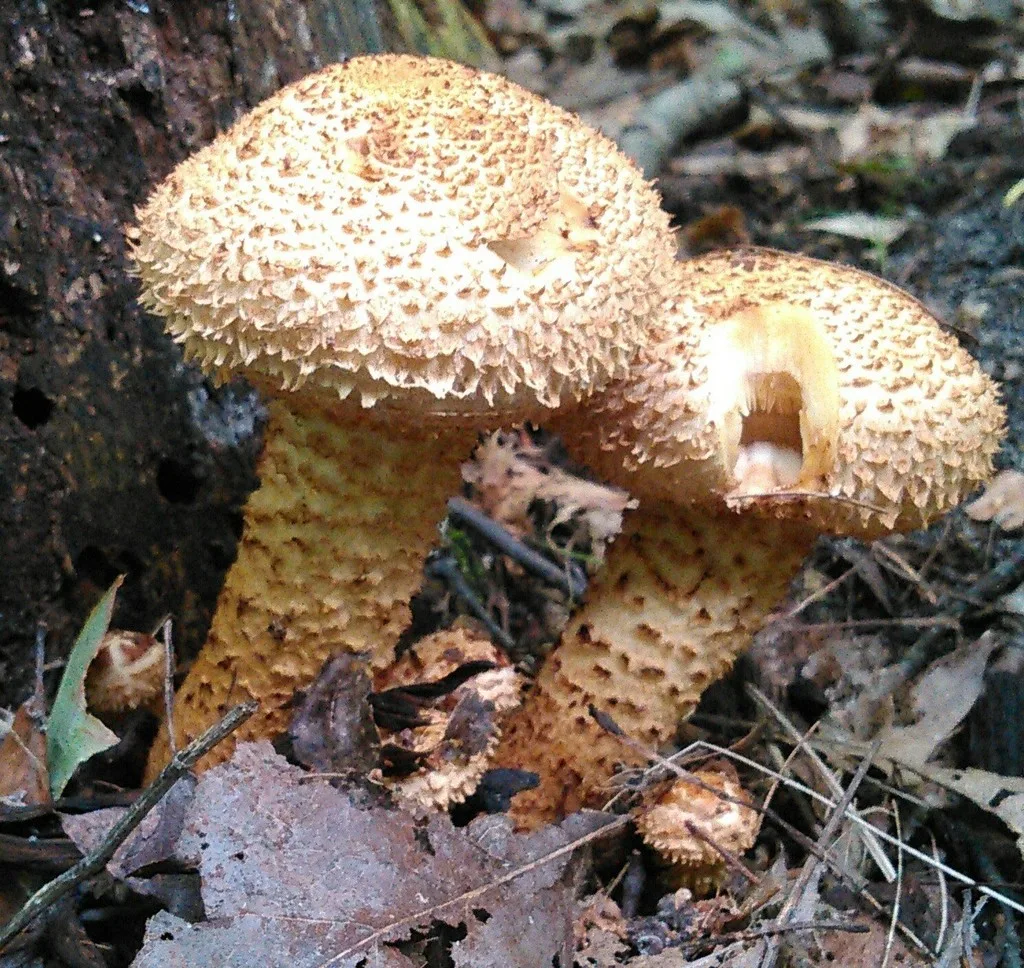
The shaggy scalycap is a dense cluster of yellowish caps covered in buff to tawny scales at the base of a living or dead tree. One species account describes it on hardwood or conifer wood in summer and fall, so it is not specific to maples. The gills turn greenish yellow, then rusty brown, and the spore print is cinnamon brown. The sources checked for this page give no edibility rating, so treat it as not edible.
Brittle Cinder (Kretzschmaria deusta)
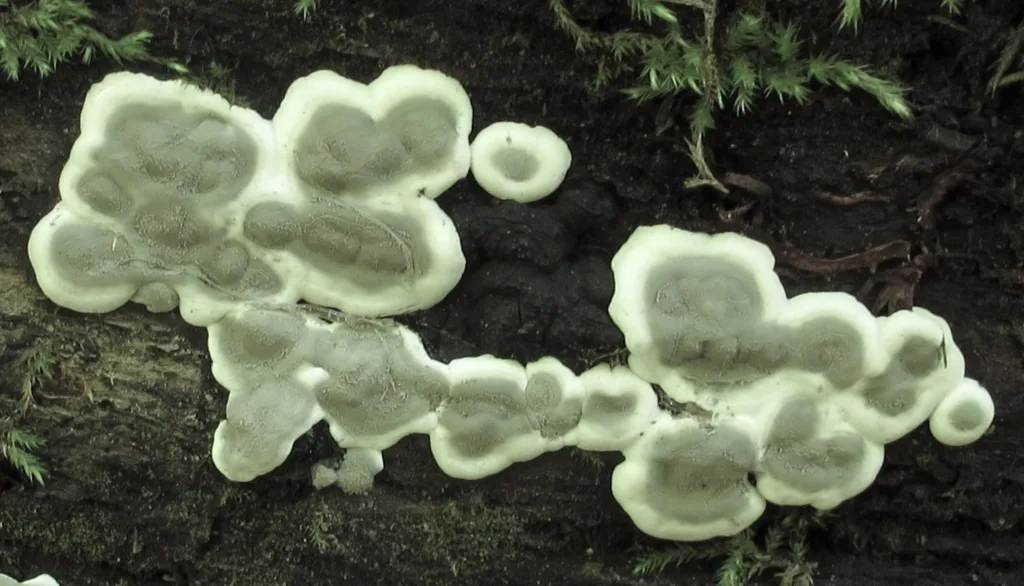
Brittle cinder is the most dangerous fungus on this page for a maple near a house, and the easiest to miss. In spring, a standard reference describes gray, dusty patches 2 to 9 cm across with a white margin near the base of the trunk. By summer it becomes a hard, black, lumpy crust that is usually overlooked. It looks like charcoal, not like a mushroom.
The Purdue Landscape Report says it is seen most often on maple and beech and enters wounded or stressed trees. Most decay fungi break down lignin or cellulose first. Brittle cinder decays both at once, which Purdue says causes faster decline and raises the risk of collapse. The crown can look completely healthy. Purdue states that there are no effective treatments and infected trees will eventually die. Look for cracked bark, bleeding cankers and bleached wood at the base.
Artist's Conk (Ganoderma applanatum)
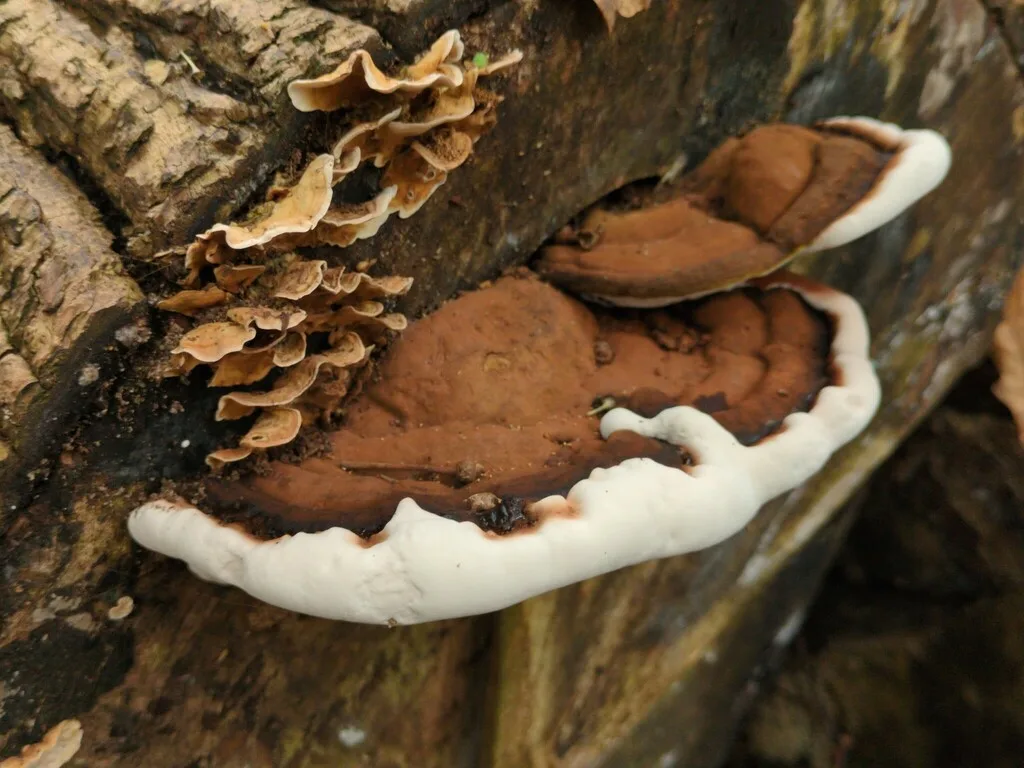
The artist's conk is a hard, flat shelf at the base of a maple or on its stump. A standard reference describes it on most hardwoods, causing a white to straw-colored rot of sapwood and heartwood. The cap is 10 to 30 cm, dull brown and unvarnished. The white to gray underside bruises brown and keeps the mark for years, which is why people draw on it. A shiny, varnished reddish shelf belongs to the Ganoderma lucidum group.
The Texas lab says Ganoderma enters through wounds on roots and the lower trunk, and decay can reach several feet into the butt. It knows of no control and advises a structural inspection by a trained professional once a conk appears.
Mossy Maple Polypore (Oxyporus populinus)
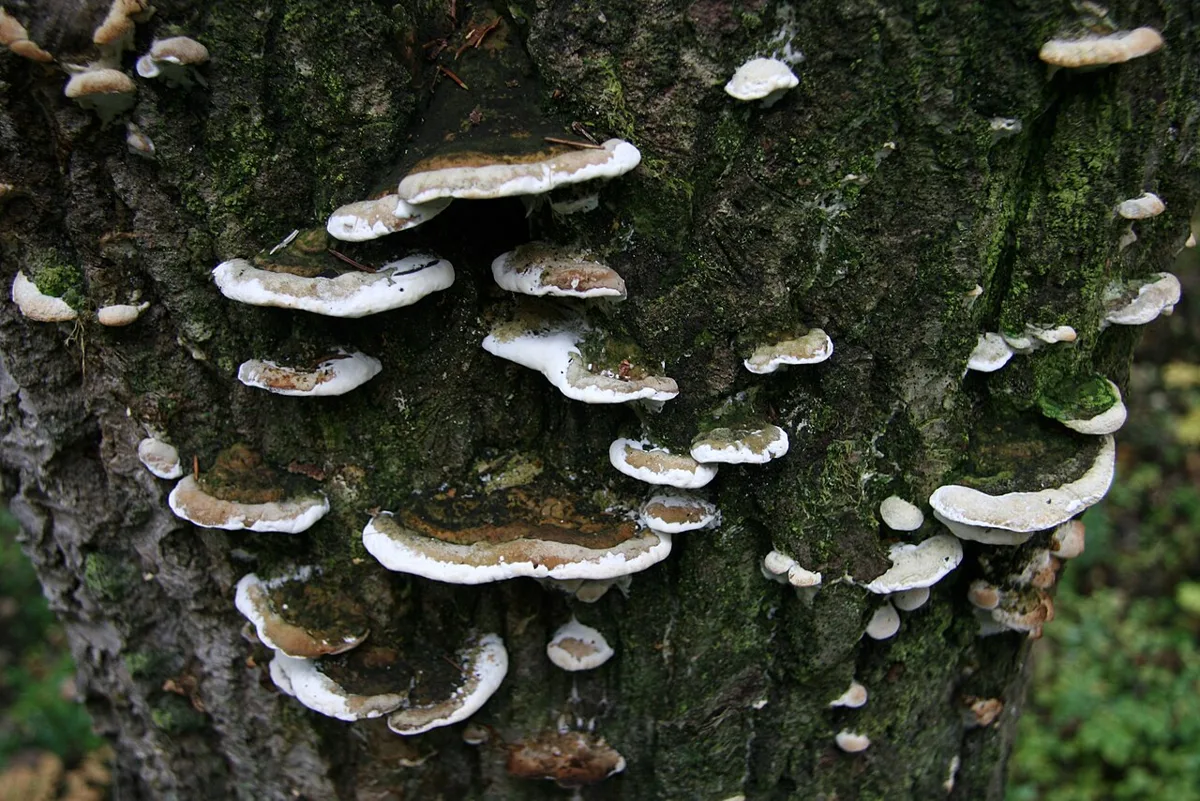
The mossy maple polypore is a whitish shelf that often wears a coat of moss, low on a living maple. One field guide's Fungi on Wood pages describe it as parasitic on living deciduous trees, especially maples, at the trunk base in or near wounds. Despite the name populinus, it is usually on maples, not poplars. Caps are 3 to 21 cm, and the pores are so small that the white to cream underside can look smooth. It is perennial and can stack up to 20 tube layers.
Honey Mushroom (Armillaria mellea)
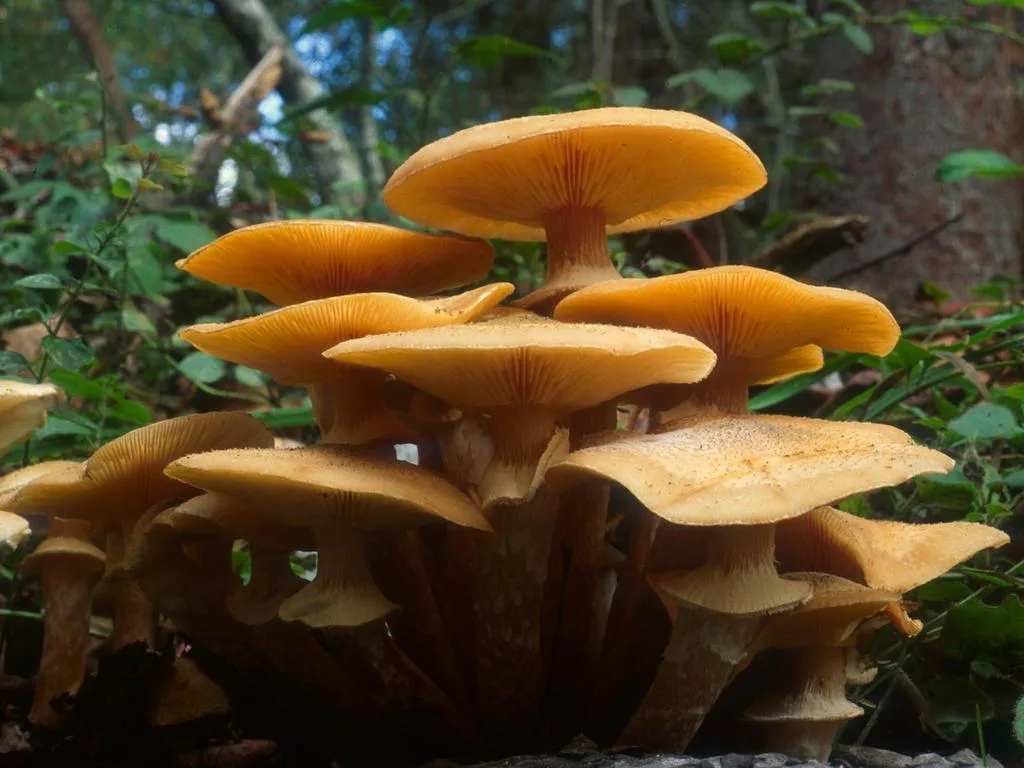
Clusters of honey-colored gilled mushrooms at the base of a maple in late summer and fall are Armillaria. The Missouri Department of Conservation says it infects more than 200 hardwoods and conifers and that oaks, elms and maples are highly susceptible. A USDA Forest Service review by Horsley and colleagues (2002) lists Armillaria among the important factors in sugar maple decline, with nutrient shortages, defoliation and drought.
The mushrooms are not a reliable sign. UC IPM notes that some trees die without producing them, and that clusters can rise from a buried root in the lawn. The better check is white, fan-shaped sheets of fungus under dead bark at the root collar. UC IPM lists no registered fungicides for Armillaria in California. Our honey mushroom identification guide covers the species.
Deadly Galerina (Galerina marginata)
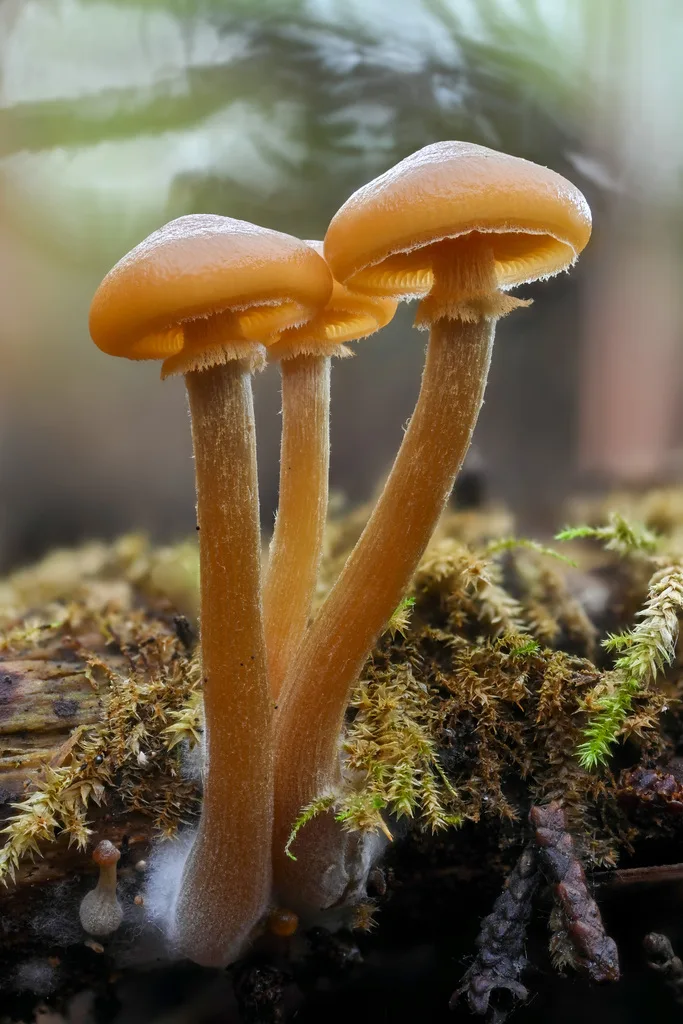
The deadly Galerina is the most dangerous mushroom likely on a rotting maple log or stump. MykoWeb describes it on well-decayed wood, with a sticky yellow-brown to orange-brown cap of 2 to 6 cm, a ring that may vanish with age, and a rusty brown spore print. MykoWeb rates it deadly poisonous, because it contains alpha-amanitins in amounts that can kill.
Honey Mushroom, Oyster or Deadly Galerina: Side-by-Side
Three gilled mushrooms share dead maple wood, and one of them is deadly, so a spore print is the minimum check. Honey and oyster mushrooms drop a white to pale print. The deadly Galerina drops a rusty brown print. Our spore print guide shows how to take one.
| Feature | Honey mushroom (Armillaria mellea) | Oyster (Pleurotus ostreatus) | Deadly Galerina (Galerina marginata) |
|---|---|---|---|
| Grows from | Wood or buried wood, large clusters | Shelves on logs and trunks | Well-decayed wood |
| Cap | 3 to 13 cm, yellowish to reddish brown | 3 to 15 cm, fan- or kidney-shaped | 2 to 6 cm, sticky, yellow-brown |
| Gills and ring | Cottony ring near the top of the stem | Gills run down the stem | Ring that may vanish with age |
| Spore print | White | White to faintly yellowish or lilac | Rusty brown |
| Risk | Digestive upset in some people, per MykoWeb | Deadly look-alikes on the same wood | Deadly: alpha-amanitins |
Why Are Mushrooms Growing in the Lawn Under My Maple?
Mushrooms in the grass under a maple are not the maple's root partners, because maples team up with fungi that never make mushrooms. A 2025 review in Frontiers in Microbiology describes sugar maple as associating exclusively with arbuscular mycorrhizal fungi. These live inside fine roots and spread by spores in the soil, as McDermott and Berry (Native Plants Journal, 2003) explain.
Their table lists maples as arbuscular, pines and birches as ectomycorrhizal, and oaks as able to form both. Many ectomycorrhizal fungi produce mushrooms.
So under a maple, a lawn mushroom is most likely breaking down dead roots or buried wood, or it belongs to a nearby oak, pine or birch. The one to watch is Armillaria fruiting from an infected root. See why mushrooms grow in your yard for common lawn species.
Can You Treat Maple Tree Fungus?
No spray cures wood decay, root rot, brittle cinder or Verticillium wilt in a maple, and the extension sources on this page say so plainly. Purdue reports no effective treatment for brittle cinder, the Texas lab knows of no control for Ganoderma rot, and Wisconsin says Verticillium wilt cannot be cured. UConn calls spraying for tar spot rarely warranted.
What helps is prevention and inspection. Avoid mower and string trimmer wounds on the trunk and roots, water during drought, and prune without leaving branch stubs. When a crust, conk or mushroom cluster appears at the base, have a certified arborist judge how much sound wood is left.
Common Identification Mistakes
Treating Tar Spot as a Tree Killer
Black leaf spots look dramatic, but tar spot is cosmetic. Save your worry for the trunk and base.
Walking Past Brittle Cinder
A black crust at the root flare looks like charcoal, not a fungus. Check the base of every large maple near a house, driveway or play area.
Knocking Off a Conk and Calling It Fixed
The conk is only the fruiting body. The decay inside the wood keeps going.
Picking Mushrooms off a Maple Stump Without a Spore Print
Honey mushrooms, oysters and the deadly Galerina can share a stump. A rusty brown print means Galerina.
Blaming a Wilting Branch on Drought Alone
Sudden wilting of one limb can be Verticillium wilt. Peel the bark and look for streaks first.
Frequently Asked Questions
What are the black spots on my maple tree leaves?
Raised black spots on the upper side of maple leaves in late summer are tar spot, caused by Rhytisma fungi. Norway maples get large spots, and native maples get smaller raised ones.
Is tar spot bad for maple trees?
No. UConn states that tar spot generally does not harm trees. Raking and removing fallen leaves in fall reduces next year's infection.
What is the fungus at the base of my maple tree?
The most common are honey mushrooms in fall clusters, the artist's conk, the mossy maple polypore and brittle cinder, a gray to black crust. All of them mean root or butt rot, so a certified arborist should inspect the tree.
What does Verticillium wilt look like on a maple?
Leaves on individual branches yellow, wilt and die suddenly, often on one side of the tree. Peeling the bark of an affected branch may show brown or green streaks in the sapwood.
What is the white fungus on my maple tree?
A white shelf low on the trunk, often mossy, is likely the mossy maple polypore. White fan-shaped sheets under loose bark at the base point to Armillaria root rot.
Can a maple tree survive with fungus on it?
Often, yes, if the fungus is on the leaves or is a slow heart rot in a large trunk. Brittle cinder, Verticillium wilt and heavy root rot usually mean decline, and an arborist can judge how much sound wood remains.
Should I cut down a maple with brittle cinder fungus?
Have a certified arborist assess it soon. Purdue says there are no effective treatments and infected trees will eventually die. The risk of collapse rises even while the crown looks healthy.
Are mushrooms that grow on maple trees edible?
Some are listed as edible, such as pheasant back when young, but the deadly Galerina grows on the same rotting wood. Never eat one without confirmation from an experienced identifier.
Why are there mushrooms in the grass under my maple tree?
Maples partner with root fungi that do not form mushrooms, so lawn mushrooms under a maple are breaking down dead roots or buried wood, or belong to another tree. Honey mushrooms in the lawn can mean Armillaria in buried roots.
Is black sooty powder under maple bark dangerous?
It can be sooty bark disease, recorded mostly on sycamore maples. The spores can cause severe asthma and a lung illness called hypersensitivity pneumonitis, so keep away and leave cutting to professionals with protective gear.
Final Safety Reminder
A maple rarely dies from what shows on its leaves, but a crust or conk at the base can mean a tree that fails in a storm, so call a certified arborist for any maple near people or buildings. The rotting wood of a maple can carry edible mushrooms and the deadly Galerina side by side. Never eat a wild mushroom based on a chart, a photo or an app, and keep children and pets away from unknown finds. If a pet eats one, follow our guide on what to do if your dog ate a mushroom. For a first opinion, photograph the top, underside and base and check them with our free mushroom identifier, then confirm with a local expert.
Sign in to leave a comment and join the discussion.
 Guide
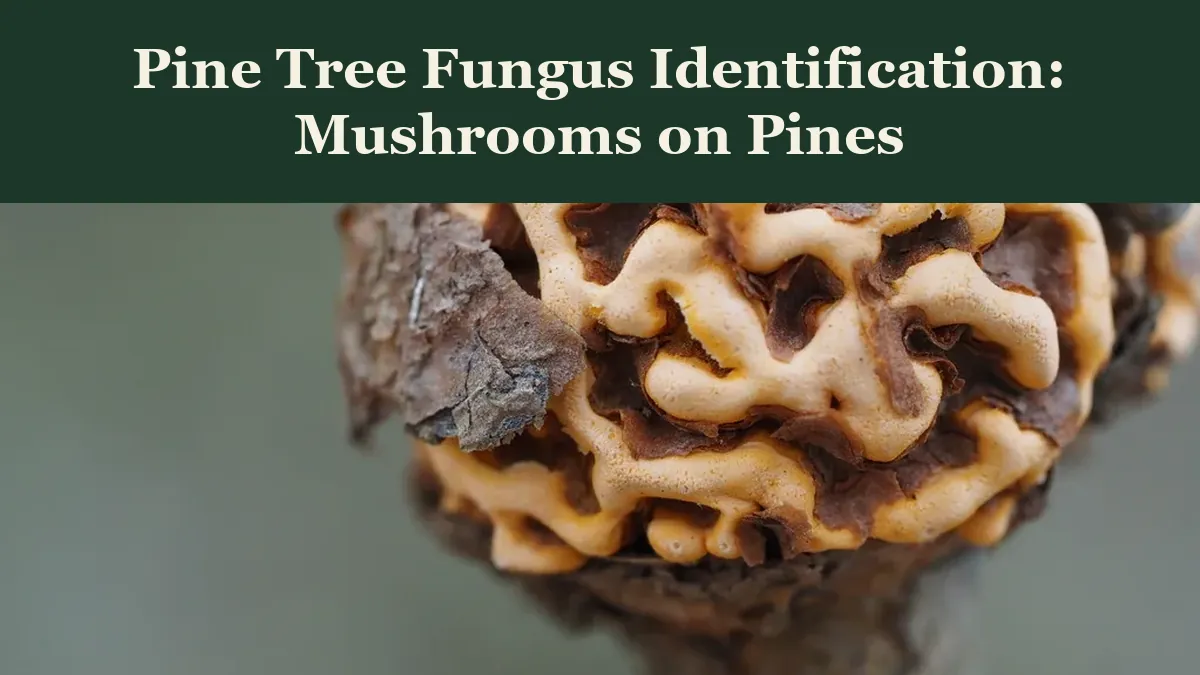
Pine tree fungus identification starts with color and place: orange powder on a woody gall is a rust, brown dead shoot tips are a blight, a conk at the base...
 Guide
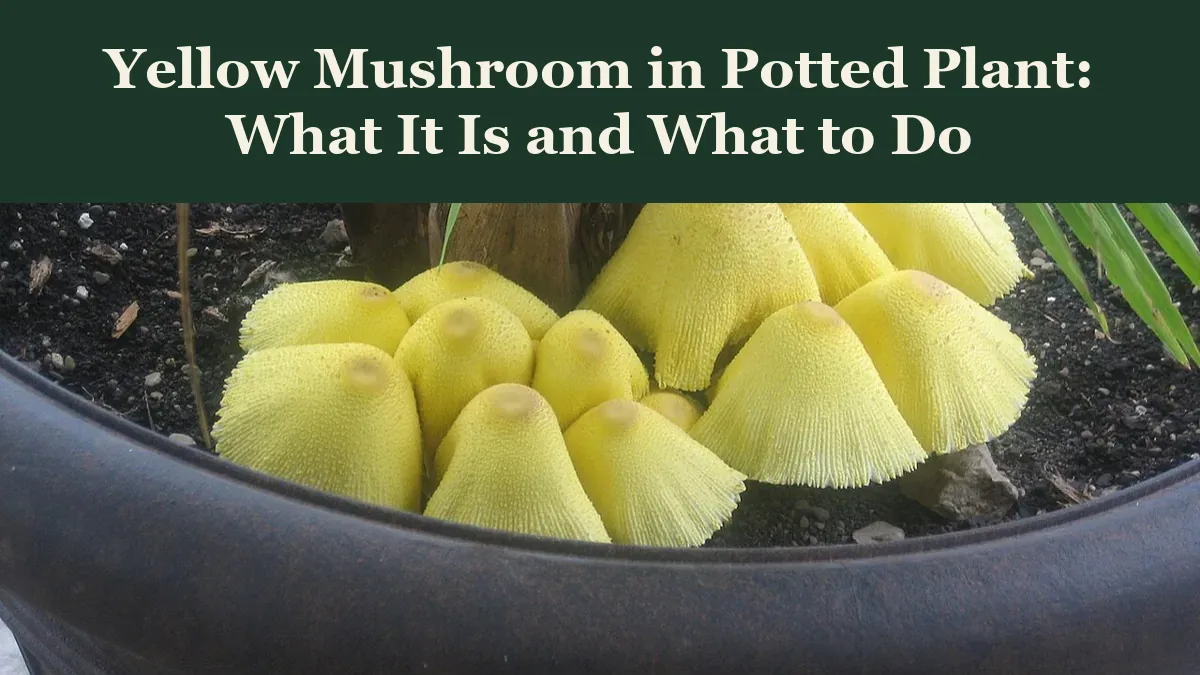
A yellow mushroom in a potted plant is almost always the flowerpot parasol, Leucocoprinus birnbaumii , a lemon-yellow mushroom that feeds on dead organic...
 Guide
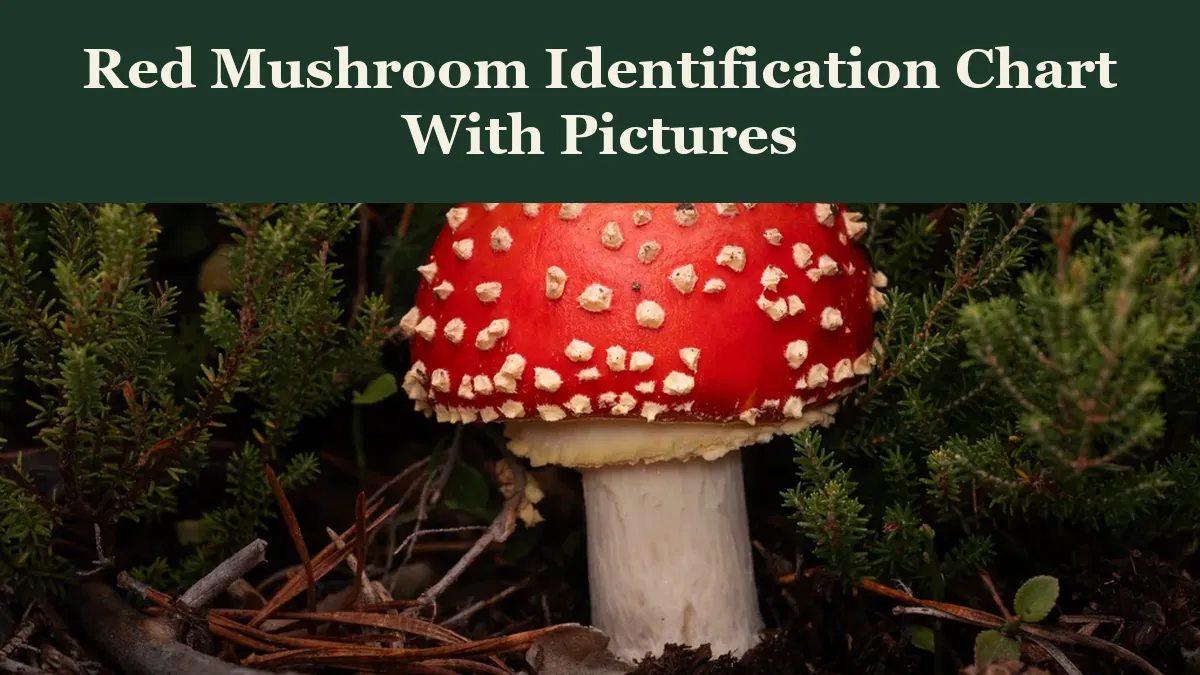
A red mushroom in the US is most often a fly agaric, a red Russula, a waxcap, a red-pored bolete or a shiny reishi shelf on a tree. The red mushrooms most...