Pine Tree Fungus Identification: Mushrooms on Pines
— views
Pine tree fungus identification starts with color and place: orange powder on a woody gall is a rust, brown dead shoot tips are a blight, a conk at the base is root rot, and white fluff on the bark is usually an insect. Mushrooms in the needles under a pine are often the tree's root partners. A few fungi do kill pines, so where the growth sits on the tree matters more than how dramatic it looks.
This guide sorts what you can see on a pine by location, says what each one means for the tree, and covers the mushrooms that grow under pines, including the poisonous fly agaric.
Key Takeaways
- Bright orange powder on a round gall in spring is a gall rust. Nearby oaks point to eastern gall rust; western gall rust needs no other host.
- Orange spores breaking from a resin-edged canker on a five-needle pine point to white pine blister rust, which needs currants or gooseberries nearby and can kill young trees.
- White, cottony fluff on a white pine trunk is usually the pine bark adelgid, an insect, not a fungus.
- Brown, resin-oozing new shoot tips on Austrian, red or Scots pine are typical of Diplodia tip blight, a disease of stressed trees.
- A velvety red-brown conk on the ground near the trunk, or a brown conk with a white underside at the root collar, means root and butt rot. Near a house, call a certified arborist.
- Pines host slippery jacks, saffron milk caps and the poisonous fly agaric. Every wild mushroom needs expert confirmation before anyone eats it.
Pine Tree Fungus Identification Chart
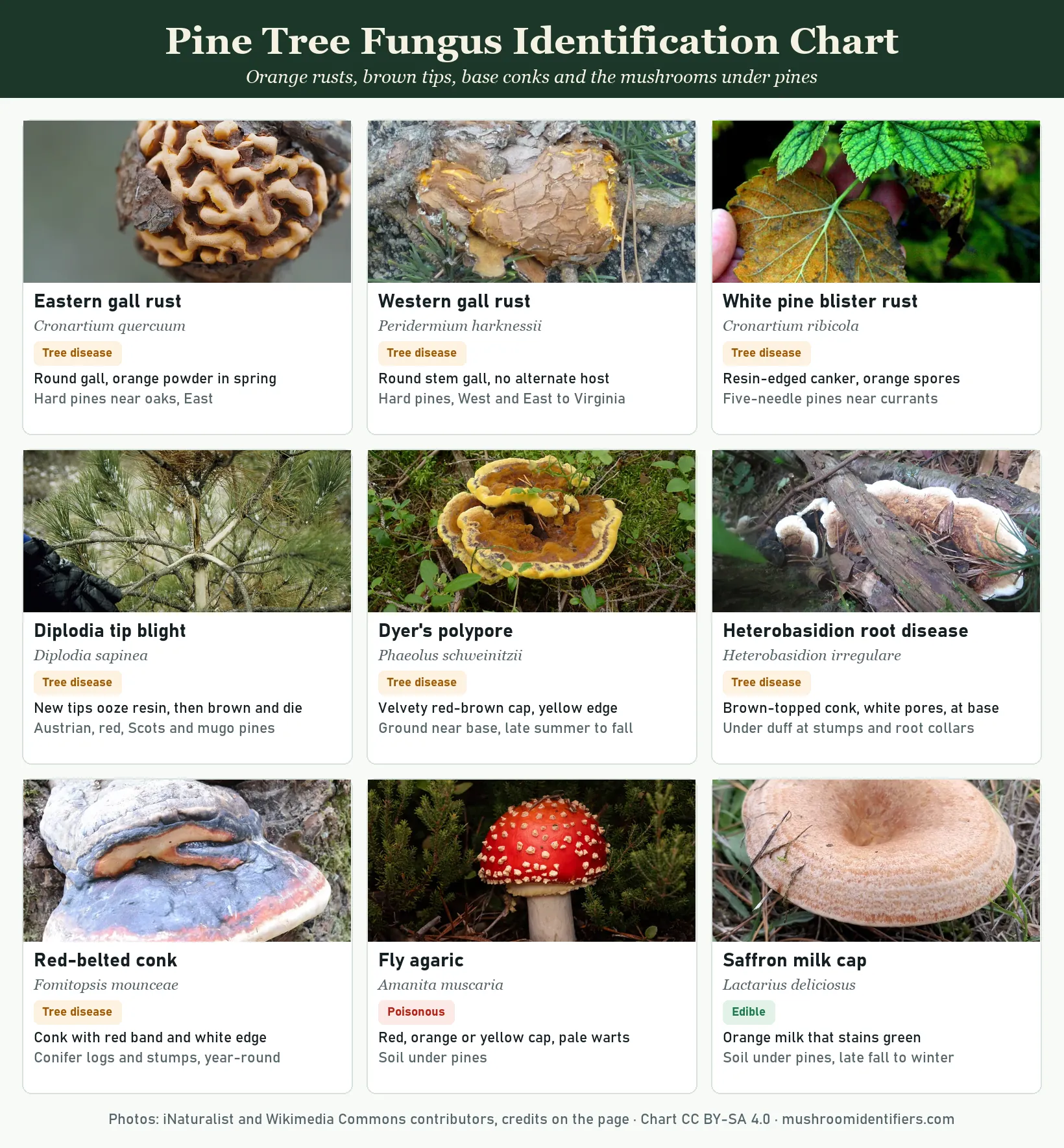
Find the row that matches where the growth appears on your pine, then read the species section below. Location is the best first clue. Color is the second: orange powder on galls and cankers comes from rusts, and white fluff on white pines is often an insect.
| Where you see it | What it looks like | Most likely | What it means for the tree | What to do |
|---|---|---|---|---|
| Round gall on a branch or stem, orange in spring | Woody swelling covered in bright orange powder | Eastern or western gall rust | Stems can break at galls in wind | Check nearby oaks; arborist if on the main stem |
| Canker on a five-needle pine | Swollen or sunken bark, resin edges, orange spores, dead flagged branches | White pine blister rust (Cronartium ribicola) | Kills branches; can kill young trees | Prune branch cankers; remove nearby currants |
| New shoot tips brown and dead | Tips ooze resin, then brown; black specks on shoots and cones | Diplodia tip blight (Diplodia sapinea) | Dieback on stressed trees | Prune in dry weather; reduce stress |
| Resin flowing down the bark, dead branch tips | Honey-colored, resin-soaked wood under the bark | Pitch canker (Fusarium circinatum) | Girdles branches and stems | Do not move the wood; arborist check |
| White fluff on the trunk or branches | Cottony white wax over tiny dark insects | Pine bark adelgid (Pineus strobi), not a fungus | Unsightly on older trees; harms young ones | Usually nothing on mature trees |
| Velvety conk on the ground near the trunk | Red-brown top, greenish yellow edge, often stalked | Dyer's polypore (Phaeolus schweinitzii) | Brown butt rot; windthrow risk | Hazard assessment near buildings |
| Brown conk at the root collar or a stump | Dirty brown top, white pore surface, often under the duff | Heterobasidion root disease (H. irregulare) | Girdles the root collar; spreads by roots | Arborist; borax on fresh stumps |
| Hard conk with a red band on a log, stump or trunk | Banded reddish margin with a white edge, white pores | Red-belted conk (Fomitopsis mounceae) | Decays conifer wood, mostly dead | Arborist check if on a living trunk |
| Cream rosette or orange shelves at the base | Wavy cream lobes, or orange shelves with yellow pores | Cauliflower mushroom or conifer chicken of the woods | Root or wood decay | Monitor; see the base table below |
| Mushrooms in the needles under a pine | Slimy capped boletes, orange milk caps, red or yellow Amanitas | Root partners of the pine | The tree is fine; many are root partners | Leave them; keep children and pets away |
For other host trees, see our tree mushroom identification chart and the oak tree fungus identification guide.
Is Fungus on a Pine Tree a Sign It Is Dying?
Fungus on a pine is a sign of disease or decay, and where it grows tells you how serious it is. Gall rusts and tip blight usually show on branches and shoots. Cankers that circle the trunk, and root rots at the base, are the ones that kill pines or make them fall. A conk is the fruiting body of a fungus living inside the wood, so knocking it off changes nothing.
Two root and butt rots matter most near buildings. Natural Resources Canada warns that Schweinitzii butt rot makes trees prone to windthrow or breakage of the lower trunk. Forestpathology.org says Heterobasidion girdles the root collar of pines. Our guide to mushrooms growing on trees covers other hosts.
Orange Fungus on a Pine Tree: The Needle and Neighbor Test
Bright orange powder on a pine gall or canker is the spore stage of a rust fungus, and two quick checks tell the three common rusts apart: how many needles grow in each bundle, and which plants grow nearby. Rusts with an alternate host cannot spread from pine to pine. They need a second plant to finish their life cycle, so the neighbors are a clue a photo cannot show.
| Check | Eastern gall rust | Western gall rust | White pine blister rust |
|---|---|---|---|
| Fungus | Cronartium quercuum | Peridermium harknessii | Cronartium ribicola |
| Pines attacked | Hard pines: jack, Scots, shortleaf, Virginia | Hard pines: ponderosa, lodgepole, jack, Monterey, Scots | Pines with needles in bundles of five |
| Second host needed | Red oaks or bur oak | None; spreads pine to pine | Currants and gooseberries (Ribes) |
| What you see | Round gall, orange powder in spring | Same gall; cannot be told apart by shape | Resin-edged canker; yellow to orange spores; flagged branches |
| Where | East of the Great Plains, where oaks grow | Western pine forests; in the East south to Virginia | Wherever five-needle pines and Ribes meet |
Gall rust details come from Ostry and Juzwik in the USDA Forest Service Forest Nursery Pests handbook, and blister rust details from the University of Wisconsin Plant Disease Diagnostics Clinic. Brown, hair-like growths on nearby oak leaves point to eastern gall rust.
Common Pine Tree Fungus Types in the US
The growths people find on pines fall into four groups: rusts, shoot and canker diseases, root and butt rots, and mushrooms that partner with or decay the tree. One insect is included because people mistake its white wax for a fungus.
Eastern Gall Rust (Cronartium quercuum)
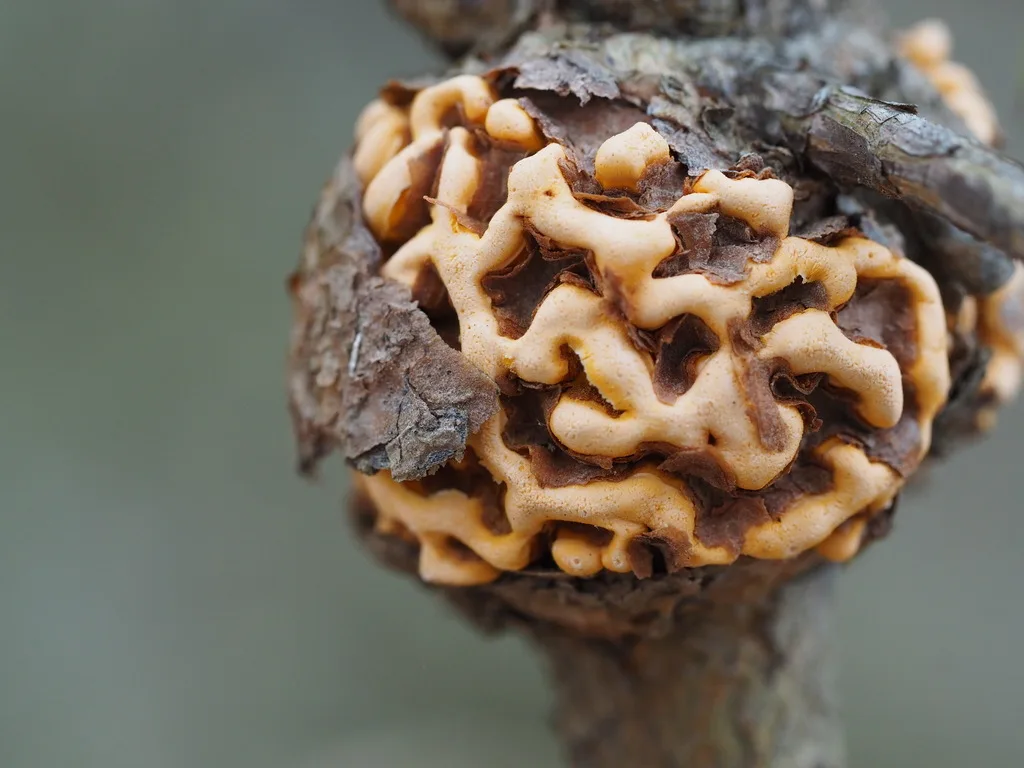
Eastern gall rust, also called pine-oak gall rust, makes round to irregular woody galls on pine stems and branches. Ostry and Juzwik list jack, Scots, shortleaf, Virginia and other hard pines as hosts, with red oaks and bur oak as the required alternate hosts. The galls are most visible in spring, when they are covered in bright orange, powdery spores. Those spores infect young oak leaves, and spores from the oak return to pine needles in late summer and early fall. Galls form about a year after infection. Harm to oaks is minimal, but pine stems can break at galls in wind.
Western Gall Rust (Peridermium harknessii)
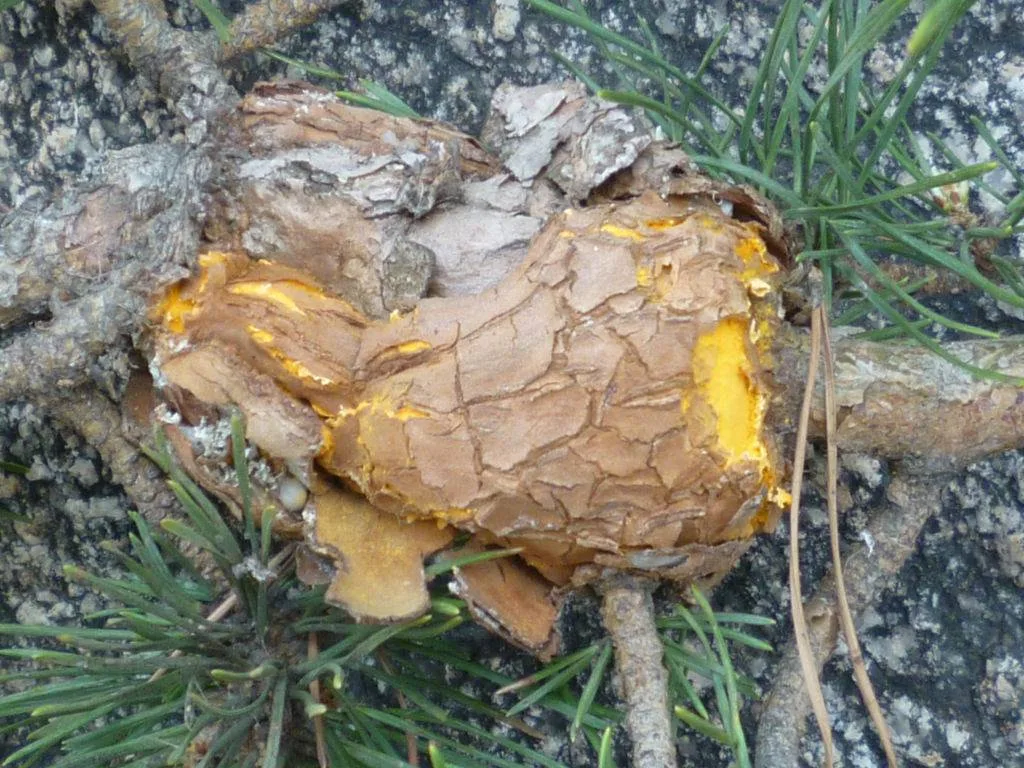
Western gall rust, also listed as Endocronartium harknessii, makes the same round galls but needs no alternate host. It spreads directly from pine to pine. Ostry and Juzwik list ponderosa, lodgepole, jack, Monterey, Jeffrey and other hard pines. It occurs throughout western pine forests and in the East as far south as Virginia.
White Pine Blister Rust (Cronartium ribicola)
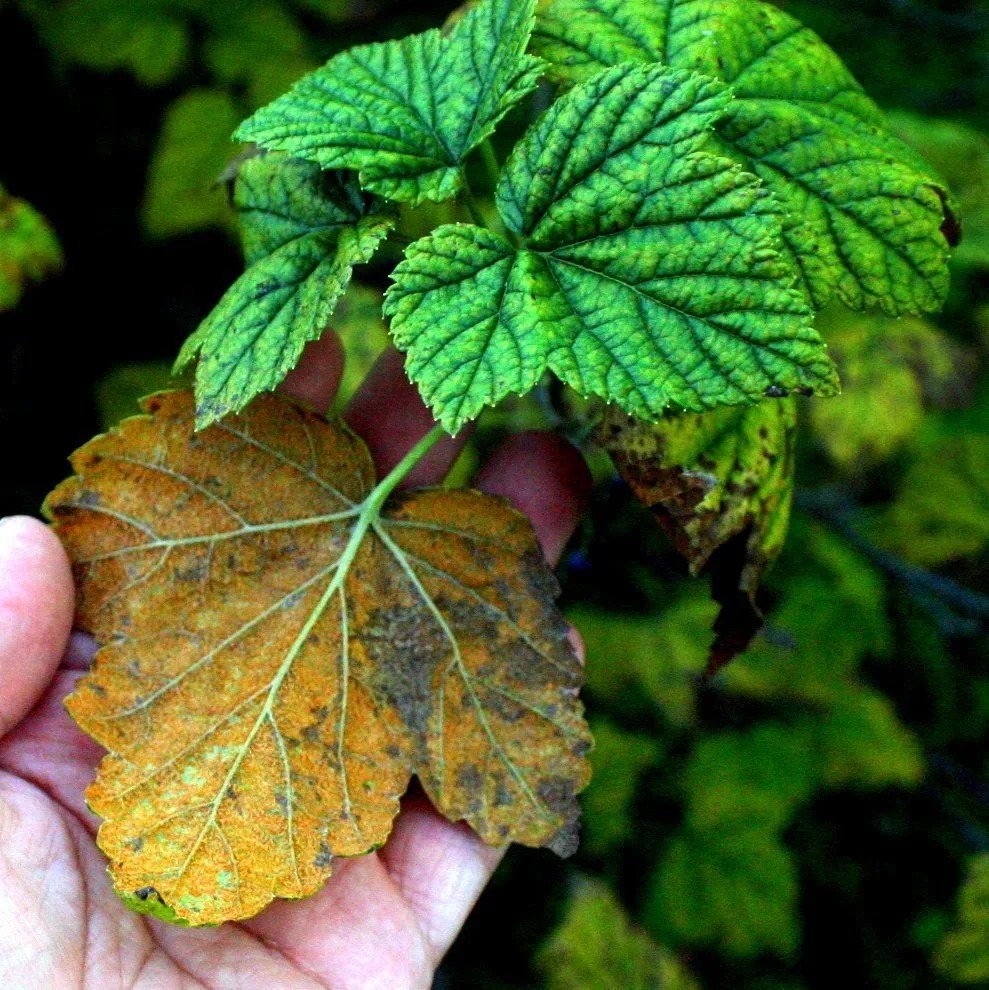
White pine blister rust is a tree-killing disease. The Wisconsin clinic says it attacks pines with needles in bundles of five and most severely damages seedlings and saplings. Cankers are swollen or sunken with resinous edges, and they rupture to show yellow to bright orange spores. Dead branches keep orange-red needles, called flags. A canker that circles a stem kills everything beyond it.
The fungus cannot spread from pine to pine; it needs currants or gooseberries. Wisconsin's advice is to remove Ribes within 200 feet, prune cankered branches at least 6 inches beyond the visible symptoms, and prune lower branches of young trees so the bottom 8 to 9 feet of trunk is clear. A branch canker within 4 inches of the trunk means the trunk is probably infected, and there is no cure for a trunk canker.
Diplodia Tip Blight (Diplodia sapinea)
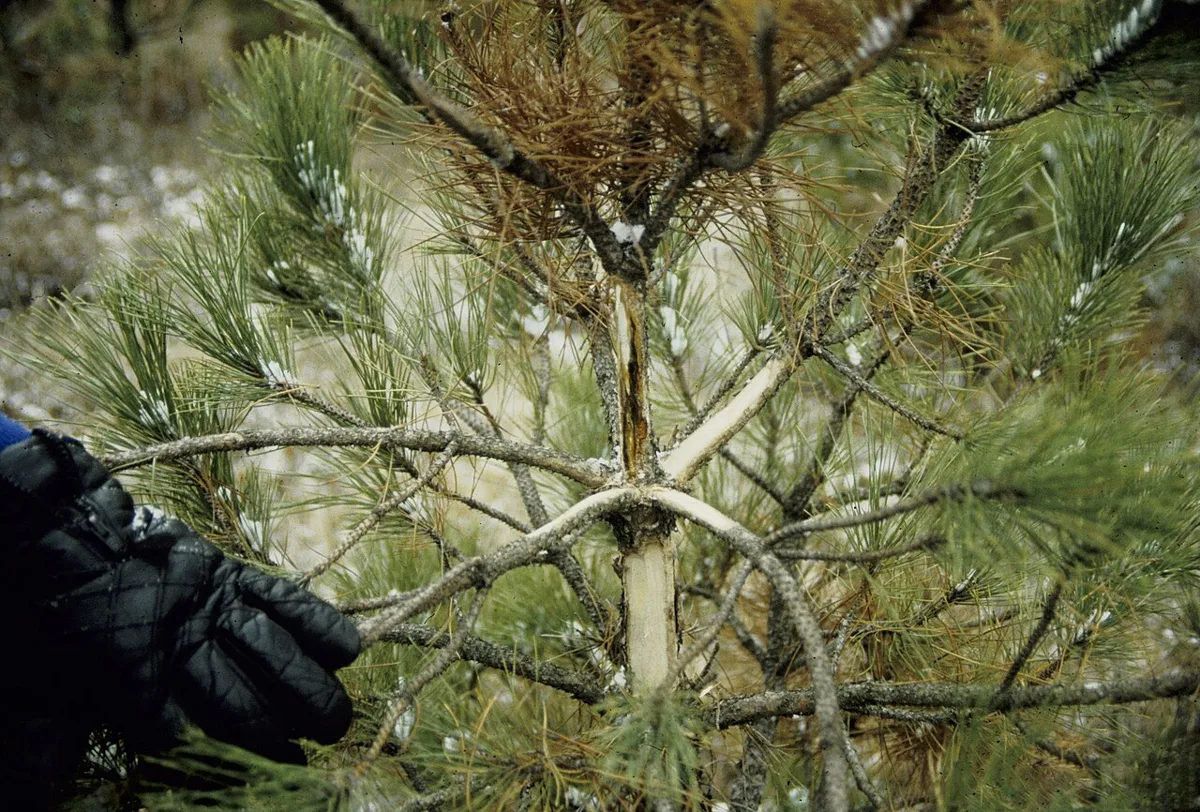
Diplodia tip blight is the common cause of brown, dead new shoot tips on landscape pines. University of Wisconsin-Madison Extension names Austrian pine as one of the most common hosts, along with red, jack, Scots and mugo pines. Branch tips first ooze resin, then brown and die, and tiny black fruiting bodies form on infected shoots and cones.
Several Diplodia species are involved, and Diplodia sapinea was formerly called Sphaeropsis sapinea. Stress makes it worse: drought, compacted soil and too much nitrogen. Wisconsin advises removing infected tips and fallen cones, pruning only in dry weather 6 to 8 inches below the infection, and avoiding new Austrian pine plantings. Fungicides only prevent infection and do not cure it.
Pitch Canker (Fusarium circinatum)
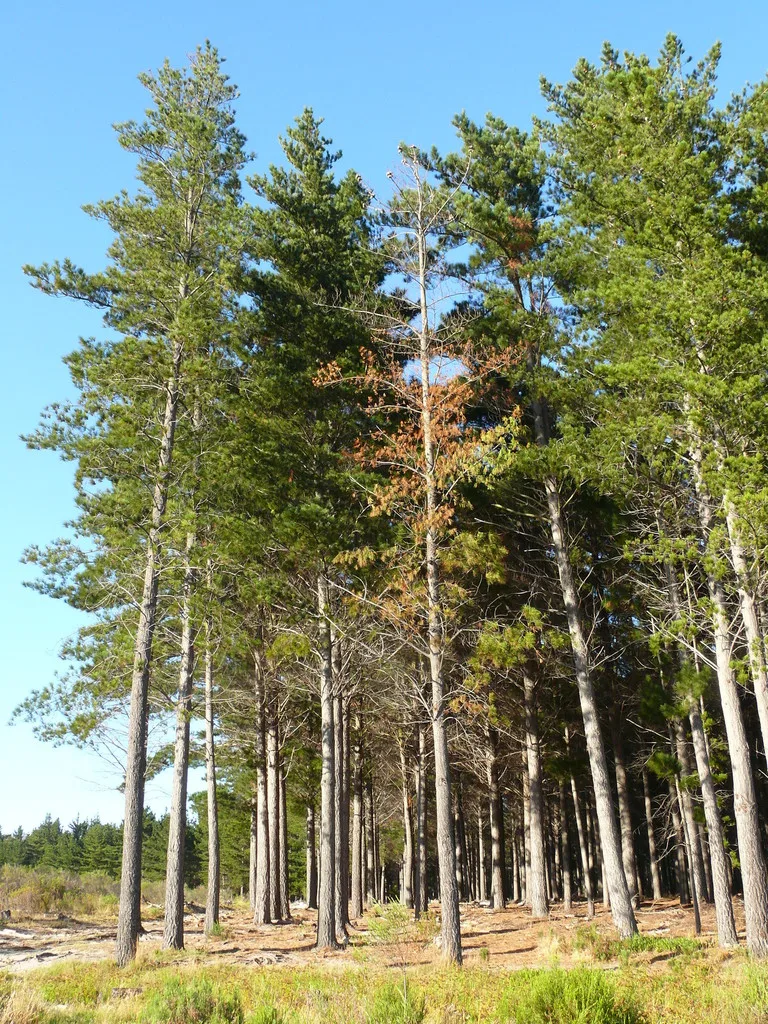
Pitch canker shows as heavy resin flow and dead branch tips. UC IPM names Monterey pine as the most widely affected host and says the disease was first seen in California in Santa Cruz County in 1986. It now occurs in 18 coastal California counties and in the southeastern US. Needles on girdled tips turn yellow, then brown. Under the bark, the wood is honey-colored and soaked in resin, and resin from a trunk infection can coat the bark several feet below it. Bark and twig beetles spread the fungus. UC IPM advises against moving infected wood, including firewood, out of the area.
Pine Bark Adelgid (Pineus strobi), Not a Fungus
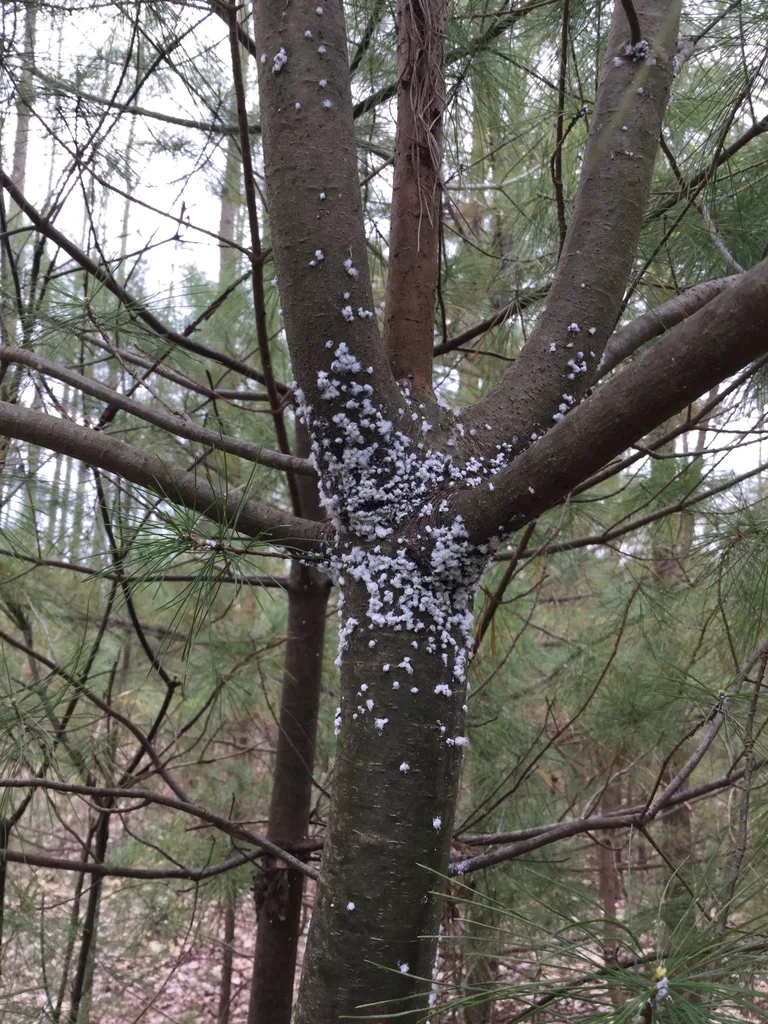
White, cottony fluff on the trunk of a white pine is usually the pine bark adelgid, a small insect. NC State Extension describes small, dark adults covered with white, fluffy material, and populations that peak in late winter and early spring before predators cut them down. NC State calls it more unsightly than injurious on older white pines, though heavily infested saplings can yellow, stunt or die. A hand lens shows the tiny insects under the wax.
Dyer's Polypore (Phaeolus schweinitzii)
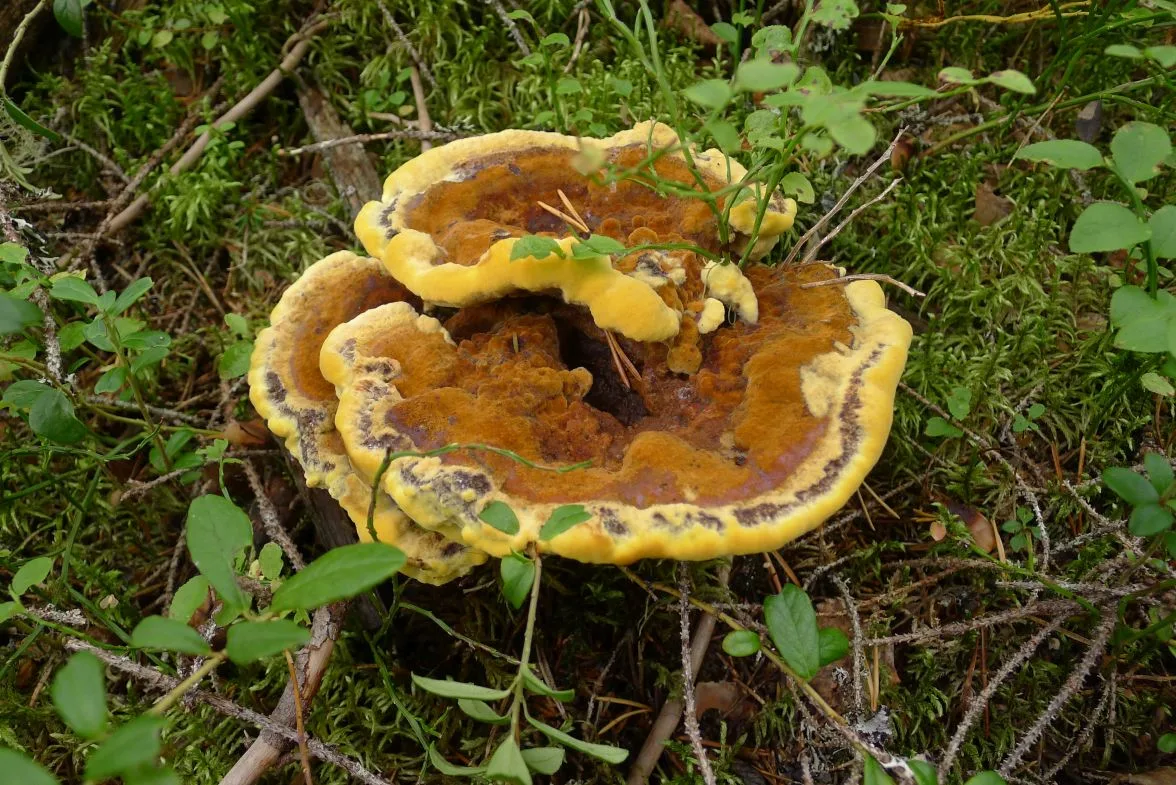
The dyer's polypore is a velvety, red-brown conk that often grows from the ground at the base of the trunk, attached to the roots. Natural Resources Canada describes a dark reddish brown, bumpy, coarsely velvety top with a greenish yellow edge when young, up to 25 cm across, on a central stalk or as shelves on the butt. It fruits in late summer or fall. Pines are among its hosts. It causes a brown cubical rot in the roots and up to about 3 meters (10 feet) of the lower trunk, and it makes trees prone to windthrow. Trees with conks near buildings should be assessed for failure risk.
Heterobasidion Root Disease (Heterobasidion irregulare)
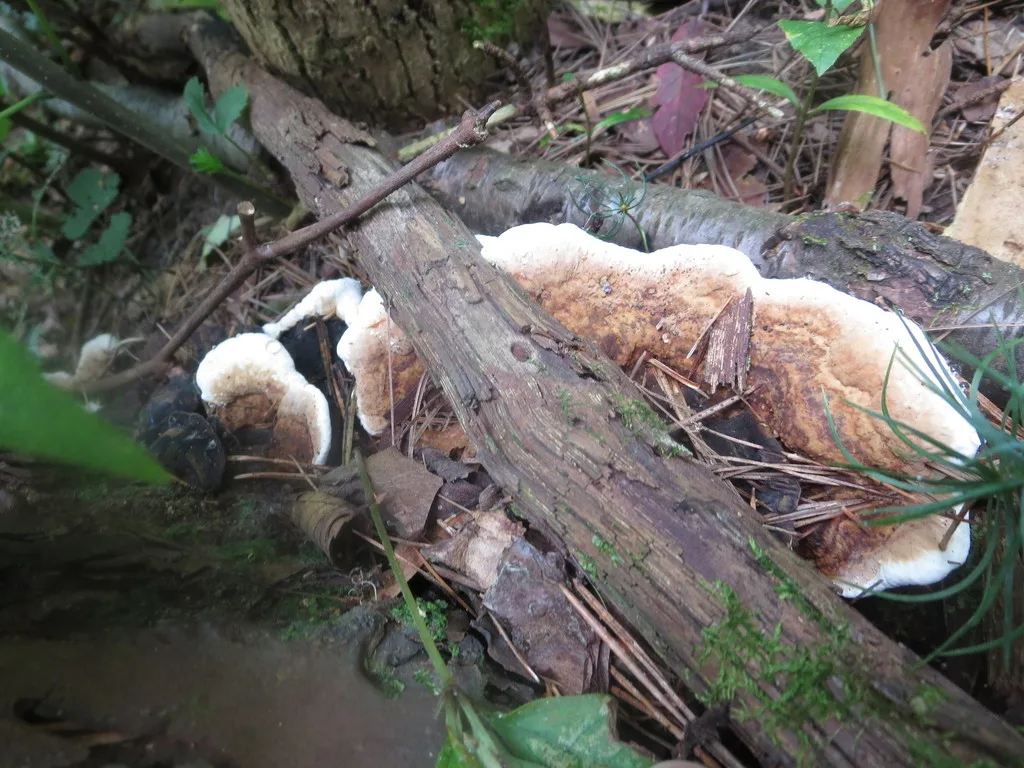
Heterobasidion root disease, also known as annosus root rot, kills pines by girdling the root collar. Forestpathology.org names Heterobasidion irregulare on pines and junipers, and H. occidentale on true firs, spruces and hemlocks in the West. Spores infect freshly cut stumps for several weeks after cutting, then the fungus grows down the stump roots into living neighbors. Conks have an irregular, dirty brown top and a white pore surface, and they hide under the duff or inside hollow stumps. Treating fresh stump tops with a registered borax product protects them, but it does not cure stumps already infected.
Red-Belted Conk (Fomitopsis mounceae)
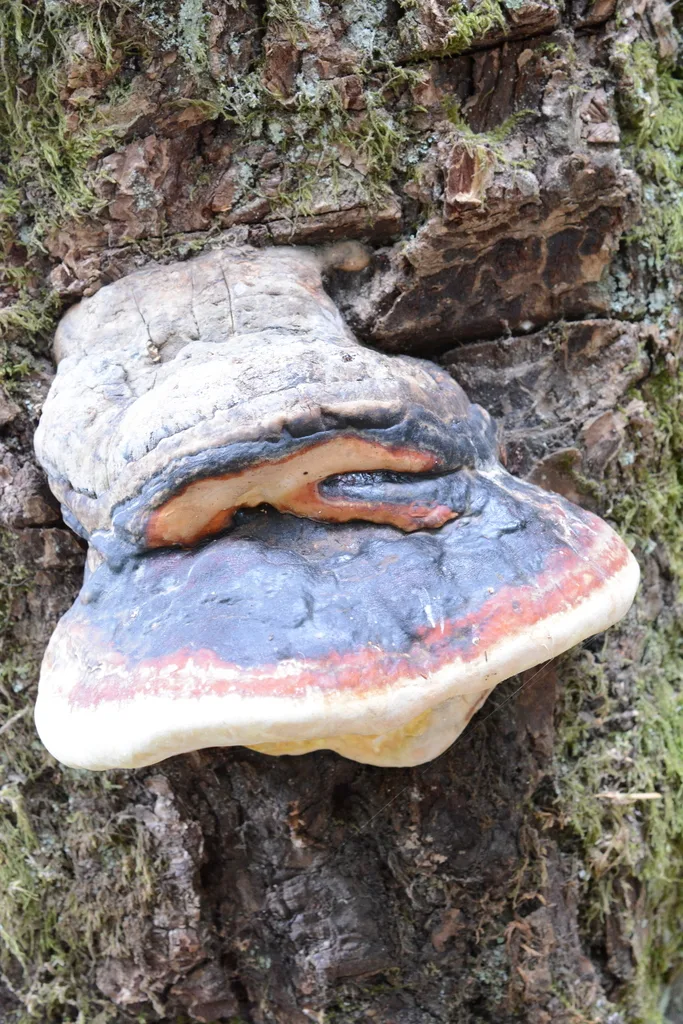
The red-belted conk is a hard, perennial shelf with a reddish to orange-brown band and a blunt white edge. MykoWeb describes it as 5 to 25 cm across, with a white, finely pored underside that often weeps clear droplets, on conifer logs and stumps and less often on hardwoods. It is mainly a decomposer but attacks living trees in some areas.
The name is disputed. Haight and colleagues (Mycologia, 2019) found that true Fomitopsis pinicola is Eurasian and named F. mounceae for Canada, the Appalachians and the northern US, and F. schrenkii for the West and Southwest. MykoWeb disagrees and treats both as populations of F. pinicola.
Slippery Jack (Suillus pungens)
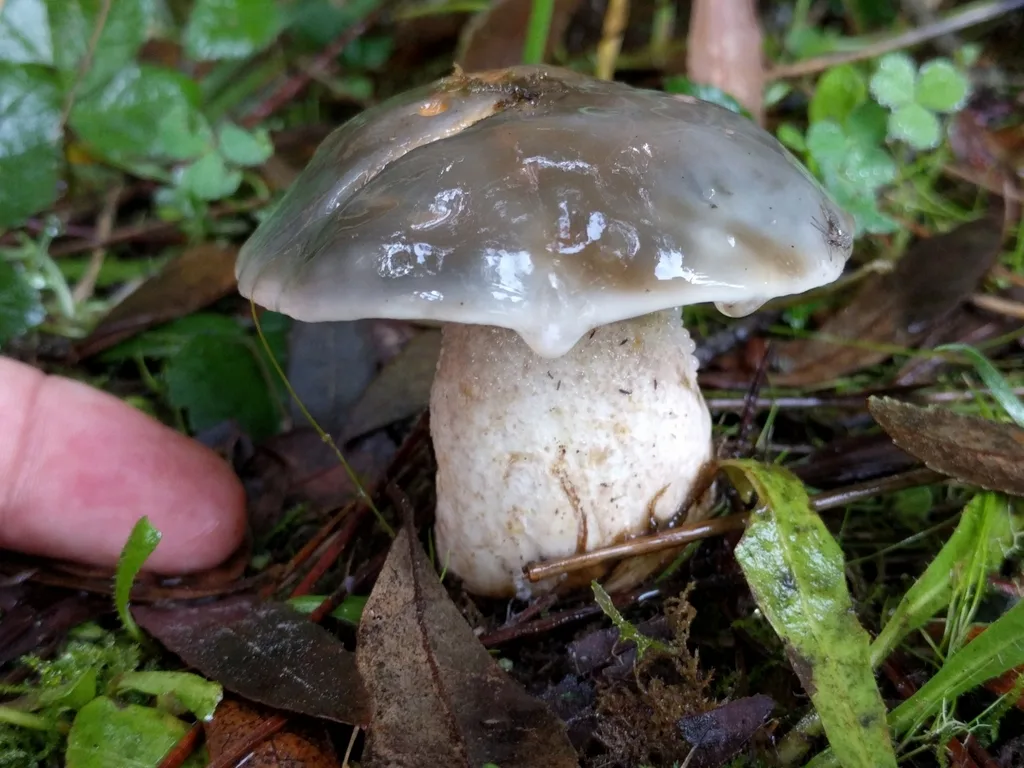
Slippery jacks are Suillus boletes with slimy caps and pores instead of gills, and they grow with pines. MykoWeb describes Suillus pungens under Monterey pine in California: a sticky cap of 5 to 13 cm that turns from white and gray-olive to brown, pores that weep white droplets when young, and a stem dotted with glands that darken with age. The spore print is brown. The pores are the first thing to check on any mushroom under a pine, as our guide to gills vs pores vs ridges explains.
Saffron Milk Cap (Lactarius deliciosus)
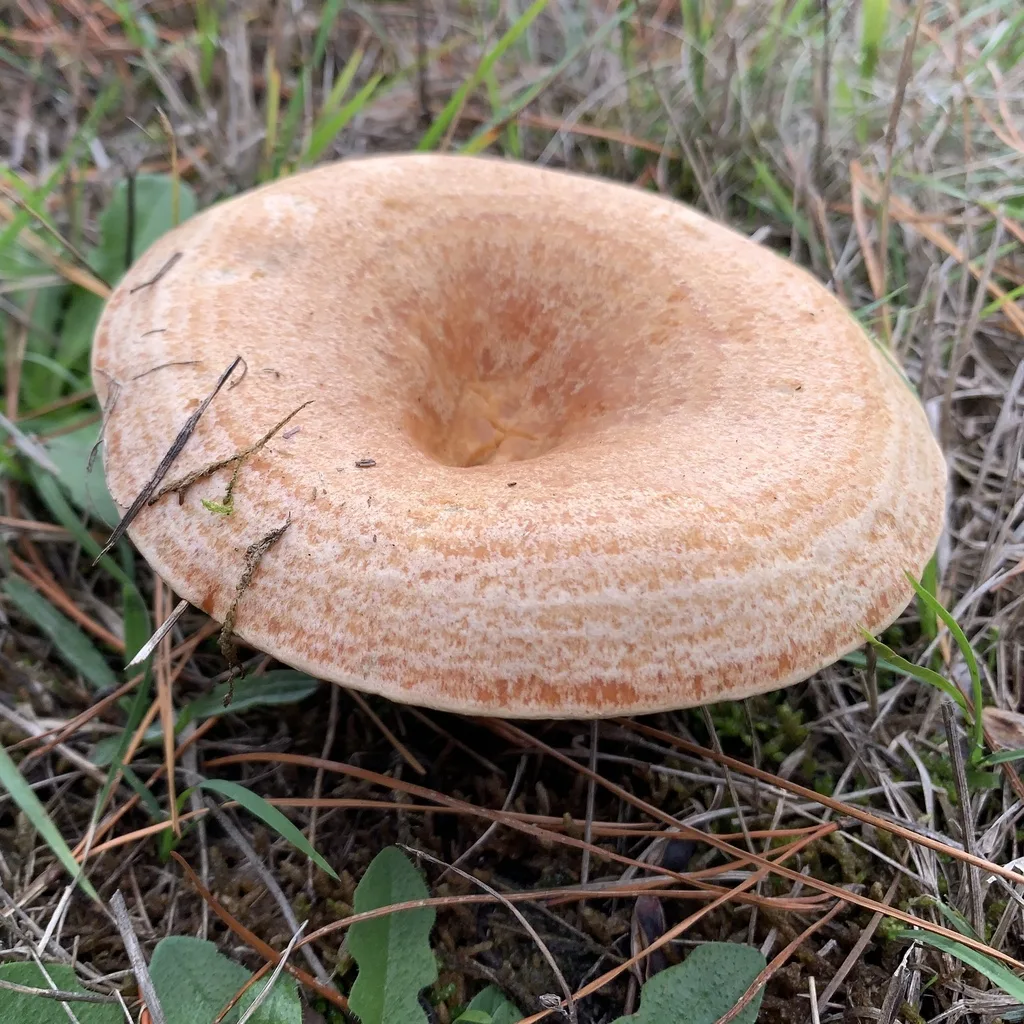
The saffron milk cap is an orange mushroom under pines that bleeds orange milk when cut, and the milk stains green. MykoWeb describes a sticky cap of 5 to 13 cm with orange and green concentric zones, turning greener with age, growing under pines from late fall to mid-winter in California. The name is a placeholder in North America: MykoWeb notes that molecular studies have not found the true European species here, only a complex of close relatives. MykoWeb lists it as edible, and it still needs expert confirmation.
Fly Agaric (Amanita muscaria)
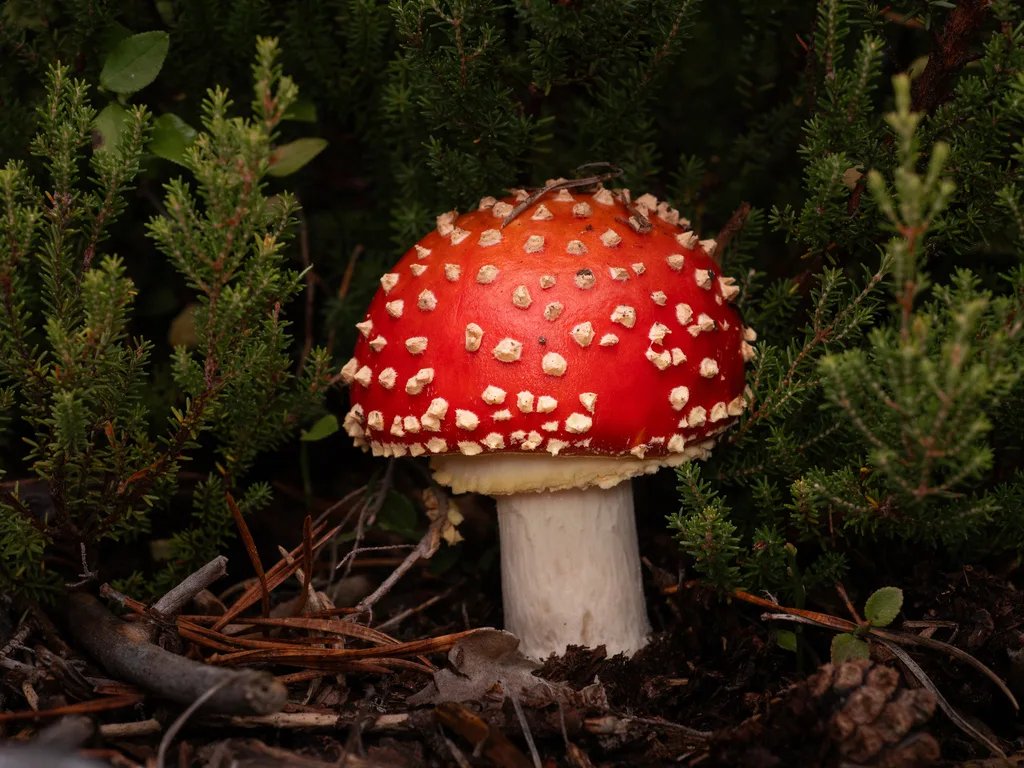
The fly agaric is the poisonous red, orange or yellow mushroom with pale warts that grows in the soil under pines. MykoWeb says it occurs primarily under pines in California and that US color forms range from red to orange, yellow and white. It has white gills, a skirt-like ring, rings of tissue around a bulbous base and a white spore print. It contains the toxins ibotenic acid and muscimol. Keep children and pets away from it.
Cauliflower Mushroom (Sparassis radicata)
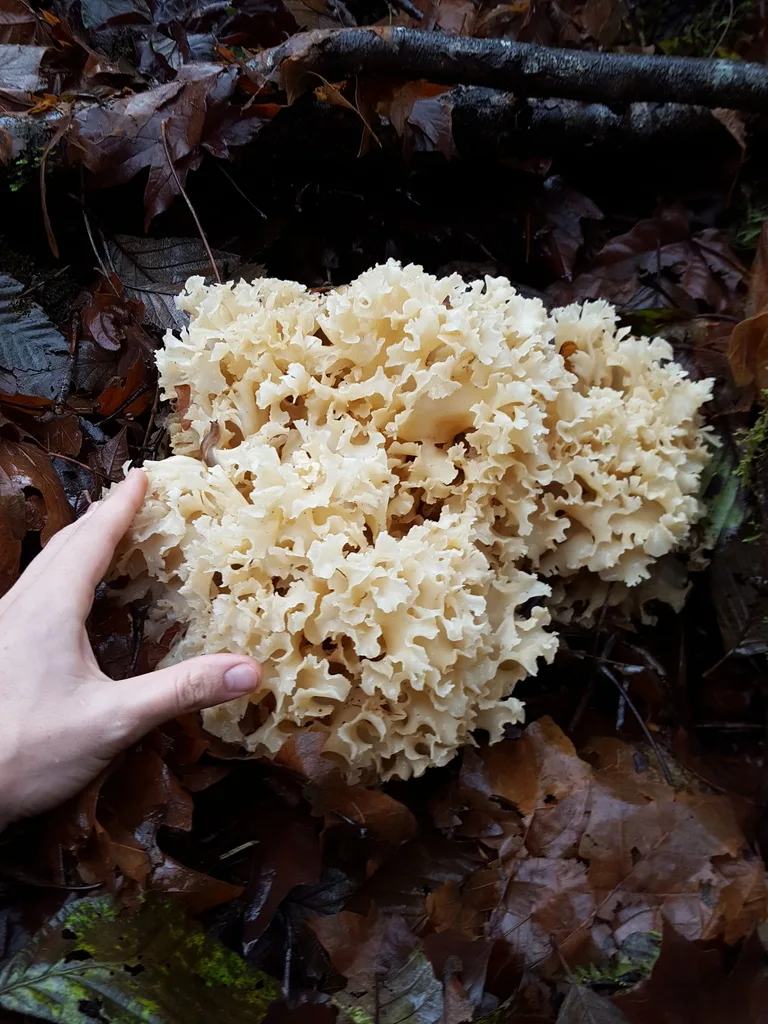
A large, cream-colored rosette of wavy, leaf-like lobes at the base of a pine is a cauliflower mushroom. MykoWeb describes the western Sparassis radicata as about 20 cm wide and 40 cm tall, rising from a root-like base at the foot of conifers, especially Bishop and Monterey pines, from late fall to mid-winter. It is believed to be parasitic, and affected trees fruit every year. Molecular work separates it from the European S. crispa, a name long misapplied to it.
Conifer Chicken of the Woods (Laetiporus conifericola)
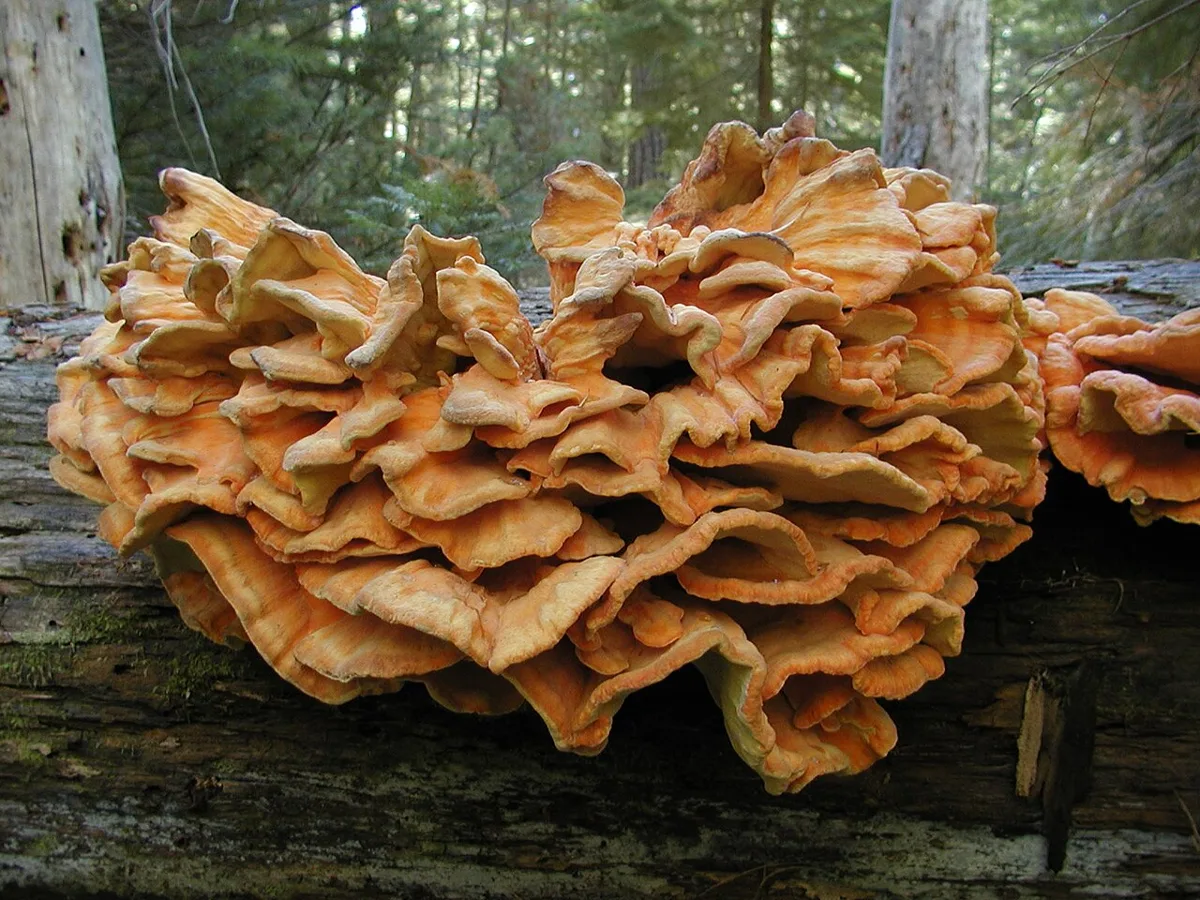
Bright orange shelves with a sulfur-yellow underside on a dead conifer are the conifer chicken of the woods. MykoWeb says it grows only on conifers, especially red fir, redwood and pines, from late summer through fall. It rates the species edible with caution, because old or undercooked specimens have caused stomach upset. Compare it with the hardwood species in our chicken of the woods guide.
Yellow or Orange Growth at the Base of a Pine: Side-by-Side
Four fungi make most of the yellow, orange or cream growths at the base of pines, and texture and the underside separate them faster than color does. Two of them, dyer's polypore and the cauliflower mushroom, are tied to the roots and butt, the part of the tree that holds it up.
| Fungus | What it looks like | Key check | Risk |
|---|---|---|---|
| Dyer's polypore (Phaeolus schweinitzii) | Velvety red-brown cap, greenish yellow edge, often stalked from the ground | Pores 1 to 3 per mm | Butt rot; windthrow risk |
| Conifer chicken of the woods (Laetiporus conifericola) | Bright orange overlapping shelves | Sulfur-yellow pores; only on conifers | Stomach upset if old or undercooked |
| Cauliflower mushroom (Sparassis radicata) | Cream rosette of wavy, leaf-like lobes | Rises from a root-like base | Believed parasitic |
| Red-belted conk (Fomitopsis mounceae) | Hard shelf, reddish band, white edge | White pores, clear droplets when fresh | Decay, mostly of dead wood |
Why Do Mushrooms Grow Under Pine Trees?
Many mushrooms in the needles under a pine are the fruiting bodies of fungi that live on the pine's roots and trade nutrients for sugar. McDermott and Berry (Native Plants Journal, 2003) list pines among the ectomycorrhizal trees, whose fungal partners wrap the root tips and often produce familiar mushrooms.
Slippery jacks, saffron milk caps and the fly agaric are among the mushrooms that fruit under pines. Mushrooms from root partners do not mean the tree is sick. See our guide to mushroom habitat for how host trees shape what you find.
Can You Treat Pine Tree Fungus?
Most pine fungi are managed with pruning, sanitation and stress reduction, not sprays, and the sources on this page list no cure for root rot or a trunk canker. The Wisconsin clinic says there is no cure for a blister rust canker on the main stem. Wisconsin Extension says fungicides for Diplodia only prevent new infections. Forestpathology.org notes that borax protects fresh stumps from Heterobasidion but does not clear infected ones.
What helps is simple. Water pines in drought, avoid wounding trunks and roots, prune diseased branches in dry weather, and do not move infected wood. For a conk at the base of a pine near a house, ask a certified arborist.
Common Identification Mistakes
Calling White Fluff a Fungus
Cottony white tufts on a white pine are usually pine bark adelgids. Look closely for tiny insects under the wax before treating anything.
Treating Every Orange Gall the Same
Eastern and western gall rust galls look identical. Check nearby oak leaves for brown, hair-like growths, because only eastern gall rust needs oaks.
Mistaking Dyer's Polypore for Chicken of the Woods
Both can be yellow-orange near a conifer. Dyer's polypore is velvety and red-brown with age, and it means butt rot.
Assuming a Red Mushroom Under a Pine Is Harmless
The fly agaric is poisonous and grows in the soil under pines. Remove it if children or pets use the area.
Frequently Asked Questions
What is the orange fungus on my pine tree?
Bright orange powder on a round gall in spring is a gall rust. Orange spores on a resin-edged canker on a five-needle pine point to white pine blister rust. Orange shelves on a dead conifer are more likely conifer chicken of the woods.
What is the white fuzzy stuff on my pine tree?
White, cottony fluff on the trunk or branches of a white pine is usually the pine bark adelgid, a small insect covered in wax. NC State calls it more unsightly than harmful on older trees.
What are the round balls on my pine tree branches?
Round, woody swellings on pine branches are usually gall rust galls. They turn bright orange with spores in spring, and stems can break at large galls.
Why are the tips of my pine tree turning brown?
Brown, dead new shoot tips that ooze resin on Austrian, red or Scots pine are typical of Diplodia tip blight. Drought and other stress make it worse.
What is the fungus at the base of my pine tree?
A velvety red-brown conk on the ground near the trunk is likely dyer's polypore, and a brown conk with a white underside under the duff may be Heterobasidion. Both mean root or butt rot, so have an arborist look at the tree.
Is pine tree fungus contagious?
Some kinds spread and some do not. Eastern gall rust and white pine blister rust need oaks or currants to complete their cycle, while western gall rust and Heterobasidion move from pine to pine.
Are mushrooms under pine trees poisonous?
Some are. The fly agaric, a red, orange or yellow mushroom with pale warts, is poisonous and grows mainly under pines. Keep children and pets away from all wild mushrooms until an expert identifies them.
Why do mushrooms grow under pine trees?
Pines partner with ectomycorrhizal fungi that live on their roots, and many of these fungi produce mushrooms. Slippery jacks, saffron milk caps and fly agarics are common examples.
Can a pine tree survive with fungus on it?
Often, yes, when the problem is a branch gall or tip blight on an established tree, though a gall on the main stem can make it break. Blister rust on the trunk, Heterobasidion and advanced butt rot are more serious.
Final Safety Reminder
Pines carry edible mushrooms and the poisonous fly agaric in the same patch of needles, and a conk at the base can mean a tree that falls in a storm. Never eat a wild mushroom based on a chart, a photo or an app, and have every find confirmed by an experienced identifier. Keep children and pets away from unknown mushrooms, and read our guide on what to do if your dog ate a mushroom if one does. For a first opinion, photograph the top, underside and base and check them with our free mushroom identifier, then with a local expert.
Sign in to leave a comment and join the discussion.
 Guide
Most maple tree fungus is either a leaf spot that looks alarming but rarely hurts the tree, or a decay fungus fruiting from wood that is already rotting...
 Guide
A yellow mushroom in a potted plant is almost always the flowerpot parasol, Leucocoprinus birnbaumii , a lemon-yellow mushroom that feeds on dead organic...
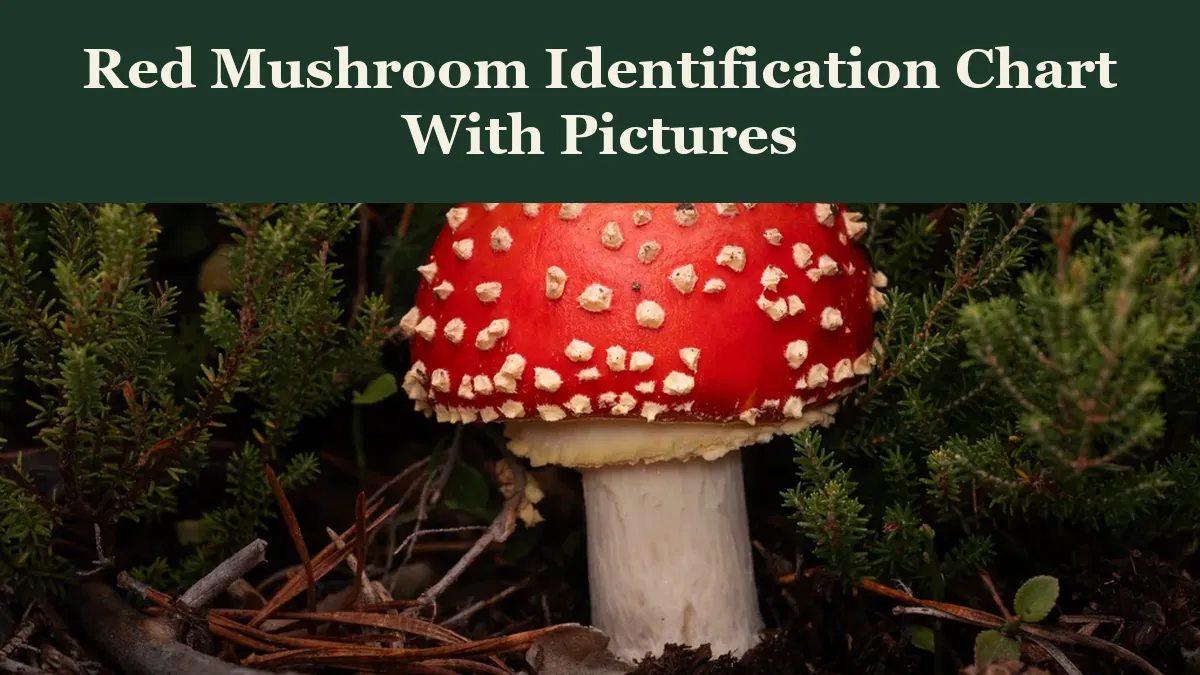 Guide
A red mushroom in the US is most often a fly agaric, a red Russula, a waxcap, a red-pored bolete or a shiny reishi shelf on a tree. The red mushrooms most...