Angel Wing Mushroom Identification Chart With Pictures
— views
An angel wing mushroom (Pleurocybella porrigens) is a thin, pure white, fan-shaped mushroom that grows in overlapping clusters on rotting conifer logs and stumps, mostly from late summer to fall. It looks like a small oyster mushroom, but oysters have thicker flesh and grow mainly on hardwoods. In 2004 angel wings were linked to 17 deaths from brain illness in Japan, mostly among people with kidney failure. Most sources now advise against eating it.
This angel wing mushroom identification chart with pictures covers the key features, a simple conifer-or-hardwood wood test, the look-alikes on logs, the 2004 outbreak and what toxin research has found since. It is an identification guide, not permission to eat a wild mushroom.
Key Takeaways
- Angel wings are thin, white, stemless fans, 2 to 10 cm across, with a white spore print.
- They grow on dead conifer wood. Oyster mushrooms grow mainly on hardwoods and have thicker flesh.
- In fall 2004, 59 people in Japan fell ill after eating angel wings and 17 died of acute encephalopathy. Nearly all of the deaths involved people with weakened kidneys.
- Symptoms began 13 to 18 days after eating, according to NAMA, so the link to the mushroom was easy to miss.
- The toxin is still debated. Recent studies point to a mix of a lectin, a protein called pleurocybelline and an unstable amino acid, pleurocybellaziridine.
- Do not eat angel wings. If someone has kidney disease and has eaten them, contact a doctor or Poison Control even without symptoms.
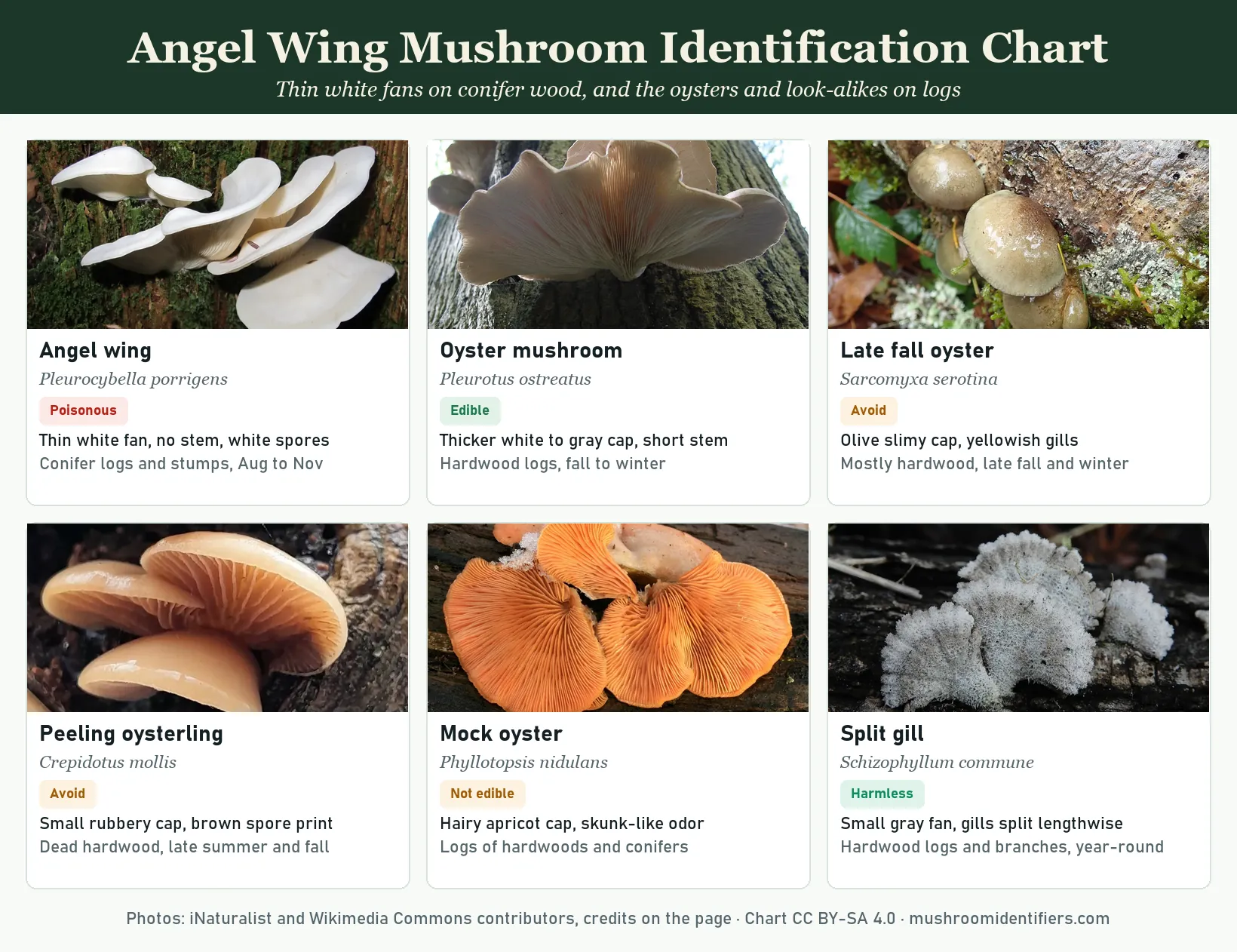
Angel Wing Mushroom Identification Chart
| Mushroom | Key features | Wood and season | Edibility or risk |
|---|---|---|---|
| Angel wing (Pleurocybella porrigens) | Thin white fan 2 to 10 cm, no stem, ivory gills, white spore print | Rotting conifer logs and stumps; late summer to fall | Poisonous: linked to fatal encephalopathy |
| Oyster mushroom (Pleurotus ostreatus) | Thicker cap 5 to 25 cm, white to grayish-brown, short off-center stem, white to lilac-tinged spore print | Hardwood logs and stumps, uncommon on conifers; mostly fall to winter | Edible per sources; confirm the species |
| Late fall oyster (Sarcomyxa serotina) | Olive green cap, slimy when wet, yellowish gills | Mostly broadleaf wood; late fall and winter | Avoid: edibility disputed |
| Peeling oysterling (Crepidotus mollis) | Small kidney-shaped cap 1.5 to 5 cm, rubbery peeling skin, brown spore print | Dead hardwood; late summer and fall | Avoid: may be poisonous |
| Mock oyster (Phyllotopsis nidulans) | Hairy apricot to buff cap, orange-buff gills, skunk-like odor, salmon-pink spore print | Logs of hardwoods and conifers | Not edible |
| Split gill (Schizophyllum commune) | Small whitish-gray fan, gills split lengthwise | Hardwood logs and branches; year-round | Small and tough |
Details come from First Nature, MykoWeb and the Missouri Department of Conservation. Compare your find with several real photographs too.
What Is an Angel Wing Mushroom?
The angel wing is a small white gilled mushroom that decays dead conifer wood and grows sideways from it without a stem. Christiaan Hendrik Persoon described it in 1805 as Agaricus porrigens, and Rolf Singer moved it to Pleurocybella in 1947, according to First Nature. The genus name means roughly "little sideways cap." The epithet porrigens is Latin for stretching out horizontally. In Japan the mushroom is called sugihiratake.
The species is widely distributed in temperate forests of the Northern Hemisphere, according to a 2025 genome study in AMB Express. First Nature records it in northern Europe, cool parts of Asia and some regions of North America. It is not an oyster mushroom, although the two are often confused.
Core Identification Features
Check the wood, the thickness of the flesh, the stem and the spore print together. No single feature separates an angel wing from every look-alike. Our guide to the parts of a mushroom explains the terms.
Cap
The cap is 2 to 10 cm across, white and smooth. First Nature describes it as a stemless, split-sided incomplete funnel. The edge is often lobed, and some caps are tongue-shaped. Caps overlap in tiers along the log.
Flesh
The flesh is thin and white. Pinch the cap between two fingers. An angel wing feels thin, while an oyster cap usually feels thicker and fleshier.
Gills
The gills are ivory white. White gills help separate fresh angel wings from Crepidotus, whose gills turn rusty brown as the spores mature.
Stem
There is usually no stem. Some caps have a very short stub at the attachment point. Oyster mushrooms may have a short, thick, off-center stem.
Spore Print
The spore print is white. A white print rules out Crepidotus, which drops a brown print, and the mock oyster, which drops a pale salmon-pink print. It does not rule out oysters. Learn the method in our spore print guide.
Where and When Do Angel Wings Grow in the US?
Angel wings grow on rotting conifer logs and stumps, and in the US they are found mostly in the Pacific Northwest and the northern states, from August to November. First Nature says they favor moss-covered conifer stumps and fallen trunks. The 2025 genome study names conifers such as cedar and pine.
Community records show the pattern clearly. Of 1,442 research-grade US observations on iNaturalist, checked in November 2026, the monthly counts break down like this:
| Months | US observations | Share |
|---|---|---|
| January to July | 45 | 3% |
| August | 88 | 6% |
| September | 482 | 33% |
| October | 677 | 47% |
| November | 138 | 10% |
| December | 12 | 1% |
About 96 percent of the records fall between August and November, and October alone holds almost half. Location follows the conifer forests. Using the same filters, 697 records came from a box between latitude 40 and 49 north and west of longitude 110 west, which covers Washington, Oregon, Idaho, northern California and parts of neighboring states. Another 319 came from the northern band above latitude 40 from Minnesota and Iowa to Maine. Only 63 came from the Southeast, from Texas to Virginia, south of latitude 40. These figures reflect where people look and post, not a full survey, but they match the conifer pattern. See our guide to edible mushrooms in the Pacific Northwest for the region's other species.
The Wood Test: Conifer or Hardwood?
The fastest field check is the wood: angel wings grow on conifers, while oyster mushrooms grow mainly on hardwoods. MykoWeb describes the oyster mushroom as growing on hardwood stumps and logs and calls it uncommon on conifers. That makes the wood a strong clue, but not proof, because oysters occasionally use conifer wood and the mock oyster grows on both.
Use three checks in order:
- Identify the log. Look at the bark, the trees around it and the litter on the ground. Needles and cones point to pine, fir, spruce, hemlock or cedar. Broad leaves point to a hardwood such as oak, maple or cottonwood.
- Pinch the cap. Thin white flesh fits an angel wing. Thick, fleshy caps fit an oyster.
- Take a spore print. White fits an angel wing or an oyster. Brown means Crepidotus. Salmon-pink means mock oyster.
A thin white fan on a conifer log with a white print is consistent with an angel wing. A thick white or gray shelf on hardwood is more likely an oyster. Neither result makes a mushroom safe to eat. Our guide to mushrooms growing on trees covers other wood-loving species.
Why Is the Angel Wing Mushroom Considered Poisonous?
Angel wings were linked to an outbreak of acute encephalopathy in Japan in fall 2004 that killed 17 people, most of whom had chronic kidney failure. Encephalopathy means a disease that damages brain function. No poisonings by this species were known before 2004, according to a NAMA toxicology article by Michael Beug.
| Question | What sources say |
|---|---|
| When and where | Fall 2004, northern Japan, including Akita, Yamagata and Niigata prefectures |
| How many fell ill | 59 people in 9 prefectures, per NAMA; the 2025 genome study also gives 59 |
| Deaths | 17, from acute encephalopathy |
| Who was affected | People with chronic kidney failure, many on hemodialysis; average age 70, per NAMA |
| Time to symptoms | 13 to 18 days after eating, per NAMA |
| Symptoms | Tremor and limb weakness, then confusion, seizures that would not stop and high fever |
| Brain scans | Lesions in the basal ganglia and the cerebral cortex |
| Later case | One more death published in 2009: a 65-year-old man on hemodialysis |
The sources differ slightly on who was affected. A 2015 study in Food Safety by Akiyama and colleagues calls the outbreak exclusive to patients with chronic renal failure treated on hemodialysis. NAMA says all or nearly all of the deaths involved people with compromised kidneys. The genome study says many of the 17 who died had kidney failure and were on hemodialysis. We found no confirmed case in a person with healthy kidneys, but the sources do not rule one out.
The long delay is the dangerous part. A person can eat angel wings, feel fine for two weeks and then develop tremors and seizures. The NAMA poisoning syndromes page lists the species under encephalopathy and advises contacting a physician or poison control center right away, without waiting for symptoms.
What Toxin Is in Angel Wing Mushrooms?
Researchers have not settled the cause, but the latest work points to three compounds acting together: a lectin called PPL, a protein called pleurocybelline and an unstable amino acid called pleurocybellaziridine. A Japanese government study group was disbanded in 2006 after concluding that the cause could not be identified, according to the 2025 genome study.
- 2011, pleurocybellaziridine: Wakimoto and colleagues proposed this unstable amino acid as the likely toxin. NAMA reports that it killed most rat brain support cells in lab tests at higher doses.
- 2015, cyanide and thiocyanate: Akiyama and colleagues gave a cyanide-releasing fraction of the mushroom to rats with damaged kidneys. Thiocyanate rose in their blood and brains. The authors offered this only as a hypothesis.
- 2023, PPL and pleurocybelline: The Watanabe and Suzuki group found that the two together act as an enzyme that breaks down proteins. They concluded that the complex disrupts the blood-brain barrier.
- 2025, all three together: In mice, a mix of PPL, pleurocybelline and pleurocybellaziridine significantly increased cell death. The genome study still calls pleurocybellaziridine the proposed causative agent.
The genome study's authors propose that the protein complex disrupts the blood-brain barrier and that pleurocybellaziridine causes the brain damage. Akiyama and colleagues note that thiocyanate can accumulate when the kidneys fail, which could explain the kidney pattern. Neither mechanism is proven.
Can You Eat Angel Wing Mushrooms?
No. Angel wings were once listed as edible, but most sources now treat them as poisonous, and no one should eat them. First Nature says they should be treated as deadly poisonous after the fatalities in Japan. NAMA lists them under encephalopathy syndromes. The genome study describes the species as a mushroom that causes acute encephalopathy.
The sources do not fully agree. In his NAMA article, Michael Beug writes that he thinks small and even moderate amounts are safe. He also warns against large amounts of any mushroom for people with kidney problems, and notes that he stopped eating angel wings himself about 25 years earlier. He reports no North American poisonings. We found no study that shows a safe amount for anyone.
First Nature notes that angel wings were once considered edible, so older field guides may still list them that way. Read our guide to poisonous vs edible mushrooms for why old edibility ratings can mislead, and our list of white poisonous mushrooms for other pale species to avoid.
Common Angel Wing Look-Alikes in the US
Angel wings share logs with several small, shelf-like gilled mushrooms, and the oyster mushroom is the one people most want to confuse it with. The pictures below show the typical form of each.
Angel Wing (Pleurocybella porrigens)
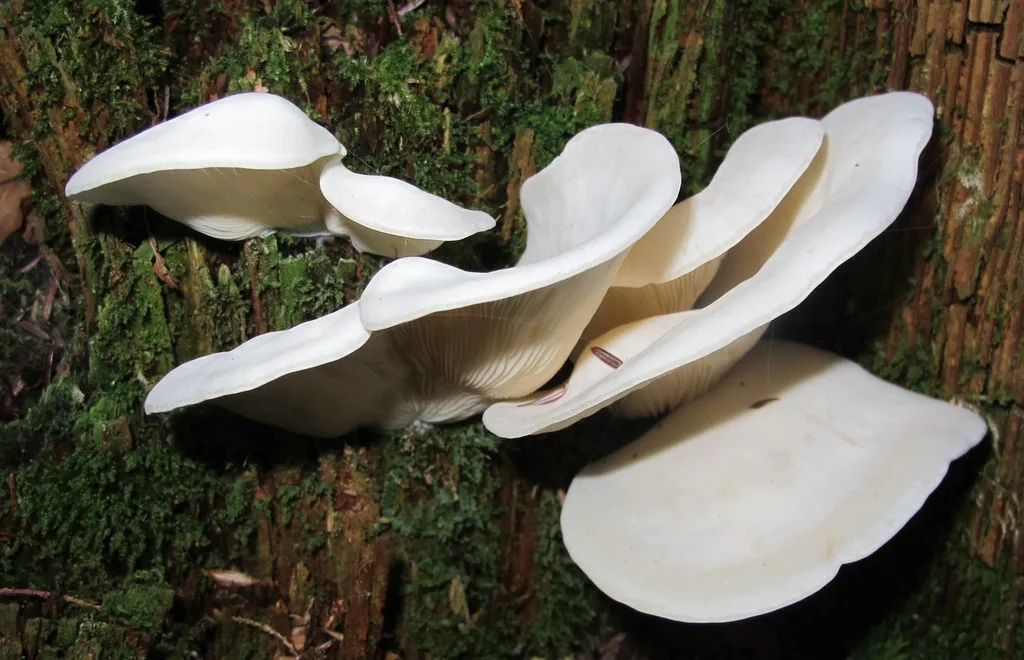
Thin, white, stemless fans in overlapping tiers on rotting conifer wood. The gills are ivory white and the spore print is white. Most US records fall in September and October.
Oyster Mushroom (Pleurotus ostreatus)
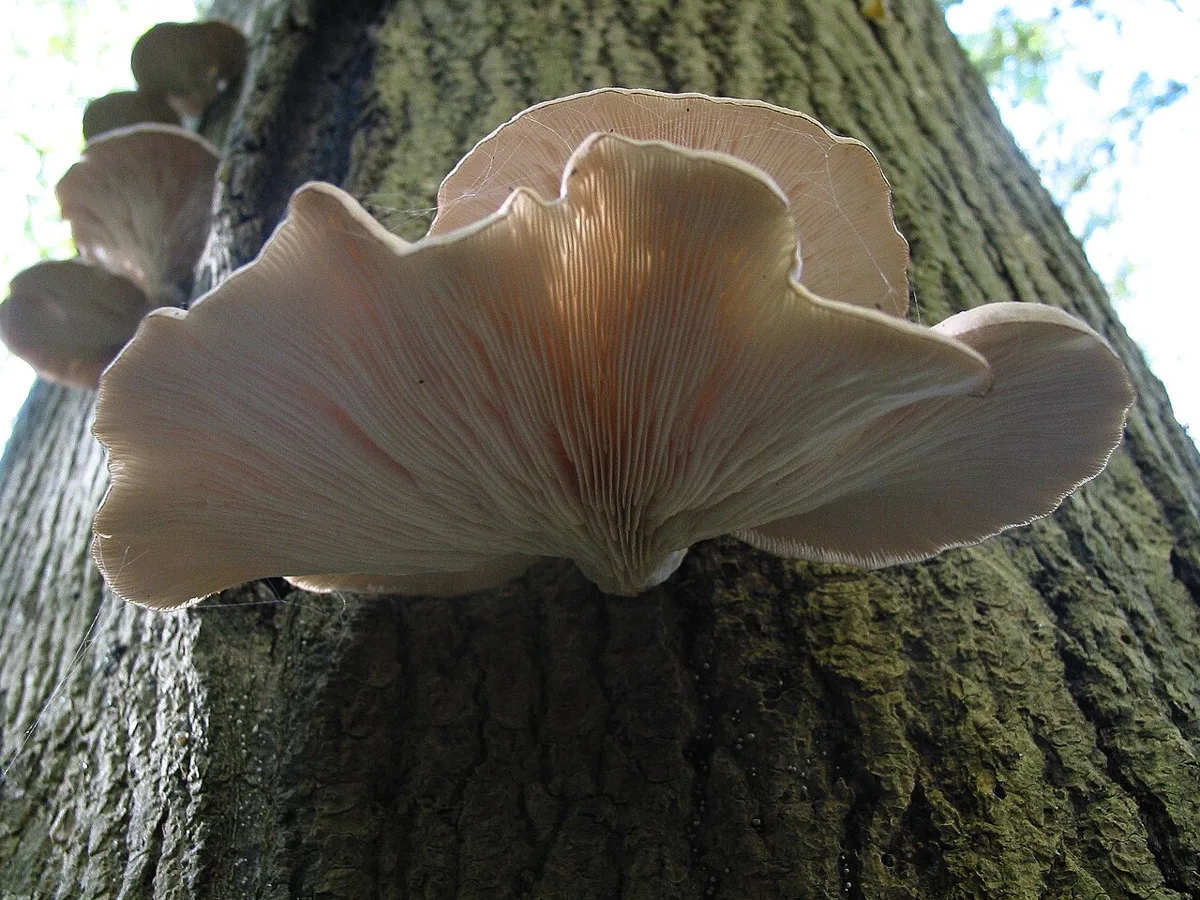
Oysters are larger, at 5 to 25 cm, and white to grayish-brown. MykoWeb notes that specimens on oaks are relatively thin-fleshed while those on cottonwood and willow are thick-fleshed, so thickness varies. The gills run down a short, thick, off-center stem when one is present. Sources differ on the spore print: MykoWeb gives white, the Missouri Department of Conservation gives white to grayish-lilac, and First Nature says usually slightly lilac. MDC adds that the related Pleurotus pulmonarius fruits only in warm months. Our oyster mushroom identification guide covers the full group.
Late Fall Oyster (Sarcomyxa serotina)
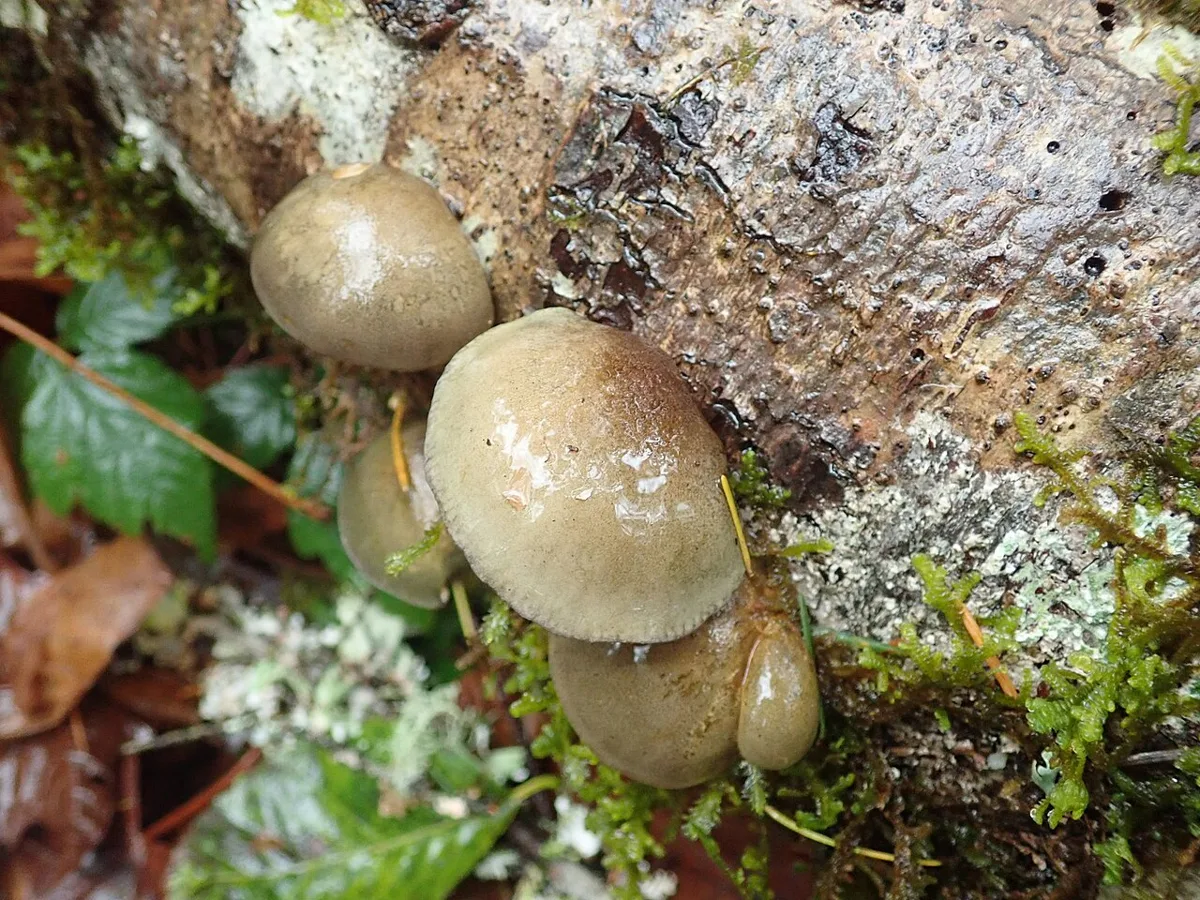
This oyster look-alike has an olive green cap, often with violet or brown tones, that is slimy when wet. First Nature describes crowded gills that start yellowish and brown with age. It grows mostly on broadleaf wood, occasionally on conifers. First Nature advises against tasting it.
Peeling Oysterling (Crepidotus mollis)
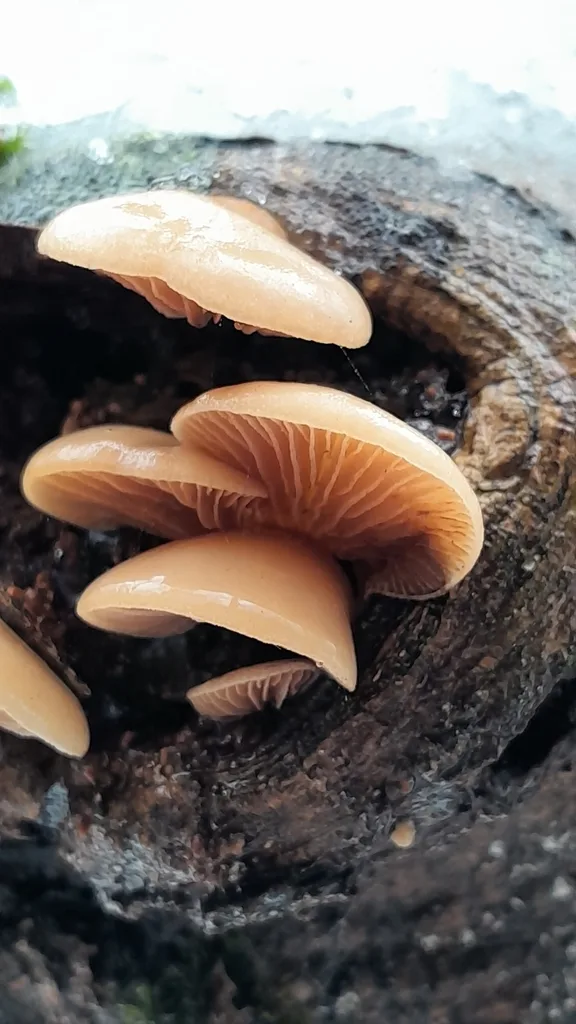
This small kidney-shaped cap, 1.5 to 5 cm across, starts pale and turns ochre-brown. Its skin is rubbery and peels away, and a gelatinous layer sits under it. The gills turn rusty brown and the spore print is snuff brown. First Nature lists it on deciduous trees and calls it of dubious edibility, possibly poisonous.
Mock Oyster (Phyllotopsis nidulans)
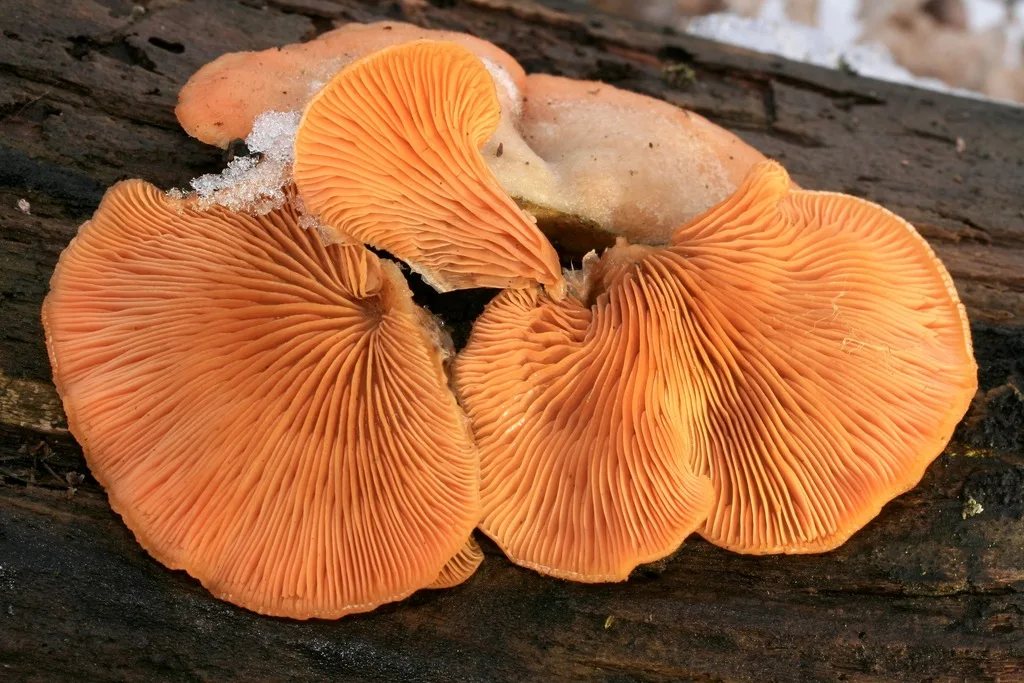
The mock oyster has a densely hairy cap in pale apricot-brown to buff and pale orange-buff gills, with no stem. MykoWeb describes a skunk-like odor and a pale salmon-pink spore print. It grows on logs and branches of both hardwoods and conifers, so the wood test does not separate it.
Split Gill (Schizophyllum commune)
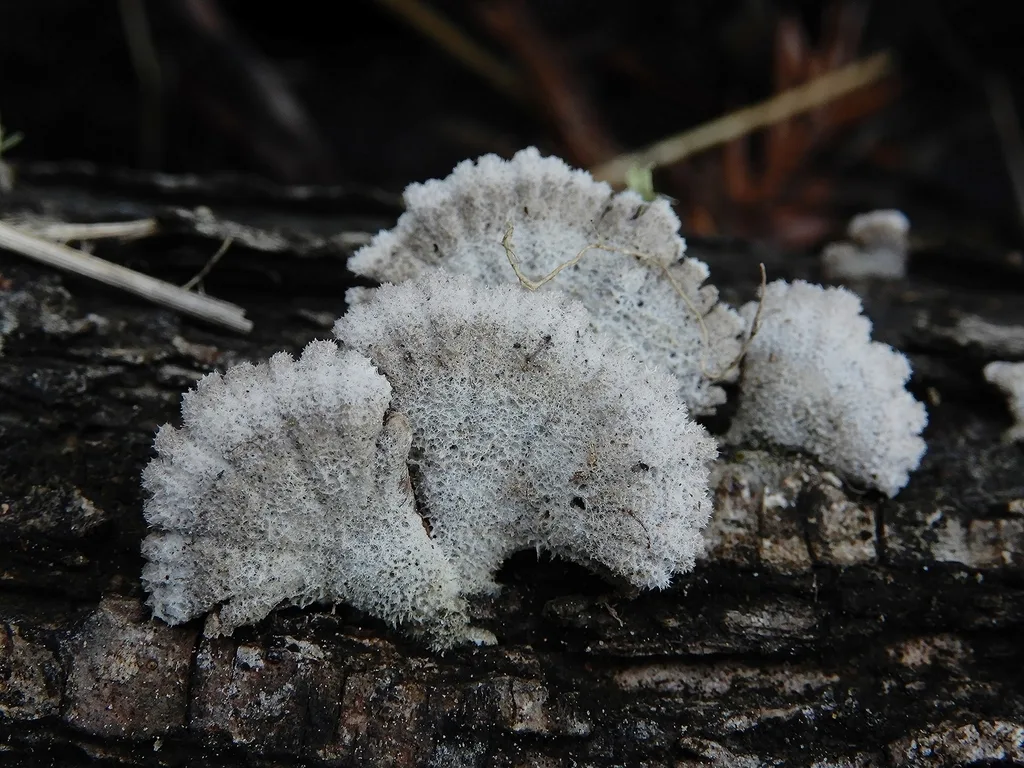
Split gill is a small whitish-gray fan on hardwood logs and branches. Its gills are split lengthwise down the middle. MykoWeb says it can be found year-round and shrivels in dry weather, then recovers after rain.
Angel Wing vs Look-Alikes: Side-by-Side Comparison
The wood, the flesh and the spore print together separate an angel wing from its look-alikes, while no single check does. Oysters are the hardest, because they share the white spore print. Use the table below as a checklist, then confirm with an expert.
| Mushroom | Wood | Cap and flesh | Spore print | Risk |
|---|---|---|---|---|
| Angel wing | Conifer | Thin, white, no stem | White | Poisonous |
| Oyster mushroom | Hardwood, uncommon on conifer | Thicker, white to gray-brown, short stem | White to lilac-tinged | Edible per sources |
| Late fall oyster | Mostly hardwood | Olive green, slimy, yellowish gills | White, per First Nature | Avoid |
| Peeling oysterling | Hardwood | Small, rubbery peeling skin, brown gills | Snuff brown | Avoid |
| Mock oyster | Hardwood or conifer | Hairy, apricot to buff, skunk odor | Salmon-pink | Not edible |
| Split gill | Hardwood | Small, gray, split gills | Not needed: the split gills settle it | Small and tough |
Common Identification Mistakes
Calling Every White Fan an Oyster
Angel wings, small oysters and split gills can all look like white fans from a distance. Turn each one over, pinch it and check the wood.
Ignoring the Wood
Conifer wood is the angel wing's habitat, while oysters are uncommon on conifers. A white fan on a pine or fir log deserves extra suspicion.
Trusting an Old Field Guide
Older guides may list angel wings as edible, because the species was once considered edible. Check the publication date of any edibility rating.
Relying on the Spore Print Alone
A white print fits both angel wings and oysters. It only rules out the brown-spored and pink-spored look-alikes.
Expecting Symptoms Right Away
In the Japanese outbreak, symptoms began 13 to 18 days after the meal. Feeling fine the next day says nothing about safety.
Frequently Asked Questions
What is an angel wing mushroom?
An angel wing, Pleurocybella porrigens, is a thin, white, fan-shaped mushroom with no stem. It grows in overlapping clusters on rotting conifer logs and stumps. Its spore print is white.
Are angel wing mushrooms poisonous?
Most sources now treat them as poisonous. In 2004 they were linked to 59 illnesses and 17 deaths from acute encephalopathy in Japan, mostly among people with kidney failure. Do not eat them.
Can you eat angel wing mushrooms?
No. They were once considered edible, but that view predates the 2004 outbreak. No study shows a safe amount, and people with kidney disease face the clearest risk.
What happened with angel wing mushrooms in Japan?
In fall 2004, 59 people in 9 Japanese prefectures fell ill after eating angel wings, and 17 died. Most had chronic kidney failure, many on hemodialysis. Symptoms began 13 to 18 days after eating, according to NAMA.
What is the difference between angel wings and oyster mushrooms?
Angel wings are thinner, pure white, stemless and grow on conifer wood. Oyster mushrooms are thicker, white to grayish-brown, may have a short stem and grow mainly on hardwoods. Both leave a white to pale spore print, so the wood and the flesh matter most.
Where do angel wing mushrooms grow in the US?
They grow on rotting conifer logs and stumps. Most US iNaturalist records come from the Pacific Northwest, followed by the northern states from Minnesota to Maine. Records south of latitude 40 in the East are scarce.
When do angel wing mushrooms grow?
They fruit from late summer to fall. About 96 percent of US iNaturalist research-grade records fall between August and November, with the peak in October.
What toxin is in angel wing mushrooms?
The cause is not settled. Recent studies point to a lectin called PPL, a protein called pleurocybelline and an unstable amino acid called pleurocybellaziridine acting together. A 2015 study also proposed cyanide and thiocyanate as a factor in people with kidney damage.
Do angel wing mushrooms grow on hardwood?
Sources describe them on conifer wood. A thin white fan on hardwood is more likely a small oyster, a Crepidotus or another species, so check the spore print and ask an expert.
Final Safety Reminder
Angel wings look gentle, but they are linked to a deadly brain illness and their symptoms can take two weeks to appear. Never eat a wild mushroom based on a chart, a photo or an app. Photograph the cap, the gills, the attachment point and the log, and check them with our free mushroom identifier and a local mycological club. If someone may have eaten angel wings, especially a person with kidney disease, call Poison Control at 1-800-222-1222 or a doctor without waiting for symptoms. Our guide on how to identify a mushroom you found explains what to record.
Sign in to leave a comment and join the discussion.
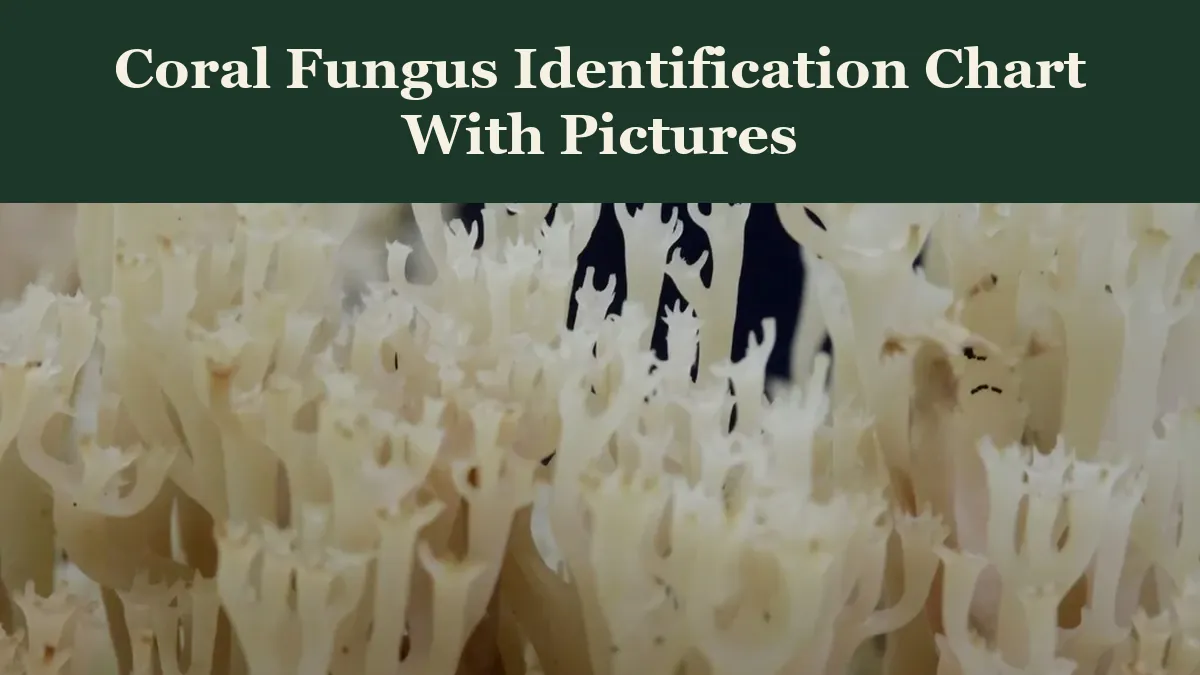 Species Guide
A coral fungus is a mushroom shaped like branching sea coral or a tuft of upright clubs, with no cap and no gills. Most US corals grow from soil in the...
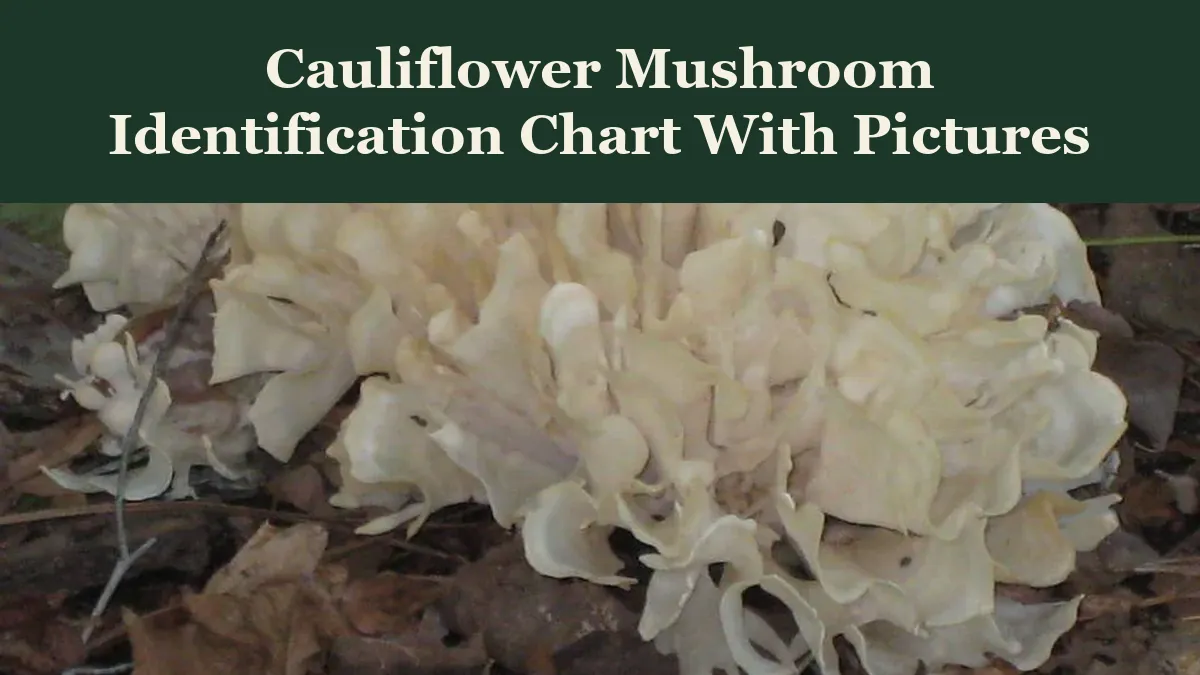 Species Guide
A cauliflower mushroom ( Sparassis ) is a large, cream-colored rosette of flat, wavy, ribbon-like lobes that grows at the base of a tree. It has no caps, no...
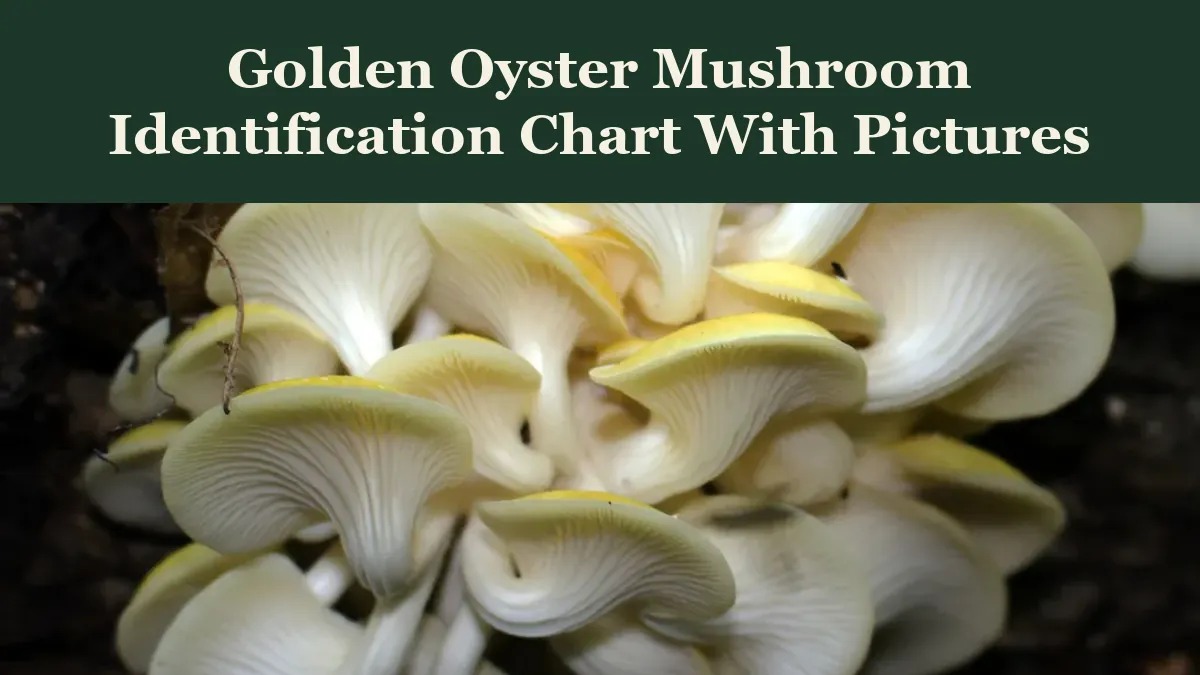 Species Guide
The golden oyster mushroom ( Pleurotus citrinopileatus ) is a bright yellow oyster mushroom that grows in dense, bouquet-like clusters on dead hardwood,...