Winter Mushrooms Identification Chart With Pictures
— views
Winter mushrooms are the cold-tolerant fungi that fruit between November and March, mostly on dead wood during thaws and mild, wet spells. In the Northeast and Midwest the common finds are velvet foot, oyster mushrooms, jelly fungi and turkey tail. In California and the Pacific Northwest, blewits, black trumpets and hedgehogs fruit through winter. The deadly Galerina also fruits in cold weather, so every small brown cluster on a log needs a spore print.
This winter mushrooms identification chart with pictures covers the main US species by region, the velvet foot and Galerina test, and the look-alikes. It is an identification guide, not permission to eat a wild mushroom.
Key Takeaways
- Most winter mushrooms grow on wood: logs, stumps and fallen branches.
- Velvet foot (Flammulina velutipes) has a sticky orange-brown cap, a dark velvety stem, no ring and a white spore print.
- Deadly Galerina (Galerina marginata) grows on the same kind of logs, leaves a rusty brown spore print and contains amatoxins, the same toxins as the death cap.
- Snow is not a safety test. The Missouri Department of Conservation records both velvet foot and deadly Galerina pushing up through snow.
- Oysters, jelly fungi, turkey tail and split gill turn up on mild winter days across much of the East.
- In California, blewits fruit from late fall, then candy caps, black trumpets and hedgehogs carry on into spring.
- No winter mushroom should be eaten without expert confirmation of the species.
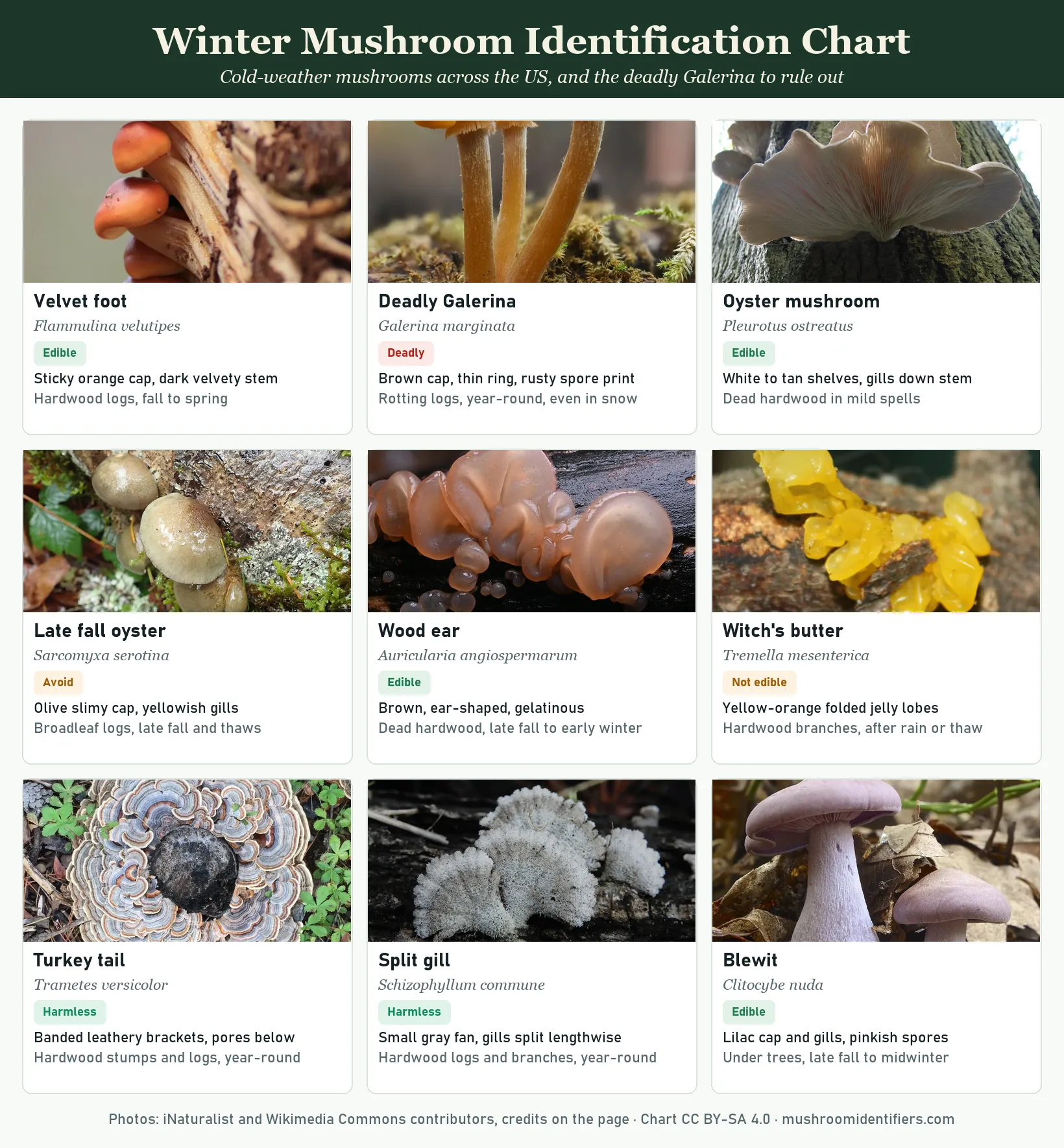
Winter Mushroom Identification Chart
| Mushroom | Key features | Where and when | Edibility or risk |
|---|---|---|---|
| Velvet foot (Flammulina velutipes) | Sticky orange-brown cap 1 to 6 cm, dark velvety stem, no ring, white spore print | Clusters on hardwood logs and stumps; fall to spring, often in warm spells | Edible per sources, but easily confused with deadly Galerina |
| Deadly Galerina (Galerina marginata) | Sticky brown cap 1.5 to 5 cm, thin ring that may vanish, rusty brown spore print | Clusters on rotting hardwood and conifer logs; year-round, most often spring and fall | Deadly: amatoxins |
| Oyster mushroom (Pleurotus ostreatus) | White, gray or tan shelf-like caps, stubby off-center stem, white to grayish-lilac spore print | Clusters on dead hardwood; any month when the weather is mild | Edible per sources; confirm the species |
| Late fall oyster (Sarcomyxa serotina) | Olive green cap, slimy when wet, yellowish gills, little or no stem | Rotting broadleaf wood; late fall, winter and thaws | Avoid: edibility disputed |
| Wood ear (Auricularia angiospermarum) | Brown, ear-shaped, gelatinous | Dead hardwood such as oak, walnut and hickory; late fall into early winter | Eaten, but confirm the species |
| Witch's butter (Tremella mesenterica) | Yellow to orange folded jelly lobes that dry to a hard crust | Dead hardwood branches; revives after rain or snowmelt | Not a food mushroom |
| Turkey tail (Trametes versicolor) | Thin, leathery, color-banded brackets with whitish pores underneath | Stumps and logs of hardwoods; year-round | Listed as edible by MDC, but leathery |
| Split gill (Schizophyllum commune) | Small whitish-gray fan with gills split lengthwise | Hardwood logs and branches; year-round | Edible per MykoWeb, but small and tough |
| Blewit (Clitocybe nuda) | Violet to lilac cap and gills fading to tan, pale pinkish-buff spore print | Under hardwoods and conifers, sometimes in rings; late fall to midwinter | Edible per sources, never raw; violet Cortinarius look-alikes |
Details come from MykoWeb, the Missouri Department of Conservation (MDC) and First Nature. Seasons shift with latitude and elevation, so compare your find with several real photographs too.
What Mushrooms Grow in Winter?
Most mushrooms that appear in a US winter are wood-decay fungi that fruit whenever a thaw or a mild, wet spell arrives. Most fungi stop fruiting in early autumn and wait as hidden threads in wood or soil, as Frank Kaczmarek writes in Northern Woodlands. Winter finds fall into three groups.
- Cold-weather fruiters: velvet foot, oyster mushrooms and the late fall oyster form fresh mushrooms in cold months.
- Persistent fungi: turkey tail, split gill and other tough shelf fungi last on logs all year.
- Revivers: jelly fungi shrink when dry or frozen and swell again after rain or snowmelt.
In New England, velvet foot and jelly ear fruit from late autumn into early winter, according to Northern Woodlands. Late fall oysters, blewits and brick tops can linger in mild weather or appear during a thaw.
Winter Mushrooms by US Region
The winter season depends on where you live: the Northeast and Midwest get short flushes on wood during thaws, while California and Oregon have ground-dwelling species that fruit through winter. The calendar below combines state agency, MykoWeb and mycological society reports. Treat each window as a rough guide, because a cold snap or a dry month can shift it by weeks.
| Region | Early winter (Nov to Dec) | Midwinter (Jan to Feb) | Late winter (Mar) |
|---|---|---|---|
| Northeast and Midwest | Velvet foot, late fall oyster, blewits, wood ear | Velvet foot and oysters in warm spells; jelly fungi after snowmelt; turkey tail and split gill on logs | Velvet foot (MDC lists it to May), oysters, jelly fungi |
| South | Oysters and velvet foot likely in mild, wet spells | Same, plus year-round decay fungi | Same |
| California | Velvet foot, blewits | Candy caps, black trumpets, hedgehogs after New Year | Black trumpets and hedgehogs into spring |
| Pacific Northwest | Black trumpets in dim forest (Oregon) | Little published data; ask a local club | Yellowfoot, hedgehogs and black trumpets still fruiting in Oregon |
We found no extension or state agency list of winter mushrooms for the Deep South. The South row applies the Missouri guidance that oysters fruit in any month with mild weather, so treat it as an estimate. Our guide to mushroom habitat explains how wood, soil and weather shape fruiting.
Velvet Foot vs Deadly Galerina
Velvet foot and deadly Galerina can grow on the same kind of log in the same cold month, and the spore print is the test that separates them: white for velvet foot, rusty brown for Galerina. Both have small, sticky, orange-brown to brown caps and grow in clusters. Galerina contains amatoxins, according to NAMA, the North American Mycological Association.
| Feature | Velvet foot (Flammulina velutipes) | Deadly Galerina (Galerina marginata) |
|---|---|---|
| Cap | 1 to 6 cm, sticky, dark orange-brown, paler at the edge | 1.5 to 5 cm, sticky when wet, honey yellow to cinnamon, fading two-toned |
| Gills | Creamy white to pale orange | Yellowish, turning rusty brown |
| Ring | None | Thin and bracelet-like, sometimes missing |
| Stem | Tough, with a dark brown to black velvety coating from the base up | Dry, bald or with white fibrils, darkening from the base up |
| Spore print | White | Rusty brown |
| Season | Late fall to spring; MDC lists October to May | Year-round, most often spring and fall |
| Risk | Edible per sources, but MDC does not recommend it | Deadly |
The descriptions come from a North American field guide for Galerina marginata and for velvet foot, plus the MDC deadly Galerina page. Galerina's stem also darkens from the base up, so a dark stem base alone proves nothing. The velvety texture and the spore print are the checks that matter.
Season is not a check either. MDC says both velvet foot and Galerina sometimes push up through snow records Galerina year-round.
NAMA puts the first symptoms at 6 to 24 hours after eating, and MDC says 10 or more hours. NAMA describes an apparent recovery around day two or three, followed by liver and kidney failure, and states that there is no antidote. Learn the full profile in our Galerina marginata guide, and the method in our spore print guide.
Common Winter Mushroom Types in the US
The nine species below are the winter mushrooms the sources for this page name most often, and eight of them grow on wood. The blewit is the exception, growing on the ground under trees. Two of the nine are look-alikes to rule out: deadly Galerina and the late fall oyster.
Velvet Foot (Flammulina velutipes)
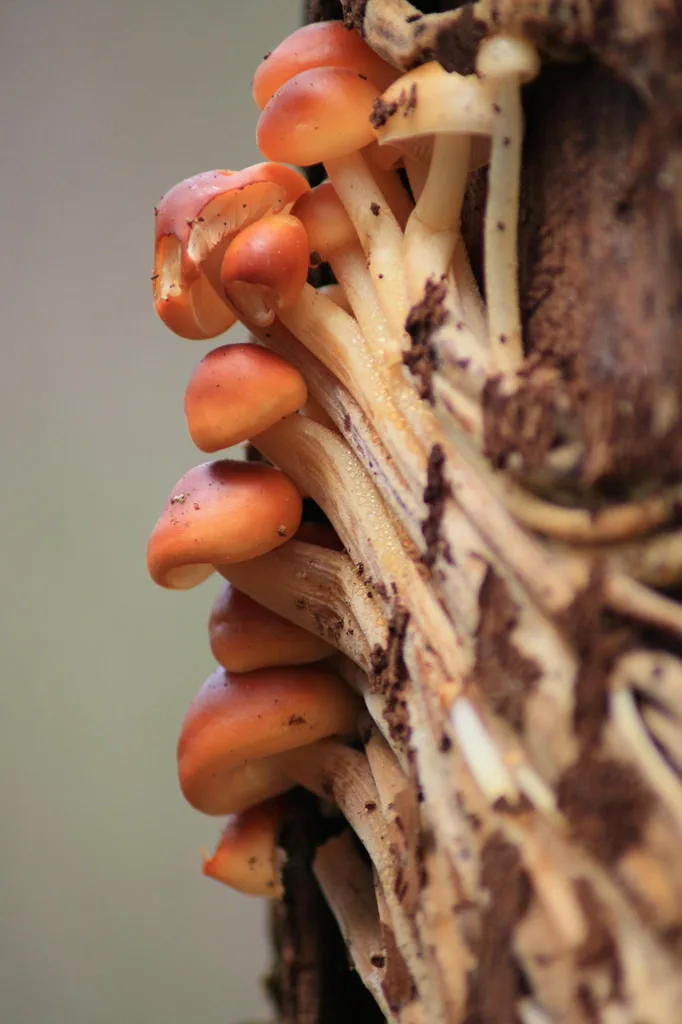
It is fond of cold weather and often appears in late fall or winter. It grows in clusters on stumps, logs and roots of hardwoods, and more rarely conifers. The cap is sticky, almost rubbery, and orange-brown. The stem is tough and turns dark and velvety from the base up. There is no ring. The spore print is white. Western Flammulina populicola, on aspens and poplars, looks nearly identical and needs a microscope to separate.
Deadly Galerina (Galerina marginata)
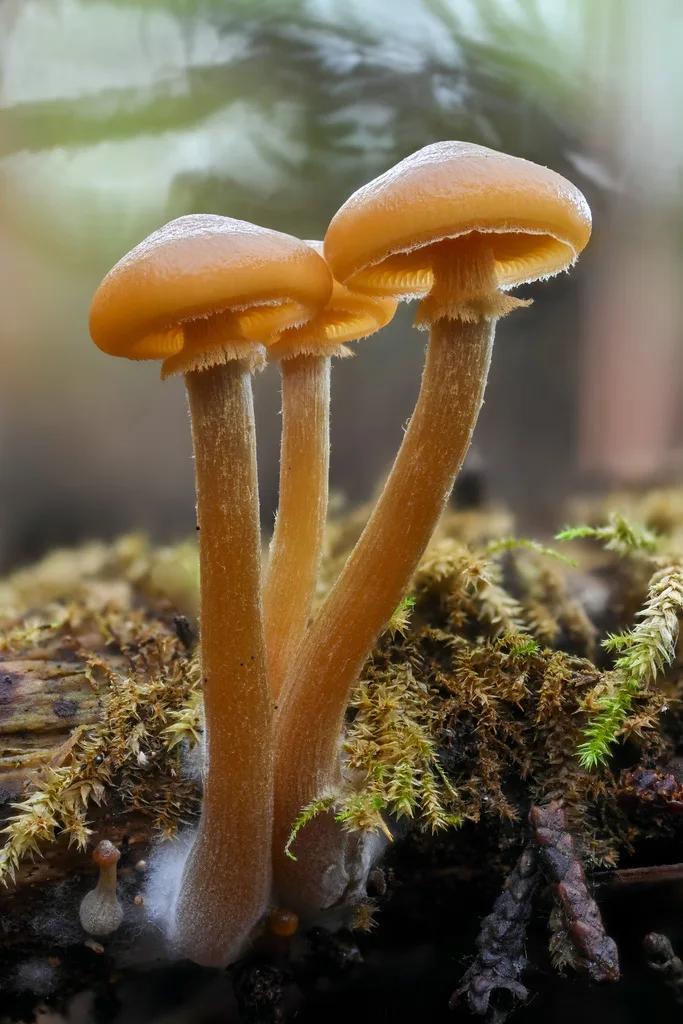
This small brown mushroom grows in clusters on rotting hardwood and conifer logs. It is deadly. The cap is 1.5 to 5 cm and fades from honey brown to a two-toned look as it dries. The ring is thin and can vanish. The spore print is rusty brown. MDC notes that it can look as if it grows from soil when the wood is buried.
Oyster Mushroom (Pleurotus ostreatus)
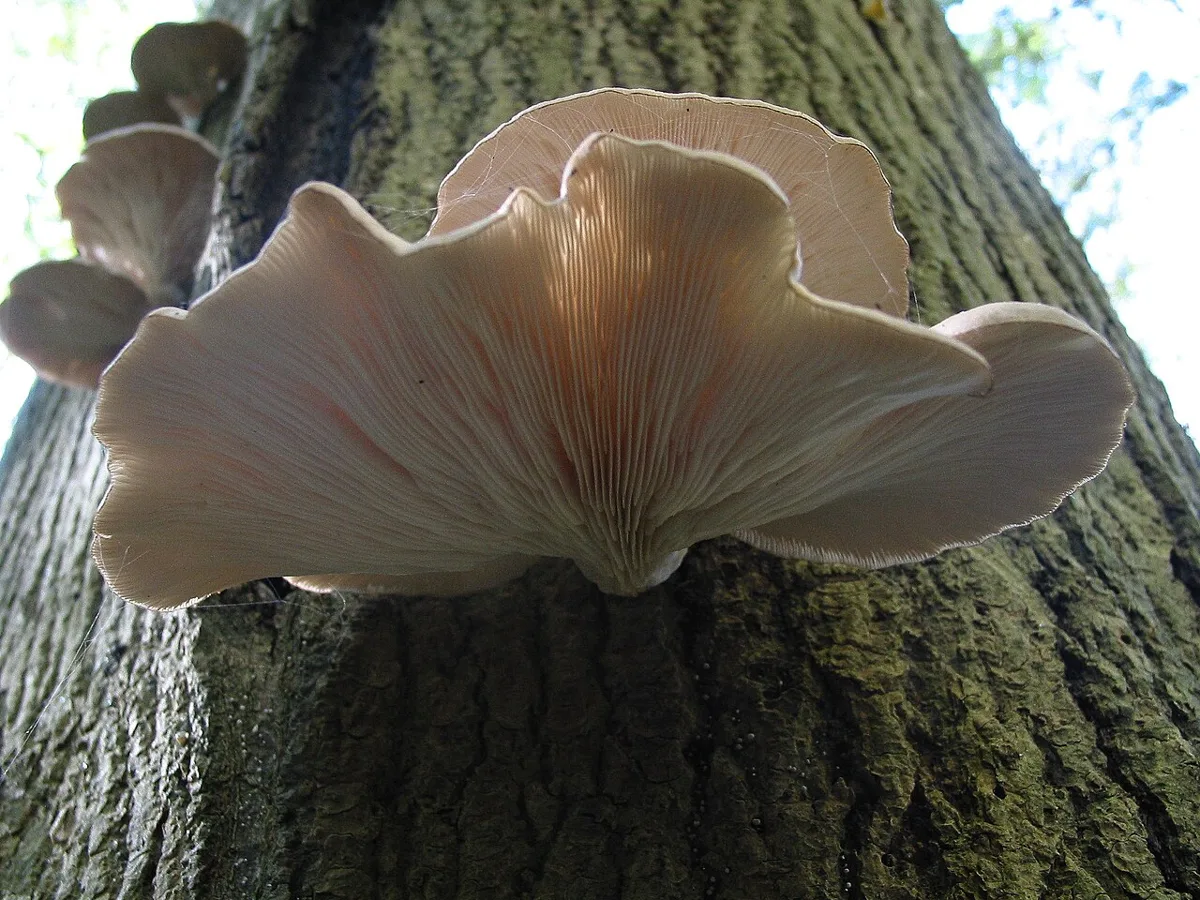
Oyster mushrooms form shelf-like clusters of whitish, grayish or tan caps on stumps, logs and trunks of hardwoods. The gills run down a stubby, off-center stem. The spore print is white to grayish-lilac. MDC says Pleurotus ostreatus fruits year-round if the weather is mild, while P. pulmonarius fruits only in warm months. That makes a winter oyster in the East most likely P. ostreatus. Our oyster mushroom identification guide covers the full group.
Late Fall Oyster (Sarcomyxa serotina)
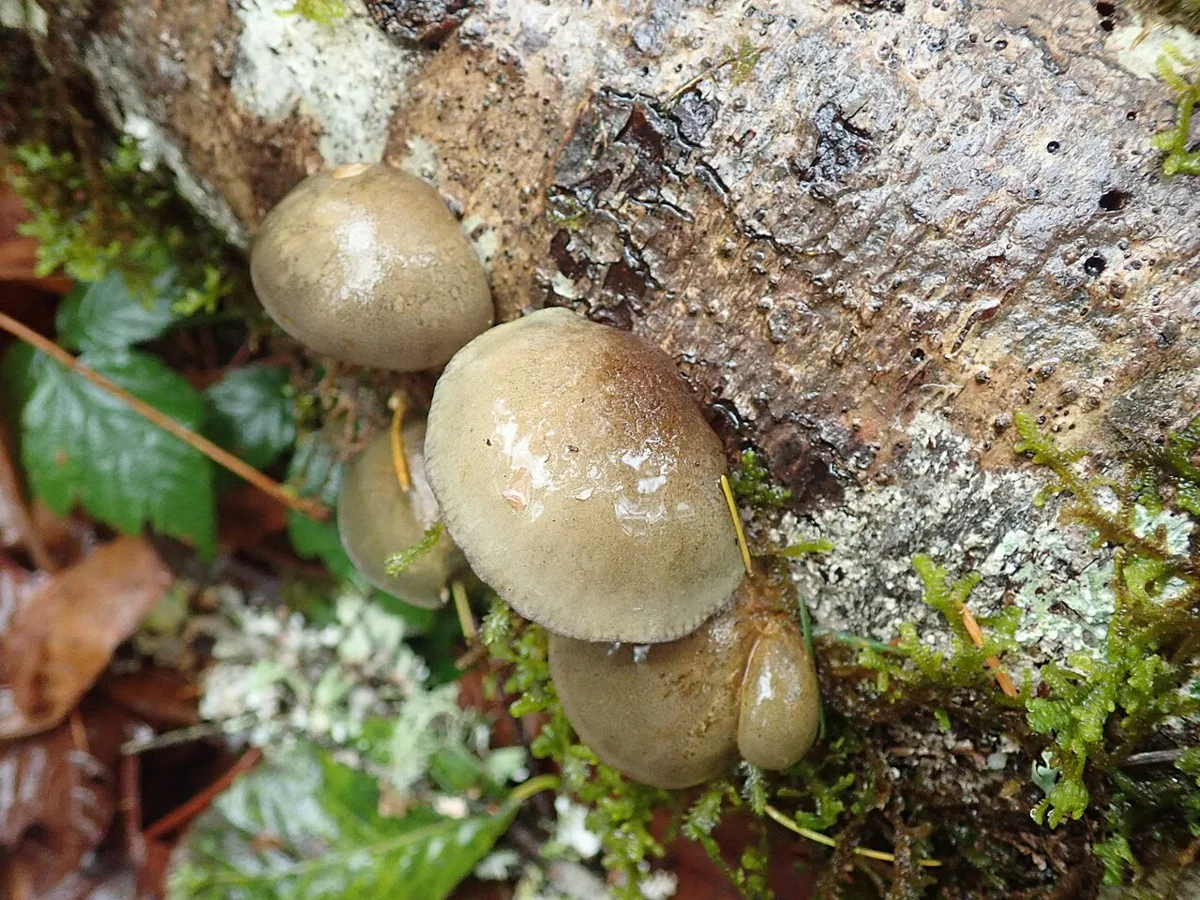
The late fall oyster is an oyster look-alike with an olive green cap, often with violet or brown tones. First Nature describes the cap as slimy when wet, with crowded gills that start yellowish and brown with age. The stem is short and to one side, or missing. It grows on rotten broadleaf wood and occasionally conifers. Older books call it Panellus serotinus.
Wood Ear (Auricularia angiospermarum)
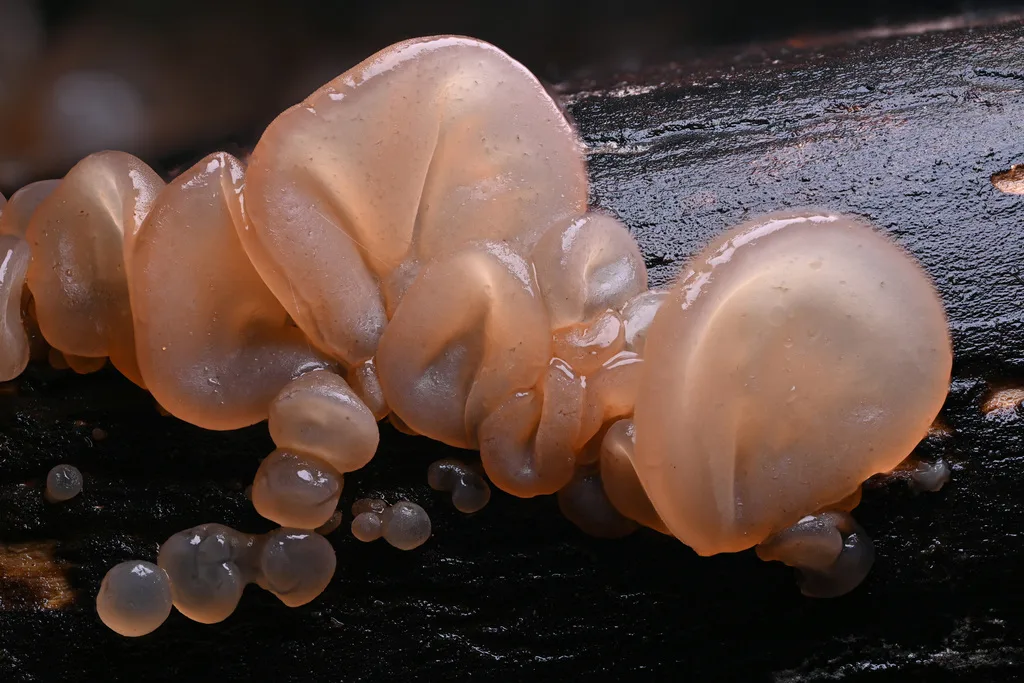
Wood ear is a brown, ear-shaped jelly fungus on dead wood. A 2021 global study of Auricularia validated the name Auricularia angiospermarum for the hardwood species, found on oak, walnut and hickory and reported so far only from North America. Wood ears on conifers such as spruce, fir and pine are A. americana. The same study lists the European A. auricula-judae from Europe only, so older US records under that name refer to the native American species.
Witch's Butter (Tremella mesenterica)
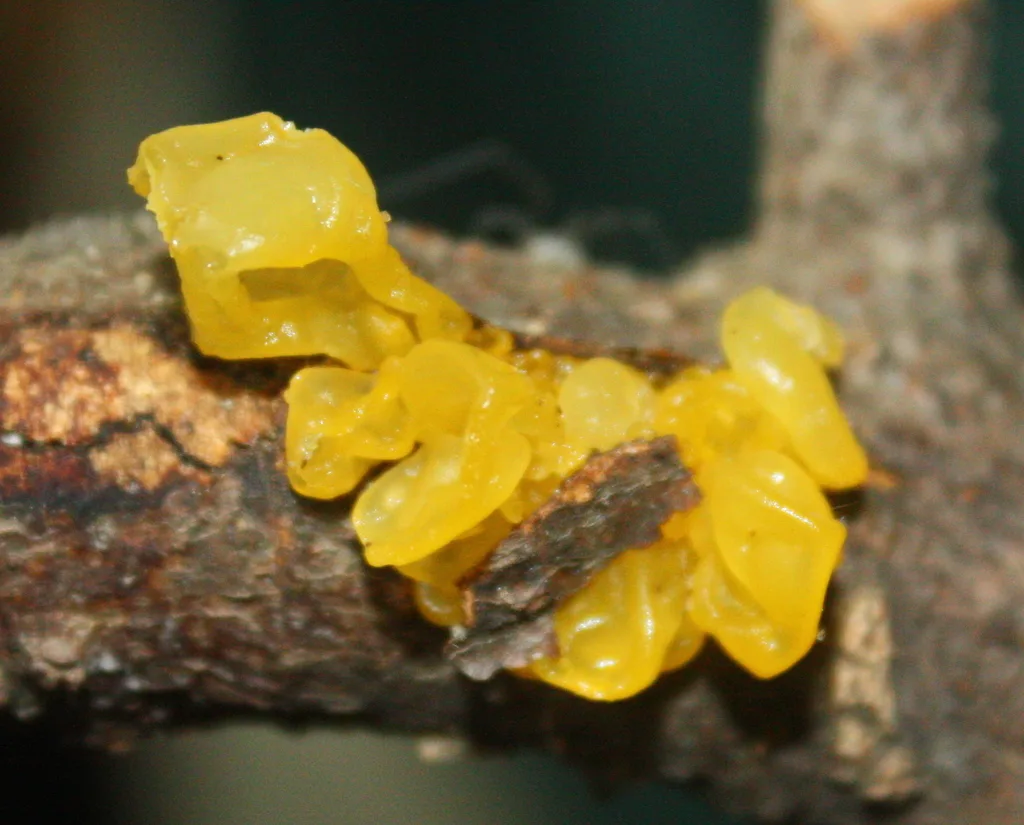
Witch's butter is a bright yellow to orange jelly made of folded, brain-like lobes. It grows on dead hardwood, where it parasitizes a crust fungus called Peniophora, according to MykoWeb. MykoWeb notes that the related golden ear dries to a hard crust and revives when moisture returns. Northern Woodlands says orange and yellow jellies expand back to normal size during rain or snowmelt.
Turkey Tail (Trametes versicolor)
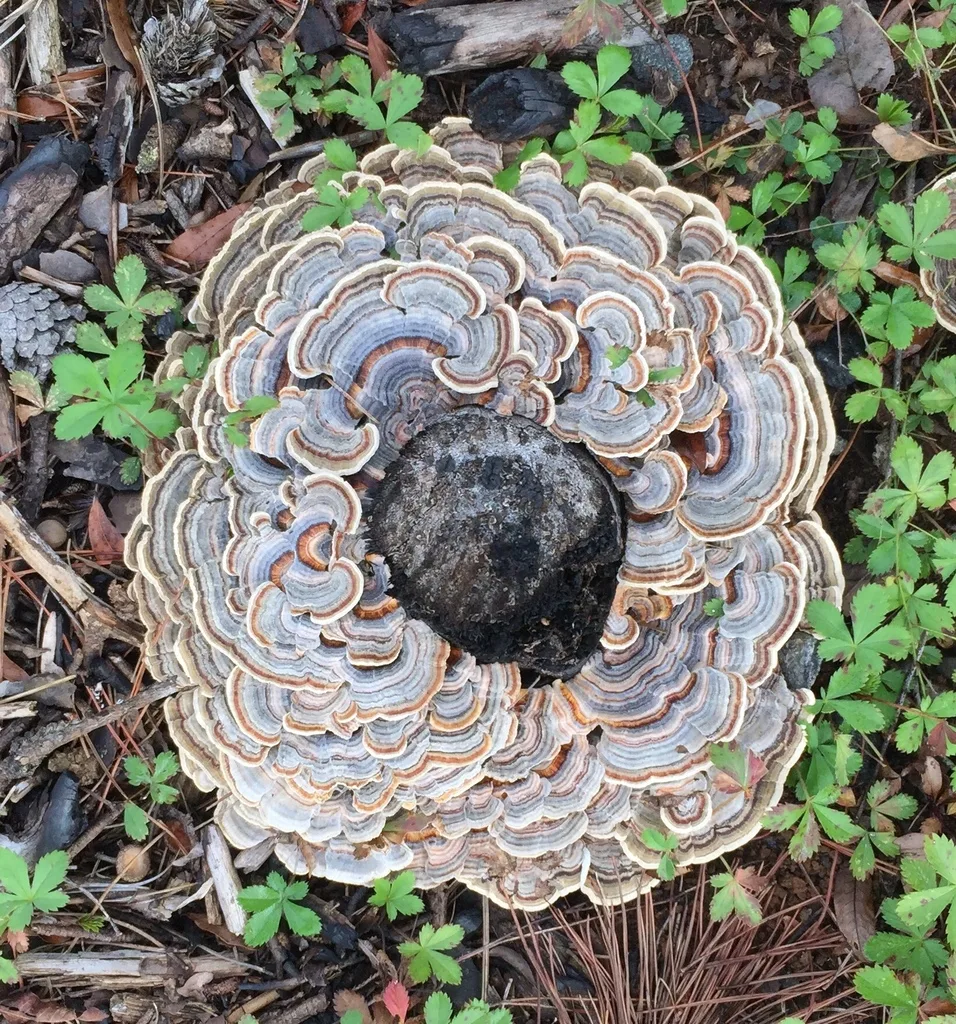
Turkey tail forms overlapping, leathery brackets with bands of color on top and whitish-yellow pores underneath. MDC lists it as visible year-round on stumps and logs of hardwoods. Check the underside: pores support turkey tail, while a smooth underside or gill-like plates mean a look-alike. See our turkey tail identification guide.
Split Gill (Schizophyllum commune)
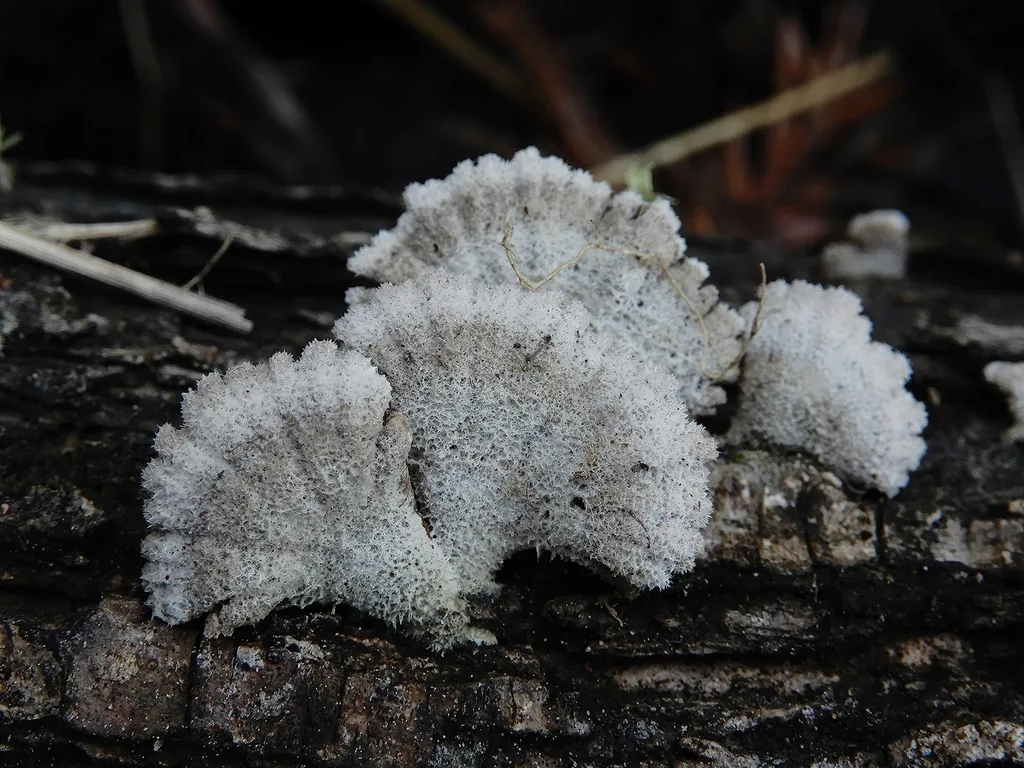
Split gill is a small, whitish-gray fan on hardwood logs and branches. Its gills are split lengthwise down the middle, and the genus name means "split leaves." MykoWeb says it fruits after fall rains but can be found year-round, shriveling in dry weather and recovering after rain.
Blewit (Clitocybe nuda)
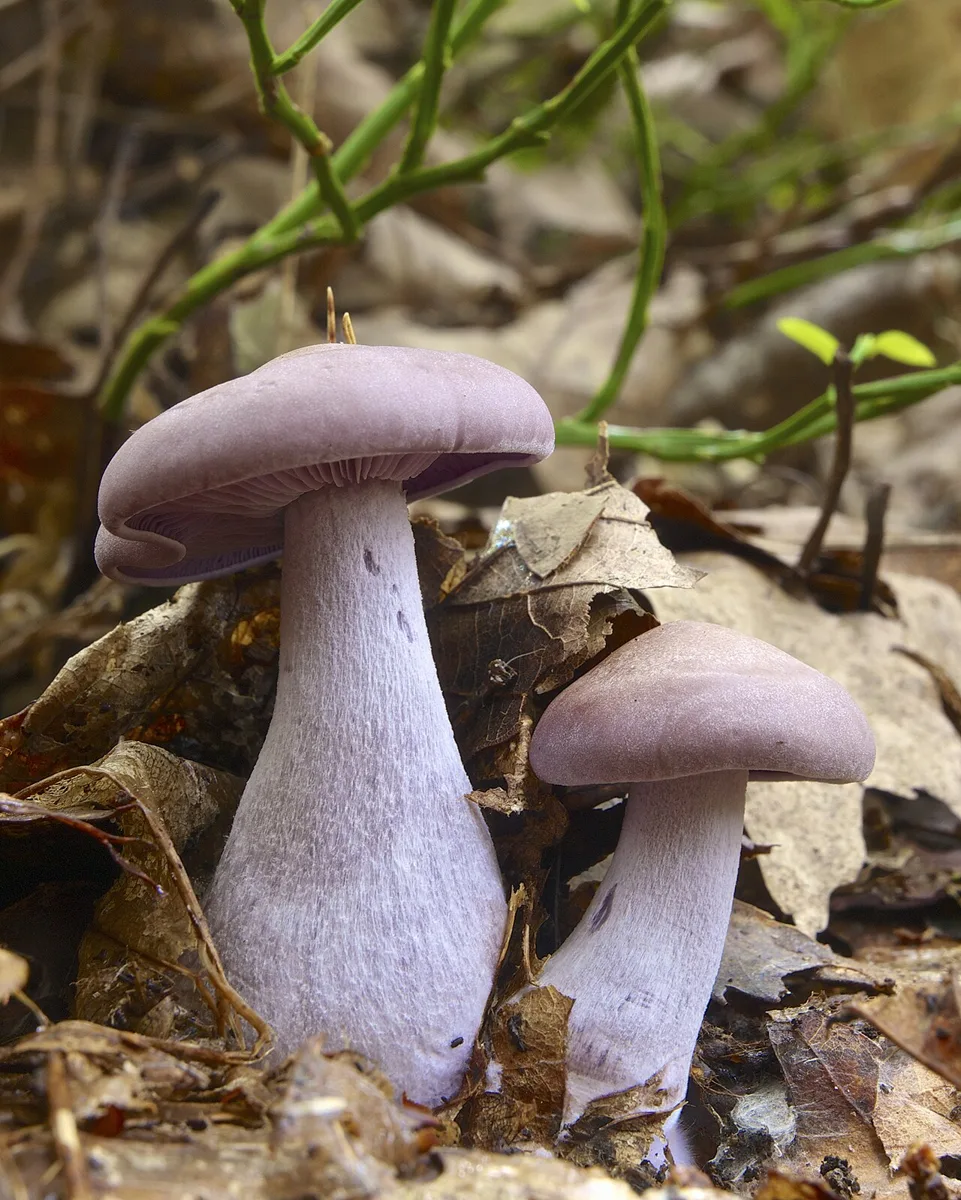
The blewit has a violet to lilac cap and gills that fade to tan, and no veil. It grows singly, in groups or in fairy rings under hardwoods and conifers. The spore print is pale pinkish-buff. MykoWeb lists it from late fall to midwinter in California. You may also see the older name Lepista nuda.
California and Pacific Northwest Winter Mushrooms
On the West Coast, several prized soil-dwelling mushrooms fruit in winter, between late fall and spring. The windows below come from MykoWeb's California Fungi pages and an Oregon mycological society. These species grow on the ground under trees, not on logs.
Candy Cap (Lactarius rubidus)
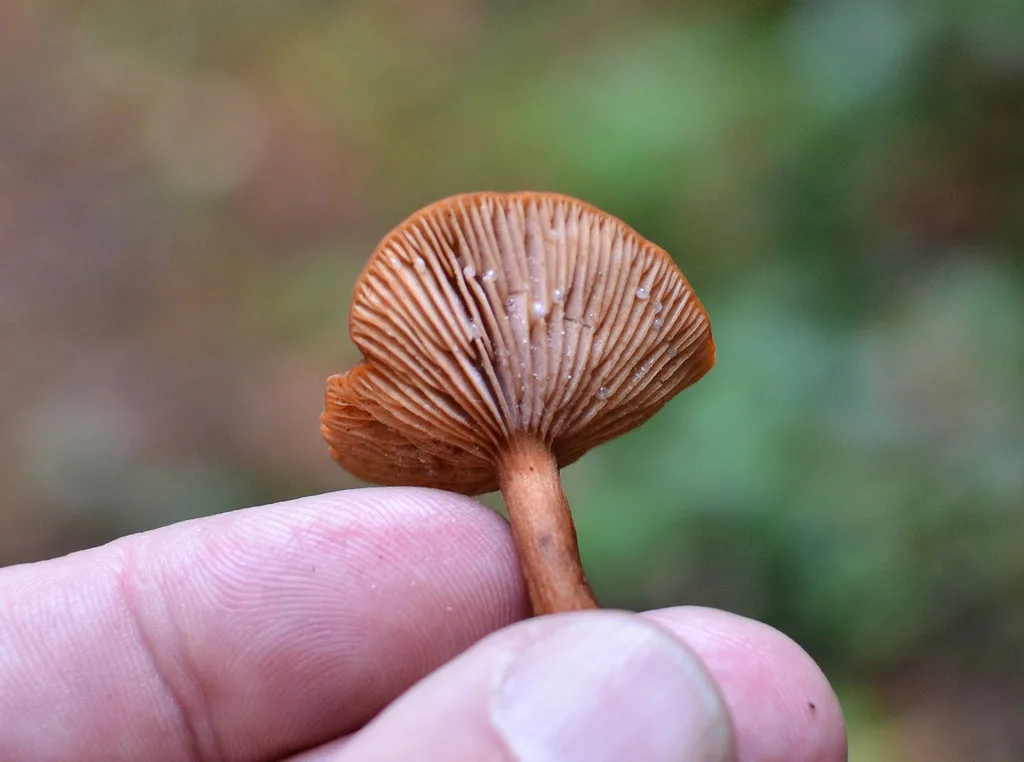
The candy cap is a small rusty-brown milk cap, 1.5 to 4.5 cm across, that bleeds a watery latex when cut. MykoWeb lists it from mid to late winter in mixed hardwood and conifer woods. Dried specimens smell strongly of fenugreek and maple syrup. MykoWeb warns that several look-alikes occur, including reddish milk caps with white latex, and that some are not edible.
Black Trumpet (Craterellus calicornucopioides)
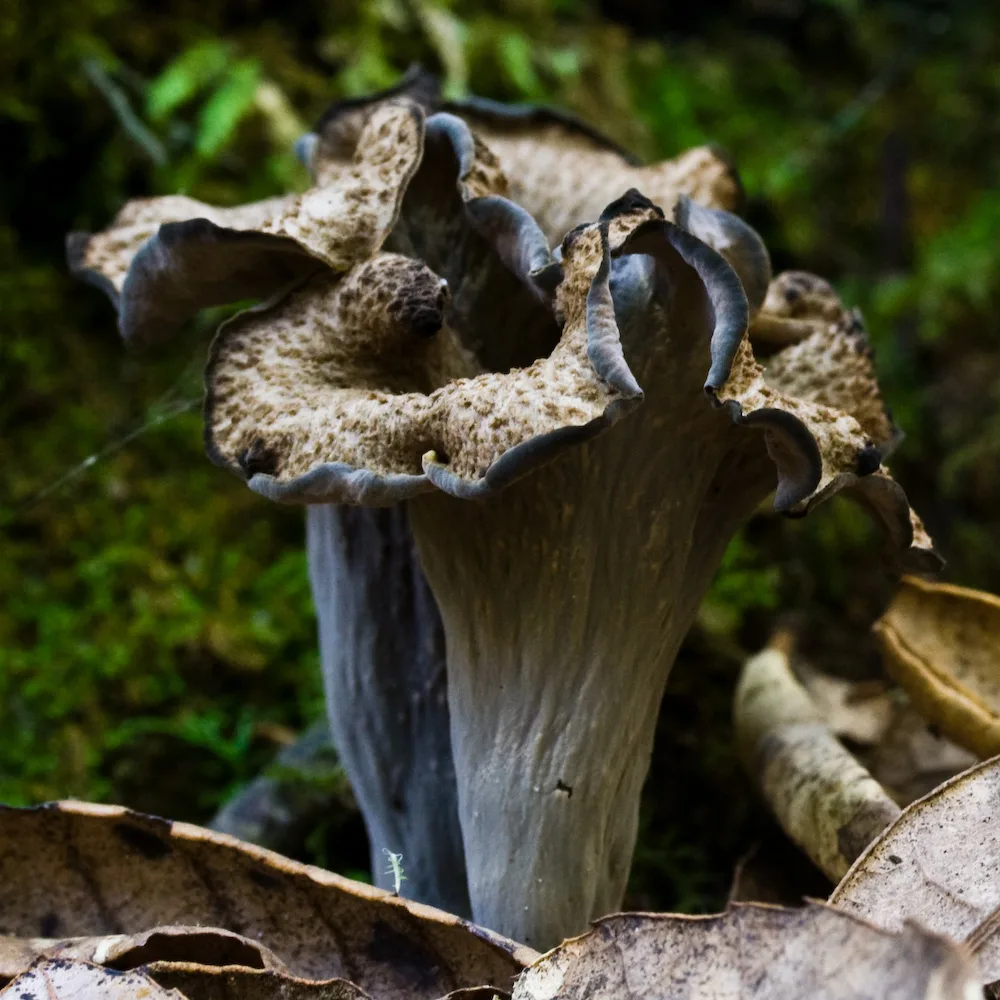
Black trumpets are dark gray to black funnels, 3 to 9 cm tall, with a pale buff spore print. MykoWeb lists them from midwinter to spring, especially under tanbark oak and madrone, and also under coast live oak. The California species was named Craterellus calicornucopioides in 2015. MykoWeb notes that hunters describe the search as looking for small black holes in the ground.
Hedgehog (Hydnum species)
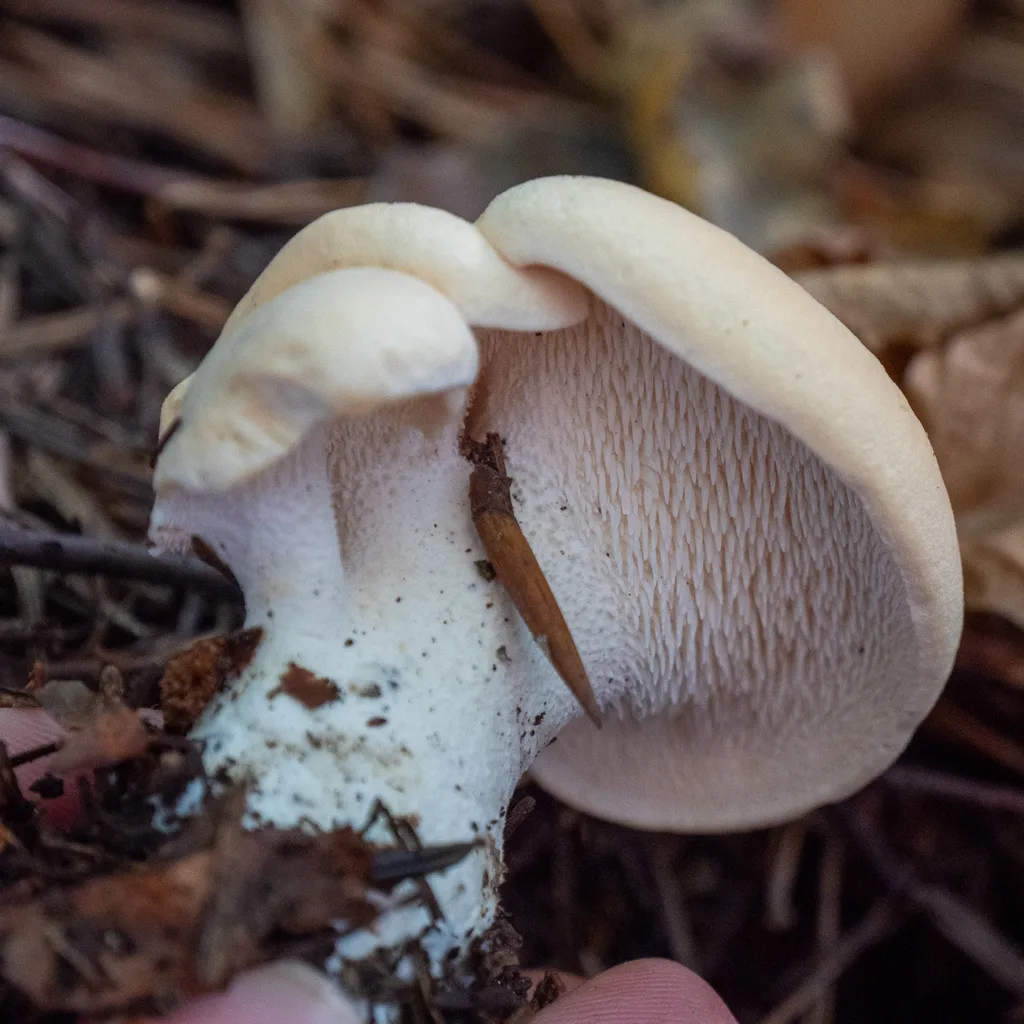
Hedgehogs have brittle, cream-colored spines under the cap instead of gills. MykoWeb says they fruit from midwinter to early spring in California, often not until after the New Year, mainly under conifers such as Bishop pine and Douglas fir. The page also states that the true Hydnum repandum is not known to occur in California. Two or three species may be hiding under that name.
Pacific Northwest Winter Finds
The Cascade Mycological Society in Oregon reported yellowfoot, bellybutton hedgehogs and black trumpets on sale at the Lane County Farmers Market in March 2026. The author also found yellowfoot and hedgehogs still fruiting on a late-winter outing. A vendor reported yellowfoot and hedgehog patches in the Cascades where snow had recently melted. For the region's wider list, see our guide to edible mushrooms in the Pacific Northwest.
Is Velvet Foot the Same as Enoki?
Yes, enoki is a cultivated form of velvet foot, but it looks so different that a supermarket pack will not help you identify the wild mushroom. Store enoki is pale and long-stemmed with a tiny cap. MykoWeb notes that the cultivated product is grown in the dark and bears little resemblance to wild material. If you want enoki without the identification risk, read our guide on how to grow enoki mushrooms.
Winter Mushroom Look-Alikes: Side-by-Side Comparison
The dangerous winter mix-up is velvet foot and deadly Galerina, and the other look-alikes mostly cause disappointment or stomach upset. Each pair below has one feature that settles it. Take a spore print and check the underside before you compare anything else.
| You think you have | Look-alike | How to tell | Risk of the look-alike |
|---|---|---|---|
| Velvet foot | Deadly Galerina (Galerina marginata) | Rusty brown spore print, thin ring, no velvet on the stem | Deadly |
| Oyster mushroom | Late fall oyster (Sarcomyxa serotina) | Olive green slimy cap, yellowish gills | Edibility disputed |
| Oyster mushroom | Orange mock oyster (Phyllotopsis nidulans) | Orange color, rotten-cabbage odor | Not edible |
| Blewit | Violet Cortinarius species | Cobweb veil, rusty-brown spores | Avoid |
| Turkey tail | False turkey tail (Stereum ostrea) | Smooth underside, no pores | Not a food mushroom |
| Turkey tail | Multicolor gill polypore (Lenzites betulina) | Gill-like plates underneath | Not a food mushroom |
| Witch's butter | Golden ear (Naematelia aurantia) or Dacrymyces | Golden ear grows on Stereum hirsutum; Dacrymyces is more orange and grows on conifers | Not a food mushroom |
| Candy cap | Reddish Lactarius with white latex | Latex white, not watery | Some not edible |
Sources: Northern Woodlands for the mock oyster, MykoWeb for the Cortinarius, Dacrymyces and Lactarius notes, and MDC for the turkey tail look-alikes. A rusty brown spore print rules out velvet foot, blewit and oyster in one step, so take one on every winter collection.
Are Winter Mushrooms Safe to Eat?
No winter mushroom is safe to eat on sight, because the deadly Galerina fruits on logs in cold weather too. Several winter species are listed as edible after an expert confirms them. Nobody should eat a mushroom based on this page.
- Velvet foot: listed as edible, but MDC does not recommend eating it because it is easily confused with deadly Galerina.
- Oyster mushroom: MDC rates it choice and advises eating only a small amount the first time.
- Late fall oyster: First Nature reports a claim by Andreas Gminder that it can contain carcinogens, which other researchers have not replicated, and advises against tasting it.
- Blewit: MykoWeb says it causes stomach upset if eaten raw.
- Hedgehog: MykoWeb says it can be bitter unless well cooked.
Our guide to poisonous vs edible mushrooms explains why simple rules fail. Dogs find winter mushrooms on walks too. If your dog eats one, follow our guide on what to do if your dog ate a mushroom and call your vet.
Where to Look for Mushrooms in Winter
Look on dead hardwood logs, stumps and fallen branches during or just after a thaw, rain or snowmelt. MDC ties velvet foot to winter warm spells, and Northern Woodlands ties jelly fungi to rain and snowmelt. Turkey tail and split gill sit on logs all year, so they are the easiest winter finds. In California, search mixed oak, madrone and conifer woods after winter rains. Our tree mushroom identification chart helps you sort what grows on which wood.
Common Identification Mistakes
Treating Snow as a Safety Check
A mushroom found in snow can feel safer than a fall find. MDC records deadly Galerina pushing through snow, just like velvet foot.
Trusting the Dark Stem Base
Velvet foot's stem darkens from the base up, and so does Galerina's. Feel for the velvet texture, look for a ring and take a spore print.
Skipping the Spore Print on Small Brown Clusters
A white print supports velvet foot. A rusty brown print means Galerina or another brown-spored mushroom. This one step catches the deadliest winter mistake.
Calling Every Winter Shelf an Oyster
Late fall oysters have olive caps and yellowish gills, and mock oysters are orange with a foul smell. Check color, gill color and odor before you assume oyster.
Frequently Asked Questions
What mushrooms grow in winter?
In the Northeast and Midwest, velvet foot, oyster mushrooms, late fall oysters, wood ear, witch's butter, turkey tail and split gill are the usual winter finds. In California, blewits, candy caps, black trumpets and hedgehogs fruit through winter. The deadly Galerina can appear in winter too.
Can mushrooms grow in the snow?
Yes, some can. The Missouri Department of Conservation says velvet foot can push up through snow during warm spells. Its deadly Galerina page says the same about Galerina, so snow tells you nothing about safety.
What is the velvet foot mushroom?
Velvet foot, Flammulina velutipes, is a cold-weather mushroom with a sticky orange-brown cap and a stem that turns dark and velvety from the base up. It grows in clusters on hardwood logs and stumps from late fall to spring. Its spore print is white.
Is velvet foot the same as enoki?
Yes. Enoki is a cultivated form of the same species, grown in the dark so it develops long pale stems and tiny caps. Wild velvet foot looks very different, so do not use store enoki to identify it.
How do you tell velvet foot from deadly Galerina?
Take a spore print. Velvet foot leaves a white print, while deadly Galerina leaves a rusty brown print. Galerina often has a thin ring and lacks the velvety stem, but the ring can vanish, so the print is the key test.
Are winter mushrooms safe to eat?
Not without expert confirmation. Several winter mushrooms are listed as edible, but the deadly Galerina grows on the same logs as velvet foot. Amatoxin symptoms start 6 to 24 hours after eating, according to NAMA, and there is no antidote.
Do oyster mushrooms grow in winter?
Yes, in mild spells. The Missouri Department of Conservation says Pleurotus ostreatus fruits year-round if the weather is mild. Check that the cap is not olive green with yellowish gills, which points to the late fall oyster.
What is the orange jelly on logs in winter?
It is usually witch's butter or a related jelly fungus. These jellies dry to a hard crust in cold, dry weather and swell again after rain or snowmelt. The common witch's butter grows on hardwoods, while the more orange Dacrymyces grows on conifers.
What mushrooms grow in winter in California?
MykoWeb lists blewits and velvet foot from late fall to midwinter, candy caps in mid to late winter, and black trumpets and hedgehogs from midwinter into spring. Hedgehogs often appear only after the New Year. Every one needs expert confirmation before eating.
Final Safety Reminder
Winter thins out the mushroom crowd, but it does not remove the deadly ones. Never eat a wild mushroom based on a chart, a photo or an app. Take a spore print of every small brown cluster, photograph the cap, gills, stem and base, and check them with our free mushroom identifier and a local mycological club. If someone may have eaten a poisonous mushroom in the US, call Poison Control at 1-800-222-1222.
Sign in to leave a comment and join the discussion.
 Guide
Most maple tree fungus is either a leaf spot that looks alarming but rarely hurts the tree, or a decay fungus fruiting from wood that is already rotting...
 Guide
Pine tree fungus identification starts with color and place: orange powder on a woody gall is a rust, brown dead shoot tips are a blight, a conk at the base...
 Guide
A yellow mushroom in a potted plant is almost always the flowerpot parasol, Leucocoprinus birnbaumii , a lemon-yellow mushroom that feeds on dead organic...