5 Best Mushroom Grow Kits for Beginners (November 2026)
— views
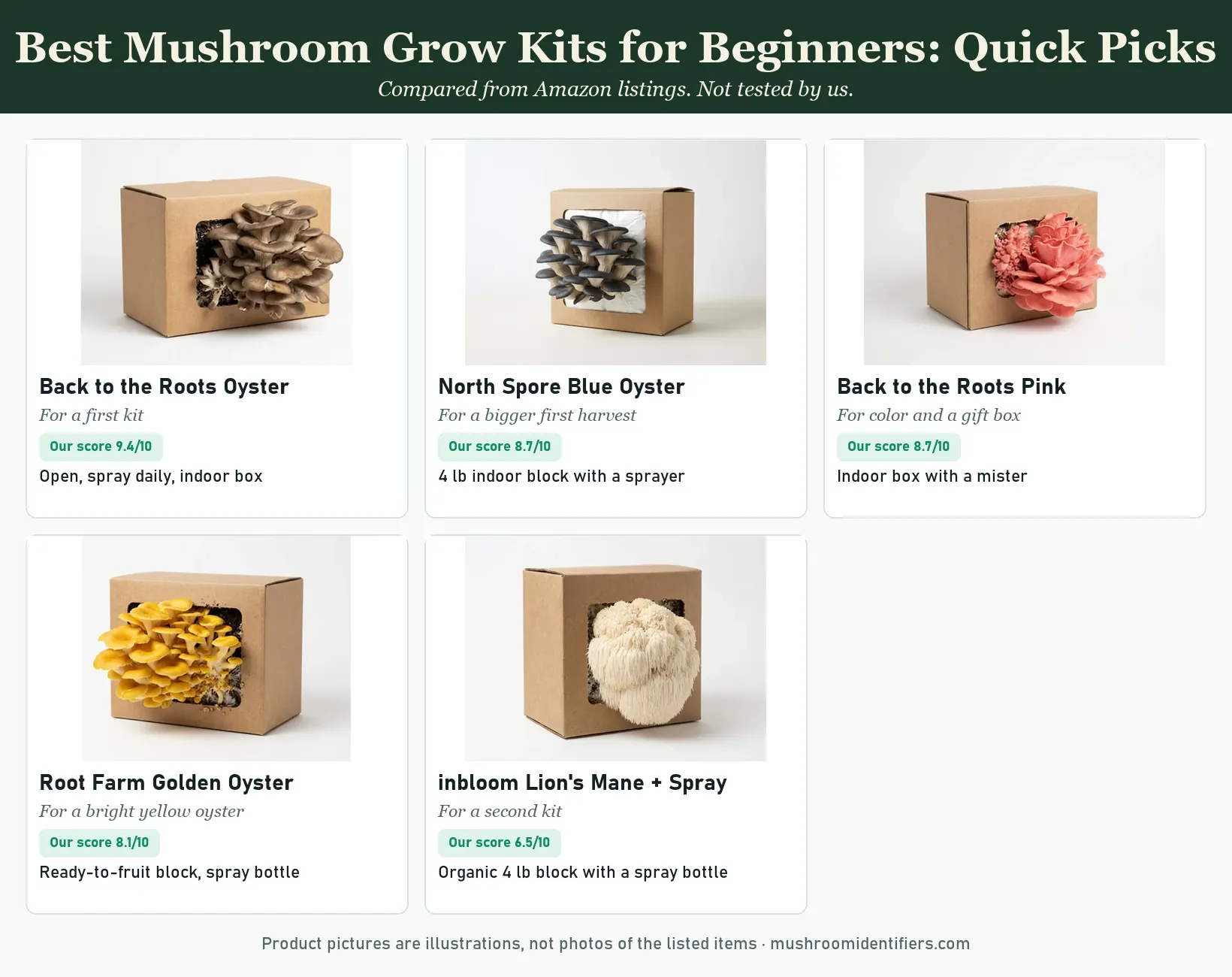
The best mushroom grow kits for beginners include the Back to the Roots Organic Oyster Mushroom Grow Kit for a first kit, the North Spore Blue Oyster Mushroom Grow Kit, 4 lb for a bigger first harvest, and the Back to the Roots Organic Pink Mushroom Grow Kit for color and a gift box.
The best mushroom grow kit for beginners, for most people, is the Back to the Roots Organic Oyster Mushroom Grow Kit, which asks you to open it and spray daily, with mushrooms in about 10 days according to the listing. It is one of the most-reviewed grow kits on Amazon.
Choose by your room before you choose by color. A kit needs a temperature that suits its species, so check the spot where it will sit. Start with an oyster, because NAMA describes oysters as among the easiest mushrooms for beginners to cultivate. For logs, beds and other formats, see our full mushroom grow kit comparison.
This page covers which species forgive mistakes, what the first week looks like and what normal looks like, for edible species only.
How We Chose Mushroom Grow Kits for Beginners
We compared current Amazon listings against university extension guidance and did not test these products. Each kit received a score out of 10, based on three weighted factors.
- Beginner ease, 40%: how forgiving the species and format are, based on extension guidance.
- Review depth, 30%: how many buyers have reviewed the listing.
- Listing clarity, 30%: whether the listing states what you get and what to expect.
A score compares listings. It is not a lab result or a yield guarantee. Product facts come from the listings, so treat them as the seller's claims.
| Product | Best for | Type | Our score |
|---|---|---|---|
| Back to the Roots Organic Oyster Mushroom Grow Kit | A first kit | Indoor kit, oyster | 9.4/10 |
| North Spore Blue Oyster Mushroom Grow Kit, 4 lb | A bigger first harvest | Indoor kit, blue oyster | 8.7/10 |
| Back to the Roots Organic Pink Mushroom Grow Kit | Color and a gift box | Indoor kit, pink oyster | 8.7/10 |
| Root Mushroom Farm Golden Oyster Mushroom Grow Kit | A bright yellow oyster | Ready-to-fruit block, golden oyster | 8.1/10 |
| inbloom Organic Lion's Mane Mushroom Growing Kit with Spray, 4 lb | A second kit | Indoor kit, lion's mane | 6.5/10 |
The Best Mushroom Grow Kits for Beginners for Different Needs
Back to the Roots Organic Oyster Mushroom Grow Kit: Best for a first kit
Our score: 9.4/10
- Organic and non-GMO, according to the listing.
- Open it and spray daily, according to the listing.
- Mushrooms in about 10 days, according to the listing.
- One of the most-reviewed grow kits on Amazon.
This kit suits someone who has never grown a mushroom and wants a result this month. There is no substrate to prepare. UF/IFAS Gardening Solutions calls a kit the easiest way to start growing mushrooms at home.
Pros
- The listed wait of about 10 days sits inside the week to 10 days that UF/IFAS gives for oyster kits.
- The care routine in the listing has only two steps.
- Many buyer reviews are available to read before you decide.
Cons
- The listing facts used here give no yield figure.
- The listing facts used here do not name the oyster variety, so check the card for a temperature range.
- Someone has to spray it every day.
Put the kit where you will see it each morning, because the daily spray is the main job. Our oyster mushroom grow kit guide covers care, problems and the second flush in detail.
North Spore Blue Oyster Mushroom Grow Kit, 4 lb: Best for a bigger first harvest
Our score: 8.7/10
- Organic, according to the listing.
- A sprayer is included, according to the listing.
- About 7 days to first harvest, according to the listing.
- 0.5 to 1.5 lb on the first harvest, according to the listing.
This kit suits a beginner who wants an idea of the harvest before buying. Its listing is the only one of these five with a yield figure, so the "bigger" label rests on that stated figure and not on a measured comparison. The 4 lb in the name is the size of the kit, not the size of the harvest.
Pros
- The listing gives the shortest stated wait of these five kits.
- It is the only listing here that states a first-harvest yield.
Cons
- The yield is a seller's estimate. We found no extension figure for kit yields.
- "Blue" does not tell you the temperature, because blue oyster strains differ widely.
Ohio State University Mycology lists a warm blue oyster at 60 to 85°F and a cold blue oyster at 35 to 50°F. Check the card for the range before you choose a spot.
A larger harvest can be more than you can eat fresh. Our guide on how to dry mushrooms covers what to do with the extra.
Back to the Roots Organic Pink Mushroom Grow Kit: Best for color and a gift box
Our score: 8.7/10
- Organic and non-GMO, according to the listing.
- A mister is included, according to the listing.
- The listing says to place the kit near a window.
- Thousands of reviews.
This kit suits a beginner with a warm, bright home. It also suits someone buying a first kit as a present, because the mister comes in the box.
Pros
- The mister is included, according to the listing.
- Thousands of buyer reviews are available to read.
Cons
- Pink oysters need warmth. Ohio State lists 75 to 90°F.
- The listing facts used here give no yield figure.
- The window advice needs care, because UGA Extension says to keep oyster kits out of direct sun.
A warm kitchen makes more sense than a cool hallway. Choose a window that does not put direct sun on the kit. Ohio State gives pink oysters a shelf life of under 3 days, so plan to cook them soon after you pick them.
Root Mushroom Farm Golden Oyster Mushroom Grow Kit: Best for a bright yellow oyster
Our score: 8.1/10
- A ready-to-fruit block, according to the listing.
- A spray bottle is included, according to the listing.
- Grows golden oyster mushrooms.
This kit suits a beginner with a warm room who wants a striking color. The block arrives ready to fruit, so the work is spraying and watching.
Pros
- The block is ready to fruit, according to the listing.
- The spray bottle is included, according to the listing.
- Ohio State says golden oysters taste like roasted cashews when sautéed in oil.
Cons
- UF/IFAS calls golden oyster invasive and tells buyers to be careful when choosing a kit.
- Ohio State calls the species exceptionally delicate, with a shorter shelf life.
- The listing facts used here give no timing or yield figure.
Keep the spent block out of gardens and woods. MushroomExpert.com says the species has escaped cultivation and begun to naturalize in eastern North America. Sealing the block in a bag and putting it in the trash is the cautious option.
A yellow oyster found outdoors is a wild mushroom, whatever its origin. Our oyster mushroom identification guide explains how wild oysters are identified.
inbloom Organic Lion's Mane Mushroom Growing Kit with Spray, 4 lb: Best for a second kit
Our score: 6.5/10
- Organic, according to the listing.
- A 4 lb kit, according to the listing.
- A spray bottle is included, according to the listing.
This kit suits a grower who has finished an oyster kit and wants to try something different. It scores lower here because this page rewards a fast, forgiving first result. Lion's mane is slower and more fragile than an oyster.
Pros
- Utah State University Extension lists lion's mane among its five beginner species.
- The spray bottle is included, according to the listing.
- The University of Kentucky says cooked lion's mane reportedly tastes like lobster.
Cons
- Kentucky gives five to six weeks under controlled conditions. We found no extension figure for a ready-to-fruit kit.
- Kentucky says lion's mane is extremely fragile and bruises very easily.
- The listing facts used here give no timing or yield figure.
Handle it as little as possible. Kentucky says to harvest when the spines have lengthened, before the top softens and turns noticeably yellow or pink. Cornell Small Farms fruits lion's mane from the side, because a top opening can gather water and encourage disease.
Our lion's mane guide shows what the wild mushroom looks like.
Which Mushrooms Are Easiest to Grow First?
Oyster mushrooms are the easiest mushroom to grow first, and a ready-to-fruit oyster kit is the simplest way to do it. NAMA says oysters are among the easiest for beginners. UF/IFAS names oyster and shiitake as some of the easiest to grow, although a shiitake log may take 6 to 18 months. Utah State lists five beginner species: button types, oyster, shiitake, pioppino and lion's mane.
No source we opened ranks species by how forgiving they are. Temperature range is the part you can measure, so the table leads with it. A wider range means the species tolerates more of what your home does.
| Species | Fruiting range | Time to first mushrooms | How forgiving |
|---|---|---|---|
| Pearl oyster | 50 to 80°F | About a week to 10 days for oyster kits | The widest range here. Suits most rooms |
| Warm blue oyster | 60 to 85°F | About a week to 10 days for oyster kits | Wide range, but check that the strain is not a cold blue |
| Pink oyster | 75 to 90°F | 7 to 10 days at 85 to 90°F | Needs a warm room. Does not keep |
| Golden oyster | 75 to 90°F | No figure found | Needs a warm room. Delicate, and the spent block needs care |
| Lion's mane | No Ohio State figure | Five to six weeks under controlled conditions | Slower, and bruises very easily |
Temperatures come from Ohio State. Timing comes from UF/IFAS, Ohio State and Kentucky. The last column is our reading of those sources, not a published ranking.
Sources differ at the warm end. UGA Extension advises 55 to 75°F for oysters in general, which is cooler than Ohio State's range for pink and golden types. In a cool room, look at pearl or blue oysters. In a warm room, look at pink or golden oysters.
What a First Week Looks Like
A first week with an oyster kit is mostly daily spraying and daily checking, and the mushrooms show up near the end of the wait. Quiet days at the start are normal.
| When | What you do | What normal looks like |
|---|---|---|
| Day 1 | Open the kit as its card says. Set it in a bright spot out of direct sun | White, stringy growth on the substrate |
| Days 2 to 4 | Spray as the card says. Look once a day | Little visible change. Tiny water droplets on the white growth |
| Roughly days 4 to 8 | Keep spraying. If pins form under plastic, slit it carefully | Tiny mushroom starts, called pins |
| 2 to 3 days after pins | Check every day. Keep the kit out of sealed boxes | Mushrooms that can double in size each day |
| About days 7 to 10 | Pick at about 2 inches, with the cap edge still curled under | A cluster ready to cook |
No extension source we opened gives a day-by-day schedule for a kit. The table combines UF/IFAS timing of a week to 10 days, Utah State's 2 to 3 days from pin to mature mushroom, and UGA Extension's daily checks. The pin window is our arithmetic, not a published number. Your kit's card comes first.
What Normal Looks Like
Use this table before you throw anything away.
| What you see | What it means | What to do |
|---|---|---|
| White, stringy growth | Healthy mycelium, the body of the fungus | Carry on |
| Tiny water droplets on the white growth | Utah State calls this an excellent sign of good health | Carry on |
| Dark yellow droplets | Utah State says mycelium commonly gives off these droplets | Carry on |
| Long stems and small caps | Too little light (UGA) or high carbon dioxide (Cornell) | Move it somewhere brighter with fresh air |
| Black, green, pink or orange growth on the block | Contamination, according to Utah State | Discard the block |
A pink oyster kit grows pink mushrooms, so judge the block itself and not the mushrooms. Early Trichoderma, a green mold, can look like healthy mycelium at first. Utah State says it becomes identifiable once it changes color.
If Nothing Happens by Day 10
Check the room temperature first, then light and moisture. UGA Extension waits 4 to 5 weeks on its home-made kit before it resets. That kit spends 2 to 3 weeks in the dark first, so its clock runs longer than a ready-to-fruit kit. The reset is to refrigerate the kit without freezing it for a day or two, mist it and start again.
What Beginners Get Wrong
Beginners most often go wrong by choosing a species that does not suit the room, hiding the kit from air and light, over-wetting it or picking too late. Each mistake below has a simple fix.
Choosing the Color Before Checking the Room
A cool winter room suits pearl or warm blue oysters better than pink or golden ones. Check the room first, then pick the kit.
Hiding the Kit in a Cupboard or Sealed Box
Cornell says high carbon dioxide gives oysters long stems and little caps, and that oysters are pickier about it than most species. NAMA says fresh-air exchange prevents the buildup.
Over-Wetting the Kit
Sources conflict here, so follow your card. UF/IFAS describes soaking a bag, while UGA Extension says not to soak or over-wet its kit. The listings say to spray daily. Utah State says to mist once a day, and UGA Extension mists several times a day.
Picking Too Late
Utah State warns that mushrooms can pass maturity within hours, and that late harvests begin to degrade and even rot. Cornell's rule for cap-and-stem mushrooms is to pick as the gills are exposed but the cap edge is still curled under. Our guide to the parts of a mushroom explains the cap and gills.
Eating the Harvest Raw
Illinois Extension does not recommend eating specialty or gourmet mushrooms raw. It says they should be thoroughly cooked, and that an internal temperature of 145°F should be sufficient.
What You Need Besides the Kit
You need a spray bottle, clean water, indirect light and a spot away from heaters, and that is all. A ready-to-fruit kit does not need a tent, a humidifier or a sealed box.
- A spray bottle. Four of these five listings include a sprayer or mister. The Back to the Roots oyster facts used here do not mention one, so check the listing.
- Clean water. UGA Extension uses only bottled water or water that has stood overnight.
- Indirect light. UGA Extension keeps oyster kits in a well-lit room out of direct sunlight. Cornell's test is simple: if a book can be read comfortably in the room, the light should be sufficient.
- A spot away from heaters. A heater vent dries the air around the kit. Cornell says humidity is most critical in the first 4 days after fruiting starts.
Do not chase a humidity number. Cornell's farm rooms run above 85% for those 4 days, while Utah State's home tub method says under 80%. Those are different setups, so follow your card.
Which Mushroom Grow Kit for Beginners Should You Choose?
Choose the kit that matches your room and what you want from a first grow.
- If you want the simplest first kit, choose the Back to the Roots Organic Oyster Mushroom Grow Kit.
- If you want a stated yield and the shortest listed wait, choose the North Spore Blue Oyster Mushroom Grow Kit, 4 lb.
- If you want color and a gift box for a warm home, choose the Back to the Roots Organic Pink Mushroom Grow Kit.
- If you want a bright yellow oyster and will bin the spent block, choose the Root Mushroom Farm Golden Oyster Mushroom Grow Kit.
- If you have finished one kit and want something new, choose the inbloom Organic Lion's Mane Mushroom Growing Kit with Spray, 4 lb.
Our Top 3 Picks at a Glance
Frequently Asked Questions
What is the easiest mushroom to grow?
Oyster mushrooms are the usual answer. NAMA describes them as among the easiest to cultivate for beginners, and UF/IFAS names oyster and shiitake among the easiest. A ready-to-fruit oyster kit removes the hardest steps.
What is the best mushroom grow kit for beginners?
The Back to the Roots Organic Oyster Mushroom Grow Kit scores highest here at 9.4 out of 10. The score compares listings, not grown results. It suits a first-timer because the routine in the listing is to open it and spray daily.
How long does a beginner mushroom grow kit take?
An oyster kit takes about a week to 10 days, according to UF/IFAS. The listings here say about 7 and about 10 days. Lion's mane is slower, and Kentucky gives five to six weeks under controlled conditions.
Do you need special equipment for a mushroom grow kit?
No. A ready-to-fruit kit needs a spray bottle, clean water, a bright spot out of direct sun and a place away from heaters. Four of the five kits here list a sprayer or mister.
How often should you spray a mushroom grow kit?
The listings say to spray daily, and Utah State says to mist once a day. UGA Extension mists its kit several times a day. Follow the card that comes with your kit.
Is the white fuzz on my kit mold?
White, stringy growth is usually healthy mycelium. Utah State says black, green, pink or orange growth means contamination. Early Trichoderma can look like healthy mycelium, so watch for a color change.
Why is nothing happening on my mushroom kit?
Little visible change is normal in the first days. Check the room temperature against the species, then check light and moisture. UGA Extension waits 4 to 5 weeks on its home-made kit before it refrigerates the kit for a day or two and restarts.
Can you get a second harvest from a beginner kit?
Often, yes. UGA Extension returns its kit to a dark room for about 2 to 3 weeks and repeats the process. It says the second round has fewer mushrooms.
Final Safety Reminder
A kit grows the labeled species, but a yard or compost pile can grow anything. Never eat a wild mushroom based on a chart, a photo or an app. Our guide on how to identify a mushroom you found covers the first steps, and our guide to poisonous vs edible mushrooms explains why no simple rule works. Keep children and pets away from unknown mushrooms. If something unexpected appears, check it with our free mushroom identifier and a local expert. Cook everything you grow, and put contaminated blocks in the trash.
About this guide: we compared current Amazon listings with university extension guidance and did not test these products. As an Amazon Associate, Mushroom Identifiers earns from qualifying purchases at no extra cost to you. Prices and availability are shown on Amazon.
Sign in to leave a comment and join the discussion.
 Guide
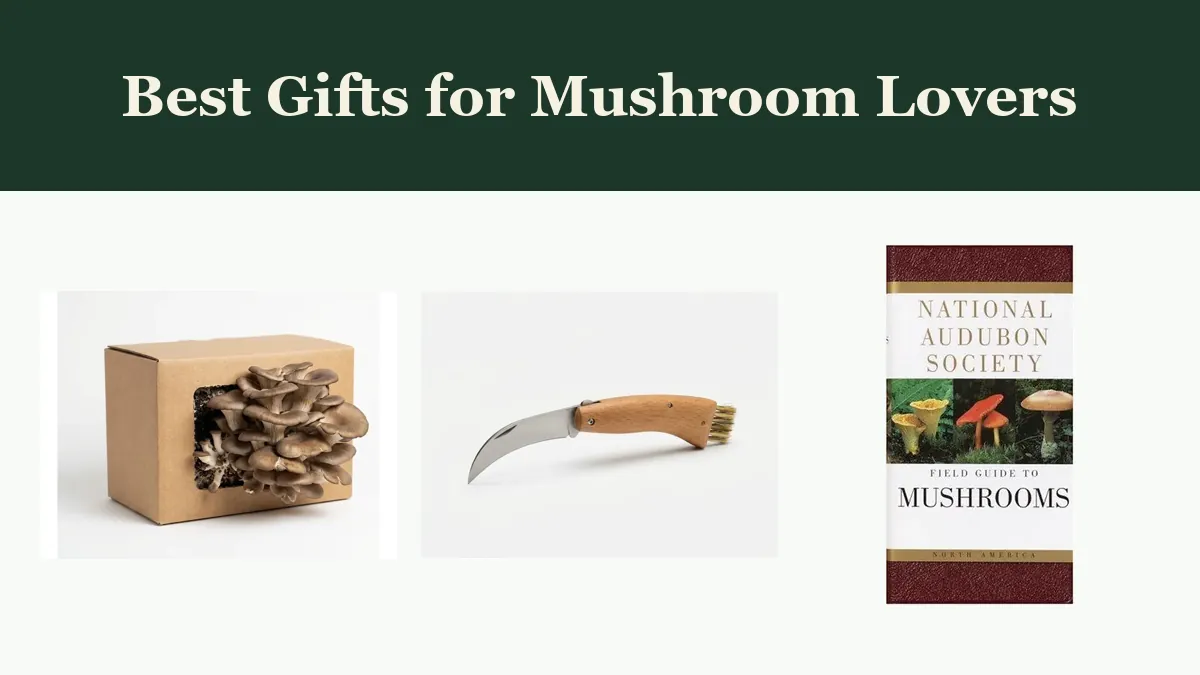
The best gifts for mushroom lovers include the Back to the Roots Organic Oyster Mushroom Grow Kit for a home cook, the Opinel No. 08 Mushroom Knife for a...
 Guide
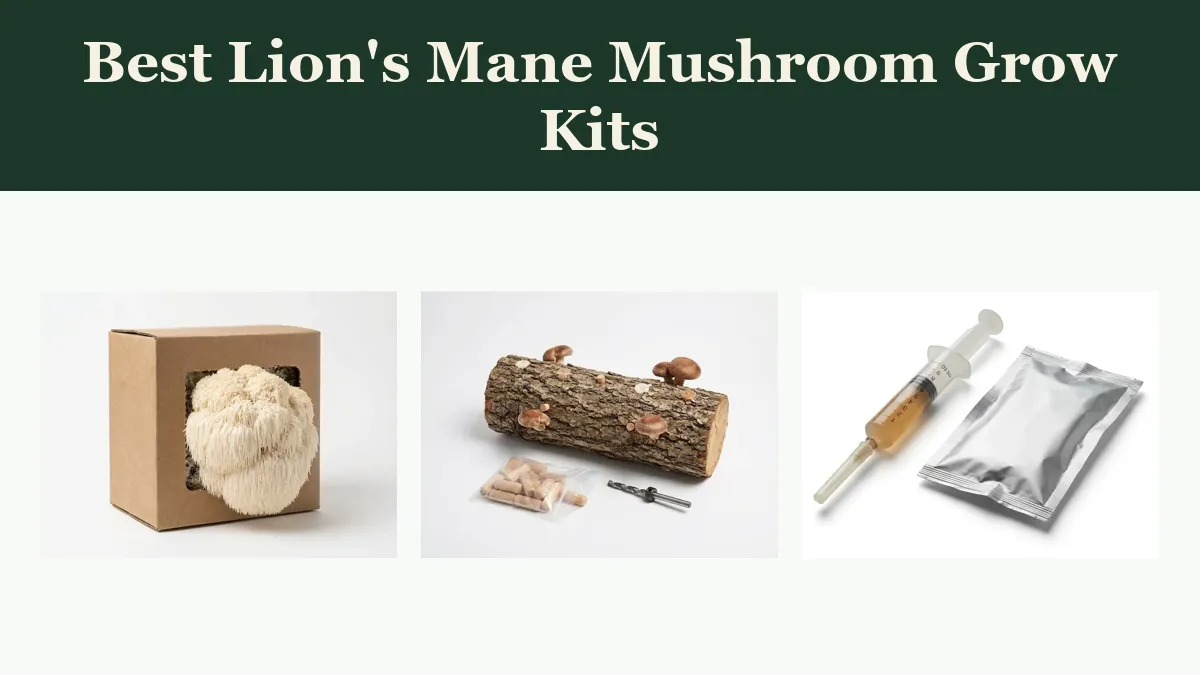
The best lion's mane mushroom grow kits include the inbloom Organic Lion's Mane Mushroom Growing Kit with Spray, 4 lb for an organic block with a sprayer,...
 Guide
The best dehydrators for mushrooms include the Cosori Food Dehydrator, 5 Stainless Steel Trays for most home foragers, the Cosori Food Dehydrator, 6...