Puffball Mushroom Identification Chart With Pictures
— views
A puffball mushroom is a round fungus with no gills and no true cap that holds its spores inside and releases them as a cloud of dust. True puffballs are pure white and solid inside when young. Toxic earthballs and deadly young Amanitas can look the same from the outside, so every puffball must be cut in half and checked by someone experienced before anyone eats it.
This puffball mushroom identification chart with pictures shows the main US puffballs, the cut test, the look-alikes that have put people in hospital, and what to do about puffballs in a lawn. It is an identification guide, not permission to eat a wild mushroom.
Key Takeaways
- A true puffball, once opened, holds only even flesh or spore dust, with no sign of a cap, gills or stem inside.
- Always slice a puffball from top to bottom. A white outside tells you almost nothing.
- An outline of a tiny mushroom inside means it is not a puffball, and it may be a deadly Amanita.
- Dark purple or black flesh under a thick rind points to a toxic earthball.
- Yellow, green or brown flesh means spores are forming, so that puffball should be discarded.
- Do not breathe puffball dust. Inhaling spores can cause a rare but serious lung illness called lycoperdonosis.
What Is a Puffball Mushroom?
"Puffball" is an informal name for several unrelated fungi that make their spores inside a closed ball. MushroomExpert.com describes the key feature: open a true puffball and you find only flesh or spore dust. Calvatia and Lycoperdon are the genera most people mean, and they sit in the order Agaricales. Earthballs (Scleroderma) look similar but belong to a different order, Boletales.
A puffball does not drop spores from gills. As it ages, the white flesh turns into powder, and the spores escape through a split or a small pore when raindrops or air disturb it. That is the "puff." The Missouri Department of Conservation estimates that a 15-inch giant puffball can hold up to 7 trillion spores.
Puffball Mushroom Identification Chart
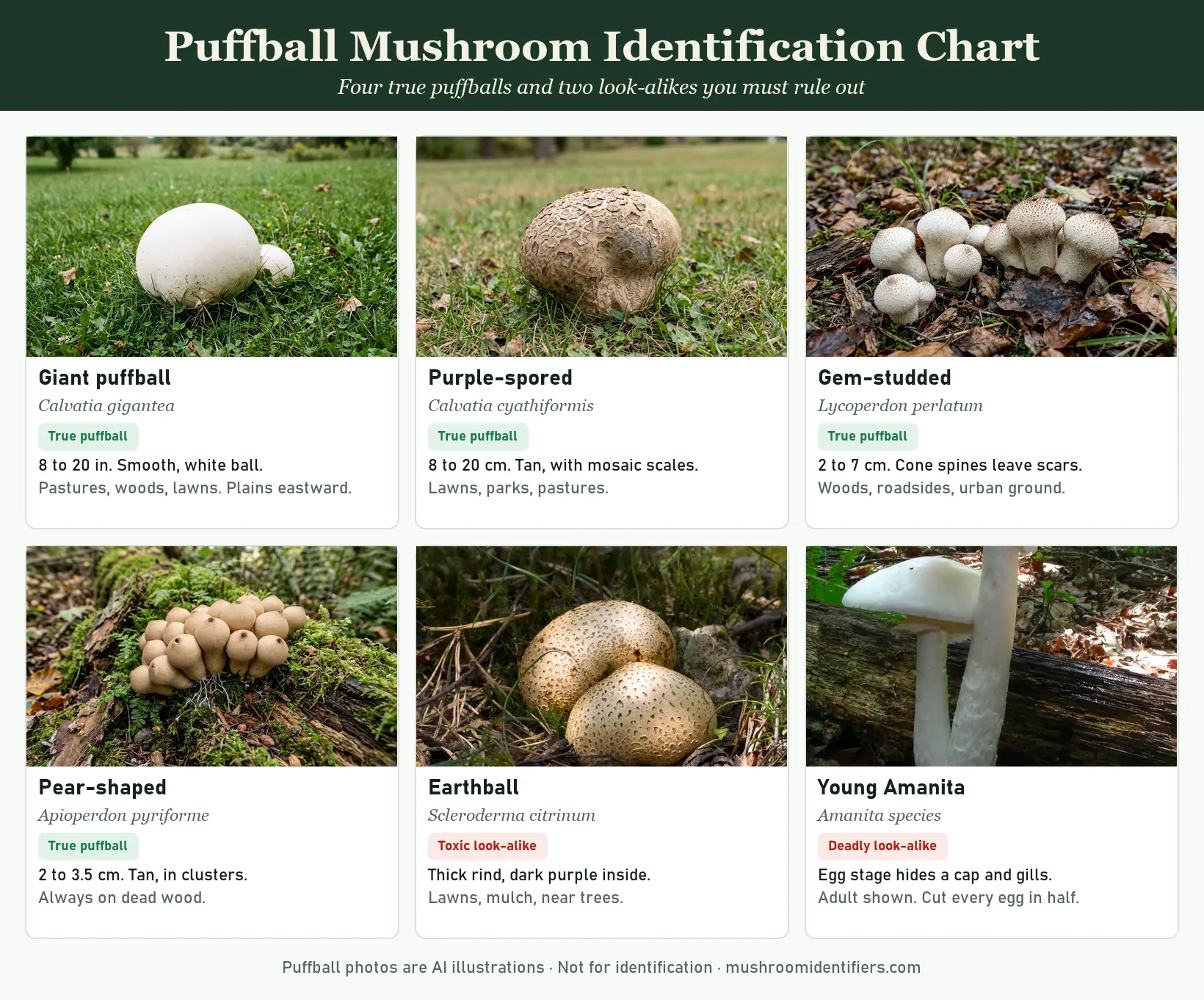
Use this chart to narrow down a puffball by size, surface and where it grows, then always do the cut test. Size alone does not separate a young giant puffball from a dangerous egg.
| Puffball | Size | Surface | Where it grows | US range |
|---|---|---|---|---|
| Giant puffball (Calvatia gigantea) | 8 to 20 in | White, smooth | Pastures, woods, lawns | Great Plains eastward |
| Western giant (Calvatia booniana) | 15 to 30+ cm | Large polygonal warts | Grass, sagebrush | Western mountains |
| Purple-spored (Calvatia cyathiformis) | 8 to 20 cm | Tan, mosaic scales | Lawns, parks, pastures | Widespread, maybe not the West Coast |
| Gem-studded (Lycoperdon perlatum) | 2 to 7 cm | Cone spines that leave scars | Woods, roadsides, urban ground | Widespread |
| Pear-shaped (Apioperdon pyriforme) | 2 to 3.5 cm | Tan, spines wear off | Clusters on dead wood | Widespread |
| Bovista pila | 4 to 7 cm | White, then brown | Grass, sandy soil | Not confirmed |
| Bovista plumbea | 1.5 to 3.5 cm | White to tan | Sparse grass | Widespread |
Details come from MushroomExpert.com, the Missouri Department of Conservation and MykoWeb. The puffball pictures are AI illustrations of the typical form, so compare your find with real photographs too.
How Do You Tell a Real Puffball From a Dangerous One?
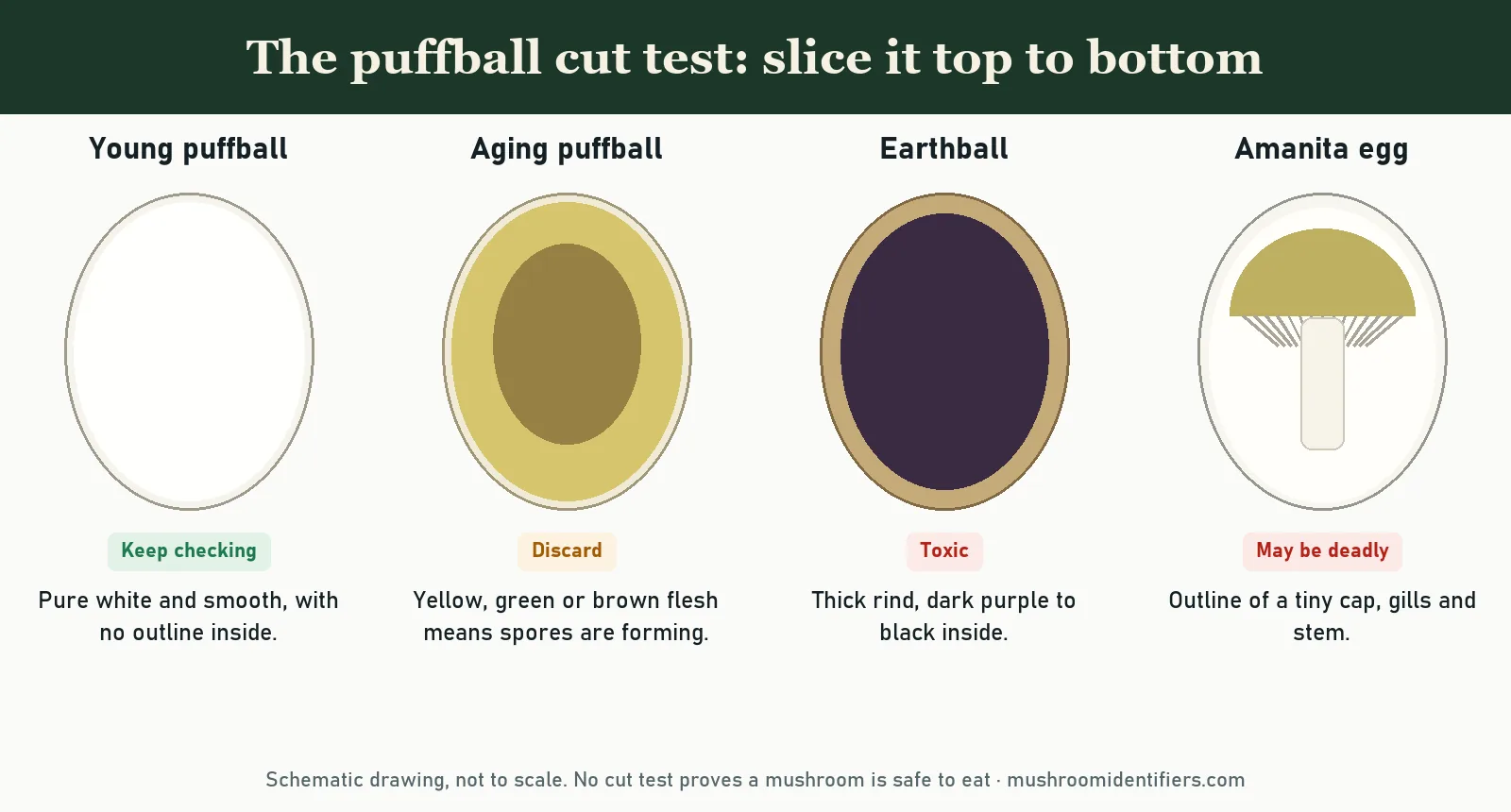
Slice the mushroom from top to bottom and look at the inside. A young true puffball is pure white and smooth like a marshmallow, with no sign of a cap or stem, according to the Missouri Department of Conservation. Anything else fails.
| What you see inside | What it means | What to do |
|---|---|---|
| Pure white, even, smooth | Consistent with a young puffball | Keep checking. Confirm the species with an expert. |
| Yellow, greenish or brown | Spores are maturing | Discard it |
| Insect tunnels or discolored patches | Past its best | Discard it |
| Dark purple to black, thick rind | Probably an earthball | Do not eat it |
| Outline of a cap, gills or stem | A young gilled mushroom, possibly a deadly Amanita | Do not eat it. Keep it from children and pets. |
| Jelly layer around a dark mass | A stinkhorn egg | Do not eat it |
The Illinois Department of Natural Resources advises discarding anything with discoloration, insects or an embryonic outline. First Nature explains the color change. The test has limits, though. University of California IPM states that no simple test identifies poisonous mushrooms, so a clean cut is one required step and never proof of safety.
Core Identification Features
Check size, surface, inside color, base and habitat together. One clue never decides it. Our guide to the parts of a mushroom explains the terms.
Size
Giant puffballs run 8 to 20 inches across, although MushroomExpert.com calls 20 to 30 cm typical. Most other puffballs stay under 3 inches. A golf-ball-sized white ball is the size that overlaps with young Amanita eggs, so treat small ones with the most caution.
Surface
Run your eye over the skin. Giant puffballs are smooth. Gem-studded puffballs carry small cone spines that rub off and leave a pattern of scars. Purple-spored puffballs crack into a tan mosaic. Earthballs have a tough, warty rind.
Inside
Color inside matters most. White is the only acceptable color for a puffball being considered as food. The purple-spored puffball turns purple-brown inside as it matures, which gives it its name, and a black interior usually means an earthball or an old puffball.
Base
Dig up the whole mushroom. Many puffballs have a narrowing base, and Lycoperdon species look pear-shaped. Check for any sac around the base, because that points away from puffballs and toward Amanitas.
Habitat and Season
Puffballs appear from summer to autumn in forests, pastures and lawns, and some grow on dead wood. The Missouri Department of Conservation lists May to October for giants, while MushroomExpert.com places them in late summer and early fall. Pear-shaped puffballs fruit later, into early winter.
Common Puffball Types in the US
Most US puffballs belong to a few recognizable groups that differ by size, surface and habitat. The pictures below are AI illustrations of the typical form.
Giant Puffball (Calvatia gigantea)
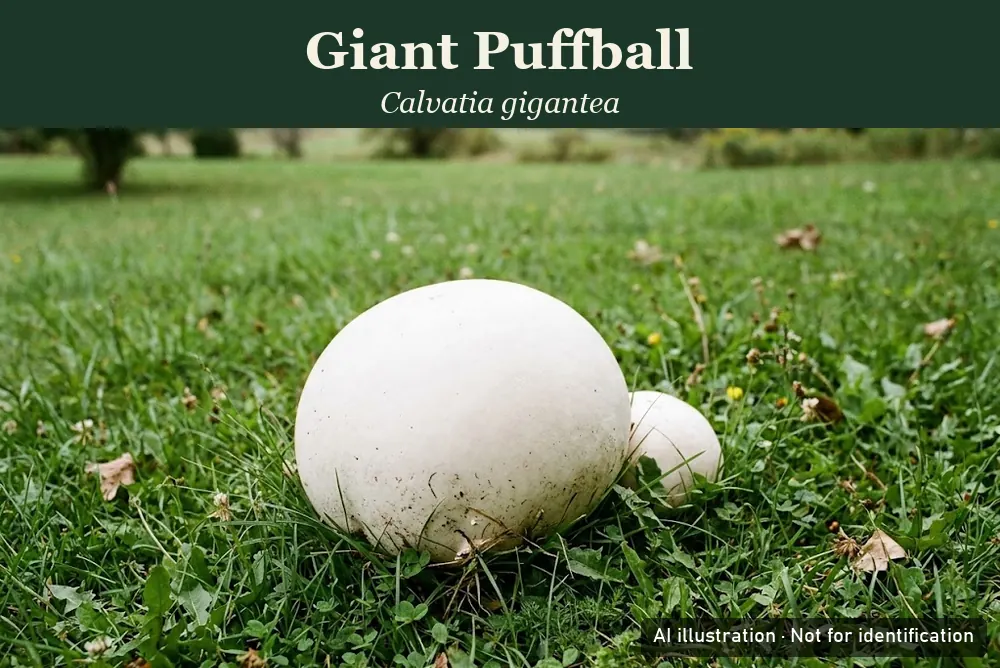
The giant puffball is a smooth white ball that can reach 20 inches. It grows in pastures, woods and lawns from the Great Plains eastward. Illinois DNR records a New York specimen from 1877 that measured over 5 feet long and 4 feet wide, with an estimated 83 trillion spores, although other sources give different measurements. You may also see the older name Langermannia gigantea.
Western Giant Puffball (Calvatia booniana)
This western species grows in grass and sagebrush in the western mountains. Its large polygonal warts separate it from the smooth eastern giant. MykoWeb notes that its edibility is only presumed.
Purple-Spored Puffball (Calvatia cyathiformis)
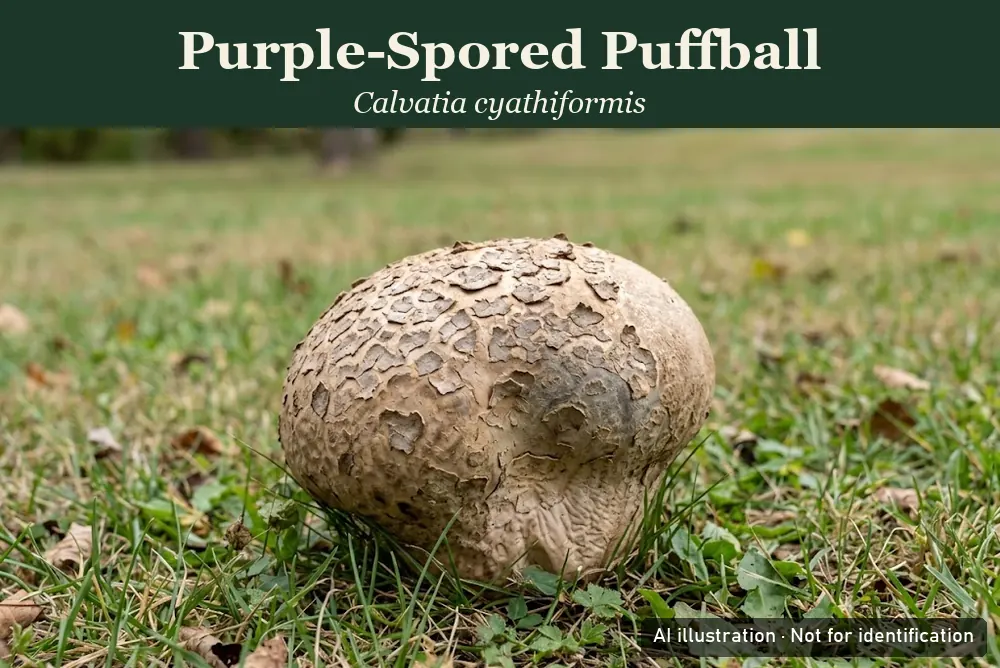
This tan puffball with a mosaic of scales is common on lawns, parks and pastures. MushroomExpert.com records it as widespread, though perhaps absent from the West Coast. It often explains searches for a "brown puffball" or "purple puffball" in a lawn.
Gem-Studded Puffball (Lycoperdon perlatum)
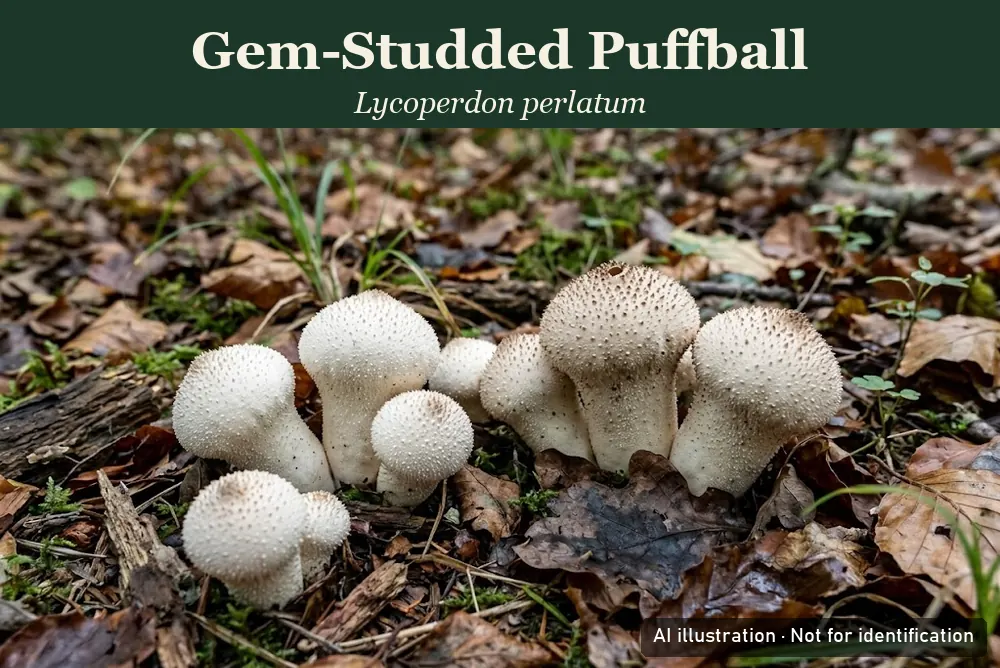
This small pear-shaped puffball is covered in cone spines that leave scars when they fall. It grows in woods, along roadsides and on urban ground. It is also the species involved in the CDC-documented lycoperdonosis cluster described below.
Pear-Shaped Puffball (Apioperdon pyriforme)
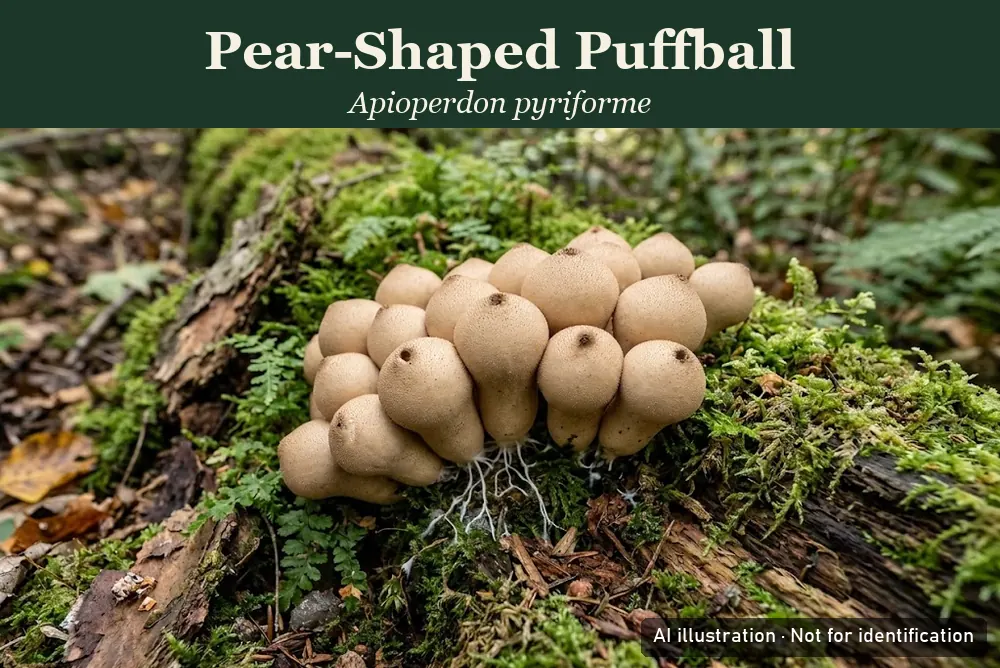
This is the puffball that grows in clusters on dead wood. Older books call it Lycoperdon pyriforme or Morganella pyriformis. MykoWeb uses the newer name. It fruits from summer into early winter.
Bovista Puffballs
Bovistas are small round puffballs of grass and sandy soil. Bovista pila reaches 4 to 7 cm and turns from white to brown. Bovista plumbea stays at 1.5 to 3.5 cm, and MykoWeb considers it too small to bother with.
Puffball Look-Alikes: Side-by-Side Comparison
Three look-alikes matter most: young Amanitas, earthballs and stinkhorn eggs. All three can be mistaken for a puffball from the outside, and young Amanitas are by far the deadliest.
| Look-alike | Risk | When cut in half |
|---|---|---|
| Amanita eggs (death cap, destroying angels) | Amatoxins, signs at 6 to 24 hours, not destroyed by cooking | Outline of a cap and stem |
| Earthballs (Scleroderma) | Vomiting, sweating, diarrhea | Thick rind, dark purple flesh |
| Stinkhorn eggs | Not recommended as food | Jelly around a developing stinkhorn |
| Veiled gilled buttons | Depends on the species | Outline of a future mushroom |
Death Cap and Destroying Angel Eggs
Young Amanitas develop inside a white universal veil, which makes them look like small puffballs. Cut in half, they show the outline of a cap and stem. The toxin is not removed by cooking, as a British Columbia Medical Journal case report notes. NAMA places the first stomach symptoms at 6 to 24 hours. Learn the adult forms in our death cap guide and our Amanita ocreata guide.
Earthballs
Earthballs have a thick, firm rind and dark purple flesh even when fairly young. The Missouri Department of Conservation notes that very young ones can be nearly white, so do not rely on color alone. Illinois DNR lists vomiting, sweating and diarrhea, and sources put onset anywhere from about 10 minutes to 5 hours. NAMA has no recorded human deaths from them. See our Scleroderma citrinum guide.
Stinkhorn Eggs
A stinkhorn egg can sit in mulch like a small puffball. Its inside is the giveaway: a thick layer of jelly around a developing stinkhorn. Compare them in our stinkhorn mushroom identification chart.
Real Puffball Mistakes
People have been hospitalized after mistaking other mushrooms for puffballs, including experienced foragers. These cases show why the cut test and an expert check both matter.
- Humboldt County, California, 2026: experienced foragers reportedly mistook Amanita ocreata for puffballs, and one person went to intensive care, according to the North Coast Journal.
- Victoria, British Columbia, 2003: a 43-year-old man ate an immature death cap as a puffball and recovered, as the BC Medical Journal reports.
- Massachusetts, 2019: a person took Scleroderma citrinum for a pear-shaped puffball and vomited about 1.25 hours later, according to NAMA reports.
- France, 2000 to 2022: a French thesis reviewed 134 Scleroderma cases, some of them severe.
Are Puffball Mushrooms Edible?
Several true puffballs are edible when young and pure white inside, but only after a correct identification. The Missouri Department of Conservation rates the giant puffball highly when it is white throughout. Reports on flavor vary, and MykoWeb calls the gem-studded puffball bland. Nobody should eat one based on this page.
Sources give the same precautions for anyone with an expert-confirmed puffball:
- Use only puffballs that are white all the way through.
- Cook them thoroughly, and peel any tough skin.
- Try a small amount first, because some people have stomach upsets from edible species.
- Eat one kind at a time, as Illinois DNR advises.
- Avoid lawns treated with chemicals.
Age matters as well. NAMA reports include a person who ate a yellowed, cooked giant puffball and had cramps and a temporary rise in liver enzymes. Read our poisonous vs edible mushrooms guide before trusting any rule of thumb.
Is Puffball Dust Dangerous to Breathe?
Yes, inhaling large amounts of puffball spores can cause a rare lung illness called lycoperdonosis. The CDC documented a 1994 Wisconsin cluster in which eight people aged 16 to 19 inhaled and chewed Lycoperdon perlatum spores.
- Three vomited within 6 to 12 hours.
- Cough, fever and breathlessness followed at 3 to 7 days.
- Five were hospitalized, and two needed a breathing tube.
- All recovered, in 1 to 4 weeks according to the CDC.
Children like stamping on puffballs, and a single puff outdoors is not the same as deliberately inhaling spores. Still, do not inhale the dust, and do not let children or dogs put old puffballs near their faces. See a doctor about any cough or breathing trouble after heavy exposure.
Are Puffball Mushrooms Poisonous to Dogs?
True puffballs are not known as a major toxin for dogs, but their spores can be dangerous and earthballs are toxic. Merck and the ASPCA do not list true puffballs, and NAMA has only isolated reports of vomiting after dogs ate them.
The bigger concern is breathing the dust. Veterinary reports describe dogs that died or were euthanized after digging or playing near puffballs, and a retriever that recovered on dexamethasone. A published case report reviews four earlier cases, two of which survived. Earthballs are more dangerous when eaten: the ASPCA lists them as a stomach irritant, and NAMA notes that some are lethal to dogs.
You cannot be sure what your dog ate, so follow our guide on what to do if your dog ate a mushroom and call a vet or poison helpline.
Are Puffballs Bad for Your Lawn?
No, puffballs do not cause real lawn damage and need no treatment. University of California IPM says that no management is needed, and that the mycelium survives even if you remove the mushrooms.
Remove them if children or pets use the yard. Pick them while they are firm and white, because Iowa State University notes that disturbing mature ones releases spores. For other species, see how to get rid of mushrooms in grass and our backyard mushroom identification guide.
Common Identification Mistakes
Skipping the Cut
A white ball on the ground can hold a developing mushroom. Slice every one from top to bottom.
Cutting Across Instead of Lengthwise
A horizontal cut can miss the outline. Slice from the top through the base so the full profile shows.
Trusting Experience Alone
The 2026 California case involved experienced foragers. Familiarity is not a substitute for checking each mushroom.
Assuming White Means Safe
Very young earthballs can be nearly white inside, and death cap eggs are white on the outside. Color is one clue among several.
Treating Cooking as a Safety Step
Cooking does not remove amatoxins. It only matters after the mushroom has been correctly identified.
A Useful Old Medicine
Puffballs have a long human history beyond the kitchen. Dried puffball powder served as a major styptic, a substance to stop bleeding, among many North American Indian groups, according to a 1983 paper in the Journal of Ethnobiology.
Frequently Asked Questions
What is a puffball mushroom?
A puffball mushroom is a round fungus that forms spores inside a closed ball, with no gills. When it matures, the flesh turns to powder and the spores puff out through a split or pore. Calvatia and Lycoperdon are the main groups.
Can you eat a puffball mushroom?
Several true puffballs are edible when young and pure white inside, but only after an expert confirms the species. Cook them thoroughly and try a small amount first. Never eat one that is yellow, brown, purple or shows any outline inside.
Are there poisonous puffballs?
True puffballs are not known as deadly, but look-alikes are dangerous. Earthballs cause vomiting and diarrhea, and young Amanitas can kill. People have been hospitalized after mistaking Amanita eggs for puffballs.
How can you tell if a puffball is poisonous?
Slice it from top to bottom. A young puffball is pure white and smooth, with no outline. Dark flesh, a thick rind or the outline of a cap and stem means it is not safe. No simple test proves any mushroom safe, so ask an expert.
What does a death cap puffball look-alike look like?
A young death cap is a small white egg that resembles a golf-ball-sized puffball. Cut in half, it shows the outline of a cap, gills and stem. Treat that outline as a danger sign and keep it away from people and pets.
Are puffball spores dangerous?
Inhaling large amounts can cause lycoperdonosis, a rare lung illness. In a 1994 Wisconsin cluster reported by the CDC, five of eight people were hospitalized, and all recovered. Avoid breathing the dust from old puffballs.
Are puffballs poisonous to dogs?
True puffballs rarely cause more than vomiting when eaten, but dogs have died of lycoperdonosis after inhaling spores. Earthballs can be lethal to dogs. Call a vet or a pet poison helpline if your dog eats or inhales one.
Why are there puffballs in my lawn?
Puffballs grow from a fungus living on organic matter in the soil, and they appear after rain from summer to autumn. They do not harm the grass. Remove them if children or pets use the yard.
What is the biggest puffball ever found?
Illinois DNR cites a New York specimen from 1877 at over 5 feet long and 4 feet wide, although other sources report different measurements. A typical giant puffball is 8 to 20 inches across.
When do puffballs grow?
Most puffballs appear from summer into autumn. The Missouri Department of Conservation lists May to October for giant puffballs, and pear-shaped puffballs can continue into early winter. Rain usually triggers them.
Final Safety Reminder
A puffball is one of the mushrooms beginners most want to trust, and that is exactly why look-alikes catch people. Never eat a wild mushroom based on a chart, a photo or an app. Take pictures of the outside and the cut face, using our guide on how to photograph mushrooms for identification, and check them with our free mushroom identifier and a local mycological club. If someone may have eaten a poisonous mushroom in the US, call Poison Control at 1-800-222-1222.
Sign in to leave a comment and join the discussion.
 Species Guide
Mushrooms growing on a living tree almost always mean the wood inside is decaying. The fungus has usually been feeding on dead heartwood or wounded sapwood...
 Species Guide
Chanterelle mushroom identification starts under the cap: a true chanterelle has blunt ridges or a nearly smooth surface running down the stem, never sharp,...
 Species Guide
A king bolete, also called porcini, is a large brown-capped mushroom with a sponge of pores instead of gills, a swollen stem with a fine white net near the...