3 Best All-in-One Mushroom Grow Bags (November 2026)
— views
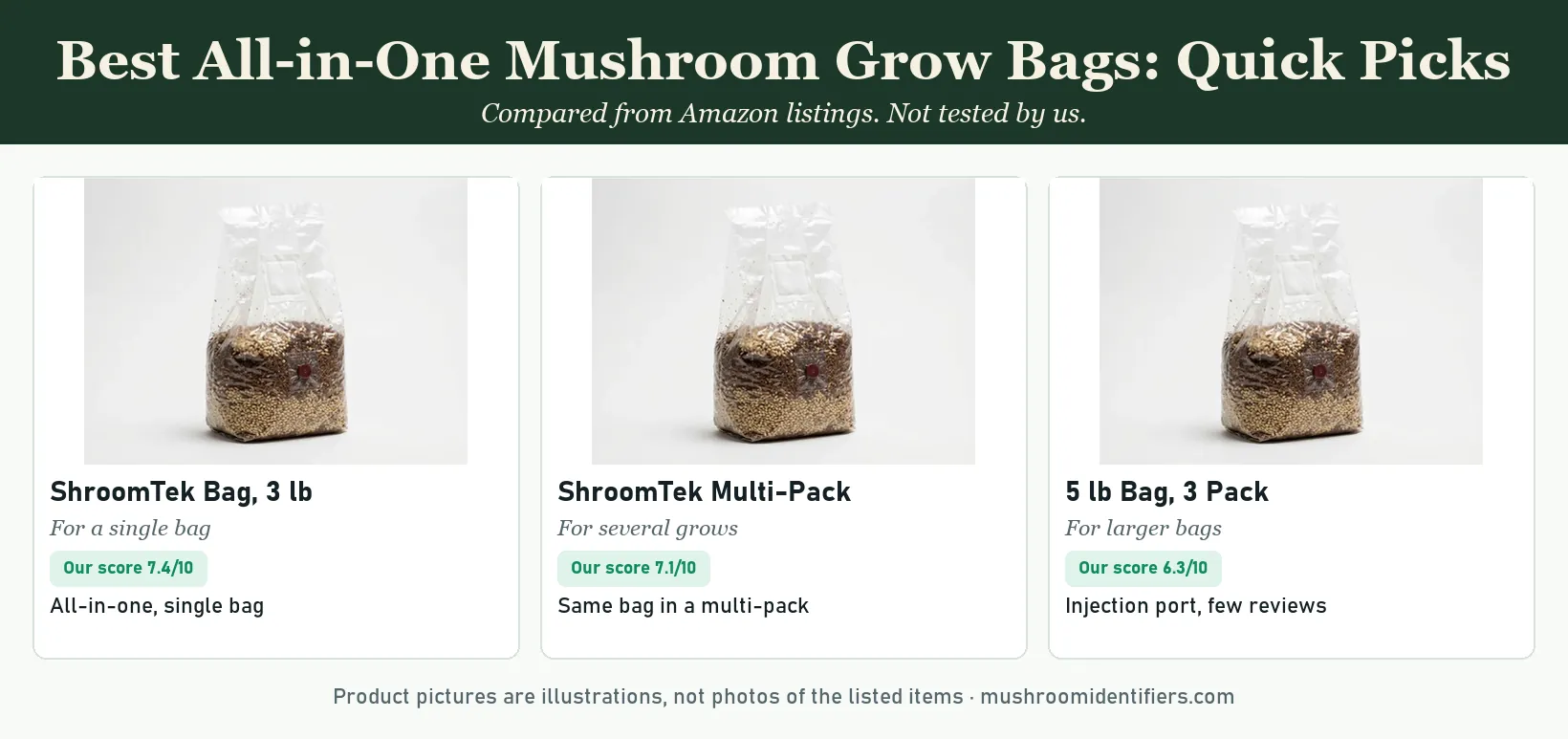
The best all in one mushroom grow kits include the North Spore ShroomTek All-in-One Mushroom Grow Bag, 3 lb for a single bag, the North Spore ShroomTek All-in-One Mushroom Grow Bags, 3 lb multi-pack for several grows, and the 5 lb All-in-One Mushroom Grow Bag, 3 Pack for larger bags.
The best all in one mushroom grow kit for most people is the North Spore ShroomTek All-in-One Mushroom Grow Bag, 3 lb, which the listing describes as all-in-one from inoculation to harvest. It has hundreds of reviews. One bag also lets you try the method before you commit to more.
Choose by experience first. These bags are sterilized substrate that you inoculate yourself, so they are not ready-to-fruit kits. A beginner should start with a block, and our mushroom grow kit comparison covers those. If you already work cleanly with a syringe, choose by bag size and by the number of grows you plan.
This page covers edible species only. Lion's mane and shiitake liquid cultures are two legal choices for a bag.
How We Chose All-in-One Mushroom Grow Bags
We compared current Amazon listings against university extension guidance and did not test these products. Each bag then received a score out of 10, based on three weighted factors.
- Beginner ease, 40%: how forgiving the format is, per extension guidance.
- Review depth, 30%: how many buyers have reviewed the listing.
- Listing clarity, 30%: whether the listing states what you get and what to expect.
A score compares listings. It is not a lab result or a yield guarantee. Product facts come from each listing, so treat them as the seller's claims. Growing facts come from the university sources linked through this page.
| Product | Best for | Type | Our score |
|---|---|---|---|
| North Spore ShroomTek All-in-One Mushroom Grow Bag, 3 lb | A single bag | All-in-one bag, 3 lb | 7.4/10 |
| North Spore ShroomTek All-in-One Mushroom Grow Bags, 3 lb multi-pack | Several grows | All-in-one bags, 3 lb multi-pack | 7.1/10 |
| 5 lb All-in-One Mushroom Grow Bag, 3 Pack | Larger bags | All-in-one bags, 5 lb, 3 pack | 6.3/10 |
The Best All-in-One Mushroom Grow Bags for Different Needs
North Spore ShroomTek All-in-One Mushroom Grow Bag, 3 lb: Best for a single bag
Our score: 7.4/10
- A 3 lb bag.
- All-in-one from inoculation to harvest, according to the listing.
- Hundreds of reviews.
This bag suits a grower who has used a syringe before and wants one trial run. A single bag keeps the first attempt small. It does not suit someone who wants mushrooms without any sterile work.
Pros
- Hundreds of buyer reviews are available to read before you decide.
- A single bag limits what you lose if the first attempt contaminates.
- The listing describes one bag from inoculation to harvest.
Cons
- It is not a ready-to-fruit kit, so you must inoculate it yourself.
- You must buy a culture separately.
- The listing facts used here give no yield figure.
Lion's mane is the shorter first project. The University of Kentucky says it fruits in five to six weeks under controlled conditions. Our lion's mane guide shows what the mushroom looks like, so you can judge what is growing.
Kentucky also says lion's mane is extremely fragile and bruises very easily. Harvest it when the spines have lengthened, before the top softens and turns yellow or pink.
North Spore ShroomTek All-in-One Mushroom Grow Bags, 3 lb multi-pack: Best for several grows
Our score: 7.1/10
- The same 3 lb bag as the single-bag listing.
- Sold in a multi-pack.
- Check the listing for the number of bags in the pack.
This pack suits a grower who has already brought one bag to harvest. It also suits someone who wants to run lion's mane and shiitake at the same time, with one species in each bag.
Pros
- It is the same bag as our top pick, so what you learn on one carries over.
- Several bags let you run more than one edible species.
- A spare bag gives you a second try after a failed run.
Cons
- One weak habit can spoil several bags.
- The listing facts used here give no shelf life, so check before you buy more than you will use soon.
- The listing facts used here give no yield figure.
Inoculate one bag first, then wait for clean growth before you start the rest. That way, one mistake costs you a single bag. Keep a hand's width between bags, as Cornell Small Farms advises. Cornell says touching bags can overheat from the heat of mycelial growth, which causes dieback and can introduce contaminants.
Several bags can give more than you can eat fresh. Kentucky says many specialty mushrooms can be dried, although this is not commonly done with lion's mane. Our guide on how to dry mushrooms covers the method.
5 lb All-in-One Mushroom Grow Bag, 3 Pack: Best for larger bags
Our score: 6.3/10
- 5 lb bags, in a 3 pack.
- A self-healing injection port, according to the listing.
- Gas exchange, according to the listing.
- Few reviews so far.
This pack suits an experienced grower who wants more substrate in each bag. It is a weaker choice for a first attempt, because there is little buyer feedback to read.
Pros
- Each bag holds 5 lb, the largest size in this comparison.
- The listing states a self-healing injection port, a feature Utah State University Extension also describes on spawn bags.
- The listing states gas exchange, which Kentucky says sealed growing containers still need.
Cons
- Few reviews so far, so there is little public feedback.
- You must buy a culture separately.
- The listing facts used here give no yield figure.
A larger bag does not mean you should inject more liquid without limit. Utah State warns that too much liquid makes bags too moist and could lead to rotting. Follow the instructions that come with the bag.
All-in-One Bag or Ready-to-Fruit Block?
Choose a ready-to-fruit block if you are new to growing, because the sterile work and the colonizing are already done. Choose an all-in-one bag only if you want to learn inoculation.
The University of Kentucky describes the commercial sequence. Growing media is sterilized or pasteurized in its container, then cooled, then inoculated. An all-in-one bag sells you the sterilized stage of that process. You do the inoculating.
A block skips that stage. UF/IFAS Gardening Solutions calls a kit the easiest way to start growing mushrooms at home. It says oyster kits give mushrooms about a week to 10 days after soaking. Our oyster mushroom grow kit guide covers block care.
| Feature | All-in-one bag | Ready-to-fruit block |
|---|---|---|
| What arrives | Sterilized substrate with no mushroom growing in it | Substrate already colonized by mycelium |
| Your first job | Inject a culture under clean conditions | Open it and keep it moist |
| Wait | Weeks of colonizing before fruiting starts | About a week to 10 days for an oyster kit |
| Main risk | Contamination at or after inoculation | Drying out or stale air |
| Extra supplies | Culture, alcohol, gloves, a mask and a flame | A spray bottle if none is included |
| Best for | Growers who want to learn sterile technique | First-time growers |
Which Species Suit a Bag?
Cornell's farm guide names lion's mane and shiitake among the species it fruits from sawdust blocks. Check the listing for what is in your bag, because the listing facts used here do not give the ingredients.
Lion's mane needs a side opening. Cornell cuts small V or X shapes in the bag and fruits it from the side, because a top opening can trap water and encourage disease.
Shiitake is the longer project. Cornell lists 42 to 84 days of incubation on sawdust. It says shiitake should not leave incubation until 75% of the block has turned brown and popcorned. Fruiting then starts with a soak of 5 to 12 hours or a chill of 12 to 24 hours.
What You Need to Inoculate a Bag
You need a clean culture of an edible species, isopropyl alcohol, a flame for the needle, gloves, a mask and a closed room. Mycelium is the living part you are starting, and it has to claim the substrate before mold does. Our guide to the parts of a mushroom covers the basics.
Which Culture to Use
Use a legal edible culture, such as lion's mane liquid culture or shiitake liquid culture. Buy one sold under a clear species name. Growing psilocybin mushrooms is illegal under US federal law. The drug is listed in Schedule I, and the same law makes it unlawful to manufacture a controlled substance without authorization.
What to Gather
- A liquid culture syringe of an edible species.
- Isopropyl alcohol. Utah State uses 90% for cleaning surfaces.
- Sterile gloves and a mask.
- A lighter to heat the needle tip.
- A clean, dark place that holds 72 to 75°F for colonizing.
- A bright spot with fresh air in the 60s°F for fruiting.
How to Inoculate a Bag
These steps follow Utah State's home method. Utah State wrote them for grain spawn bags, so follow your bag's own card where it differs.
- Prepare the room. Close windows and vents, and keep pets out. Clean surfaces with isopropyl alcohol.
- Protect the work. Wear a mask and sterile gloves. Do not breathe directly onto the work surface.
- Clean the port. Wipe the injection port with isopropyl alcohol.
- Heat the needle. Heat the tip with a lighter until it is red hot, then let it cool.
- Insert the needle. Push it 1 to 2 inches through the port.
- Inject sparingly. Change the angle as you go to spread the culture. Utah State's limit is no more than 1 cubic centimeter per 1/2 pound of grain.
- Store the bag. Keep it in a clean, dark place at 72 to 75°F. Utah State gives 2 to 4 weeks for grain spawn to colonize.
What Happens After Colonizing
Cornell treats a bag as fully colonized when mycelium has grown throughout all of the available food. It says most species do best in the 60s°F. Its farm rooms stay above 85% humidity for the first 4 days after initiation, with about 80% ideal afterward. It keeps carbon dioxide below 1,000 ppm for most species.
Utah State's home tub method keeps humidity below 80%, so the sources differ. Those are different setups, and a home bag can only approximate a farm room. For light, Cornell's test is simple: a book should be comfortable to read in the room.
Why Bags Contaminate
Bags contaminate because sterile substrate is rich food, so any mold or bacteria that gets in can grow alongside the mushroom. Cornell says sterility becomes much more critical with high-nitrogen materials such as grain and supplemented sawdust. It says ambient microorganisms grow on them more easily, so inoculation needs a lab-like setting.
A home room is not a lab. Utah State adds that mold is everywhere, and that the conditions that favor your mushrooms also favor mold.
| Cause | Sign or risk | What to do |
|---|---|---|
| Incomplete sterilization | Black, purple or green colors in the bag | Discard it quickly. Utah State says these colors mean the bag was not fully sterilized |
| Trichoderma | Looks like healthy mycelium at first, then turns black, green, pink or orange | Discard the substrate quickly to avoid spreading it |
| Other molds | Utah State names cobweb mold and black mold as common | Discard the bag. Utah State says only patches under about a dime's size can occasionally be removed |
| Too much liquid | A bag that stays too moist, which could lead to rotting | Inject less next time and follow the bag's instructions |
| Overheating | Touching bags, mycelial dieback | Keep a hand's width between bags, as Cornell advises |
Not every change is a problem. Utah State says dark yellow droplets from the mycelium are normal and healthy. Early Trichoderma is the hard case, because Utah State says it is difficult to tell from healthy mycelium at first. If you are unsure, watch for color changes and do not eat from a doubtful bag.
Which All-in-One Mushroom Grow Bag Should You Choose?
Choose the bag that matches your experience and plans, using the list below.
- If you are new to growing, skip these bags and start with a ready-to-fruit block.
- If you want one trial run with a syringe, choose the North Spore ShroomTek All-in-One Mushroom Grow Bag, 3 lb.
- If you have finished one bag and want more grows, choose the North Spore ShroomTek All-in-One Mushroom Grow Bags, 3 lb multi-pack.
- If you are experienced and want more substrate per bag, choose the 5 lb All-in-One Mushroom Grow Bag, 3 Pack.
Our Top 3 Picks at a Glance
Frequently Asked Questions
What is an all in one mushroom grow kit?
An all in one mushroom grow kit is a sealed bag of sterilized substrate that you inoculate yourself. You add a culture, wait for it to colonize the bag, then fruit the mushrooms. It is not a ready-to-fruit kit.
Is an all-in-one grow bag good for beginners?
No. A beginner should start with a ready-to-fruit block, because the sterile work is already done. UF/IFAS calls a kit the easiest way to start growing mushrooms at home.
Do all-in-one bags come with a mushroom culture?
These bags are made for you to inoculate, so plan to buy a culture separately. Check the listing to confirm what is included.
What can you grow in an all-in-one bag?
Use a legal edible culture, such as lion's mane or shiitake liquid culture. Cornell names both among the species it fruits from sawdust blocks. Check the bag's ingredients on the listing first.
How long does an all-in-one bag take?
It depends on the species. Kentucky says lion's mane fruits in five to six weeks under controlled conditions. Cornell lists 42 to 84 days of incubation for shiitake on sawdust, before fruiting starts.
How much liquid culture should you inject?
Follow the instructions for your bag. Utah State's method for grain bags uses no more than 1 cubic centimeter per 1/2 pound of grain. It warns that too much liquid could lead to rotting.
Why did my grow bag turn green?
Green usually means contamination. Utah State says black, purple or green colors in a spawn bag mean it was not fully sterilized. Discard the bag quickly and do not eat from it.
What is the difference between an all-in-one bag and a grain bag?
Utah State uses a grain bag to make spawn, then mixes that spawn into a separate substrate at about 3 lb to 10 lb. An all-in-one bag is described as one bag from inoculation to harvest. You skip the transfer step.
Do you need a flow hood or a lab?
Cornell says grain and supplemented sawdust need a lab-like setting for inoculation. Utah State gives a home method that uses alcohol, gloves, a mask and a closed room. Those clean habits are the minimum in that method.
Can you eat mushrooms grown in an all-in-one bag?
You can eat them if the culture was a labeled edible species and the bag stayed clean. Illinois Extension says all specialty mushrooms should be thoroughly cooked. Throw the bag away if it shows black, green, pink or orange growth.
Final Safety Reminder
A clean bag grows the culture you put in it, but a contaminated bag is not food. Discard any bag with black, purple, green, pink or orange growth. Illinois Extension does not recommend eating specialty mushrooms raw, and it says they should be thoroughly cooked.
Wild mushrooms are a separate matter. Never eat a wild mushroom based on a chart, a photo or an app, and read our guide to poisonous and edible mushrooms before you trust any rule of thumb. If something unexpected appears, follow our steps on how to identify a mushroom you found, then check it with our free mushroom identifier and a local expert.
About this guide: we compared current Amazon listings with university extension guidance and did not test these products. As an Amazon Associate, Mushroom Identifiers earns from qualifying purchases at no extra cost to you. Prices and availability are shown on Amazon.
Sign in to leave a comment and join the discussion.
 Guide
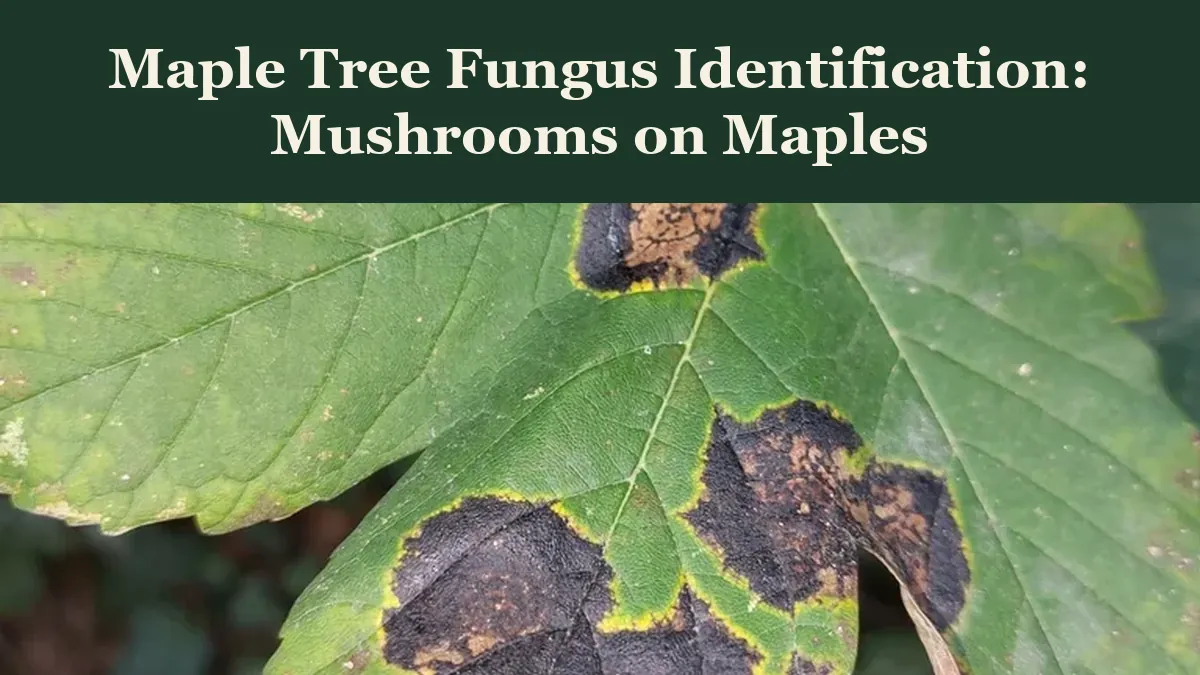
Most maple tree fungus is either a leaf spot that looks alarming but rarely hurts the tree, or a decay fungus fruiting from wood that is already rotting...
 Guide
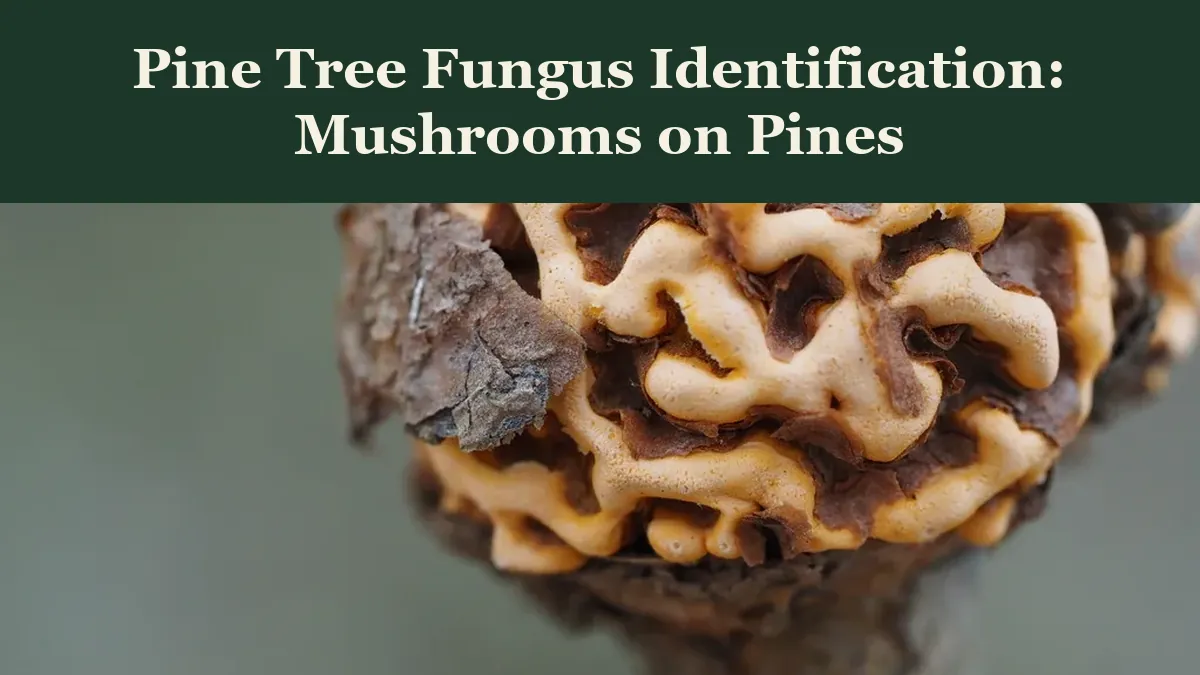
Pine tree fungus identification starts with color and place: orange powder on a woody gall is a rust, brown dead shoot tips are a blight, a conk at the base...
 Guide
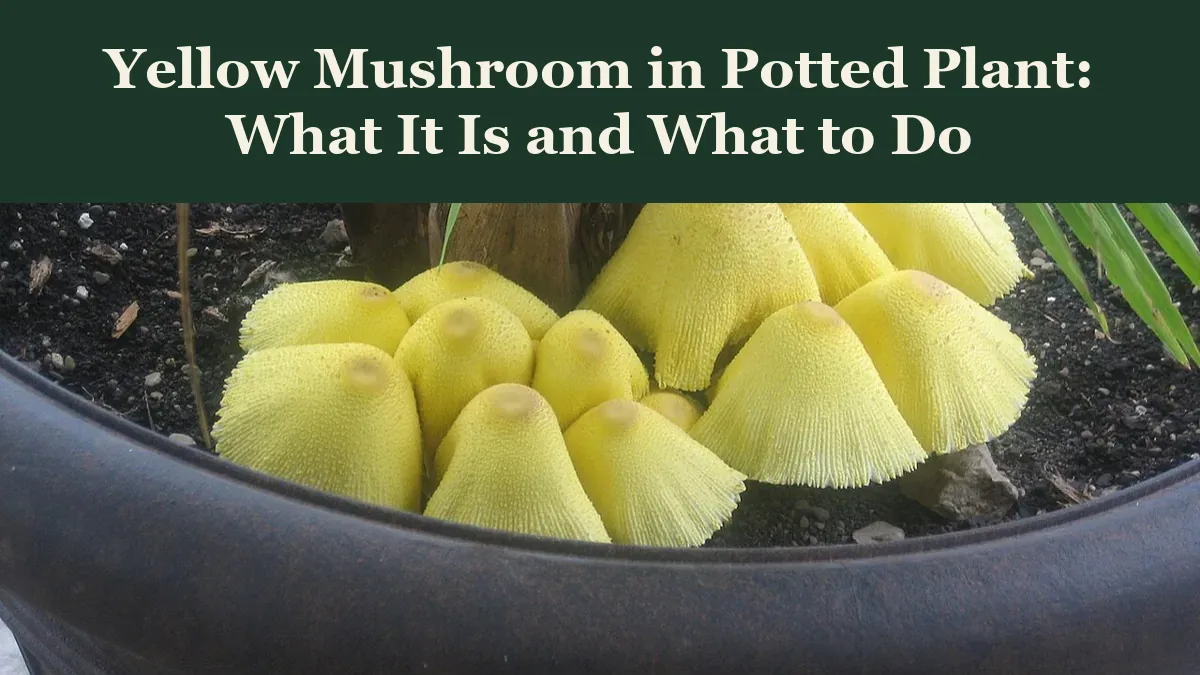
A yellow mushroom in a potted plant is almost always the flowerpot parasol, Leucocoprinus birnbaumii , a lemon-yellow mushroom that feeds on dead organic...