Poisonous Mushrooms in Florida: Yard Identification Chart
— views
The most common poisonous mushroom in Florida yards is the green-spored parasol (Chlorophyllum molybdites), a big white lawn mushroom that causes severe vomiting, and the most dangerous is the all-white destroying angel (Amanita bisporigera), which can cause fatal liver failure. Most other Florida yard mushrooms are harmless or only smell bad. No yard mushroom should be eaten, and children and dogs should be kept away from all of them.
This page sorts the mushrooms a Florida homeowner sees by color and place: white ones in the lawn, yellow ones in pots, orange ones in grass and at tree bases, and red ones that stink in mulch. It covers the checks to run, what to do about dogs and children, and how to clear a lawn.
Key Takeaways
- University of Florida Extension calls the green-spored parasol the most common cause of mushroom poisoning in the United States. It often grows in fairy rings in Florida lawns from about April to November.
- Flip a white lawn mushroom over. Gills that have turned gray-green and a green spore print point to the green-spored parasol.
- Dig up the base. An all-white mushroom with a ring and a sac around the base is an Amanita and may be a destroying angel.
- Children under 6 made up 45.4% of the mushroom exposures reported to Florida poison centers from 2014 to 2024.
- Stinkhorns, the small orange wandering creamsicle and bird's nest fungi are not considered poisonous by UF/IFAS.
- The UF/IFAS Plant Pathology lab identifies mushrooms free of charge when a person or a pet may have been poisoned. Poison Help is 1-800-222-1222.
Florida Yard Mushroom Identification Chart
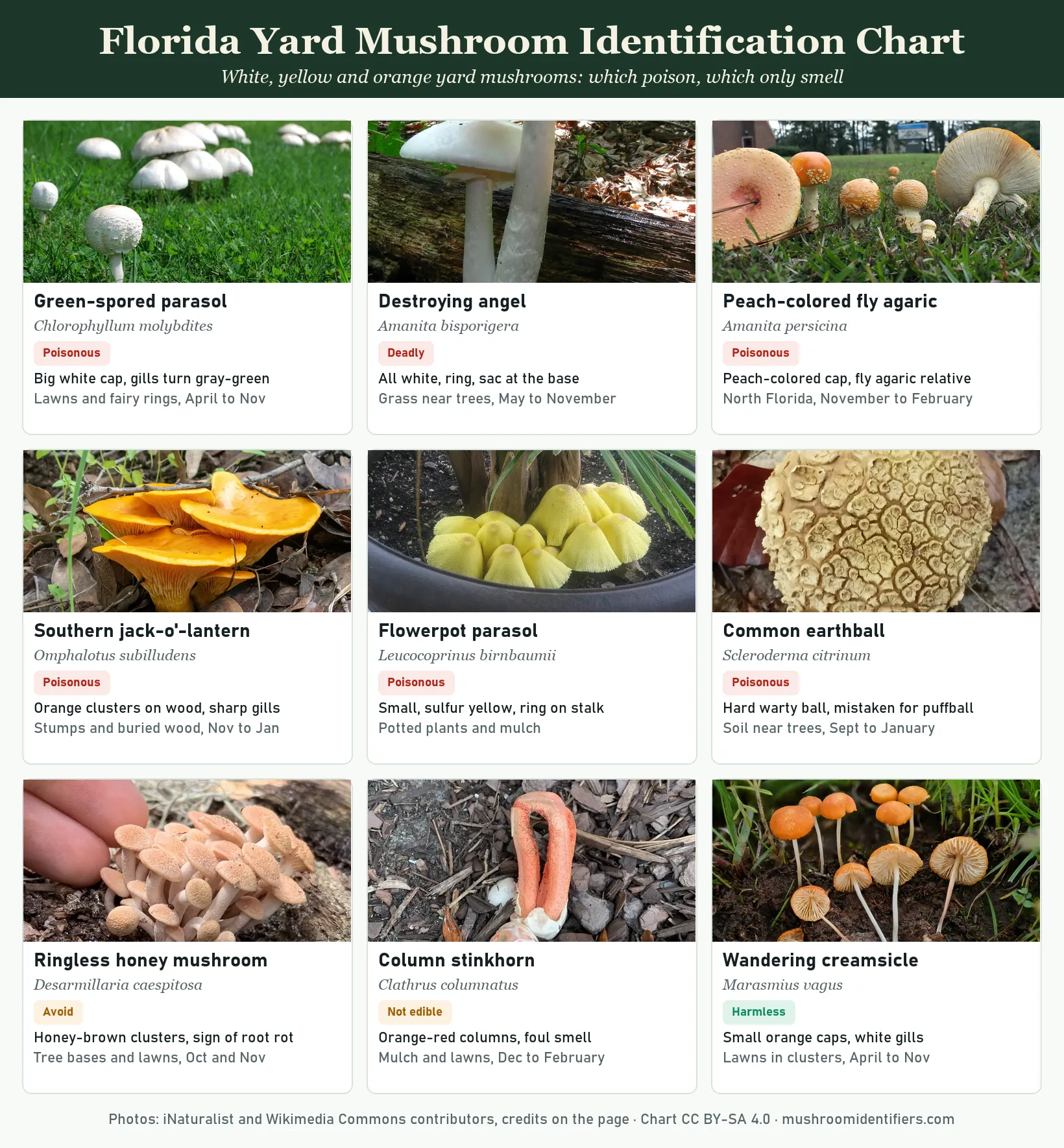
Match the color and the place first, then read the risk column. Record counts and months come from our count of research-grade Florida fungi records on iNaturalist, pulled in November 2026. Read the months as estimates.
| Mushroom | What you see | Where and when in Florida | Risk |
|---|---|---|---|
| Green-spored parasol (Chlorophyllum molybdites) | Large white cap with tan scales, ring on the stalk, gills turn gray-green | Lawns, often in rings. April to November, peak in September | Poisonous. Severe vomiting and diarrhea |
| Destroying angel (Amanita bisporigera) | All white, skirt-like ring, sac at the base | Grass and soil near oaks and other trees. May to November | Deadly. Amatoxin, liver failure |
| Peach-colored fly agaric (Amanita persicina) | Peach-colored cap, a fly agaric relative | Near trees, mostly north Florida. November to February | Treat as poisonous. Its group affects the nervous system |
| Southern jack-o'-lantern (Omphalotus subilludens) | Orange clusters with sharp gills, fused at the base | Stumps and buried wood. November to January | Poisonous. Vomiting within hours |
| Flowerpot parasol (Leucocoprinus birnbaumii) | Small, sulfur yellow all over, thin stalk with a ring | Potted plants and mulch. Mostly June to September outdoors | Poisonous if eaten |
| Common earthball (Scleroderma citrinum) | Hard warty ball with a thick rind, dark inside | Soil near trees. Earthballs peak from September to January | Poisonous. Stomach upset, a risk to dogs |
| Ringless honey mushroom (Desarmillaria caespitosa) | Dense honey-brown clusters, no ring | Lawns over tree roots and at trunk bases. October and November | Avoid. Sign of root rot in the tree |
| Column stinkhorn (Clathrus columnatus) | Two to five orange-red columns joined at the top, foul smell | Mulch and lawns. December to February | Not edible. Not considered poisonous |
| Wandering creamsicle (Marasmius vagus) | Small orange caps, white gills and stalk, in clusters and arcs | Lawns. April to November | Harmless. Not known to be toxic |
Which Mushrooms in Florida Yards Are Poisonous?
Five groups cause the real poisonings: the green-spored parasol, white and peach-colored Amanitas, jack-o'-lanterns, earthballs and a few small brown or white mushrooms that carry amatoxin. A study of Florida Poison Information Center Network data counted 2,995 mushroom exposures from 2014 to 2024. Of those with a known age, 1,323 were children under 6. Vomiting was the most common effect outside the psychoactive cases. Three people died, and in all three the mushroom was never identified.
- Deadly: destroying angels and their white relatives. UF/IFAS also warns that some small Lepiota and Conocybe species in pots and mulch contain amatoxins.
- Severe stomach illness: green-spored parasol, southern jack-o'-lantern, earthballs.
- Nervous system effects: the peach-colored fly agaric and its relatives.
- Alarming but not poisonous: stinkhorns, the wandering creamsicle, bird's nest fungi and dog vomit slime mold, according to UF/IFAS fact sheets.
Two famous killers are nearly absent. iNaturalist shows a single research-grade Florida record of the death cap (Amanita phalloides) and one verifiable record of a false morel (Gyromitra). That does not make Florida low risk, because destroying angels carry the same toxin group as the death cap.
How Do You Check a Florida Yard Mushroom?
Flip it, print it, dig it and slice it: four quick checks sort most Florida yard mushrooms without tasting anything. Handling is not the danger. The UF/IFAS guide to mushrooms in potted plants says touching mushrooms is not dangerous, but that no unknown fungus should ever be eaten.
- Flip it. Look at the gills. White gills that turn gray and then green on a big lawn mushroom mean green-spored parasol. Sharp orange gills on a cluster mean jack-o'-lantern. A slimy olive coating that stinks means stinkhorn.
- Print it. Leave the cap gills-down on paper under a bowl for several hours. A green spore print is rare among mushrooms and confirms the green-spored parasol. Destroying angels and the wandering creamsicle print white.
- Dig it. Lift the whole base with a trowel. A sac-like cup at the bottom of a white mushroom is an Amanita sign, and it often hides underground.
- Slice it. Cut any round ball in half. A thick rind around purplish or black flesh is an earthball.
These checks show what to keep away from a child or a dog. They never show that a mushroom is fit to eat.
Common Poisonous and Problem Mushrooms in Florida Yards
Nine species explain most of the white, yellow and orange mushrooms that Florida homeowners ask about. Six are poisonous, one signals a sick tree, and two are only a nuisance.
Green-Spored Parasol (Chlorophyllum molybdites)
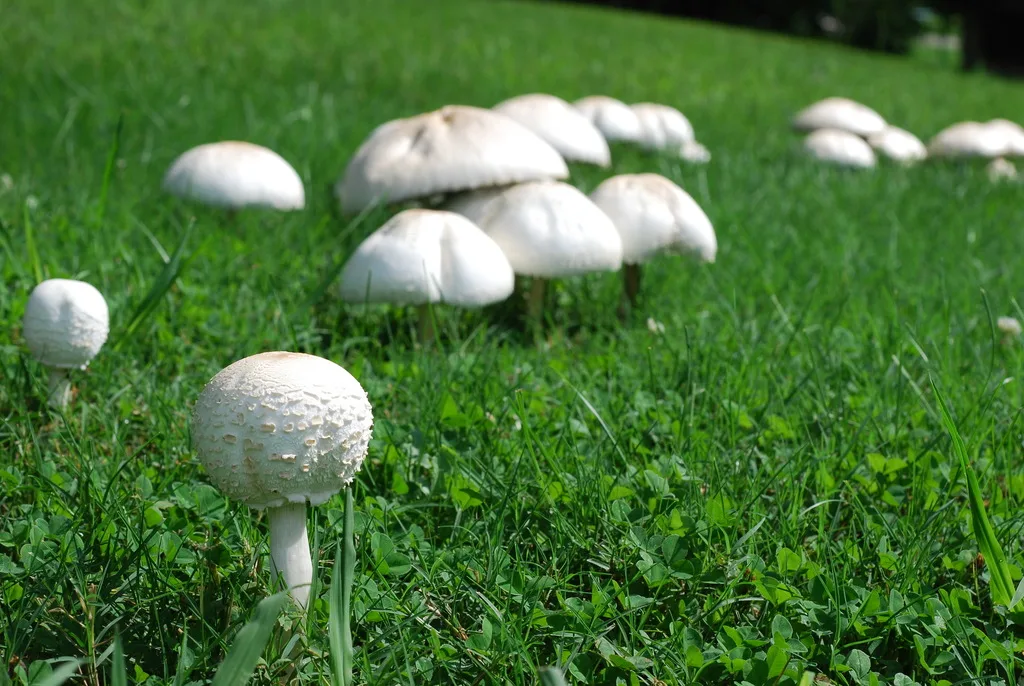
This is the big white mushroom of Florida lawns. The UF/IFAS fact sheet gives a cap 1.8 to 11.8 inches wide with beige to pinkish-brown scales, a thick ring, and gills that go from white to gray to green. Symptoms start one to two hours after eating, and most patients recover within 24 hours. There is no antidote. Florida has 2,438 records, about half of them in the central part of the state. Our green-spored parasol guide covers the full identification.
Destroying Angel (Amanita bisporigera)
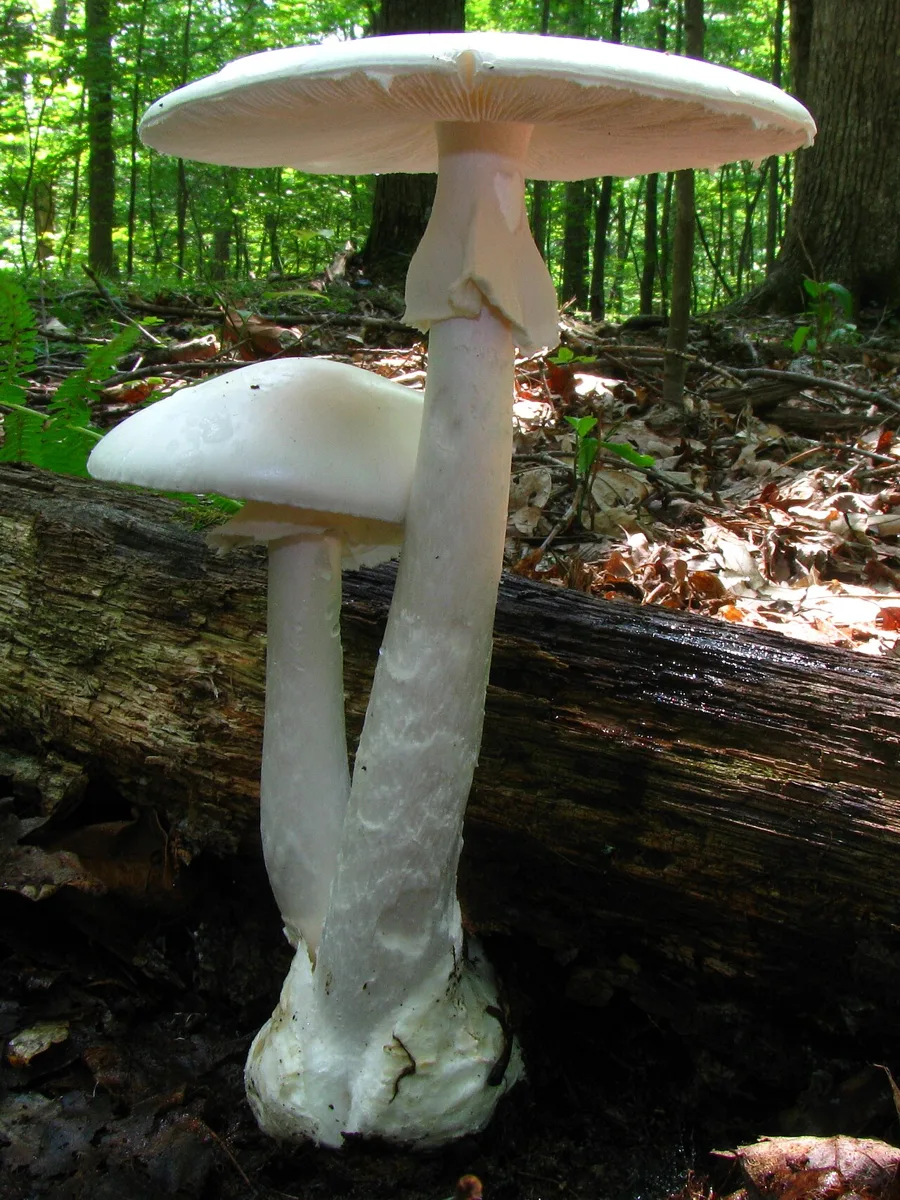
The destroying angel is plain, white and easy to overlook. The Missouri Department of Conservation describes a white cap 2 to 5 inches wide, white gills, a skirt-like ring and a sac-like cup at the base. It grows on the ground in woods and in grass near trees. NAMA says amatoxin symptoms wait 6 to 24 hours, then a false recovery can come before liver and kidney failure. Florida has 74 records, plus a few of the related Amanita suballiacea, which StatPearls also lists as an amatoxin species. See our destroying angel guide.
Peach-Colored Fly Agaric (Amanita persicina)
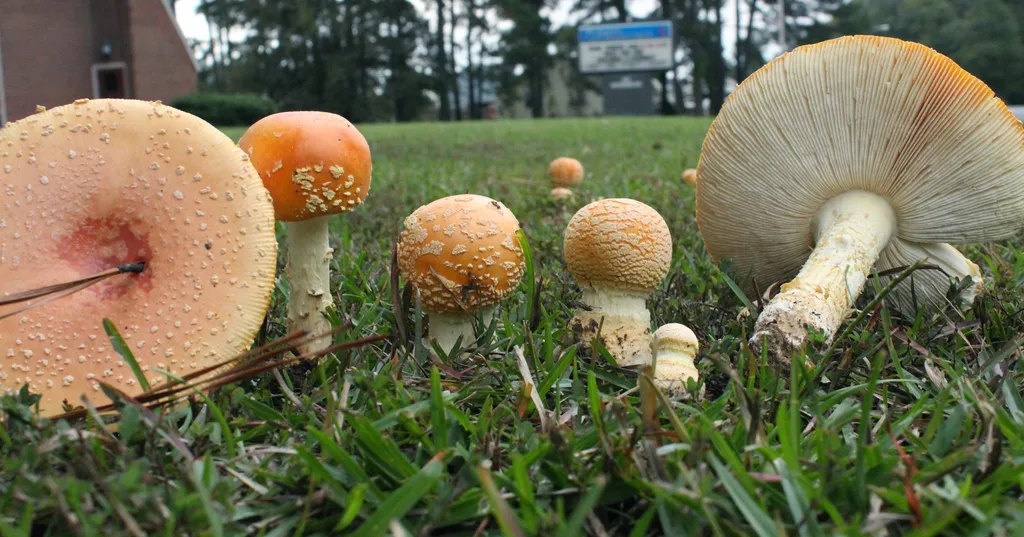
This is the Amanita that Florida records most often, with 1,168 records. About 93% fall from November to February, and most come from north Florida. iNaturalist files it in the same section of the genus as the fly agaric. NAMA says mushrooms of that group act on the nervous system within 30 minutes to 2 hours, with drowsiness, confusion and sometimes a coma-like sleep. NAMA also notes that dogs often eat fly agarics.
Southern Jack-o'-Lantern (Omphalotus subilludens)
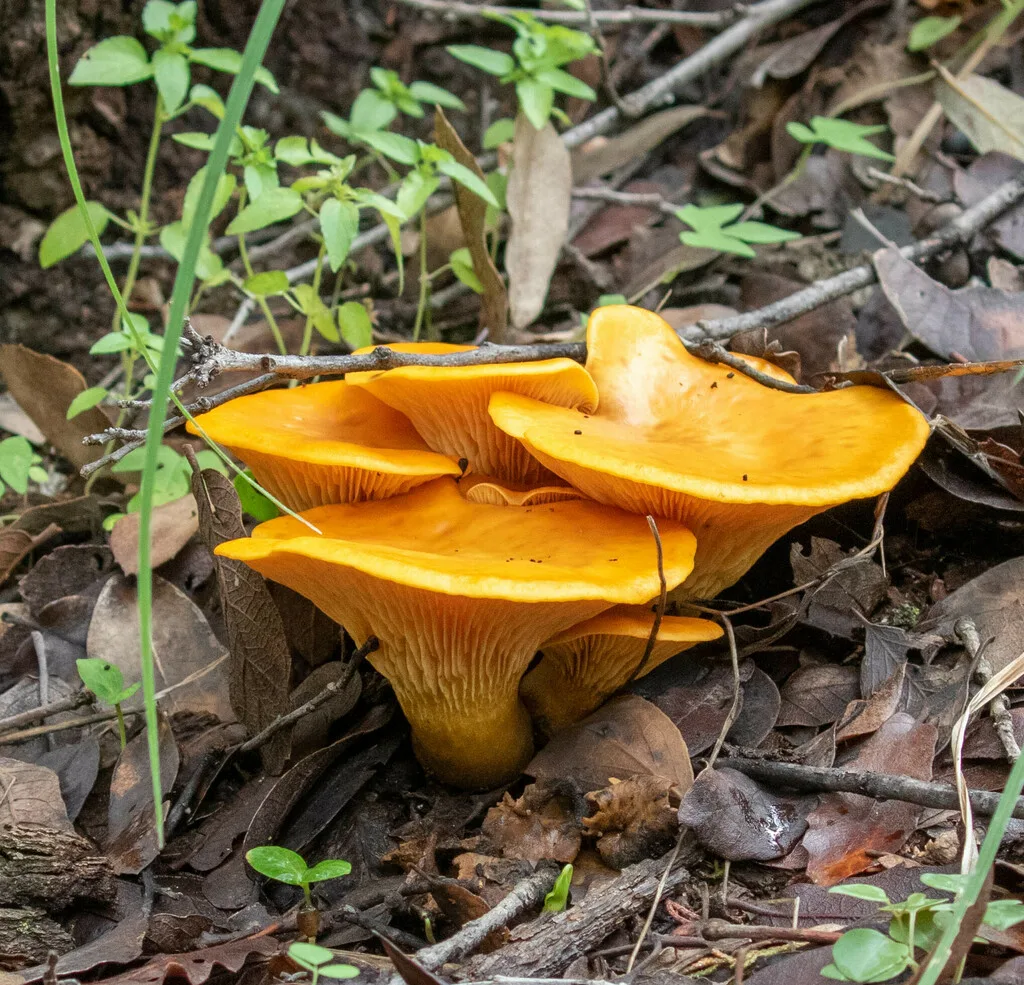
Orange clusters at a stump in a Florida winter are often this species. The UF/IFAS chanterelle fact sheet names it as the look-alike that people mistake for chanterelles. It has true gills, grows from wood, and forms clusters fused at the base. The wood may be buried, so it can seem to rise from the lawn. NAMA reports nausea in 90% of jack-o'-lantern cases, with most people recovering within 12 hours. Our jack-o'-lantern guide covers the eastern species.
Flowerpot Parasol (Leucocoprinus birnbaumii)
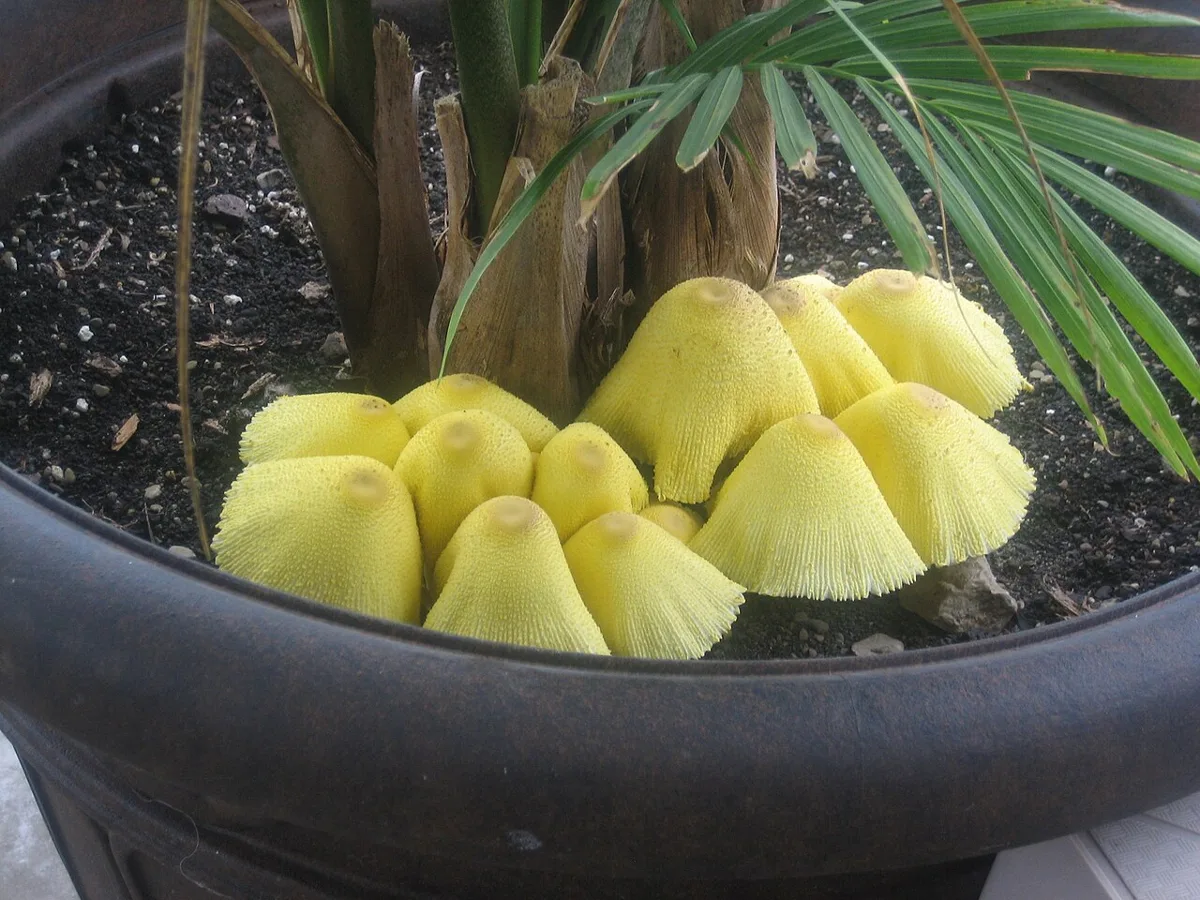
UF/IFAS calls this the most common mushroom on indoor potting soil. The whole mushroom is sulfur yellow, with a raised center, fine lines on the cap, and a thin stalk with a ring. It fruits year-round indoors and UF/IFAS lists it as poisonous. UF/IFAS adds that most pot mushrooms are not plant pathogens. Florida has 1,223 records, most from June to September. Our yellow mushroom in potted plant page covers removal.
Common Earthball (Scleroderma citrinum)
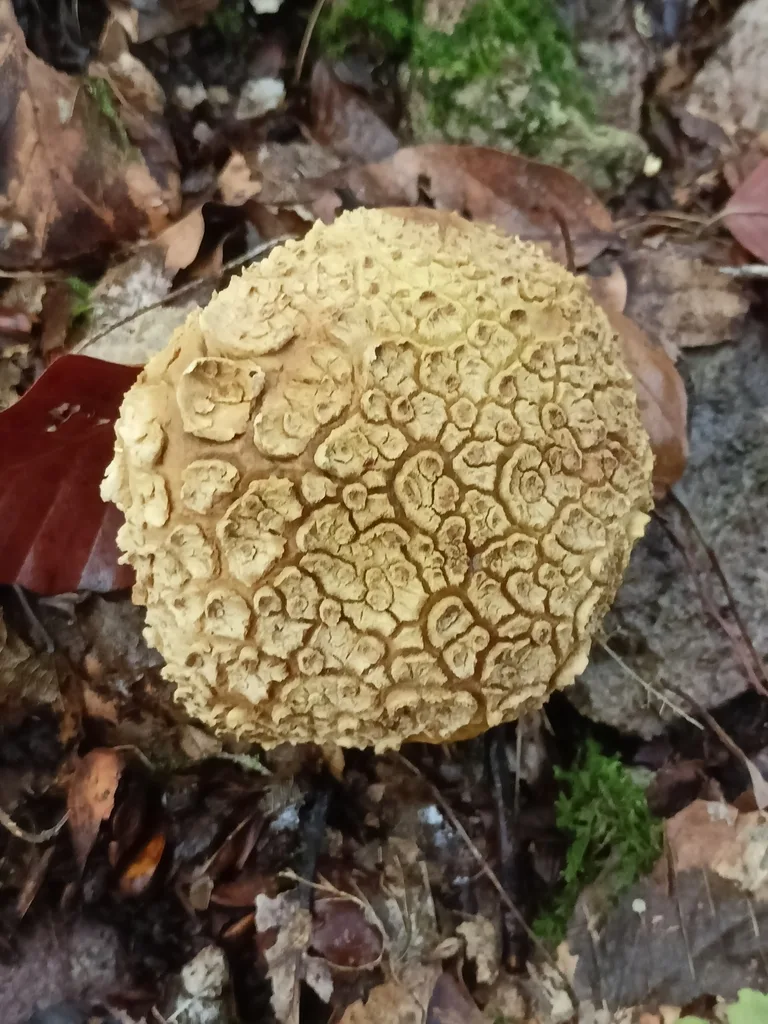
Earthballs are the hard round balls that sit on soil near trees. The Missouri Department of Conservation describes a ball 1 to 4 inches wide with a thick, warty rind. The inside is nearly white when very young, then turns purplish and blackish. It lists the species as poisonous, with nausea and vomiting. Florida has several earthball species, and they are hard to tell apart without a microscope.
Ringless Honey Mushroom (Desarmillaria caespitosa)
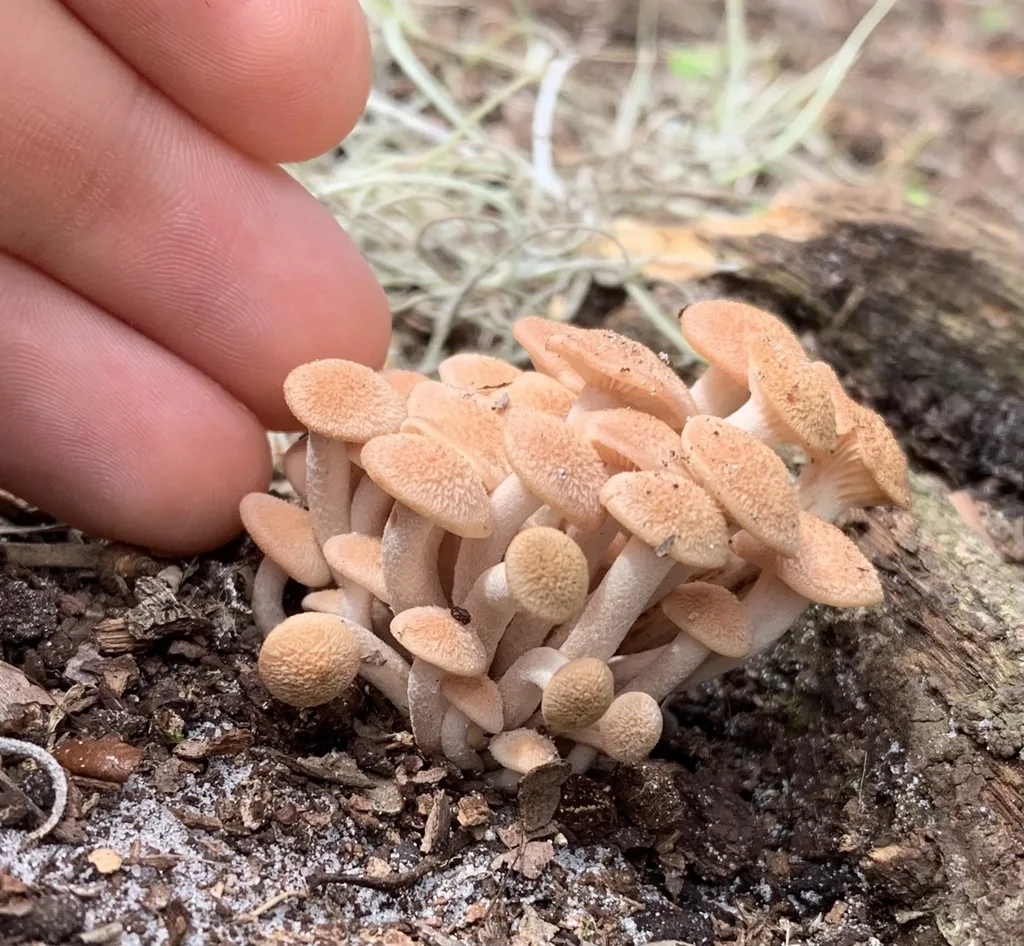
Dense honey-colored clusters in a lawn in October and November usually trace back to tree roots. UF/IFAS Gardening Solutions says the fungus, which it calls Armillaria tabescens, is the most common cause of Armillaria root rot in Florida trees and shrubs. It names turkey oak, laurel oak, azalea, ligustrum, camellia and citrus among the susceptible plants. For the homeowner, the clusters are a tree health warning more than a poisoning risk, but they are still not food from a lawn.
Column Stinkhorn (Clathrus columnatus)
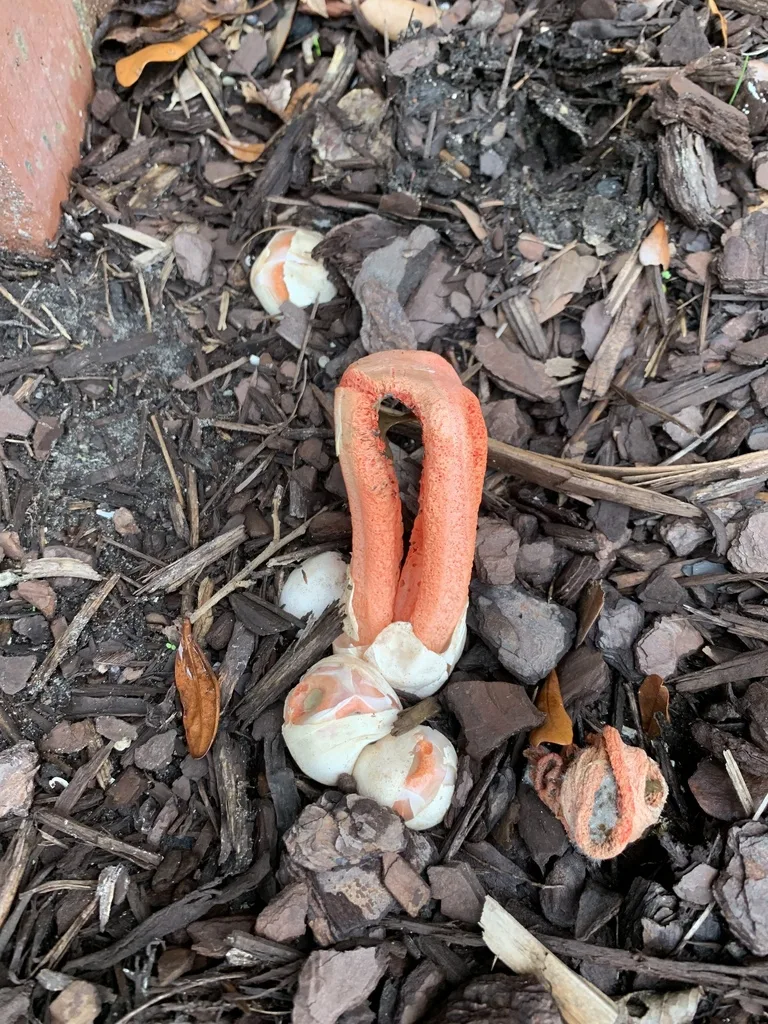
The UF/IFAS stinkhorn fact sheet describes two to five spongy orange-to-red columns that join at the top, with foul olive-brown slime on the inside. It hatches from a white egg in mulch. UF/IFAS says stinkhorns are not considered poisonous, though it notes reports of pigs poisoned by this species and does not recommend eating any stinkhorn. Florida has 1,980 records, about 71% from December to February. South Florida records are mostly of Clathrus crispus instead, which iNaturalist calls the wiffle ball stinkhorn. Compare them in our stinkhorn identification chart.
Wandering Creamsicle (Marasmius vagus)
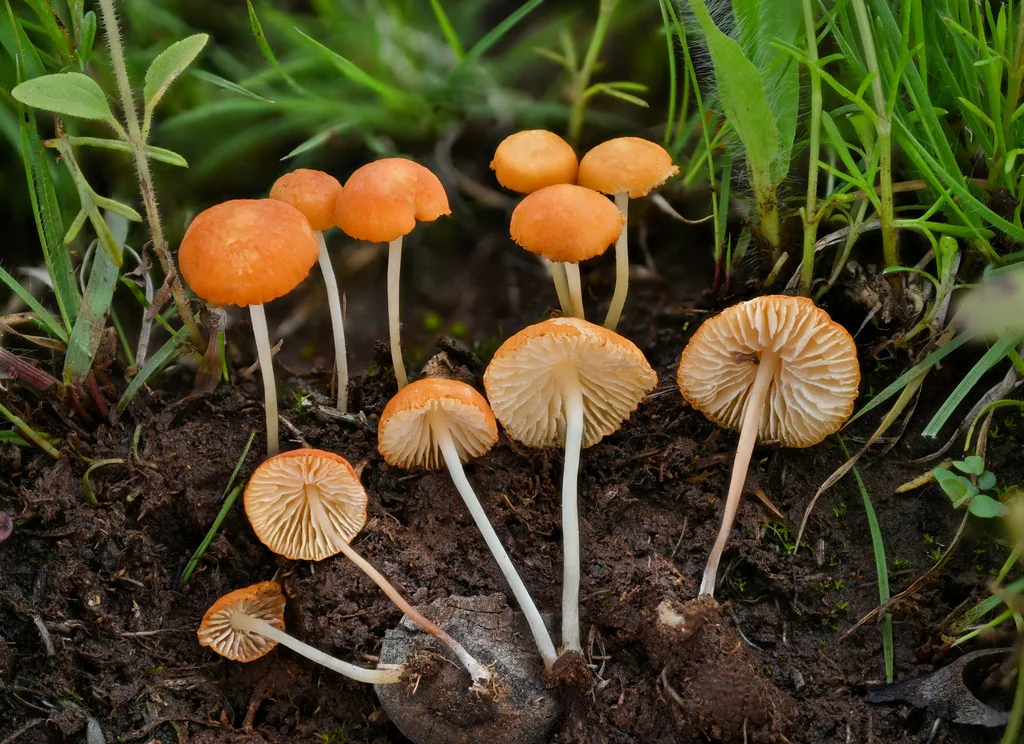
Small orange caps scattered across a wet summer lawn are usually this species. The UF/IFAS fact sheet calls it one of the most common lawn mushrooms in Florida. Caps are 12 to 20 millimeters wide, apricot to pale orange, over white gills and a white stalk. It was first recorded in Florida in 2012 and is believed to come from Australia. UF/IFAS says it is not known to be toxic to people or animals and does not harm the lawn.
Florida Yard Mushroom Look-Alikes: Side-by-Side Comparison
The dangerous yard mushrooms each have a harmless or less harmful twin, and one check separates each pair. The dangerous ones are named in the second column.
| What you see | Dangerous possibility | Similar and less harmful | Deciding check |
|---|---|---|---|
| Big white mushroom in the lawn | Green-spored parasol or destroying angel | American titan (Macrocybe titans), which has no ring | Green spore print for the parasol. Sac at the base for the destroying angel |
| Orange cluster at a tree base | Southern jack-o'-lantern | Ringless honey mushroom | Bright orange, smooth caps point to jack-o'-lantern. Honey-brown, scaly caps point to ringless honey |
| Small orange caps in grass | Young jack-o'-lantern over buried wood | Wandering creamsicle | Creamsicle caps stay under an inch, with white gills and a thin white stalk |
| White ball or egg in soil or mulch | Amanita egg or earthball | Stinkhorn egg, puffball | Slice it top to bottom. A mushroom outline is an Amanita. A dark center in a thick rind is an earthball |
| Small pale mushroom in a pot | Lepiota or Conocybe species | Inky caps, bird's nest fungi | Not reliable by eye. Remove them all where a child or pet can reach |
The American titan deserves a note. The UF/IFAS fact sheet says it is the largest gilled mushroom in the Western Hemisphere, with pale buff caps that can reach 3 feet across. It warns that young ones can be confused with the green-spored parasol. A hard, glazed shelf low on a palm trunk is a different matter, and our palm tree fungus identification page covers it.
Are Florida Yard Mushrooms Poisonous to Dogs?
Yes, several are, and dogs are at higher risk than adults because they are smaller and more likely to eat fresh mushrooms in a lawn. UF/IFAS says the toxin in the green-spored parasol affects dogs as well as people. NAMA adds that some earthballs are lethal to dogs, that amatoxin signs in dogs appear after a delay of 6 to 12 hours or more, and that fly agaric relatives can put a dog into a deep, coma-like sleep.
- Take the mushroom away and save what is left, including pieces from the dog's mouth or vomit.
- Store the sample in a paper bag or waxed paper in the refrigerator, as NAMA advises.
- Call your veterinarian or an emergency clinic at once. The ASPCA Animal Poison Control Center answers at (888) 426-4435 at any hour, and a consultation fee may apply.
- Ask the clinic to contact UF/IFAS. Its fungal identification services page says the lab identifies mushrooms at any time, free of charge, when a pet's health may be at risk.
Do not wait for symptoms. Our guide on what to do if your dog ate a mushroom lists the steps in order. For a child, call Poison Help at 1-800-222-1222 right away.
How Do You Get Rid of Mushrooms in a Florida Lawn?
Remove the mushrooms by hand or with the mower, bag them where children or pets play, and expect them back after the next rain. The mushroom is only the fruit of a fungus living in soil, mulch or buried wood.
- Fairy rings: the UF/IFAS fairy ring fact sheet says all warm-season turfgrasses can be affected, which covers St. Augustinegrass lawns. Rings form where stumps, logs or lumber are buried. Chopping the mushrooms with the mower is usually adequate. Collect and bin them if children or pets are present. Rings fade naturally, but it can take up to five years.
- Stinkhorns: UF/IFAS says fungicides are typically ineffective. Dig up the eggs and the mature stinkhorns, seal them in a plastic bag and put them in the garbage. Raking the mulch may reduce later fruiting.
- Pots: pick the mushrooms out, rake the soil surface and water less. Overwatering encourages fruiting.
- Timing: a UF fungi expert told UF/IFAS News that lawn mushrooms drop off after two to three weeks without much rain, but an irrigated lawn can produce them year-round.
Our guide on how to get rid of mushrooms in grass covers the longer-term fixes.
Common Identification Mistakes
Assuming a White Lawn Mushroom Is a Store Mushroom
The two most important poisonous mushrooms in Florida are both white and both grow in grass. Dig up the base of any white one, because the sac of a destroying angel often hides underground.
Judging a Young Mushroom by Its Gills
Green-spored parasol gills are white to yellowish when young and turn green only as the spores mature. A young one can pass for an edible parasol. The spore print settles it.
Treating Smell or Bright Color as the Danger Sign
Stinkhorns smell like rot and are not considered poisonous. The orange wandering creamsicle is not known to be toxic. The plain white mushrooms with no smell are the ones that send people to the hospital.
Waiting for Symptoms Before Calling
Amatoxin symptoms can take 6 to 24 hours to appear, and by then the liver is already under attack. Call as soon as you know a mushroom was eaten.
Frequently Asked Questions
What is the most common poisonous mushroom in Florida?
The green-spored parasol is the most common. UF/IFAS calls it the most common cause of mushroom poisoning in the United States and one of the most common lawn mushrooms in Florida. It causes vomiting and diarrhea one to two hours after eating.
What are the big white mushrooms in my Florida yard?
Most are green-spored parasols, which have tan scales, a ring and gills that turn green. An all-white mushroom with a sac at the base may be a destroying angel.
Are the yellow mushrooms in my potted plant poisonous?
The small yellow mushroom in pots is the flowerpot parasol, and UF/IFAS lists it as poisonous if eaten. Touching it is not dangerous. Pick it out if a child or pet can reach the pot.
What are the orange mushrooms in my Florida lawn?
Small orange caps scattered in grass are usually the wandering creamsicle, which is not known to be toxic. Orange clusters at a stump or tree base in winter are usually the poisonous southern jack-o'-lantern. Orange-red columns that stink are column stinkhorns.
Are Florida lawn mushrooms poisonous to dogs?
Some are. The green-spored parasol, Amanitas and earthballs can all poison dogs, and earthballs and amatoxin mushrooms can kill them. Remove mushrooms from the yard, and call a veterinarian or the ASPCA line at (888) 426-4435 if a dog eats one.
Are stinkhorn mushrooms poisonous?
UF/IFAS says stinkhorns are not considered poisonous. It still does not recommend eating them and notes reports of pigs poisoned by the column stinkhorn. They do not damage lawns or soil.
Does Florida have death cap mushrooms?
Barely, according to the records. iNaturalist shows one research-grade Florida record of the death cap. Florida does have destroying angels, which carry the same amatoxins and are just as dangerous.
Can you get sick from touching a poisonous mushroom?
No. UF/IFAS states that touching and handling mushrooms is not dangerous. Poisoning comes from eating them, so wash your hands and keep pieces away from children and pets.
Why do mushrooms keep coming back in my Florida lawn?
The fungus lives in the soil, mulch or buried wood, and picking the mushrooms does not remove it. Rain or irrigation triggers new ones.
Final Safety Reminder
Florida yards grow mushrooms most of the year, and the dangerous ones look ordinary. Never eat a yard mushroom. Clear mushrooms from places where children and dogs play. For a first opinion, upload a photo to our free mushroom identifier, then have an expert confirm it. If anyone has eaten an unknown mushroom, call Poison Help at 1-800-222-1222 right away.
Sign in to leave a comment and join the discussion.
 Guide
The best-known edible mushrooms in California are the golden chanterelle, candy cap, black trumpet and king bolete, and most of them fruit near the coast...
 Guide
The fungus people notice most on a palm tree is Ganoderma butt rot, a lethal trunk decay with no cure, or a leaf problem that is cosmetic or not caused by a...
 Guide
Most maple tree fungus is either a leaf spot that looks alarming but rarely hurts the tree, or a decay fungus fruiting from wood that is already rotting...